Quiet Windows FAQ
What is a “Quiet Window”?
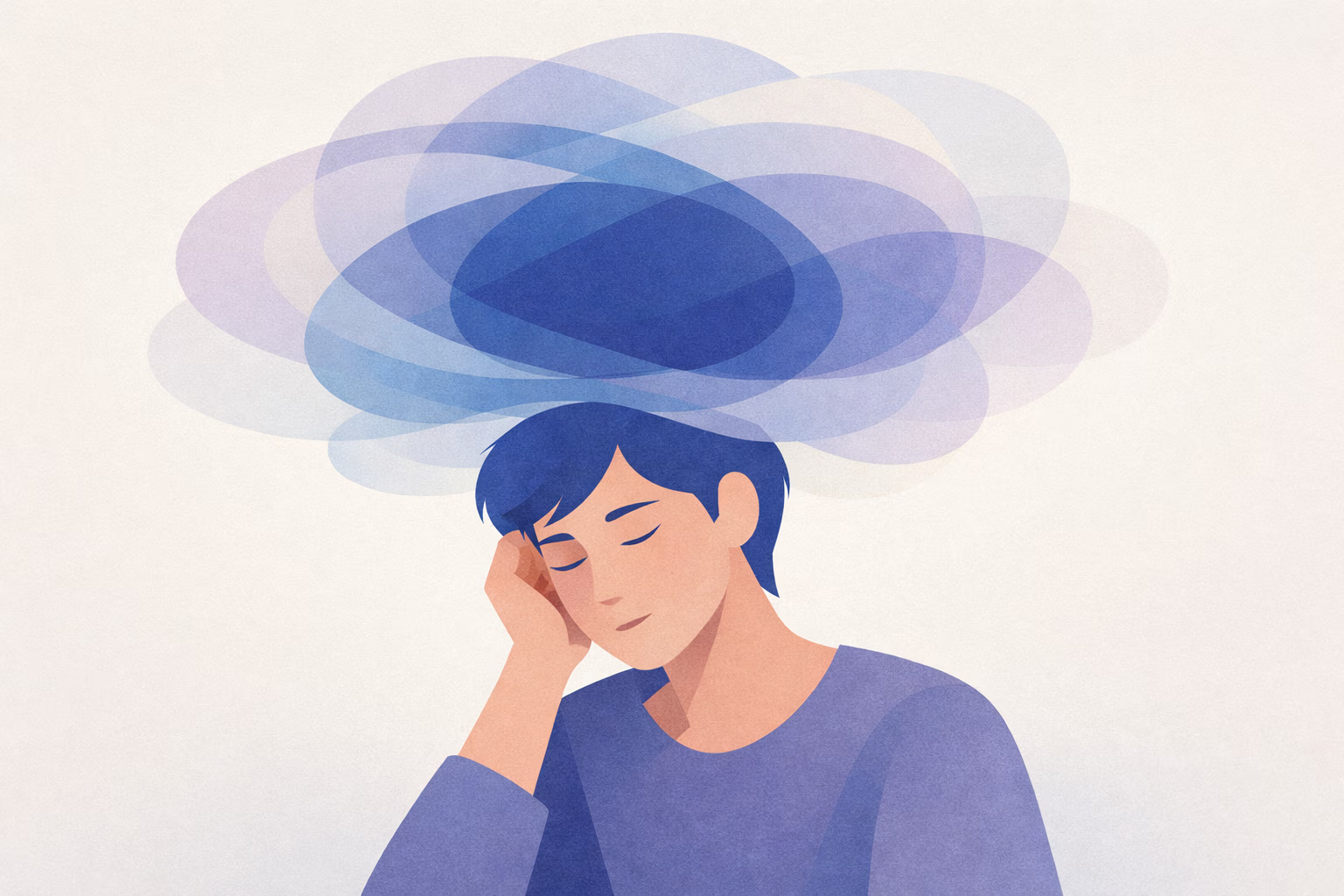
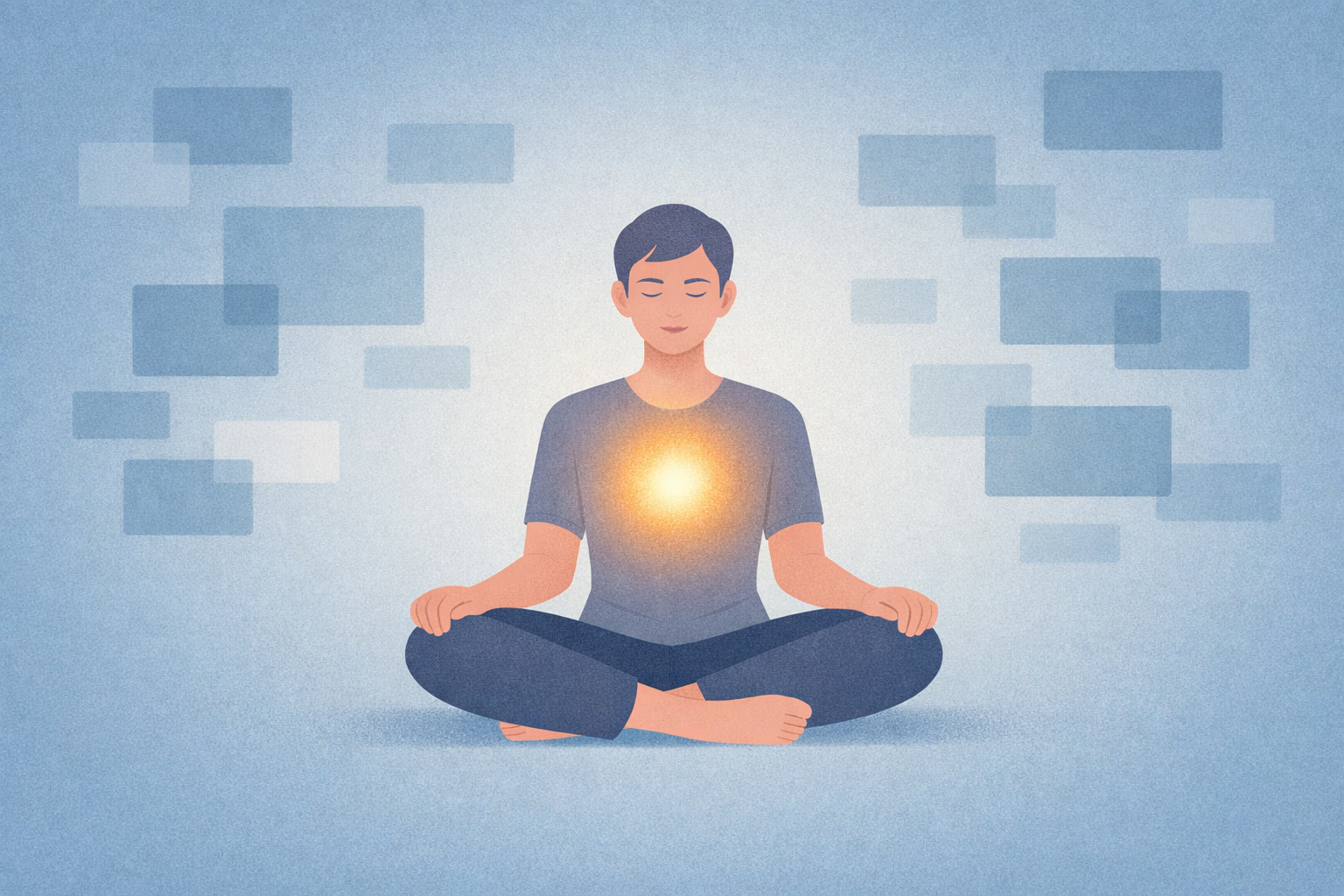
Quiet Windows are non-clinical, meaning-first art pieces designed to lower cognitive resistance and support pattern recognition without diagnosis. Instead of telling you what you “have,” they create a gentle perceptual space where your nervous system can notice: pressure, avoidance, craving, control, shame, or disconnection—without defensiveness. They’re built for modern loops: overstimulation, emotional compression, identity drift, threat activation, and more. Think of them as a quiet interface layer—art that makes inner dynamics easier to see, while preserving dignity and choice.
How do I use this library?
Start by choosing the domain that matches your “inner weather” right now—overload, numbness, threat, shame, dopamine saturation, or recovery. Open one piece and slow down: read the title, view the image, then read the poem or text once without trying to “figure it out.” Let it land. Notice what shifts in your body: breath, jaw, shoulders, urgency, softness. If you want structure, try a 3-step rhythm: (1) observe, (2) name one sensation, (3) choose one gentle action (pause, walk, hydrate, message someone).
Is this therapy, treatment, or diagnosis?
No. Quiet Windows are not therapy, treatment, or diagnosis—and they are not a substitute for professional care. They are a creative reflection tool: a meaning-first layer that supports awareness, regulation, and self-understanding without labeling you as “broken.” Many people find that art can bypass mental arguing and let the nervous system settle enough to see what’s happening more clearly. If you’re in crisis, experiencing severe symptoms, or feel unsafe, please seek qualified support. Quiet Windows can still be used as a calming companion alongside care.
What if I don’t “feel” anything when I read one?
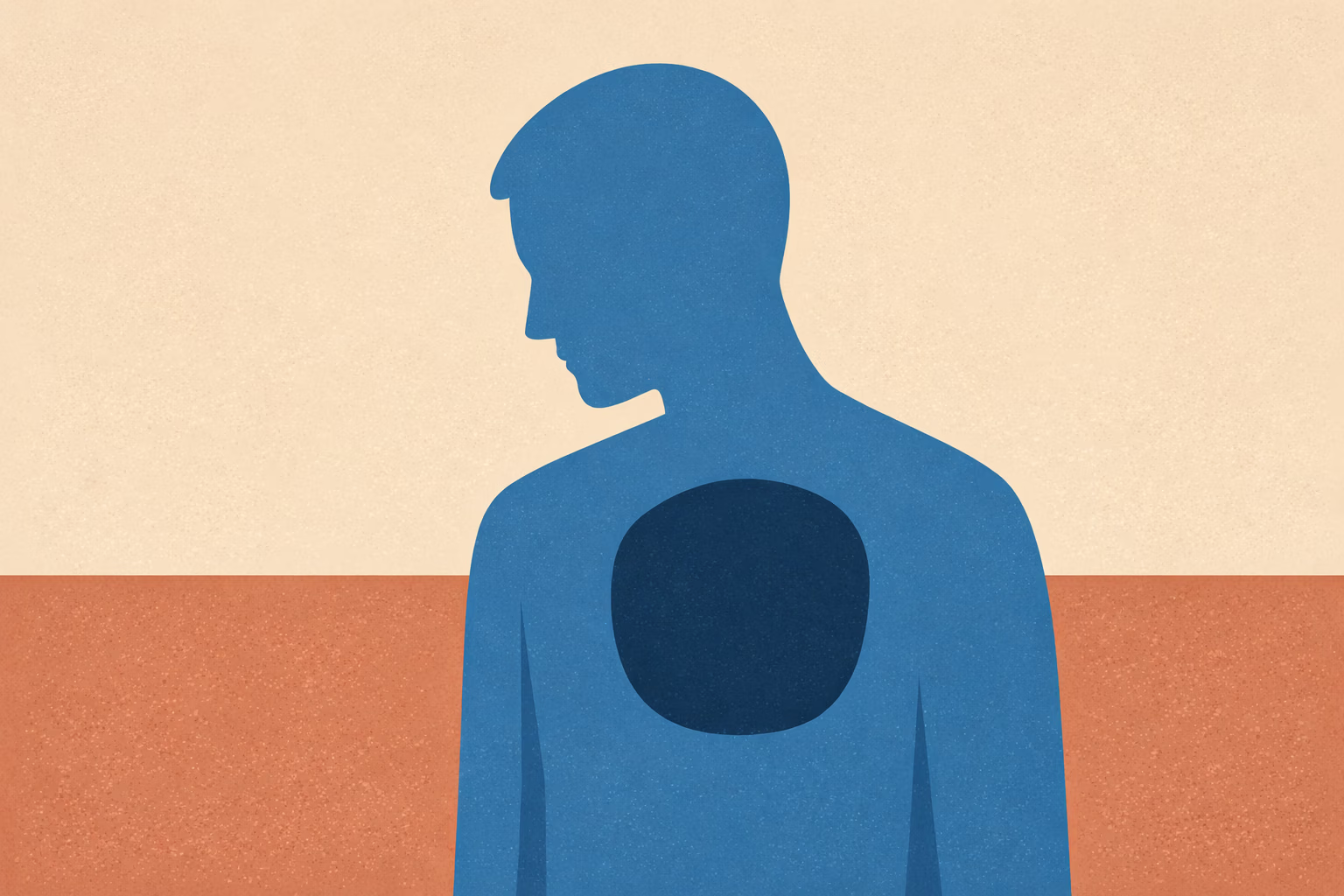
That’s normal—and often meaningful. Sometimes “nothing” is the nervous system’s protective strategy: shutdown, numbness, or low access to emotion after prolonged pressure. Don’t force intensity. Choose domains like Numbness & Shutdown or Recovery, Stillness & Reorientation and use a softer goal: simply staying present for 30–60 seconds. Try reading out loud, or returning at a different time of day. Quiet Windows are designed for repetition; the effect often appears gradually—more like thawing than a dramatic breakthrough.
How do I pick the “right” domain?
Use a simple matching rule: choose the domain that best describes your dominant friction right now. If you feel wired, urgent, scanning—try Stress & Threat Activation. If you feel tight and overloaded—try Overload & Emotional Compression. If you feel restless and craving input—try Overstimulation & Dopamine Saturation. If you feel ashamed or self-attacking—try Shame, Guilt & Inner Critic. If you feel scattered or unsure who you are—try Identity Drift & Fragmentation. When uncertain, start with Recovery.
Can I use Quiet Windows daily?
Yes—Quiet Windows work well as a small daily ritual because they require low effort and don’t depend on motivation. The key is to keep the dose gentle: one piece per day is enough. Many people use them as a “transition tool” between environments: after work, before sleep, after conflict, or when craving stimulation. If you want a consistent practice, choose one domain for a week and rotate through it slowly. The goal isn’t to consume content—it’s to create a short window where the nervous system can settle, notice, and reorient toward meaning.
What’s the difference between Quiet Windows and your blog articles?
Blog articles explain patterns with language, concepts, and structure. Quiet Windows do something different: they create a felt recognition before analysis. When the mind is defensive, overloaded, or numb, long explanations can bounce off or turn into more thinking. Quiet Windows offer a non-demand entry point—art that helps the nervous system notice and soften first. After a Quiet Window resonates, the “From Art to Science” links (or your blog categories) can deepen understanding with neuroscience, psychology, and meaning-based tools. Many users benefit from this sequence: art → recognition → science → action.
What if a Quiet Window triggers sadness, anxiety, or discomfort?
A small wave of discomfort can be a sign of contact—something real is being noticed. The rule is: stay within safe intensity. If the feeling is tolerable, slow your breath, loosen your jaw, and remind yourself you’re not required to solve anything right now. If it feels too strong, close the page, look around the room, and orient to safety (light, sound, stable surfaces). You can switch to a gentler domain like Recovery or Numbness. Quiet Windows are designed to be non-invasive; your nervous system gets to set the pace.
Can I share a Quiet Window?
Yes—you can share links to individual pieces or domain pages with friends, family, or your community. Quiet Windows often help people communicate inner states without needing the “right words.” Please don’t redistribute the art assets (images/poems) outside the DojoWell site or represent them as your own work. The DojoWell Framework, Meaning Density Model™, and related creative systems are protected intellectual property. If you want to use Quiet Windows in a workshop, school, clinic, or organization, contact DojoWell for permission and licensing options so the work can be shared responsibly and sustainably.
Do Quiet Windows work for people who dislike “self-help” content?
Often, yes—because Quiet Windows don’t demand agreement, positivity, or “fixing yourself.” They are designed for people who feel exhausted by advice, pressured by optimization culture, or allergic to motivational framing. Quiet Windows don’t ask you to perform wellness. They simply create a clear, dignified moment of perception—what’s happening inside, without blame. That’s why they can bypass resistance: the mind doesn’t have to debate concepts; it only has to notice. If you’re skeptical, treat it as an experiment: open one piece, give it 60 seconds, and observe whether your body softens or clarifies.