
Identity Slowdown in Growth Cycles
Understand identity slowdowns as part of long-term evolution.
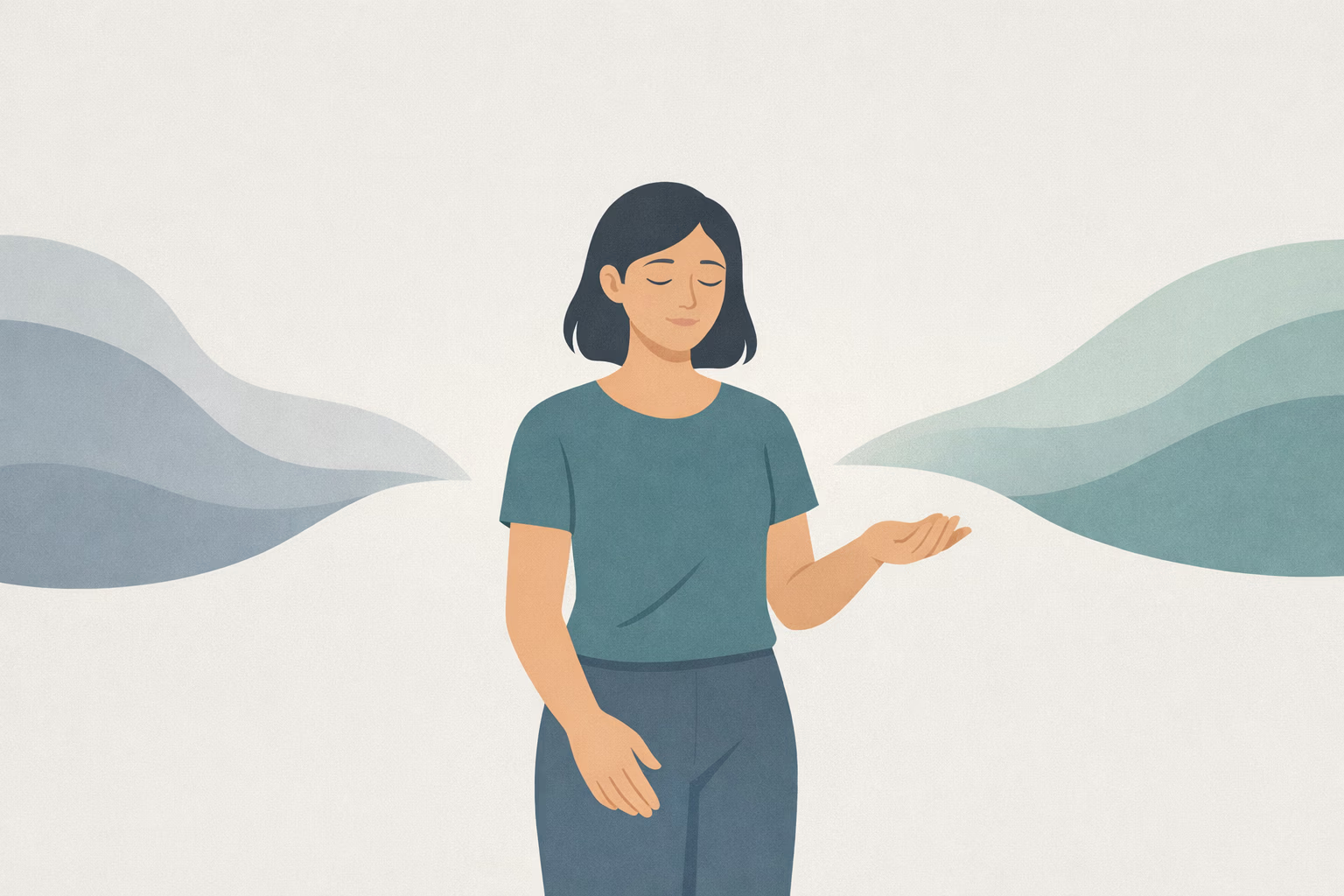
In context: This is the “middle state“: Loosening Without Letting Go. It is the transition from a “clench“ to a “cradle.“ You are still “holding“ the relationship, the job, or the goal, but the “pressure“ is lower. In the Meaning Density Model™, this is a state of “suspended engagement.

The rope is still held, but no longer tight.
You notice the middle state—neither gripping nor letting go.
This moment names loosening as a valid position, not a failure.
Name the middle state with DojoWell.
Explore DojowellArticles exploring the psychology behind these patterns.
This is the "middle state": Loosening Without Letting Go. It is the transition from a "clench" to a "cradle." You are still "holding" the relationship, the job, or the goal, but the "pressure" is lower. In the Meaning Density Model™, this is a state of "suspended engagement." You are present and connected, but you are not "grasping." This reduces the load on the Threat system while keeping the Reward system oriented toward what matters.
Because "dropping" often leads to a collapse of meaning. Loosening, however, creates "room for integration." When you loosen the grip, you allow for "wiggle room" in your loops. This prevents "structural failure" when things go wrong. It allows you to be "resilient" rather than "rigid," leading to a much higher density of lived experience because you aren't constantly fighting the "flow" of reality.
One Quiet Window, one insight, one reflection — every Sunday