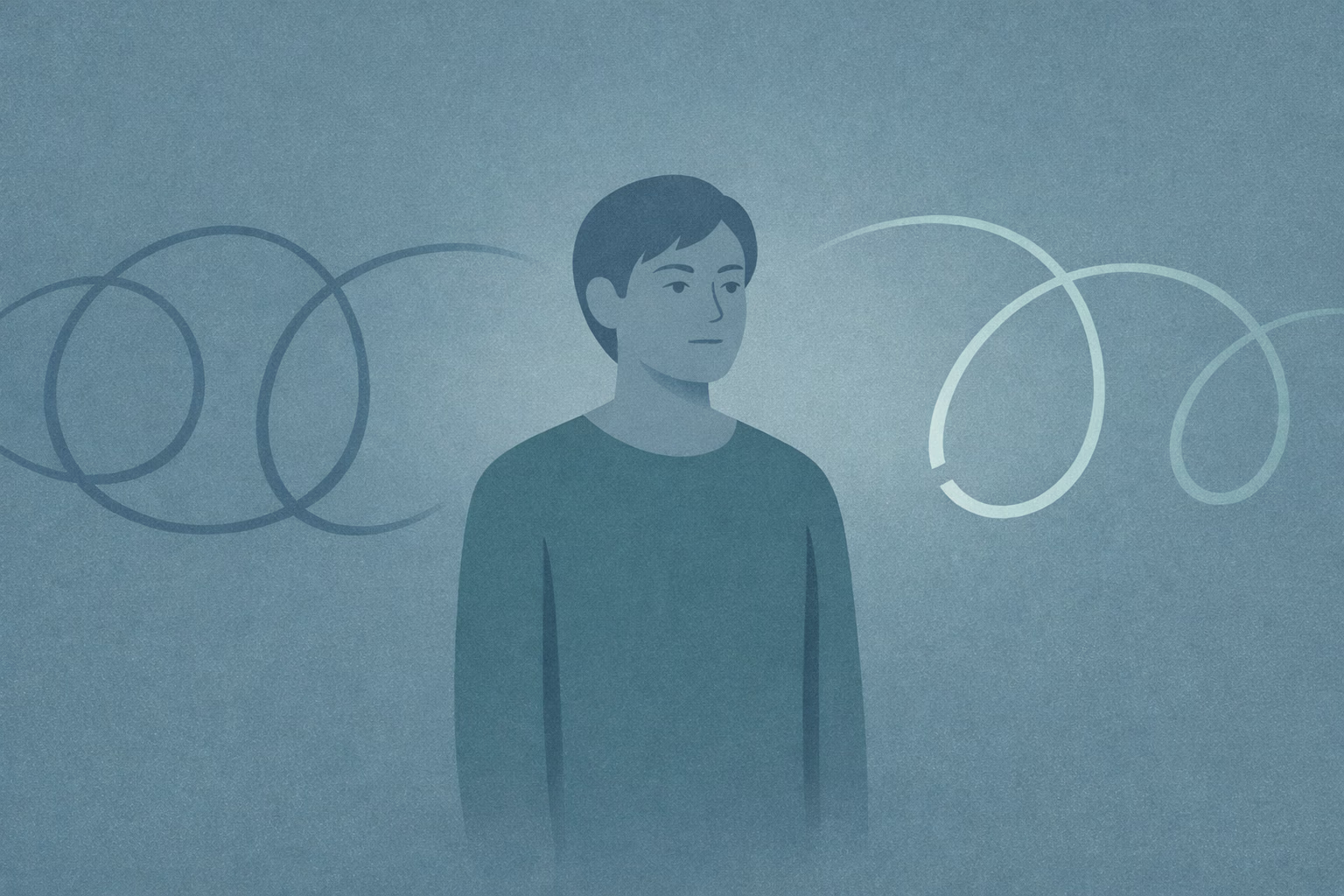
Stress Loop Awareness & Early Detection
Discover how to identify stress loops early.
In context: You've lost the “Quiet Between Signals.“ In a hyperconnected world, your Threat & Safety system is used to a constant stream of “inputs.“ When a gap occurs, the system often glitches and scans for a “missing“ threat. In DojoWell, we teach that these gaps are where “Nervous System Balance“ is restored.

There is a quiet between signals.
No message arrives.
No cue follows.
This gap is not uncertainty— it is rest.
The nervous system recalibrates in these pauses.
You do not need to fill the silence.
Let the space remain open.
Safety is reinforced when nothing interrupts.
This is how vigilance lowers naturally.
Introduce signal gaps with DojoWell.
Explore DojowellArticles exploring the psychology behind these patterns.
You’ve lost the "Quiet Between Signals." In a hyperconnected world, your Threat & Safety system is used to a constant stream of "inputs." When a gap occurs, the system often glitches and scans for a "missing" threat. In DojoWell, we teach that these gaps are where "Nervous System Balance" is restored. Learning to inhabit the quiet—rather than filling it—allows your architecture to "defragment" and reset its baseline.
That is the Reward & Pursuit system looking for a "signal hit" to avoid the discomfort of settling. Your brain interprets the "gap" as a "Meaning Deficit." By resisting the urge to check, you prove to your system that the "Quiet Between Signals" is safe. This "Gap Training" is essential for rebuilding the "Structural Buffers" that prevent you from being perpetually over-triggered.
One Quiet Window, one insight, one reflection — every Sunday