

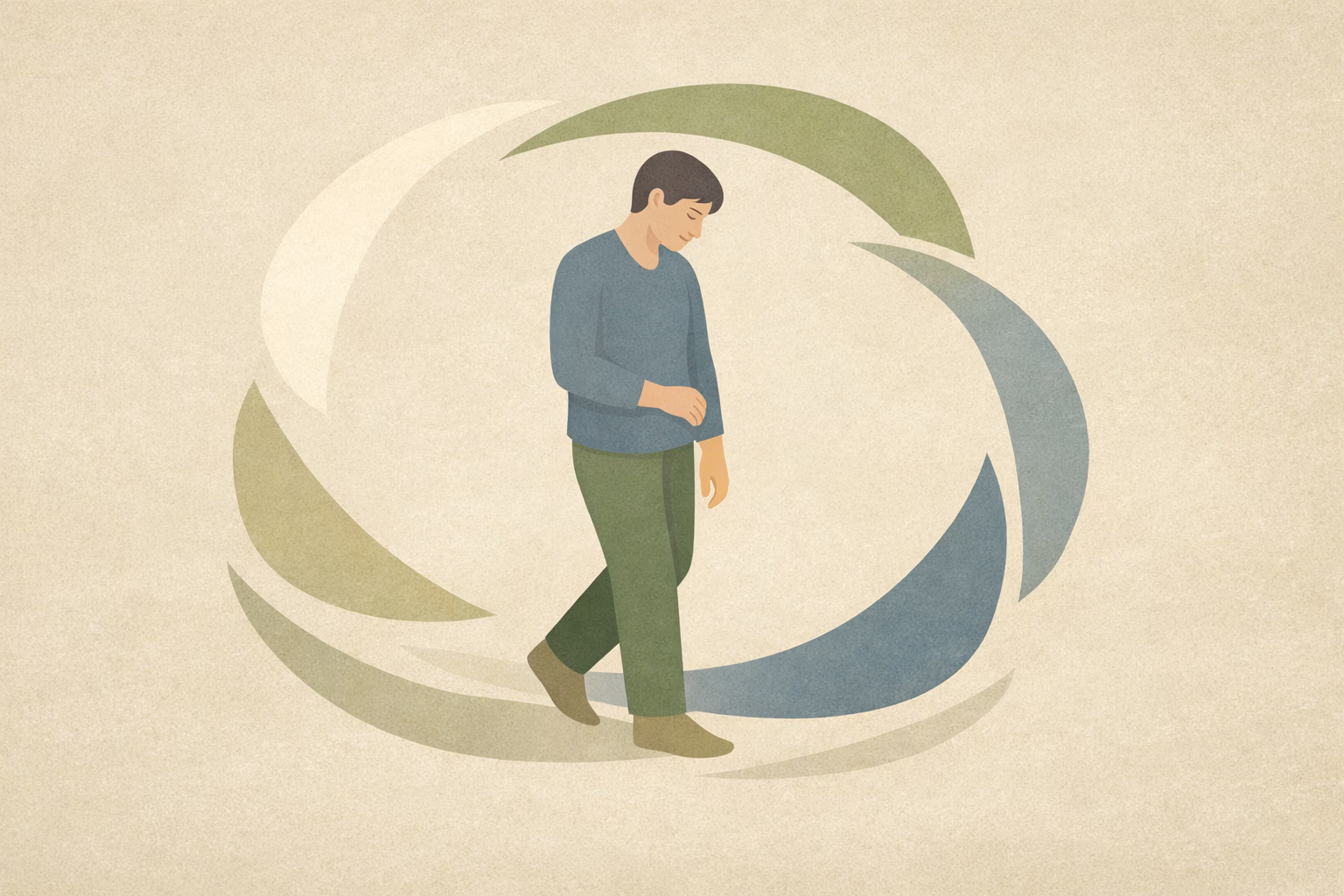
Avoidance Loops and Emotional Delay
Understand why you avoid important things and how emotional threat drives delay.
In context: Yes. Avoidance is often a high-velocity loop where we keep moving to stay ahead of a threat. By choosing stillness, you stop the “flight“ response. This allows the Threat system to see that the thing you were avoiding is not actually destroying you in the present moment.

The loop ends by not moving.
Nothing more is required.
The horizon stays steady, and completion arrives without action.
Let stillness finish what motion could not.
This is not avoidance—it is resolution through rest.
Close the loop gently with DojoWell.
Explore DojowellArticles exploring the psychology behind these patterns.
Understand why you avoid important things and how emotional threat drives delay.
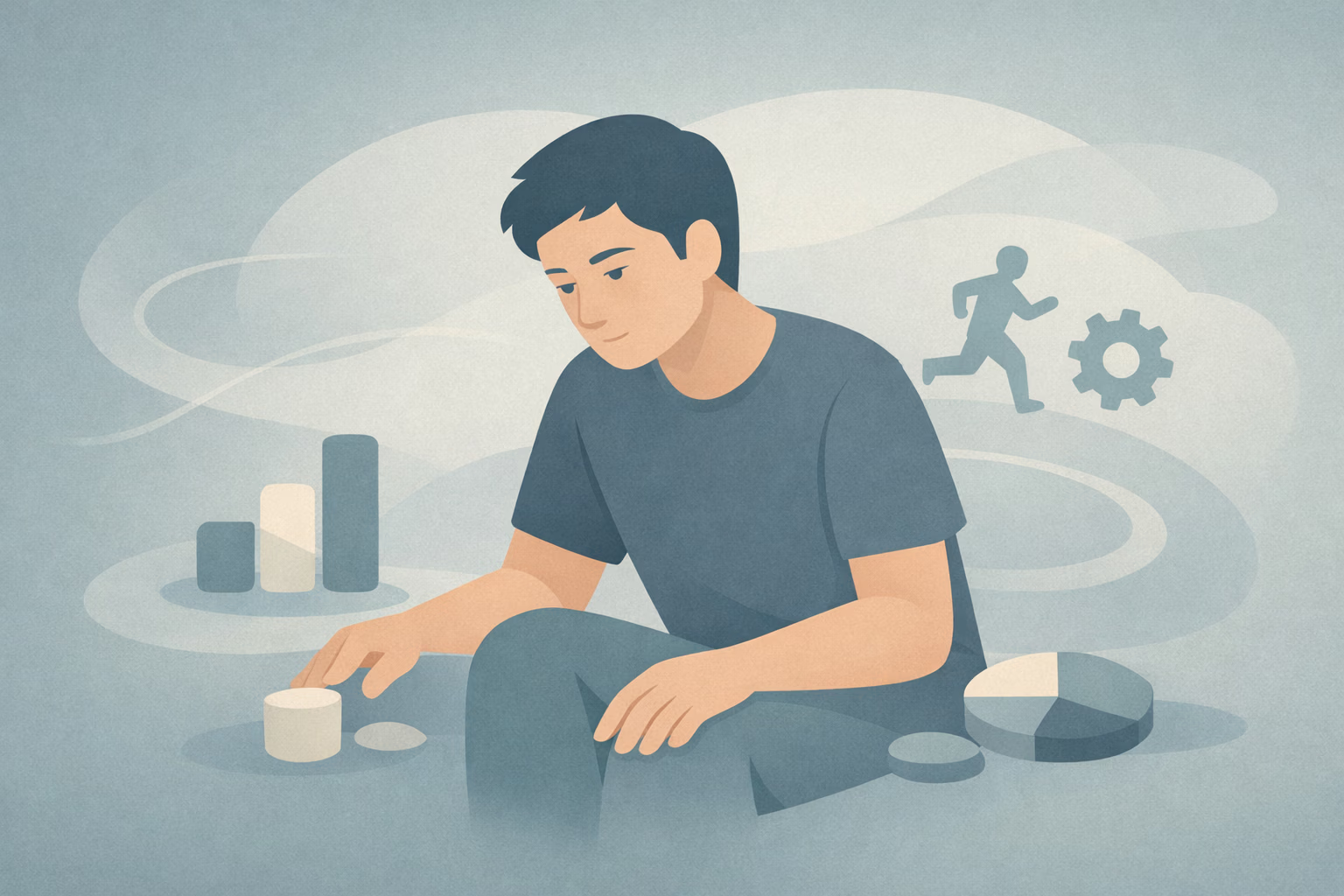
Understand why optimizing everything hides deeper fear.

Learn how to reconstruct purpose after losing direction.
Yes. Avoidance is often a high-velocity loop where we keep moving to stay ahead of a threat. By choosing stillness, you stop the "flight" response. This allows the Threat system to see that the thing you were avoiding is not actually destroying you in the present moment. This "standing still" is a powerful form of exposure that completes the cycle of fear, transforming a frantic avoidance loop into a settled state of safety.
A cycle completes when the nervous system reaches a "done" signal. Frantic movement keeps the loop open because the "safety" is never fully reached—it’s always just one more step away. By not moving, you force the system to find safety in the now rather than the next. This "landing" provides the physiological resolution the brain needs to file the experience away as finished, allowing your identity to update and move on.
One Quiet Window, one insight, one reflection — every Sunday