
Inner Reconstruction: Rebuilding Yourself After Emotional Collapse
In short: Losing meaning can feel less like “sadness” and more like a structural outage: the map that used to guide your choices stops updating, and everyday tasks don’t land anywhere. People often describe it as emptiness, numbness, or a strange distance from their own life—not because they’re broken, but because the systems that create coherence are under load.
Losing meaning can feel less like “sadness” and more like a structural outage: the map that used to guide your choices stops updating, and everyday tasks don’t land anywhere. People often describe it as emptiness, numbness, or a strange distance from their own life—not because they’re broken, but because the systems that create coherence are under load.
Meaning reconstruction is what happens when a nervous system and an identity slowly reorganize after loss, disruption, or prolonged uncertainty. It isn’t a single insight or a sudden “new purpose.” It’s the gradual return of internal signal: what matters, what fits, what is still true, and what is no longer required to be carried.
What if the absence of purpose isn’t a personal failure—but an unfinished transition?
After a loss—of a person, a role, a community, a body capacity, a future you were counting on—many people don’t just miss what was there. They lose the organizing structure that quietly answered daily questions: “Who am I in this?” “What is this for?” “Where does my effort go?” [Ref-1]
This disorientation often shows up as functional symptoms rather than dramatic feelings. You may still do the basics, but there’s a sense that your actions don’t “complete.” The nervous system stays slightly braced, waiting for a resolution that can’t arrive through repetition alone.
When the story that held you stops fitting, it can feel like you’re floating—still here, but not anchored to a direction.
Meaning isn’t merely a belief you decide to adopt. It tends to emerge when experience can be integrated into a stable orientation: values become usable again, actions have a clear “why,” and identity feels more continuous from day to day. In research on meaning reconstruction, this rebuilding is described as a process—one that reconnects significance and sense after a life disruption. [Ref-2]
In the beginning, this may look unimpressive from the outside. There can be small moments where a choice feels slightly more aligned, or a conversation lands with less internal conflict. Those moments matter because they restore coherence—an internal “yes, that fits”—which reduces the need for constant self-monitoring.
Human nervous systems don’t regulate only through immediate safety cues; we also regulate through narrative: an ongoing sense of what is happening, what it means, and who we are within it. When major events invalidate the old storyline, it isn’t just disappointing—it can be neurologically and socially destabilizing.
Meaning reconstruction literature describes this as rebuilding a world of sense and significance after bereavement or disruption: not by forcing a “positive spin,” but by gradually forming a story that can hold what happened without collapsing your identity. [Ref-3]
Why does “I don’t know who I am anymore” feel so physical?
Because when the narrative frame breaks, the body loses a major source of closure. The mind keeps scanning for a frame that can make the experience land, and until it does, the system stays partially activated.
Early reconstruction often brings relief without a dramatic sense of inspiration. Relief can come from reduced internal friction: fewer competing demands, less second-guessing, and a faint return of “done” after ordinary tasks. This matters because a nervous system stabilizes not through constant intensity, but through completion signals—clear endings that allow stand-down.
Sometimes the first thing that returns is not joy, but orientation: a sense that certain choices are more coherent than others. Even small moments of settledness can function like “micro-closures,” supporting well-being by allowing the system to register completion and safety. [Ref-4]
A common cultural expectation is that purpose is “found,” like a hidden object. But after a major rupture, meaning is often reconstructed rather than retrieved. It’s assembled over time from what remains true, what has changed, and what you can responsibly carry forward. [Ref-5]
This is why pressure to “figure it out” can backfire. When certainty is demanded too early, the system may default to borrowed answers—roles, labels, or goals that produce temporary relief but don’t settle into identity. Reconstruction tends to be slower and quieter: a series of lived confirmations that eventually add up to a new, workable story.
If reconstruction is the process of reorienting, then “stuckness” is often not a lack of effort but an interruption in the meaning loop. Instead of moving toward completion, the system shifts into regulatory holding patterns—states designed to reduce load when the next step feels undefined or too costly.
These holding patterns can look like numbness, busyness, scrolling, overanalysis, or a kind of suspended waiting. Structurally, they reduce immediate consequence and postpone commitment, which can be protective when life feels too unstable for a new frame. Meaning-making research in grief notes that reestablishing sense can support coping over time, while disruption can leave people oscillating between searching and shutdown. [Ref-6]
When an old identity framework dissolves, the system may respond with strategies that preserve stability in the short term. These strategies aren’t character flaws; they’re attempts to manage uncertainty, prevent further loss, or avoid investing in a storyline that might break again.
In meaning-centered approaches to grief, these shifts are understood as part of the broader reconstruction process: the psyche and nervous system reorganizing around a changed reality. [Ref-7]
If the system can’t reach closure through meaning, it often reaches for substitutes that change state quickly: stimulation, urgency, compulsive research, constant planning, numbing routines, or external validation. These can provide short-term relief, but they typically don’t deliver the “this is integrated” signal that allows deeper stand-down.
Over time, reliance on substitutes can make emptiness feel more convincing. Not because the person is failing, but because the nervous system learns: “Nothing completes here.” That learning can erode self-trust—the sense that your choices lead somewhere real. Meaning-oriented grief literature describes how sustained disorientation can increase distress and reinforce avoidance of the very processes that rebuild significance. [Ref-8]
Sometimes the hardest part isn’t pain—it’s the sense that nothing you do actually lands.
Meaning and engagement feed each other. When you have orientation, it’s easier to invest attention, relationships, and effort; your actions return something recognizable to you. When orientation is missing, engagement often declines—not as “lack of motivation,” but as a protective reduction in output when the return is uncertain.
This is one reason meaning can feel increasingly inaccessible over time. If life doesn’t provide completion signals, the system conserves: fewer bids for connection, fewer commitments, fewer risks. Dialogical perspectives on loss describe how the self can feel reorganized into competing “voices” or positions after disruption, making coherent engagement harder until a new narrative frame stabilizes. [Ref-9]
Reconstruction tends to proceed when the system experiences enough safety to tolerate “not knowing” without panic or shutdown. This is less about convincing yourself with reassuring thoughts, and more about reducing internal pressure so that choices can be made from values instead of urgency.
In narrative identity research, adaptive growth is often linked to the ability to form a livable story over time—one that acknowledges reality while gradually restoring agency and continuity. [Ref-10]
What changes when certainty is no longer the entry ticket?
The work becomes less like proving you’re okay and more like allowing coherence to reappear through completion: decisions that match your values, relationships that hold your truth, and time enough for the nervous system to register “this is safe to become.”
Identity is not built in isolation. Humans are social organisms, and our narratives become more stable when they are witnessed—when someone else can hold the thread with us, remember what we meant, and reflect back continuity during times we can’t feel it ourselves.
Supportive relationships don’t “fix” meaning, but they can provide scaffolding for reconstruction: fewer contradictions, less need to perform, and more room for experiences to settle into a coherent self. Research on identity reconstruction after loss emphasizes the role of social context in how new identities consolidate over time. [Ref-11]
When meaning begins to return, it often doesn’t arrive as constant inspiration. More commonly, it shows up as steadiness: increased capacity to hold uncertainty without collapsing into urgency, avoidance, or overcontrol. The nervous system has more room; signals return.
You might notice that some decisions become simpler—not because life is simpler, but because the internal conflict has reduced. There’s a clearer sense of what is “yours to carry” and what is no longer required. Descriptions of post-traumatic growth often include this kind of shift: a changed relationship to life that includes greater perspective and resilience, rather than perpetual positivity. [Ref-12]
A turning point in reconstruction is when the focus quietly moves from restoring what was to orienting toward what can be. This doesn’t erase grief or rewrite history. It means the self is no longer organized solely around the rupture; it is organizing around a direction.
Over time, people may find they can carry the past as part of their story without having to live inside it. In broader writing on growth after trauma, this is often described as a reorientation—new priorities, new meanings, and a future that is chosen rather than inherited. [Ref-13]
Not everything can be repaired. But a life can still be authored.
When meaning collapses, it can feel like you “should have prevented it,” as if purpose is something you must maintain perfectly. But reconstruction is not a sign of weakness; it’s a human response to rupture. It’s what systems do when the world changes and the old map no longer matches the territory.
In that light, rebuilding purpose becomes less about chasing a feeling and more about restoring coherence: letting a new storyline form that can hold what happened, support the life you’re in, and allow your actions to complete again. Research on post-traumatic growth frames this as a legitimate pathway forward—one that can coexist with loss. [Ref-14]
Meaning can be rebuilt—not by returning to the version of life that was interrupted, but by allowing a new orientation to consolidate in your body and your identity. The future doesn’t need to replicate the past to be real.
Over time, what emerges can be quieter than the old meaning and still be stronger: a coherence that holds complexity, a self that trusts its own direction, and a purpose that is lived into stability rather than demanded on command. [Ref-15]
From theory to practice — meaning forms when insight meets action.
Because human nervous systems regulate through narrative as well as immediate safety cues. When the storyline that held you breaks — through bereavement, role loss, or a future you were counting on disappearing — the body loses a major source of closure. The mind keeps scanning for a frame that can make the experience land, and until one forms, the system stays partially activated. That's why 'I don't know who I am anymore' shows up as bracing, numbness, or floaty distance rather than tidy sadness. The Identity & Meaning System has lost its map, and the Threat & Safety System hasn't been told it's safe to stand down.
After a major rupture, meaning is reconstructed rather than retrieved. Culture often implies purpose is hidden somewhere waiting to be discovered, but reconstruction is slower and quieter — assembled over time from what remains true, what has changed, and what you can responsibly carry forward. Pressure to 'figure it out' tends to backfire, because demanding certainty too early pushes the system toward borrowed answers that produce temporary relief but don't settle into identity. Reconstruction is a series of lived confirmations — small moments where a choice feels slightly more aligned — that eventually add up to a workable story.
Not inspiration. Usually relief — from reduced internal friction, fewer competing demands, less second-guessing, and a faint return of a Done Signal after ordinary tasks. The first thing that returns is often orientation, not joy: a sense that certain choices are more coherent than others. These micro-closures matter because nervous systems stabilize through completion signals, not constant intensity. Direction can return before meaning feels strong. If you're waiting for a thunderclap of purpose, you may miss the steadier, structural shift — fewer open loops, slightly clearer yes/no, and the body registering that something has actually finished.
When the system can't reach closure through meaning, it reaches for substitutes that change state quickly — stimulation, urgency, compulsive research, numbing routines, external validation. These provide short-term relief but rarely deliver the 'this is integrated' signal that allows deeper stand-down. Over time, the nervous system learns: 'Nothing completes here.' That learning thins self-trust — the sense that your choices lead somewhere real. Reconstruction tends to move when safety and pacing replace forced certainty, and when supportive witnessing holds the thread during stretches you can't feel continuity yourself. Not everything can be repaired, but a life can still be authored.
From Science to Art.
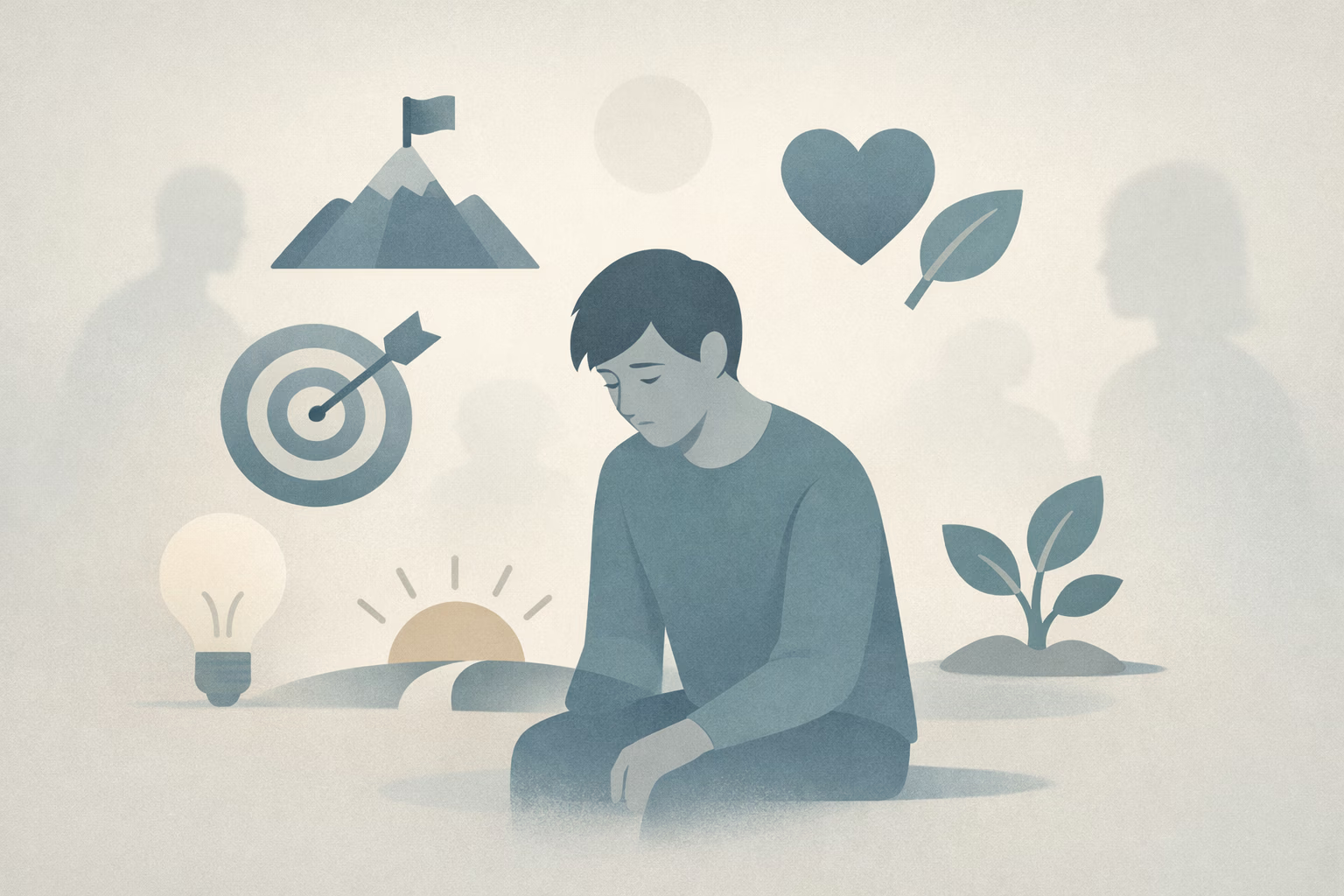
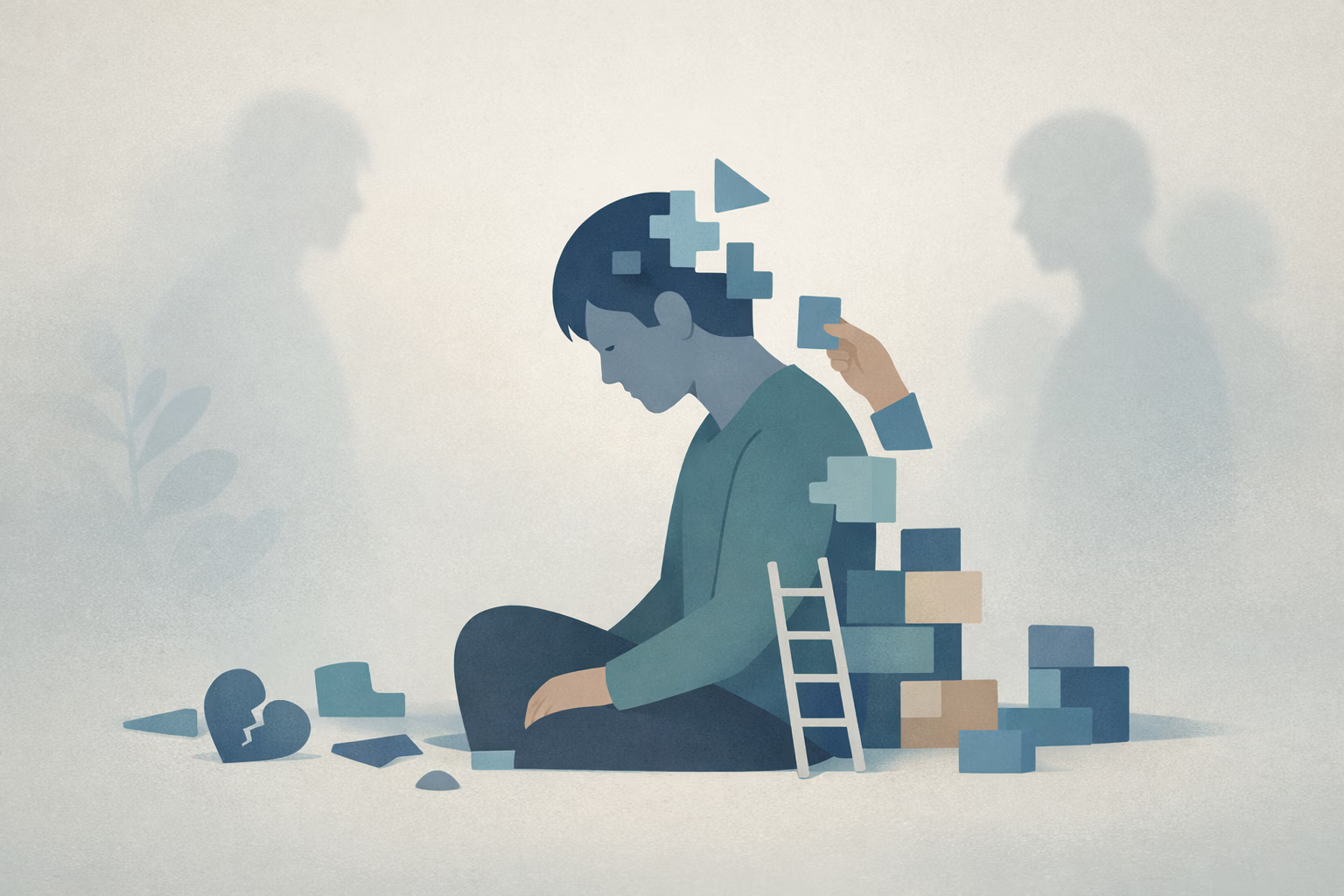
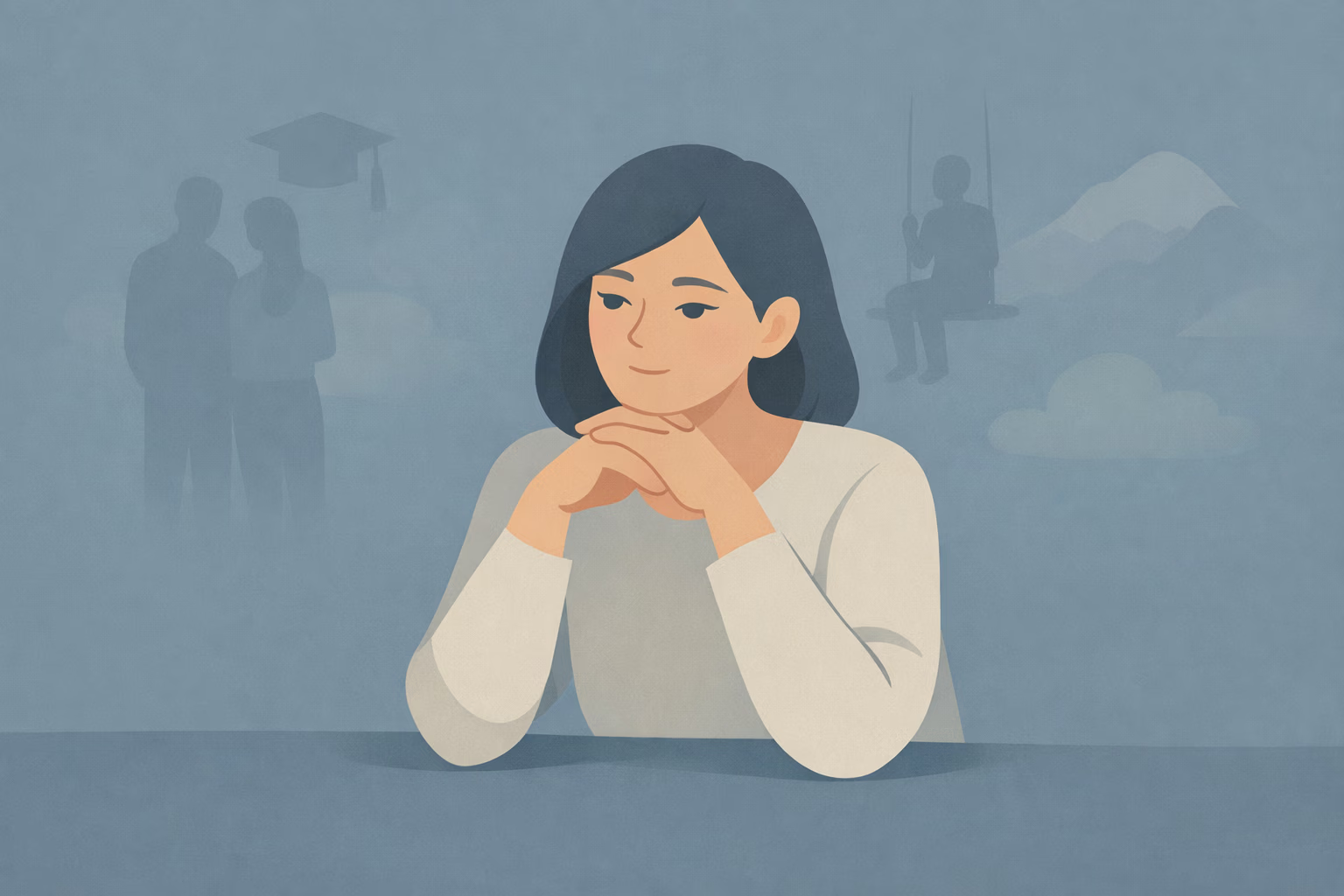
Understanding explains what is happening. Art allows you to feel it—without fixing, judging, or naming. Pause here. Let the images work quietly. Sometimes meaning settles before words do.
One Quiet Window, one insight, one reflection — every Sunday