

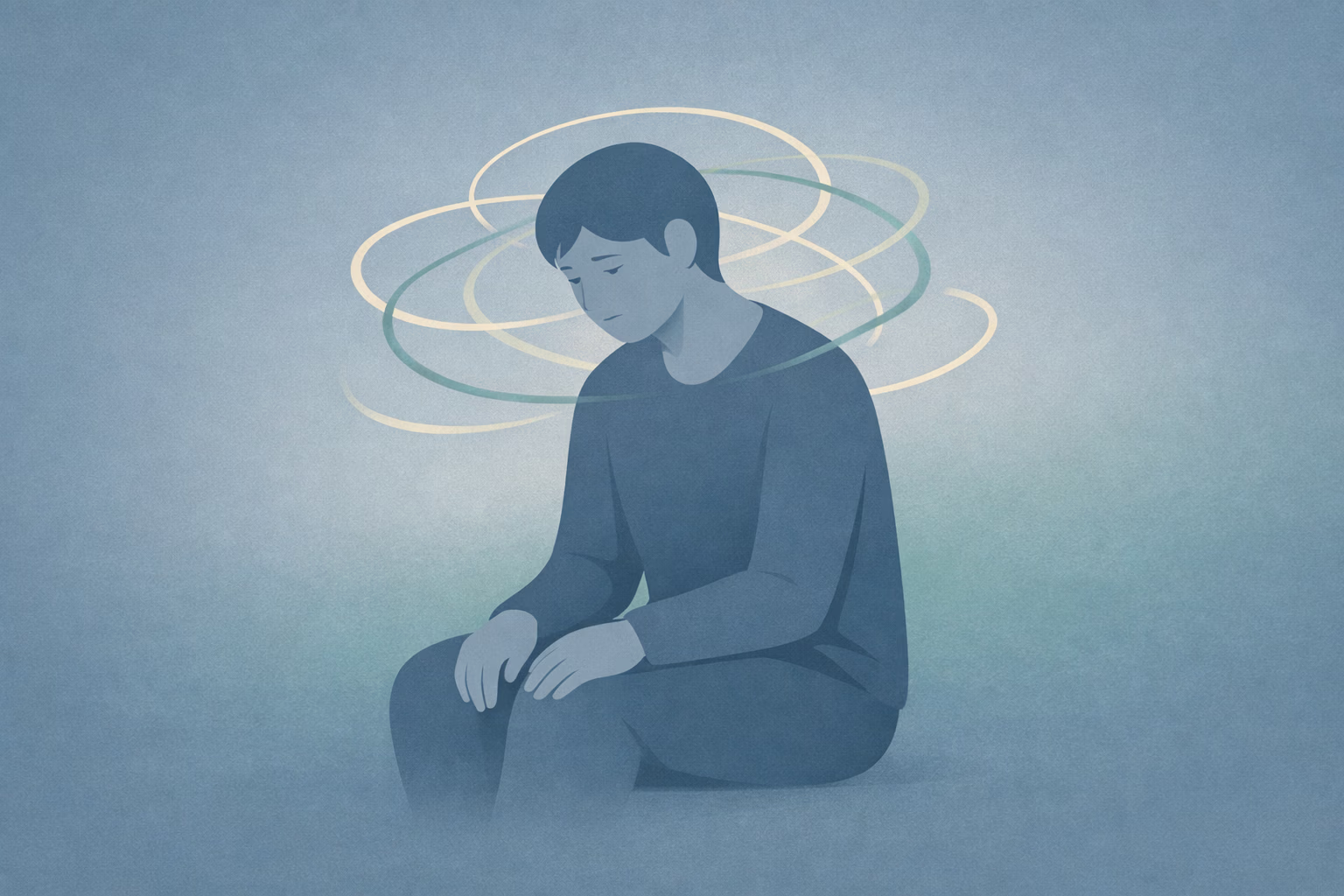
Emotional Loops & the Nervous System
How overload, numbness, and shutdown emerge from nervous system pressure—and how regulation restores balance.
ExploreA structured map of modern human pressure—exploring how biology, technology, identity, and environment shape emotional regulation, behavior, and meaning.
How overload, numbness, and shutdown emerge from nervous system pressure—and how regulation restores balance.
Explore
How screens, algorithms, and AI reshape desire, focus, sleep, and emotional regulation.
Explore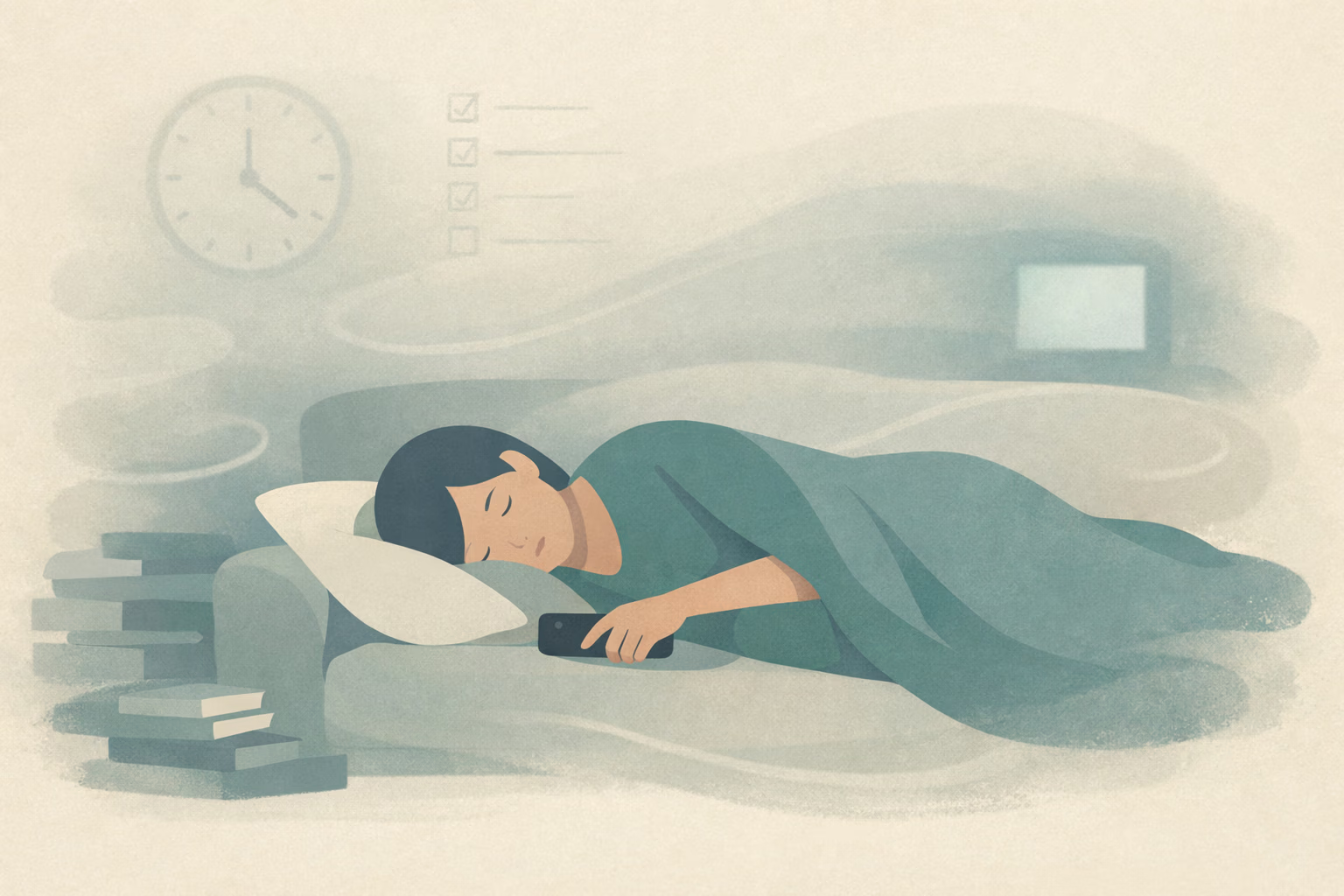
Why procrastination, busyness, and numbing are protective responses to pressure—not failure.
Explore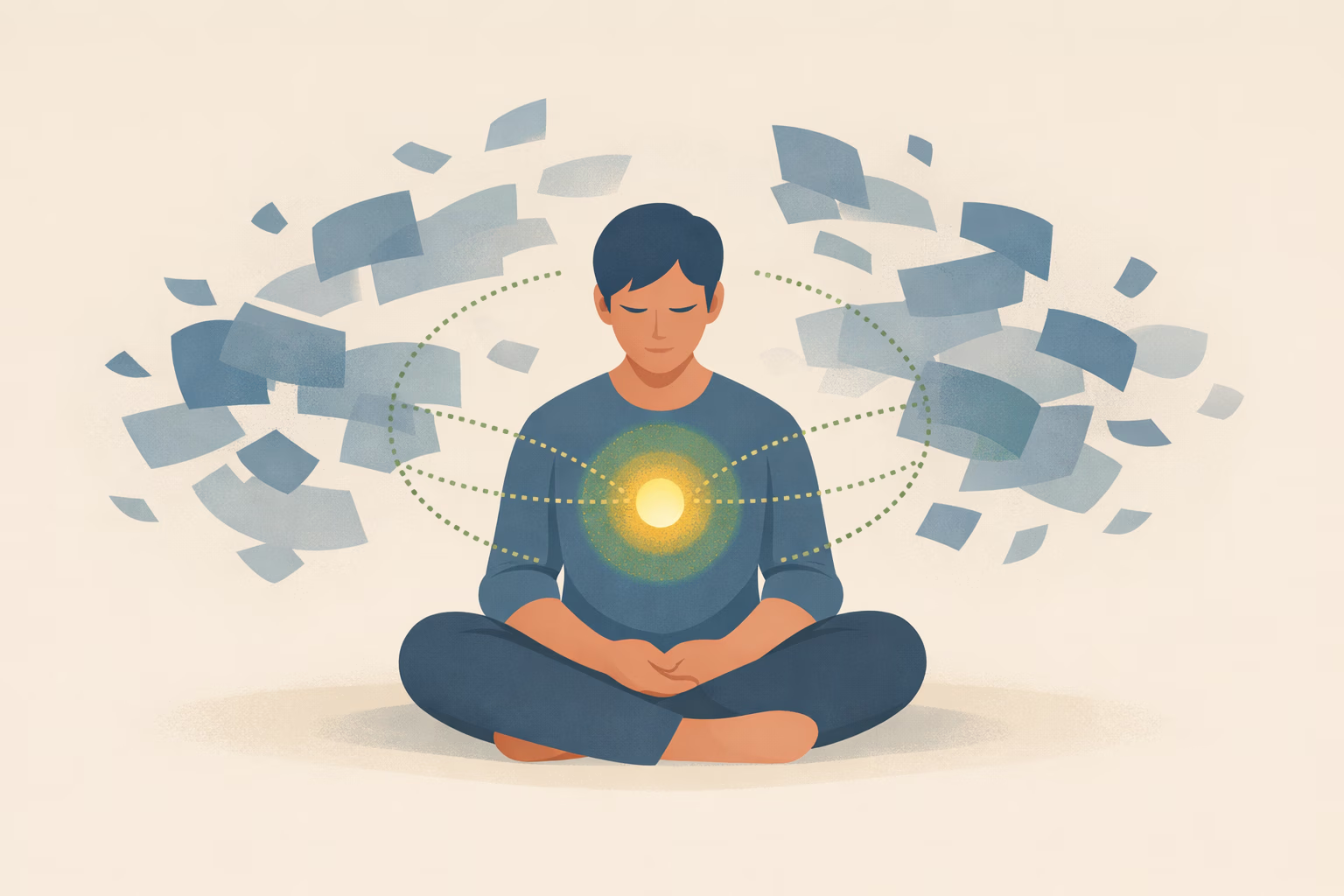
Why meaning erodes in modern life—and how values and alignment restore coherence.
Explore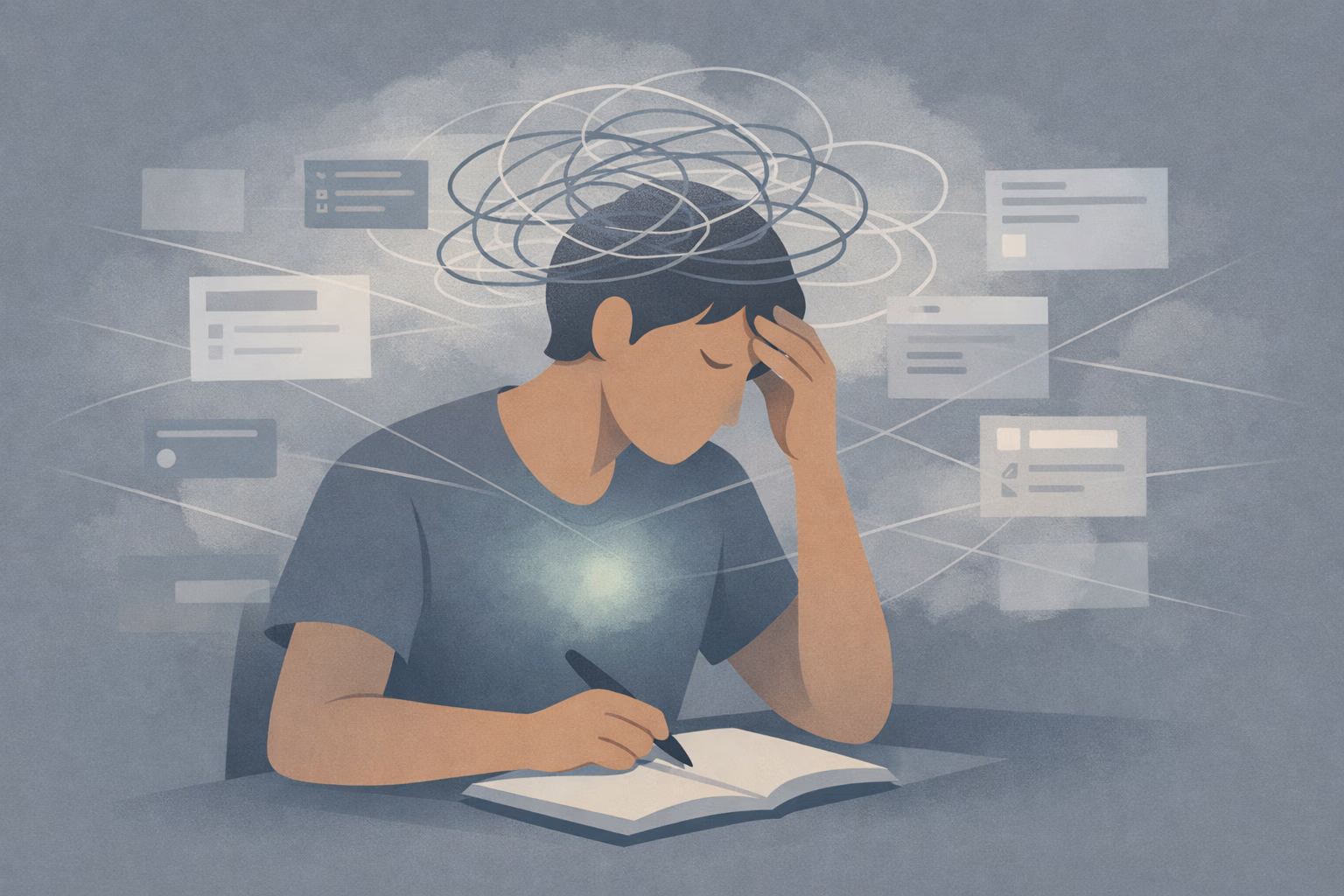
How information overload and decision fatigue trap the mind—and how clarity returns.
Explore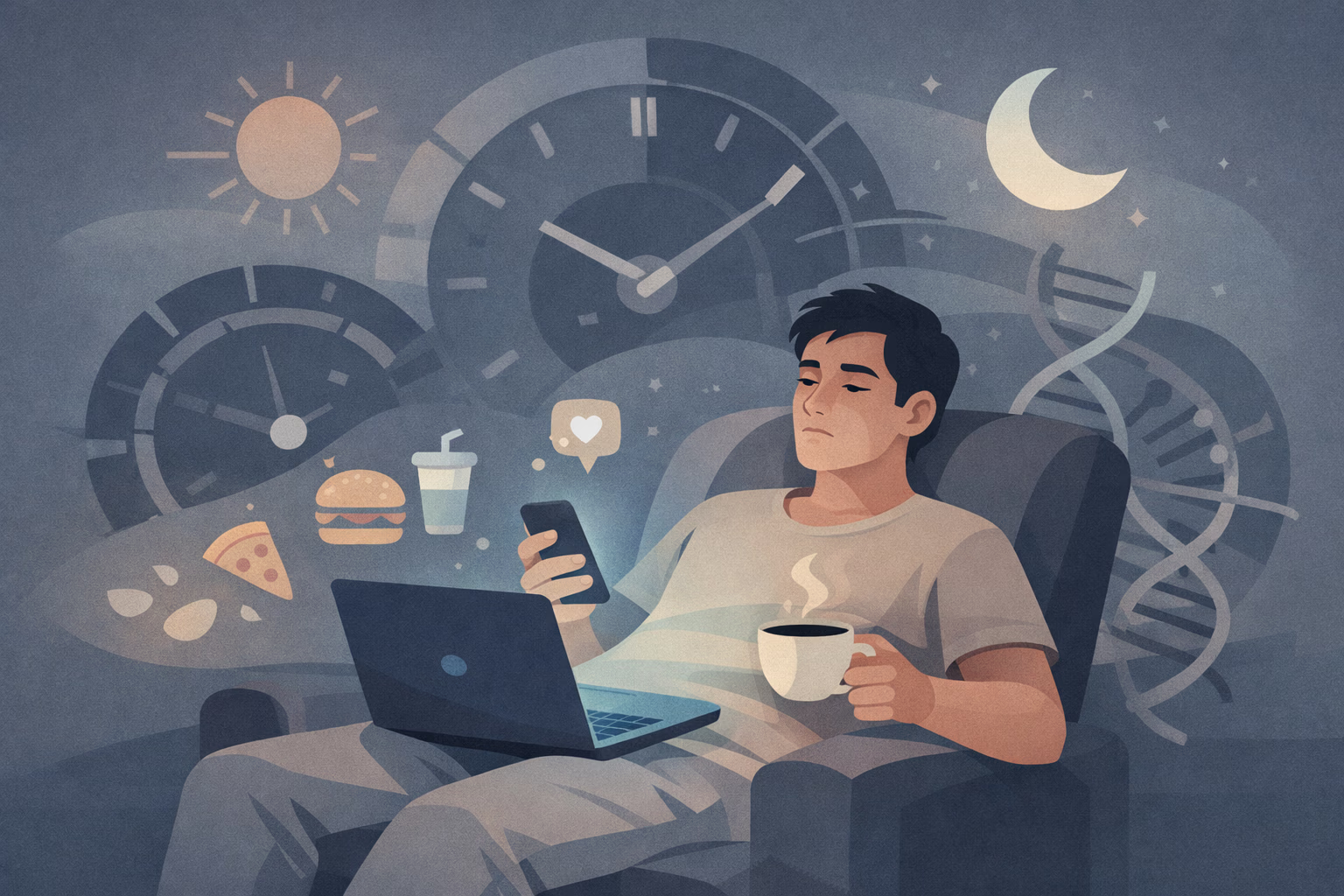
How modern schedules, stress, and inactivity conflict with biology and shape mood and energy.
Explore
How digital life, lost community, and chronic stress reshape intimacy and emotional safety.
Explore
How hustle culture and financial pressure activate ancient survival systems.
Explore
How to use technology without losing attention, regulation, or meaning.
ExploreThreat-aware comparisons between DojoWell and the major wellness apps people consider — meditation, habit, blocker, philosophy, journaling and gamified self-care tools — to help you choose the right layer for the right moment.
Calm addresses relaxation and sleep. DojoWell addresses why unrest keeps returning. Different layers, sometimes complementary.
CompareHeadspace teaches meditation techniques. DojoWell addresses the structural loops that create chronic stress in the first place.
CompareNoom uses CBT and calorie tracking. DojoWell addresses why behaviours persist through the loop framework underneath them.
CompareTherapy addresses what BetterHelp and DojoWell cannot. Where each tool sits, and when to use which.
CompareStoic teaches you what to think about your emotions. DojoWell teaches you what is structurally causing them.
CompareFabulous gamifies habit building. DojoWell maps why habits do not stick — the loop architecture beneath behaviour.
CompareWaking Up trains state through meditation. DojoWell trains structure through completion. Complementary, not competitive.
CompareInsight Timer offers 200,000+ free meditations. DojoWell offers a structured journey — fewer choices, more integration.
CompareFinch supplies external motivation through pet attachment. DojoWell builds intrinsic motivation through loop literacy.
CompareMindvalley sells transformational courses. DojoWell focuses on closing modern loops first — less ambitious in promises, more direct about mechanism.
CompareCompetitor names referenced for comparison and identification only. All third-party trademarks remain the property of their respective owners. No affiliation, sponsorship, partnership, or endorsement is implied.
The Dojowell framework identifies four operating systems: Reward & Stimulation, Threat & Control, Attachment & Belonging, and Identity & Meaning. These are not personality types; they are deep-seated evolutionary hardwiring. In the digital era, these systems often become "hijacked," leading to a collapse of Meaning Density. Understanding these systems is the first step toward regaining Loop Sovereignty.
Evolutionarily, your Reward System was designed for scarcity—finding food or novelty required high effort. Today, we live in a world of "frictionless access." When you receive dopamine without the "Done Signal" of physical effort, you enter a Pleasure Loop. This results in craving without fulfillment, which is why scrolling for hours leaves you neurologically exhausted rather than satisfied.
In its healthy state, the Threat & Safety System helps you manage risk. However, when physical threats are replaced by abstract, infinite ones—like status anxiety or social comparison—the system enters a Power Loop. Here, you seek safety through perfectionism or hustle culture. The core problem is that external control is being used as a poor substitute for internal safety.
This is your "Social Compass." Humans evolved to survive in groups, so social exclusion was historically a death sentence. Modern social signaling (likes and comments) mimics tribal belonging but lacks the co-regulation of real-world bonds. When this system is malnourished, it triggers the Threat System, forcing you into Power or Avoidance loops to escape the pain of isolation.
The Narrative System (Identity & Meaning) is "The Weaver." It allows humans to integrate pain and sacrifice into a coherent story across time. While animals live in immediate loops of threat or reward, humans can endure immense hardship if the Meaning Loop is intact. Meaning isn't a feeling; it is the structural byproduct of actions that align with your chosen values.
Standard self-help treats symptoms like laziness as moral failings. Dojowell treats them as Evolutionary Mismatches. Your "Paleolithic hardware" is reacting to "Hypermodern software." By focusing on the structural repair of your internal systems—rather than just "trying harder"—you move from exhausting your willpower to designing a life that produces Meaning Density by default.
A Pleasure Loop occurs when the Reward System is triggered by frictionless access (like scrolling or sugar) without a "Done Signal." In nature, dopamine was the fuel for pursuit and completion; today, we have pursuit without end. This creates "Reward without Completion," which collapses your Meaning Density. You feel stimulated but never satisfied because the loop never closes; it only resets, leaving you in a state of chronic craving.
A Power Loop is the result of the Threat System trying to solve internal anxiety through external control. In work, this manifests as perfectionism, over-optimization, and status anxiety. You believe that if you just work harder, you will finally feel safe. However, because the threat is abstract (algorithmic comparison), no amount of control ever feels like "enough." You are using achievement as a shield, which eventually leads to burnout.
The Avoidance Loop is a glitch between the Threat and Reward systems. When you encounter discomfort, your brain seeks immediate "Relief." Modern tools (streaming, procrastination) provide that relief instantly, but Relief is not Resolution. Every time you escape a difficult task, the loop remains open in your subconscious, consuming background energy. You aren't resting; you are just delaying the cost of integration.
Unlike others, a Meaning Loop is a complete circuit: Value → Chosen Action → Effort → Completion → Coherence. It requires friction (effort) and a clear ending. When you finish a task that aligns with your values, your nervous system registers a "Done Signal." This allows the experience to settle into your identity, increasing your "density" and making you more resilient to future stress.
Meaning is not a "vibe" you find; it is a neuro-structural byproduct of completed loops. When you close a behavioral loop, your brain moves from "Doing" to "Being." Meaning is the feeling of that integration. If your life is a series of unclosed loops (half-finished projects, unaddressed emotions), you will feel "meaningless" simply because your structure is too porous to hold experience.
The key difference is the Baseline Return. In a Power Loop, you feel temporary relief or superiority, but immediately need the next task to outrun anxiety. In a Meaning Loop, you feel a sense of "Enoughness." You can stop and exist without the pressure to produce. A Meaning Loop updates your Identity; a Power Loop only updates your Metrics.
The MDI is a diagnostic score (0–100) that measures the structural integrity of your life. Instead of measuring "happiness," it tracks five key variables: Integration Strength (closing loops), Alignment (matching values), Regulation (nervous system stability), Disruption (external hijacks), and Retrigger Pressure (environmental stress). A high MDI means your experiences are settling into a stable sense of self.
In the DojoWell app, points represent Lived Proof. Each level requires 1500 points to ensure your nervous system has actually adapted to the new psychological terrain. We don't allow "level-skipping" because structural coherence cannot be rushed. You aren't just gaining points; you are building the "muscle" required to sustain a higher density of meaning.
Focus Mode is a practical tool for reducing Disruption. By choosing your "allowed" contacts and apps, you create a protected Integration Window. This allows your Narrative System to work without being constantly interrupted by the Threat System (notifications) or the Reward System (digital novelty). It is essentially "loop insurance," ensuring the habit you started actually reaches the "Done Signal."
Orbs represent your neurochemistry (Dopamine, Oxytocin, Serotonin, etc.). When you perform a habit—like a "Social" pillar habit—you trigger the Attachment & Belonging System, which visualizes as an update to your Oxytocin orb. This helps you see that wellness is a measurable chemical state. By tracking all 17 orbs, you can see which biological systems are thriving and which are being neglected.
Yes, but we recommend doing so mindfully. Your top 9 values are the compass for your Meaning Loop. While your core nature is stable, your "Value Orientation" can shift as you move through different levels of growth. The app allows you to update these manually or retake the Personal Values Quiz on dojowell.com monthly to ensure alignment with your evolving identity.
The ultimate goal is Loop Sovereignty. This is the state where you are no longer a victim of Evolutionary Mismatches. You have the tools to recognize a Pleasure, Power, or Avoidance loop as it opens, and the structural strength to shift back into a Meaning Loop. When you reach the "Mountain Peak" (Level 7), your life has become dense enough to maintain coherence on its own.
This is Emotional Decompression. When you close Avoidance Loops, your nervous system shifts from "High-Alert" (Sympathetic) to "Recovery" (Parasympathetic) mode. The heaviness is the accumulated fatigue your system was masking with adrenaline. It is a sign that your body finally feels safe enough to rest—a "clearing of the backlog" necessary to increase your Meaning Density.
Loop-Bleed occurs when the stress from one loop (like work) spills into another (like family) because the first never received a "Done Signal." DojoWell uses Transition Design—audio cues and rituals—to "seal" one loop before opening the next. Preventing this spillover is essential for maintaining Alignment (Al) across your life pillars.
Numbness is often a Dorsal Vagal Shutdown—a protective "dimming of the lights" when your system is overloaded by open loops. We don't force you to feel more; we focus on Structural Safety. As you close manageable loops and reduce Retrigger Pressure (Rp), the numbness will lift. It is a protective state, not a permanent failure.
Binge-listening turns the framework into a Pleasure Loop (novelty seeking) rather than a Meaning Loop (integration). Consuming info without "Lived Proof" of action creates "thin" meaning. We limit progression to ensure your internal architecture has time to "harden" around each new concept through actual practice.
An Unhealthy Habit is a Relief-Seeking Loop; it drops anxiety temporarily but leaves the threat unaddressed. A Healthy Habit is a Resolution-Seeking Loop. While it requires more initial friction (effort), it produces a "Done Signal" that actually settles the nervous system, whereas unhealthy habits only reset the timer on the next craving.
Yes. Brain Fog is often Open-Loop Congestion. When you have too many "half-finished" tasks, your Narrative System runs out of working memory (cognitive RAM). By externalizing these loops into a Habit Board, you clear that mental congestion, allowing your focus to become sharp and dense once again.
One Quiet Window, one insight, one reflection — every Sunday