

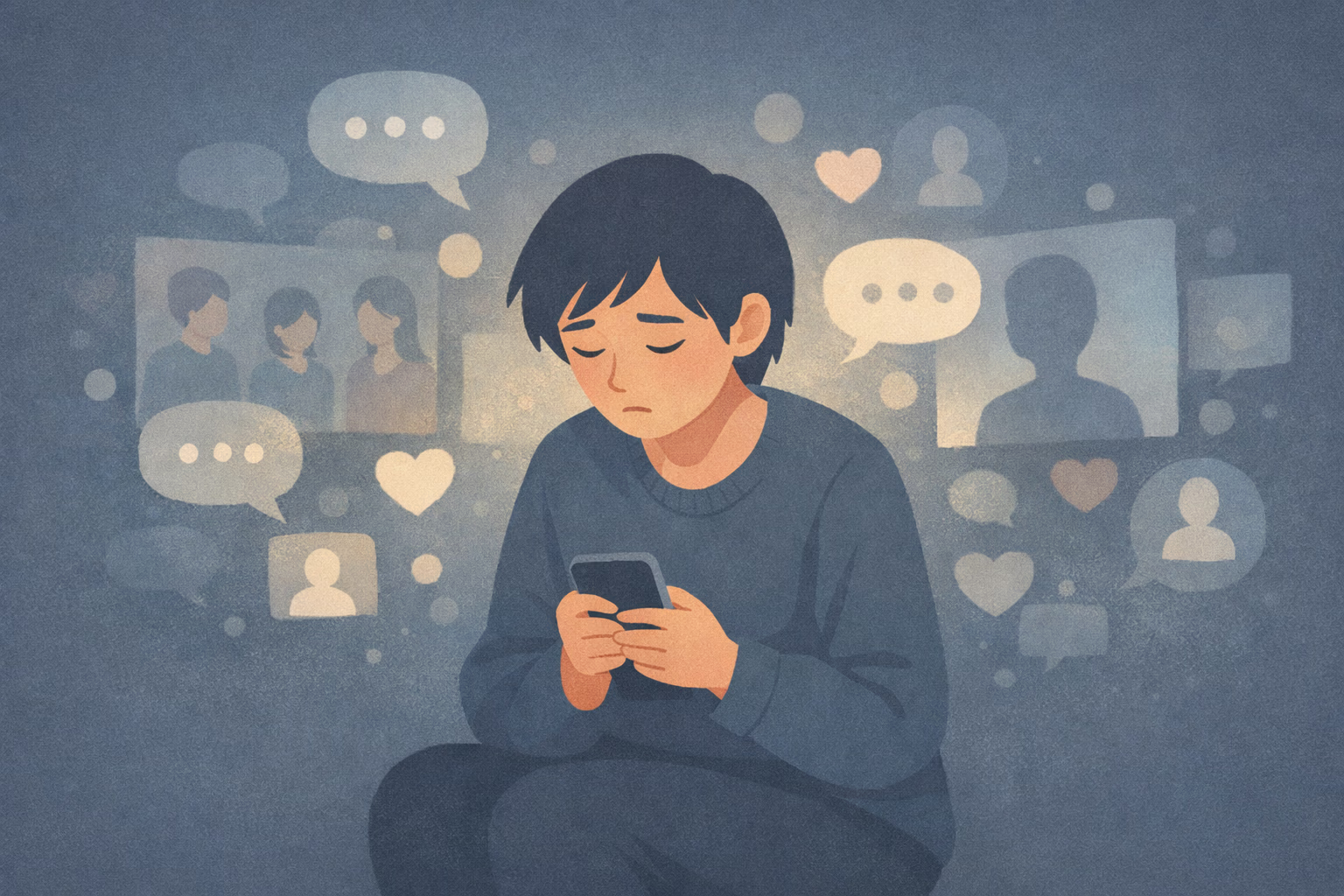
Social Anxiety in the Digital Era: Why Connections Feel Harder
Belonging instincts collide with comparison culture.
Read articleHumans are wired for safety, belonging, and emotional attunement. These articles explore how modern environments, digital comparison, trauma adaptations, and social fragmentation strain attachment systems—often without us realizing why.
Online comparison, hyper-independence, and shallow signaling can distort attachment instincts—creating anxiety, emotional overfunctioning, and distrust even in safe relationships.
Belonging instincts collide with comparison culture.
Read article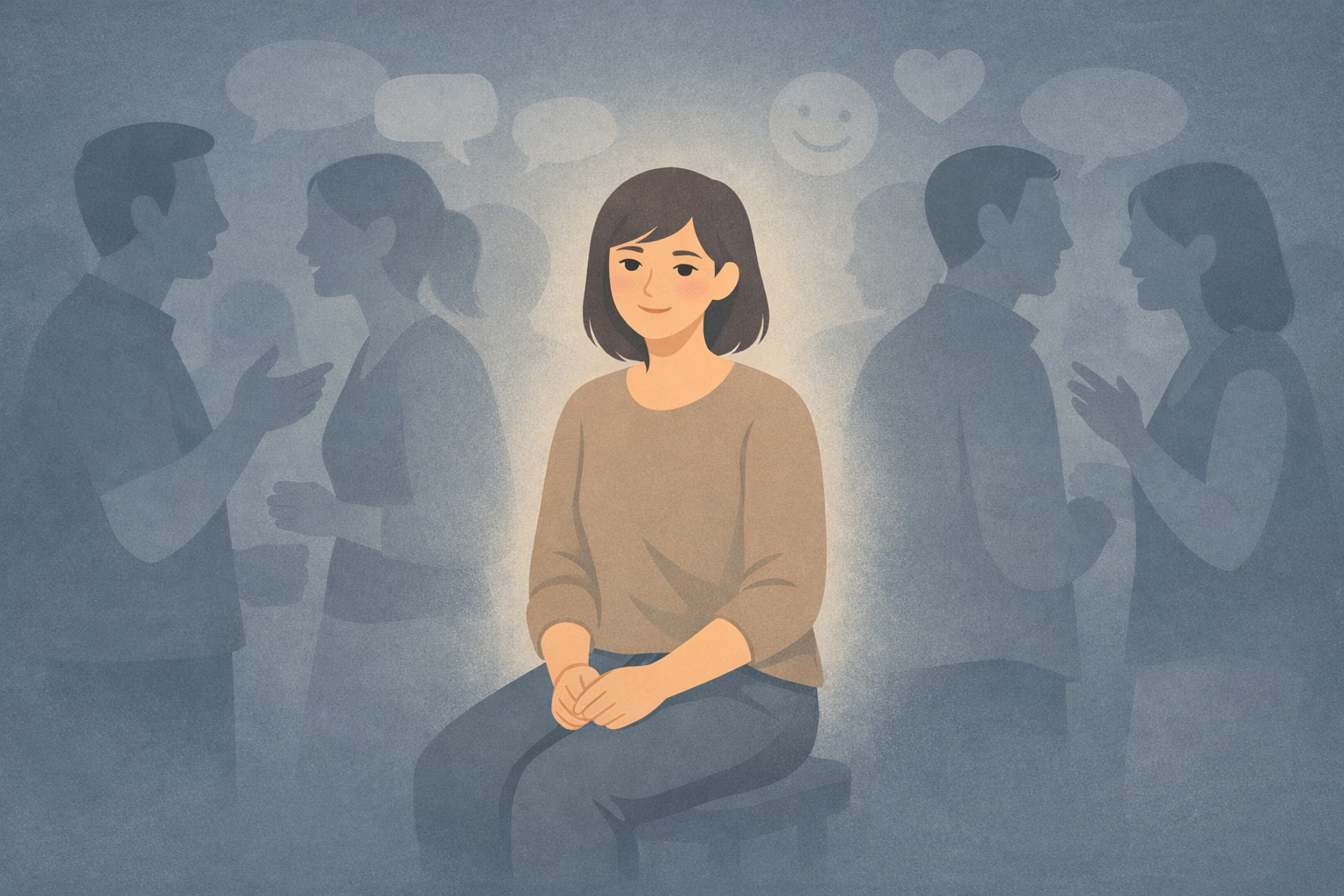
Belonging systems require depth, not volume.
Read article
Hyper-independence as survival adaptation.
Read article
Avoidant attachment framed as strength.
Read article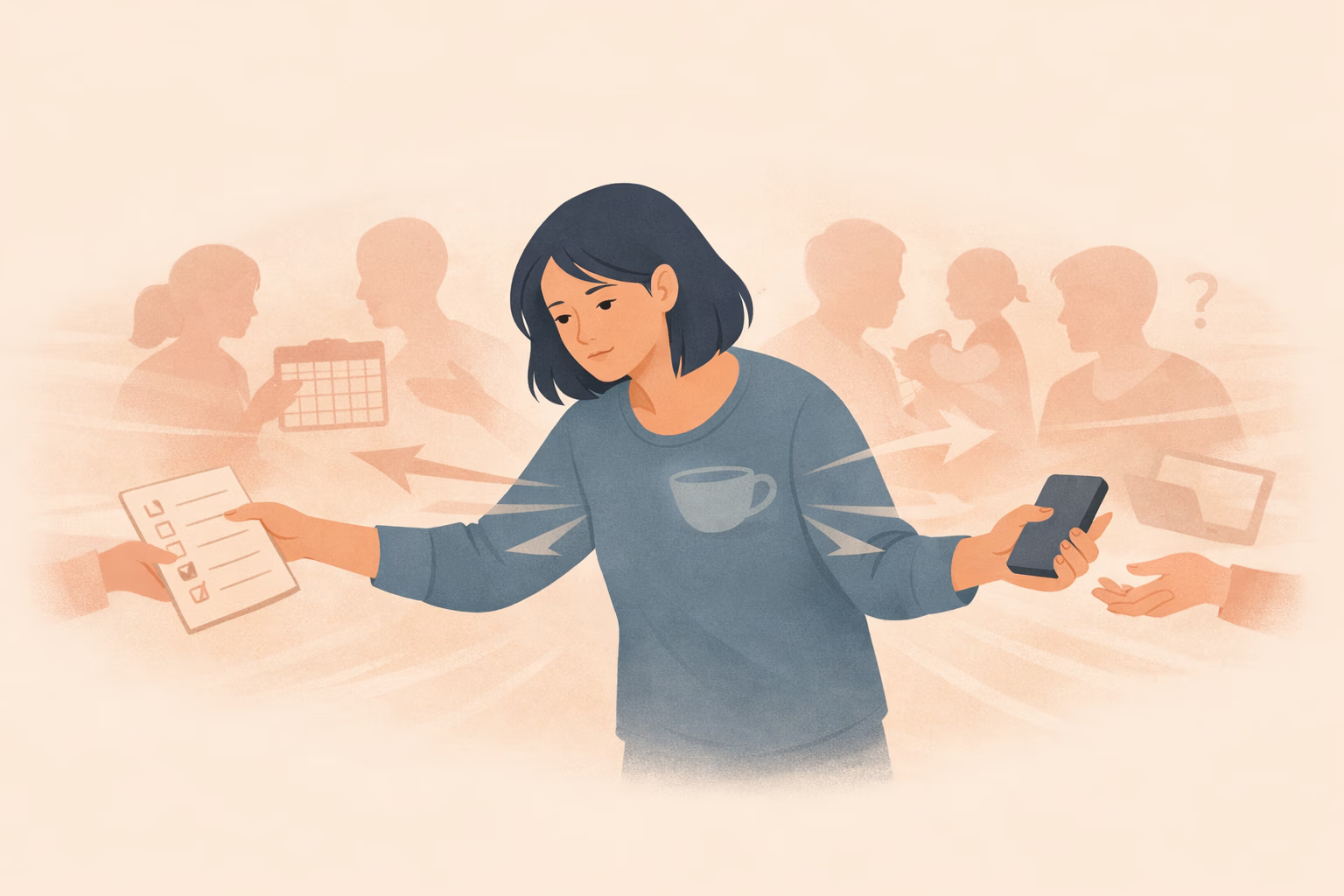
Self-neglect driven by belonging fear.
Read article
Trust grows from repeated safety signals.
Read articleYou are experiencing Digital-Era Social Anxiety. Your ancient tribal brain wasn't built for "Global Visibility," where your Belonging System feels evaluated by thousands at once. This triggers a Power Loop where you perform a social self to avoid judgment. At Dojowell, we view this as "Belonging Overload." Meaning returns when you move away from social metrics and rebuild connection at a human scale, where dignity replaces performance.
This is Hyper-Independence. It is often an Avoidance Loop masquerading as strength. If you learned that relying on others was unsafe, your brain adopted "Self-Sufficiency" as a survival strategy—a trauma response. You are exhausted because you are carrying the weight of a social animal alone. True autonomy includes the freedom to rely on others. Strength becomes meaningful only when it's a choice, not a cage that keeps you isolated.
You are facing Superficial Relationship Drain. Belonging circuits require depth and reciprocity to recharge. If interactions remain shallow, your Attachment System doesn't receive the "Safety Signal" it needs to settle. You are "Socially Busy" but "Emotionally Starved." This is an Avoidance Loop where volume is used to substitute for intimacy. Settlement occurs when you invest in fewer, deeper connections where you are fully known.
This is Emotional Overfunctioning. It is a Power Loop used to secure belonging by becoming "Indispensable" so people won't leave. This replaces mutuality with self-sacrifice, trading your "Needs" for "Utility." You feel invisible because you have been performing a role rather than existing as a person. Reclaiming meaning involves setting Relational Boundaries, allowing others to carry their own weight so you can be seen for your humanity.
Not all exhaustion comes from conflict. Sometimes it comes from relational mismatch—when nervous systems stay activated instead of soothed.
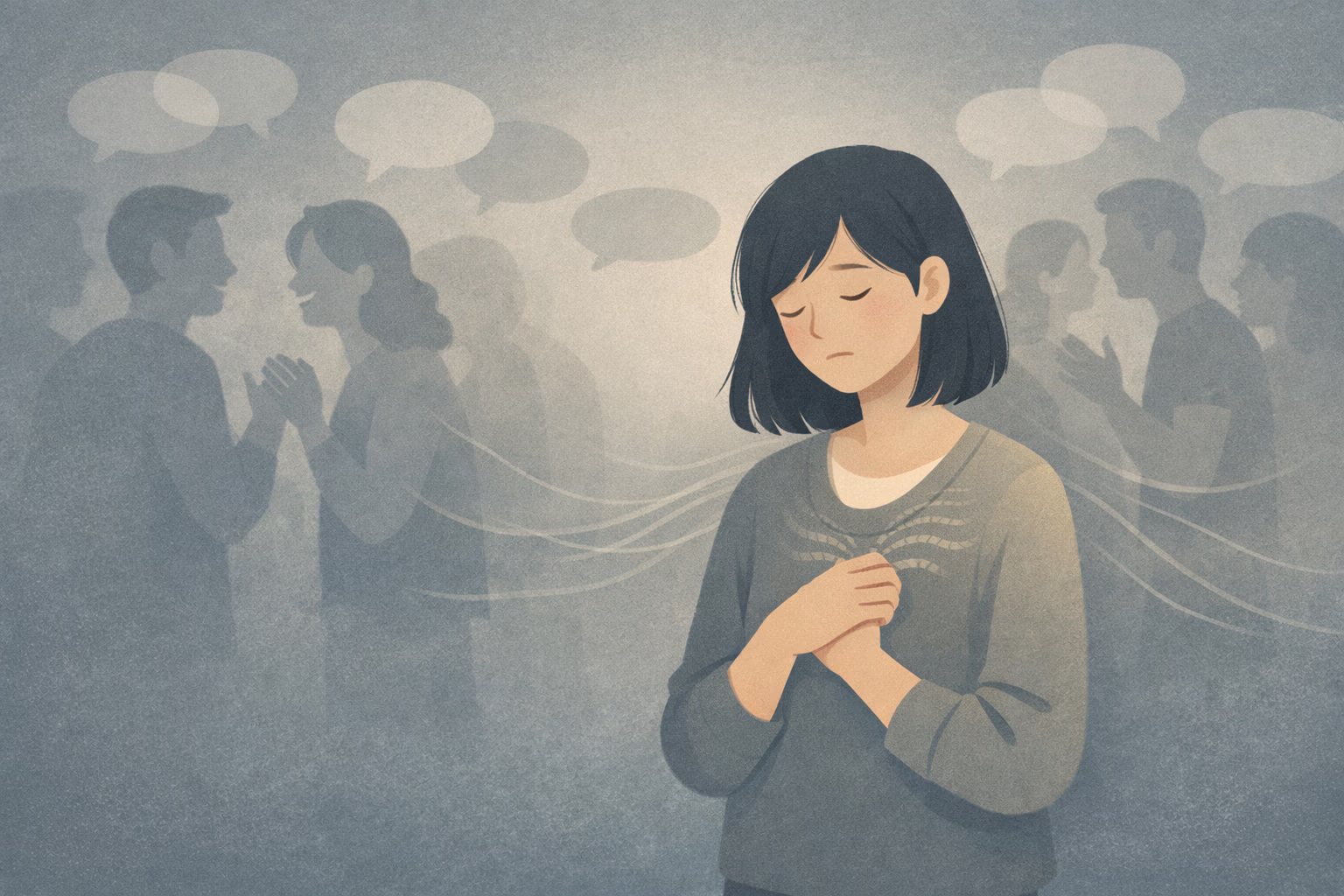
Threat activation through emotional mismatch.
Read articleModern identity formation increasingly overlaps with emotional labor, self-expression, and boundary negotiation— especially among younger generations.

Mindfulness as identity signaling.
Read articleParenting now carries identity pressure, comparison anxiety, and constant evaluation—activating threat systems instead of support systems.
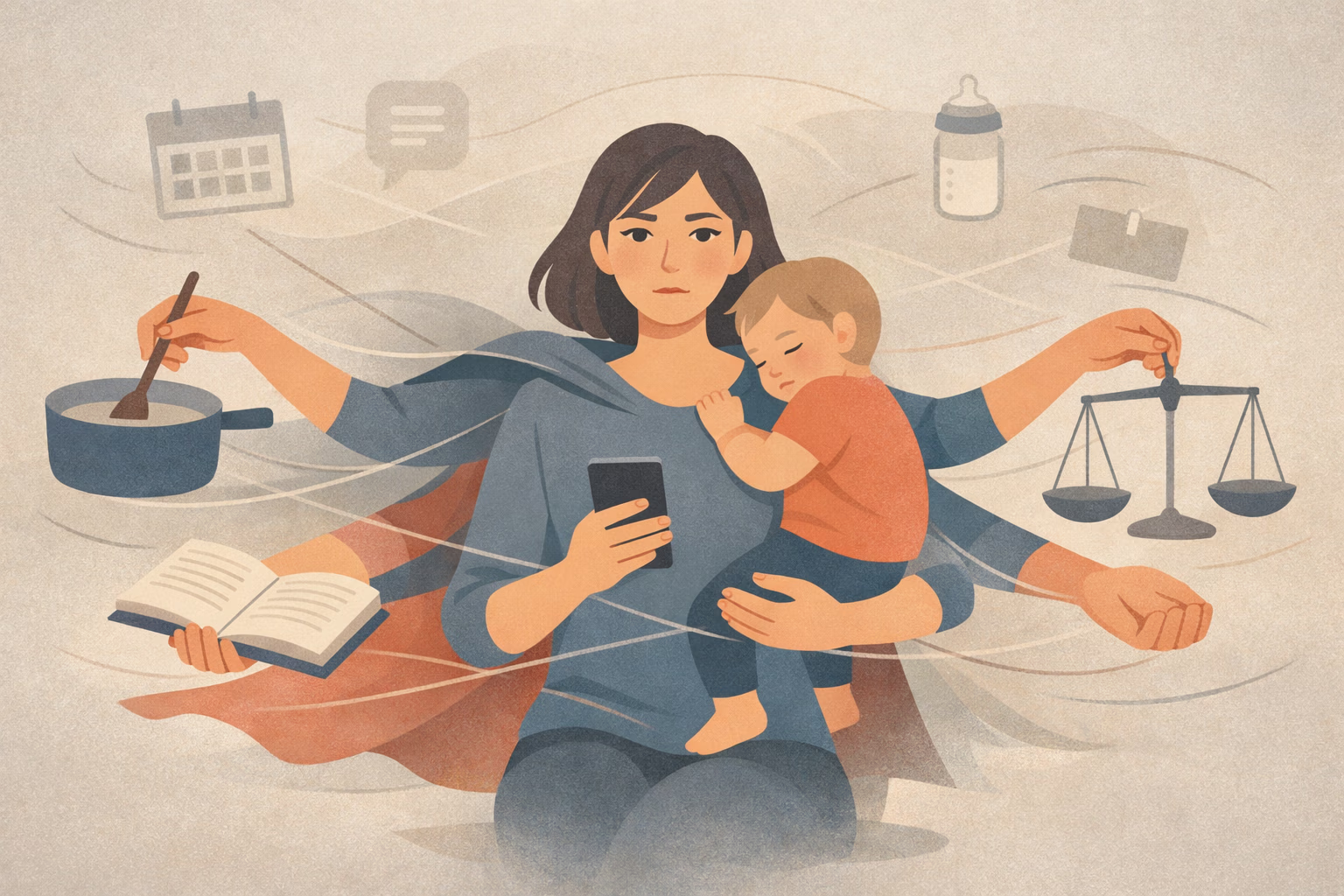
Identity and threat overload collide.
Read articleThis is Relationship Drain. Your Social System is sensing a biological mismatch. When you are with someone who triggers vigilance—due to their own unclosed loops or a lack of reciprocity—your brain activates a low-level Avoidance Loop. You are using massive emotional energy to "mask" or monitor the interaction. At Dojowell, we reframe this exhaustion as Information: your nervous system is signaling that this connection lacks the "Felt Safety" required for nourishment.
You are caught in Parenting Perfectionism. Modern culture has turned parenting into a Power Loop—the belief that if you just "optimize" every meal and emotional beat, you can guarantee your child's future safety. This keeps your Threat & Safety System in high alarm. In the Dojo, we remind parents that children don't need "Optimized Managers"; they need Attuned Presence. Meaning grows through messy connection in the present, not the frantic control of the future.
You may be looking for Identity-Based Mindfulness. For many, mindfulness isn't about emptying the mind to escape stress; it's about Narrative Integration. This is a Meaning Loop where you use regulation to see who you are and what you stand for. Instead of seeking "calm" as a destination, you are seeking Alignment. When your practice helps you author your own identity, it stops being a chore and becomes an act of self-expression.
One Quiet Window, one insight, one reflection — every Sunday