Trauma Responses in Daily Life: Signs You Don’t Notice

In short: Handling everything alone, staying composed, and rarely asking for support. From the outside, it may read as “low needs” or “just how you are.” Inside, it often feels like holding your life with clenched hands—because relying on someone else doesn’t register as regulating, it registers as risky.
Hyper-independence can look like competence: handling everything alone, staying composed, and rarely asking for support. From the outside, it may read as “low needs” or “just how you are.” Inside, it often feels like holding your life with clenched hands—because relying on someone else doesn’t register as regulating, it registers as risky.
What if your self-sufficiency isn’t a personality trait—but a nervous system strategy?
In the Meaning Density Model™, patterns like distancing, overcontrol, or “I’ve got it” aren’t character flaws. They’re ways a system protects itself when closeness hasn’t reliably delivered safety, completion, or steadiness. Hyper-independence is often less about wanting to be alone, and more about what the body expects to happen when needs become visible.
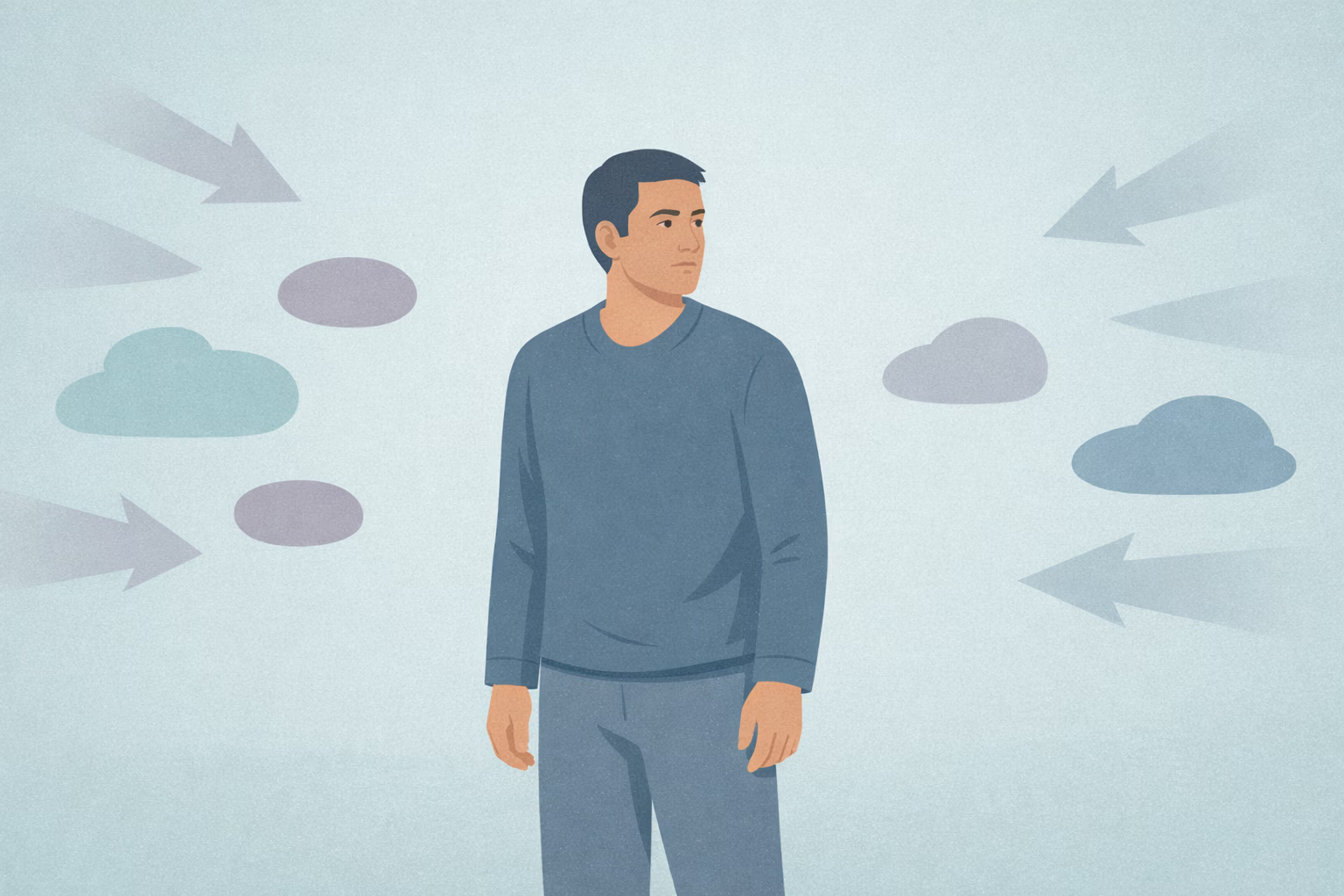
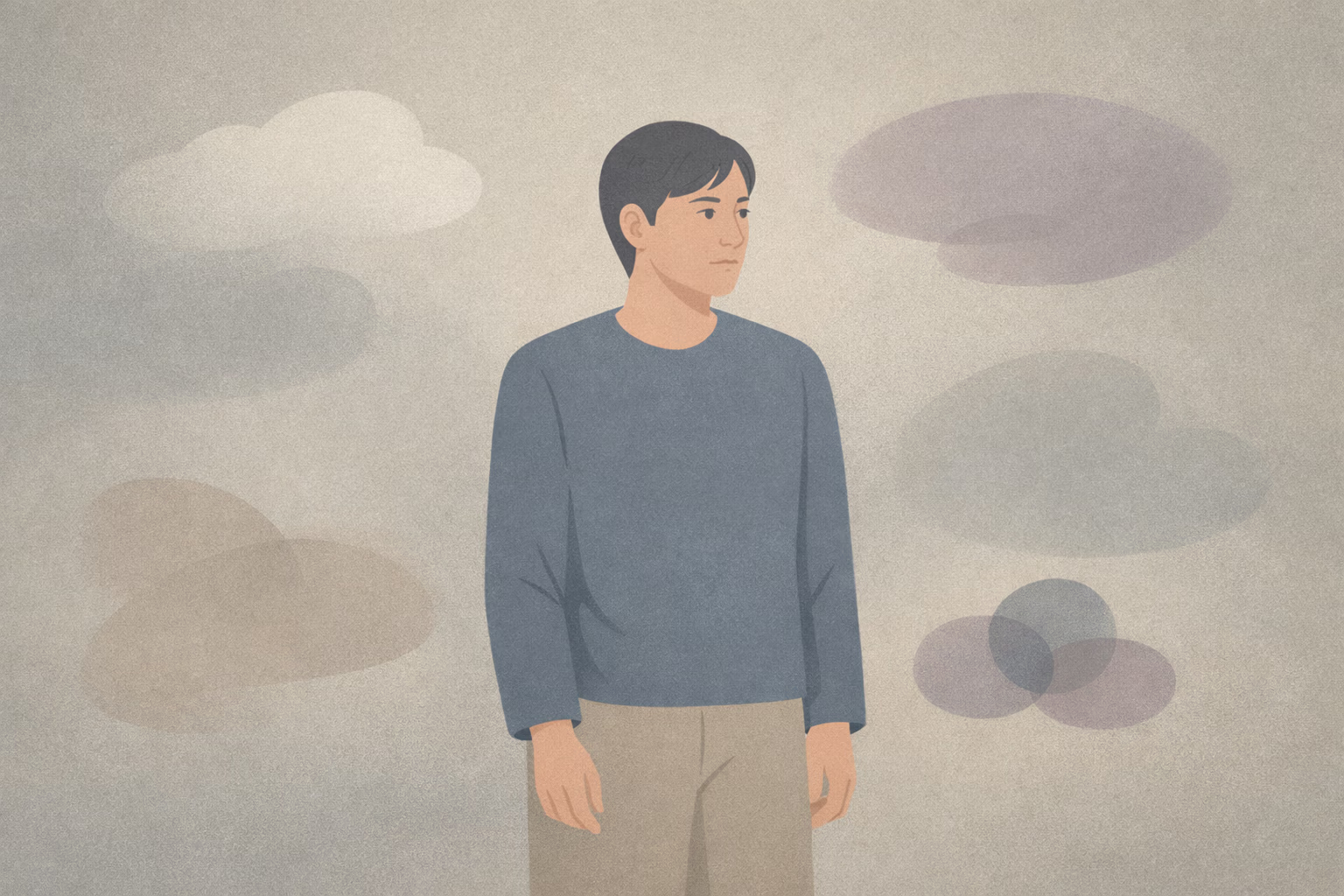
Hyper-independence often contains a quiet contradiction: outward self-sufficiency alongside an inward sense of being unsupported. You may function well, solve problems fast, and keep moving—but still feel guarded, unseen, or emotionally alone.
That loneliness isn’t always dramatic. It can feel like an absence of “being held” by anyone—no reliable place to set down the weight. The system learns to expect that support will be inconsistent, costly, or will come with strings attached, so it organizes life around not needing it. [Ref-1]
“I can do it myself” can be a form of protection, not pride.
Humans are built for co-regulation: we steady through cues of safety, responsiveness, and mutual support. When those cues aren’t dependable, the attachment system doesn’t simply “turn off.” Instead, signals of need tend to get rerouted into self-management—more planning, more control, more emotional compression.
This isn’t about suppressing feelings through willpower. It’s structural: the nervous system stops broadcasting needs outward because doing so hasn’t reliably led to closure. The result is a guarded, self-contained state where you rely on yourself not because it’s ideal, but because it reduces unpredictability. [Ref-2]
When help doesn’t feel safe, self-control becomes the substitute.
Hyper-independence often develops in conditions where closeness was not consistently protective—where care was unpredictable, conditional, dismissive, or reversed (you became the one who handled things). In those environments, the most stable option is often self-preservation.
The system learns: “If I need less, I get hurt less.” It’s not a belief you choose; it’s a pattern that builds when the cost of needing is too high, and the reward of reaching out is too uncertain. Over time, self-reliance becomes an organizing principle, because it reliably prevents certain kinds of collapse. [Ref-3]
Extreme self-reliance can create a temporary sense of control. If you don’t ask, you can’t be refused. If you don’t lean, you can’t be dropped. If you don’t reveal needs, you can’t be shamed for having them.
That sense of safety is real in the body: fewer social risks, fewer dependence points, fewer moments where someone else’s mood or availability determines your stability. Hyper-independence reduces exposure to rupture—at the cost of reducing access to repair. [Ref-4]
Many modern cultures reward self-sufficiency so heavily that hyper-independence can be socially reinforced. You may be praised as “low maintenance,” “easy,” “so strong,” or “so capable.” That approval can mask the nervous system cost of chronic self-containment.
Research on extreme self-reliance has linked it to reduced help-seeking even when support would be beneficial, suggesting that “I’ll handle it” can become a barrier rather than a preference. [Ref-5] In other words, the pattern can look like competence while quietly narrowing the channels where nourishment, buffering, and relational completion would normally flow.
Hyper-independence often operates as an Avoidance Loop: distancing reduces immediate risk, so the body learns it as the safest option. But the same distancing also prevents experiences that could update the system—moments where support is steady, needs are met without consequence, and closeness produces calm rather than cost. [Ref-6]
The loop isn’t maintained by “not trying hard enough.” It’s maintained by architecture: the short-term relief of self-reliance becomes the reinforcing signal, while the longer-term benefits of connection never get enough repetition to register as safe and real.
Protection can be effective and still be expensive.
Hyper-independence isn’t just “liking space.” It’s a consistent pattern of self-contained regulation—especially under stress—where the system defaults to doing everything internally rather than distributing load through relationship. [Ref-7]
None of these are moral failures. They are predictable outputs of a system designed to prevent disappointment and preserve stability.
When a nervous system spends years relying on self-containment, relationships can start to feel thin—not necessarily because there’s no love, but because there’s limited shared load. Without moments of mutual reliance, the relational “muscles” that build depth and repair don’t get regular use. [Ref-8]
Over time, this can narrow emotional resilience. Not because you become less capable, but because you’re carrying more alone. Co-regulation—being steadied by another person’s presence, voice, or care—becomes unfamiliar. In its place, the system may default to endurance, shutdown, or control during high demand.
Hyper-independence is often self-confirming. If you rarely rely on others, you rarely encounter the kind of responsiveness that would contradict the body’s expectation of disappointment. The nervous system stays calibrated to “reliance is unsafe,” not because it’s irrational, but because it lacks new, completing evidence. [Ref-9]
This is one reason the pattern can feel so stubborn: it’s not primarily a mindset. It’s a learning history embedded in the consequences the body remembers—what happened when you needed, asked, waited, or trusted. When those loops didn’t complete, the system adapted by removing dependence points.
Distance can feel peaceful because it removes the possibility of rupture—not because you don’t want closeness.
As safety is rebuilt over time, something subtle can shift: needs stop feeling like a threat to dignity. Not because you “understand yourself better,” but because the body’s expectation of consequence begins to soften, and the attachment system becomes less alarmed by visibility.
In that state, acknowledging a need doesn’t automatically produce urgency, collapse, or self-judgment. It becomes more like a signal—information that can be held without immediate containment or denial. This is not a dramatic transformation; it’s often a quieter settling where the system permits reality to be real. [Ref-10]
When the nervous system expects less punishment for needing, the self doesn’t have to harden to stay intact.
Healthy interdependence isn’t losing yourself. It’s having enough trust in connection that support can move both directions without threatening identity. In more stable relational environments, people can lean and be leaned on without turning it into a referendum on worth.
As trust is gradually allowed, the relationship becomes more predictable at the level that matters: responsiveness, repair, and follow-through. This predictability creates closure—moments where reaching out leads to an actual “done” signal rather than an unfinished question mark. [Ref-11]
When the system no longer expects abandonment, invalidation, or role reversal as the default outcome of closeness, there is often a noticeable reduction in bracing. The body doesn’t have to stay as armored to maintain stability.
In practical terms, this can look like greater emotional availability, more ease with reassurance, and an increased capacity to stay present during stress without withdrawing into total self-management. Not as a performance—more as a natural consequence of reduced load and more frequent relational completion. [Ref-12]
Relief is a state change. But stability tends to come from repeated experiences that end cleanly: needs named, responses given, repairs made, and the nervous system allowed to stand down.
Hyper-independence is not the same as solitude. Solitude can be chosen and nourishing. Hyper-independence is often protective aloneness—aloneness that keeps life manageable by limiting reliance.
As relational safety returns, connection can begin to function as a meaning-making environment: a place where life events integrate, identity is witnessed, and difficult experiences reach completion instead of staying stuck in private endurance. Social isolation, in contrast, tends to increase stress load and reduce buffering—making the system work harder to stay regulated. [Ref-13]
When closeness is safe, it doesn’t erase you. It helps life cohere.
Hyper-independence often began as intelligence under pressure: a way to reduce exposure to disappointment and keep your world predictable. If you learned to carry everything alone, it likely worked—at least in the sense that it prevented certain kinds of harm. That deserves respect, not shame.
And it’s also reasonable to name the cost: when self-reliance becomes the only stable option, it can shrink the places where relief, support, and shared meaning might otherwise land. Reframing the pattern as an adaptation can open a new kind of agency—where connection isn’t a demand or a weakness, but something chosen when safety and reciprocity are real. [Ref-14]
True autonomy isn’t never needing anyone. It’s having enough internal and relational safety that relying doesn’t feel like danger, debt, or disappearance.
Hyper-independence is often a chapter of survival—one that kept identity intact when support was not dependable. Over time, many people discover that interdependence doesn’t erase the self; it strengthens it by giving life more places to complete, settle, and become coherent. [Ref-15]
From theory to practice — meaning forms when insight meets action.
Often yes, and the article reframes it carefully. From outside it reads as low needs or 'just how you are.' Inside, it often feels like holding your life with clenched hands — because relying on someone else doesn't register as regulating, it registers as risky. Hyper-independence usually develops when closeness wasn't consistently protective: care was unpredictable, conditional, dismissive, or reversed. The system learns 'if I need less, I get hurt less.' That's not a belief you choose — it's a pattern that builds when the cost of needing is too high and the reward of reaching out is too uncertain. Self-preservation becomes the most stable option.
Because the body remembers what happened the last several times needs were visible. The article explains the mechanics: humans are built for co-regulation, but when those cues aren't dependable, signals of need get rerouted into self-management — more planning, more control, more emotional compression. The system stops broadcasting needs outward because it hasn't reliably led to closure. Asking creates exposure to disappointment, refusal, shame, or the unbearable wait for a response that may not come. Self-control becomes the substitute for safe reliance. It's not about willpower or pride; it's the nervous system organizing around fewer dependence points to reduce unpredictability.
Because it's self-confirming. The article describes the trap directly: if you rarely rely on others, you rarely encounter the responsiveness that would contradict the body's expectation of disappointment. The Avoidance Loop here isn't fear-based but evidence-based — the short-term relief of self-reliance becomes the reinforcing signal, while the longer-term benefits of connection never get enough repetition to register as safe. The pattern can also get socially rewarded: 'low maintenance,' 'so strong,' 'so capable.' That approval masks the cost. Distance can feel peaceful because it removes the possibility of rupture — not because you don't want closeness.
Not losing yourself — the article makes this distinction central. True autonomy isn't never needing anyone; it's having enough internal and relational safety that relying doesn't feel like danger, debt, or disappearance. Healthy interdependence allows support to move both directions without threatening identity. As trust is gradually allowed, relationships become predictable at the level that matters: responsiveness, repair, follow-through. Reaching out leads to actual Done Signals rather than unfinished question marks. The body doesn't have to stay armored to maintain stability. Hyper-independence is often a survival chapter — interdependence is what becomes possible when life has more places to complete and settle.
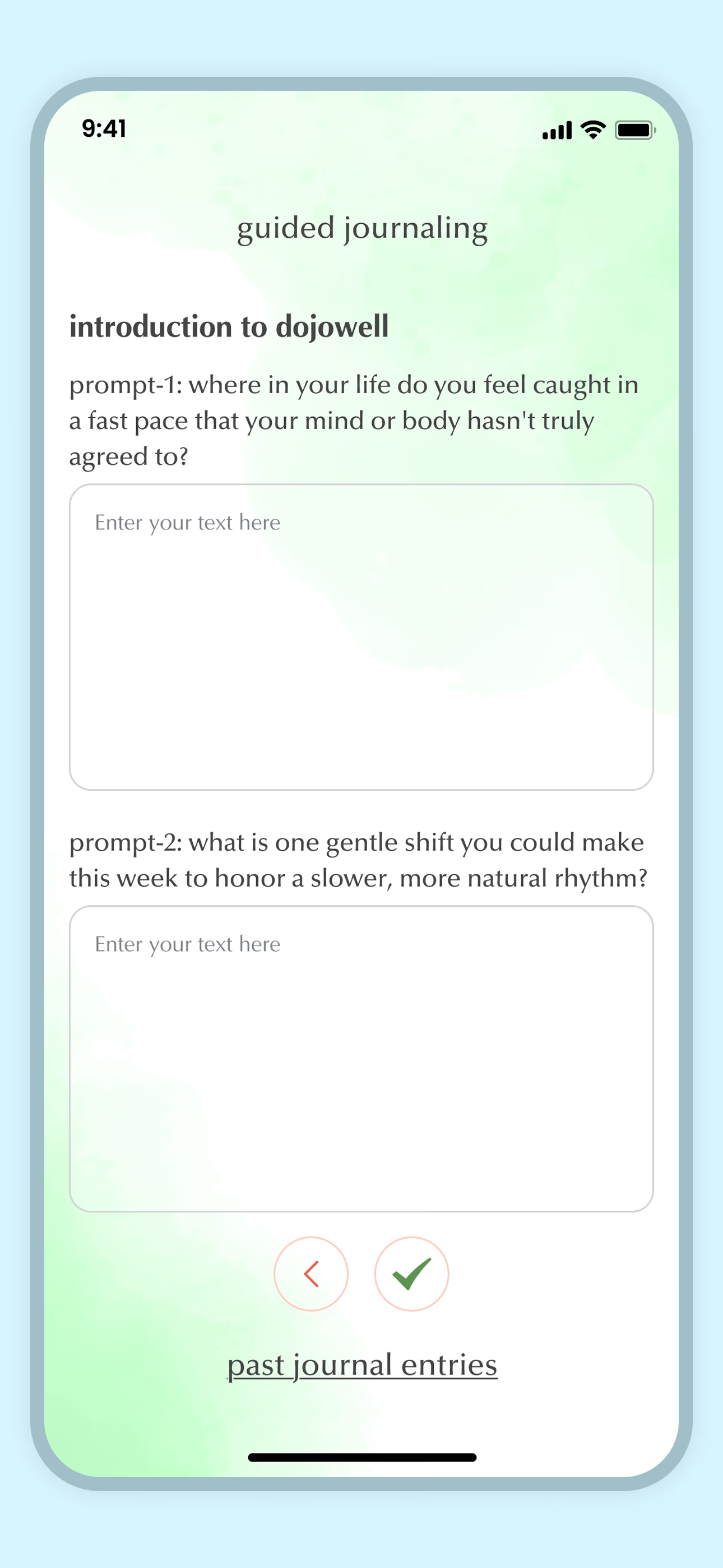
From Science to Art.
Understanding explains what is happening. Art allows you to feel it—without fixing, judging, or naming. Pause here. Let the images work quietly. Sometimes meaning settles before words do.
One Quiet Window, one insight, one reflection — every Sunday