The Loneliness Epidemic: Living Alone for the First Time in Human History
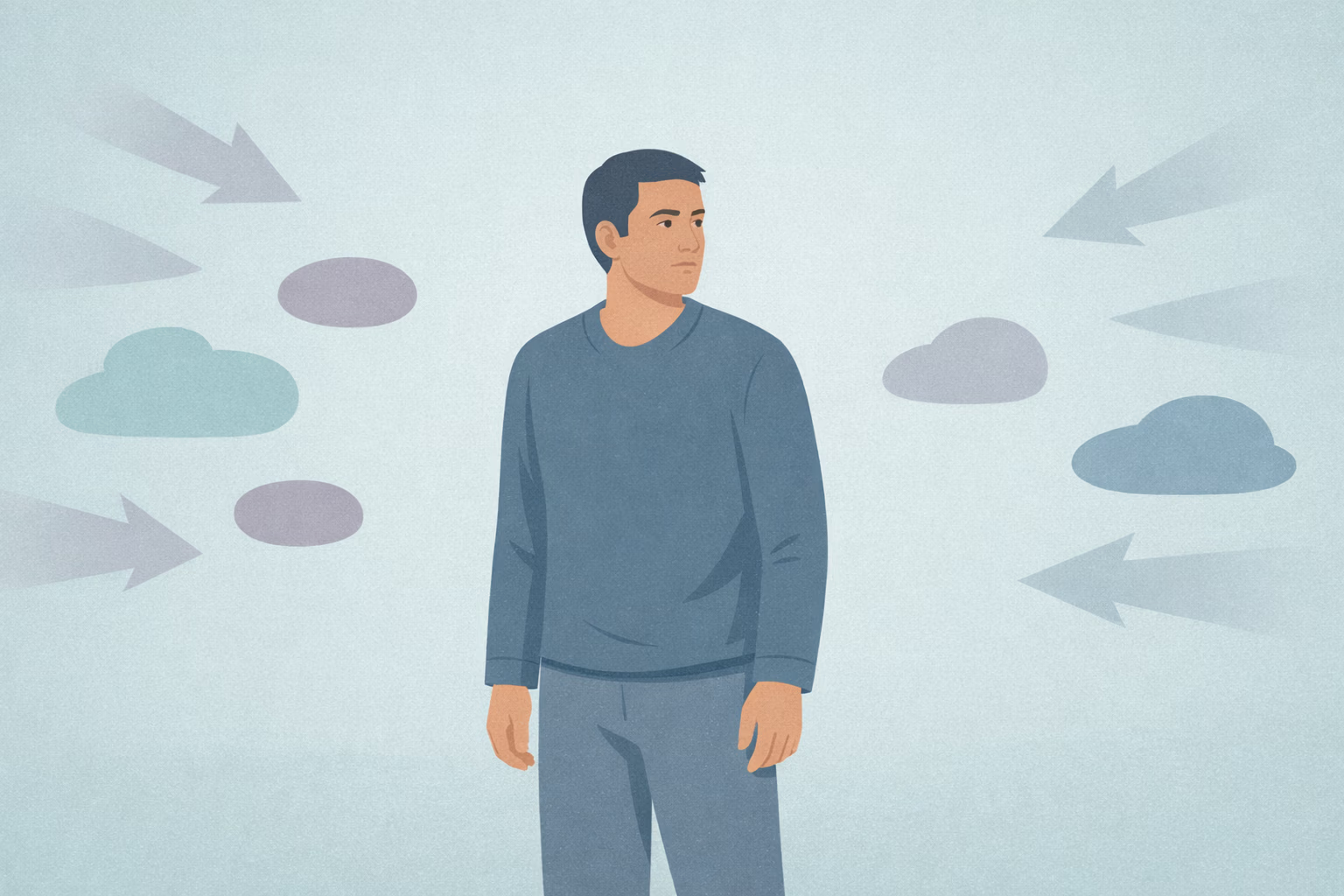
In short: Many people describe a strange modern tension: nothing is actively wrong, yet the body acts like something might be. Thoughts scan, shoulders tighten, sleep gets lighter, and even small tasks can carry a faint sense of urgency.
Many people describe a strange modern tension: nothing is actively wrong, yet the body acts like something might be. Thoughts scan, shoulders tighten, sleep gets lighter, and even small tasks can carry a faint sense of urgency.
This isn’t a character flaw or a motivational problem. It’s often what a human nervous system does when it has less access to the social signals it evolved to use for safety—steady faces, predictable belonging, and the quiet reassurance of “we’re in this together.”
What if some of your “anxiety” is actually your system trying to locate tribe?
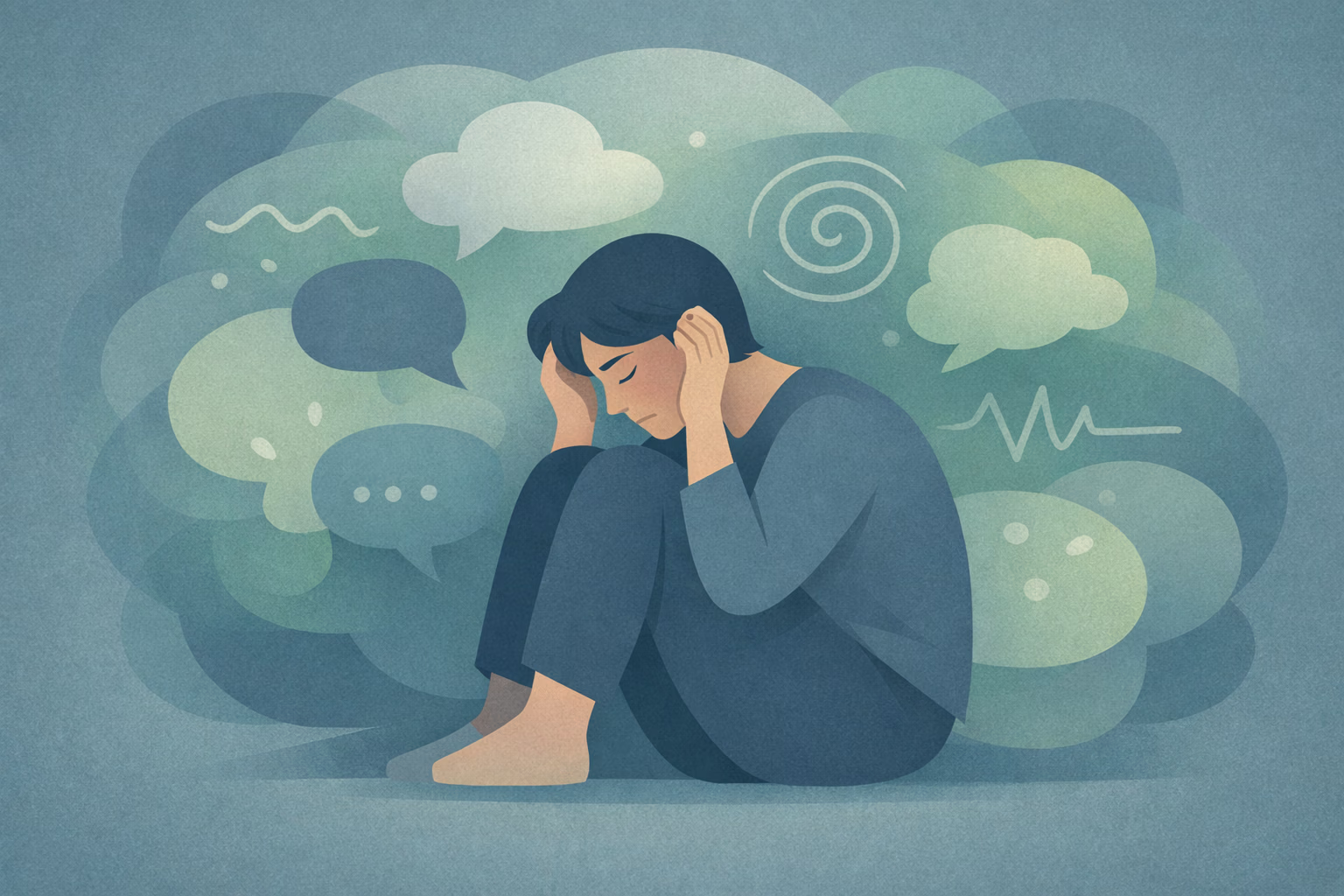
Background anxiety often shows up as a diffuse readiness: the mind keeps checking for what’s next, and the body holds a subtle brace. When there’s no clear threat, it can be confusing—like an alarm with no smoke.
One overlooked piece is social context. Humans are built to calibrate threat using the presence (or absence) of reliable others. When that stabilizing context is thin, the nervous system may keep a low-grade alert running, not because you’re doing life wrong, but because the environment isn’t providing enough “all clear” cues. [Ref-1]
Sometimes the hardest part isn’t what’s happening—it’s that nothing ever fully lands as safe and finished.
In a well-supported social field, the nervous system can borrow calm. Facial expressions, tone of voice, familiar routines, and mutual attention provide ongoing feedback that the world is workable. This is not about talking through feelings; it’s about biology receiving steady evidence that threat detection can stand down. [Ref-2]
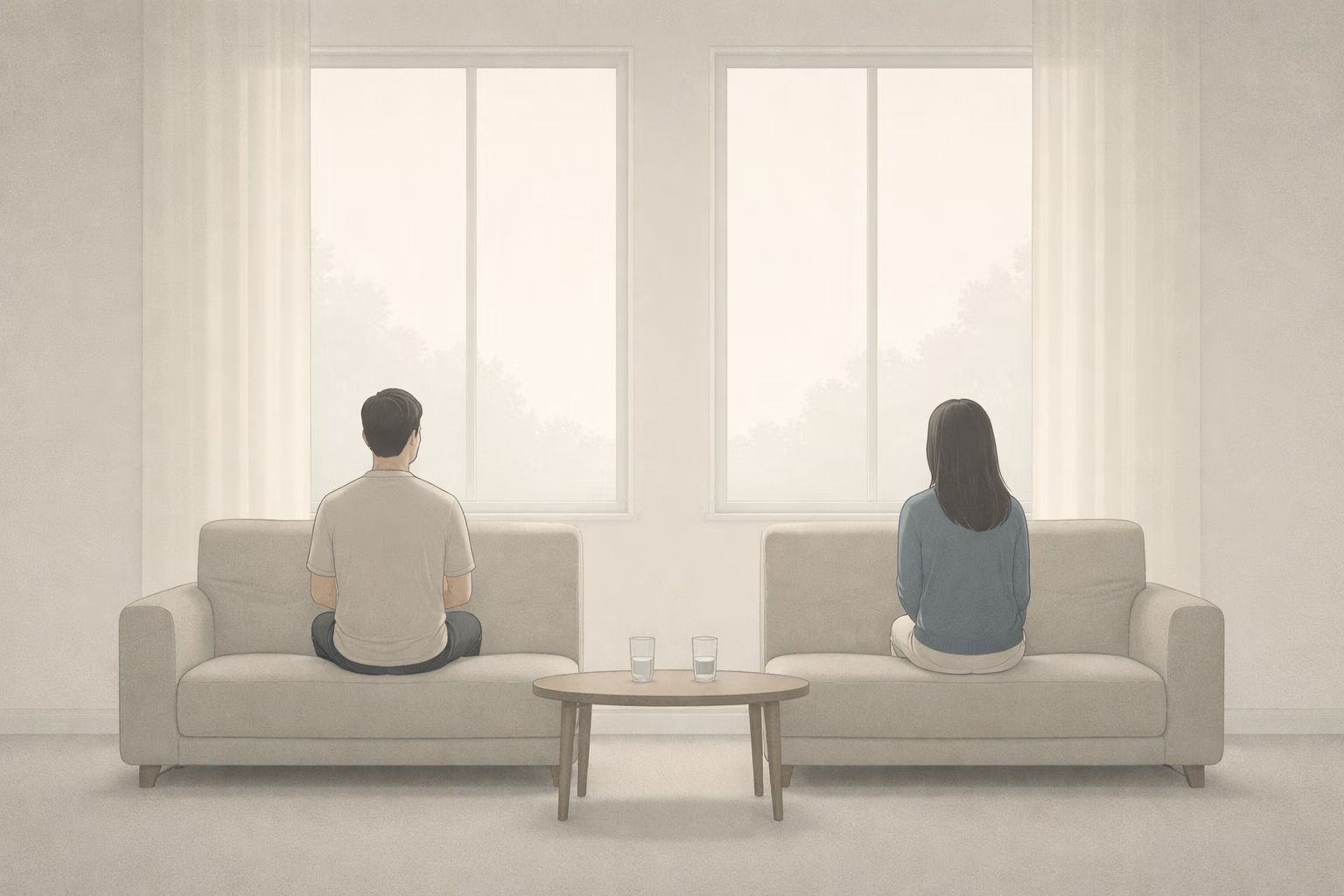
When those signals are inconsistent—moving often, working remotely in isolation, living among strangers, interacting mostly through text—the system has less external confirmation that it can relax. It may stay semi-alert, scanning and interpreting ambiguity as potential risk, simply because ambiguity is unresolved in the body.
Across human history, belonging wasn’t a bonus feature. It was infrastructure. Tribes and tight communities did more than provide companionship; they stabilized survival through shared watchfulness, shared meaning, and shared completion of daily loops—food, shelter, care, repair, ceremony.
Attachment and bonding systems are wired to make safety measurable: proximity, attunement, and predictability tell the nervous system that resources and protection are available. When that wiring gets consistent input, threat detection can quiet down without requiring constant self-management. [Ref-3]
In other words: tribe helped the body know when the day was “done.”
Independence is a real adaptation. Many people have built capable, meaningful lives with high autonomy: living alone, handling problems privately, moving through new cities, making their own schedule. At first, it can feel like freedom.
But autonomy can also mean fewer moments of involuntary co-regulation—those small, steady contacts that soften stress chemistry and signal safety at the level of the body. Social contact can support stress regulation through neurobiological pathways, including oxytocin-linked effects. [Ref-4]
So why can independence still feel tense?
Because “I can handle it” and “my nervous system can stand down” aren’t the same state.
Co-regulation doesn’t require dependence or constant socializing. It’s simply the nervous system’s expectation that some parts of safety are shared: someone notices you, routines repeat, repair is possible, and belonging isn’t negotiated every day.
When life is organized so that most regulation is private, the body may carry higher allostatic load—the cumulative cost of maintaining readiness without enough restorative closure. [Ref-5]
This is one reason “taking care of yourself” can paradoxically feel like more work: it adds tasks, but may not add the missing safety signals that let the system actually power down.
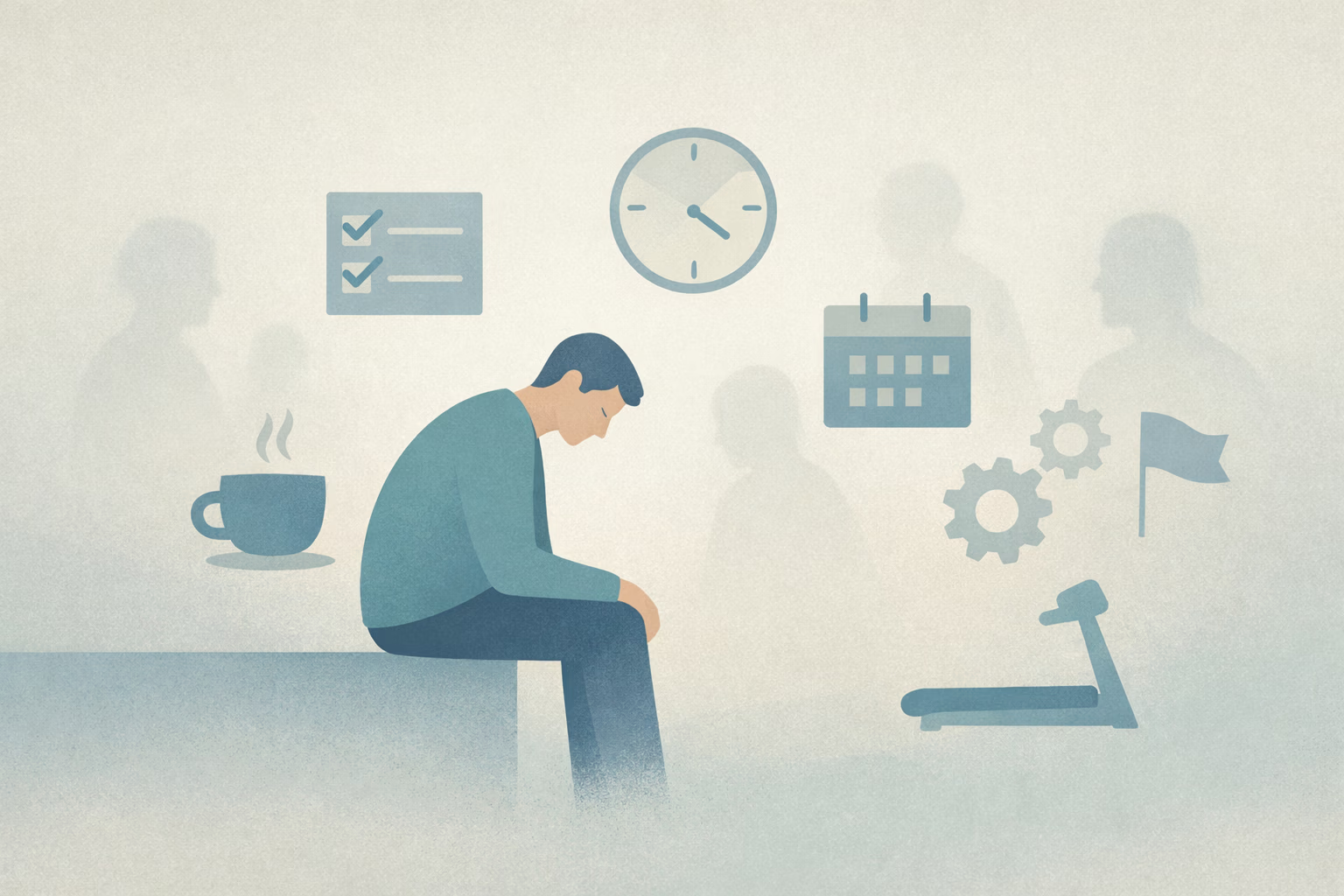
When reliable social cues are scarce, the nervous system often compensates by increasing monitoring. This can look like planning more, checking more, rehearsing more, or narrowing life to what feels controllable. It’s not “fear” driving it as a simple cause; it’s an attempt to create predictability when the environment isn’t providing enough closure.
Over time, vigilance can function like a substitute for tribe: “If I stay alert, maybe I won’t be caught off guard.” The trouble is that vigilance rarely completes anything. It keeps loops open, which keeps the system activated. Stress neurobiology tends to intensify under chronic uncertainty and insufficient buffering. [Ref-6]
These strategies can reduce immediate friction, while quietly increasing long-term load.
Chronic social thinness doesn’t just feel lonely. It can present as a physiology that won’t fully settle—muscle tension that returns quickly, a startle that comes too easily, or a mood that spikes faster than it used to.
Common patterns include:
These aren’t personality traits. They’re consistent with a system operating closer to the edge of its regulatory bandwidth under prolonged stress activation. [Ref-7]
Long-term vigilance tends to reduce capacity for complexity. Not because you’re less capable, but because the nervous system has less room for nuance when it’s managing constant readiness. Social isolation and perceived loneliness are associated with changes in stress response and mental health burden over time. [Ref-8]
This can show up as a narrower window for uncertainty, less spontaneity, and less ability to “hold” mixed signals without tipping into overwhelm. The system begins to prefer what is immediate, simple, and low-risk—because those are easier to close.
When the body has been on duty for a long time, even neutral days can feel like too much to carry.
As social contact decreases, everyday interactions can start to feel higher-stakes. Without repeated experiences of safe repair and predictable presence, the nervous system may treat social uncertainty as a bigger signal than it is.
In practical terms, the system starts asking: “Is this safe?” before it asks: “Is this meaningful?” That shift can be understood through a safety-based lens: when cues of safety are limited, protective states become more available, and the body prioritizes defense over connection. [Ref-9]
The loop reinforces itself structurally: less contact means fewer safety cues; fewer safety cues mean more vigilance; more vigilance makes contact feel costly—so contact reduces further.
When external co-regulation is limited, people often develop internal scaffolding: routines, principles, commitments, and a sense of “who I am in the middle of this.” This is not mere insight or positive thinking. It’s the slow formation of an inner baseline that can hold steady when the social world is thin.
From an attachment and regulation perspective, inner stability grows when experiences repeatedly conclude with enough completion that the system learns: “This ends. I can return.” [Ref-10]
What does that change feel like?
Less like constant self-improvement, and more like reduced internal negotiation—fewer open tabs running in the background. Meaning starts behaving like a settled orientation, not a concept you have to maintain.
Humans regulate through patterns. Small, repeatable social moments—greetings, shared meals, brief check-ins, familiar places—can function as safety cues because they are predictable and reciprocated. They don’t need to be intense. They need to be reliable enough for the nervous system to mark, “This is normal, this is safe, this returns.” [Ref-11]
What matters is not social quantity but social intelligibility: interactions that are understandable, paced, and likely to repair if something goes slightly off. Over time, these rituals can reduce the need for constant monitoring because the body has evidence that connection has structure.
It’s hard to relax in a world where every interaction feels like a one-time audition.
As threat load decreases, many people notice a distinct shift: fewer exaggerated reactions, more stable energy, and a softer edge around uncertainty. The system has more room to interpret signals accurately, rather than defensively.
This is also where values become more usable. Under chronic activation, values can feel like pressure (“I should be more social”). With more capacity, values become orientation (“This matters to me”), which tends to organize behavior more coherently over time. [Ref-12]
The result isn’t constant calm. It’s improved return—after stress, the system can come back to baseline with less struggle.
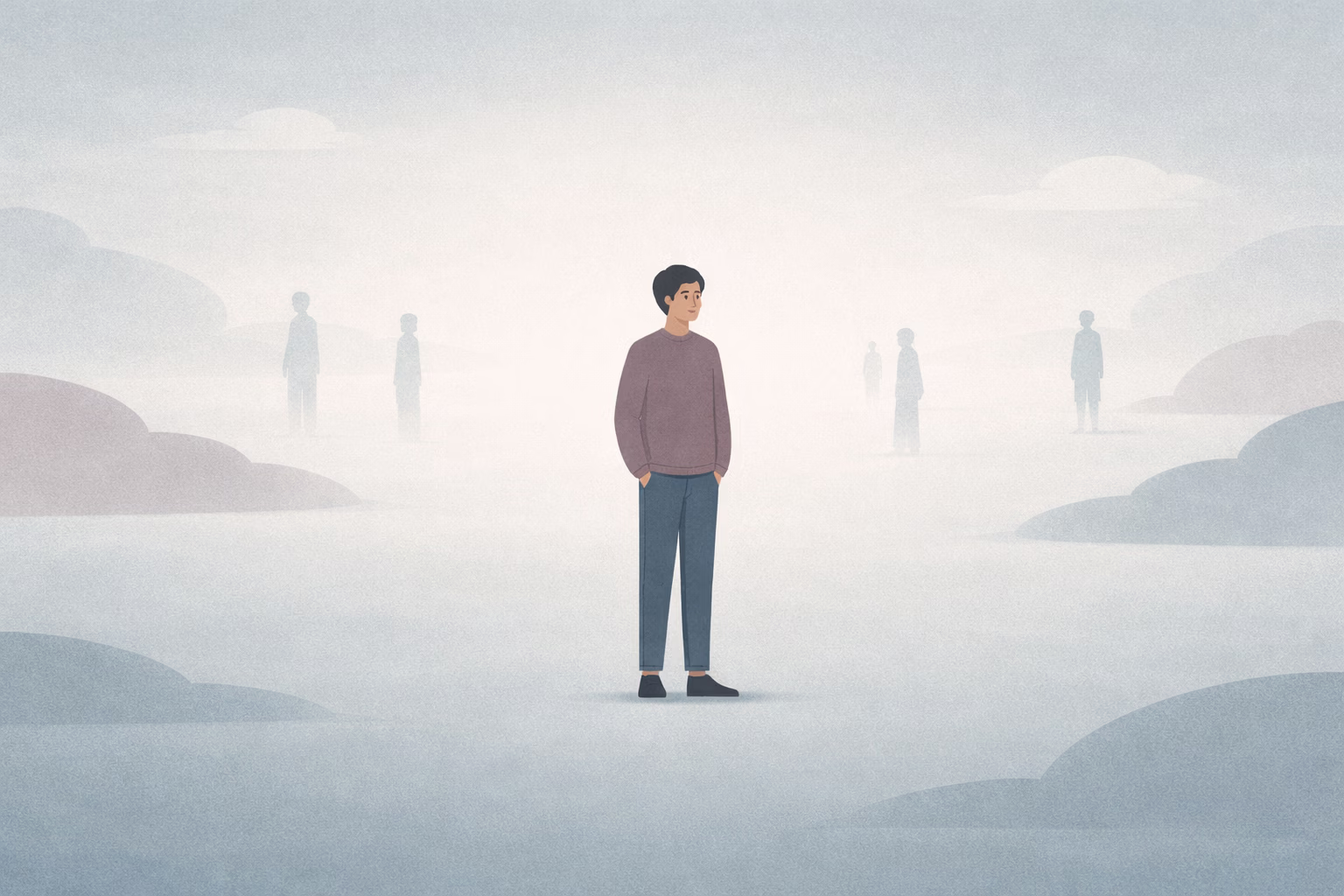
When life includes enough stable belonging, the nervous system stops treating connection as a gamble. This doesn’t erase difficulty; it changes the background assumption from “I’m on my own” to “support exists.”
That change often lands at the identity level: a person begins to experience themselves as someone who has a place, a role, and a shared continuity. Meaning becomes denser because experiences don’t just happen—they complete into a story that the body trusts. Narrative identity and personal meaning tend to strengthen when experiences can be integrated into a coherent sense of self over time. [Ref-13]
In that state, agency feels less like forcing and more like choosing within a world that can hold you.
It’s understandable to interpret chronic edginess as “something wrong with me.” But a calmer framing is often more accurate: a human system is responding to reduced access to social safety cues. That response may be uncomfortable, yet it’s also evidence of a nervous system still trying to protect life and keep it coherent.
Tribe, in this sense, isn’t a personality preference. It’s part of the biology of safety and self-care—how humans reduce load and regain steadiness. When belonging becomes more stable, shame tends to loosen, not through pep talks, but because the system is no longer managing survival alone. [Ref-14]
Many people don’t need to be “fixed.” They need more moments that signal completion: a face that recognizes them, a place they return to, a rhythm that repeats, a sense that life is held in more than one nervous system.
When shared presence becomes real and consistent, the body often finds its way back to baseline. Clarity follows—not as a mental achievement, but as a physiological settling that makes meaning feel inhabitable again. [Ref-15]
From theory to practice — meaning forms when insight meets action.
Because some of what gets labeled anxiety is your nervous system trying to locate tribe. Humans calibrate threat using the presence or absence of reliable others. When stabilizing social context is thin, the system keeps a low-grade alert running — not because you're doing life wrong, but because the environment isn't providing enough all clear cues. Sometimes the hardest part isn't what's happening; it's that nothing ever fully lands as safe and finished. Ambiguous silence reads as disapproval, neutral feedback reads as danger, ordinary uncertainty feels like a countdown. The Attachment & Belonging system needs intelligible signals to stand down.
Because biology still expects co-regulation, even in a competent adult life. In a well-supported social field, the nervous system can borrow calm. Facial expressions, tone of voice, familiar routines, and mutual attention provide ongoing feedback that the world is workable. This isn't about talking through feelings; it's biology receiving steady evidence that threat detection can stand down. Co-regulation doesn't require dependence or constant socializing — just the nervous system's expectation that some parts of safety are shared. I can handle it and my nervous system can stand down aren't the same state, which is why independence can still feel tense.
Because as social contact decreases, everyday interactions start feeling higher-stakes. Without repeated experiences of safe repair and predictable presence, the system treats social uncertainty as a bigger signal than it is. The shift becomes: is this safe? before is this meaningful? When cues of safety are limited, protective states become more available, and the body prioritizes defense over connection. The Avoidance Loop tightens structurally: less contact means fewer safety cues, fewer cues mean more vigilance, more vigilance makes contact feel costly. Isolation amplifies danger perception, which quietly reinforces withdrawal.
Tribe was originally an external regulator, not a lifestyle preference — it stabilized survival through shared watchfulness, shared meaning, and shared completion of daily loops. Independence is a real adaptation, but autonomy can also mean fewer moments of involuntary co-regulation. Predictable rituals — greetings, shared meals, brief check-ins, familiar places — function as Done Signals because they're reliable and reciprocated. Quantity matters less than intelligibility: interactions paced and likely to repair. It's hard to relax in a world where every interaction feels like a one-time audition. Tribe isn't a luxury; it's part of how humans reduce load.
From Science to Art.
Understanding explains what is happening. Art allows you to feel it—without fixing, judging, or naming. Pause here. Let the images work quietly. Sometimes meaning settles before words do.
One Quiet Window, one insight, one reflection — every Sunday