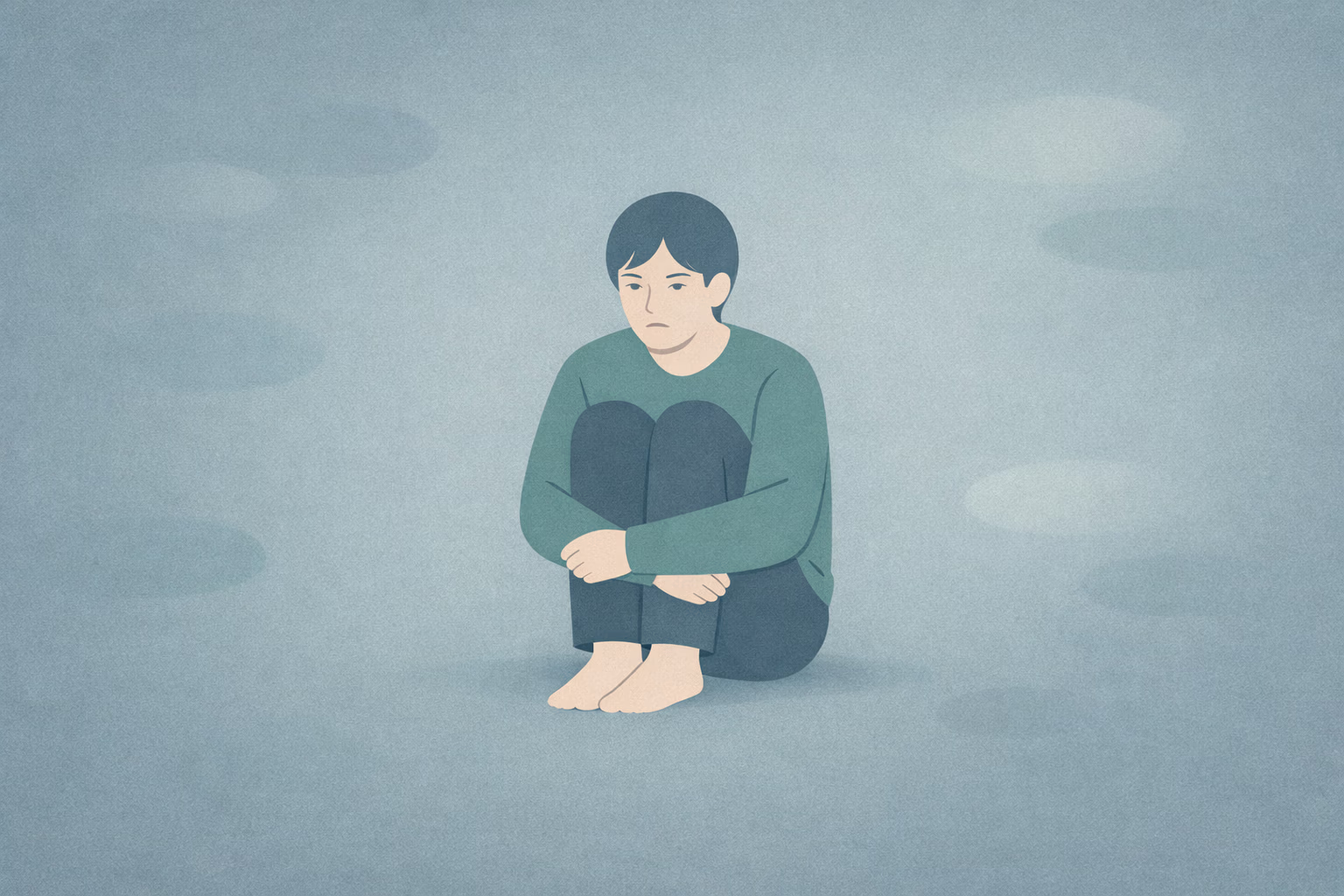
Shutdown Mode: When the Mind and Body Freeze
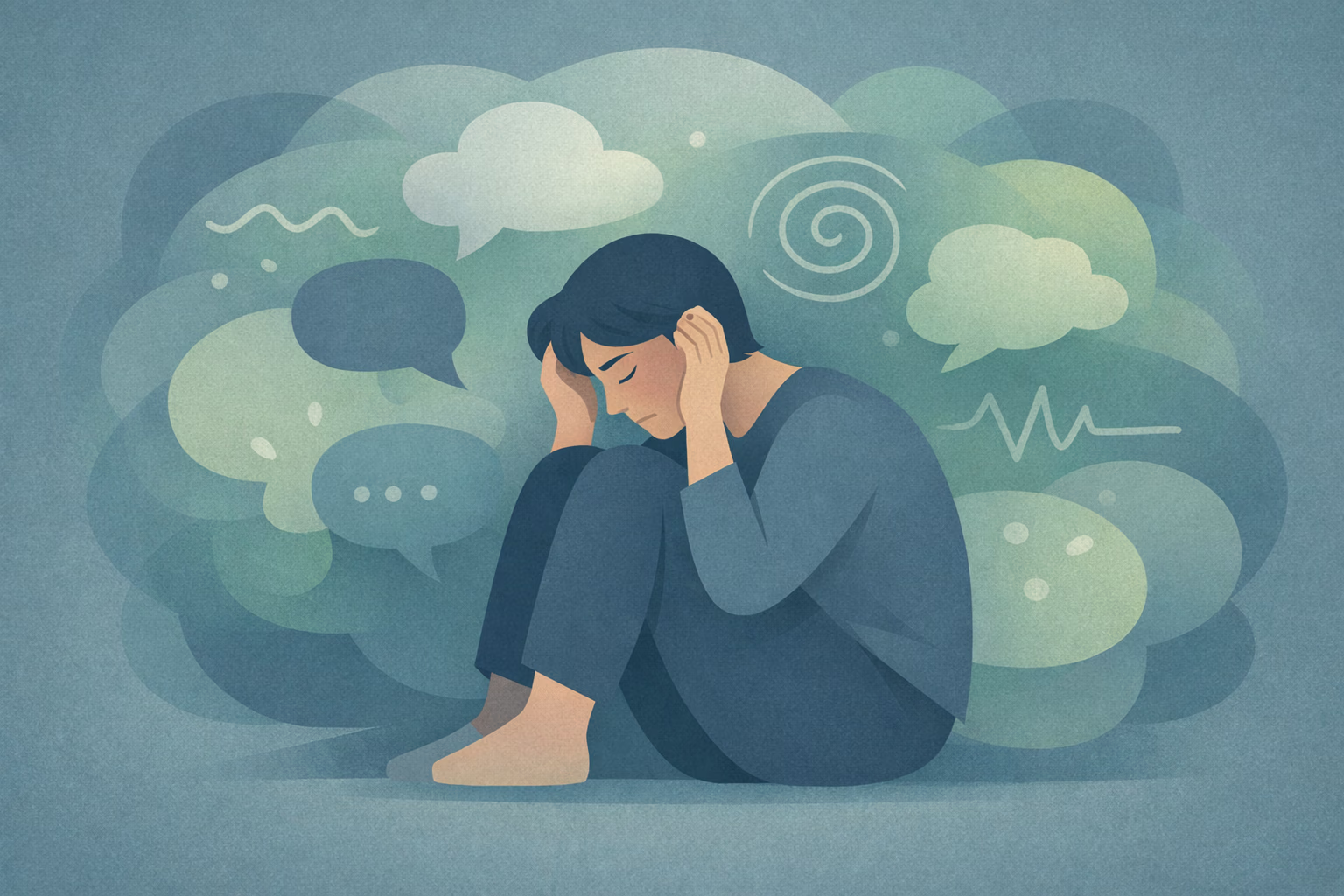
In short: Emotional numbness often gets described as “not feeling anything.” But for many people, it’s closer to a protective dimming: emotional signals are still there, yet the nervous system dampens them to keep life manageable. What if numbness isn’t the absence of emotion—what if it’s your body protecting you from too much, too fast, for too long?
Emotional numbness often gets described as “not feeling anything.” But for many people, it’s closer to a protective dimming: emotional signals are still there, yet the nervous system dampens them to keep life manageable.
What if numbness isn’t the absence of emotion—what if it’s your body protecting you from too much, too fast, for too long?
When the world asks for constant responsiveness—updates, decisions, performance, reaction—shutdown can become a kind of internal quiet. Not peaceful quiet, but “I can function if I stay muted” quiet.
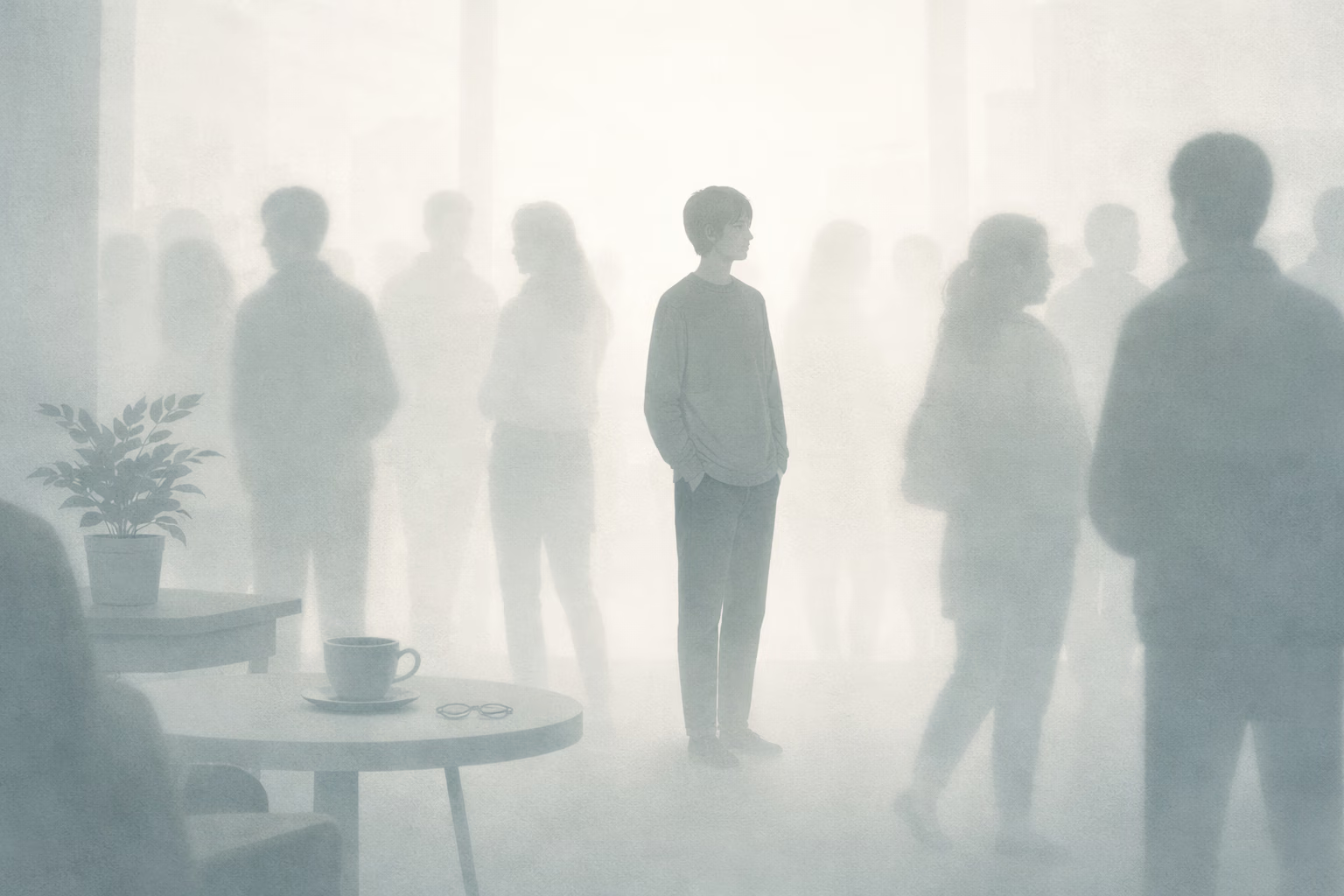
Emotional numbness can show up as flatness, distance, or a strange sense that life is happening “over there,” while you’re watching from behind glass. Some people describe it as fog, blankness, or an unreal quality to everyday moments. [Ref-1]
What makes it especially unsettling is the self-doubt it can create. When your internal signals are quieter, it can feel harder to trust your preferences, reactions, or sense of self. You might wonder whether you’re “broken,” when the more accurate story is often: your system is conserving energy and reducing load.
Numbness is often less like emptiness and more like a safety setting: less signal, fewer spikes, fewer surprises.
Numbness doesn’t always follow a single dramatic event. It can also emerge after months or years of small, repeated strains: too many demands, too little recovery, too much input, too few “done” signals.
When stress becomes constant, the nervous system can shift into a freeze-like, low-mobility state—less emotional intensity, less outward energy, less internal motion. This is not a choice or a personality trait. It’s a regulation strategy that reduces volatility when the system can’t keep mobilizing. [Ref-2]
In this state, it can be harder to register subtle cues—hunger, tiredness, satisfaction, interest—because the system is prioritizing stability over richness of experience.
From an evolutionary perspective, shutdown responses exist for a reason. When escape, fighting, or problem-solving aren’t possible, the body can conserve resources and reduce pain by lowering arousal.
This is why numbness can appear alongside feeling stuck: in an unworkable job, an endless conflict, chronic illness, grief without space, or ongoing uncertainty. It’s not “fear causing avoidance.” It’s the body adapting to conditions where high activation would be costly and unresolved. [Ref-3]
When the system can’t complete the loop, it may choose the lowest-energy option: reduce signal.
Emotional shutdown can temporarily lower inner conflict. If you’ve been carrying competing demands, social tension, or relentless evaluation, numbness can reduce the intensity of those internal crosscurrents.
It can also decrease sensory load—less intensity from noise, conflict, decision-making, or other people’s emotions. In that sense, numbness can function like an internal circuit breaker: not a long-term solution, but an emergency stabilization response. [Ref-4]
The nervous system often accepts numbness because it can feel safer than overwhelm. But the same dampening that reduces pain can also reduce pleasure, interest, and inner orientation.
Over time, this can look like going through motions without a felt sense of meaning or reward. It’s not that you “don’t care.” It’s that the system is limiting access to intensity—pleasant and unpleasant alike—as a way to stay steady. [Ref-5]
And when emotional feedback is quieter, it becomes harder to know what matters, what fits, what’s too much, or what needs closure.
One reason numbness can persist is that it changes your immediate state. The reduction in intensity can feel like a solution, because it provides short-term stability.
But state change isn’t the same as integration. Integration is what happens after experiences complete—when the nervous system receives a “done” signal and identity can update without ongoing activation. Shutdown often interrupts that completion, leaving loops unfinished.
In modern life, this can become an avoidance loop: less signal brings relief, relief reinforces less signal, and the system learns that muted experience is the safest way to keep functioning. [Ref-6]
Numbness can be misunderstood as laziness, indifference, or a lack of gratitude. More often, it’s a pattern of reduced arousal and reduced signal flow—an adaptive response under load. [Ref-7]
These patterns are not identities. They’re what a nervous system does when it’s trying to keep the internal environment survivable.
Emotions aren’t just “feelings.” They’re information—about safety, boundaries, needs, connection, and meaning. When that information is consistently turned down, it becomes harder to respond with nuance.
In relationships, numbness can reduce the sense of mutual rhythm: less spontaneity, less aliveness, less felt reciprocity. In daily life, it can shrink the range of what feels worth doing, because reward signals and “this matters” signals are quieter. Some frameworks describe this as a protective state linked to altered autonomic patterns that prioritize conservation over social engagement. [Ref-8]
When your signal range narrows, life can start to look flatter—not because life is flat, but because your system is running low-power.
Many people assume numbness continues because they are “avoiding emotions.” Structurally, it’s often closer to this: the nervous system is repeatedly exposed to intensity without adequate completion, recovery, or closure—so it stops offering full signal as a protective default.
In a world of constant input and partial attention, experiences often don’t resolve. Conversations end mid-stream. News cycles refresh before meaning settles. Work tasks replicate instead of completing. The body receives fewer “finished” cues, so activation doesn’t truly stand down.
Over time, shutdown can begin to feel like your baseline—not because you’re incapable of feeling, but because your system has learned that full signal is expensive in an environment that won’t let loops close. [Ref-9]
Emotional signal flow tends to come back the way circulation returns to a limb after pressure eases: gradually, sometimes unevenly, sometimes with surprising sensations. This isn’t something that can be commanded by insight or effort.
What supports return is usually not “trying to feel.” It’s the broader conditions that allow the nervous system to exit protective low-power mode: more safety cues, less overload, more pacing in life’s demands, and more opportunities for experiences to actually complete. [Ref-10]
Coherence isn’t a mood. It’s the body recognizing: I can come back online because it’s safe enough to process and finish.
Humans regulate in context. When someone else is steady, attuned, and low-demand, the nervous system can borrow that steadiness—often before any story about what’s happening makes sense.
This is part of why numbness can soften in the presence of safe companionship, gentle conversation, or environments where you’re not being evaluated. Not because connection “fixes” you, but because it reduces defensive load and provides external cues that the world is not currently requiring collapse or vigilance. [Ref-11]
In that kind of context, the system can begin to re-open channels of sensation, attention, and responsiveness—at a pace that maintains stability.
When shutdown loosens, people don’t always experience a dramatic emotional flood. Often, the first signs are small: clearer perception, more distinct preferences, a sense of “warmth” or presence, or noticing beauty without trying.
Sometimes the return shows up as variability—moments of aliveness mixed with moments of fatigue. That variability can be a sign of flexibility returning: the system is no longer locked into one defensive setting. [Ref-12]
And importantly, the return of signal doesn’t mean constant intensity. It can mean a wider range: more capacity to register what’s happening, then come back to baseline when the moment is done.
As emotional signaling becomes more available, many people notice a shift that’s quieter than happiness: orientation. A sense of direction. A sense that choices have contours again.
This is where meaning starts to reform—not as a motivational speech, but as lived coherence. When internal signals can rise and resolve, you can sense what fits, what doesn’t, what needs tending, and what can be released. Agency becomes less about pushing and more about responding. [Ref-13]
You don’t need constant brightness to be well. You need enough signal to know where you are, and enough closure to move forward.
Emotional numbness is often your system’s proof that you kept going under conditions that did not allow full processing, full rest, or full completion. That is not a character flaw. It’s an adaptation.
When you view numbness through that lens, shame has less to hold onto. The question shifts from “What’s wrong with me?” to “What has my system been carrying, and what has it not been able to finish?”
Meaning tends to return when life becomes more complete—when experiences have endings, when demands have edges, and when your nervous system is allowed to stand down. In that environment, reconnection can happen as a byproduct of safety and closure, not as a performance. [Ref-14]
Numbness is rarely the disappearance of your inner life. More often, it’s your biology protecting what matters by lowering the volume until conditions improve.
As capacity returns, the self that felt distant often becomes recognizable again—not through forcing, but through completion and settling. And that return can carry a simple message: your system wasn’t failing; it was enduring, waiting for enough safety to come back online. [Ref-15]
From theory to practice — meaning forms when insight meets action.
Usually not — it's closer to a protective dimming. Emotional signals are still there; the nervous system is dampening them to keep life manageable. Numbness often feels like flatness, distance, or watching life from behind glass. It's a safety setting: less signal, fewer spikes, fewer surprises. The Threat & Safety System chooses this when constant micro-stress, too many demands, and too few Done Signals make full mobilization too costly. It's not a character flaw or laziness; it's regulation under load. Your system is conserving energy and reducing load — limiting access to intensity, pleasant and unpleasant alike, to stay steady when nothing else is letting it stand down.
Because it works in the short term. Shutdown lowers inner conflict — competing demands, social tension, relentless evaluation all quiet down. Sensory load drops. Less emotional spike, less urgency, less pain from unmet needs, more ability to get through the day. It functions like an internal circuit breaker. The trade-off is that the same dampening reducing pain also reduces pleasure, interest, and inner orientation. The Avoidance Loop forms structurally: less signal brings relief, relief reinforces less signal, and the system learns muted experience is the safest way to keep functioning. Going through motions without felt meaning isn't apathy — it's the cost of staying steady.
Because the nervous system gets repeatedly exposed to intensity without adequate completion. Conversations end mid-stream, news cycles refresh before meaning settles, work tasks replicate instead of completing — the body receives fewer 'finished' cues, so activation never truly stands down. This is Evolutionary Mismatch in action: a system built for periodic intensity followed by recovery, dropped into an environment where loops don't close. Over time, shutdown becomes baseline not because you're incapable of feeling but because your system has learned that full signal is expensive in an environment that won't let experiences finish. It's endurance, not absence of self.
Like circulation returning to a limb after pressure eases — gradually, sometimes unevenly, sometimes with surprising sensations. It can't be commanded by insight or effort. What supports return is broader conditions: more safety cues, less overload, more pacing in life's demands, more opportunities for experiences to actually complete. Co-regulation matters more than self-analysis here — when someone steady, attuned, and low-demand is present, your system borrows that steadiness before any story makes sense. The first signs are usually subtle: clearer perception, distinct preferences, warmth, noticing beauty without trying. Variability returns first — flexibility, not constant intensity.
From Science to Art.
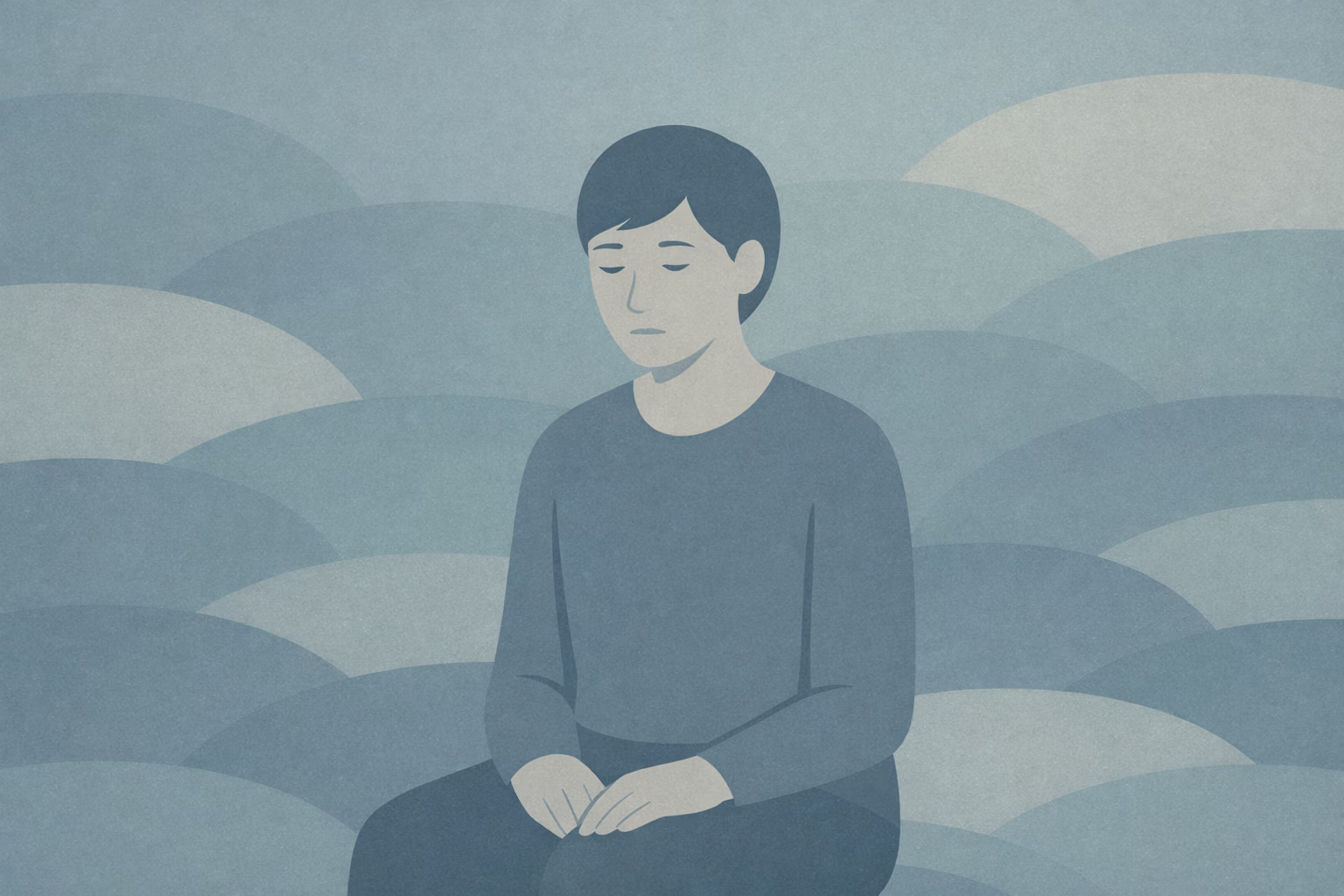
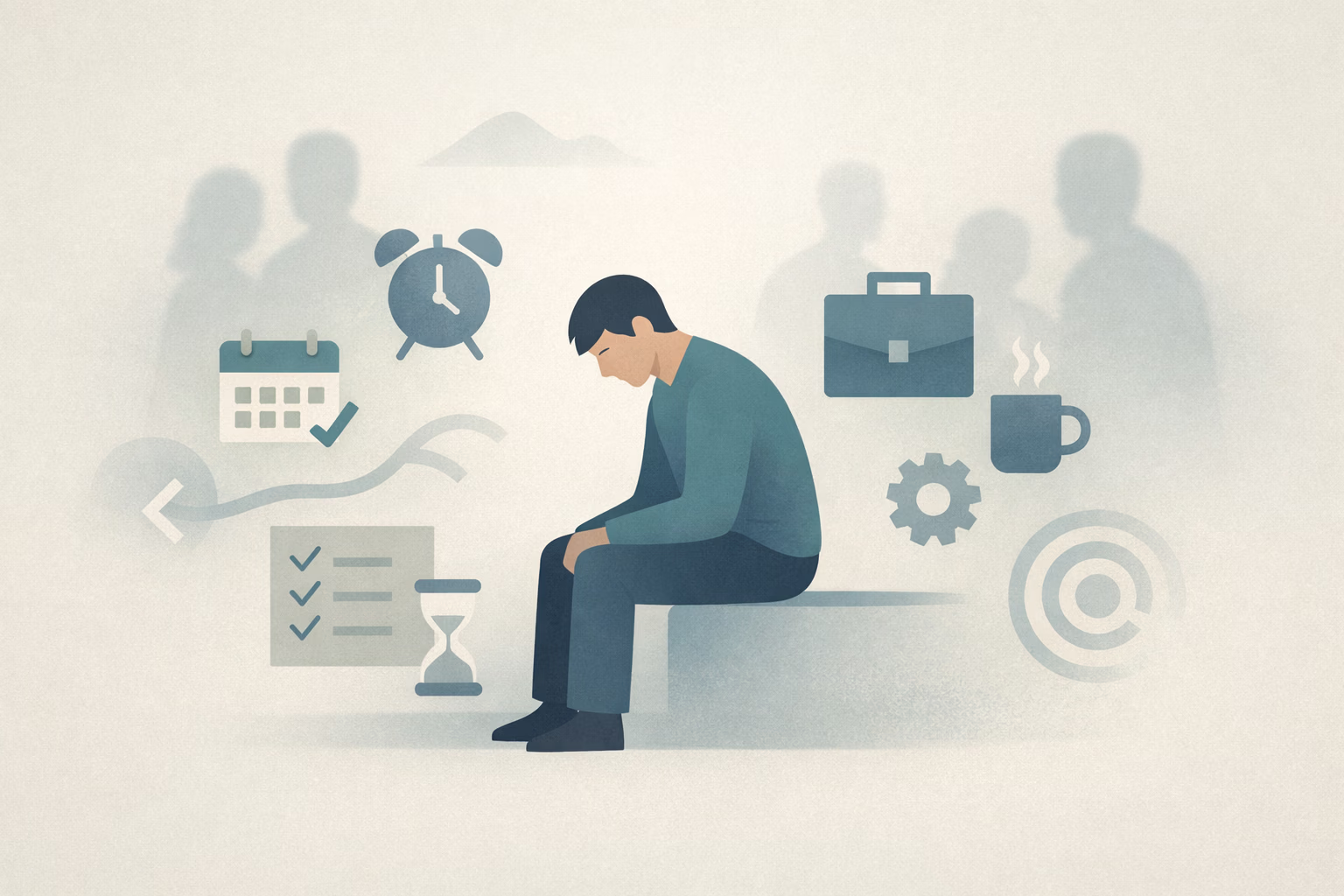
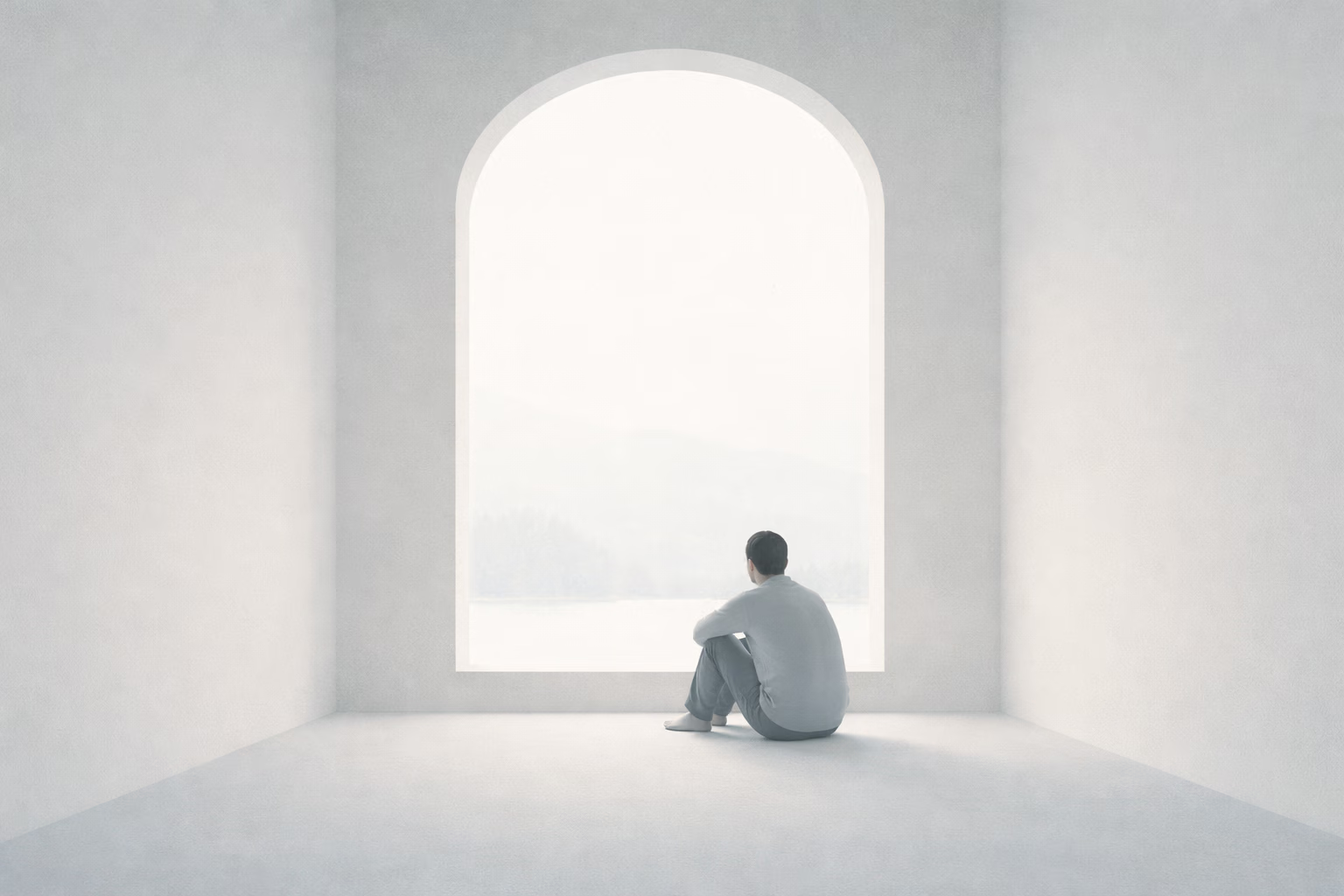
Understanding explains what is happening. Art allows you to feel it—without fixing, judging, or naming. Pause here. Let the images work quietly. Sometimes meaning settles before words do.
One Quiet Window, one insight, one reflection — every Sunday