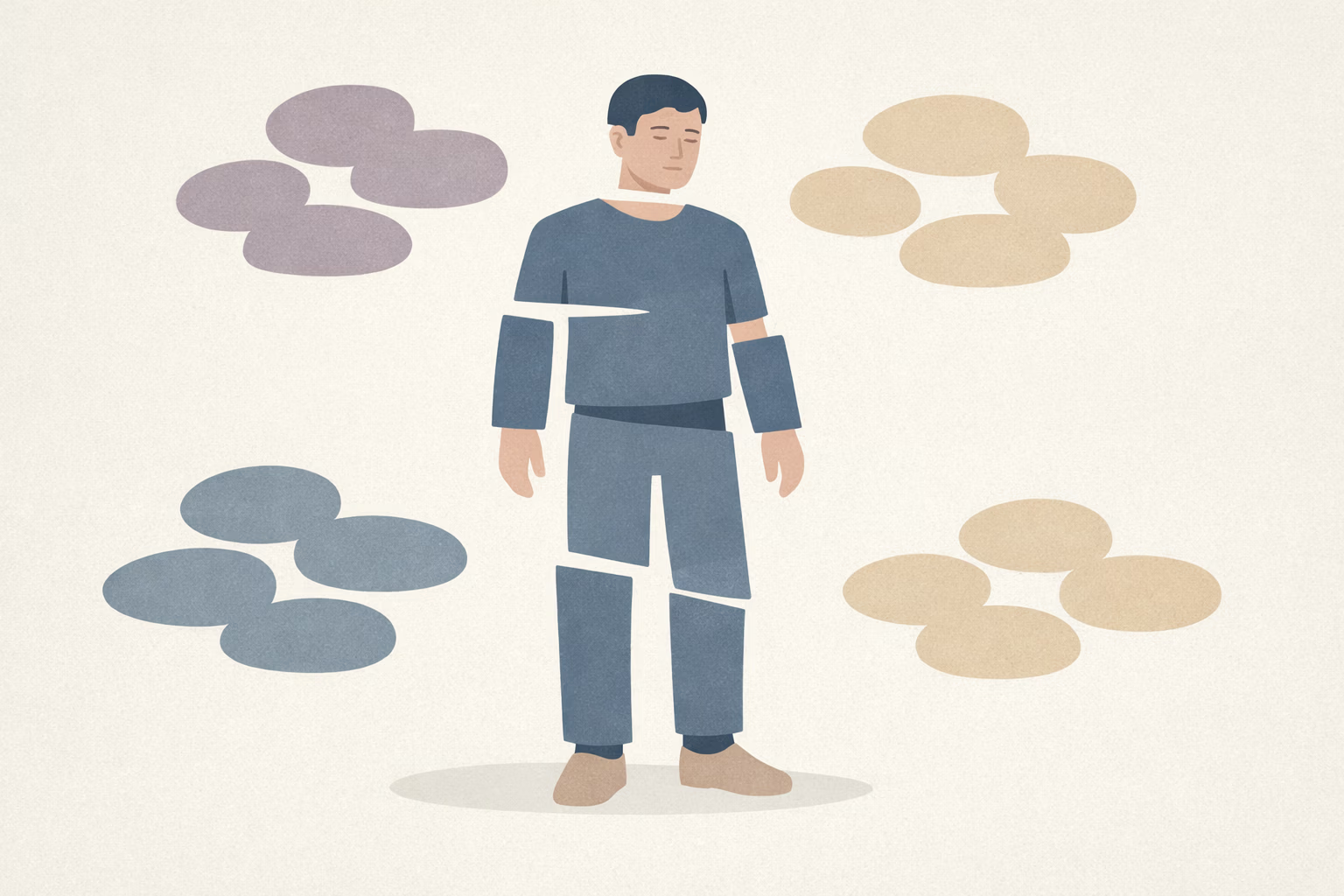
Emotional Fragmentation & Inner Parts
Understand emotional fragmentation and how to reintegrate.
In context: This is a state of “stable non-participation.“ Your Threat & Safety system has allowed you to be present, but your Reward system is “offline“ to prevent further depletion. You are physically there, but your “emotional integrator“ is on standby. According to DojoWell, this is a valid way to navigate high-stimulus environments without crashing.

You are present, but not participating.
Conversations happen nearby.
Life continues its rhythm.
You remain here, aware, yet untouched.
This is not indifference.
It is conservation.
The system stays close enough to remain oriented, far enough to stay safe.
There is nothing wrong with this balance.
Engagement will return when it no longer costs too much.
For now, witnessing is enough.
Normalize partial engagement with guidance from DojoWell.
Explore DojowellArticles exploring the psychology behind these patterns.
This is a state of "stable non-participation." Your Threat & Safety system has allowed you to be present, but your Reward system is "offline" to prevent further depletion. You are physically there, but your "emotional integrator" is on standby. According to DojoWell, this is a valid way to navigate high-stimulus environments without crashing. By accepting that you are present but not participating, you reduce the internal friction and social pressure that usually prolongs a shutdown.
Yes. In the Meaning Density Model™, forcing engagement when your system is in shutdown creates "hollow loops" that further drain your identity. Choosing to be present without the demand for participation is a form of structural boundaries. It allows you to maintain social continuity without exhausting your internal resources. Over time, as your nervous system feels safer and less pressured to "perform," natural participation will return on its own, without you having to force a spark.
One Quiet Window, one insight, one reflection — every Sunday