Trauma Responses in Daily Life: Signs You Don’t Notice
In short: Sometimes the hardest part isn’t a single emotion—it’s the way your inner signals stop arriving as one clear message. You can want closeness and distance in the same hour. You can feel calm while also bracing inside.
Sometimes the hardest part isn’t a single emotion—it’s the way your inner signals stop arriving as one clear message. You can want closeness and distance in the same hour. You can feel calm while also bracing inside. You can make plans sincerely, then find your body refusing to cooperate.
What if “parts of you” aren’t a metaphor for being broken, but a description of how protection works under strain?
Emotional fragmentation is often a protective separation: different internal states get organized into compartments so you can keep functioning. It can look like inconsistency from the outside, but from the inside it’s frequently a nervous system doing load management—trying to prevent overwhelm by keeping certain signals from flooding the whole system.
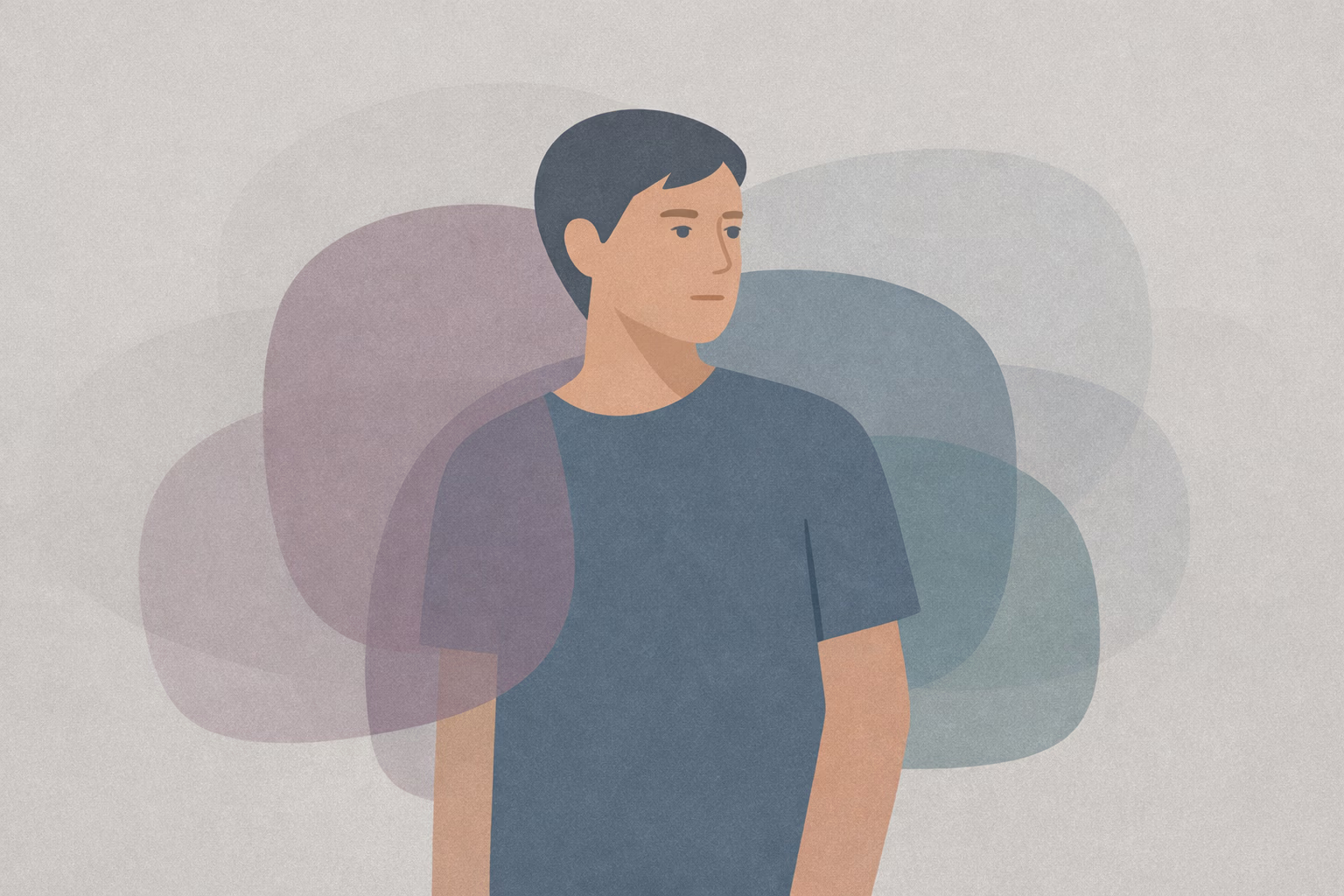
Emotional fragmentation often shows up as inner conflict that isn’t resolved by “thinking it through.” One part of you is ready to commit; another part can’t sign off. One part is certain; another part is suspicious. It can feel like self-contradiction, but it’s more like parallel channels running without a shared meeting room. [Ref-1]
This can create a specific kind of exhaustion: not from doing too much, but from having to renegotiate yourself repeatedly. When internal messages don’t consolidate, even small decisions carry the weight of a much larger negotiation.
Humans regulate through connection and safety cues. When threat is present—or when the social environment is unpredictable—your system has to keep you operational while also tracking danger. One way it does this is by separating experiences that don’t fit together safely in the same moment. [Ref-2]
Attachment strain matters here because relationships are where safety is supposed to be confirmed. When closeness also carries uncertainty, the nervous system can end up holding “approach” and “protect” in different lanes. The result is not a lack of insight. It’s a structural compromise: keep functioning now, postpone full integration until conditions allow.
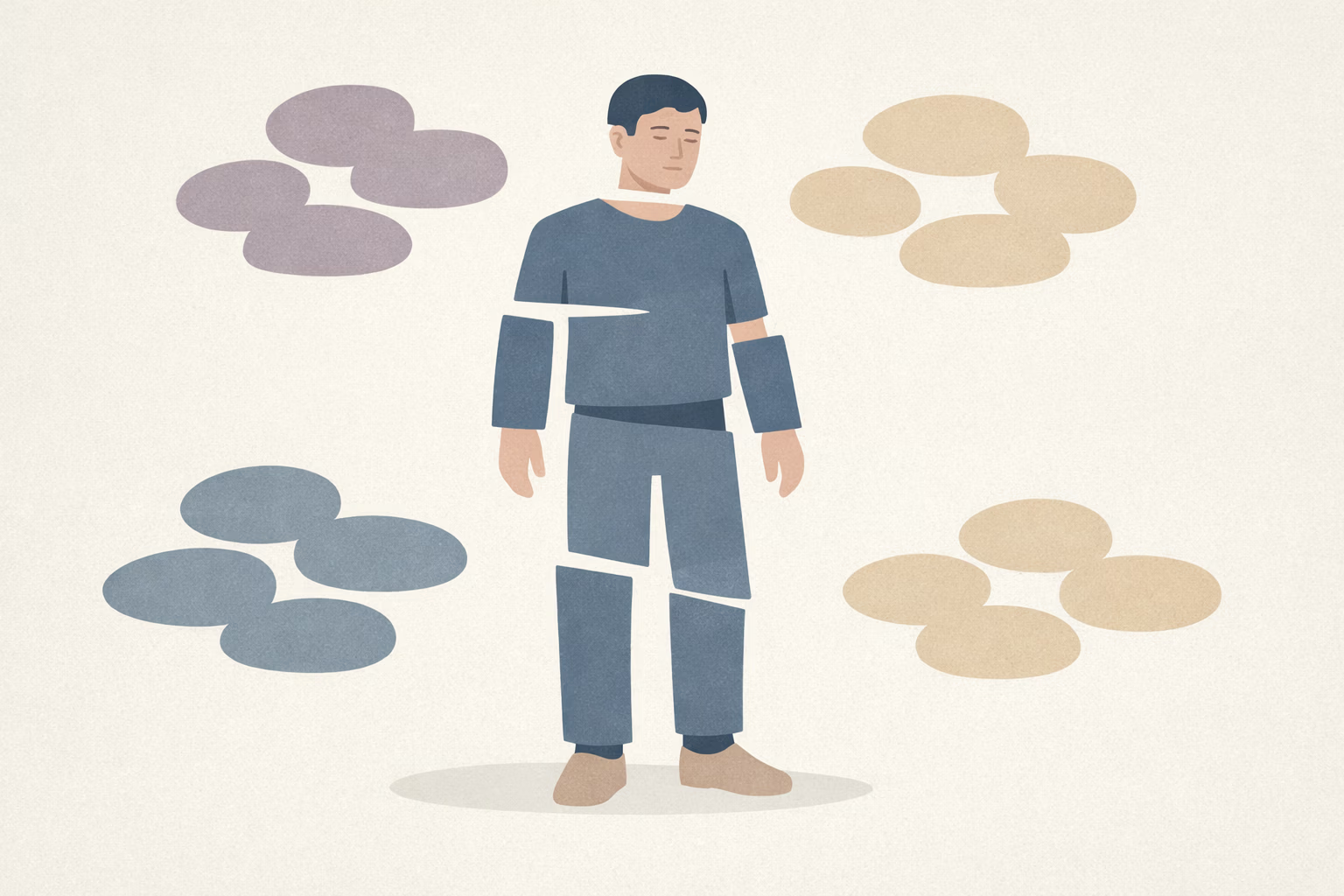
Fragmentation is not an identity. It’s a regulatory response that can develop when an experience is too intense, too fast, or too unsupported to complete. Instead of the whole self absorbing it, the system stores it in pieces—sensations here, images there, meaning somewhere else—so daily life can continue. [Ref-3]
This is why people can describe a mismatch between what they “know” and what their body will allow. Information can be present while completion is absent. Integration isn’t the same as understanding; it’s the point where the nervous system can file the experience as done, and identity can hold it without needing to isolate it.
“I can explain it clearly, but it doesn’t feel like it belongs to me.”
In the moment, separation can be stabilizing. If the full emotional load arrived all at once, it could disrupt work, parenting, decision-making, and basic functioning. Compartmentalization is one way the system prevents collapse by distributing intensity across time. [Ref-4]
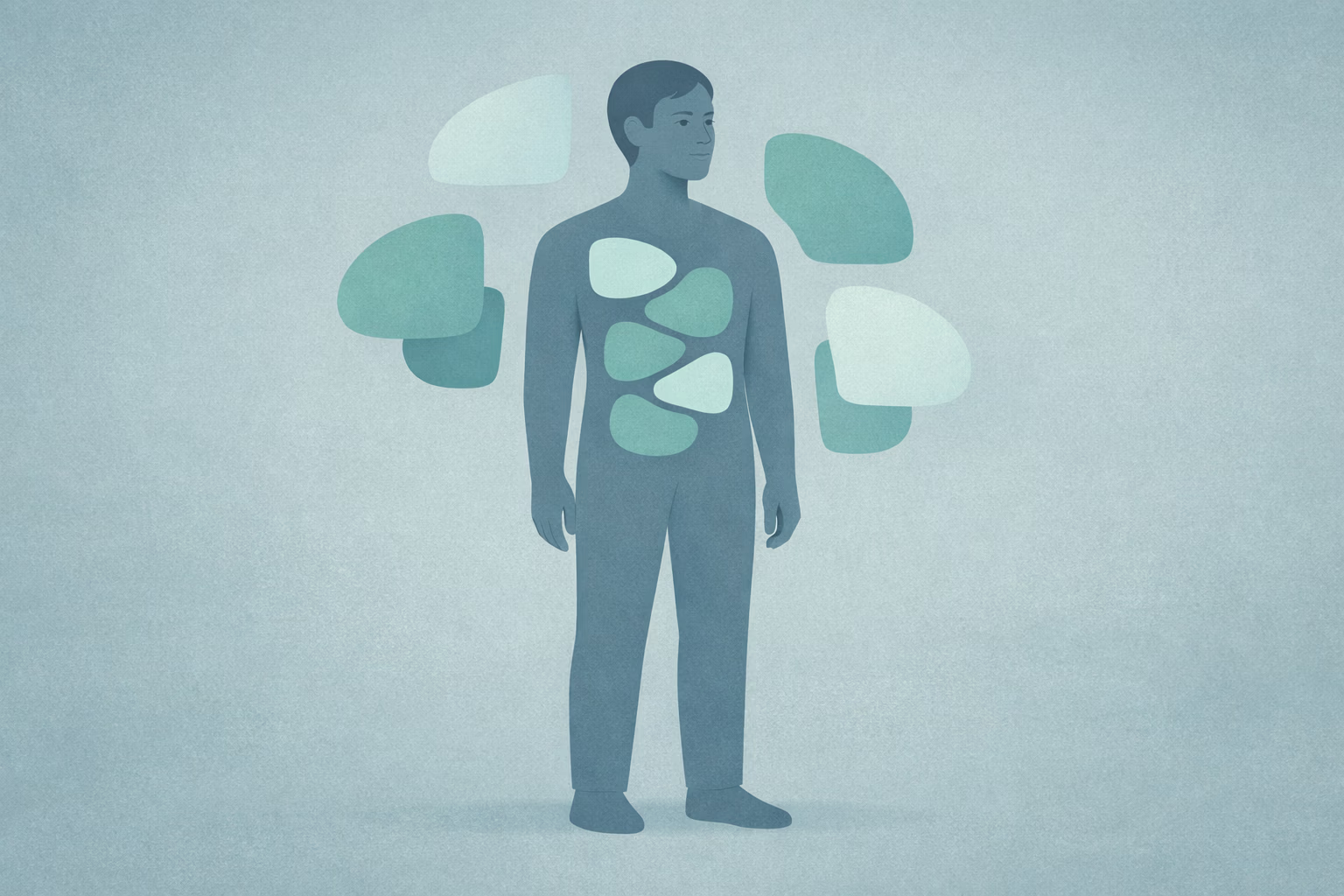
Think of it as a breaker panel, not a character flaw. When the circuit is overloaded, the system diverts power so the whole house doesn’t go dark. The cost is that some rooms lose electricity—certain signals go dim, certain needs become harder to access, and some realities remain “not fully connected” to the rest of you.
One of the most confusing aspects is that you can look fine while feeling internally discontinuous. You can show up, achieve, care for others, and still feel like you don’t fully trust your own internal continuity. That loss of self-trust isn’t moral; it’s what happens when your system repeatedly learns, “My signals don’t arrive together.” [Ref-5]
Coherence is the felt sense that your choices, values, and reactions belong to one integrated organism. When fragmentation persists, you may start relating to yourself like a shifting environment—monitoring, negotiating, bracing—rather than inhabiting a stable “me.”
Fragmentation can become self-reinforcing. Not because you’re avoiding feelings out of weakness, but because full contact with certain material can re-trigger high activation. The system learns a simple rule: partial contact is safer than completion. [Ref-6]
This is how an avoidance loop forms structurally: cues appear, the system detects potential overload, and it narrows access—attention shifts, urgency rises, numbness sets in, or control strategies take over. The loop isn’t “irrational.” It’s a consistent attempt to prevent the nervous system from being flooded again.
When closure was historically unavailable, the body can treat openness as a risk.
Over time, compartmentalized states can start to look like opposing “parts,” each with a role: one keeps you productive, one keeps you guarded, one demands relief, one monitors for danger. The shifts can be sudden because they’re state shifts, not deliberate choices. [Ref-7]
These aren’t random contradictions. They’re specialized strategies that developed under different conditions—and they don’t automatically share information with each other.
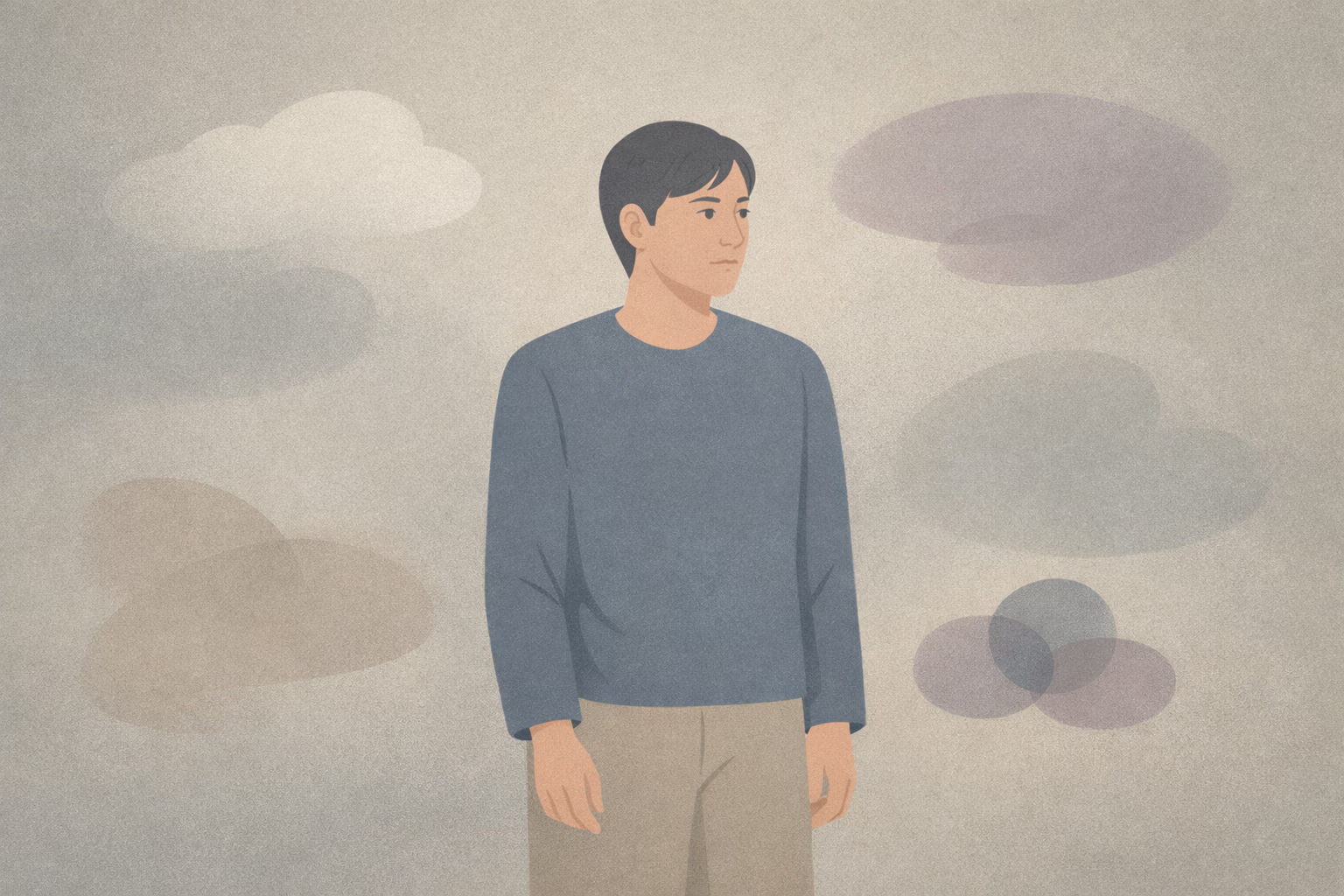
When communication between states is limited, identity can feel blurry. Not because you “don’t know yourself,” but because the self you can access depends on which internal network is currently in charge. This can lead to chronic tension and decision paralysis: choices don’t settle because different internal needs aren’t coming into the same room at the same time. [Ref-8]
Vitality can also flatten. Not necessarily sadness—more like reduced signal return. Pleasure, curiosity, and appetite for life may feel distant, because the system is using capacity to manage internal partitioning. In this state, “more effort” often increases strain rather than restoring clarity.
Fragmentation often brings short-term relief: you can get through the day, avoid an internal surge, keep things moving. The nervous system marks that as successful regulation. But the underlying experience remains incomplete—still unfiled, still active in the background. [Ref-9]
Over time, the pattern can teach the system to rely on disconnection for stability. The “done” signal never arrives, so the system keeps maintaining boundaries between parts. This is one reason people can feel stuck even when life is objectively safer now: the protective architecture is still doing what it once had to do.
“It’s not that I won’t face it. It’s that my system won’t stay with it long enough for it to finish.”
When internal parts don’t communicate, it’s often because the system doesn’t have enough safety to let information move freely. Safety here isn’t positive thinking. It’s the physiological condition where activation lowers enough for the brain and body to link events, consequences, values, and story into a single track. [Ref-10]
Meaning tends to return when experiences can complete—when the nervous system can stand down and identity can hold the full sequence without needing to split it apart. This is why coherence can’t be forced by insight. It emerges as the system gains enough stability to connect what was previously kept separate.
Coherence is less like “figuring yourself out,” and more like your system finally being able to file something as finished.
Harsh self-judgment adds load. It turns internal signals into threats, which increases the need for compartmentalization. When a part expects punishment—criticism, disgust, dismissal—it has no reason to send its information into the shared system.
By contrast, an attuned stance (internally or relationally) functions like a safety cue: it reduces threat signaling, which can improve emotion regulation capacity at the body level. [Ref-11] Importantly, this isn’t about “liking” every internal impulse. It’s about reducing the conditions that require isolation in the first place.
“When I stop interrogating myself, my signals return in a language I can understand.”
When fragmentation eases, it often isn’t dramatic. It can look like fewer internal reversals, less whiplash, and more follow-through that doesn’t require force. People often describe a clearer sense of direction—not because life got simpler, but because internal messages arrived with less distortion.
There may be more self-kindness in the system as well, not as a virtue but as a stabilizer: when the internal environment is less hostile, signals don’t have to hide. Research on self-compassion suggests it can be associated with reduced self-criticism and improved resilience under stress. [Ref-12]
A major shift happens when the goal stops being to defeat an internal state and starts being to restore communication between states. Not because every part is correct, but because every part carries data about safety, belonging, need, or limits.
Relational safety often plays a role here. Humans regulate in connection; social buffering can lower stress responses and help the nervous system return from activation. [Ref-13] As load decreases and cues of safety increase, the internal system has more room to coordinate rather than compete.
Over time, the experience of “parts” can change from a civil war to a committee: different perspectives, one body, more shared memory, and more consistent identity.
If parts of you stopped communicating, it likely happened for a reason that made sense at the time. Fragmentation is often the nervous system’s way of keeping you functional when full coherence would have been too costly. That means your inner division can be read as intelligence under constraint, not defect.
When conditions shift—when safety cues increase, when load decreases, when experiences can complete—those protectors don’t have to work as hard. The system can begin to unify around what matters: belonging, direction, and a life that feels internally inhabitable. Frameworks of safety emphasize how profoundly physiology shapes what feels possible. [Ref-14]
You don’t become whole by eliminating the sides of you that seem inconvenient. Wholeness is more often the return of communication: signals traveling farther without triggering alarms, experiences completing instead of scattering, identity feeling less like a debate and more like a home.
Self-trust tends to rebuild as the system experiences consistency—when what you sense, choose, and live start lining up with less internal interruption. In that sense, integration is not a performance. It’s a settling. [Ref-15]
From theory to practice — meaning forms when insight meets action.
Because your inner signals aren't arriving as one clear message. Different internal states get organized into separate compartments under strain — so you can want closeness and distance in the same hour, feel calm while bracing inside, or make plans sincerely and watch your body refuse to cooperate. From the outside it looks like inconsistency. From the inside it's frequently a nervous system doing load management, keeping certain signals from flooding the whole system. The exhaustion isn't from doing too much; it's from having to renegotiate yourself repeatedly because internal messages don't consolidate, and small decisions then carry the weight of a much larger negotiation.
The article frames them as a description of how protection works under strain rather than a personality theory. Over time, compartmentalized states can start to look like opposing parts because they each carry different jobs — one keeps you productive, one keeps you guarded, one demands relief, one monitors for danger. The shifts feel sudden because they're state shifts, not deliberate choices. These specialized strategies developed under different conditions and don't automatically share information with each other. They aren't random contradictions; they're regulatory responses that made sense when full coherence would have been too costly to maintain.
Because integration isn't the same as understanding. Information can be present while completion is absent. Fragmentation often means the experience was stored in pieces — sensations here, images there, meaning somewhere else — so daily life could continue. The pieces never linked into one coherent file. That's why people describe a mismatch between what they know and what their body will allow: 'I can explain it clearly, but it doesn't feel like it belongs to me.' Integration happens when the nervous system has enough safety to file the experience as done, and identity can hold it without needing to isolate it any longer.
Not by defeating any internal state but by restoring communication between states. Every part carries data about safety, belonging, need, or limits. Harsh self-judgment intensifies splits because it turns internal signals into threats, increasing the need for compartmentalization — a part expecting punishment has no reason to send its information into the shared system. Co-regulation and an attuned stance function like safety cues, lowering threat signaling and improving emotion regulation at the body level. Over time, the experience of parts can change from a civil war to a committee: different perspectives, one body, more shared memory, more consistent identity. Wholeness is signal flow returning.
From Science to Art.
Understanding explains what is happening. Art allows you to feel it—without fixing, judging, or naming. Pause here. Let the images work quietly. Sometimes meaning settles before words do.
One Quiet Window, one insight, one reflection — every Sunday