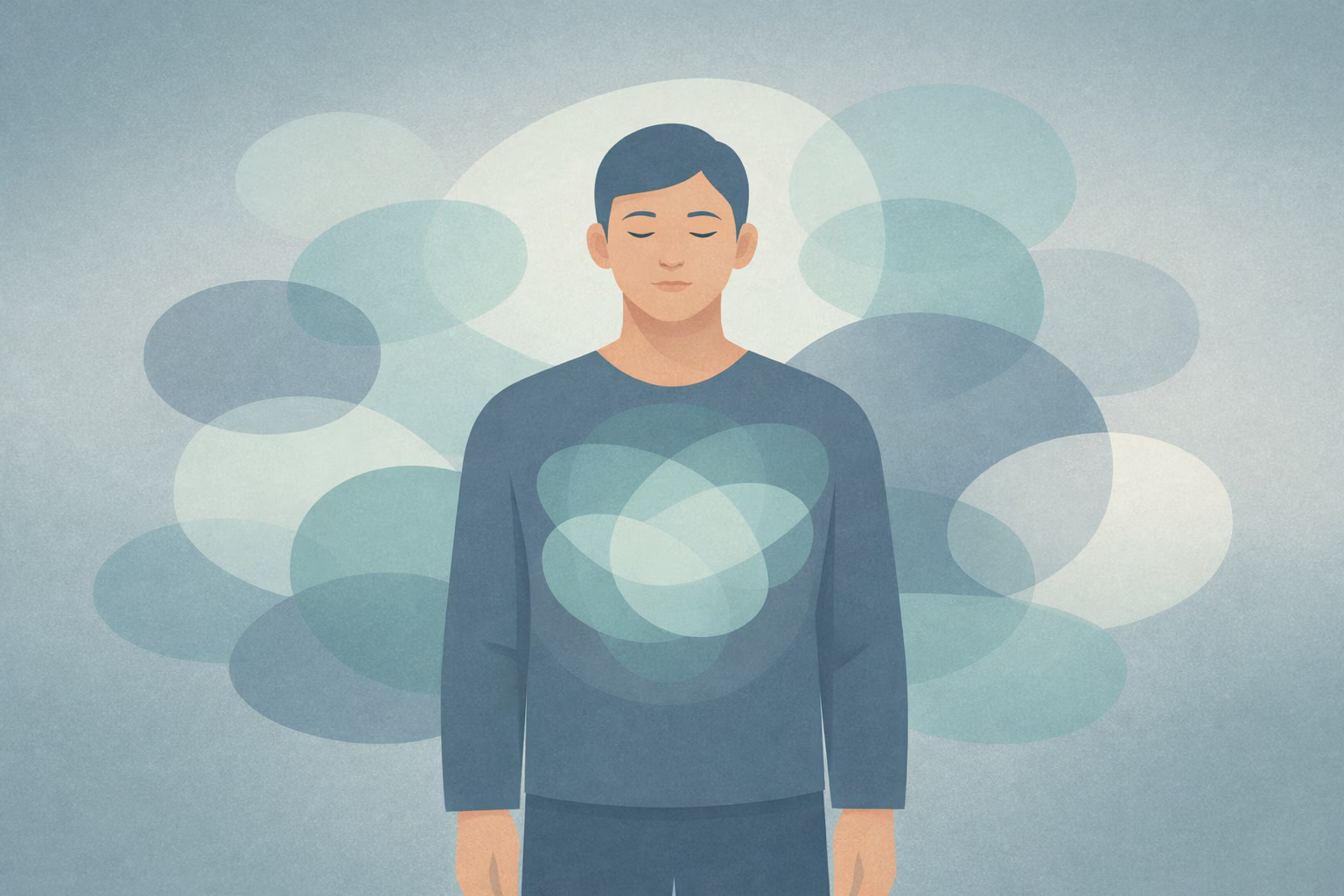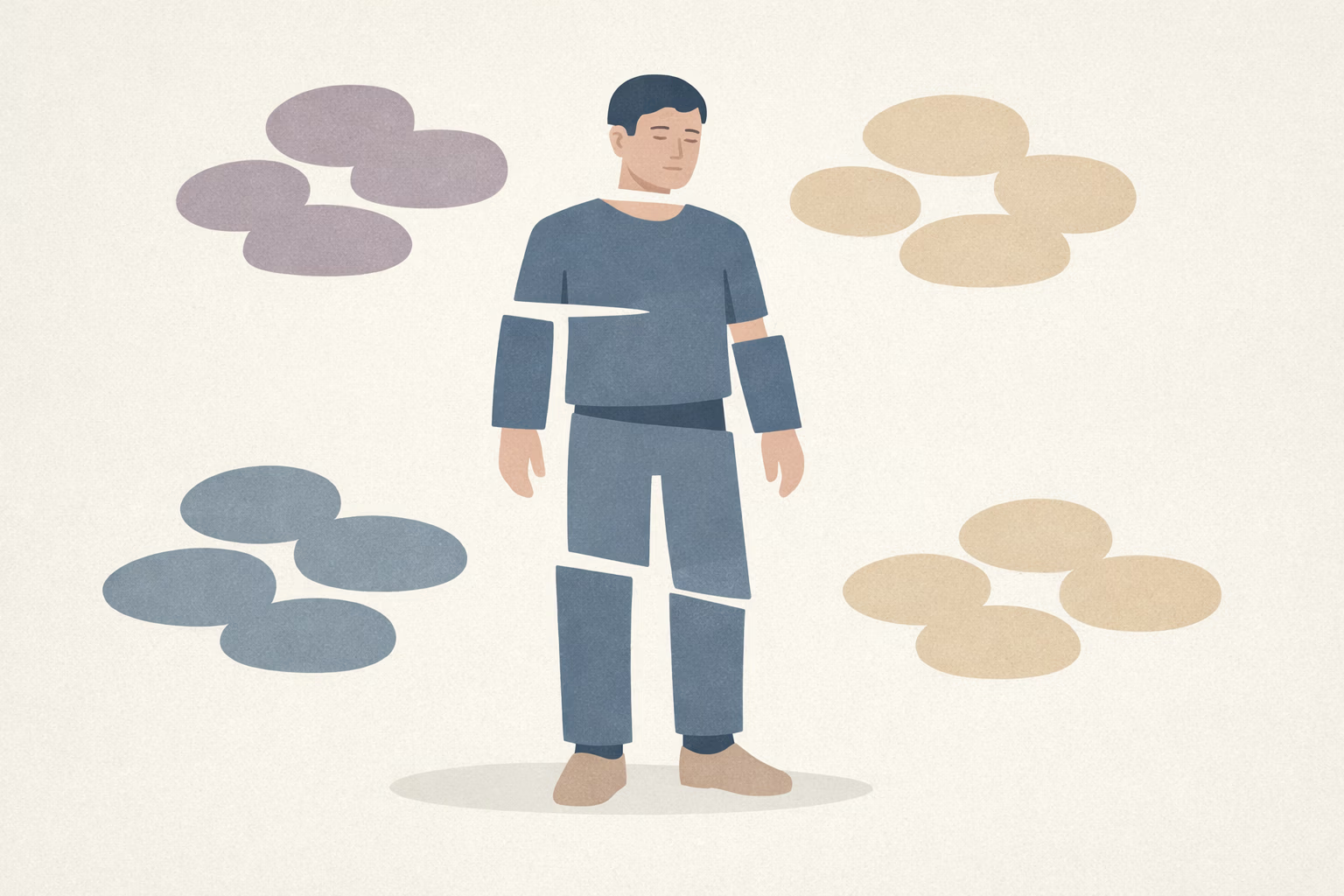
Emotional Fragmentation: When Parts of You Stop Communicating
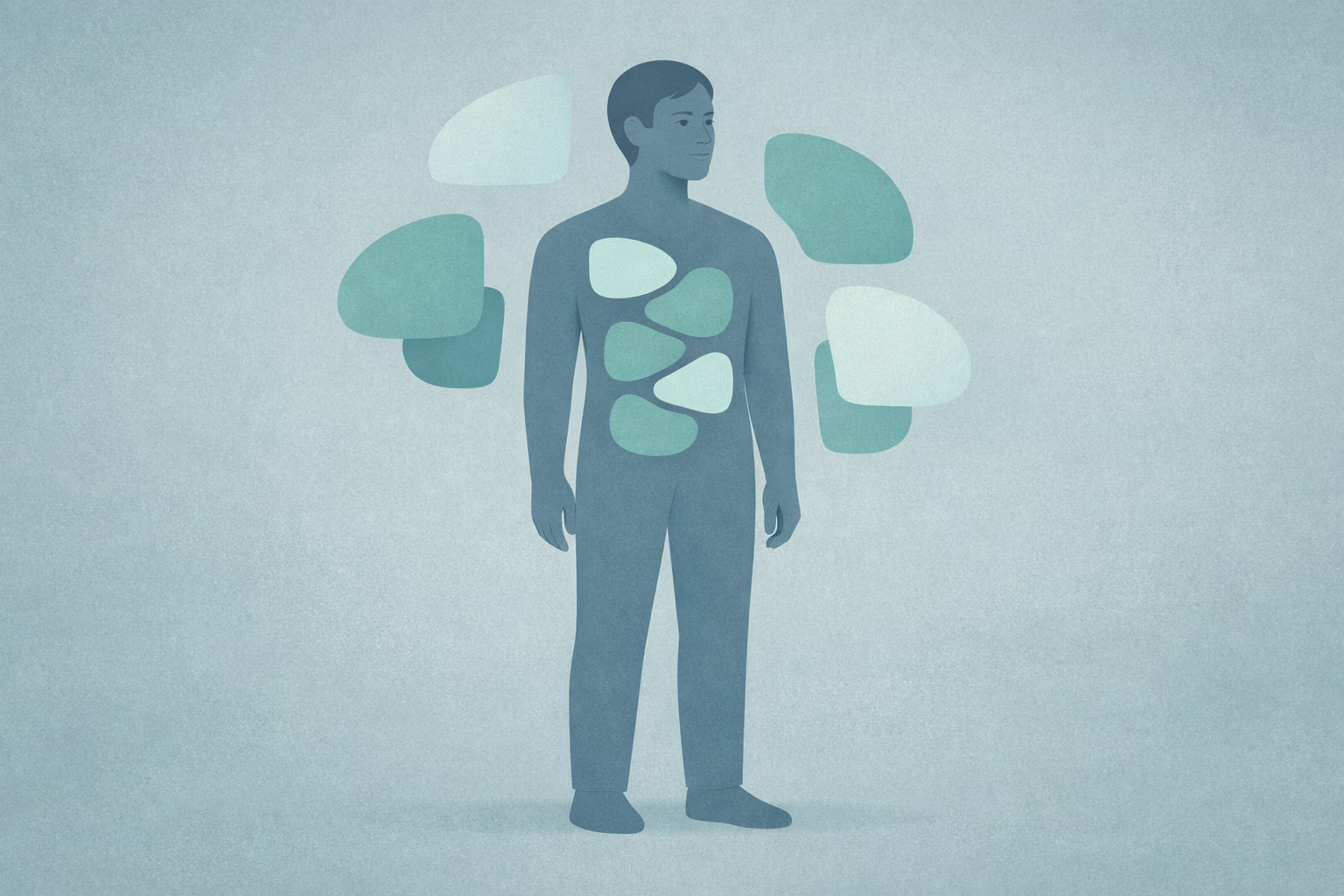
In short: Many people describe a quiet, confusing kind of division: one part of you wants closeness and rest, another part pushes for control and achievement; one part longs to speak, another part keeps everything tidy and neutral. This can look like inconsistency from the outside, but internally it often feels like competing loyalties trying to protect the same life.
Many people describe a quiet, confusing kind of division: one part of you wants closeness and rest, another part pushes for control and achievement; one part longs to speak, another part keeps everything tidy and neutral. This can look like inconsistency from the outside, but internally it often feels like competing loyalties trying to protect the same life.
What if “being split” isn’t a personality flaw, but a temporary organizational strategy under load?
Emotional reintegration is less about becoming a different person and more about restoring communication between states of you that learned to operate separately. When conditions become safer and more coherent, those states can stop taking turns at the wheel and start cooperating again.
Feeling internally divided is often what happens when the nervous system has had to keep incompatible needs from colliding. One state carries urgency, another carries caution; one state moves toward connection, another state moves toward distance. These aren’t random moods—they’re organized patterns that helped you keep going when life didn’t allow a single, clean response. [Ref-1]
In daily life, this can show up as sudden switches: confident in the morning, flat at night; calm with strangers, tense with loved ones; committed to a plan, then unable to start. The mind may label this as “I’m broken” or “I’m dramatic,” but structurally it can be a sign of compartmentalization—different circuits handling different contexts because integration was too costly at the time.
Reconnection between fragmented emotional states tends to require one thing first: enough regulation that the system can tolerate contact between previously separated material. When arousal is high, the nervous system prioritizes speed and protection; when arousal settles, it can afford linkage, sequencing, and context. That shift is biological as much as psychological. [Ref-2]
This is why people can “know” something happened, “understand” why they react, and still feel internally divided. Understanding can live in the mind while the body remains organized around unfinished alarms. Reintegration is more like the body receiving credible safety cues and completion signals, so previously isolated states can come into the same room without triggering overload.
When the system no longer has to brace, it can start to connect the dots.
In threatening or chronically demanding environments, separation can be protective: it reduces inner conflict by keeping certain experiences out of immediate awareness, and it allows functioning to continue under pressure. Over time, this can create “gaps” in continuity—moments that don’t feel fully owned, choices that don’t feel fully authored, or reactions that arrive without a clear storyline. [Ref-3]
From this angle, emotional reintegration isn’t forcing everything to be felt at once. It’s the natural resolution that can occur when the conditions that required separation are no longer present. The system can update: what once had to be handled apart can now be held together, because the cost of integration has dropped.
When parts of the self operate in isolation, a lot of energy goes into management: suppressing impulses, maintaining a social face, overexplaining to yourself, rehearsing conversations, or bracing for reactions. This isn’t “too sensitive.” It’s a real metabolic and attentional load created by running parallel systems that don’t share information. [Ref-4]
As internal cooperation increases, the feeling often isn’t dramatic. It can be quietly efficient: fewer inner debates, less anticipatory tension, more consistent follow-through. The body spends less time in high-cost states, because it doesn’t have to keep producing emergency signals to coordinate competing agendas.
Many people become skilled at managing themselves: staying composed, staying busy, staying useful, staying “fine.” These strategies can reduce immediate disruption, and they often develop for good reasons. But management is different from coherence. Coherence means the system can carry multiple truths without splitting them into separate lanes. [Ref-5]
Suppression can create short-term quiet while preserving the original fragmentation. Coherence shows up when the nervous system receives enough completion that it no longer needs to keep certain experiences isolated to function. The difference is subtle: management feels like holding the lid down; coherence feels like there is less pressure in the container to begin with.
When inner states can’t cooperate, life can start to revolve around avoiding internal collision. Not because you’re afraid in a simple, personal way—but because the system has learned that mixing certain signals creates too much load, too many consequences, or too little resolution.
That avoidance often becomes a meaning loop: the day is organized around reducing internal friction rather than moving from values. You might notice energy going into staying ahead of discomfort, staying socially acceptable, or staying in control—while the deeper “why” of your life feels blurry. Reintegration functions like an exit: not by pushing harder, but by restoring internal alignment so meaning can land and behavior can stabilize. [Ref-6]
When your inner system cooperates, you don’t need constant self-negotiation just to exist.
Reintegration often looks less like a breakthrough and more like increased continuity. The inner dialogue becomes less polarized—fewer all-or-nothing stances, fewer sudden reversals, fewer “Who even was I yesterday?” moments. Memory and self-story can feel more threaded, as if experiences are easier to place on a timeline rather than floating as disconnected scenes. [Ref-7]
This is not “more emotion.” It’s more internal communication and earlier signal detection, which reduces the need for emergency-level reactions later.
When parts remain separated, the system often pays in chronic friction. There can be a persistent sense of unfinished business—decisions that never feel complete, relationships that never feel settled, and self-promises that repeatedly reset. Over time, this can translate into exhaustion, not because you’re doing life wrong, but because your nervous system is running a high-overhead operating system.
Another cost is identity stall. Identity develops when experiences complete and integrate into a coherent self-story. When experiences remain uncompleted or compartmentalized, the sense of “who I am” can feel thin, inconsistent, or dependent on context. Avoidance can then become the primary organizer: not wanting certain states to activate, not wanting certain outcomes to happen, not wanting certain conversations to begin. [Ref-8]
It’s hard to build a life from values when so much energy goes into preventing inner fallout.
When the inner system experiences even small moments of coherence, the effect can be self-reinforcing. Relief is not just pleasant; it’s informational. It tells the nervous system, “This configuration is sustainable.” Clarity is also informational: it reduces prediction error, reduces scanning, and reduces the need for control as a substitute for certainty.
As narrative continuity increases, choices can begin to feel more authored. You’re not merely reacting to whatever state is loudest today; you’re more able to carry yesterday’s truth into today’s behavior. Over time, this supports a steadier narrative identity—less patchwork, more continuity, more “this is me.” [Ref-9]
A key bridge in reintegration is arousal stability. When the body is chronically activated, it treats vulnerable signals (tenderness, grief, longing, uncertainty) as destabilizing—not because they’re “bad,” but because they increase complexity at a time when the system is optimized for speed. When activation drops, the system can tolerate complexity again.
This is why reintegration isn’t a mindset shift. It’s a physiological shift toward conditions where previously exiled signals can re-enter without triggering shutdown, urgency, or overcontrol. In calmer states, the nervous system can link sensation, context, and meaning into something that feels complete rather than scattered. Social buffering and credible safety cues can support this downshift, making reconnection more possible. [Ref-10]
Coherence often returns when the body no longer has to choose between function and truth.
Humans are social regulators. An attuned relationship—where you feel seen without being analyzed, held without being handled—can provide the nervous system with a stabilizing reference point. That stability makes it easier for internal states to come online without needing to fragment or perform.
Importantly, this isn’t about being “fixed” by someone else. It’s about your system receiving signals of non-threat and belonging, which reduces defensive load and allows internal signals to coordinate. Gentle, non-shaming contact (including with yourself) can replace the internal stance of criticism with a stance that is more metabolically sustainable. [Ref-11]
When there is less inner punishment, there is less need for inner hiding.
When reintegration progresses, the change is often practical: increased calm, fewer internal emergencies, and more resilience under normal stress. Resilience here doesn’t mean never getting activated; it means activation resolves more cleanly. The system returns to baseline more reliably because fewer loops remain open and fewer signals are being blocked from completion.
People often report a more trustworthy inner compass: not constant certainty, but a steadier sense of self-reference. Signals are easier to read and less likely to arrive as extremes. This can feel like self-trust returning—not as a motivational slogan, but as a lived sense that your internal system is communicating in a usable way. [Ref-12]
As internal cooperation increases, values can move from abstract ideals to lived orientation. Values aren’t pressure; they’re direction. When the self is fragmented, direction gets interrupted by state shifts. When the self is more integrated, direction becomes easier to hold across time—especially through discomfort—because fewer parts are working against the same choice.
This is where meaning becomes stabilizing. Meaning emerges when experiences complete and integrate into identity, creating a sense of “this matters and it fits who I am.” That kind of meaning supports follow-through without constant force, because behavior is no longer a tug-of-war between competing internal mandates. Narrative identity research describes this as integrating difficult experiences into a coherent life story that can guide future action. [Ref-13]
When your story can hold the whole of you, your next step doesn’t have to be negotiated from scratch.
Emotional reintegration can be understood as the restoration of self-leadership: not domination over parts of you, but a return to internal collaboration. In that collaboration, agency increases—not because you finally found the “right” mindset, but because fewer inner signals are being forced into silence, and fewer choices are made just to prevent internal backlash.
As coherence grows, life can reorganize around purpose rather than avoidance. The nervous system spends less time managing threat and more time available for connection, creativity, and contribution. That shift supports psychological flexibility: the capacity to stay oriented to what matters even when experience is complex. [Ref-14]
Many modern struggles aren’t evidence of a defective self; they’re evidence of a self that adapted to incomplete endings. Reintegration is what becomes possible when those adaptations are no longer required and the system can finally allow completion to land.
Over time, the measure of change is not how intensely you understand your past, but how steadily your present feels inhabited—how much of you can be in one life, on one timeline, in one body, with less internal splitting. In that settled continuity, meaning isn’t manufactured; it emerges as the whole self is welcomed back into the story. [Ref-15]
From theory to practice — meaning forms when insight meets action.
Because the nervous system has organized different states to handle different contexts. The article describes this as compartmentalization: one part of you wants closeness and rest, another pushes for control and achievement, another keeps everything tidy and neutral. From outside it looks like inconsistency, but internally it's competing loyalties trying to protect the same life. Approach states push forward and perform; protect states minimize and withdraw; monitor states scan and prevent mistakes. These aren't random moods — they're patterns that helped you keep going when life didn't allow a single, clean response. The split is a strategy under load, not an identity.
No, and the article is careful about this. Reintegration isn't the demand to feel it all simultaneously. It's the natural resolution that becomes possible when conditions that required separation are no longer present. The system can update: what once had to be handled apart can now be held together because the cost of integration has dropped. Safety and regulation are the bridge — not courage. When arousal settles, the nervous system can afford linkage, sequencing, and context. You can know something happened, understand why you react, and still feel internally divided, because understanding lives in the mind while the body stays organized around unfinished alarms.
Management is holding the lid down; integration is lower pressure in the container. The article makes this distinction central. Many people become skilled at managing themselves — staying composed, useful, fine. Those strategies reduce immediate disruption and often develop for good reasons. But suppression preserves the original fragmentation. Coherence shows up when the nervous system receives enough completion that it no longer needs to keep certain experiences isolated to function. Avoidance loops then loosen: the day stops revolving around preventing internal collision. Reintegration is restoration of self-leadership — internal collaboration rather than domination over parts of you.
Less like breakthrough and more like increased continuity. The article describes the practical signs: more nuance, where competing needs can coexist without one erasing the other; more consistency, so preferences and boundaries feel less random across contexts; more signal return — hunger, fatigue, excitement, discomfort registering earlier and clearer; less internal courtroom, fewer hours spent proving you're allowed to feel what you feel. Memory and self-story start to thread, with experiences placed on a timeline rather than floating disconnected. This isn't more emotion — it's more internal communication and earlier signal detection, which reduces the need for emergency-level reactions later.
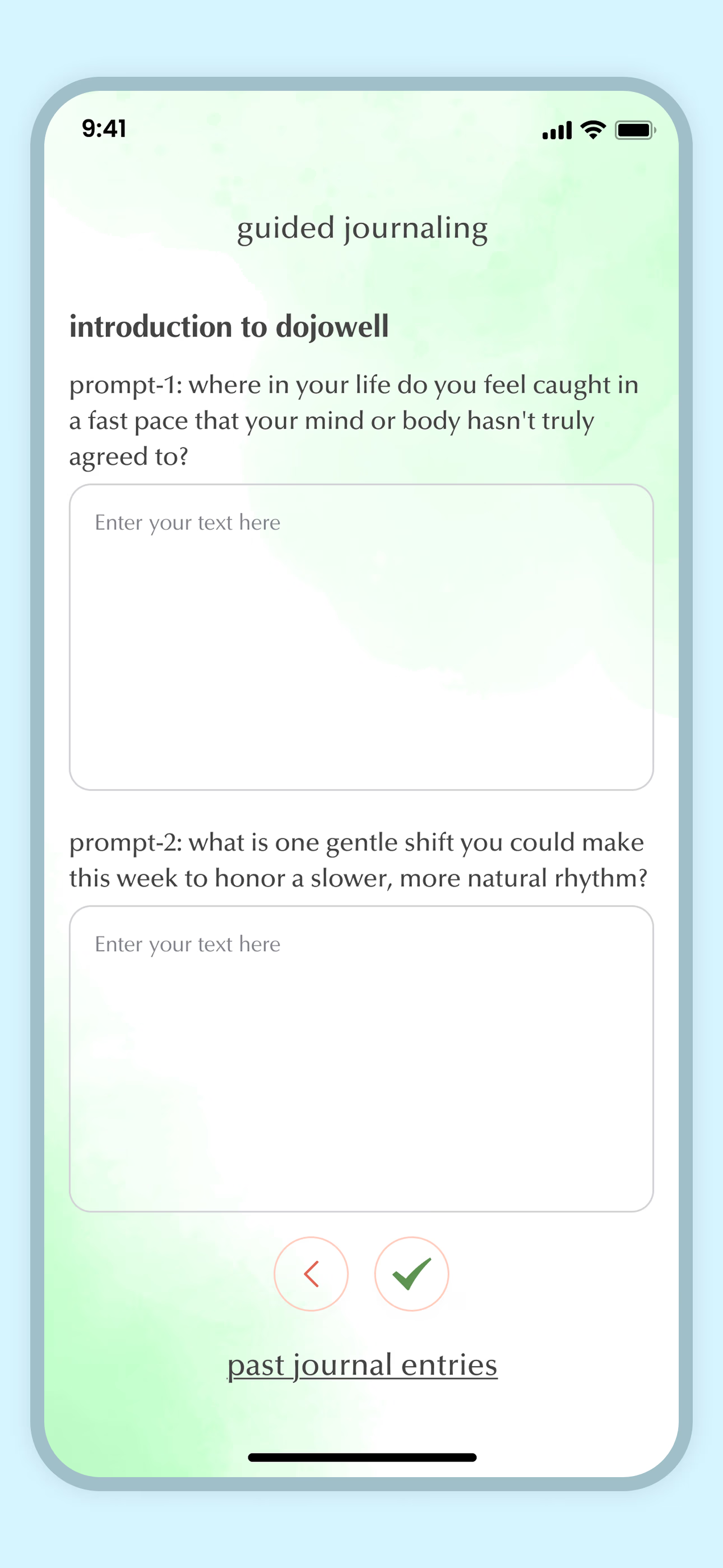
From Science to Art.
Understanding explains what is happening. Art allows you to feel it—without fixing, judging, or naming. Pause here. Let the images work quietly. Sometimes meaning settles before words do.
One Quiet Window, one insight, one reflection — every Sunday