

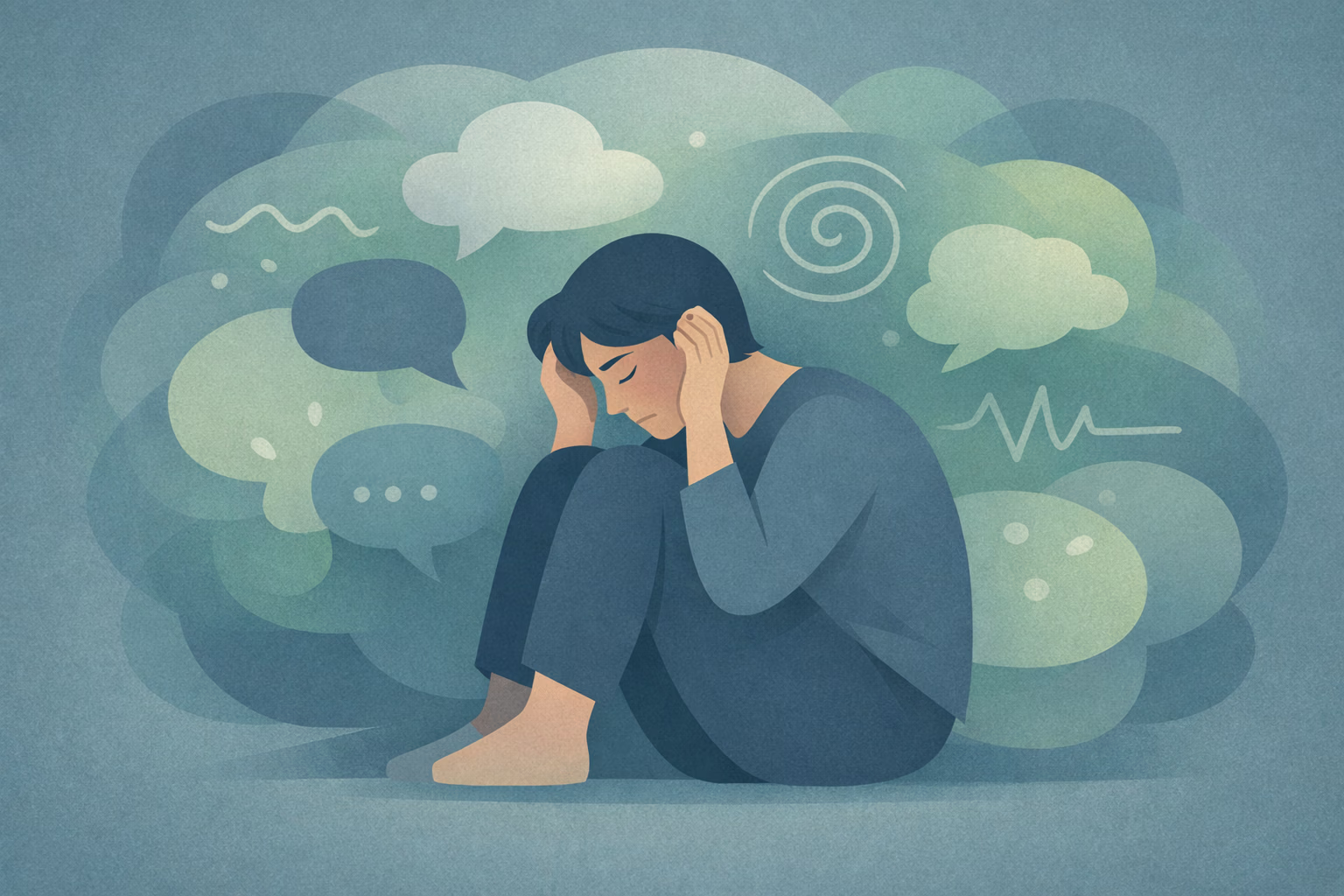
Emotional Numbness: Why You Feel Disconnected From Yourself
Explains numbness as a freeze response triggered by chronic micro-stress and overstimulation.
Read articleArticles exploring how modern life overloads the nervous system—driving shutdown, panic cycles, emotional labor, micro-pattern reactivity, loneliness, and reward dysregulation.
When input exceeds capacity, the system protects itself—through freeze, disconnection, emotional compression, and motivation collapse.
Explains numbness as a freeze response triggered by chronic micro-stress and overstimulation.
Read article
Why overwhelm is an ancient threat-detection system overloaded by modern input.
Read article
Why chronic stress collapses motivation systems.
Read article
Self-neglect as internalized unworthiness.
Read article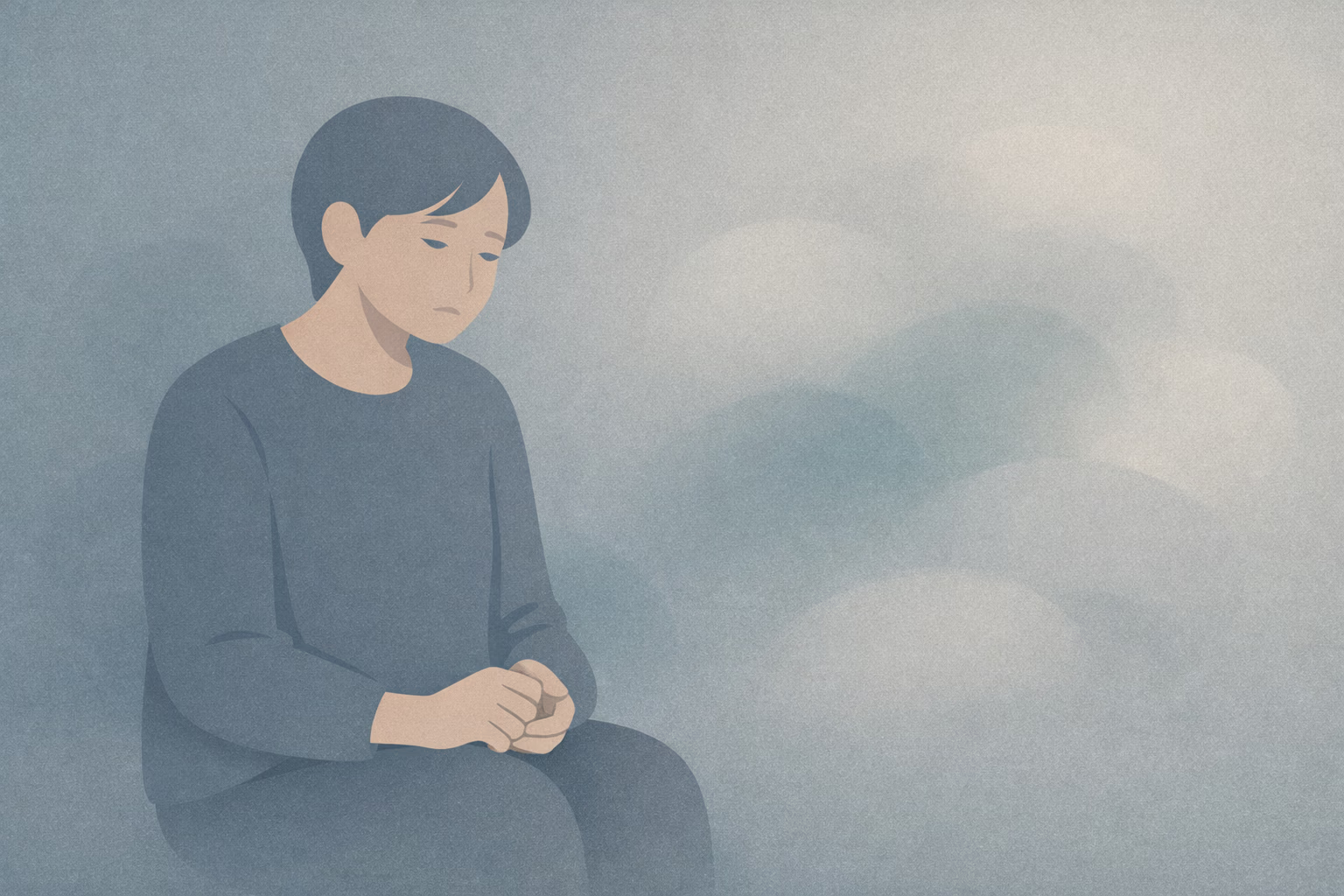
Numbing is a protective adaptation.
Read article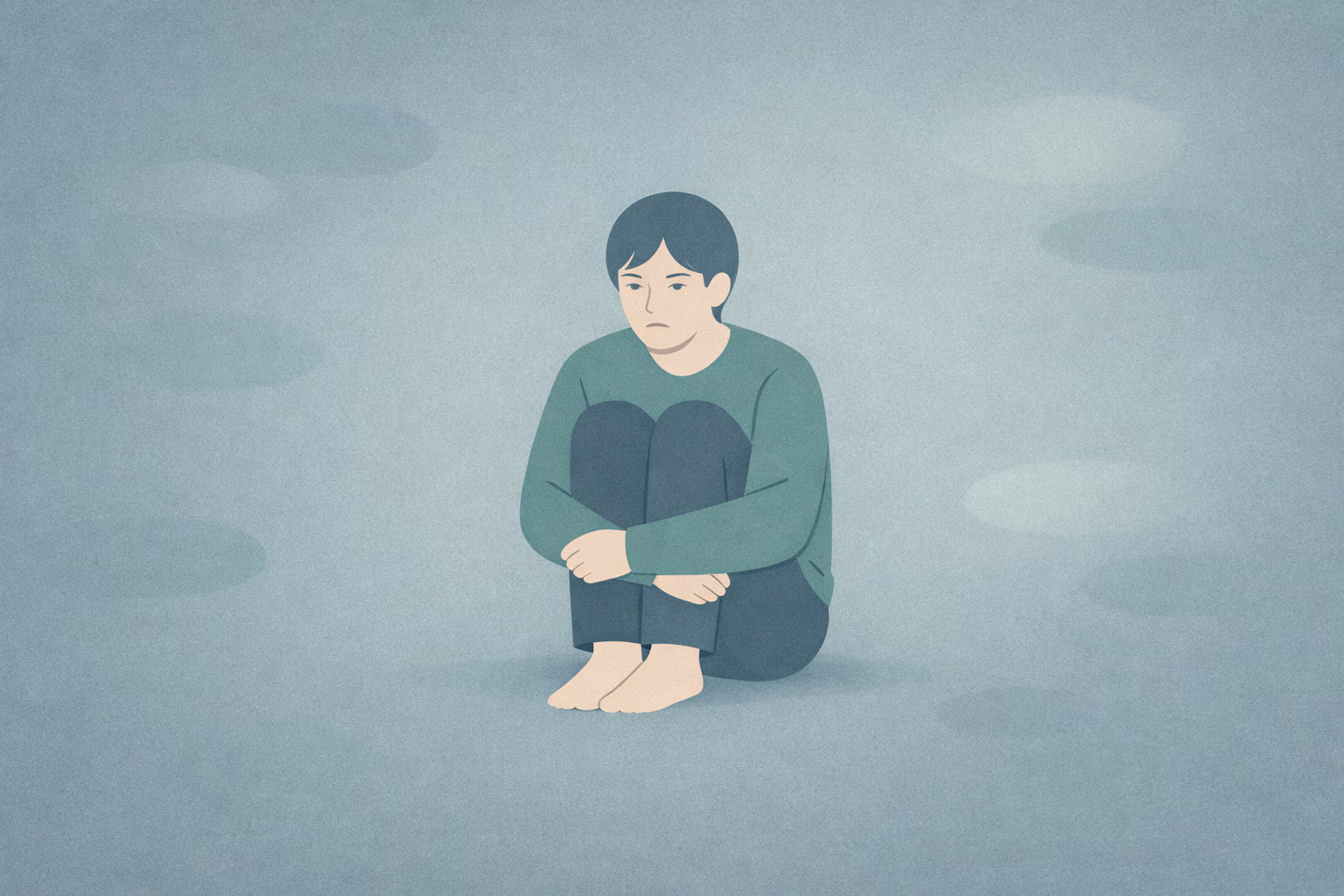
Freeze response triggered by overwhelm.
Read article
Numbness becomes default after chronic overload.
Read article
Motivation collapse tied to threat or dopamine depletion.
Read article
Numbing behaviors hide emotional overload.
Read article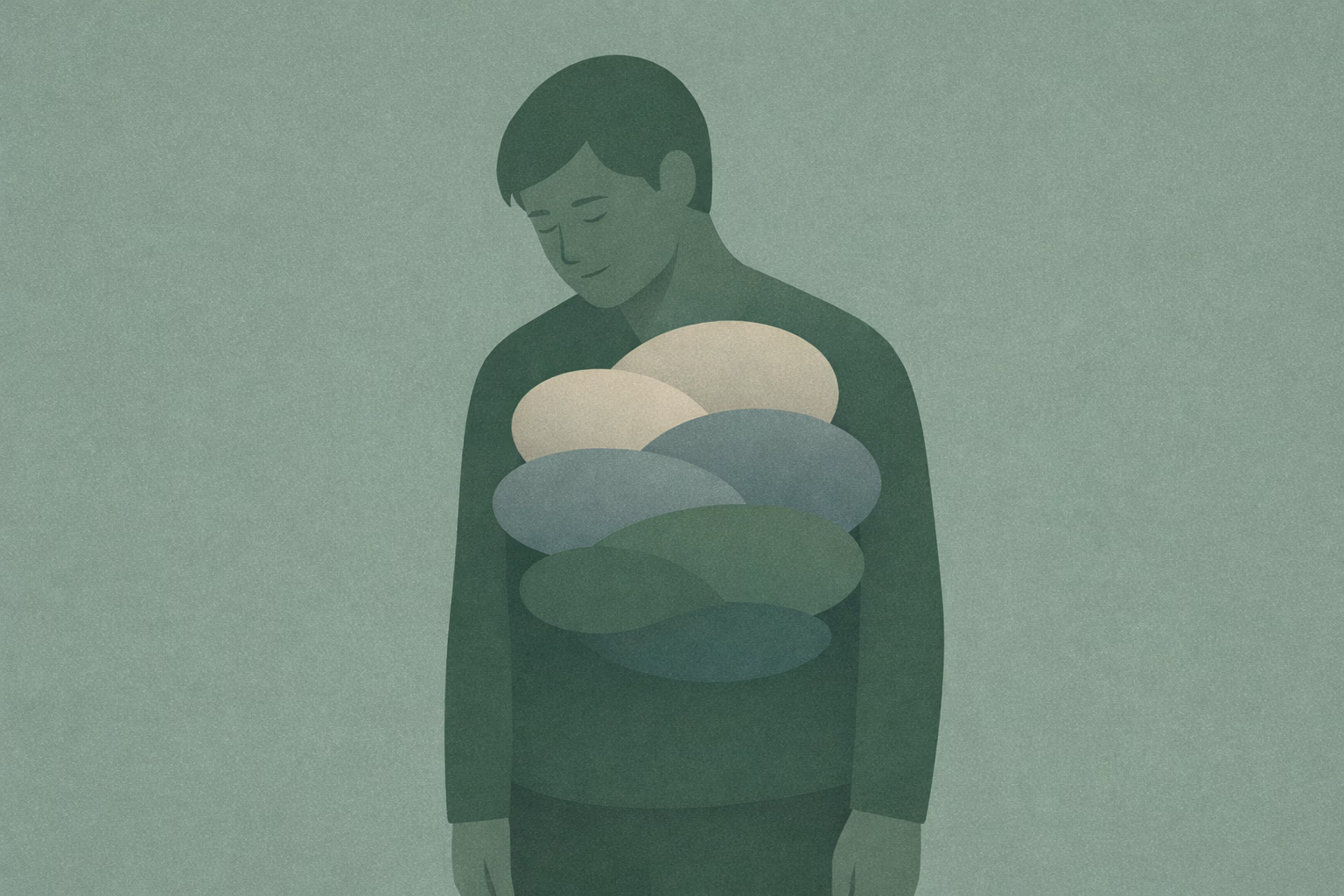
Suppressed emotions become somatic tension.
Read article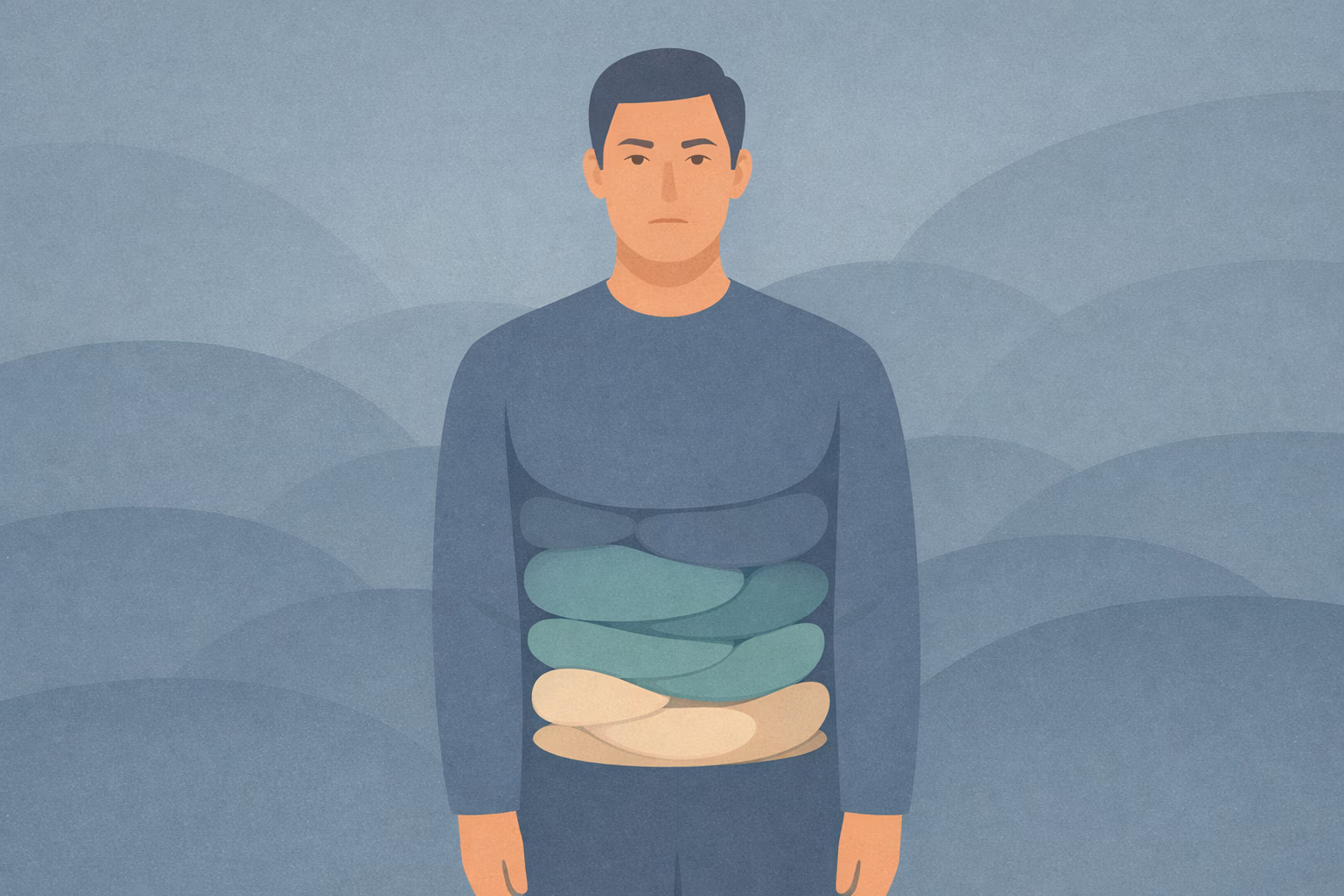
Compression increases internal pressure.
Read article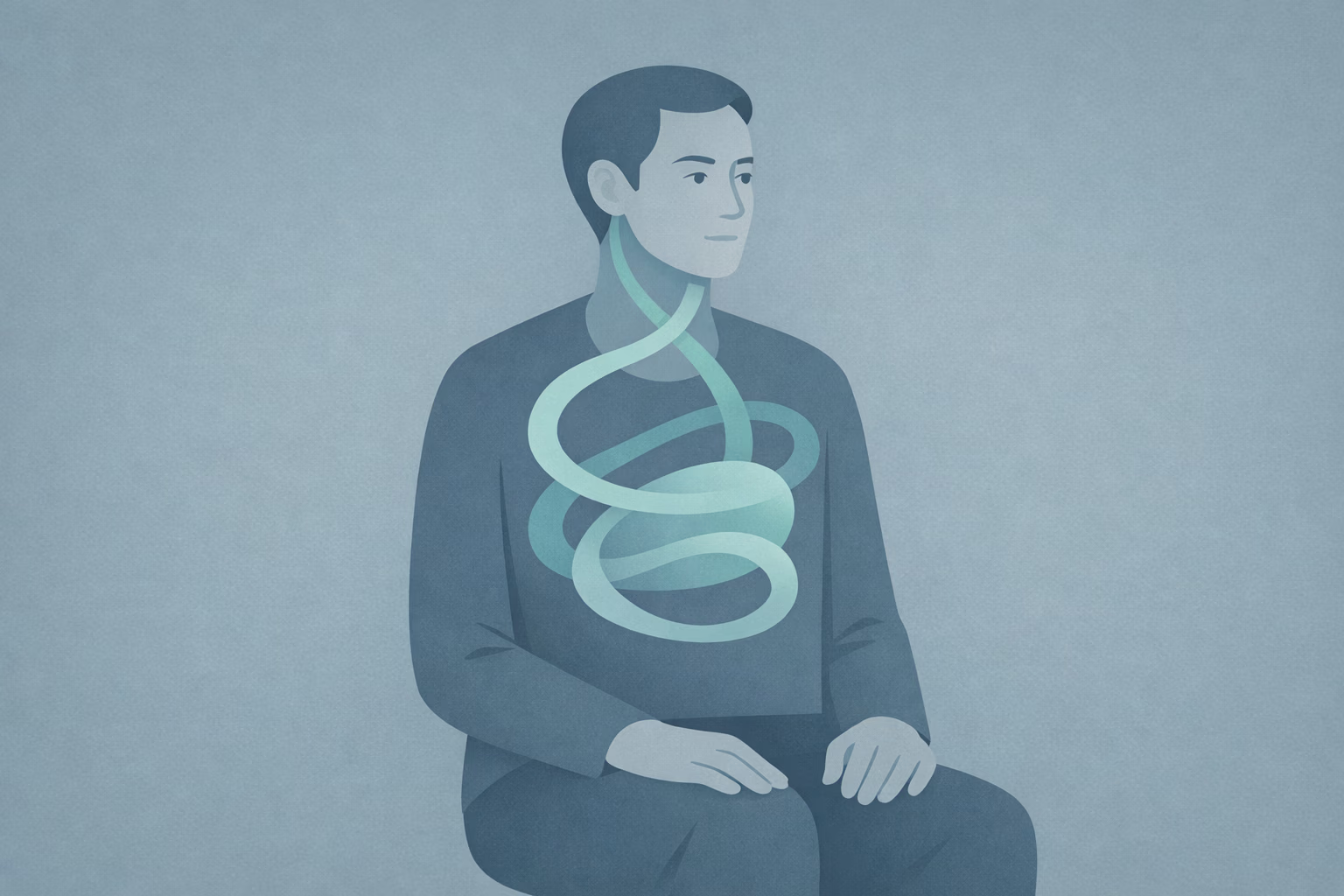
Body expresses emotional patterns through tension.
Read article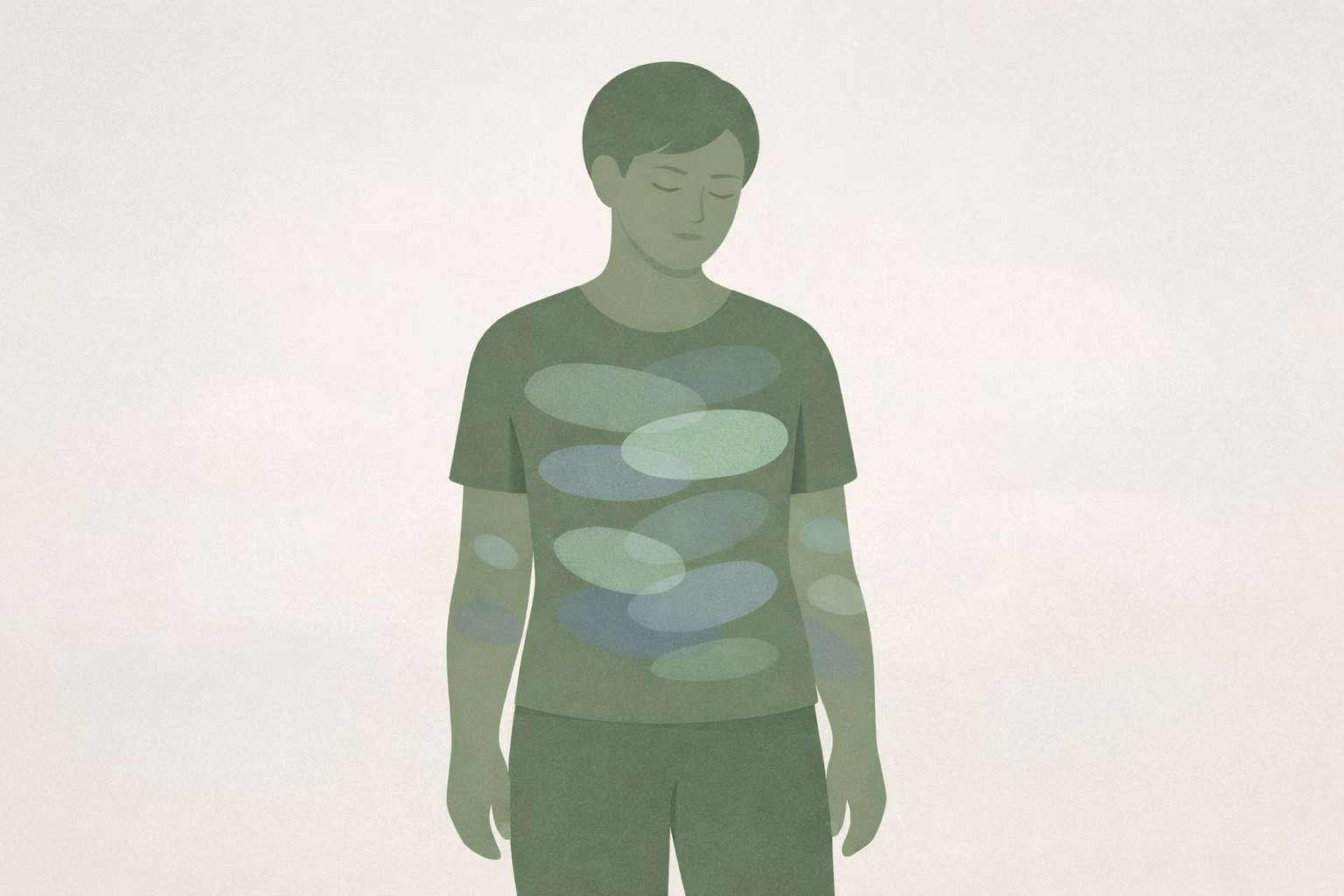
Body retains emotional imprints long after events.
Read article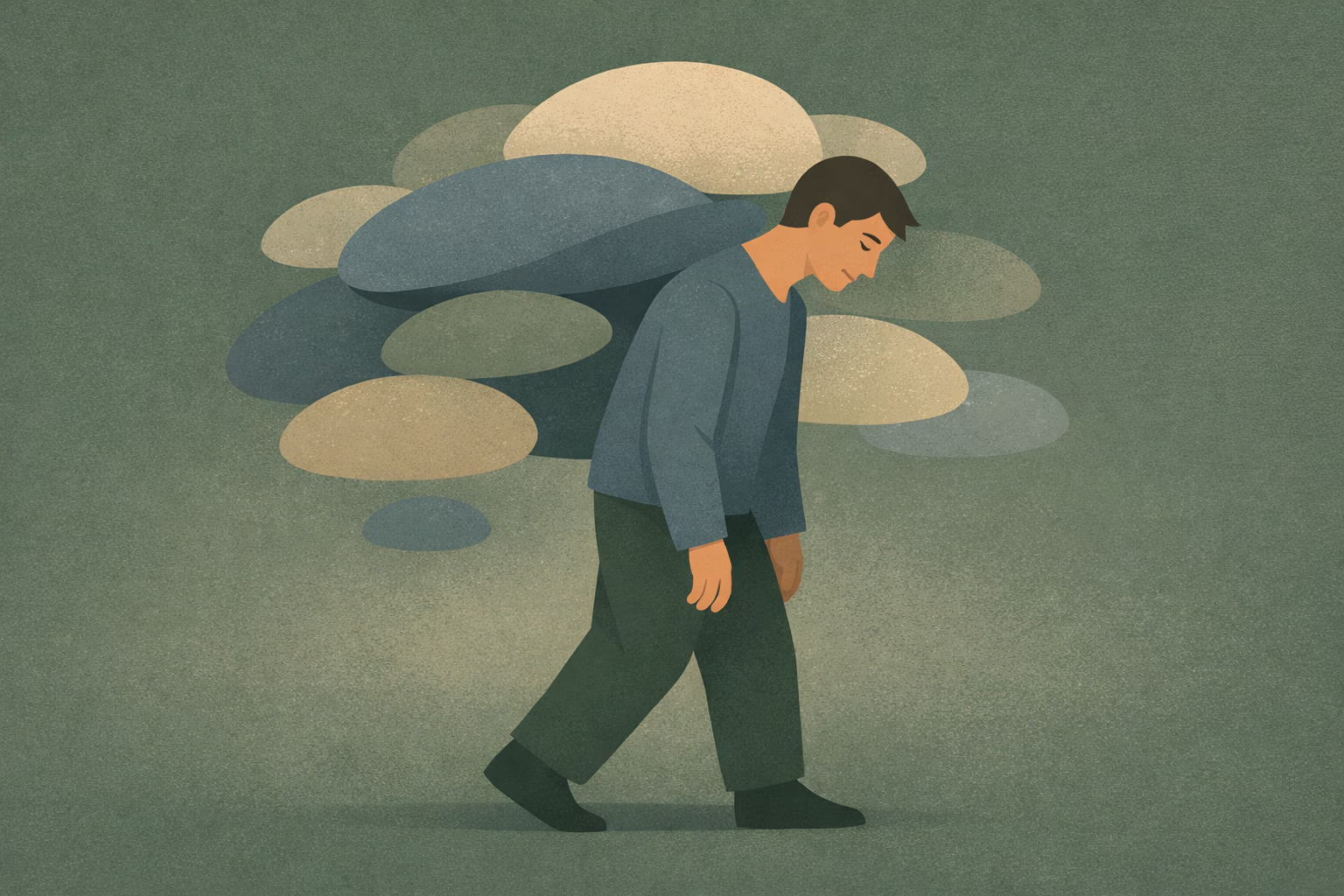
Emotional strain accumulates over time.
Read article
Congestion arises from unprocessed emotional backlog.
Read article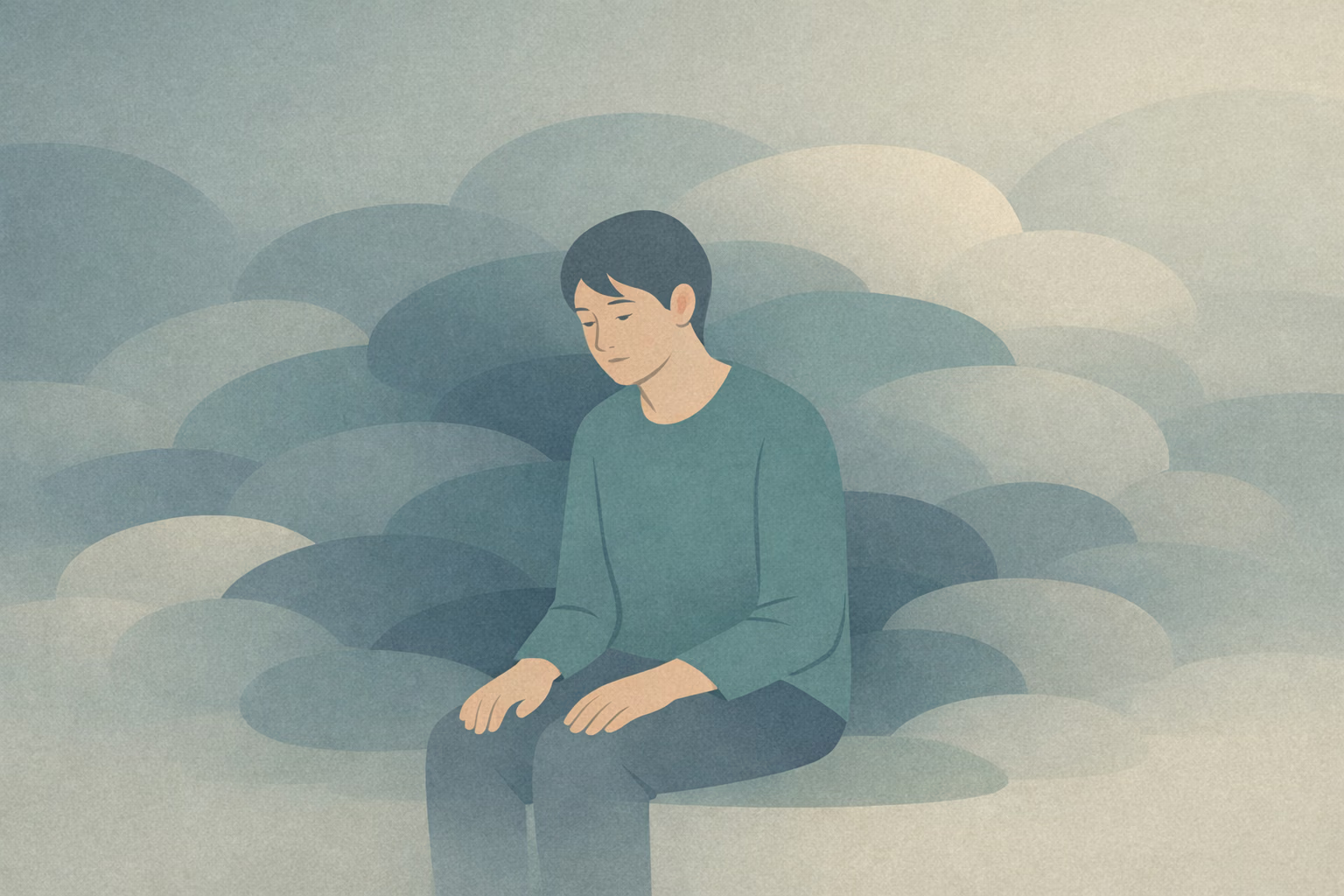
Density reflects emotional accumulation + low capacity.
Read article
Release must be structured, safe, and regulated.
Read article
AI accelerates output but drains originality.
Read articleNumbness is a structural "Power System" response to an Avoidance Loop that has become overloaded. When digital inputs exceed your nervous system's capacity, the system initiates a "Dorsal Vagal Shutdown." This is a protective dampening designed to prevent total collapse from overstimulation. Numbness is a signal that your "meaning density" has become too thin because experiences are being triggered but never allowed to settle or integrate.
This "Emotional Weight" is the somatic result of Emotional Compression. When you push emotions down to remain functional, that unexpressed energy manifests as muscular holding and internal pressure. In the Meaning Density Model™, this drains your "Biology & Health" system because your energy is being consumed just to maintain composure. Releasing this weight requires allowing the nervous system to complete its stored loops so physical ease can return.
Laziness is a myth; what you are experiencing is a protective collapse of initiative. When your "Reward & Pursuit" system is exhausted by constant triggers without reaching a "Done Signal," the brain shuts down to prevent further depletion. True motivation returns when you stop using force and start restoring "Meaning Density" through small, value-aligned completions that signal safety to your "Threat System."
Emotional Congestion occurs when too many "behavioral loops" are left open, creating a backlog of unprocessed experience. To clear this without flooding your system, Dojowell advocates for "Structured Release"—creating safe containers like somatic grounding to let pressure out slowly. This transforms "congestion" into "insight," moving you toward "Narrative Fluidity" where experiences support your direction rather than blocking it.
Modern tools create a "Hypermodern Era" of infinite triggers with no biological endings. This separates "Action" from "Integration," creating a life high in output but low in "Meaning Density." You are constantly initiating new loops without reaching the "Done Signal" required for the nervous system to settle. The goal is to move from "acceleration" back to "intentionality," ensuring tools serve your "Narrative & Identity" rather than dictating your biological pace.
Panic, stress sensitivity, and nervous-system fatigue aren’t “in your head”—they’re state shifts in survival circuitry and capacity.
Explains how repeated panic drains nervous system capacity.
Read article
Core survival circuits hijacked by modern stressors.
Read article
Shock overloads the threat circuits and needs somatic reset.
Read article
Stress becomes baseline when habituated.
Read article
Emotional tension stored as muscular holding.
Read article
Panic becomes a learned neural loop.
Read article
Chronic micro-stress drains emotional energy reserves.
Read article
Stress loops repeat due to conditioned triggers.
Read article
Sensitivity increases when capacity is low.
Read article
Awareness interrupts stress escalation.
Read article
Threshold depends on capacity + micro-stress load.
Read article
Deactivation interrupts threat cascade.
Read article
Stress carries information about unmet needs.
Read article
Lifestyle mismatches create continuous low-level stress.
Read article
Repatterning reduces chronic stress loops.
Read article
Unlearning dismantles outdated threat patterns.
Read article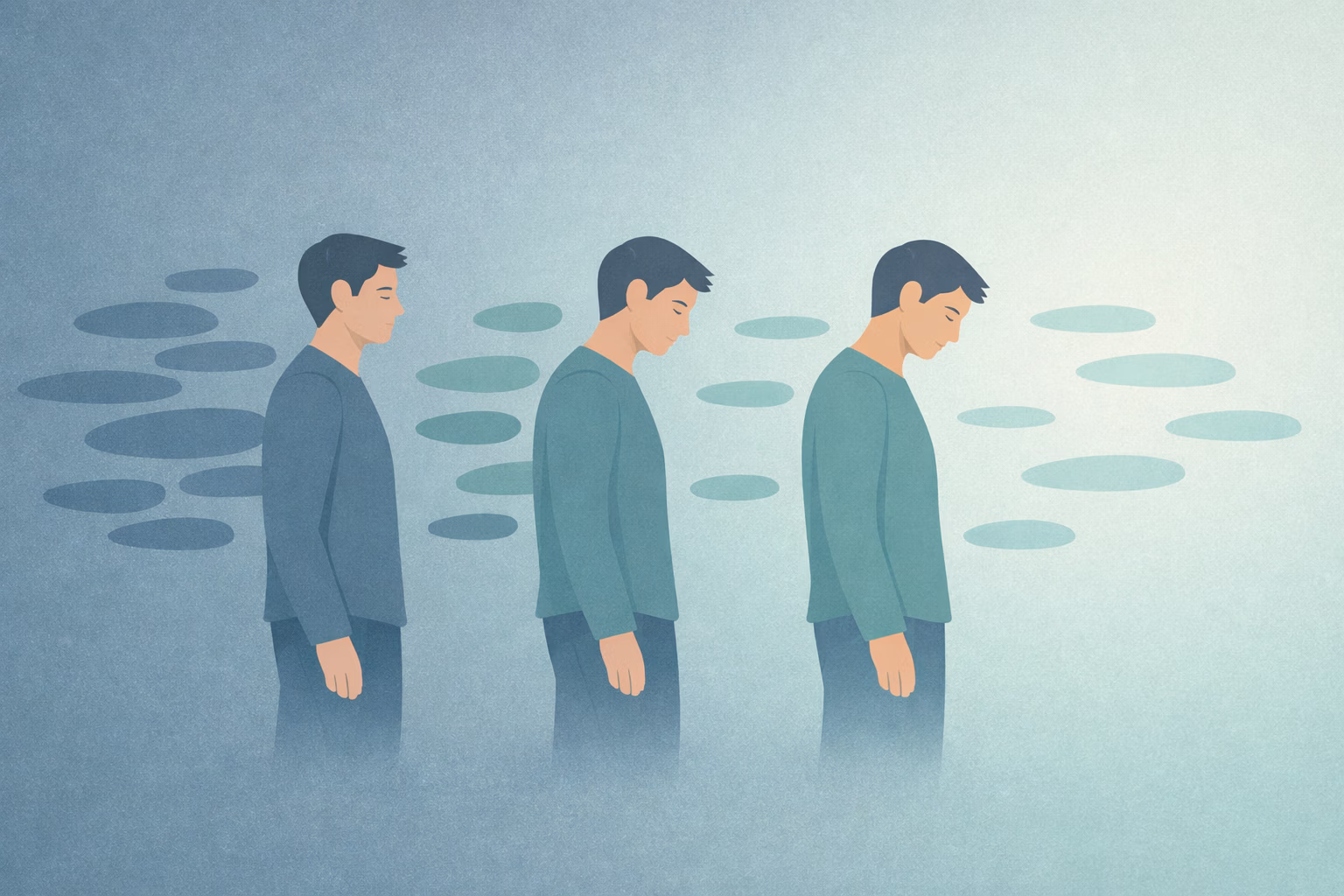
Downshifting slows threat responses.
Read article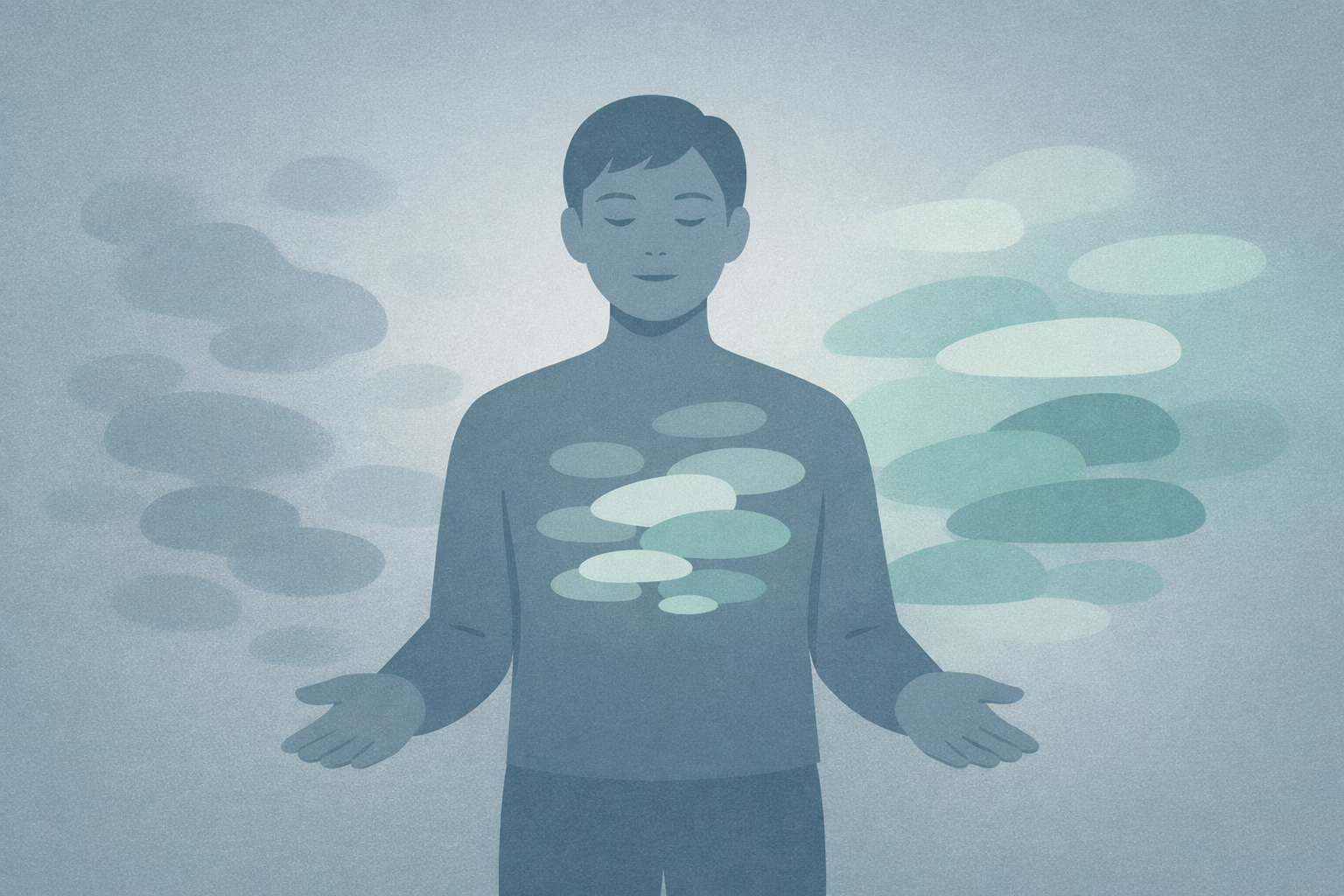
Stress reveals unmet needs & conflicts.
Read article
Fluidity = adaptive regulation, not suppression.
Read articlePanic is a high-velocity activation of your Threat & Safety System that has become "decoupled" from reality. In the Dojowell framework, this is a Panic Loop—a learned neural habit where your body misinterprets internal survival signals as external danger. Recovery isn't about logical "thinking," but about using somatic deactivation to signal safety to your Power System, allowing the loop to finally close and your energy to reorient toward meaning.
This "stuckness" is Shutdown Mode, a biological state where your system suppresses movement to conserve energy. According to the Meaning Density Model™, this occurs when your Reward & Pursuit system is overridden by a Threat System that deems action unsafe. Thawing from freeze requires gentle, structured re-activation that respects your current capacity, rather than forceful effort which only increases the internal pressure.
Stress Sensitivity is a symptom of low Meaning Density. When your nervous system capacity is drained by chronic micro-stresses and "leaky" behavioral loops, your biological "buffer" is exhausted. Building resilience isn't about "toughening up"; it’s about repairing the structural conditions of your life—reducing unnecessary loop initiations and protecting recovery time—so your threshold naturally rises and small things regain their proper scale.
This is a failure of Stress Alignment caused by a "Hypermodern" pace. Constant triggers and social comparison are fundamentally at odds with the human nervous system's need for rhythm. This mismatch creates a persistent, low-level activation that your body stores as Tension Buildup. By "decoding" this tension as a signal of misalignment, you can restructure habits to support your biology, allowing meaning to emerge as a natural byproduct of a life in sync.
Stress Translation is the process of interpreting your biological reactions as a compass. Your "Threat System" isn't attacking you; it is pointing toward unmet needs, violated boundaries, or a misalignment with your Narrative & Identity. When you move from "Avoidance" to "Integration," you stop wasting energy on internal conflict. This shifts you into a Meaning Loop, where difficult physiological states become data points that guide you toward a values-aligned existence.
Practical regulation skills for real life—grounding, recovery, emotional precision, and building capacity without forcing calm.
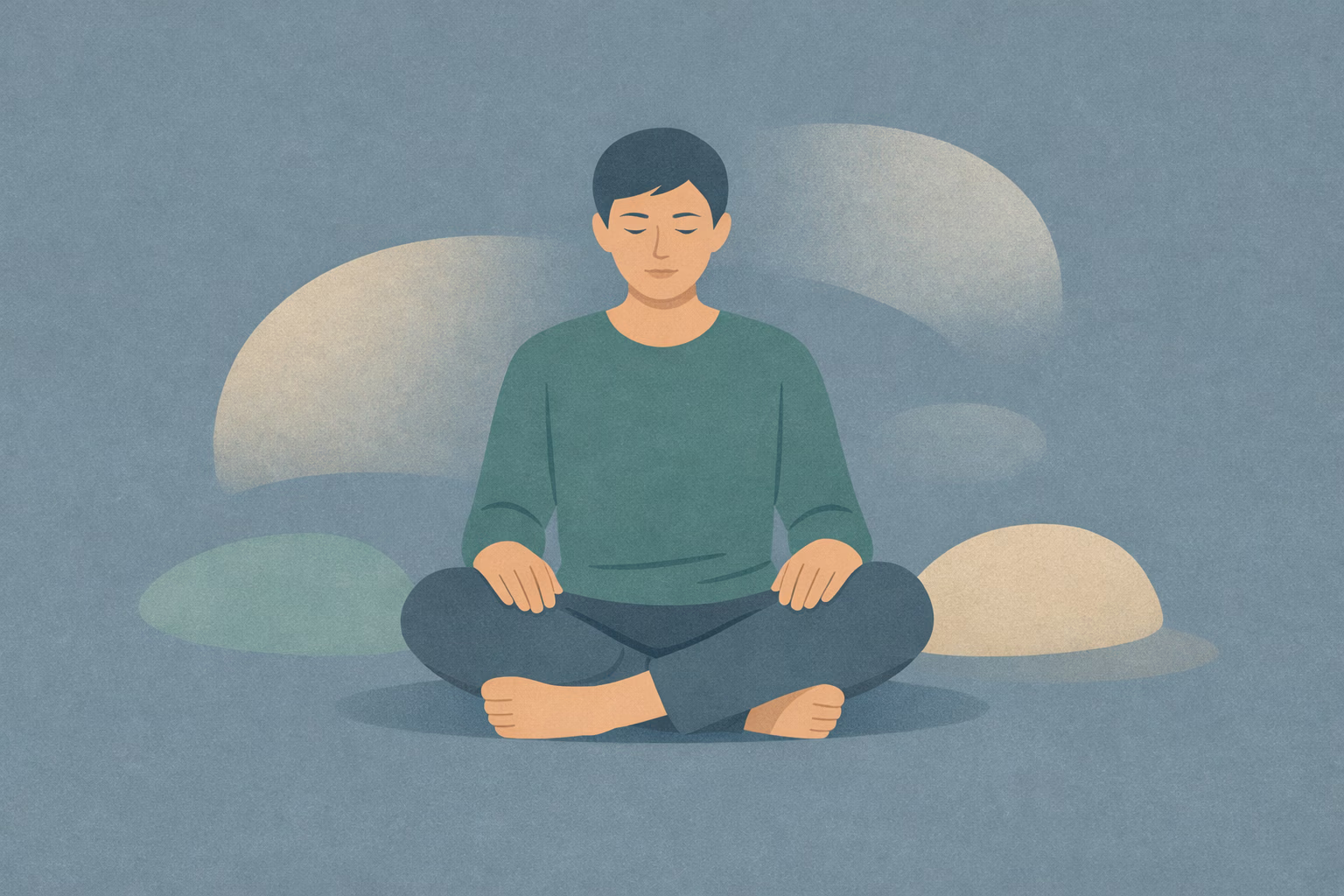
Practical tools to regulate nervous system quickly.
Read article
Body-first tools reduce stress faster than thinking.
Read article
Mindfulness ≠ forcing stillness; it’s awareness.
Read article
Emotional buffering increases resilience to stressors.
Read article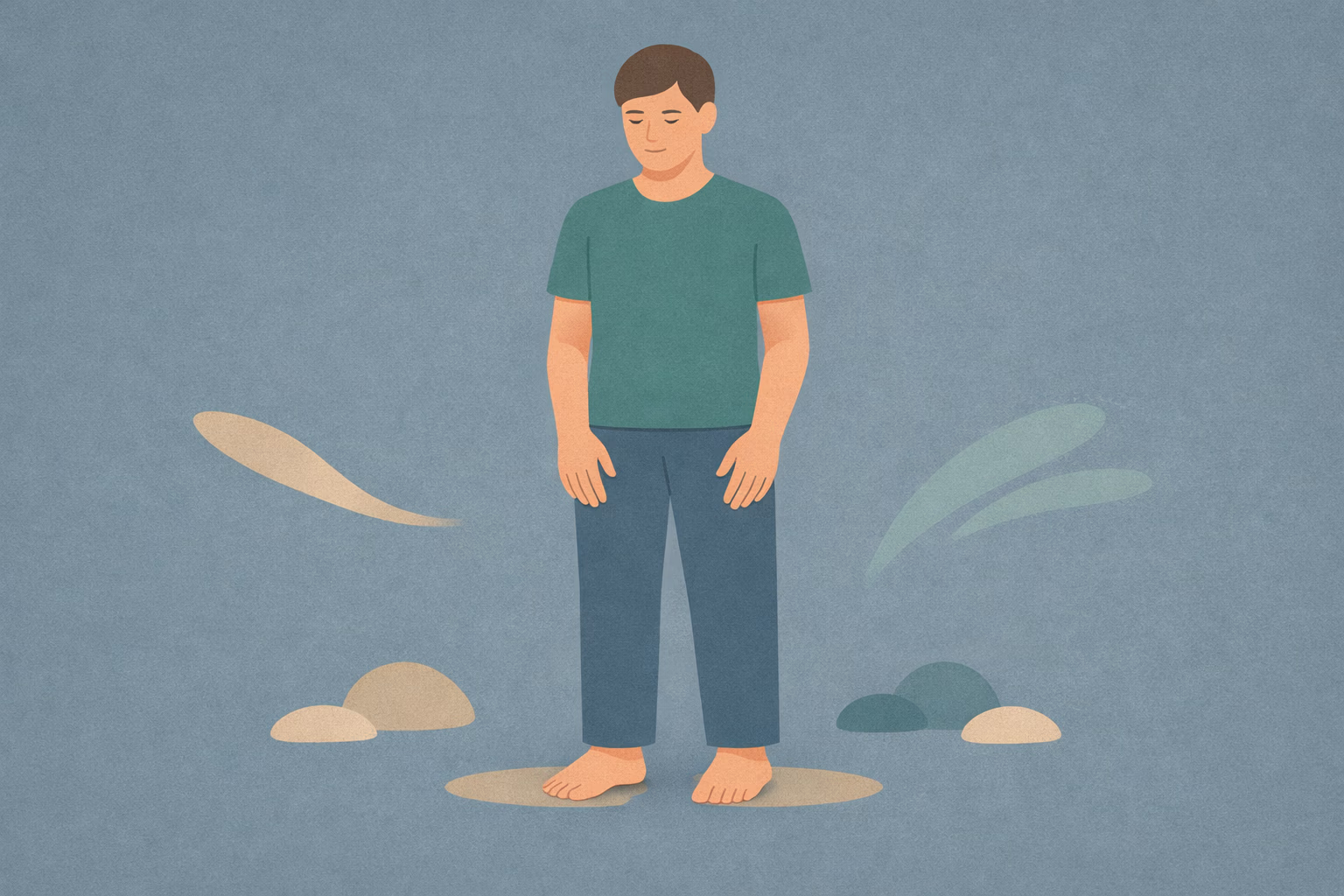
Grounding reduces anxiety through sensory anchoring.
Read article
Rest decreases activity; recovery restores capacity.
Read article
Active rest = restorative practices integrated into activity.
Read article
Awareness precedes transformation.
Read article
Grounding restores somatic safety and presence.
Read article
Reset requires shifting autonomic state, not just thoughts.
Read article
Simple rituals rebalance the system fast.
Read article
Body signals reveal emotional states.
Read article
Flexibility reduces emotional suffering.
Read article
Sensitivity = deeper processing, not frailty.
Read article
Strategy prevents overwhelm and reactivity.
Read article
Recalibration restores nervous system balance.
Read article
Small emotional habits shift entire patterns.
Read article
Integration merges emotion + meaning.
Read article
Tolerance expands through gradual exposure.
Read article
Refueling replenishes emotional energy reserves.
Read article
Agility = adaptiveness + flexibility.
Read article
Emotional recovery requires longer rest than people assume.
Read article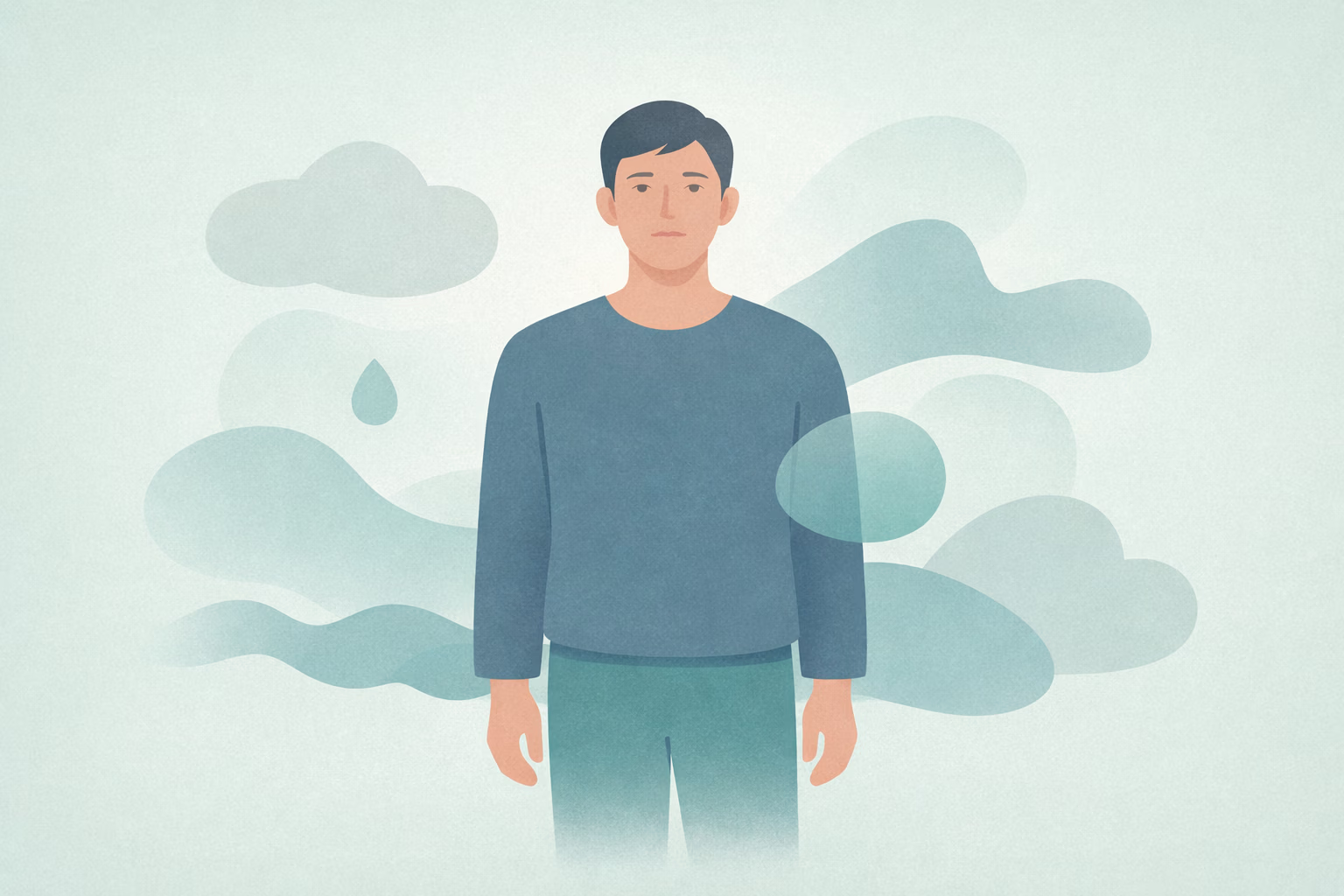
Maturity = emotional endurance + awareness.
Read article
Precision improves regulation + meaning-making.
Read article
Calibration aligns internal state with reality.
Read article
Nourishment strengthens emotional resilience.
Read article
Logistics = planning emotional workload.
Read articleYou are likely confusing Rest with Recovery. Rest is the reduction of activity, but Recovery is an active process that restores your nervous system's capacity. If your "behavioral loops" are still open—mentally tracking social status or work metrics—your system is still performing "Emotional Labor" while you sleep. True recovery requires closing these loops through intentional rituals and somatic resets to prevent waking up biologically depleted.
No, and forcing calm is actually a "Power Loop" trap. At Dojowell, we define mindfulness as non-controlling awareness, not a performance of stillness. When you try to "force" calm, you signal to your Threat System that your current state is "bad," which increases internal tension. Calm is a byproduct of honesty—allowing your nervous system to settle on its own timeline without the demand to escape your current feelings.
Building an Emotional Buffer is about increasing your internal "volume" or capacity. This is achieved through Emotional Micro-Habits—tiny, repeatable actions like naming a feeling with precision or taking 30-second "Active Rest" breaks. By closing small loops throughout the day, you prevent "Emotional Congestion" from building up, creating a structural "margin for error" that allows you to meet challenges with agility rather than reactivity.
Emotional Precision is the skill of naming your feelings with accuracy. In the Meaning Density Model™, ambiguity is a threat to the Narrative System. When you can't name what you feel, your brain stays in a high-alert "search mode." Precision "calibrates" your internal state with reality, transforming vague chaos into a manageable map. This reduces the emotional load because your brain no longer needs to shout to be heard.
This is the practice of Active Rest. You don't always need to withdraw to recover; you can weave regulation into your movement. By shifting focus from "Status & Control" to "Sensory Awareness," rituals like Mindful Walking act as "Emotional Logistics." They organize your inner workload so you replenish reserves while participating in life, sustaining the Meaning Density required to stay whole during high-demand seasons.
How unresolved threat learning shapes guilt, shame, perfectionism, reactivity, and inner fragmentation—quietly, repeatedly, and often invisibly.
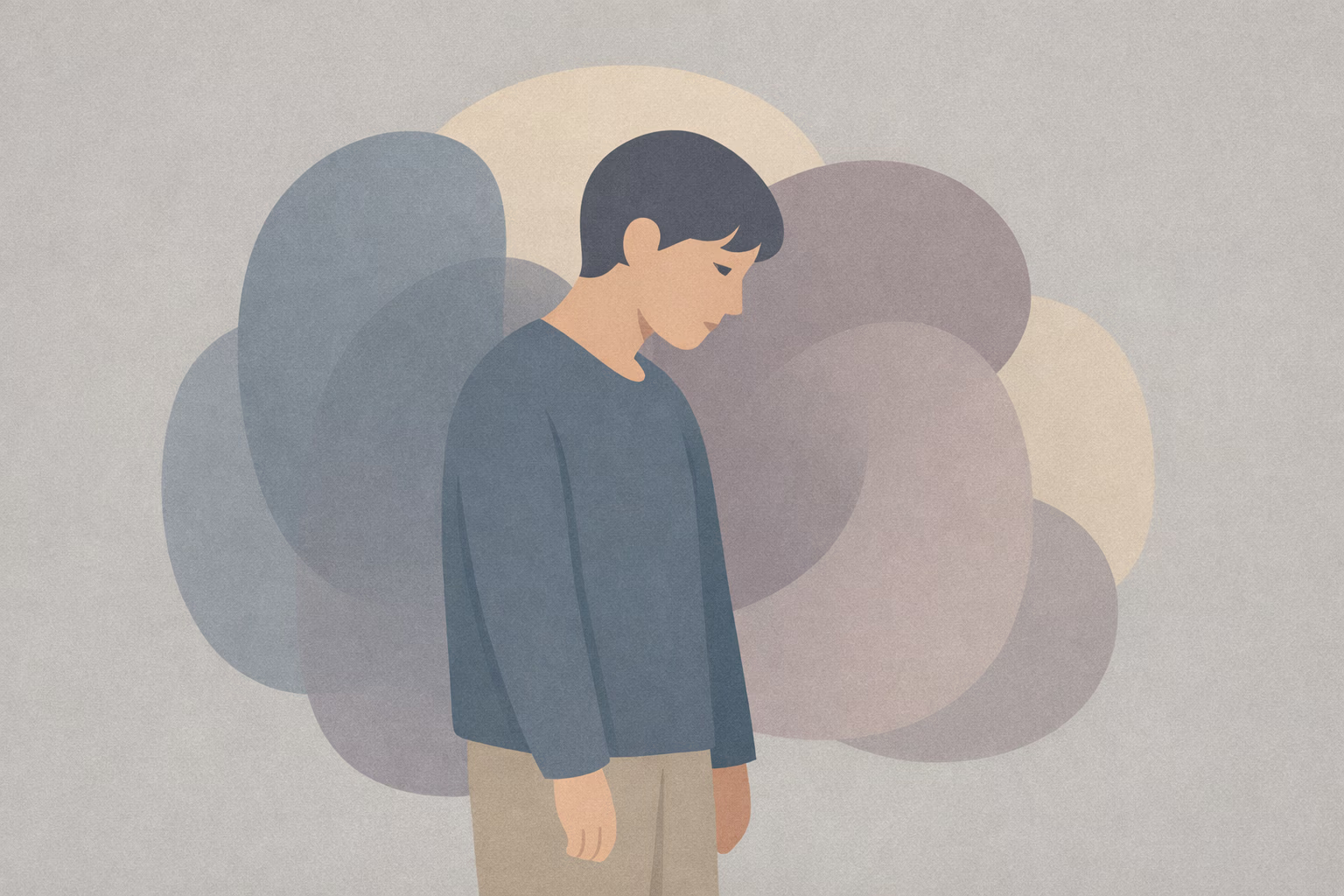
Explains guilt/shame as social survival mechanisms.
Read article
Inner critic as internalized threat signal.
Read article
Micro-trauma emerges as subtle emotional patterns.
Read article
Perfectionism as a threat-avoidance survival mechanism.
Read article
Anxiety-driven decisions limit growth and reinforce threat loops.
Read article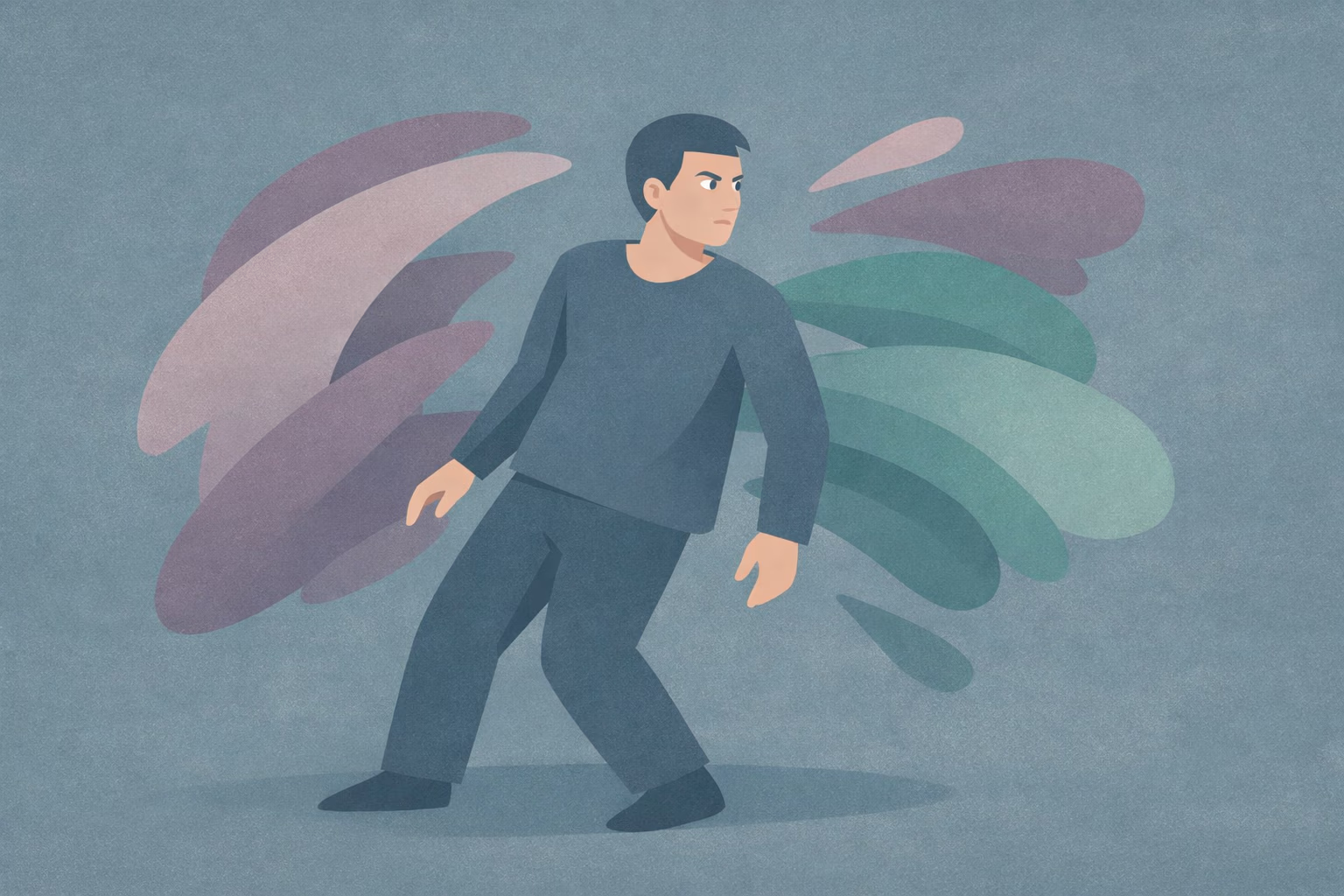
Emotions hijack prefrontal thinking under threat.
Read article
Guilt/shame shape choices as tribal-survival emotions.
Read article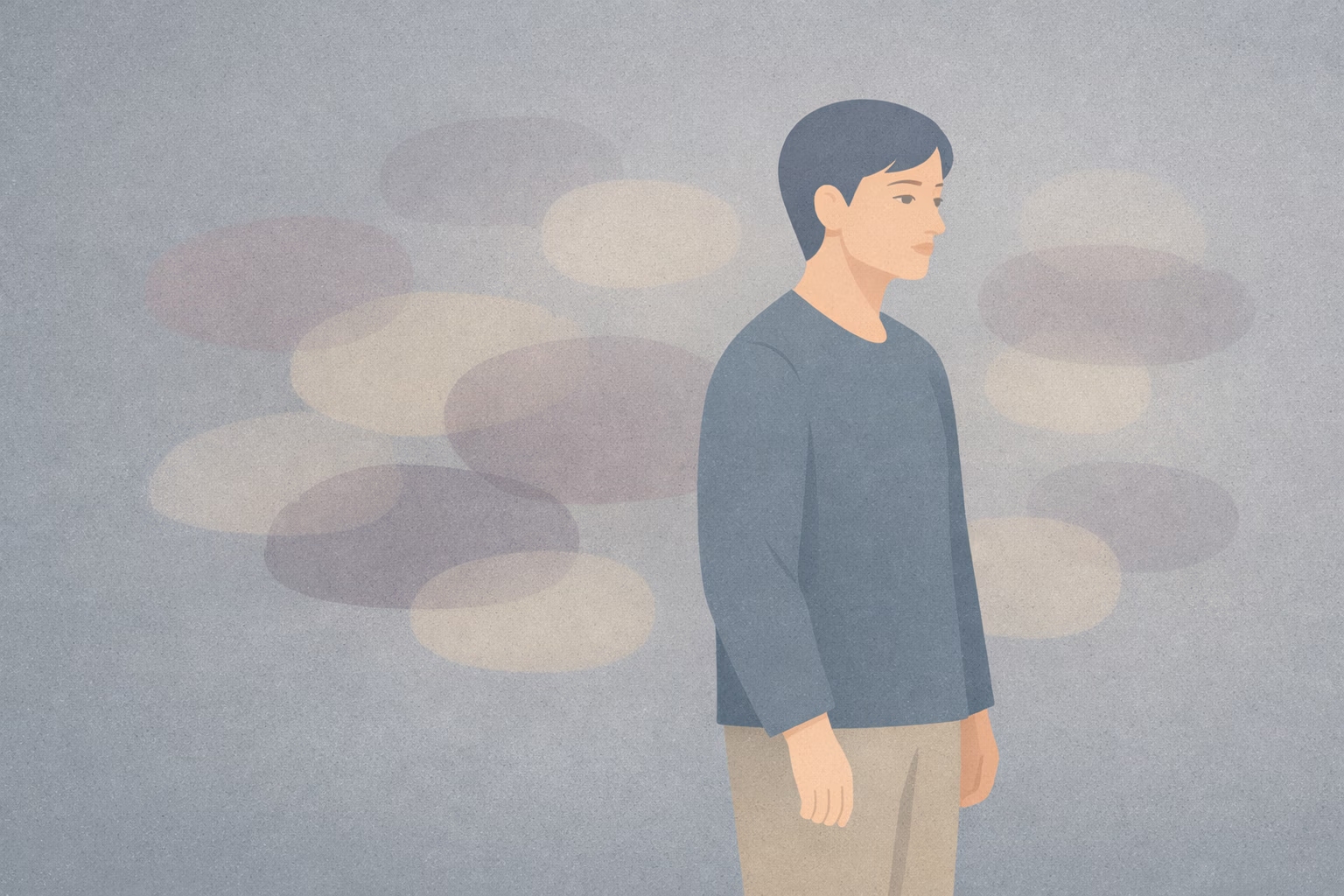
Micro-wounds shape reactions and behaviors.
Read article
Triggers activate survival circuitry before logic.
Read article
Suppression creates internal emotional pressure.
Read article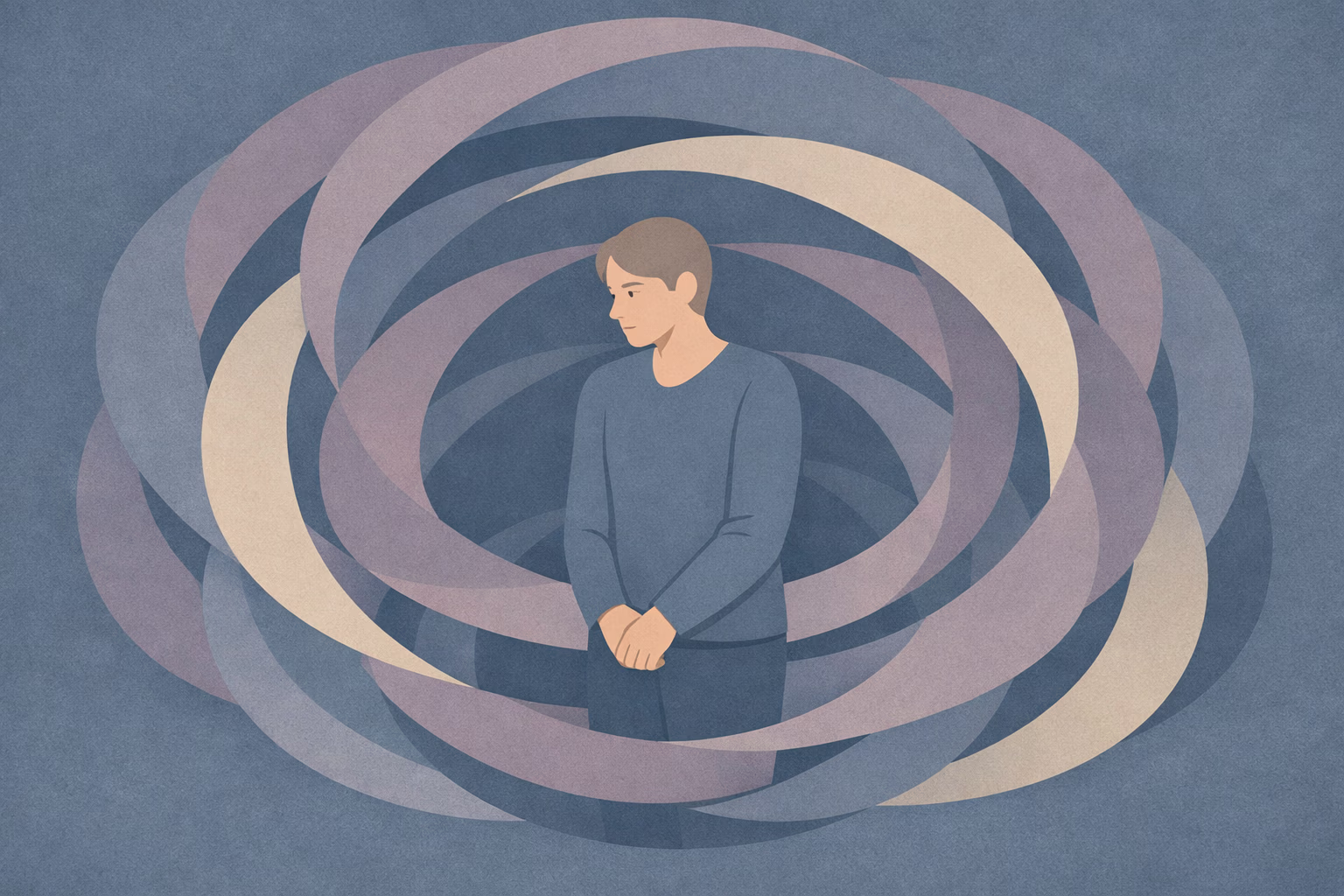
Internal judgment forms a self-reinforcing loop.
Read article
Reflexes developed through conditioned emotional learning.
Read article
Awareness + interruption break emotional loops.
Read article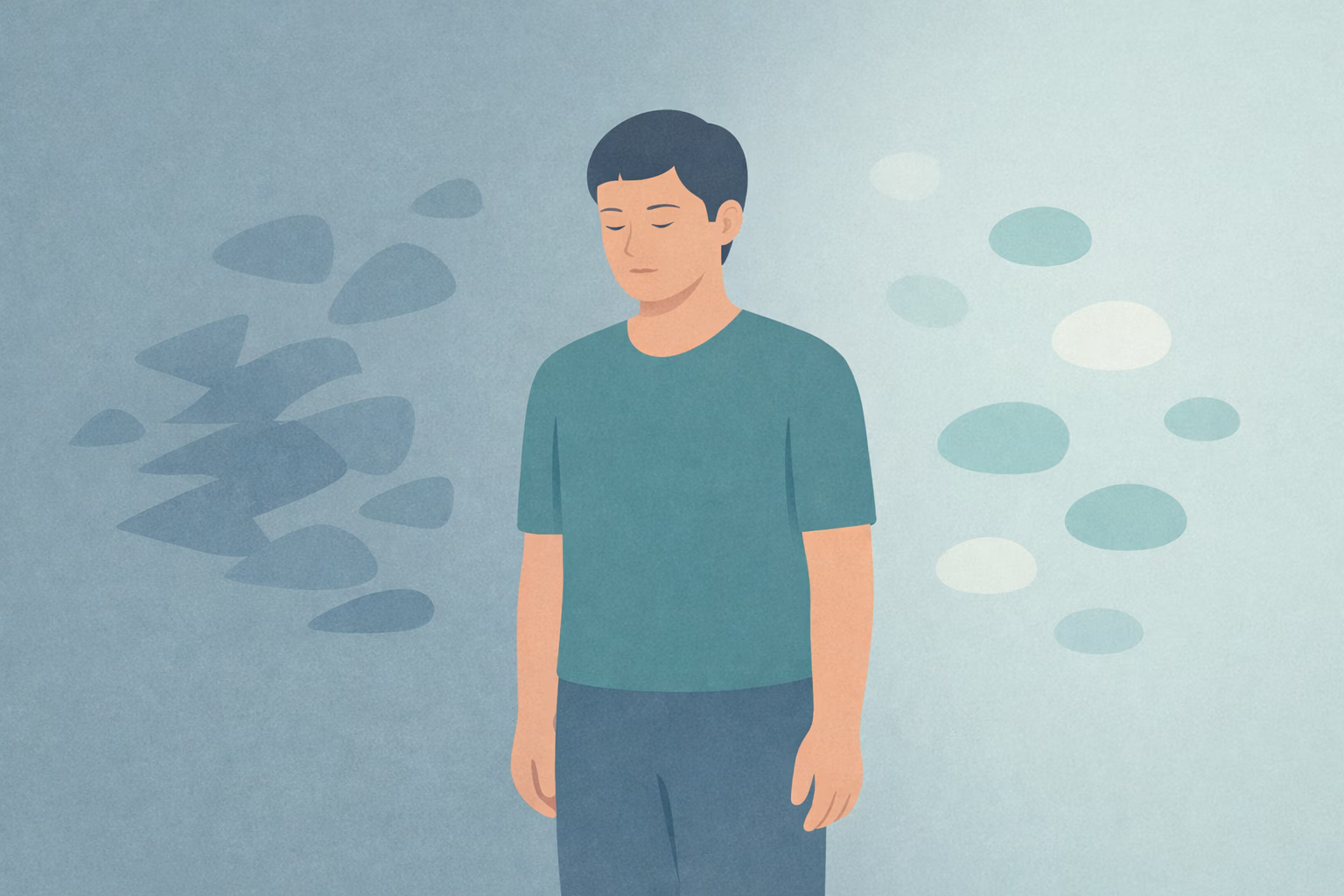
Steps to restore balance after overreacting.
Read article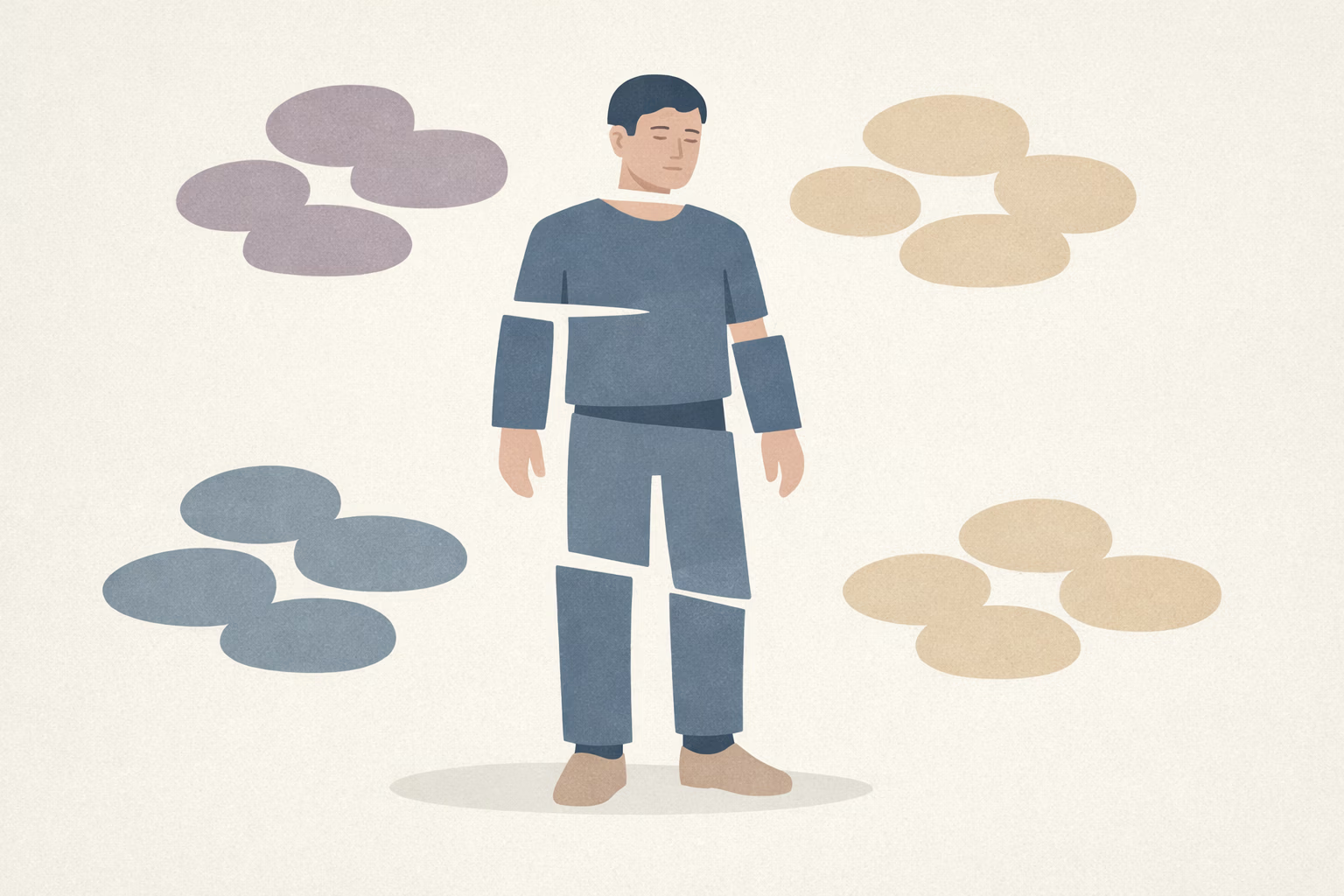
Fragmentation divides emotional experience.
Read article
Displacement hides vulnerable emotions behind safer ones.
Read article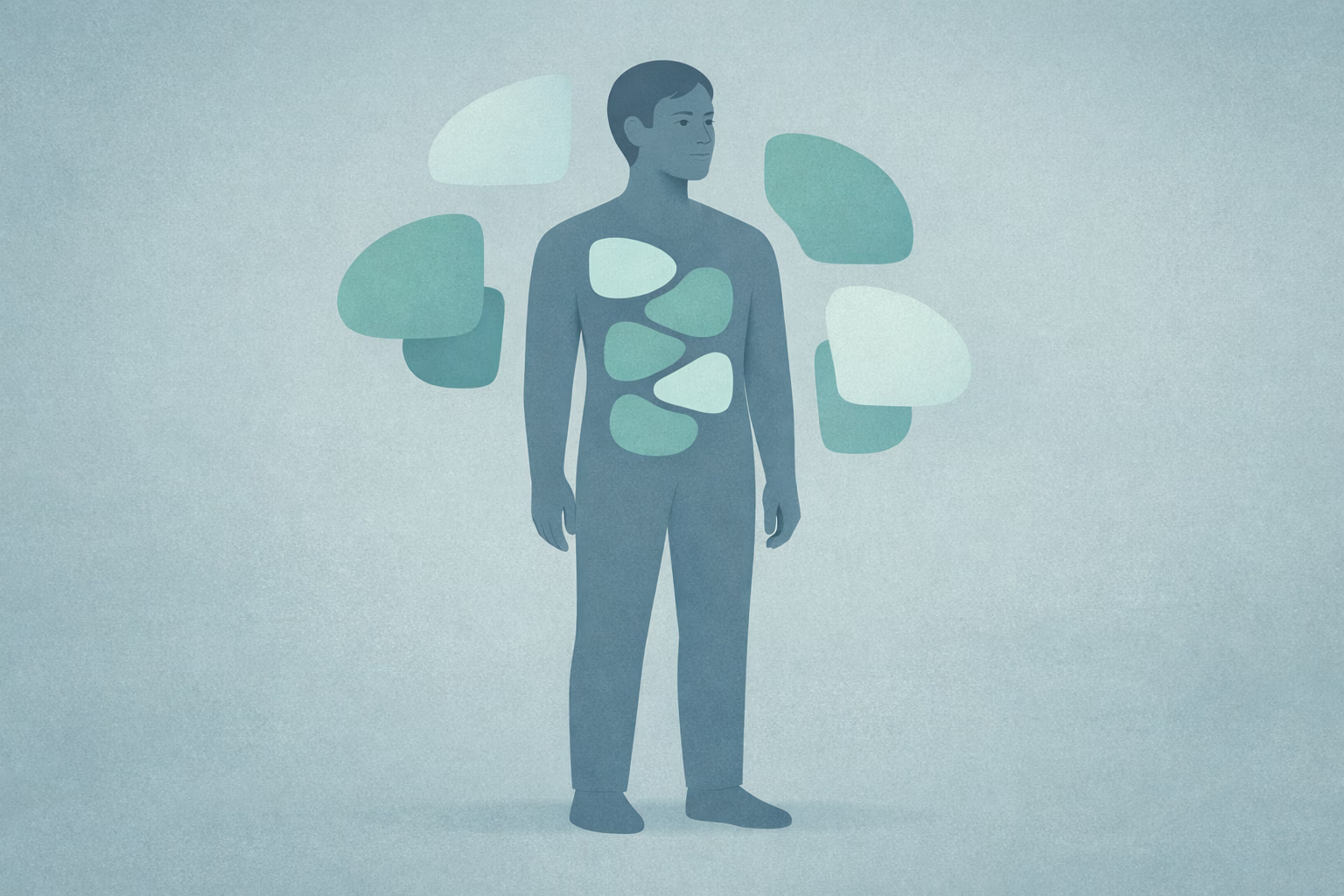
Reintegration heals emotional fragmentation.
Read article
Reconciliation heals the stress–identity conflict.
Read article
Freelance instability mimics threat loops.
Read articleThe Inner Critic is a misplaced protector within your Threat & Safety System. Its original "structural" purpose was to prevent social danger by punishing you internally before the "tribe" could reject you externally. This is a classic Power Loop where self-attack is used for control. Healing isn't about "killing" the critic, but about transitioning from fear-based self-punishment to values-based self-leadership, restoring the energy spent on self-defense back to your lived experience.
These are Emotional Reflexes—learned threat cues stored in your biological memory. When a present event mimics a past "micro-wound," your nervous system bypasses logic and goes straight to survival mode, creating an Avoidance Loop. By "mapping" these reflexes, you move from reactive "hijacking" to intentional orientation. This creates space between the trigger and the response, allowing that moment to become a place of choice and meaning.
Perfectionism is a Power Loop disguised as high standards. Structurally, it is a strategy to avoid the "threat" of judgment. In the Meaning Density Model™, perfectionism reduces meaning because it prevents "completion." If a task is never "good enough," the loop never closes and the experience never integrates into your identity. Moving toward Narrative Fluidity means choosing participation over flawlessness, allowing life to land and be "done."
This is Emotional Fragmentation, where your system separates conflicting needs to maintain stability. One part may crave growth while another prioritizes safety, creating a massive "Emotional Load" as you battle yourself. At Dojowell, we practice Stress Reconciliation. By listening to the intent of these fragmented parts, you can reunite them under a values-aligned direction, restoring the coherence of your internal world.
Yes, through Stress Unlearning. These patterns are not your DNA; they are deeply habituated loops in your Power System that persist because they haven't been integrated yet. By using Emotional Micro-Habits—tiny interruptions of the old loop—you signal to your brain that the old protection is no longer required. You are reclaiming authorship of your narrative, allowing the old loop to lose its power through Emotional Maturity.
Humans regulate through tribe cues. When those cues fade, threat systems stay active—and connection becomes thinner, even when it’s constant.

Remote work removes tribe cues → emotional drift.
Read article
Human brains evolved for tribe, not isolation.
Read article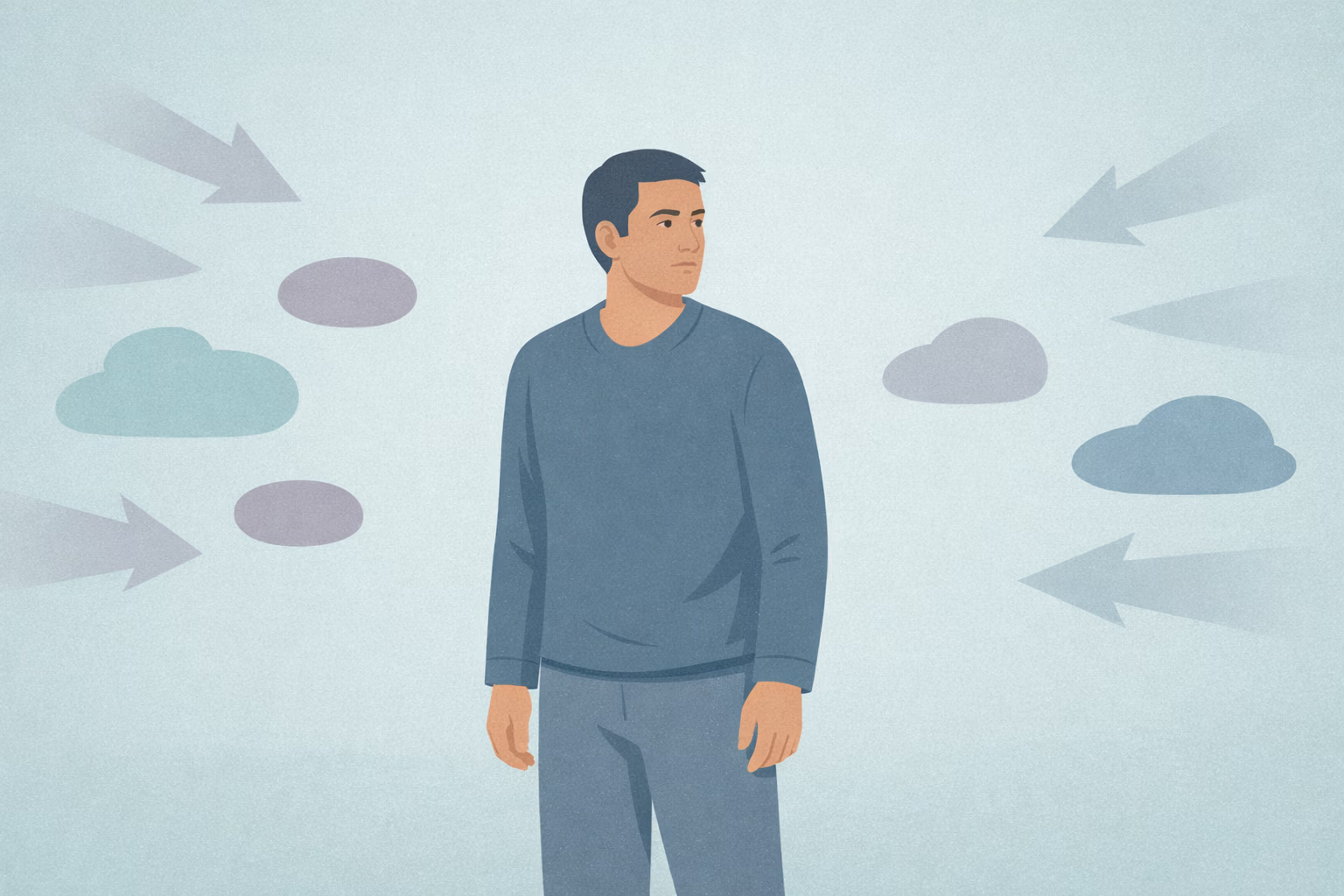
No tribe = exaggerated hypervigilance.
Read article
Digital connection replaces real attunement.
Read articleThis is the paradox of Connection Without Closeness. Your "Attachment & Belonging" system requires specific biological cues—like eye contact and vocal tone—to reach a "Done Signal" of safety. Digital contact often triggers the desire for connection but fails to provide biological settlement. This creates a "low density" social life where you are constantly initiating loops that never integrate, leaving you feeling socially full but emotionally starved.
Humans are "obligatory gregarious" beings; for our ancestors, being alone signaled danger. In the Meaning Density Model™, the absence of a "Tribe" causes your Threat & Safety System to become hypervigilant. Without passive safety cues from others, your brain assumes 360-degree threat detection duties. This constant background "Emotional Labor" keeps you in a high-alert Avoidance Loop, seeking tribal safety that isn't physically present.
Dojowell views this as a Crisis of Structure, not values. In our Hypermodern Era, the "Narrative System" (the self) exists without a "Shared Container" of community. We have prioritized "Status & Control" over "Attachment & Belonging," dismantling the natural loops of social integration. Loneliness is the biological signal that your environment is no longer meeting your nervous system's fundamental need for shared presence.
Surface-level relationships occur when Social Performance is prioritized over Emotional Attunement. When we treat relationships as part of our "Status & Control" system, we create a Power Loop where the goal is to be liked rather than seen. True "Meaning Density" requires the safety to drop the performance so the loop of intimacy can close. Without vulnerable, non-metric interaction, the connection remains thin and unfulfilling.
Recovery begins by acknowledging that "Tribe" is a biological regulator, not just a preference. You must signal safety to your Attachment System through Embodied Belonging—moving from "Social Pursuit" (scrolling) to "Shared Presence" (physical proximity without an agenda). By honoring the need for low-stakes, non-performance-based connection, you restore the Social System loops, allowing meaning to grow from a shared center.
When stimulation becomes constant, reward learning breaks: pleasure flattens, craving intensifies, and shame follows the crash.

Overstimulation desensitizes reward circuits.
Read article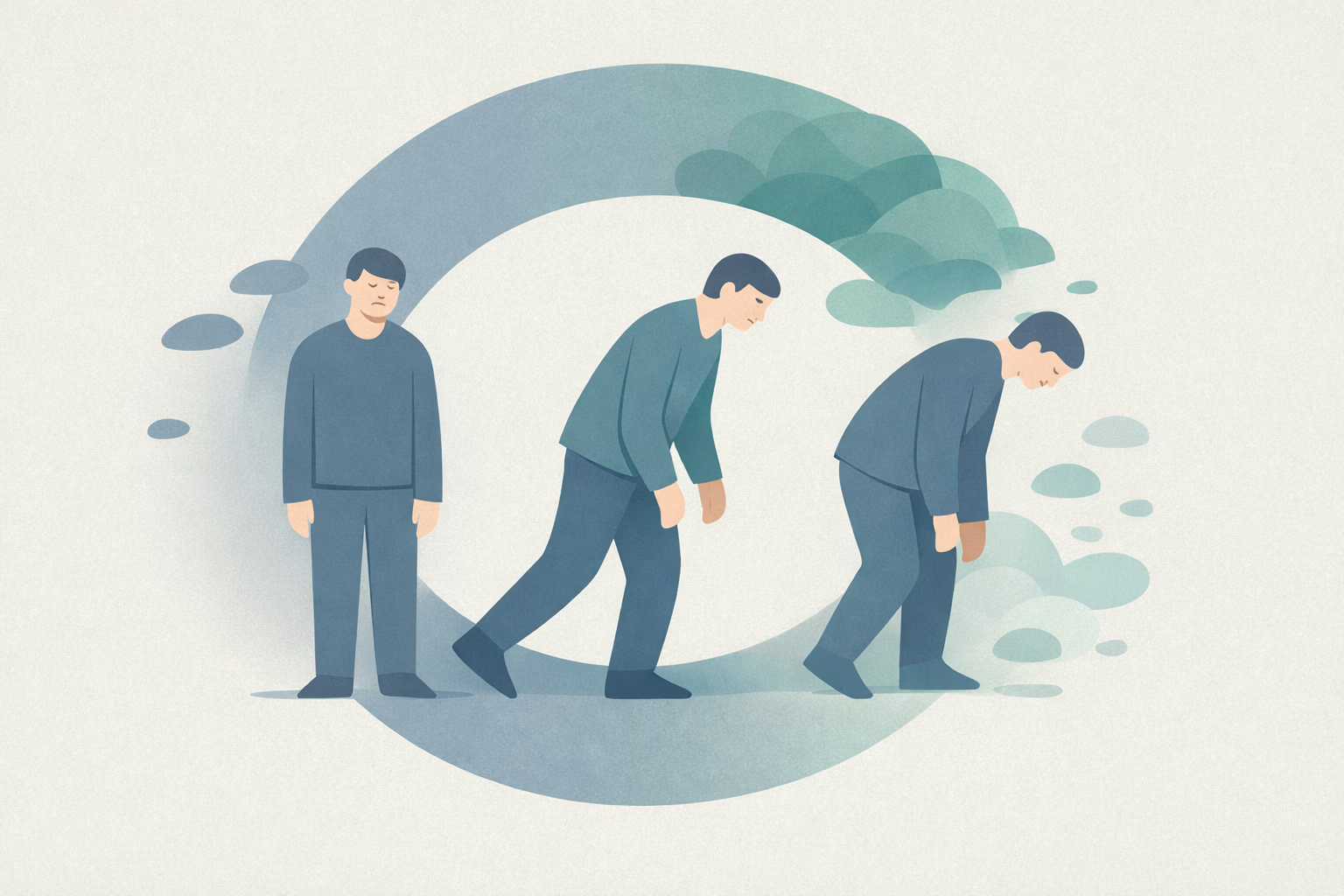
Chronic overstimulation → numbing → craving.
Read article
Shame follows reward dysregulation.
Read article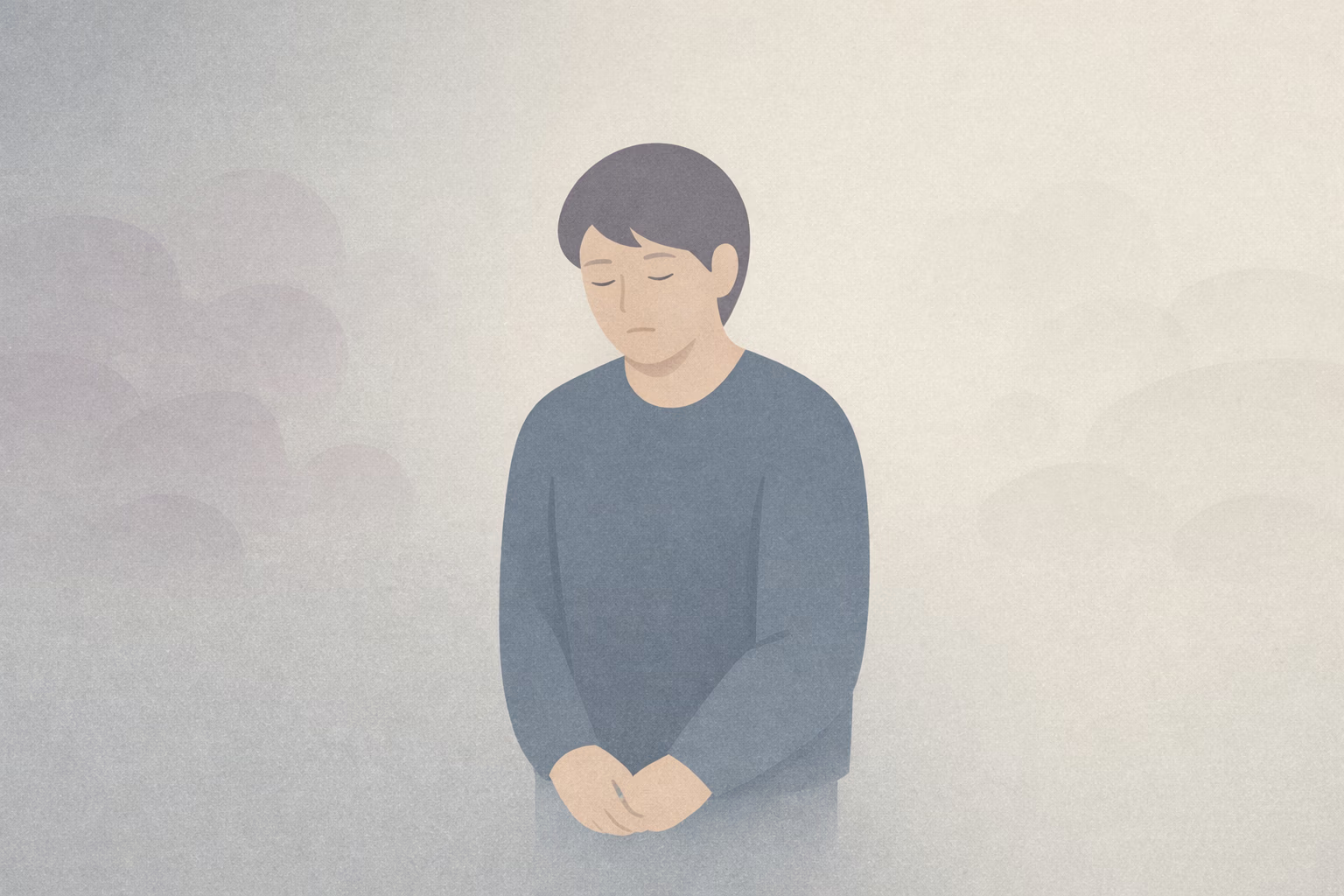
Withdrawal from dopamine spikes feels like depression.
Read article
Relearning natural pleasure cycles.
Read articleThis is the "Pleasure Plateau." In the Dojowell framework, your "Reward & Pursuit" system downregulates its receptors when faced with constant dopamine flooding to protect itself. This results in low Meaning Density; your life is high in "triggers" but zero in "settlement." Richness returns not by finding "better" stimulation, but by allowing your system to rest so it can regain its natural sensitivity to depth and quiet meaning.
This is Psychological Withdrawal. Every dopamine spike is followed by a proportional "dip" below baseline as the brain seeks homeostasis. These spikes are often "leaky loops" that provide intensity without lasting integration. The "crash" is your biology asking for recovery. Instead of chasing another high, the Dojo practice is to stay with the flatness, allowing the system to recalibrate toward a sustainable, meaning-led rhythm.
This is the "Shame Spiral," a conflict between your Pleasure Loop and your Attachment System. Your "Inner Critic" attacks you to try and force you back into social alignment, but this stress usually drives you back into numbing behavior for relief. In the Dojo, we reframe this shame as "misaligned data." It is a signal that your actions are drifting from your values, requiring care-based repair rather than self-punishment.
This cycle is the architecture of a Pleasure Loop in the Hypermodern Era. It begins with Numbing (escape), leads to Craving (higher dose), and ends in a Crash (exhaustion). It persists because it lacks a "Done Signal." Breaking it requires "Structural Recovery"—intentionally building endings into your digital and physical habits to move from consumption to meaningful participation.
Yes, through "Reclaiming Desire." This involves moving from a Pleasure Loop to a Meaning Loop via "Dopamine Calibration." As you lower the intensity of inputs, your "Narrative & Identity" system begins to find joy in "Higher Density" activities—like contribution or deep learning—which provide a "Done Signal" that consumption cannot. Satisfaction returns as a byproduct of alignment.
One Quiet Window, one insight, one reflection — every Sunday