Chronic Stress Patterns: The Loops You Stop Noticing
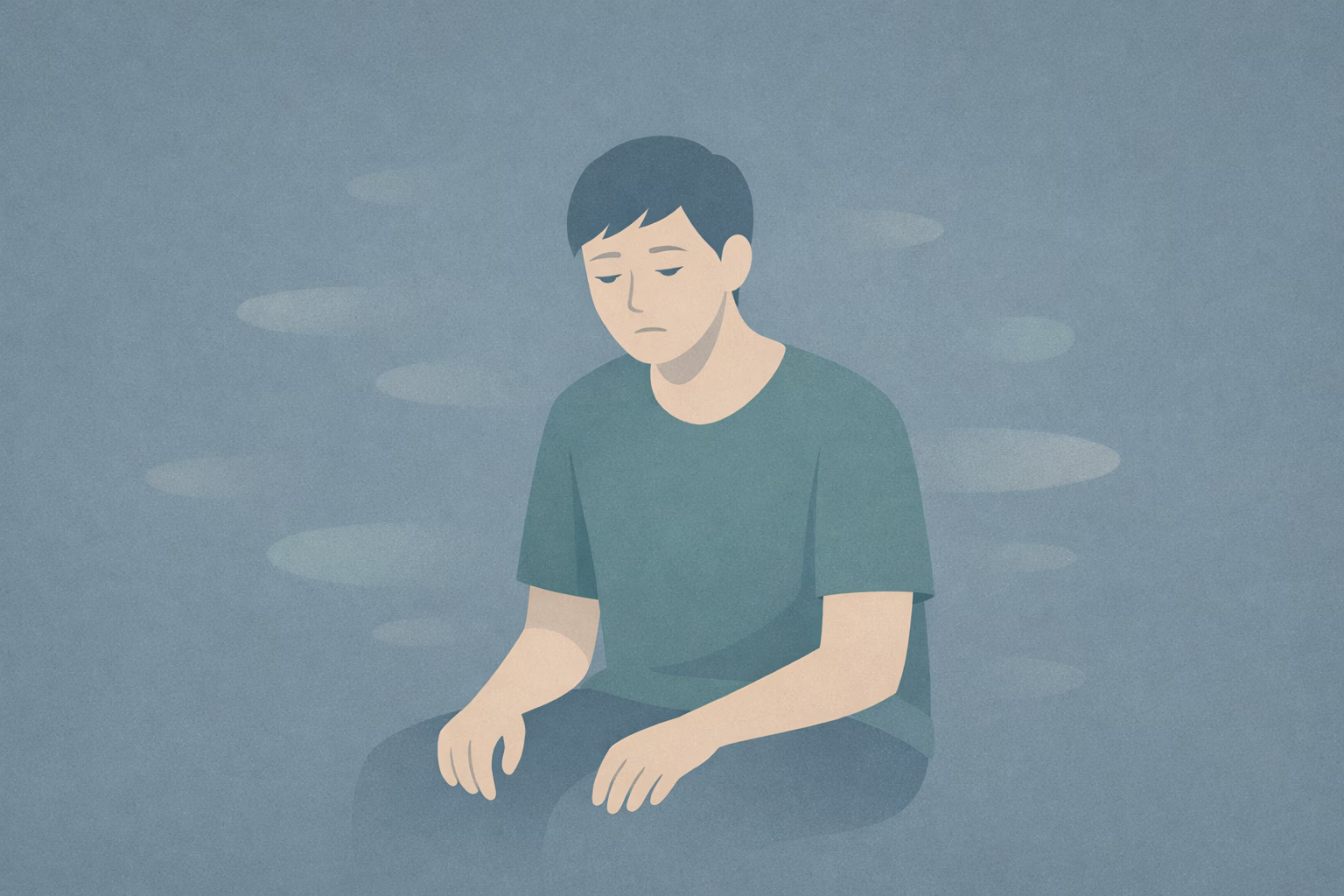
In short: Emotional exhaustion often isn’t dramatic. It can look like getting through the day, answering messages, meeting the basics—while something inside feels thin, dull, or strangely absent. You may even be “resting,” yet the sense of refueling never quite arrives.
Emotional exhaustion often isn’t dramatic. It can look like getting through the day, answering messages, meeting the basics—while something inside feels thin, dull, or strangely absent. You may even be “resting,” yet the sense of refueling never quite arrives.
What if the emptiness isn’t a lack of gratitude or motivation—what if it’s your system signaling depleted reserves?
In a body designed for cycles of effort and recovery, chronic micro-demands and unresolved “not-done-yet” stress can keep the nervous system spending energy it doesn’t have. Emotional exhaustion is frequently less about attitude and more about load, incomplete closure, and a mind-body system that hasn’t been allowed to stand down.
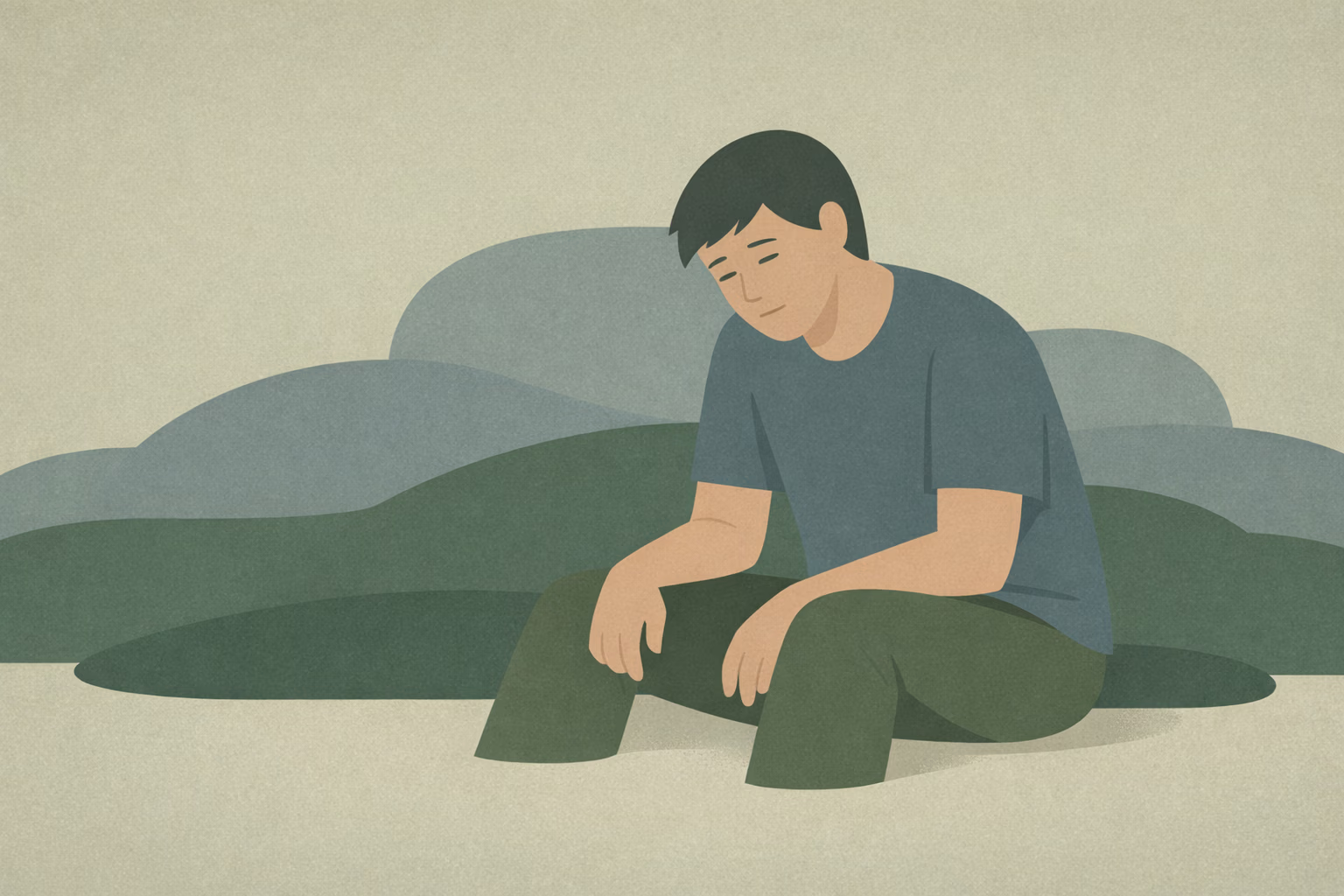
Emotional exhaustion is often described as being empty, flat, or worn down—even when you’re still functioning. It can feel like there’s no extra to give: no buffer, no softness, no margin. Small things may land with surprising force because there’s so little capacity left to absorb them.
What makes it confusing is that it can coexist with competence. You can keep working, parenting, caregiving, or performing—while feeling less like a person and more like a set of outputs. This isn’t “laziness”; it’s what a depleted regulatory system looks like. [Ref-1]
It’s not that nothing matters. It’s that everything costs more than it should.
Your nervous system continuously budgets energy across attention, decision-making, social responsiveness, and threat detection. Under ongoing stress load, that budget can get overspent. The result isn’t only tiredness—it’s reduced responsiveness: motivation drops, flexibility narrows, and the smallest friction can feel like a wall.
When recovery is incomplete, the body may remain in a higher-cost operating mode. Over time, the “baseline” shifts: you’re still doing life, but with fewer reserves and fewer reliable signals of restoration. In research terms, this is often described as allostatic load—wear-and-tear from sustained adaptation. [Ref-2]
Human threat-and-safety systems evolved for short bursts: detect a problem, mobilize, resolve, then return to safety. In modern life, demands rarely resolve cleanly. Work continues, family needs continue, information continues, and many stressors don’t have a clear “finished” signal.
When activation becomes chronic, the body pays for it in energy, sleep quality, immune function, and emotional bandwidth. The issue is not sensitivity; it’s duration. A system designed for cycles can become strained when it’s asked to stay “on” indefinitely. [Ref-3]
In other words: the problem isn’t that you can’t handle life. It’s that life may not be giving your system an ending.
When reserves drop low, the nervous system often shifts into conservation. This can look like emotional withdrawal, reduced initiative, fewer opinions, less engagement, and a quieter internal world. It isn’t always sadness. Sometimes it’s simply the body minimizing spending.
From a regulation standpoint, this makes sense: social interaction, decision-making, and sustained empathy are energetically expensive. Pulling back can be the system’s way of reducing output when input (recovery, nourishment, safety, completion) hasn’t kept up. [Ref-4]
Many people assume that the way out of exhaustion is more force: more grit, more intensity, more self-control. Sometimes that works briefly—because adrenaline and urgency can temporarily raise output. But that isn’t replenishment; it’s an advance on a limited account.
When the nervous system is already running high-cost physiology, adding pressure can keep activation circulating. It can also delay the body’s “done” signals—those subtle internal markers that something has been completed and can now release. The result is often a deeper sense of depletion, paired with self-blame for not being able to will your way back. [Ref-5]
Emotional exhaustion often functions like an avoidance loop—not because of a personal fear story, but because depletion changes behavior in predictable structural ways. When capacity is low, the system starts prioritizing immediate relief from demand. Anything that requires sustained engagement can register as “too expensive,” even if it matters deeply.
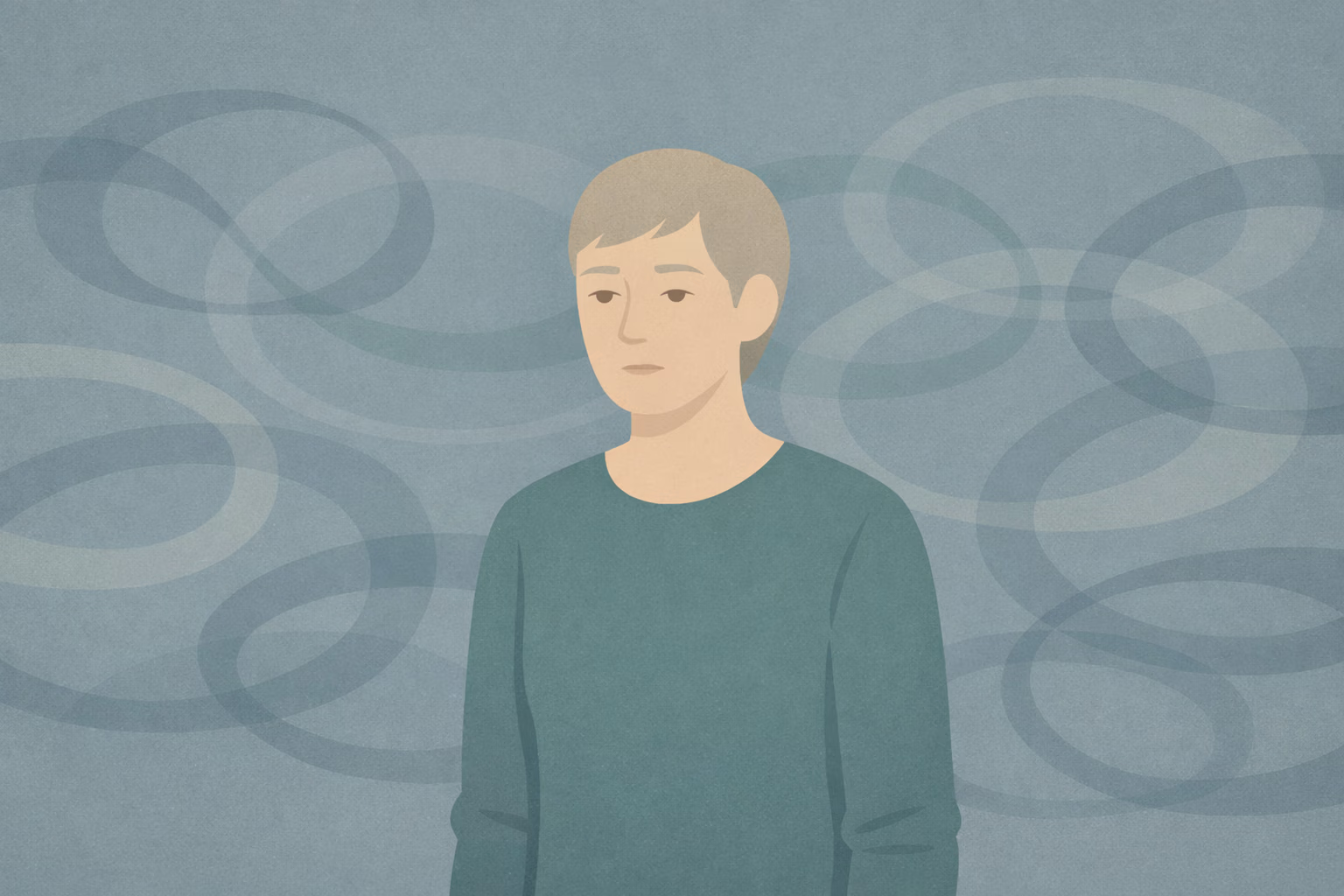
This can create a closed circuit: depleted capacity leads to minimized engagement; minimized engagement reduces the chances of real completion and restorative closure; without closure, the nervous system stays partially mobilized; and the next day begins with less reserve. Over time, people may recognize themselves less, not because their identity disappeared, but because their system is running in survival economics. [Ref-6]
Emotional exhaustion can show up as a cluster of signals that look psychological, but often have a biological backbone: narrowed bandwidth, reduced flexibility, and a system that can’t rebound easily. These are not moral failures; they are load markers. [Ref-7]
Sometimes people interpret these changes as “I’m becoming a worse person.” A more accurate read is: your capacity for signal return is reduced because your system hasn’t had sufficient completion and stand-down.
As exhaustion persists, emotional range may narrow further. Not necessarily into constant distress, but into a smaller palette: fewer highs, fewer lows, more gray. This can be protective—less range means less expenditure—but it also reduces access to the cues that make life feel real, connected, and worth it.
Prolonged depletion can increase shutdown risk: the body becomes more likely to default to collapse states (fog, numbness, disengagement) because mobilization is too costly and recovery hasn’t arrived. In that narrowed state, meaning can feel distant—not because you “lost your purpose,” but because the system is conserving. [Ref-8]
When your inner world is quiet from depletion, it can sound like nothing matters—even when it does.
One of the hardest parts is that expectations often stay the same while capacity shrinks. Life doesn’t pause for depleted nervous systems. Deadlines, bills, caregiving, social roles, and self-maintenance continue, and many are structured to demand consistency regardless of internal reserves.
When demand is continuous, the nervous system may struggle to detect safety cues—signals that it’s okay to stand down. Without those cues, even quiet moments can feel like bracing, not resting. In a sense, the body remains on-call. Over time, this can create a persistent background activation that prevents true settling. [Ref-9]
It’s not just “too much to do.” It’s too little true completion.
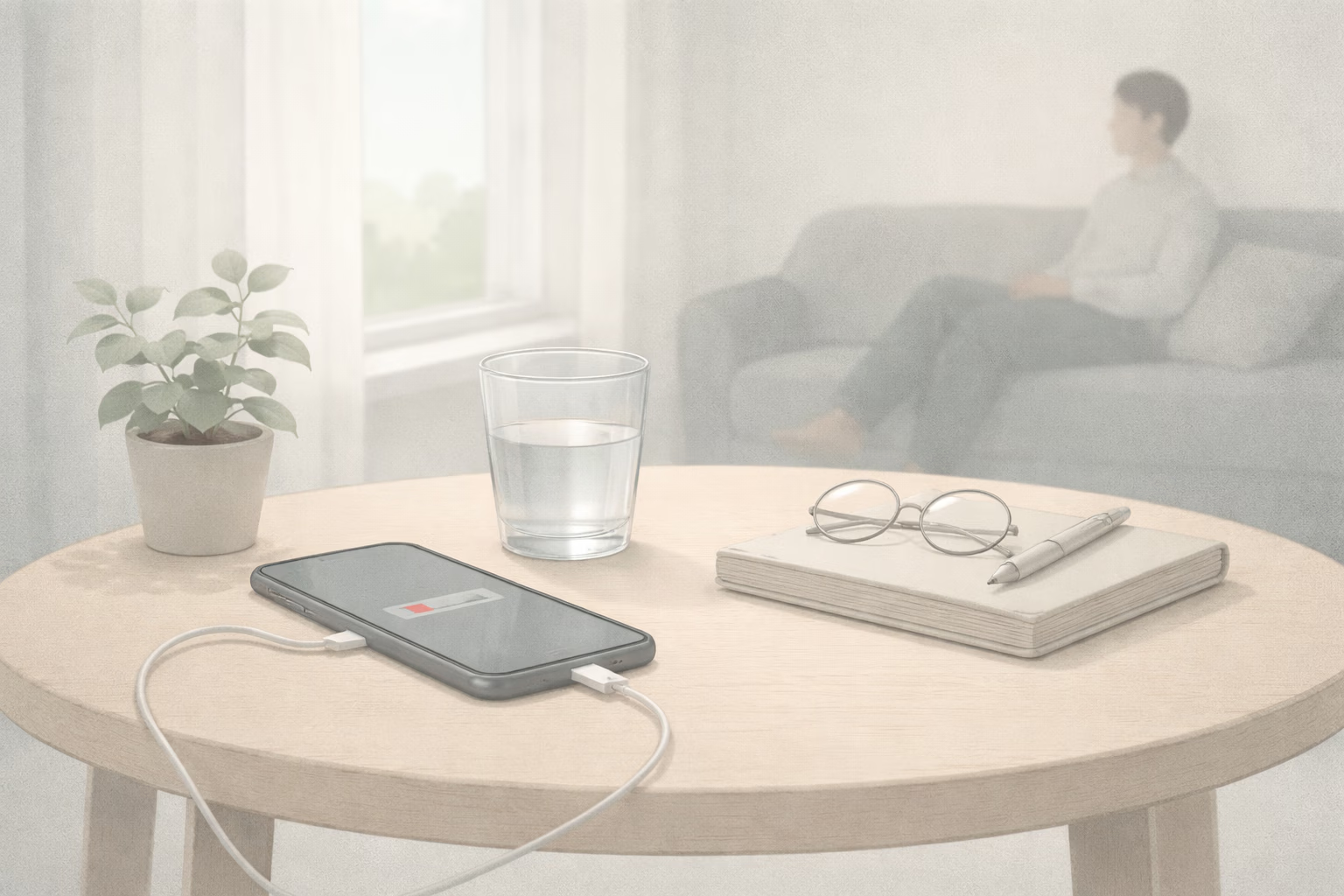
Emotional reserves tend to rebuild when the nervous system repeatedly receives credible signals of safety and completion. Not “positive thinking” safety—physiological safety: lower vigilance, fewer abrupt demands, and more experiences that actually end.
In that context, pacing isn’t a motivational strategy; it’s a biological condition for restoration. When activation decreases and completion increases, the system can begin to reallocate energy away from constant monitoring and back toward responsiveness, curiosity, and connection. This is often gradual, because the body learns through repetition, not insight. [Ref-10]
Stability returns when your system believes, through experience, that it won’t be asked to run forever.
Humans regulate in relationship. Supportive connection can reduce stress load not by “fixing feelings,” but by changing the nervous system’s math: fewer threat signals, more safety cues, and less need to self-monitor every moment.
Low-demand relationships—where you’re not being evaluated, managed, or extracted from—can act like a form of co-regulation. The presence of steadiness, attunement, and predictability can help the body downshift. In contrast, isolation or constant social performance often increases load, even if no one is explicitly doing anything wrong. [Ref-11]
As reserves rebuild, the first change is often subtle: a little more responsiveness. A slightly faster recovery after stress. A small return of interest. More room between stimulus and reaction. These are signs of capacity returning—your system regaining the ability to register signals and come back online without staying stuck.
This isn’t about becoming “more emotional.” It’s about the nervous system restoring range and flexibility: the ability to feel engaged without becoming flooded, and to disengage without collapsing. Over time, people often notice they have something to give again—not as performance, but as a natural overflow of restored bandwidth. [Ref-12]
When capacity returns, it often feels like options returning.
In exhaustion, life can become an endurance project—do what’s next, survive the day, repeat. When capacity rebuilds, a different organizing principle can reappear: orientation. Choices start to be guided less by urgency and more by what fits your values, relationships, and sense of self.
This is where meaning becomes practical. Not as a motivational slogan, but as coherence: your actions begin to line up with who you are and what matters, and that alignment reduces the need for constant internal force. The nervous system often stabilizes when it isn’t living in contradiction—when “how I live” and “what I value” can finally meet without overload. [Ref-13]
Emotional exhaustion is often the body’s honest report: demand has exceeded capacity for too long, and too many loops have remained unfinished. Seeing it this way can soften shame. Shame adds load; understanding reduces it—not by curing anything instantly, but by giving your system less to fight against.
In a meaning-centered frame, the question shifts from “What’s wrong with me?” to “What has my life been requiring, and what has it been preventing?” That shift doesn’t force an answer. It simply restores dignity and makes room for realignment—between demands, values, and what your nervous system can actually sustain. [Ref-14]
When emotional capacity is treated as real—finite, renewable, and shaped by conditions—people often stop interpreting depletion as personal defect. And as the system gradually returns to steadier baselines, direction tends to follow on its own: not because you pushed harder, but because you’re no longer spending your life force on constant internal bracing.
Vitality, connection, and meaning aren’t achievements you force into place. They’re often what shows up naturally when your nervous system is allowed enough safety and closure to settle. [Ref-15]
From theory to practice — meaning forms when insight meets action.
Because depleted capacity changes the math on every interaction. Emotional exhaustion isn't dramatic; it's the experience of getting through the day while something inside feels thin or absent. Small things land with surprising force because there's so little buffer left. The article puts it directly: 'It's not that nothing matters. It's that everything costs more than it should.' This is what a depleted regulatory system looks like — not laziness, not lost gratitude, but reduced reserves and weakened recovery between demands.
Usually no — it's conservation. When reserves drop low, the nervous system shifts into a mode that minimizes spending: less interest in conversation, more zoning out, preference for low-stimulation environments, difficulty caring about things you used to care about. Social interaction, decision-making, and sustained empathy are energetically expensive. Pulling back is the system's way of reducing output when input (recovery, nourishment, completion) hasn't kept up. Reduced empathy isn't because you don't care; it's because you're out of margin.
Because grit doesn't replenish — adrenaline can temporarily raise output, but that's an advance on a limited account, not refueling. When the system is already running high-cost physiology, adding pressure keeps activation circulating and delays the body's Done Signals. The article describes a closed circuit: depleted capacity reduces engagement; reduced engagement reduces real completion; without closure, the system stays partially mobilized; the next day begins with less reserve. That's not failure of will. It's survival economics.
Responsiveness, not intensity. The first sign is subtle: a little more recovery after stress, slightly faster return after activation, a small return of interest, more room between stimulus and reaction. This isn't about becoming 'more emotional'; it's the nervous system restoring range — the ability to feel engaged without flooding and disengage without collapsing. As capacity returns, life shifts from endurance to orientation: choices guided less by urgency and more by what fits. Vitality shows up naturally when the system isn't spending itself on constant internal bracing.
From Science to Art.
Understanding explains what is happening. Art allows you to feel it—without fixing, judging, or naming. Pause here. Let the images work quietly. Sometimes meaning settles before words do.
One Quiet Window, one insight, one reflection — every Sunday