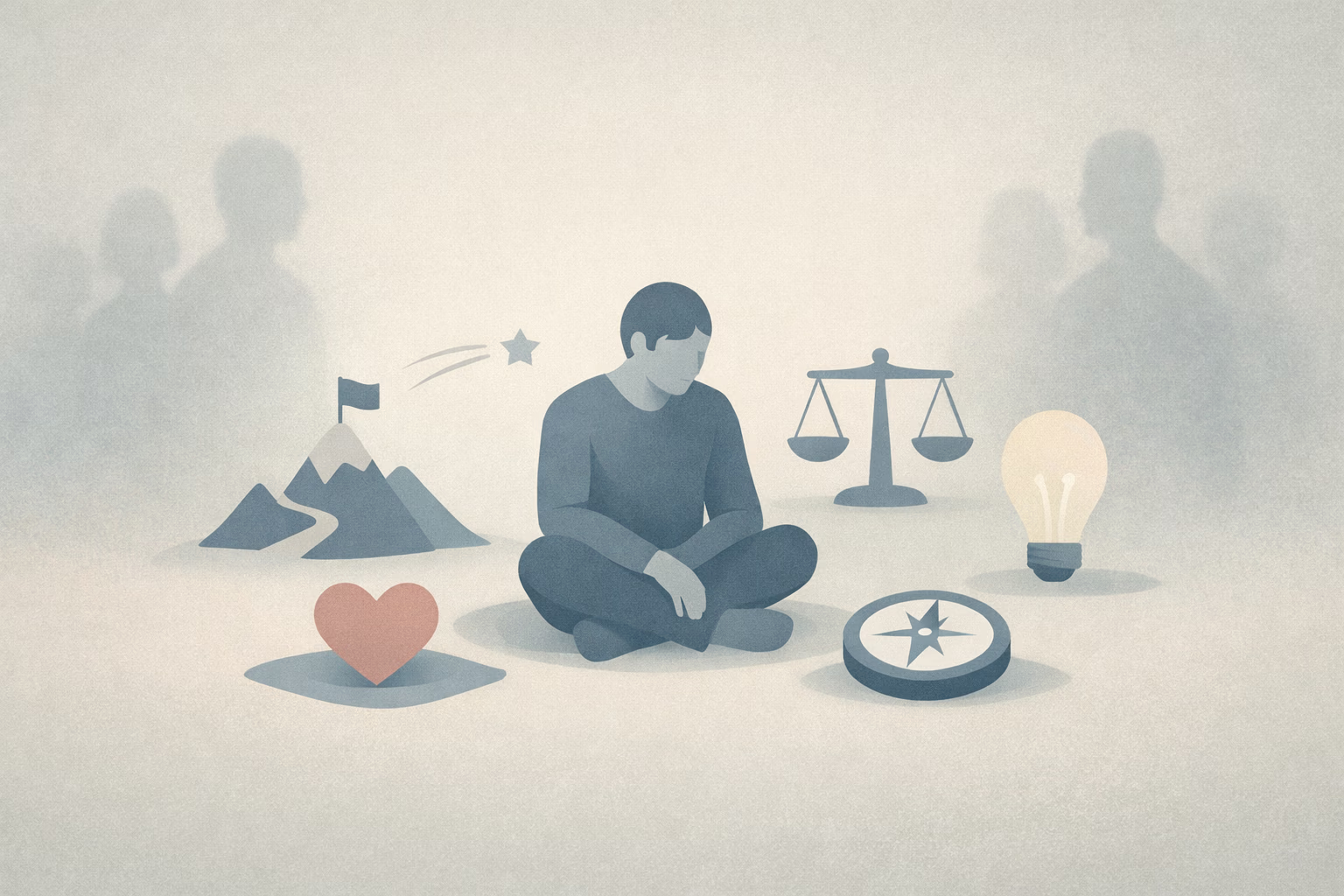
Emotional Logistics: Organizing the Inner Work of Daily Life
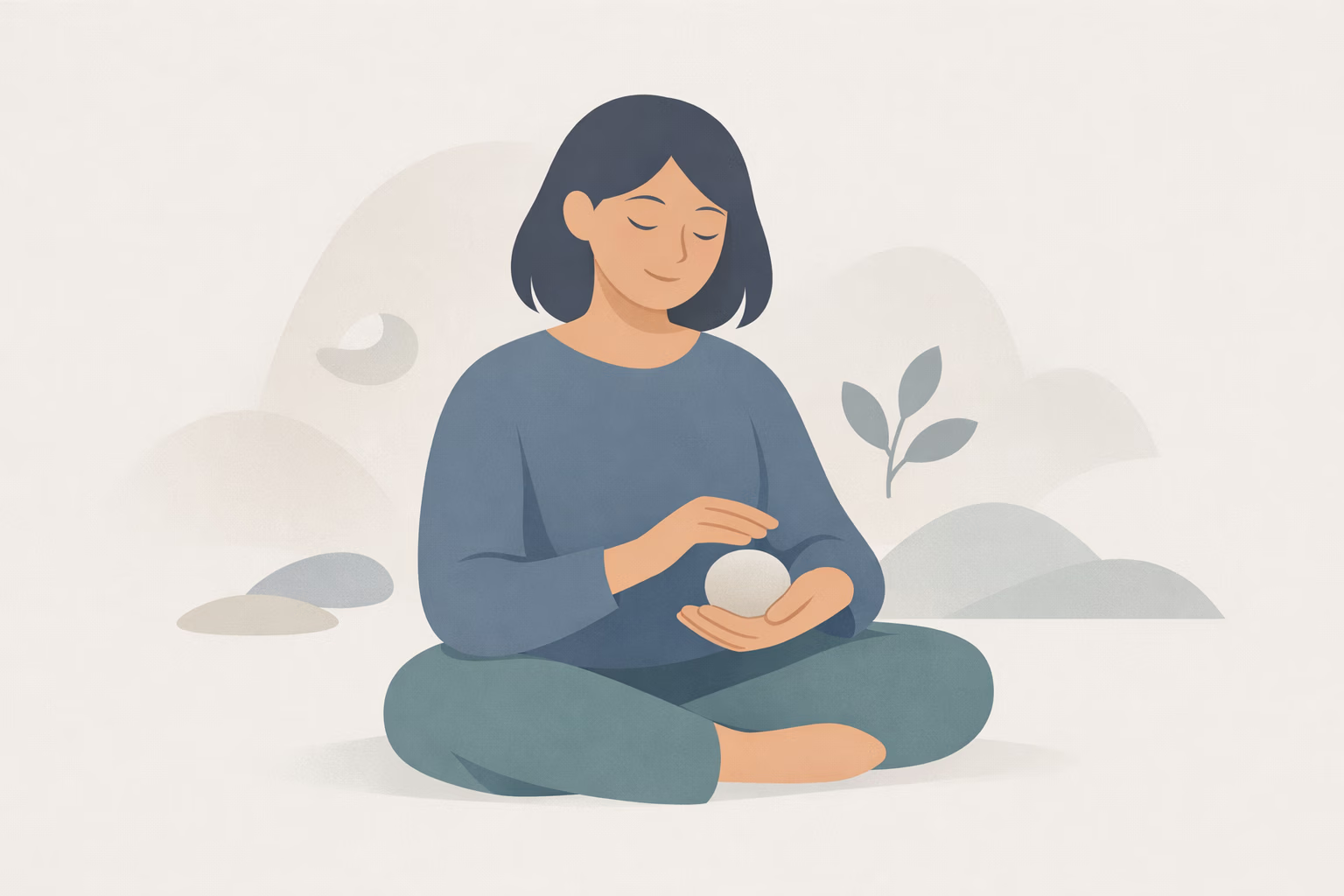
In short: “Emotional stewardship” can sound like a personality trait, or a project you’re supposed to be good at. In reality, it’s closer to hygiene for the inner world: the ongoing way a human nervous system returns to baseline, closes loops, and keeps life feeling like it belongs to you.
“Emotional stewardship” can sound like a personality trait, or a project you’re supposed to be good at. In reality, it’s closer to hygiene for the inner world: the ongoing way a human nervous system returns to baseline, closes loops, and keeps life feeling like it belongs to you.
When inner signals don’t get enough space to resolve, they don’t disappear. They tend to shift into other forms—pressure, drift, numbness, sudden intensity, or a constant sense that something is unfinished.
What if the goal isn’t to manage emotions—but to reduce the backlog that keeps you activated?
Many people don’t “ignore emotions” on purpose. Life gets loud, fast, and demanding, and the inner world becomes a tab left open in the background. At first, postponing works: you keep moving, meet the deadline, take care of others, get through the day.
But uncompleted inner experiences tend to stay physiologically “in progress.” Over time, what was postponed can show up as overwhelm (too much, too fast), muting (too little signal), or disruption (reactions that feel out of proportion). This is less about personality and more about load—what your system has had to carry without closure. [Ref-1]
Some days it isn’t that anything is “wrong.” It’s that nothing ever fully landed.
A nervous system stabilizes when it can complete cycles: detect a signal, orient, respond, and then stand down. Regular emotional attention supports that completion—so fewer experiences remain half-processed and “live” in the body as background activation.
This matters for narrative coherence, too. Humans rely on an internal story of what’s happening and why. When inner signals are repeatedly skipped, the story starts to fray: decisions feel less grounded, preferences get harder to sense, and the self can feel oddly distant. Daily regulation in ordinary life is strongly associated with better well-being, not because it creates perfect moods, but because it helps the system return to stable signaling. [Ref-2]
Humans don’t just react—we track what reactions mean. We can notice patterns across time, connect them to context, and sense what aligns (or doesn’t) with who we are. That reflective capacity is part of what makes emotional stewardship possible: not as analysis, but as orientation.
When inner states are routinely bypassed, the system often compensates with blunt tools—shutting down, pushing through, chasing relief, tightening control. Those are regulatory responses, not identities. Research on suppression and avoidance suggests that chronically sidelining inner experience can carry longer-term costs for distress and health, which fits the idea that “holding it down” doesn’t create completion. [Ref-3]
Not “What’s wrong with me?” but “What has my system been carrying without a place to finish?”
It’s easy to confuse emotional care with either indulgence (feeding feelings) or suppression (containing feelings). Stewardship sits in a different lane: it’s the lowering of internal pressure through completion rather than through force.
Suppression often looks like stability from the outside, but internally it can keep the system braced. Over time, that bracing can show up as tension, fatigue, irritability, or sudden “leaks” when capacity runs out. Chronic suppression has been associated with health and stress-related costs, which aligns with the idea that the body keeps score of what hasn’t resolved. [Ref-4]
A common modern belief is that emotions are optional—nice to have, but not necessary for functioning. In the short term, that can be true: you can compartmentalize and still perform.
But neglected emotional signals don’t simply vanish; they tend to destabilize meaning and identity. When inner responses aren’t integrated into the story of your life, you may start feeling oddly unmoored: doing the “right” things while not feeling connected to why they matter. Emotional suppression has been linked with anxiety, numbness, and relationship strain—outcomes that make sense if the inner world is treated as disposable rather than informational. [Ref-5]
Emotional neglect often forms a loop because it works immediately. Skipping inner attention reduces friction in the moment: fewer pauses, fewer conversations, fewer hard acknowledgments. The reward is speed and temporary relief.
The cost shows up later as diminished coherence: decisions feel harder, reactions become less predictable, and the nervous system carries more “open loops.” This can resemble an avoidance loop—not because of a single fear-based cause, but because the environment rewards bypassing and rarely provides natural closure. Ongoing emotional avoidance is associated with higher stress and distress, which fits a structural model: less completion means more chronic activation. [Ref-6]
When the inner world goes untended, the effects are often practical rather than dramatic. It can look like inconsistency, confusion, or a sense of “I don’t know why I’m like this.” Emotional awareness is linked with mental health partly because it supports clearer processing and more accurate self-interpretation over time. [Ref-7]
Common patterns that reflect backlog and incomplete closure:
It isn’t that the emotions are too big. It’s that they’ve been waiting without a place to land.
Self-trust isn’t a mindset; it’s a track record inside the nervous system. When signals repeatedly arise and get bypassed, the system learns that its messages won’t be received. Over time, inner communication gets noisier (to break through) or quieter (to conserve energy).
This can erode clarity: it becomes harder to tell what you want, what you value, or what a “yes” feels like in the body. Emotional awareness is often described as supporting stability and self-trust because it helps responses become more legible and less surprising. [Ref-8]
Unfinished emotional material tends to retain charge. When it’s postponed, it doesn’t get the “done” signal that allows the nervous system to stand down. So the next trigger doesn’t just activate the present moment—it can also activate the backlog.
That’s one reason intensity can feel confusing: it isn’t always about what’s happening now. It can be what’s happening now plus what never completed. In that cycle, avoidance becomes self-reinforcing: intensity makes future contact feel costly, and then postponing continues. Models of emotional intelligence and regulation consistently connect self-awareness and regulation capacity with better resilience, suggesting that clearer internal processing reduces the need for extremes. [Ref-9]
Sometimes the “too much” isn’t too much emotion—it’s too many unfinished moments arriving at once.
Emotional stewardship is not a demand to monitor yourself all day. Constant scanning can become another form of pressure—more activation layered onto activation. The deeper function is quieter: making space for completion so your system can return to baseline more reliably.
When consistent care is present, balance tends to return not as perfection, but as steadier signaling. The inner world becomes less urgent because it’s less neglected. This is why many public-health framings of emotional wellness emphasize regular, ordinary support rather than crisis-only attention: daily care reduces overload and supports stability. [Ref-10]
Not control. Not collapse. Just a system that can finish what it starts.
Humans regulate in connection. When relationships provide safety cues—respect, time, non-escalation—inner signals often become easier to digest. This isn’t about “expressing everything.” It’s about the nervous system having enough interpersonal steadiness that signals can complete without turning into conflict, withdrawal, or performance.
Shared emotional awareness can strengthen relational grounding because it reduces guessing and hidden pressure. When the inner world is allowed to be real (without being weaponized), it becomes easier for identity and values to stay online. Everyday emotional regulation is widely normalized as a core element of well-being, including in the relational sphere. [Ref-11]
When emotional stewardship is present over time, the change often isn’t dramatic. It’s a return of capacity: more room between stimulus and reaction, fewer sudden spikes, and a clearer sense of what is “mine” versus what is ambient stress.
People often describe a steadier internal trust—not because they are constantly introspective, but because their system has fewer unresolved loops competing for attention. Practices that support daily regulation are frequently framed as simple and regular for this reason: they support consistent return to baseline rather than rare breakthroughs. [Ref-12]
Meaning isn’t built by intensity; it’s built by coherence. When your inner world is routinely cared for, your actions and values are more likely to align—not because you force alignment, but because you can feel what fits. The self becomes easier to inhabit.
In that state, identity works like an orientation system: it guides choices with less drama. Emotional stewardship supports meaning by keeping the inside and outside in conversation, so your life story can update honestly and settle. Many framings of emotional self-care emphasize that it’s preventive and sustaining, not self-indulgent—because it preserves the continuity that meaningful lives require. [Ref-13]
In a culture that rewards speed and performance, caring for the inner world can get mislabeled as extra. But emotional stewardship is closer to protecting your future agency: it reduces the chance that tomorrow will be run by today’s unresolved pressure.
When inner signals are met with steadiness over time, life tends to feel less like constant correction and more like lived direction. Emotional awareness supports this not by “fixing feelings,” but by allowing experience to complete so meaning can stay intact. [Ref-14]
Daily emotional stewardship isn’t a performance of wellness. It’s the quiet condition that lets your nervous system stand down, your story stay coherent, and your values remain reachable.
Not because you try harder—but because fewer parts of you are left unfinished. Over time, that completion becomes a kind of stability you can build a life on. [Ref-15]
From theory to practice — meaning forms when insight meets action.
No — and the article is direct about this. Constant scanning becomes another form of pressure, more activation layered onto activation. Stewardship is closer to hygiene for the inner world: the ongoing way a nervous system returns to baseline, closes loops, and keeps life feeling like it belongs to you. The deeper function is quieter — making space for completion so the system can return to baseline more reliably. Not control, not collapse. Just a system that can finish what it starts. The goal isn't managing emotions in real time; it's reducing the backlog that keeps you activated.
Because unfinished emotional material retains charge. The article explains the mechanics: when content is postponed, it doesn't get the Done Signal that allows the nervous system to stand down. So the next trigger doesn't just activate the present moment — it activates the backlog. That's why intensity can feel confusing: it's what's happening now plus what never completed. The 'too much' isn't usually too much emotion — it's too many unfinished moments arriving at once. Ignoring creates short-term quiet, but unfinished signals create long-term noise, and noise erodes clarity about what's true and important.
Because skipping inner attention works immediately and gets reinforced. The article describes the structure: emotional neglect reduces friction in the moment — fewer pauses, fewer hard acknowledgments. The reward is speed and temporary relief. The cost shows up later as diminished coherence: decisions feel harder, reactions become less predictable, and the system carries more open loops. This is an Avoidance Loop, but not because of fear. It's because the environment rewards bypassing and rarely provides natural closure. Self-trust isn't a mindset — it's a track record. When signals are repeatedly bypassed, the system learns its messages won't be received.
Steadier signaling, not perfect moods. The article emphasizes that restored stewardship usually isn't dramatic — it's the return of capacity. More room between stimulus and reaction, fewer sudden spikes, a clearer sense of what's mine versus what's ambient stress. People describe more predictable energy, less urgency to escape discomfort, cleaner 'no' signals, and a greater sense of being oriented in their own life. Stewardship isn't self-indulgent; it's preventive. It protects future agency by reducing the chance that tomorrow will be run by today's unresolved pressure. A meaningful life needs somewhere to land — that's what daily care provides.
From Science to Art.
Understanding explains what is happening. Art allows you to feel it—without fixing, judging, or naming. Pause here. Let the images work quietly. Sometimes meaning settles before words do.
One Quiet Window, one insight, one reflection — every Sunday