Emotional Labor Fatigue: The Hidden Work You Carry
In short: “Emotional logistics” isn’t about managing feelings like a project. It’s about how the inner work of daily life—anticipating, responding, recovering, repairing, deciding—gets carried through your system. When that inner work has no clear sequencing, it doesn’t disappear.
“Emotional logistics” isn’t about managing feelings like a project. It’s about how the inner work of daily life—anticipating, responding, recovering, repairing, deciding—gets carried through your system.
When that inner work has no clear sequencing, it doesn’t disappear. It stays active in the background as unfinished business. And the result often looks like “too much”: too many reactions, too many responsibilities, too much self-monitoring, too little room to settle.
What if the problem isn’t that you’re too emotional—but that you’re doing too much emotional labor without enough closure?
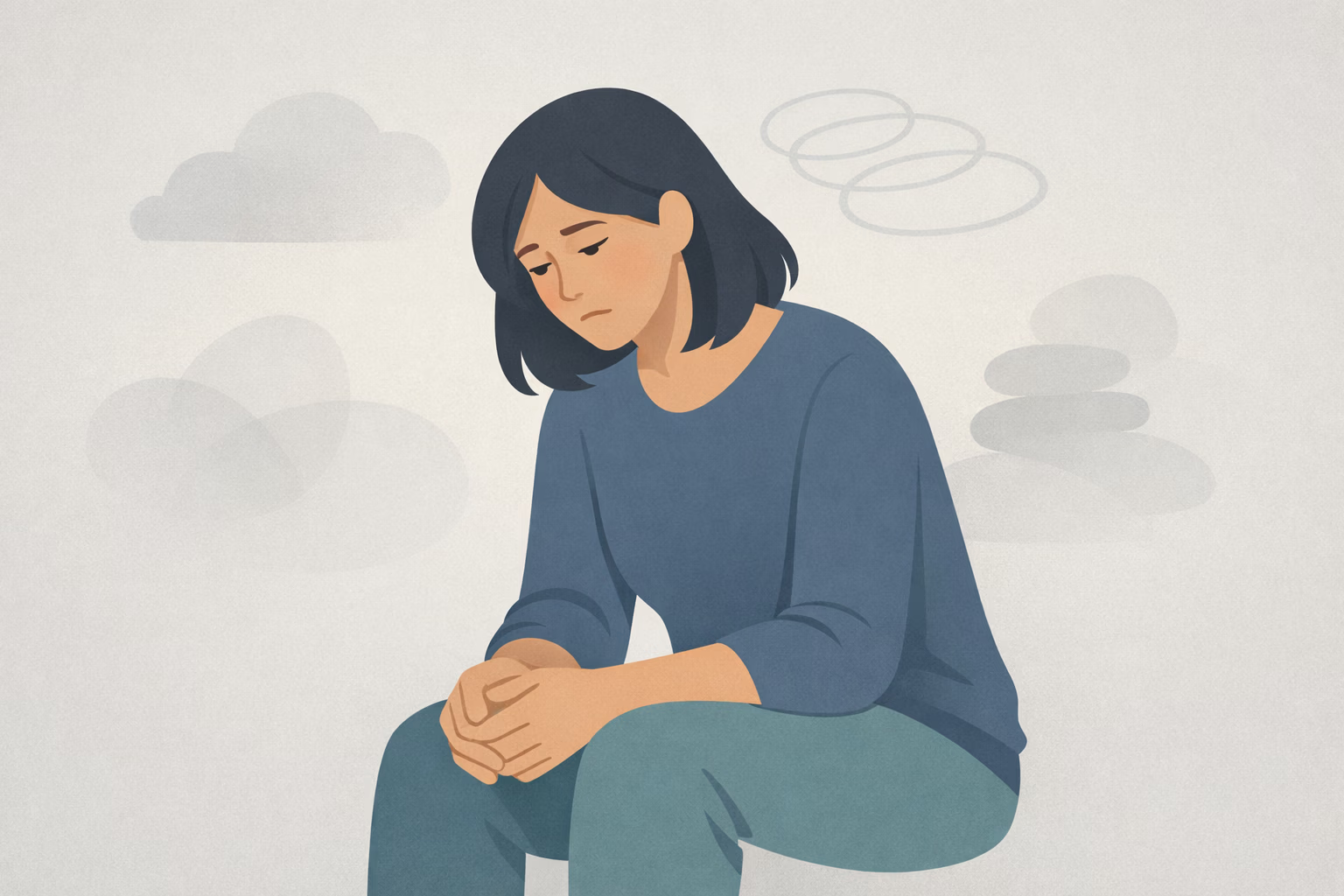
Emotional chaos can feel like multiple signals arriving at once: a worry about work, a text you haven’t answered, a relationship tension, a body that’s tired, a decision you keep postponing. None of these items is “wrong.” The overload comes from concurrency—too many live threads competing for the same limited bandwidth. [Ref-1]
In that state, the nervous system tends to favor speed over precision. It prioritizes scanning and readiness, not completion. You may notice your attention hopping, your body staying on alert, or your thoughts looping without resolution—not because you lack character, but because the system is trying to keep up.
When there are too many open tabs, even simple tasks can feel strangely heavy.
Planning and executive attention aren’t just cognitive skills; they’re load-shifting mechanisms. When demands are sequenced—this first, then that—the body gets a clearer map of what is happening now versus later. That distinction matters because it reduces the need for constant monitoring. [Ref-2]
When sequencing is missing, the nervous system often stays in a “keep everything available” mode. That mode is expensive: it asks your system to hold many unfinished possibilities at once. And what looks like emotional reactivity can be a predictable byproduct of that sustained load.
Not “How do I handle all of this?” but “What is actually happening now, and what is not happening yet?”
Across human history, complexity was real—social dynamics, survival tasks, caregiving, conflict—but much of it came with clearer endpoints. Hunt completed. Meal eaten. Shelter built. Conversation finished. These “done” signals allow the nervous system to stand down and reallocate energy. [Ref-3]
Modern life often keeps the planning system active without providing the same level of completion. When the future is always pressing in, the body can stay organized around readiness, even when there is no immediate danger. Emotional logistics, at its core, is about restoring conditions where completion is possible again.
Many people carry emotional tasks in their head because it works in the short term: you don’t forget, you stay prepared, you keep things from falling apart. This can look like “being on top of it,” even when it’s actually an ongoing internal hold. Over time, the cost is cumulative. [Ref-4]
The body keeps score of that cumulative cost as allostatic load—wear and tear from repeated activation without sufficient stand-down. You can be doing “fine” externally while your internal system is paying the interest on constant readiness.
It helps to separate two very different aims: emotional control versus emotional organization. Control often implies forcing a state, overriding signals, or keeping a lid on experience. Organization is structural: it reduces internal entropy so signals can arrive, be handled, and then resolve.
Chronic stress isn’t only about intensity; it’s also about duration and lack of recovery. When emotional responsibilities are unstructured, they tend to extend indefinitely. Organization doesn’t erase stressors—it gives them boundaries in time and meaning, which reduces the sense of endlessness. [Ref-5]
Structure can be a form of kindness: it tells the nervous system what it no longer has to hold all at once.
When emotional load isn’t organized, a self-feeding loop can form. Open tasks remain open. The system compensates by staying activated. Activation makes it harder to think clearly and finish things. And unfinished things keep activation high.
This is one reason overwhelm often travels with avoidance and reactive coping. It’s not primarily about lacking motivation; it’s about a system that cannot find an exit ramp. Over time, chronic overload is associated with burnout patterns in both mind and body. [Ref-6]
When emotional logistics are strained, people often describe a particular kind of day: nothing catastrophic happens, yet everything feels like it requires more effort than it “should.” That mismatch is a clue that capacity is being spent on background holding, not just visible tasks. [Ref-7]
Some common patterns show up—not as defects, but as adaptations to hidden load:
These patterns are consistent with the idea that sustained load changes what the system can access and when.
Meaning requires slack—some available capacity to integrate what happened into “who I am” and “what matters.” When everything is urgent, the mind tends to shift toward managing instead of making sense. The result can be a life that functions, but feels thin.
Burnout is often described as exhaustion plus cynicism plus reduced efficacy. In everyday language, it can feel like: “I’m doing so much, but it’s not adding up to a life.” Decision fatigue adds another layer, because the constant need to choose under load makes even small preferences feel burdensome. [Ref-8]
When there’s no internal “done,” even meaningful things can start to feel like one more demand.
Emotional tasks are different from practical tasks because they don’t always have visible endpoints. “Repair the tension,” “respond wisely,” “figure out what I want,” “be supportive,” “stay professional,” “don’t overreact”—these are real demands, but they’re hard to close without structure.
When structure is absent, emotional tasks tend to stack. They collide at inconvenient times: a hard email arrives when you’re already depleted; a family need spikes during a work deadline; an old uncertainty reappears when you wanted a quiet weekend. Executive function and emotion regulation share resources; when those resources are taxed, collisions become more frequent and more costly. [Ref-9]
The issue often isn’t the size of any one task, but the lack of protected sequencing between them.
There’s a quiet shift that can happen when emotional work becomes more defined: instead of a fog of “I need to deal with everything,” the system recognizes distinct categories of responsibility. Naming and prioritizing don’t complete the work by themselves, but they can reduce the background cost of carrying it as an undifferentiated mass. [Ref-10]
In nervous-system terms, clarity can function like a partial stand-down signal: not because the situation is solved, but because the system has a map. A map reduces scanning. It also creates the possibility of recovery between efforts, which is where sustainable capacity comes from.
Importantly, this is not about forcing calm. It’s about making emotional labor legible enough that it can have edges—and therefore, eventual closure.
A large portion of emotional logistics is relational: who holds what, when, and for how long. When roles are unclear, people compensate by tracking everything—tone, needs, risk, the next potential rupture. That tracking can look like “being sensitive,” but structurally it’s the mind doing unpaid coordination work.
Clarity around roles and timing reduces the amount of interpretation required in the moment. It also lowers the chance that one person becomes the default container for everyone else’s unfinished material. When relational expectations are less ambiguous, the body often finds more safety cues in connection rather than more work in connection. [Ref-11]
Friction isn’t always conflict. Sometimes it’s just too many unspoken expectations moving through the same small space.
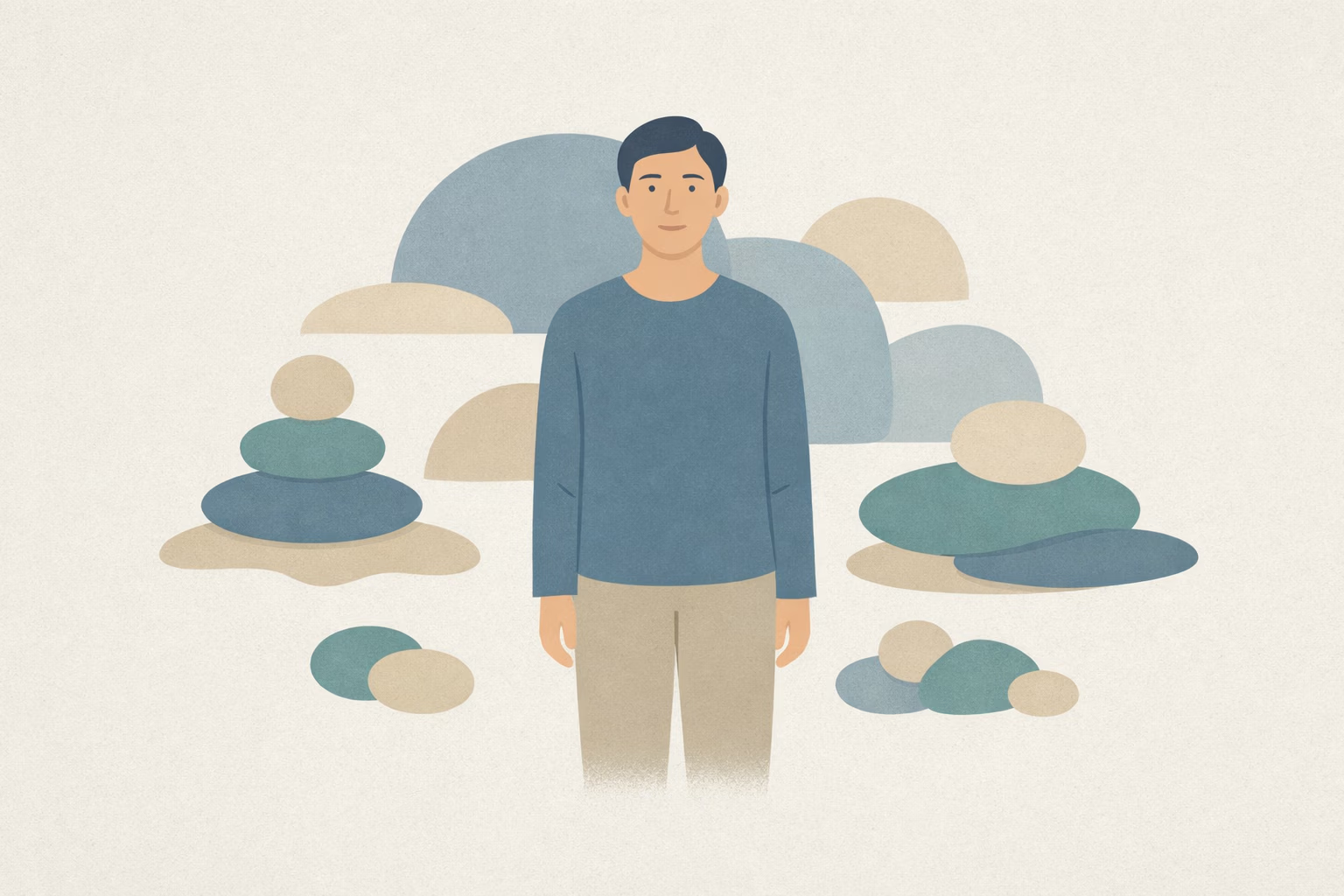
When emotional logistics improve, many people notice a different kind of calm: not a peak state, but predictability. The nervous system isn’t bracing as often. Attention returns more easily after interruptions. Small stresses stay smaller because they don’t automatically attach to ten other open loops.
Relationships can feel buffering again—less like additional complexity, more like shared load. Social support is one of the most robust regulators of stress physiology, especially when it’s experienced as reliable rather than conditional. [Ref-12]
Stewardship is different from self-control. Self-control often implies overriding signals. Stewardship implies responsibility with care: acknowledging that your inner life includes real workloads, real limits, and real needs for completion.
When emotional logistics are supported, identity tends to feel more coherent. You’re not reinventing yourself in every moment of pressure. You’re more able to move from “What do I have to handle?” toward “What kind of person am I being in this season?” That shift is stabilizing because it aligns behavior with values and reduces the sense of fragmentation. Self-compassion also fits here—not as a sentiment, but as a stance that lowers threat and makes completion more reachable. [Ref-13]
Emotional logistics is not another self-improvement project. It’s an orientation: recognizing that inner responsibilities exist, that they take energy, and that your nervous system needs closure—not just stimulation or endurance—to stay well.
When you relate to your patterns as regulatory responses under load, shame often loosens its grip. That softening matters: self-criticism tends to amplify threat, while self-compassion supports steadier regulation and resilience. [Ref-14]
Over time, organized inner work makes room for a different experience of agency—less like pushing yourself through life, more like living from a shape that makes sense.
A meaningful life isn’t built by never having emotional tasks. It’s built when those tasks can move through: named, held, completed, and then released. When completion happens often enough, identity gains continuity—your days start to add up to a story you can recognize. [Ref-15]
And in that recognition, there’s a particular kind of relief: not because nothing is asked of you, but because what’s asked of you can finally reach “done.”
From theory to practice — meaning forms when insight meets action.
Because the chaos comes from concurrency, not catastrophe. Too many live threads — the unanswered text, the postponed decision, the tired body, the work worry, the relational tension — compete for the same limited bandwidth. The nervous system favors speed over precision in that state, prioritizing scanning and readiness rather than completion. You may notice attention hopping, body staying alert, thoughts looping without resolution. None of the items is wrong; the overload is structural. When emotional work has no clear sequencing, it doesn't disappear — it stays active in the background as unfinished business, and the result looks like 'too much' even on ordinary days.
The article draws this distinction carefully. Control implies forcing a state, overriding signals, keeping a lid on experience. Organization is structural — it reduces internal entropy so signals can arrive, be handled, and resolve. Chronic stress isn't only about intensity; it's also about duration and lack of recovery. When emotional responsibilities are unstructured, they extend indefinitely. Organization doesn't erase stressors; it gives them boundaries in time and meaning, which reduces the sense of endlessness. Structure can be a form of kindness — it tells the nervous system what it no longer has to hold all at once. That's load relief, not suppression.
Likely because the system is staying on-call. When emotional tasks are carried mentally — remembering everyone's needs, tracking potential conflicts, mentally rehearsing difficult conversations, holding decisions open just in case — the body keeps score as allostatic load. You can be doing fine externally while internally paying interest on constant readiness. Rest doesn't reach you because the system hasn't received any Done Signal that would let it stand down. Naming and prioritizing emotional tasks doesn't complete the work, but it can function as a partial stand-down — the system has a map, scanning reduces, and recovery between efforts becomes possible.
Sequencing is what makes that distinction usable. The question shifts from 'How do I handle all of this?' to 'What is actually happening now, and what is not happening yet?' When demands are sequenced, the body gets a clearer map of present versus future, which reduces the constant monitoring that 'keep everything available' mode requires. A lot of emotional logistics is also relational — who holds what, when, and for how long. Clarity around roles and timing reduces the unpaid coordination work of tracking everyone's tone and risk. Friction isn't always conflict; sometimes it's too many unspoken expectations moving through the same small space.
From Science to Art.
Understanding explains what is happening. Art allows you to feel it—without fixing, judging, or naming. Pause here. Let the images work quietly. Sometimes meaning settles before words do.
One Quiet Window, one insight, one reflection — every Sunday