Emotional Logistics: Organizing the Inner Work of Daily Life
In short: Some forms of exhaustion don’t come from deadlines or chores. They come from the invisible effort of managing tone, smoothing tension, anticipating reactions, and keeping things “okay”—often while also managing your own internal state.
Some forms of exhaustion don’t come from deadlines or chores. They come from the invisible effort of managing tone, smoothing tension, anticipating reactions, and keeping things “okay”—often while also managing your own internal state.
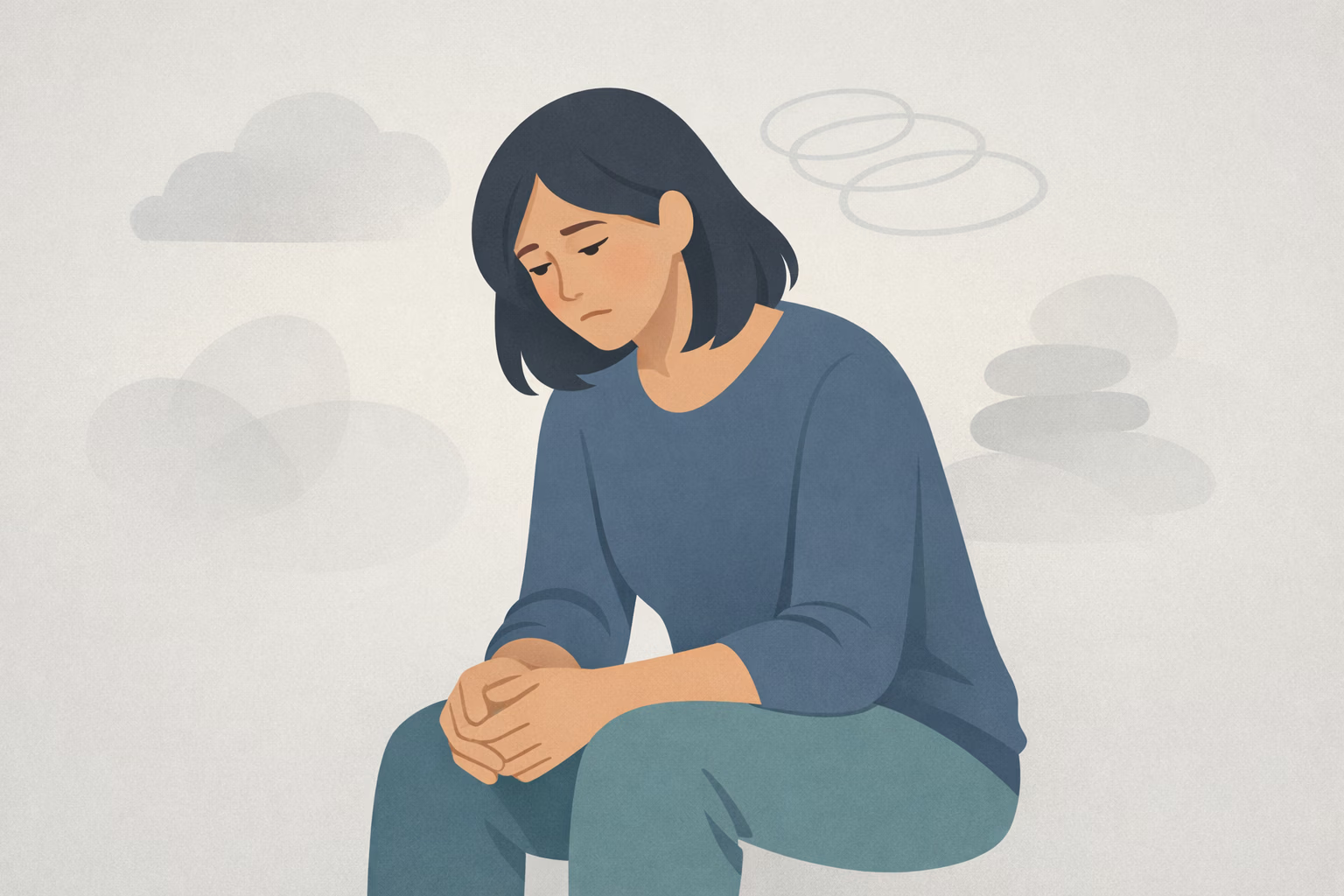
Emotional labor fatigue is what can build when that invisible work becomes constant: you are tracking other people’s moods, editing your words, and holding the emotional temperature of a room, even when no one asked you to. The result isn’t just tiredness. It’s depletion that can feel confusing, because the “work” doesn’t look like work.
What if the problem isn’t that you’re too sensitive—but that you’re carrying too much regulation for too long?
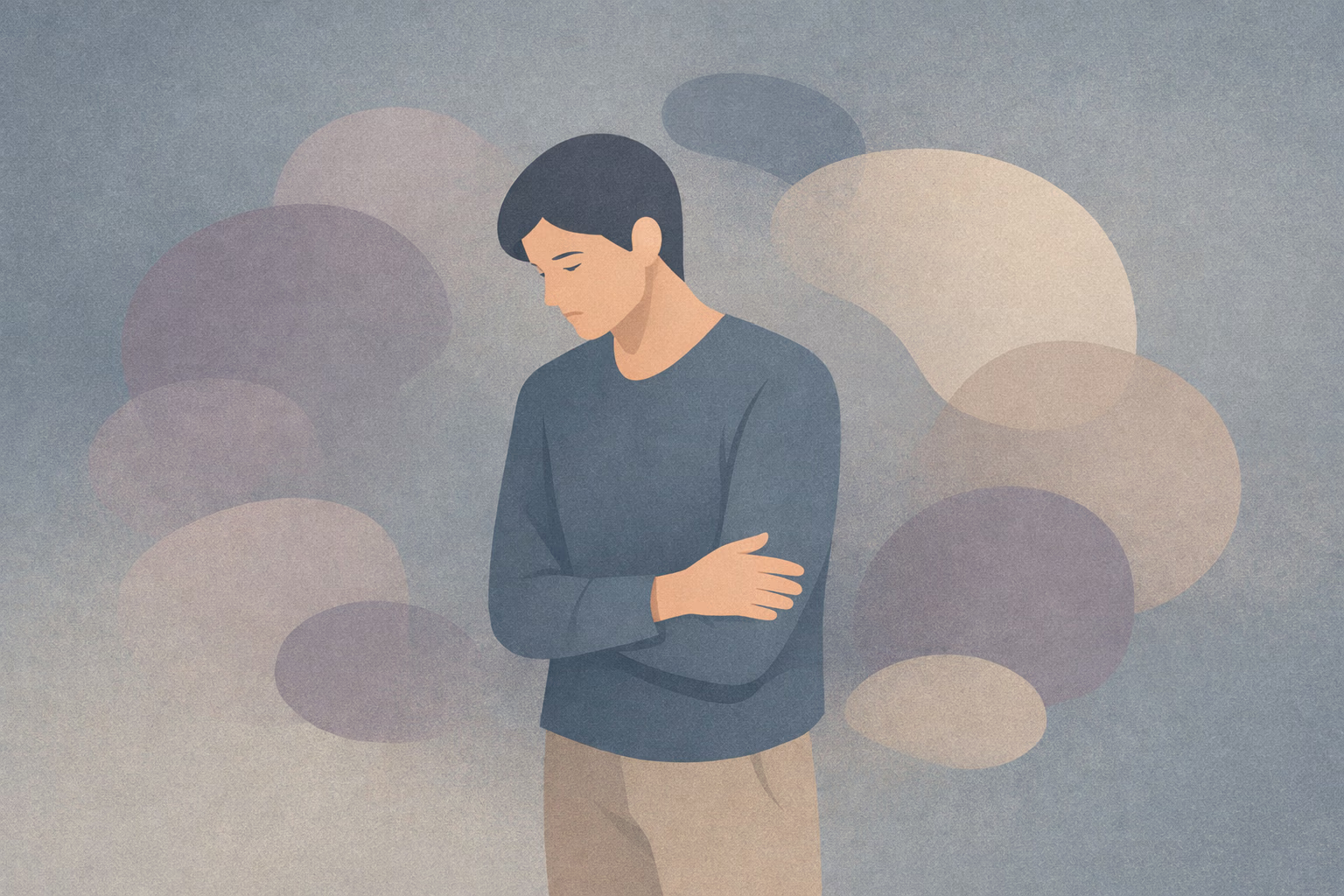
Emotional labor fatigue often shows up as a specific kind of after-effect: you leave an interaction and feel hollow, foggy, or strangely irritable. There may not have been conflict. There may not even have been much conversation. But your system feels like it just ran a marathon.
That’s because the effort wasn’t in the content of the interaction—it was in the ongoing calibration. Reading cues, predicting outcomes, keeping your face and voice steady, choosing what not to say, and silently tracking what the other person might need next is real work, even when it never becomes visible. [Ref-1]
Sometimes the most exhausting part is not what was said, but what had to be managed so nothing went wrong.
Emotional labor is often described as “managing emotions,” but the strain is frequently more structural than emotional. It’s the continuous monitoring: scanning for micro-shifts in tone, deciding what is safe to share, and running quick calculations about impact, timing, and fallout. This keeps attention split and prevents the sense of psychological “done.” [Ref-2]
When this becomes a default mode, the body carries it as sustained activation. Even if you’re sitting still, your system is allocating resources to prediction and prevention. Over time, that can feel like low-grade stress that never fully powers down—less like a crisis and more like a background process that won’t close.
Human nervous systems evolved inside relationships. In small groups, tracking the emotional weather mattered: it helped maintain cooperation, protect bonds, and prevent threats from within the group. This doesn’t make emotional labor a personal quirk—it makes it a predictable expression of an attachment-and-belonging system doing its job.
Because social cues are processed as safety cues, your body may treat interpersonal tension as a kind of environmental risk. The more your system expects that things could shift suddenly, the more it stays prepared. And preparation, biologically, is not restful. It is a form of mobilization that can persist long after the moment passes. [Ref-3]
In the short term, managing other people’s feelings often works. It reduces friction. It keeps conversations smooth. It helps everyone get through dinner, the meeting, the family call, the relationship repair attempt. It can even prevent escalation, which your system registers as immediate safety.
So the pattern is understandable: when your environment rewards “keeping things calm,” your nervous system learns that emotional caretaking is a reliable tool for stability. The problem is that the calm is sometimes purchased with your internal resources—and the bill tends to arrive later as fatigue, numbness, or a thin margin for stress. [Ref-4]
What if your system is choosing the least risky option in the moment, not the most sustainable one?
Many people who carry emotional labor are competent, perceptive, and socially skilled. From the outside, it can look like strength: the person who can handle tense dynamics, keep things courteous, and make everyone feel okay.
But capacity isn’t infinite. When the same person is repeatedly the one who absorbs discomfort, translates emotions, and buffers conflict, the system starts to accumulate wear. Exhaustion and resentment aren’t character flaws; they’re information that a load has been running without closure. Burnout can follow not because you cared, but because the structure made you the permanent regulator. [Ref-5]
In an avoidance loop, the system learns that one behavior quickly reduces immediate strain. Emotional caretaking often does exactly that: it prevents awkwardness, defuses tension, and reduces the chance of someone else’s distress becoming a problem you’ll have to deal with later.
Over time, the pattern can replace other forms of resolution. Instead of roles and expectations being clarified, the pressure is quietly absorbed. Instead of consequences being allowed to land where they belong, they are muted or rerouted. This isn’t “fear” or “people-pleasing” as an identity—it’s a nervous system selecting a fast path to short-term stability when longer-term completion feels costly or unavailable. [Ref-6]
When emotional labor becomes chronic, it tends to organize a person’s behavior in predictable ways. Not because they are “that kind of person,” but because the environment keeps requesting the same function from them: stabilize, smooth, carry.
Some patterns that often appear:
These are regulatory responses under load—signs that the system is protecting itself by narrowing output and conserving resources.
Extended emotional labor doesn’t only cost energy; it can also distort a relationship’s balance. When one person repeatedly carries the regulation, the relationship can quietly adapt around that arrangement. The “stable” dynamic becomes: one person absorbs, the other expresses. One person anticipates, the other reacts.
Inside the body, sustained social strain can leave traces that feel like “I’m fine” on the surface while the system stays braced underneath. Over time, this can reduce spontaneity and make authenticity feel expensive—because being real might create more to manage. The result is not necessarily conflict; it’s a slow thinning of aliveness. [Ref-8]
When you’re always translating the room, you start to forget what your own signal feels like.
A painful twist of emotional labor fatigue is that competence attracts more demand. When you’re the one who keeps things calm, people may come to depend on that function—sometimes openly, sometimes subtly. They may reach for you when they’re dysregulated, uncertain, or overwhelmed, because your steadiness has become part of the system’s stability.
This can create a reinforcing loop: the more you carry, the more you are perceived as the carrier. And the less room there is for you to have a normal human range without consequences. Fatigue increases not simply from effort, but from role permanence—when the system treats your regulation as infrastructure. [Ref-9]
What if your exhaustion is evidence that you’ve been structurally assigned more emotional responsibility than one body can hold?
In relationships, “care” is often confused with “carrying.” But the nervous system recognizes a different distinction: whether a loop closes. When responsibility is shared and expectations are coherent, the body can stand down. When responsibility is ambiguous and one person silently compensates, the system stays on call.
Recognizing limits is not the same as becoming harsh or uncaring. It’s a way the organism marks what is sustainable—so the relational system can reorganize around reality rather than around silent overextension. When limits are honored (by you and by others), emotional energy tends to return not as a motivational high, but as a steadier baseline: less bracing, fewer internal calculations, more room to simply be present. [Ref-10]
Emotional labor fatigue often improves when roles and expectations become explicit enough that the same person is no longer doing constant invisible work. This is not a “communication tip” so much as a structural change: who holds what, who repairs what, who owns what.
Research on emotional suppression suggests that when people regularly hide or inhibit their internal state, there can be relational costs—less mutual understanding, less accurate attunement, more distance over time. [Ref-11] In that light, renegotiating roles isn’t just about fairness; it’s about restoring the conditions where connection can be real rather than managed.
When the relationship no longer depends on one person’s continuous self-editing, the system gets a clearer “done” signal. Less monitoring is required because less monitoring is needed.
As load reduces and loops close more cleanly, many people notice a specific kind of relief: not euphoria, but space. More breathing room in conversation. Less urgency to fix. Less internal narration about how things are landing.
This is often accompanied by “signal return”—preferences, fatigue cues, and genuine yes/no responses become easier to detect because they’re no longer constantly overridden by the job of managing others. That return isn’t the same as insight. It’s a settling in the body that happens when there’s less to brace against and fewer unfinished interpersonal tasks running in the background. [Ref-12]
It’s not that life becomes effortless. It’s that your system stops acting like every interaction is a situation to manage.
When reclaimed energy is available, relationships can shift from caretaking to mutuality. Mutuality doesn’t mean perfect symmetry; it means that responsibility can move. It means one person’s distress doesn’t automatically become the other person’s job to metabolize.
Under lower cognitive and emotional load, attention becomes more flexible—less consumed by scanning and more available for actual connection. Research suggests that cognitive load changes how emotional information is processed, sometimes reducing nuance while increasing downstream costs. [Ref-13] In everyday terms: when you’re not overloaded, you don’t have to simplify people into “okay/not okay.” You can respond with more range, without taking over.
Care becomes sustainable when it’s built on shared reality rather than one person’s constant compensation.
Emotional labor is a real human capacity: the ability to notice, soothe, coordinate, and create social safety. In close relationships and caregiving roles, that capacity can be meaningful and even lifesaving.
What breaks people is not caring—it’s carrying without closure. When the burden is chronic and the role is unchosen, the body treats it like ongoing demand with no stand-down signal. Over time, that looks like caregiver burden: reduced capacity, narrowed bandwidth, and less available presence. [Ref-14]
Seeing emotional labor clearly can restore agency, because it turns a vague sense of “something’s wrong with me” into an intelligible map: load, role, closure, and meaning.
Emotional labor fatigue is not proof that you’re failing at relationships. It’s proof that your system has been running high output for a long time.
When care includes the self—when responsibilities are shared and completion is possible—the nervous system doesn’t have to stay armored. Chronic stress load has measurable effects on health and cognition, not because someone is weak, but because biology keeps score. [Ref-15]
In a coherent life, care is not something you disappear into. It’s something you can participate in while remaining whole.
From theory to practice — meaning forms when insight meets action.
Because the effort wasn't in the content of the interaction — it was in the ongoing calibration. Reading cues, predicting outcomes, keeping your face and voice steady, choosing what not to say, silently tracking what the other person might need next: this is real work even when it never becomes visible. Sometimes the most exhausting part isn't what was said, but what had to be managed so nothing went wrong. The body carries this monitoring as sustained activation. Even sitting still, your system is allocating resources to prediction and prevention — a background process that never closes cleanly.
Emotional labor is the invisible effort of managing tone, smoothing tension, anticipating reactions, and keeping things okay — often while also managing your own internal state. Burnout follows not because you cared, but because the structure made you the permanent regulator. Capacity isn't infinite. When the same person repeatedly absorbs discomfort, translates emotions, and buffers conflict, the system accumulates wear. Exhaustion and resentment aren't character flaws; they're information that a load has been running without closure. The Avoidance Loop tightens here: caretaking prevents immediate awkwardness, but the underlying mismatch stays unclosed and the same demand returns.
Because competence attracts more demand, and the role gets locked in by the social system around you. When you're the one who keeps things calm, people come to depend on that function — sometimes openly, sometimes subtly. Your steadiness becomes part of the system's stability. A reinforcing loop forms: the more you carry, the more you're perceived as the carrier, and the less room there is for you to have a normal human range without consequences. Fatigue increases not just from effort but from role permanence — when the system treats your regulation as infrastructure that's expected to keep running.
No. The article reframes this clearly: care is often confused with carrying. The nervous system recognizes a different distinction — whether a loop closes. When responsibility is shared and expectations are coherent, the body can stand down. When responsibility is ambiguous and one person silently compensates, the system stays on call. Recognizing limits is how the organism marks what is sustainable. Care that includes the self lasts longer. Mutuality doesn't mean perfect symmetry; it means responsibility can move — one person's distress doesn't automatically become the other person's job to metabolize. Real care is something you participate in while remaining whole.
From Science to Art.
Understanding explains what is happening. Art allows you to feel it—without fixing, judging, or naming. Pause here. Let the images work quietly. Sometimes meaning settles before words do.
One Quiet Window, one insight, one reflection — every Sunday