
Guilt & Shame: Invisible Forces That Shape Your Behavior
In short: Guilt and shame are often treated like private flaws: something you “shouldn’t” feel, or something you must defeat before you can live clearly. But in a human nervous system, these states are more like social-weather alerts—signals that track approval, belonging, and the risk of being pushed out of the group.
Guilt and shame are often treated like private flaws: something you “shouldn’t” feel, or something you must defeat before you can live clearly. But in a human nervous system, these states are more like social-weather alerts—signals that track approval, belonging, and the risk of being pushed out of the group.
What if your guilt isn’t proof you’re wrong—just proof your system is scanning for social consequences?
When daily decisions start to feel morally loaded—what to say, what to ask for, whether to rest, whether to disagree—it’s usually not because you’re broken. It’s often because the brain is trying to prevent social loss in an environment where “enough” and “safe” rarely feel complete.
A common signature of guilt- and shame-driven living is chronic second-guessing. The decision itself may be small—replying to a message, setting a boundary, spending money, choosing a meal—but the internal stakes feel enormous, as if each choice will be filed away as evidence of who you are.
In that state, self-blame can become the brain’s fastest organizing tool. If something might go wrong, the system assigns responsibility early—sometimes automatically—because responsibility feels like control. That can look like “I should have known,” “I’m being difficult,” or “I don’t deserve to take up space,” even when the situation is complex. [Ref-1]
Importantly, this doesn’t mean you’re uniquely sensitive or inherently insecure. It means your system is running a high-frequency social-risk calculation, and it’s treating ambiguity as unfinished business that must be closed.
Guilt and shame sit close to the brain’s social-survival machinery. When the nervous system senses possible disapproval, it can shift into heightened self-monitoring: tracking tone, timing, wording, facial expression, and how you might be interpreted. [Ref-2]
This is not a “thinking problem.” It’s often a whole-body orientation toward preventing a rupture: fewer risks, fewer bold moves, fewer statements that could be challenged. Inhibition and conformity can become the default not because you lack opinions, but because the system is prioritizing social safety cues over internal preference.
Over time, this can create a particular kind of fatigue: not from doing too much, but from continuously pre-editing yourself.
In social species, belonging isn’t a luxury. Historically, being accepted influenced access to protection, food, mating opportunities, and shared resources. From that angle, guilt and shame aren’t random punishments—they’re cooperative tools that helped groups stay coordinated. [Ref-3]
Guilt tends to orient toward behavior (“I may have harmed something; I should repair”), while shame tends to flood identity (“Something about me could cost me connection”). These experiences can overlap, and both can narrow attention toward what must be fixed to reduce social threat.
So the mere presence of guilt or shame doesn’t mean you did something wrong. It often means your system is updating your “standing in the group” map.
One reason guilt and shame can be so persuasive is that they often work. They discourage behaviors that might bring conflict, and they push quick correction—apologies, explanations, over-performance, self-restriction—before anyone else has to ask. [Ref-4]
In a nervous system, that quick correction can produce an immediate downshift: fewer unknowns, fewer potential arguments, fewer chances of being seen as “too much.” The loop closes fast: you comply, you smooth, you contain, and the environment stays stable.
That stability is real. The hidden cost is that the stability may be purchased by shrinking, not by resolution.
When compliance reliably prevents tension, it starts to feel like safety. But it’s a particular kind of safety: the safety of being hard to criticize. Over time, life can become organized around avoiding disapproval rather than inhabiting a real point of view. [Ref-5]
Authenticity isn’t a personality trait here; it’s a form of coherence—when inner signals, values, and outward actions match closely enough that the system can register “done.” Chronic compliance interrupts that “done” signal. The body may behave, but the identity story remains incomplete: What did I choose? What do I stand for? What is true for me?
“It’s not that I don’t know what I want. It’s that wanting feels like it comes with consequences.”
This is why people can look “fine” on the outside and still feel internally unmoored.
Over time, these social emotions can start acting like internal enforcement: a fast pressure system that nudges behavior back toward what seems acceptable. You don’t need an external critic in the room if the nervous system has learned to anticipate one.
This is less about “fear” as a story and more about prediction and load. If the system predicts relational friction, it may pre-emptively restrict options: don’t ask, don’t disagree, don’t take, don’t rest, don’t be visible. The result can look like morality, but it often functions like threat management. [Ref-6]
In that mode, guilt and shame don’t merely comment on decisions. They become the decision-making framework.
When the body is organized around social risk reduction, certain behaviors become especially likely—not because you’re “a people-pleaser,” but because these patterns efficiently lower uncertainty in relationships. [Ref-7]
Each pattern can create short-term relief. And that relief can be mistaken for confirmation that the pattern is “right.”
If you repeatedly choose what reduces social friction, the internal system receives fewer clear signals about your own preferences. Self-trust doesn’t disappear because you “lack confidence.” It erodes because decisions stop being anchored to lived outcomes that feel like yours.
Resentment can build in a quiet, structural way: not as dramatic anger, but as the sense that life is happening without your authorship. You may notice chronic indecision because every option is evaluated through external consequence first, and internal consequence second (or not at all). [Ref-8]
In this state, even good choices can feel unsettled—because they didn’t fully land as identity-level completion.
One of the most confusing parts is how quickly things can feel better after you comply. The nervous system gets an immediate “stand down” signal: no confrontation, no rupture, no exposure. That relief is not imaginary—it’s the body exiting a threat-prediction state.
But relief is not the same as closure. Relief can arrive even when the deeper loop remains incomplete: your preference wasn’t represented, the boundary wasn’t real, the repair wasn’t mutual, the relationship dynamic didn’t update. The body learns a simple rule: compliance reduces activation. [Ref-9]
Over time, that rule can become automatic, making guilt and shame feel like reliable guides—even when they’re mostly guiding you toward short-term quiet.
Values-based decision-making tends to require a different internal condition than shame-based decision-making. It asks for enough nervous system space to sense what matters, enough time to tolerate complexity, and enough internal permission to let a choice represent you.
When social-threat activation is high, the brain prioritizes immediate belonging signals over longer-horizon meaning. When that activation lowers, a different kind of clarity becomes available: not a sudden burst of confidence, but a steadier access to “this is aligned” versus “this is just safer.” [Ref-10]
What changes when a decision is allowed to be about direction, not defense?
This isn’t about replacing guilt and shame with positive thinking. It’s about restoring the conditions where choices can integrate—where they can settle as coherent identity rather than remaining endless social math.
Some environments intensify these loops: conditional approval (“I like you when you perform”), frequent criticism, shifting expectations, or inconsistency in care. In those settings, the nervous system can learn that connection is unpredictable, and unpredictability increases monitoring.
When approval feels contingent, shame can become the quickest organizing force—an internal attempt to prevent the next rupture by pre-emptively correcting the self. Research links shame and self-criticism with heightened social anxiety processes, which fits with the lived experience of feeling constantly evaluated. [Ref-11]
Again, this is not about weakness. It’s about adaptation to an unstable social reward landscape: when the rules keep changing, the system tries to become the rule.
As internal load reduces and more experiences reach completion, decisions can start to carry a different texture. There is often more internal permission—not as a dramatic breakthrough, but as a quieter absence of compulsive self-editing.
Clarity can show up as simplicity: fewer arguments with yourself, less need to justify, and more ability to hold two truths at once (for example: “This might disappoint someone” and “It still matters to me”). This is closely related to psychological flexibility—being able to stay oriented to values even when discomfort is present, without needing immediate escape or certainty. [Ref-12]
“I can feel the pull to over-explain, and I don’t have to obey it.”
The most telling sign is often ease after the decision: not excitement, but a sense that the system recognizes a coherent ending.
When guilt and shame have been running the show, it can seem like the only two options are: keep everyone comfortable, or become reckless. But meaning-led direction is neither. It is the capacity to let decisions express values and identity while still accounting for relationships.
This shift isn’t powered by motivation. It’s powered by coherence: choices that match what matters, consequences that are faced rather than bypassed, and a body that can register completion instead of staying braced for review. In emotion regulation terms, the system isn’t “getting rid” of guilt and shame; it’s rebalancing what information they’re allowed to carry. [Ref-13]
Belonging remains important—but it stops being the only currency. Decisions begin to answer a different question: not “Will I be approved of?” but “Will I be able to live with this as part of who I am?”
Guilt and shame can be informative without being authoritative. They can signal that something relational might need attention, repair, or clarity. They can also signal that the system is overloaded and scanning for danger in ordinary moments.
When these states are treated as automatic obedience cues, life narrows. When they’re treated as signals for reflection, the decision-making center of gravity can move back toward values, context, and meaning—toward choices that create real closure instead of temporary relief. [Ref-14]
Agency often returns not as force, but as orientation: a felt sense that your life is allowed to be shaped from the inside, even while staying connected to others.
There is a kind of belonging that asks you to keep proving you deserve to be here. And there is a kind of belonging that forms when your decisions are allowed to represent you—when your life story gains continuity instead of constant correction.
Over time, meaning becomes less like an idea and more like a settled narrative: a lived pattern you recognize as yours. Not because you never feel guilt or shame again, but because those signals no longer get to define your identity or dictate every choice. [Ref-15]
When choices align with what matters and reach real completion, the nervous system gets a different message: you are not just acceptable—you are coherent.
From theory to practice — meaning forms when insight meets action.
Chronic second-guessing is a signature of guilt- and shame-driven living. The decision itself may be small — replying to a message, setting a boundary, choosing to rest — but internal stakes feel enormous, as if each choice will be filed as evidence of who you are. In that state, self-blame becomes the brain's fastest organizing tool. If something might go wrong, the system assigns responsibility early because responsibility feels like control. This isn't about being uniquely sensitive or insecure — it means your system is running a high-frequency social-risk calculation, and treating ambiguity as unfinished business that must be closed. Guilt isn't proof you're wrong; it's proof your system is scanning for social consequences.
In social species, belonging isn't a luxury — historically it influenced access to protection, food, and shared resources. Guilt and shame aren't random punishments but cooperative tools that help groups stay coordinated. Guilt orients toward behaviour (I may have harmed something; I should repair). Shame floods identity (something about me could cost me connection). Both narrow attention toward what must be fixed to reduce social threat. The mere presence of these states doesn't mean you did something wrong — it means the Attachment & Belonging System is updating your standing in the group map. They're social-weather alerts, not verdicts about your worth.
When compliance reliably prevents tension, it starts to feel like safety — but a particular kind: the safety of being hard to criticize. The nervous system gets an immediate stand-down signal after compliance: no confrontation, no rupture, no exposure. The body learns: compliance reduces activation. From the Status & Control evolutionary root, this becomes a Power Loop — over-apologizing, people-pleasing, self-sacrifice, over-explaining. Each pattern creates short-term relief, and that relief is mistaken for confirmation the pattern is right. But relief isn't closure. Your preference wasn't represented, the boundary wasn't real, the dynamic didn't update. Stability gets purchased by shrinking, not by resolution.
These states can be informative without being authoritative. They can signal that something relational might need attention, repair, or clarity — or that the system is overloaded and scanning for danger in ordinary moments. When treated as automatic obedience cues, life narrows. When treated as signals for reflection, decision-making moves back toward values, context, and meaning. As internal load reduces and more experiences reach completion, decisions carry a different texture — fewer arguments with yourself, less need to justify, more ability to hold two truths at once: this might disappoint someone, and it still matters to me. Meaning Density grows when choices are allowed to represent you.
From Science to Art.
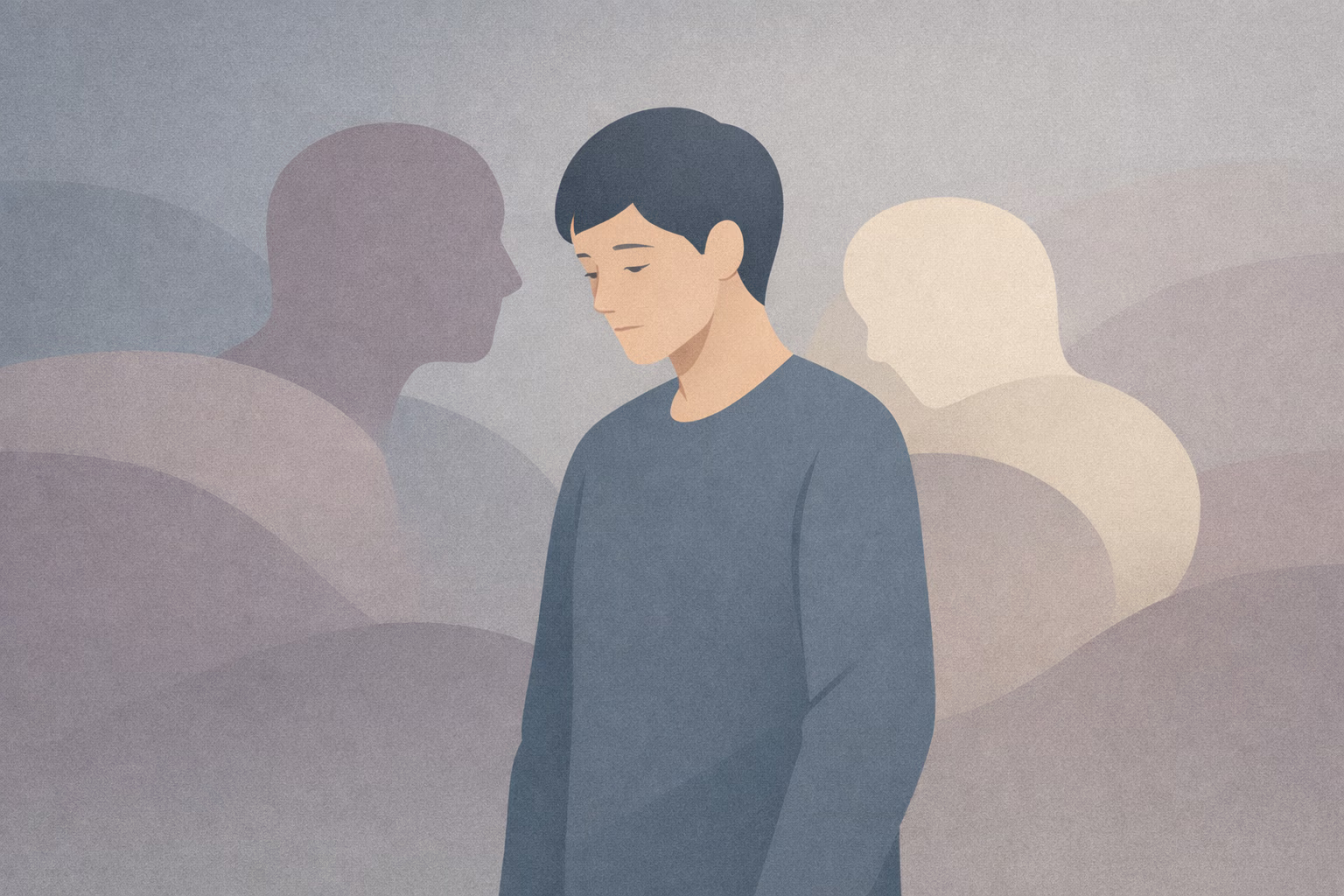
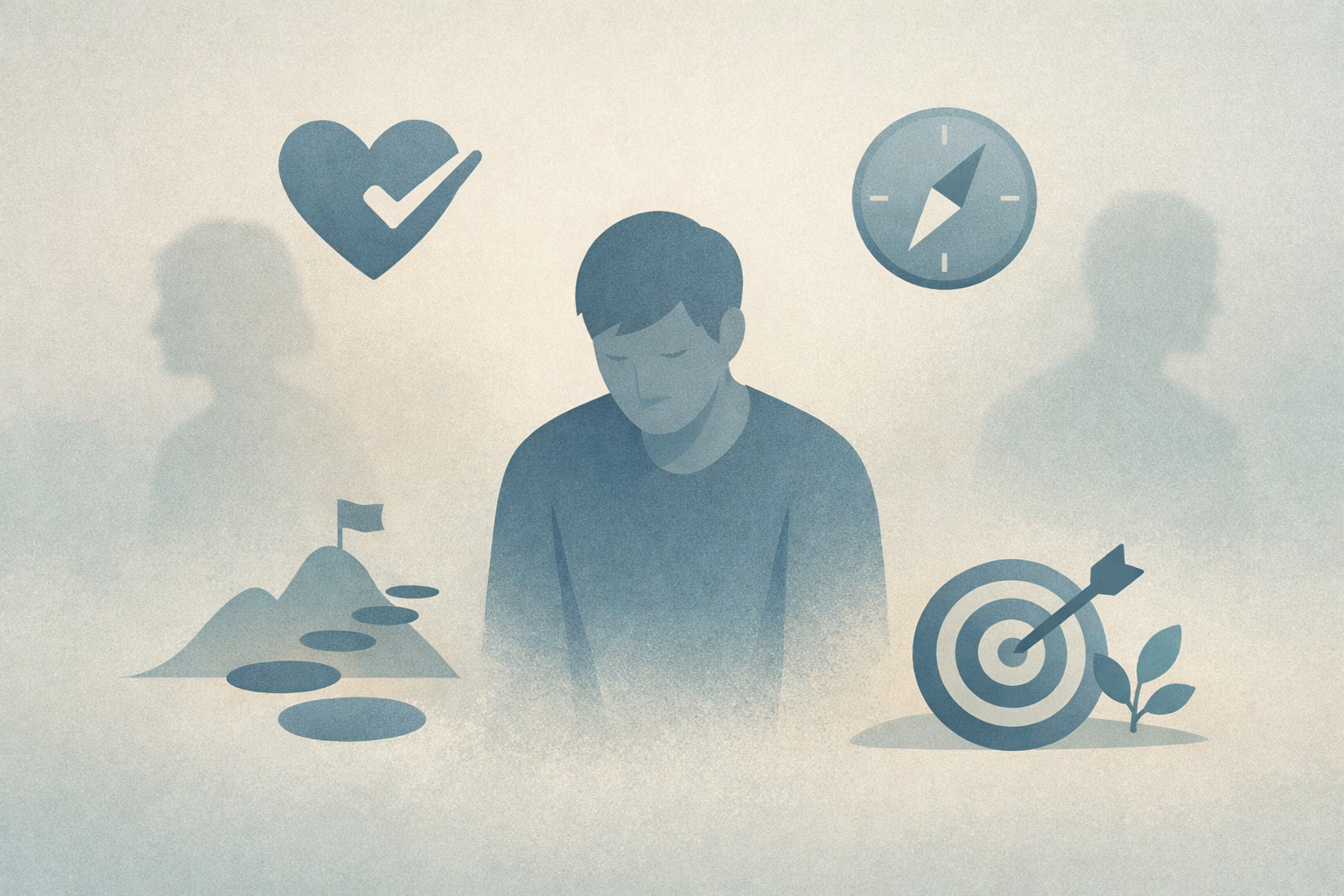
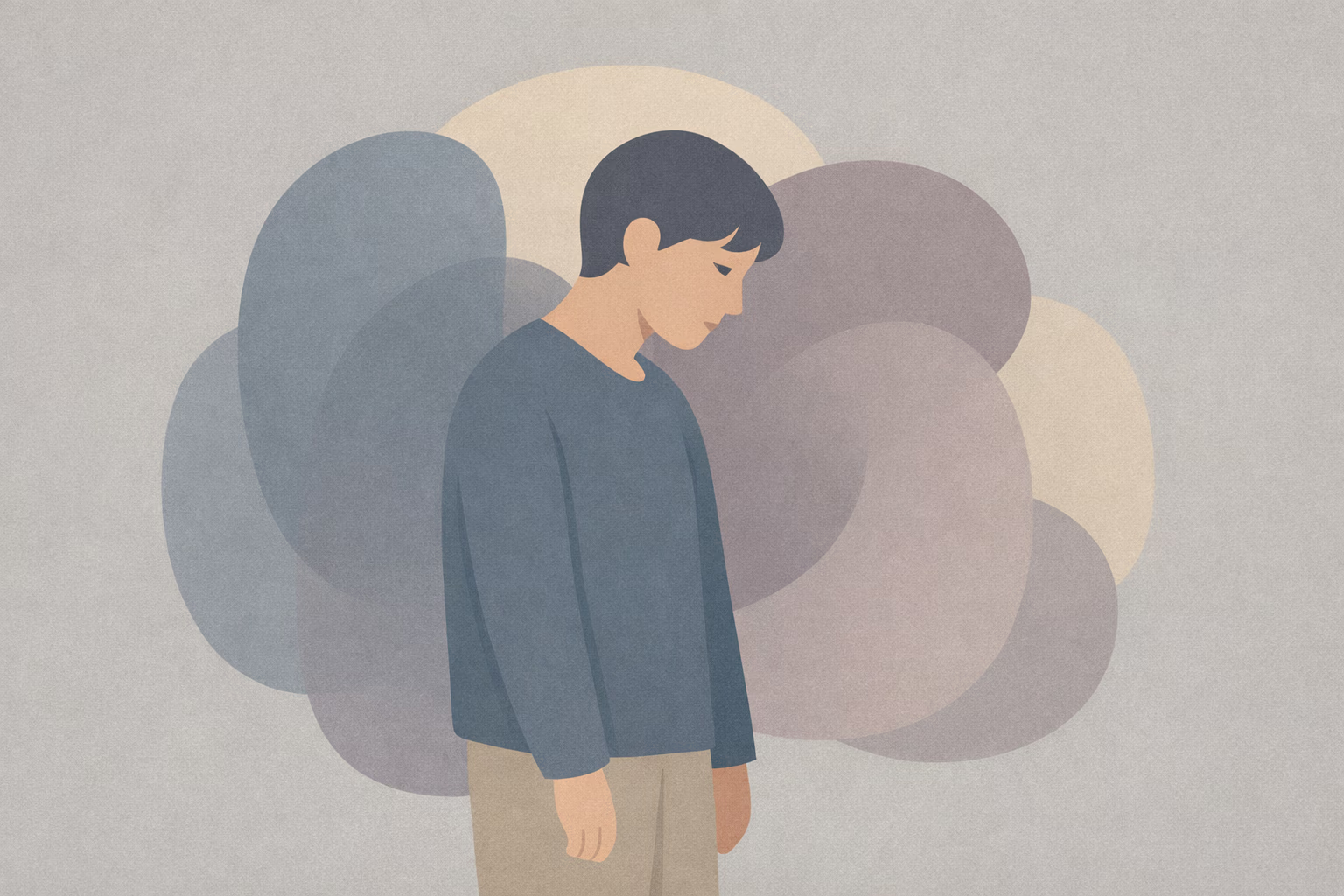
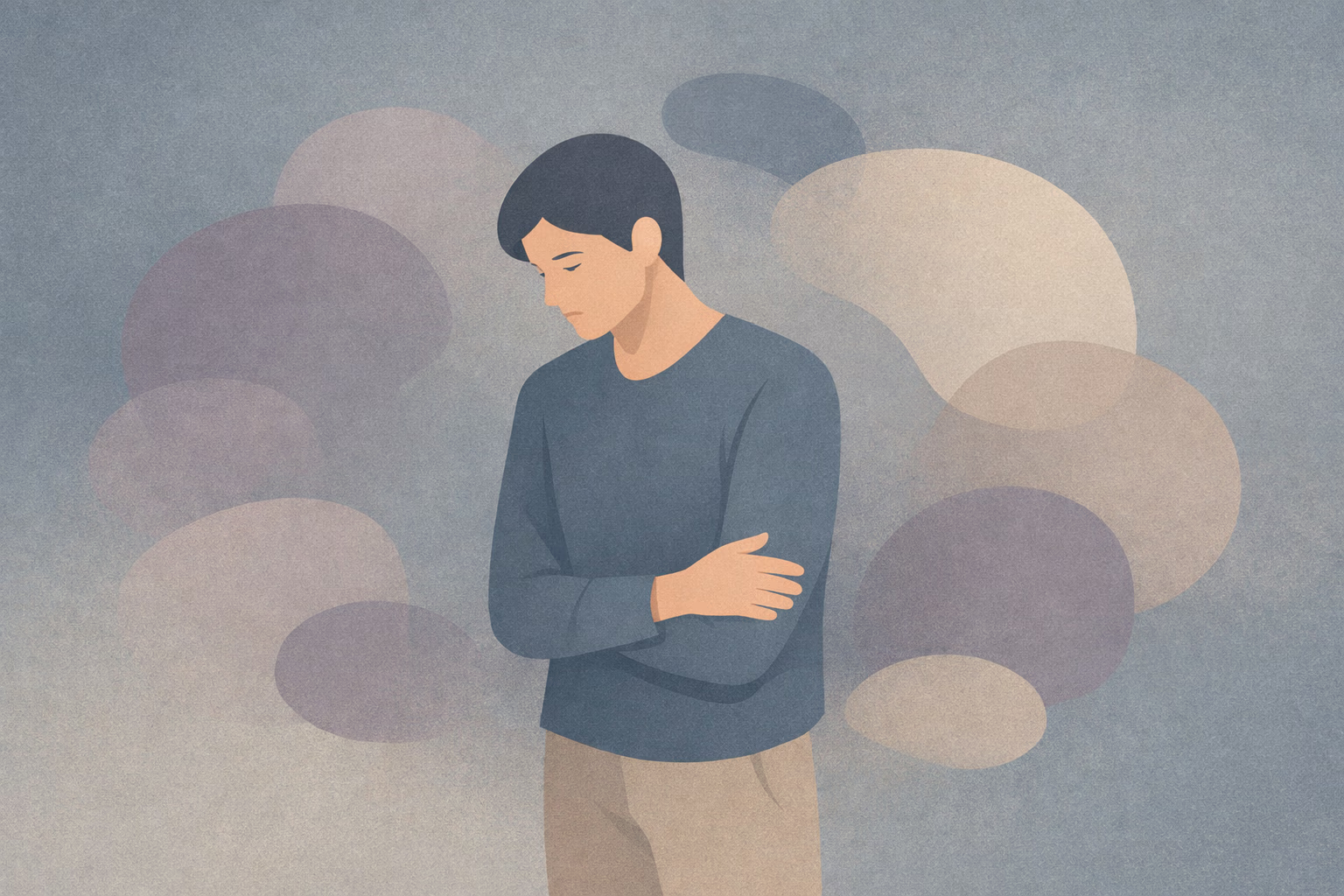
Understanding explains what is happening. Art allows you to feel it—without fixing, judging, or naming. Pause here. Let the images work quietly. Sometimes meaning settles before words do.
One Quiet Window, one insight, one reflection — every Sunday