The Inner Critic Spiral: How Judgment Becomes Habit
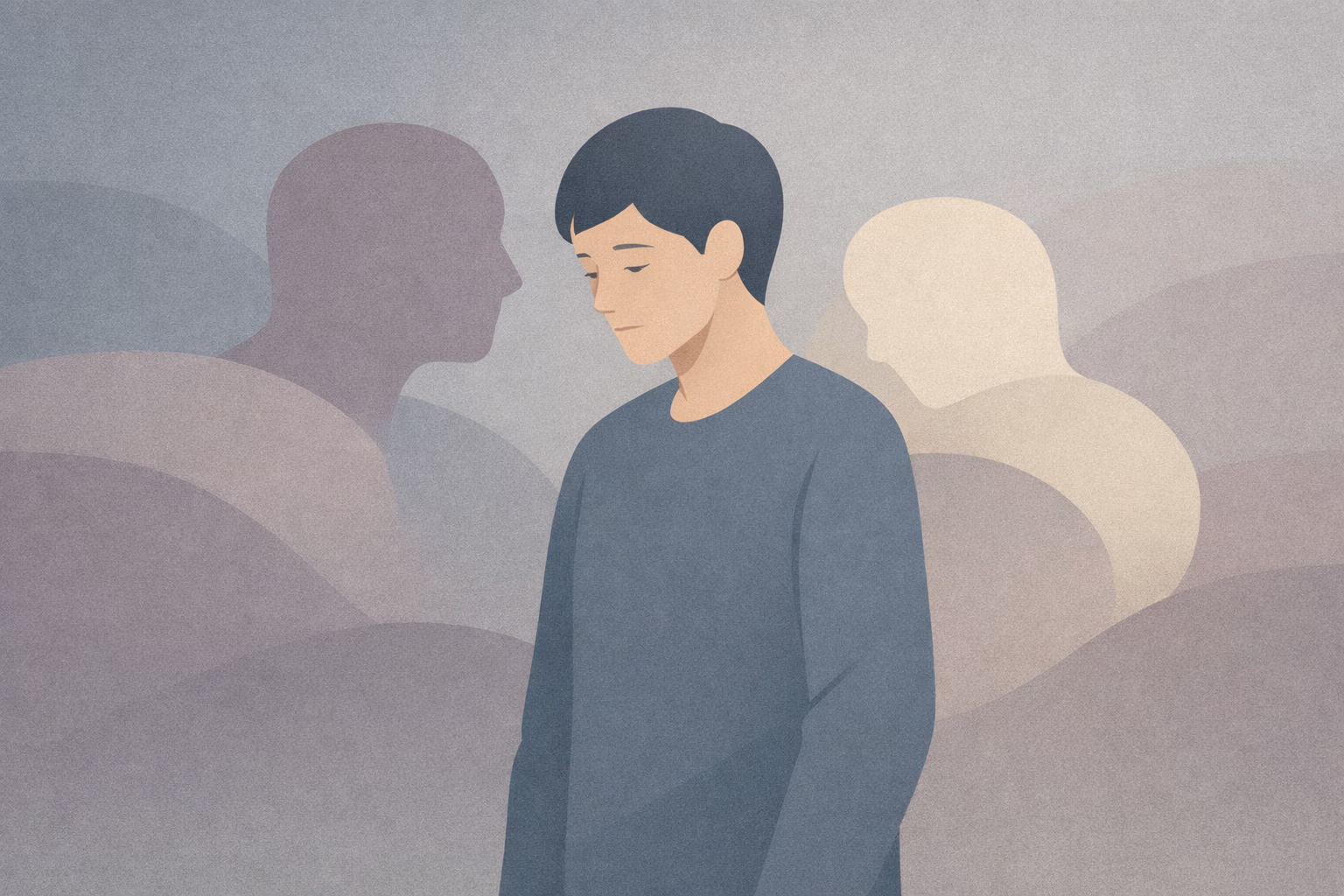
In short: The “inner critic” is often described like a personality trait: a harsh voice, a perfectionist streak, a chronic sense of not measuring up. But for many people, it functions less like a character flaw and more like an internalized threat-detection and self-correction system—built to prevent social danger, rejection, or costly mistakes.
The “inner critic” is often described like a personality trait: a harsh voice, a perfectionist streak, a chronic sense of not measuring up. But for many people, it functions less like a character flaw and more like an internalized threat-detection and self-correction system—built to prevent social danger, rejection, or costly mistakes.
What if your inner critic isn’t a verdict about who you are, but a regulation response to life feeling unfinished and evaluative?
When the nervous system is carrying high load, it tends to lean on strategies that create quick control: scanning for errors, tightening standards, rehearsing what could go wrong. This can produce short-term relief. Over time, it can also reshape identity—until “being a person” starts to feel like “being a project.”
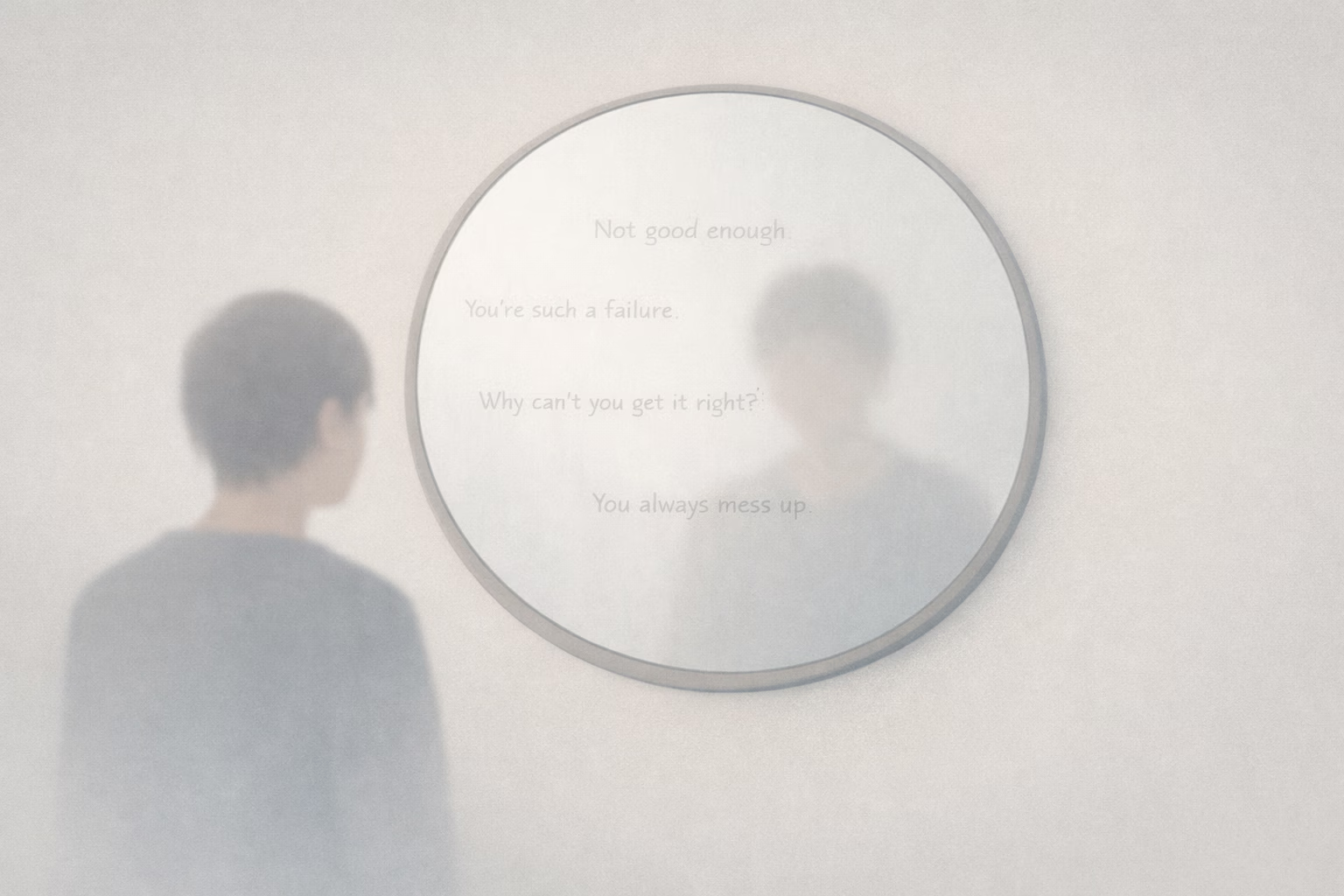
Chronic self-judgment usually isn’t subtle. It can sound like a running performance review: tracking what you said, what you didn’t say, how you came across, what you should have done differently. It can create the sense that you’re always behind, always exposed, always one misstep away from consequences.
Many people describe an exhausting mismatch: they can be competent in real life while still feeling internally “not good enough.” The critic doesn’t necessarily respond to evidence; it responds to cues of risk and incompletion—moments where the system can’t land on “done.” [Ref-1]
Self-criticism is not only “thought content.” It often arrives with a whole-body shift: increased vigilance, narrowed attention, urgency, and a subtle loss of spontaneity. The nervous system behaves as if something important could be lost—status, belonging, safety, or future opportunity.
In threat mode, the system prioritizes error detection and control. That can make the inner voice sharper, more absolute, and more persuasive. It may also reduce access to flexible problem-solving—because the body is organized for prevention, not exploration. [Ref-2]
When the critic gets loud, it’s often because your system is trying to stop an outcome it believes would be hard to survive.
Humans are wired for connection, and historically, connection wasn’t just “nice to have.” It was protection, resource access, and a buffer against danger. That means social risk can register like survival risk, especially when belonging has felt conditional.
The inner critic can be understood as a strategy of anticipation: monitor the self, find the flaw first, correct it quickly, and reduce the chance of external punishment, humiliation, or exclusion. In that frame, self-attack is not random; it’s a way of staying ahead of consequences. Shame and guilt processes are deeply tied to social evaluation and behavior correction. [Ref-3]
In many environments—families, schools, workplaces, communities—“getting it wrong” has carried outsized cost. Under those conditions, a strict internal enforcer can feel protective: it keeps you compliant, careful, and readable to authority.
Self-criticism can also mimic the social world: if the environment is judgmental, the nervous system may internalize that tone so it can predict it. The goal isn’t self-understanding; it’s risk reduction. Research on shame and self-evaluation supports how strongly social emotions shape self-view and behavior. [Ref-4]
So the critic isn’t born from personal defect—it’s often built from repeated exposure to evaluation without enough repair or closure.
There is a difference between learning and punishment. Constructive self-correction tends to be specific, proportionate, and settling: it identifies what happened and allows the system to move forward. Chronic self-attack is broader and destabilizing: it makes the self the problem, not the situation.
Self-conscious emotions like shame can rapidly organize behavior, but when they’re chronically activated, they can erode felt safety and continuity of identity. In other words, the person may comply more, but feel less real while doing it. [Ref-5]
Many inner critics don’t speak like a coach. They speak like an authority: absolute, impatient, and morally certain. This tone often shows up when the nervous system is trying to create control quickly—especially in contexts that feel socially evaluative.
Social-evaluative threat can produce measurable stress responses in the body, coordinating cortisol with other systems that support vigilance and self-monitoring. When that activation becomes familiar, the critic can become the “manager” of safety: pushing perfectionism, leveraging shame, and narrowing what feels allowed. [Ref-6]
Perfectionism can look like high standards, but it often functions like a safety ritual: “If I do it perfectly, nothing bad can happen.”
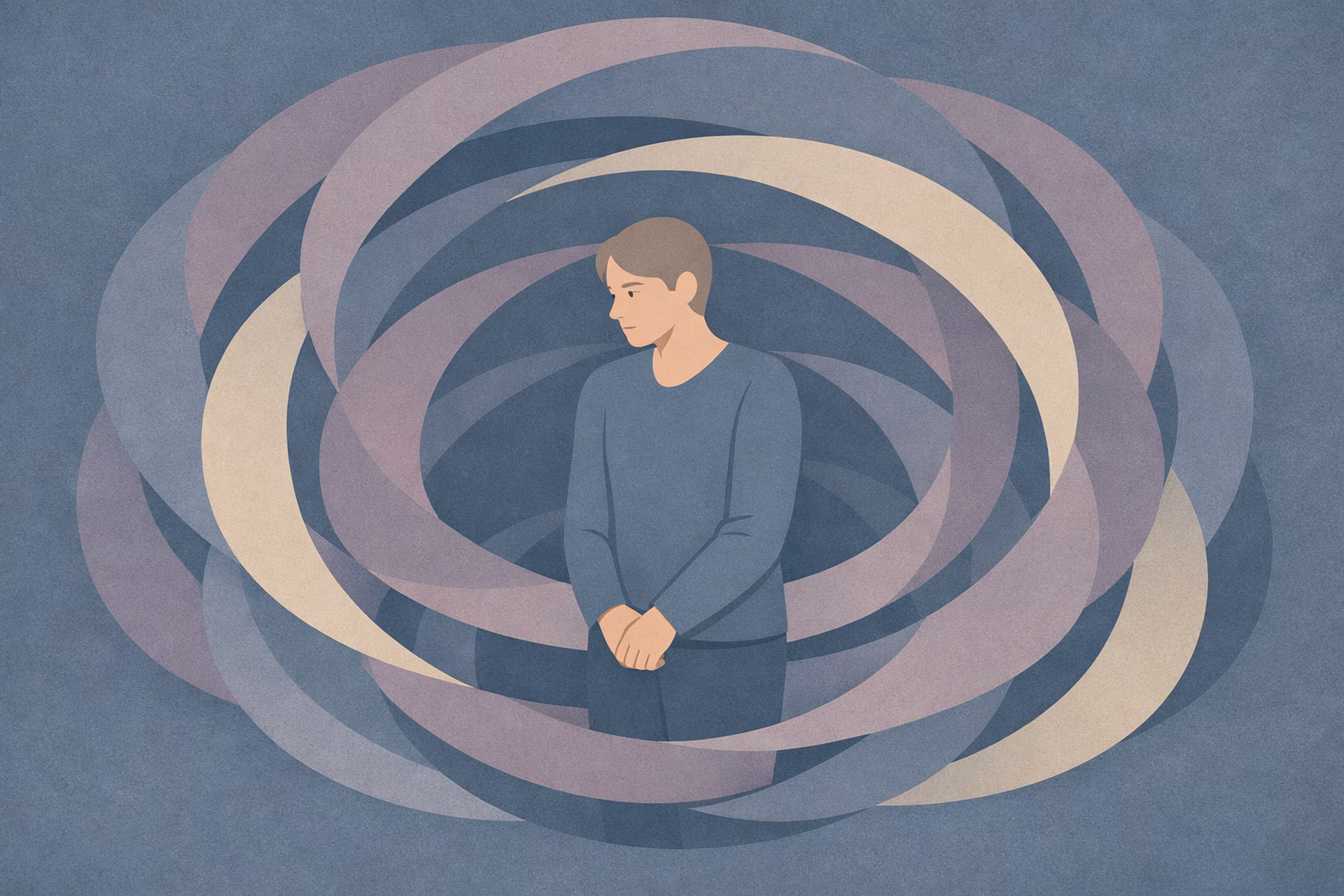
The inner critic tends to create loops that feel mentally busy but don’t produce completion. Instead of arriving at closure, the system stays in rehearsal, review, and pre-emptive correction—because “done” doesn’t feel safe.
These patterns aren’t “bad habits.” They’re structural responses to muted safety signals and amplified evaluation signals—especially when shame has been part of the learning environment. [Ref-7]
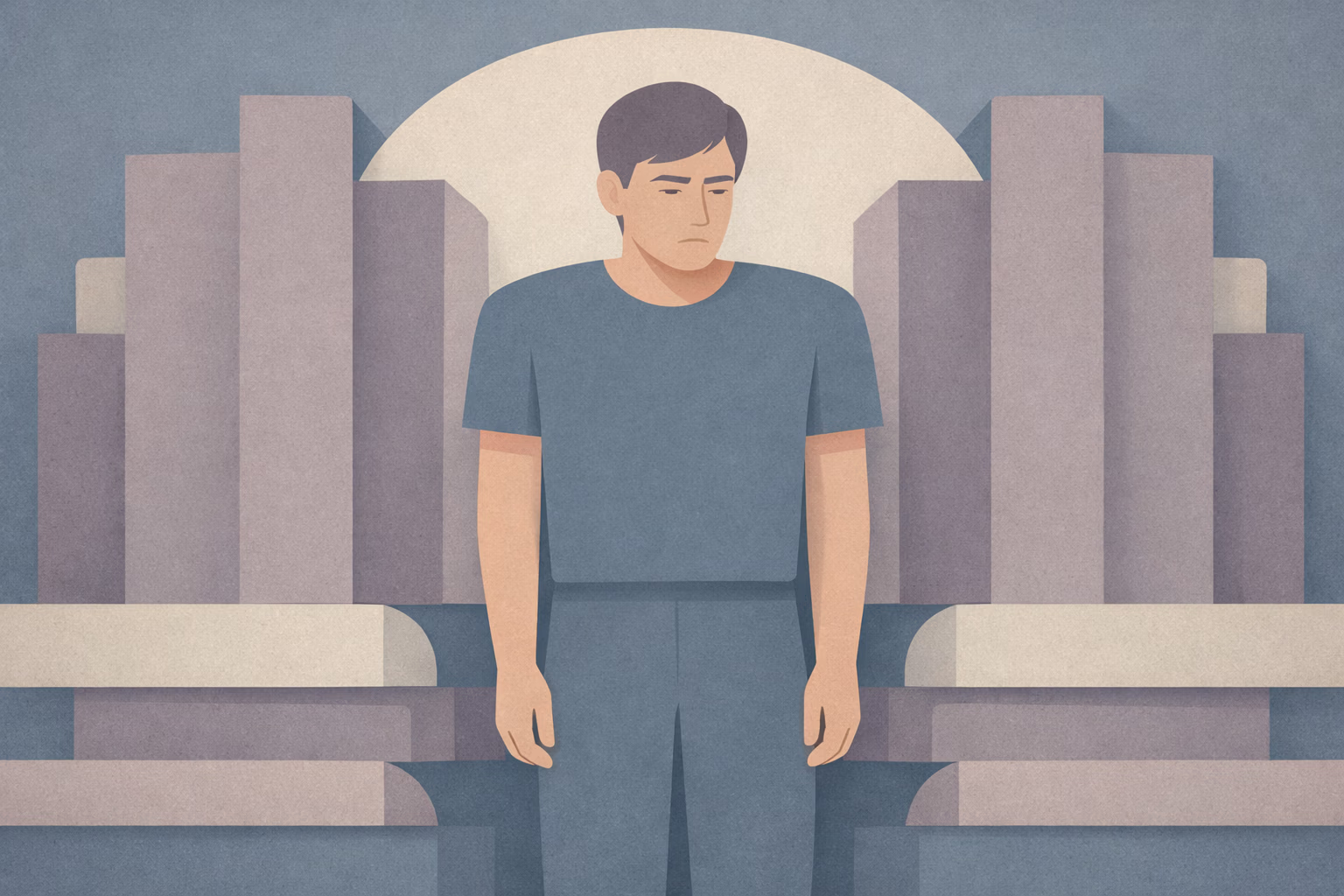
Over time, a relentless critic doesn’t just create stress—it can create identity fatigue. When the system is always correcting, the self can start to feel like a set of problems to manage rather than a coherent person living a life.
This is one reason self-criticism can correlate with rumination and depressive symptoms: the mind keeps working, but the work doesn’t resolve. The loops stay open, so the nervous system stays recruited. [Ref-8]
People often describe this as exhaustion without relief: not simply tiredness, but the sense of being unable to fully stand down. Even rest can feel “evaluated,” as if recovery needs to be earned.
A key reason the inner critic becomes dominant is that it can produce short-term safety gains. After self-attack, you might work harder, prepare more, say less, or avoid risk. If nothing “bad” happens afterward, the nervous system can mistakenly credit the critic for preventing disaster.
This is how regulation strategies get locked in: the system repeats what seems to reduce threat, especially under stress. Over time, the critic becomes louder during transitions, uncertainty, conflict, or visibility—moments when the environment feels least predictable and closure is least available. [Ref-9]
It’s not that self-attack works well. It’s that it can work fast.
Recognizing the critic as a signal changes the internal geometry. Not because insight automatically heals anything, but because it reclassifies what’s happening: the system is flagging risk and trying to create control.
When the critic is treated as truth, identity compresses around it: “This voice is me.” When it’s treated as signal, a different possibility becomes thinkable: “This is my nervous system running an old protection program.” That shift can soften the sense of inevitability and restore a small margin of choice—without requiring you to “believe positive thoughts.” Internal working models shaped by earlier relationships can influence what safety feels like inside, especially under stress. [Ref-10]
The critic often speaks in certainties because uncertainty is what the body is trying to eliminate.
Inner critics don’t develop in a vacuum. They often intensify in climates where approval is conditional, mistakes are punished disproportionally, or emotions are met with invalidation. In those contexts, self-monitoring becomes a way to stay connected and reduce exposure.
Social-evaluative threat is not just “in your head.” It can shape stress physiology, including cortisol patterns, particularly when performance and acceptance feel linked. [Ref-11]
Even in adulthood, workplaces, social media, and relationship dynamics can replicate this training: continuous visibility, rapid feedback, and ambiguous norms. The system adapts by scanning harder and tightening the self.
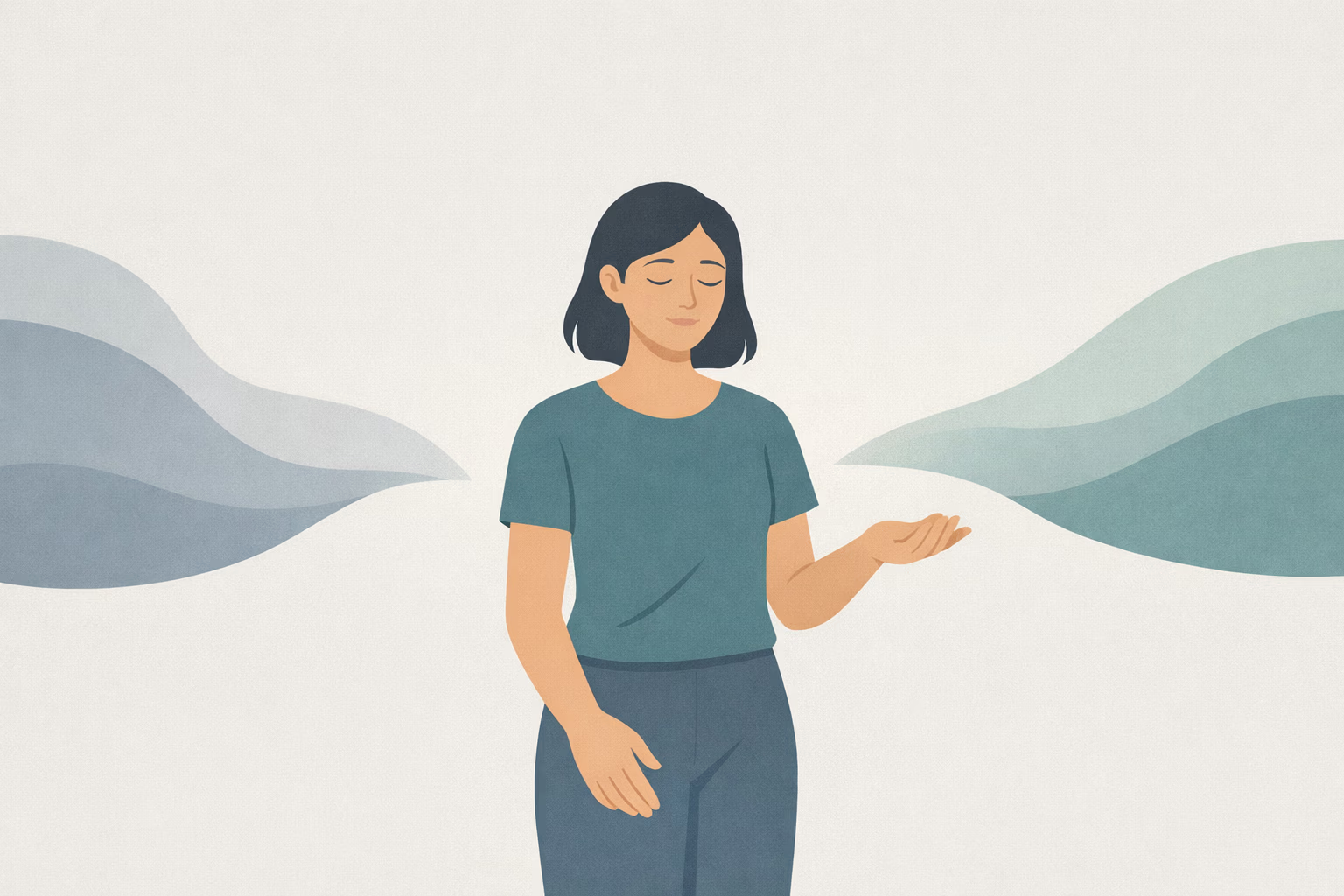
When self-attack is less dominant, many people notice something that’s easy to miss: more internal space. Not necessarily constant calm or confidence, but a larger capacity to respond to life without immediately contracting into management mode.
In this state, creativity and engagement often become more available because the nervous system isn’t spending as much energy on pre-emptive control. Research distinguishes self-criticism from self-compassion in terms of risk and resilience, suggesting that kinder internal relating can support well-being and recovery from stress load. [Ref-12]
Identity is not only a story you tell—it’s also a lived sense of “who I am” that stabilizes when experiences complete. When self-attack is constant, experiences don’t resolve; they stay open as evidence in an ongoing trial.
As the system finds more closure—moments that land, repair that sticks, effort that can end—identity can begin to reorganize around trust rather than fear. The goal is not to eliminate self-evaluation; it’s for evaluation to become proportionate and settling, so life can move forward without constant internal prosecution. Evidence from compassion-focused approaches suggests that reducing self-criticism can support self-soothing capacities and psychological flexibility over time. [Ref-13]
Coherence often feels simple: fewer emergency edits to the self, and more continuity from one day to the next.
It can help to see the inner critic as a protector that took on too much authority. It learned that harshness creates movement and that movement can reduce immediate risk. In a world that rarely offers “done,” that strategy can become permanent—even when it costs health, connection, and meaning.
As internal safety cues become more available, the critic often has less reason to dominate. Not because it’s defeated, but because the system no longer needs constant punishment to stay oriented. Meta-analytic research links self-compassion with psychological well-being, suggesting that gentler internal climates can support steadier functioning. [Ref-14]
You don’t have to win a war against yourself to become more coherent. You need a life that lets your system finish what it starts.
Growth tends to hold when it becomes part of identity—when lessons integrate into “this is how I live now,” not “this is how I avoid being shamed.” Over time, a nervous system that receives more closure can shift from self-surveillance to self-guidance.
And when guidance replaces punishment, meaning-making becomes less about proving worth and more about inhabiting it—one completed chapter at a time. [Ref-15]
From theory to practice — meaning forms when insight meets action.
Less personality, more regulation pattern. The article reframes the inner critic as an internalized threat-detection and self-correction system — built to prevent social danger, rejection, or costly mistakes. When the nervous system is carrying high load, it leans on quick-control strategies: scanning for errors, tightening standards, rehearsing what could go wrong. That's why the critic doesn't really respond to evidence; it responds to cues of risk and incompletion. Calling it your true self misses the structure. It's a Power Loop strategy that learned harshness creates movement and movement reduces immediate threat. A protector that got promoted too far.
Because in threat mode, the system prioritizes error detection and control. The whole body shifts: increased vigilance, narrowed attention, urgency, lost spontaneity. That makes the inner voice sharper, more absolute, more persuasive — and reduces access to flexible problem-solving because the body is organized for prevention, not exploration. Social-evaluative threat produces measurable stress responses, so when belonging has felt conditional, the critic gets recruited as the manager of safety, leveraging shame and perfectionism. When the critic gets loud, it's often because your system is trying to stop an outcome it believes would be hard to survive.
Same direction, different biology. Constructive self-correction is specific, proportionate, and settling — it identifies what happened and lets the system move forward. Self-attack is broad and destabilizing — it makes the self the problem, not the situation. That didn't land, next time I'll phrase it differently versus I always ruin things, I shouldn't talk. Self-conscious emotions like shame can rapidly organize behavior, but when chronically activated they erode felt safety and continuity of identity. The person may comply more but feel less real while doing it. The critic's certainty often signals what the body is trying to eliminate: uncertainty itself.
More internal space — not necessarily constant calm or confidence, but a larger capacity to respond to life without immediately contracting into management mode. Creativity and engagement become more available because the nervous system isn't spending energy on pre-emptive control. More willingness to participate without perfect prep. More flexibility after mistakes, without identity collapse. As experiences land and repair sticks, identity reorganizes around trust rather than fear. The aim isn't eliminating self-evaluation — it's letting evaluation become proportionate and settling, so life can move forward without constant internal prosecution. Guidance instead of punishment, one completed chapter at a time.
From Science to Art.
Understanding explains what is happening. Art allows you to feel it—without fixing, judging, or naming. Pause here. Let the images work quietly. Sometimes meaning settles before words do.
One Quiet Window, one insight, one reflection — every Sunday