
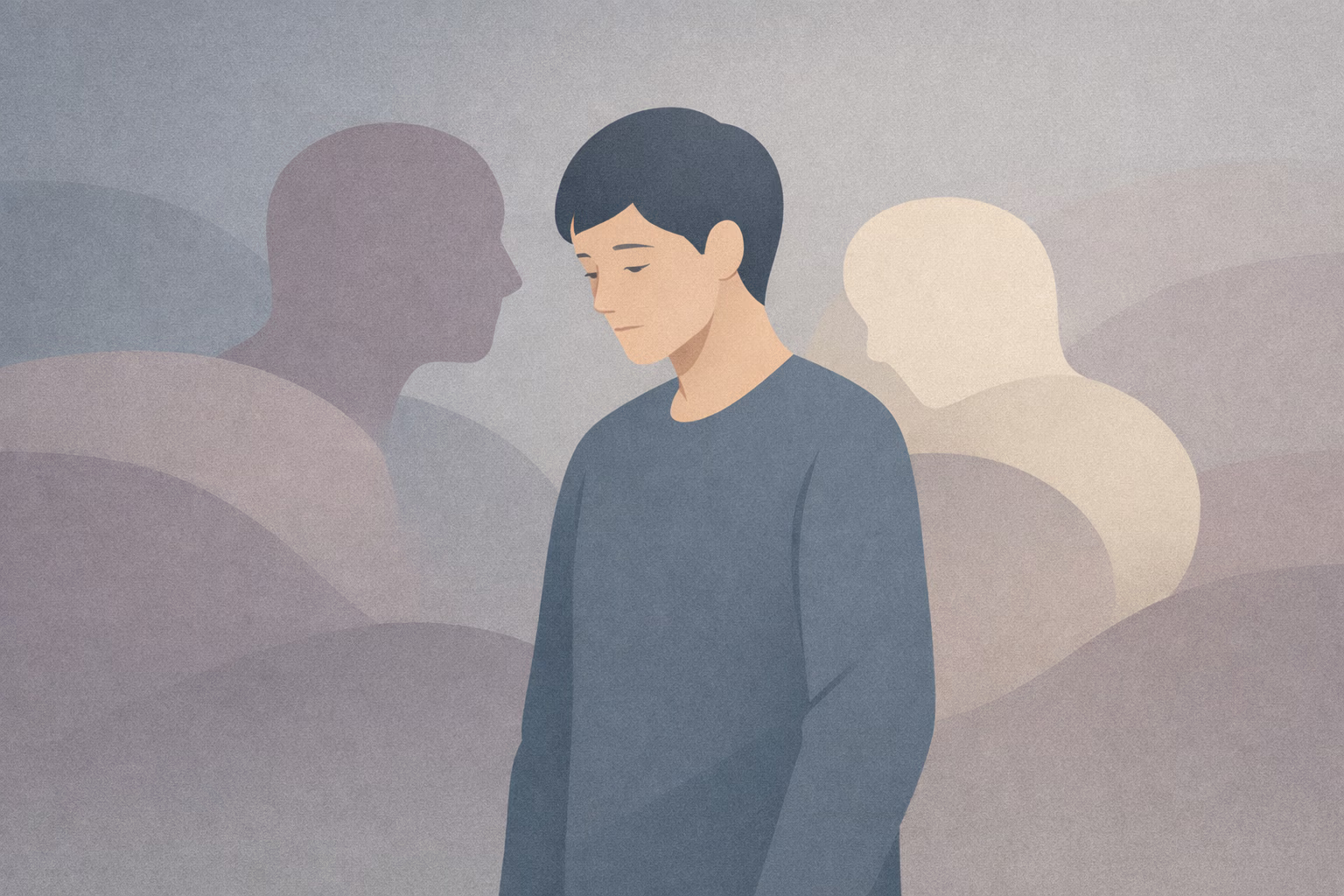
The Inner Critic: How It Shapes Your Identity & Behavior
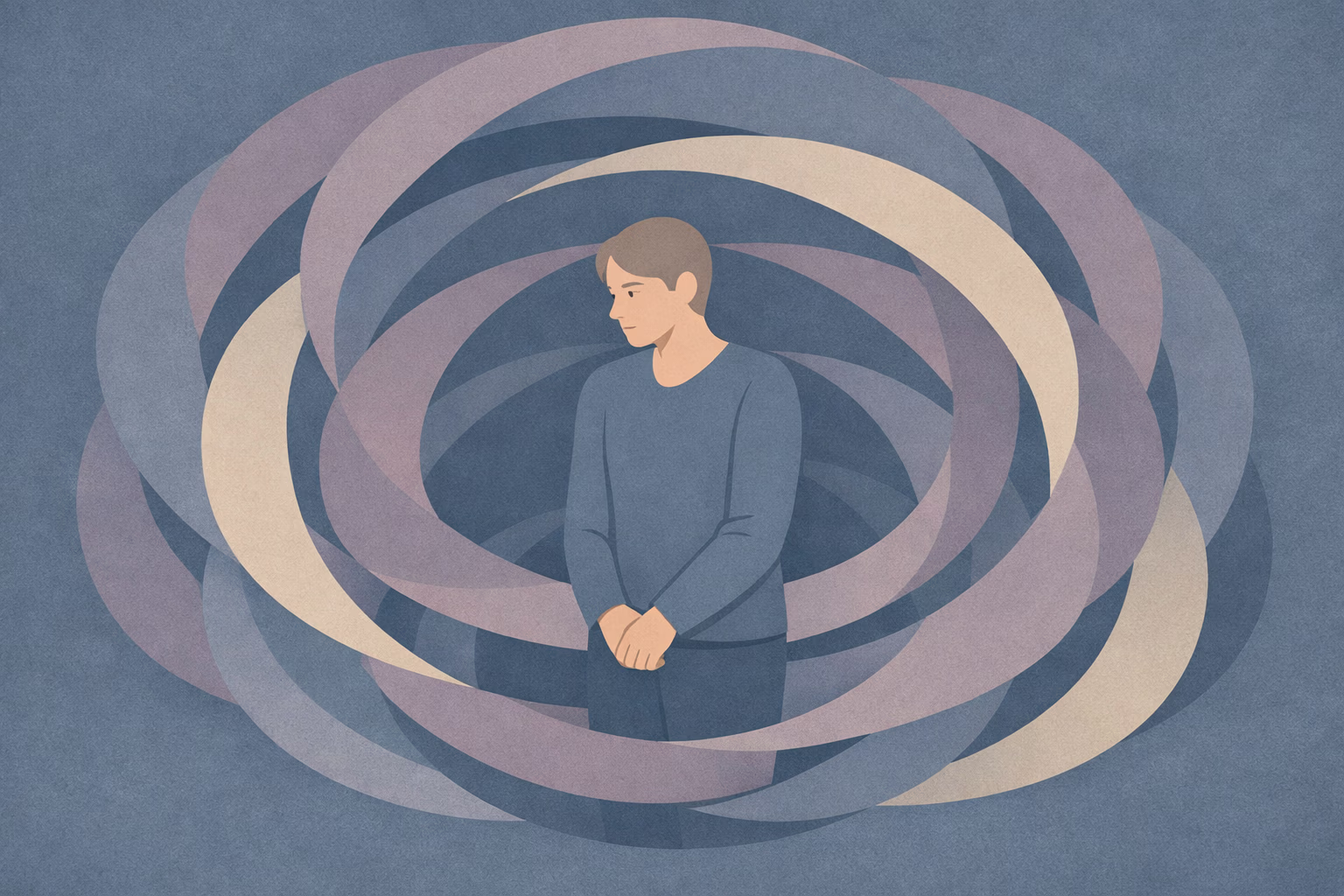
In short: Many people assume the “inner critic” is a personality flaw: a mean streak, low confidence, or a motivation problem. But the spiral usually has a more understandable architecture. Judgment increases threat; threat narrows the mind; and that narrowed state produces more judgment—creating a loop that can feel automatic and exhausting.
Many people assume the “inner critic” is a personality flaw: a mean streak, low confidence, or a motivation problem. But the spiral usually has a more understandable architecture. Judgment increases threat; threat narrows the mind; and that narrowed state produces more judgment—creating a loop that can feel automatic and exhausting.
What if the critic isn’t the truth about you, but a nervous system strategy trying to create safety through control?
In a world that rarely gives clean endings—clear feedback, repaired moments, settled belonging—the brain often searches for closure internally. Self-criticism can become a substitute “done signal”: a harsh internal conclusion that briefly quiets uncertainty, even if it costs you energy, identity coherence, and peace.
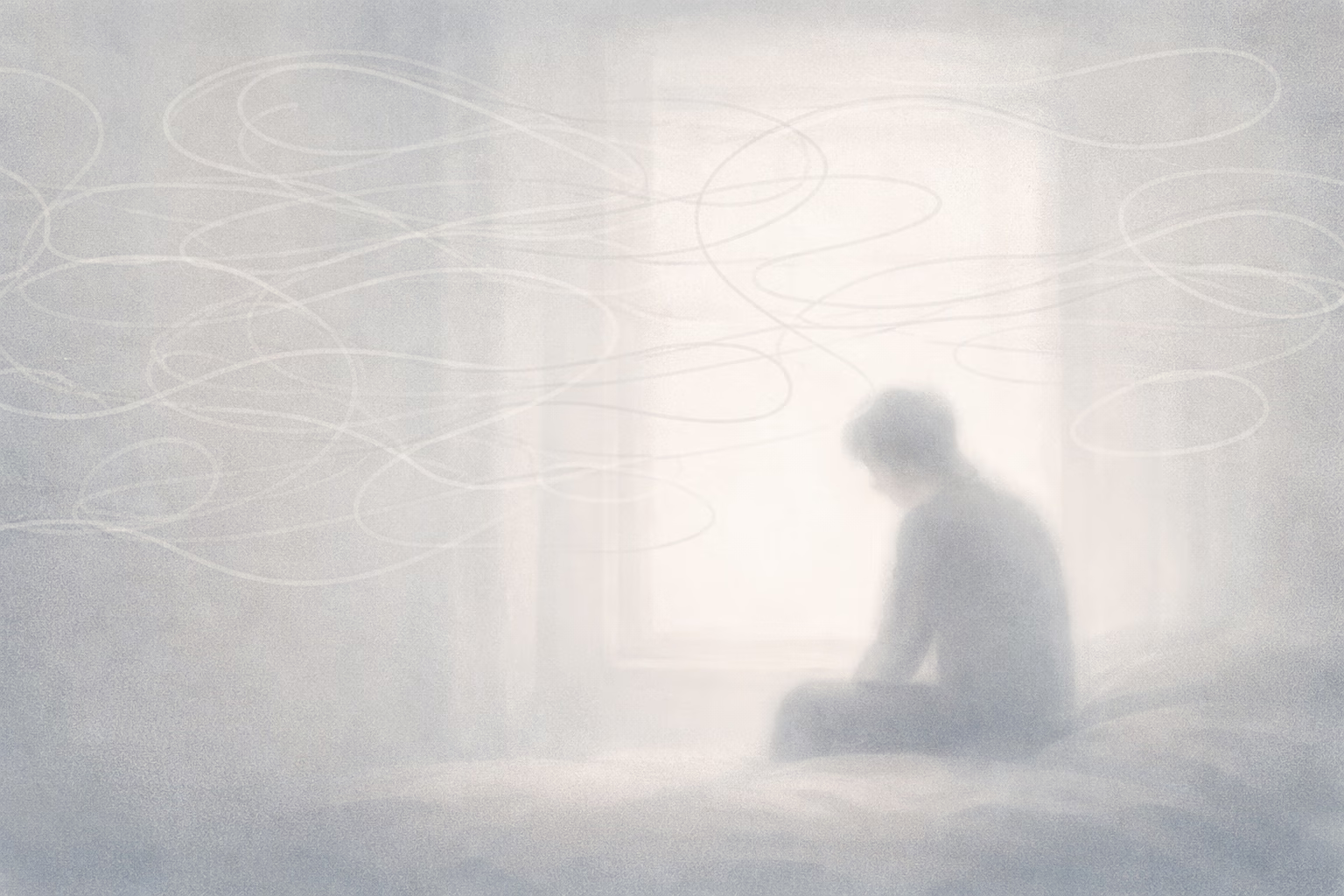
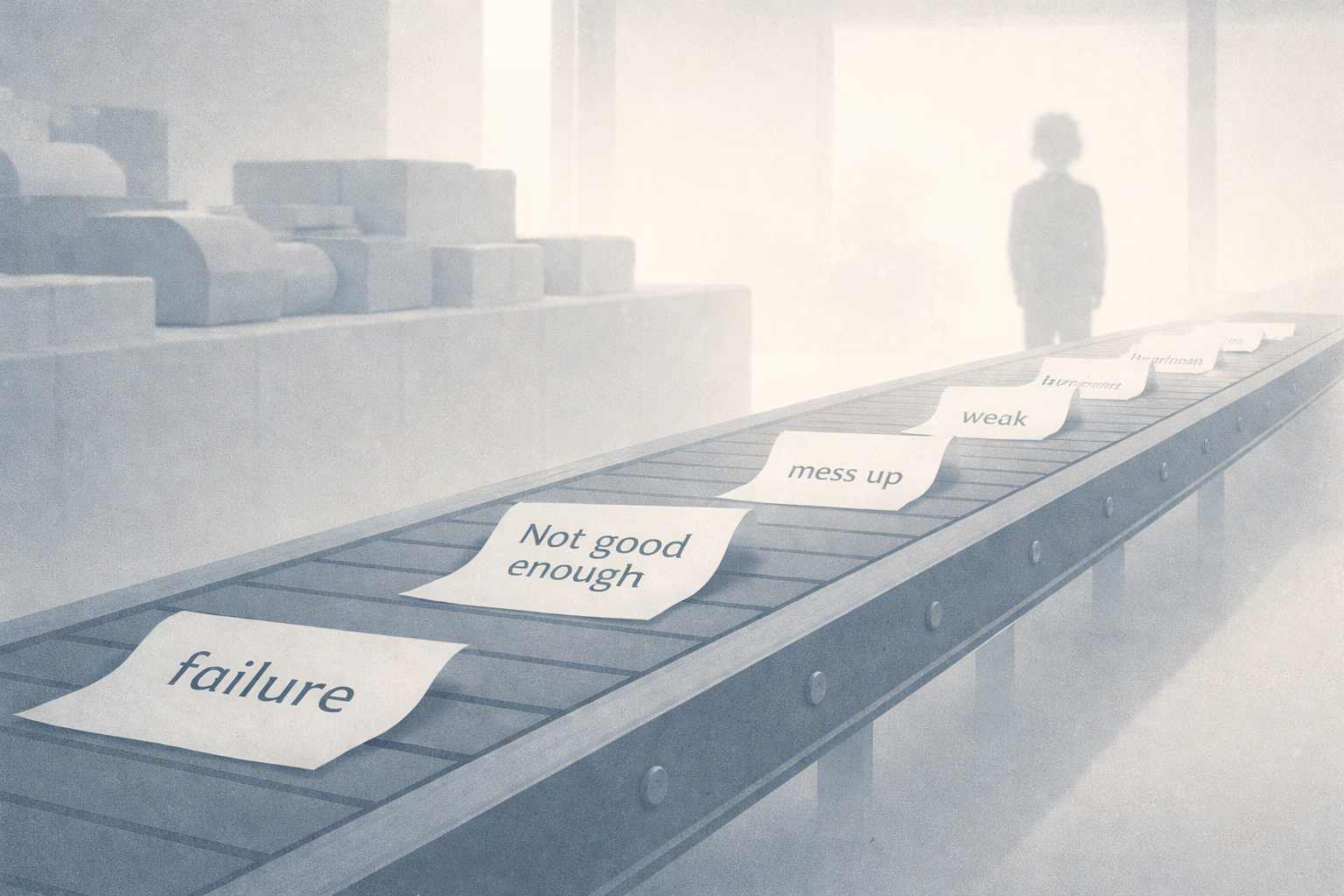
The inner critic spiral often shows up as relentless evaluation: replaying what you said, scanning for what you missed, forecasting what could go wrong, and then using judgment as the tool to stay “ready.” The result isn’t just emotional discomfort—it’s mental load, reduced clarity, and a sense of being on internal trial.
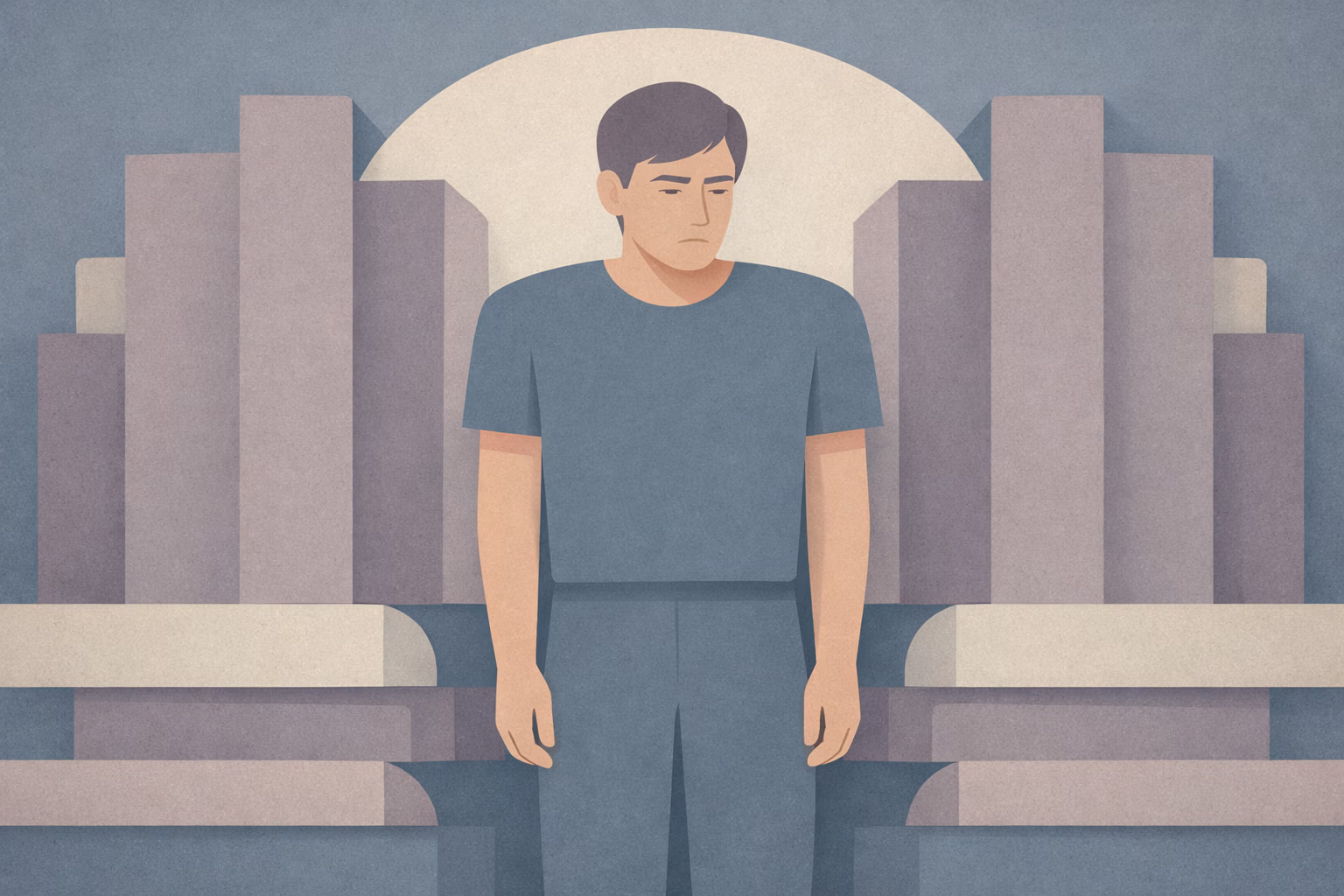
People describe it as being trapped in a room with a loud commentator who never rests. Even when life is objectively going fine, the system can feel like it’s still in a corrective emergency, as if safety depends on continuous self-monitoring. [Ref-1]
“It’s not that I want to be hard on myself. It’s that being soft feels like letting something slip.”
Self-judgment isn’t processed as a neutral thought in the body. Harsh internal language can function like a social threat cue—similar to being criticized, excluded, or watched for mistakes. When the brain flags threat, attention tightens, ambiguity feels intolerable, and the mind searches for something to correct.
This is one reason the critic can become louder under stress: the more activated the threat circuitry, the more the mind generates negative interpretations and “preventive” analysis. The content sounds psychological, but the engine is physiological—vigilance looking for an exit ramp. [Ref-2]
In that state, judgment can feel urgent—not because it’s accurate, but because the system is trying to reduce uncertainty fast.
From an evolutionary perspective, social standing and group belonging were not “nice-to-haves.” They were safety. So the mind evolved to track signals of approval, rejection, and rank—and to adjust behavior quickly when danger of exclusion was possible.
In many lives, self-criticism becomes the internal version of that social tracking system: an attempt to pre-empt punishment, embarrassment, or loss of belonging by punishing first. It can carry the flavor of shame, not as a character defect, but as a powerful social regulatory mechanism that tries to keep you inside the rules of the group. [Ref-3]
This is why the critic often intensifies around visibility: performance reviews, relationships, parenting decisions, creative work, health choices—any domain where “being wrong” could mean social cost.
Even when it hurts, self-criticism can provide a temporary sense of structure. It narrows the field: instead of living in open-ended complexity, you get a clear verdict—“I messed up,” “I should have known,” “I need to do better.” That clarity can feel like control.
Under load, the nervous system often prefers a painful certainty to a diffuse uncertainty. Self-surveillance becomes a way to stay braced and prepared, as if tension itself is a form of readiness. But effortful internal control is costly; it can keep the system activated rather than resolved. [Ref-4]
“If I’m hard on myself, at least I’m not caught off guard.”
The inner critic often promises results: better choices, fewer mistakes, faster growth. And sometimes criticism does correlate with short bursts of correction. But the spiral’s longer-term outcome is frequently the opposite: more fear in the system, more hesitation, and a tighter range of behavior.
That’s because chronic threat doesn’t support flexible learning. It supports protective learning: “don’t risk it,” “don’t stand out,” “don’t be seen failing.” The mind becomes more preoccupied with avoiding error than completing experience and gaining true closure. Over time, the critic can reduce the very conditions that help humans adapt: safety cues, clear feedback, and a sense of completion. [Ref-5]
When criticism is repeated often enough, it can take on the role of an internal manager: scanning, policing, and enforcing. The tone may mimic an earlier environment—strict standards, unpredictable feedback, conditional acceptance—or it may be an invented voice that tries to keep life from getting messy.
This “authority” doesn’t need to be consciously chosen. Under chronic stress, the brain prioritizes protection and compliance. Self-surveillance can become a form of internal governance: constant monitoring to keep the system within perceived safety boundaries. [Ref-6]
In the power loop, control becomes the substitute for safety.
The critic isn’t always loud and insulting. Sometimes it’s quiet, relentless, and “reasonable.” It can show up as analysis, comparison, or endless improvement projects that never land in a felt sense of done.
Under stress physiology, these patterns become more likely because the brain’s threat systems bias attention toward errors and potential consequences. [Ref-7]
When judgment is constant, the nervous system rarely receives a stand-down signal. Even rest can feel monitored. That sustained load commonly leads to fatigue that is not just “tiredness,” but depletion: reduced cognitive flexibility, reduced appetite for novelty, and a shrinking window for play and creativity.
Over time, identity can erode. Instead of “a person who lives,” you can start to feel like “a project being managed.” Life becomes a stream of self-corrections rather than a sequence of experiences that complete and integrate. In that climate, creativity often drops—not because you lack talent, but because creativity requires room for imperfect drafts and uncertain outcomes.
Chronic suppression or forced positivity can add another layer of cost: more effort spent managing presentation, less capacity left for genuine recovery. [Ref-8]
The inner critic spiral is often strengthened by a very human learning rule: whatever reduces threat gets repeated. After a burst of self-criticism, you might correct something, over-prepare, apologize quickly, or tighten control—and for a moment, the pressure drops.
That drop can feel like relief, and the nervous system remembers it as evidence that criticism “worked.” This is how the critic becomes habit: not because you enjoy it, but because the loop occasionally delivers a short-lived quieting of activation. In regulation science, these cycles are often maintained by shifts in state—tension, release, tension again—rather than by conscious belief. [Ref-9]
“I don’t keep doing it because it helps my self-esteem. I keep doing it because it stops the panic for a second.”
There is a meaningful difference between understanding the inner critic and the point when it no longer feels required for safety. Insight can be true and still leave the body braced. The shift usually comes when threat activation reduces enough that the system no longer needs constant internal enforcement.
In that lower-threat state, the mind can make finer distinctions: “This was imperfect” is not automatically “This is dangerous.” The urge to punish softens because the situation no longer reads as urgent. This is also where avoidance patterns can change—not through willpower, but because the nervous system is no longer using judgment as the primary tool to escape uncertainty. [Ref-10]
Coherence returns when the system can complete an experience without turning it into a verdict about identity.
Inner criticism often makes sense in context. If your environment included unpredictable feedback, conditional approval, public comparison, or consequences that felt oversized, the nervous system learned to prevent exposure. The critic becomes a way to simulate external scrutiny so you’re never surprised by it.
Even in adulthood, modern structures can keep that learning active: performance metrics, public opinion, comment sections, algorithmic comparison, and workplace cultures where “being human” feels like a liability. These conditions can increase rumination and repetitive self-evaluation, especially when closure is unclear and feedback is inconsistent. [Ref-11]
In other words: the critic may not be an internal “choice.” It may be an internalized environment that never provided a stable enough endpoint.
As internal threat decreases, people often notice changes that are more structural than emotional. There is more space between an event and a verdict. The mind returns to the present more easily. Decisions feel less like court cases and more like orientation: “What matters here?”
This doesn’t mean life becomes perfect or silent. It means the system has more capacity to let signals rise and fall without escalating into punishment. Self-referential thoughts can become information rather than alarms. Research on self-compassion and reduced self-judgment often aligns with this kind of softening of internal threat and self-attacking cognition. [Ref-12]
The opposite of the inner critic isn’t self-indulgence. It’s a different organizing principle: guidance instead of punishment, trust instead of surveillance. Trust here doesn’t mean “nothing will go wrong.” It means your system expects that you can meet reality without needing to attack yourself into compliance.
This is where values regain their role. When fear drives the steering wheel, behavior becomes about avoiding exposure. When trust returns, behavior becomes more identity-aligned: you can choose based on meaning, not just on what reduces immediate threat. Work on self-attunement and self-trust points to this restoration of inner guidance as a stabilizing force. [Ref-13]
“I don’t need to scare myself into being a good person. I can listen for what matters and respond.”
If the inner critic has been running your life, it may help to view it less as an enemy and more as a protective reflex that got promoted too far. It learned that judgment could create short-term control, and it kept repeating what once reduced risk.
Meaning and agency tend to return when safety is supported—internally and relationally—so the system doesn’t have to generate threat to stay organized. Human nervous systems regulate better with buffering: signals of connection, steadiness, and non-conditional belonging that let vigilance stand down. [Ref-14]
When the pressure to self-punish decreases, dignity becomes easier to access—not as a feeling you force, but as a coherent stance that starts to fit again.
Many people were taught—directly or indirectly—that criticism is the price of improvement. But a nervous system can learn without being threatened, and a life can change without being driven by internal attack.
Over time, the most stabilizing shifts are often the ones that reduce coercion and increase coherence: choices that can settle into identity, experiences that can reach completion, and an internal climate where correction doesn’t have to come with contempt. In modern models of coping and regulation, what matters is not just what you think, but what repeatedly changes state and what finally allows closure. [Ref-15]
From theory to practice — meaning forms when insight meets action.
Something else. The spiral has an understandable architecture: judgment increases threat, threat narrows the mind, and that narrowed state produces more judgment — creating a loop that feels automatic. The critic isn't the truth about you; it's a nervous system strategy trying to create safety through control. In a world that rarely gives clean endings, the brain searches for closure internally. Self-criticism becomes a substitute Done Signal — a harsh internal conclusion that briefly quiets uncertainty even though it costs energy and identity coherence. It's not that you want to be hard on yourself. It's that being soft feels like letting something slip.
Because harsh internal language registers like a social threat cue, and the brain treats threat detection as protection. Even when it hurts, self-criticism provides temporary structure. Instead of living in open-ended complexity, you get a clear verdict — 'I messed up,' 'I should have known,' 'I need to do better.' That clarity feels like control. Under load, the nervous system often prefers a painful certainty to a diffuse uncertainty. Self-surveillance becomes a way to stay braced and prepared, as if tension itself is a form of readiness. If I'm hard on myself, at least I'm not caught off guard. But effortful internal control keeps the system activated rather than resolved.
Short bursts of correction sometimes, but the longer-term outcome is usually the opposite: more fear in the system, more hesitation, a tighter range of behavior. Chronic threat doesn't support flexible learning; it supports protective learning — don't risk it, don't stand out, don't be seen failing. The mind becomes more preoccupied with avoiding error than with completing experience. The critic reduces the very conditions that help humans adapt: safety cues, clear feedback, completion. Criticism can create movement. Threat can create urgency. But completion is what creates settling. Growth doesn't actually require punishment to be real.
More structural than emotional. There's more space between an event and a verdict. The mind returns to the present more easily. Decisions feel less like court cases and more like orientation — what matters here? Less scanning for what's wrong. More tolerance for 'not finished yet.' More ability to move on after repair. More mental quiet after effort ends. The opposite of the inner critic isn't self-indulgence — it's a different organizing principle: guidance instead of punishment, trust instead of surveillance. Trust here doesn't mean nothing will go wrong. It means your system expects you can meet reality without needing to attack yourself into compliance.
From Science to Art.
Understanding explains what is happening. Art allows you to feel it—without fixing, judging, or naming. Pause here. Let the images work quietly. Sometimes meaning settles before words do.
One Quiet Window, one insight, one reflection — every Sunday