


The Inner Critic & Self-Judgment
Explore why the inner critic evolved and how it shapes your behavior today.
In context: The critic “sounds like you“ because it uses the hardware of your Narrative & Identity system. It hijacks your first-person “I“ to give its signals authority. De-fusing means recognizing that “I am a failure“ is actually a transmission from the Status system saying “Status is low.
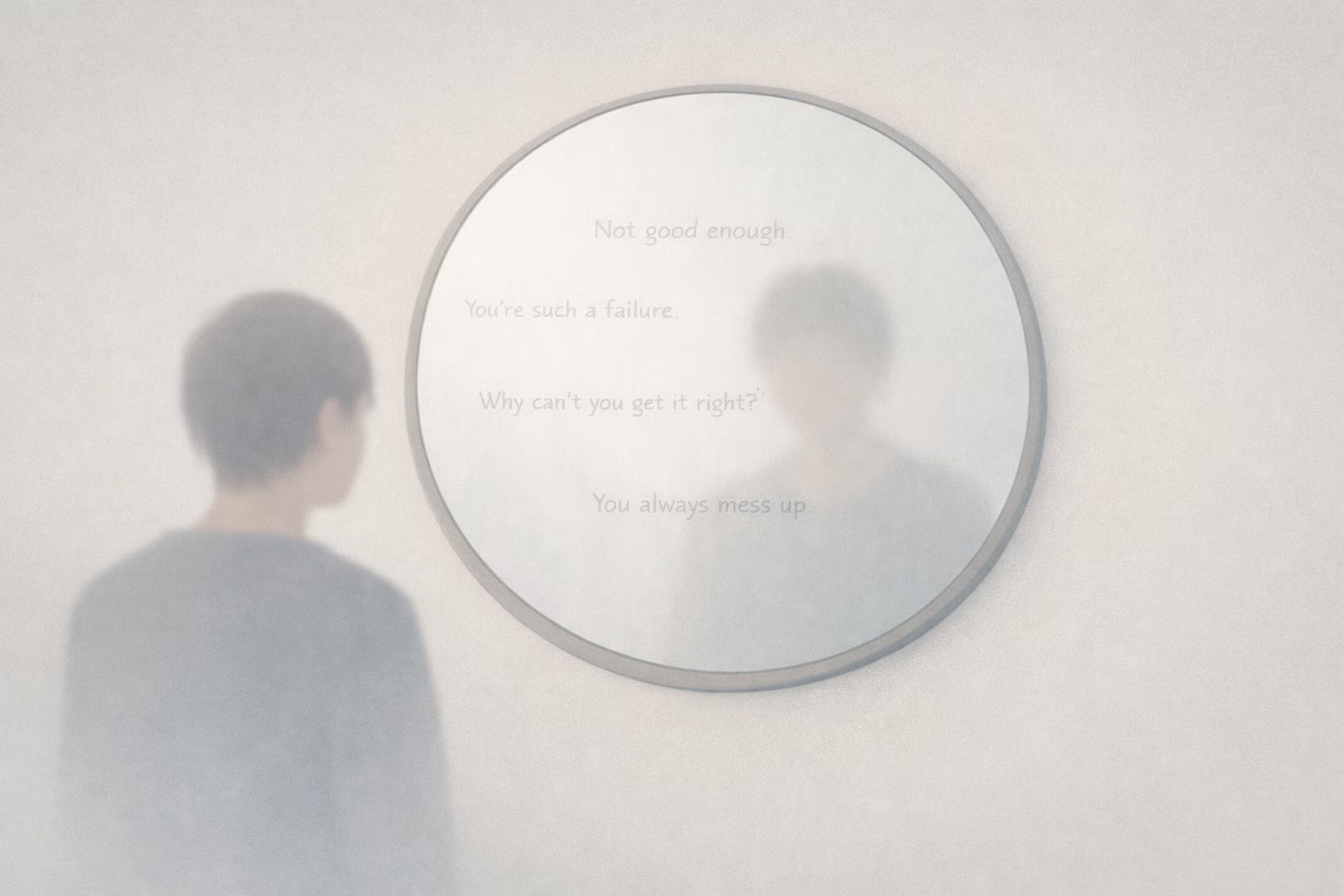
The critic that sounds like you borrows your tone, your language, your timing.
It feels intimate, convincing.
But notice how it speaks at you, not from you.
Identity loosens when the voice is heard as a function, not a self.
Separate voice from identity with DojoWell.
Explore DojowellArticles exploring the psychology behind these patterns.
Explore why the inner critic evolved and how it shapes your behavior today.

Understand how thinking patterns are formed and how to reshape them.

Understand why self-righteousness often hides insecurity and emotional fear.
The critic "sounds like you" because it uses the hardware of your Narrative & Identity system. It hijacks your first-person "I" to give its signals authority. De-fusing means recognizing that "I am a failure" is actually a transmission from the Status system saying "Status is low." By translating the first-person attack into a third-person system report, you break the identity-lock and restore your sovereignty.
Use the "Data Labeling" technique. When the voice says, "I'm doing this wrong," rephrase it to: "The monitoring system is reporting a correctness error." This shift from Subject (I) to Object (The system) is a primary move in the Meaning Density Model™. It allows you to handle the data for integration without letting the "tone" of the critic damage your core sense of self.
One Quiet Window, one insight, one reflection — every Sunday