The Role of Habitual Thought Patterns in Emotional Loops
In short: Most people don’t wake up and choose a predictable set of thoughts. Yet many of us recognize the same internal storyline returning: the same worries, the same interpretations, the same mental “verdicts” about what’s happening and what it means.
Most people don’t wake up and choose a predictable set of thoughts. Yet many of us recognize the same internal storyline returning: the same worries, the same interpretations, the same mental “verdicts” about what’s happening and what it means.
What if your mind isn’t failing you—what if it’s conserving load by using what has worked before?
Cognitive patterns are not personality flaws. They’re learned, efficiency-based pathways for turning uncertainty into something the nervous system can organize around. The problem is that what creates short-term stability can also keep certain loops from ever reaching a “done” signal—so the mind keeps running them.
There’s a particular kind of exhaustion that comes from watching yourself think the same way again—especially when the thoughts don’t match your intentions. You might genuinely want to feel calm, open, or connected, and still find your mind returning to scanning, predicting, defending, or replaying.
This isn’t because you’re “too negative” or “bad at mindset.” It’s often because your thinking is doing a regulatory job: creating structure, certainty, and a sense of preparedness when life feels ambiguous. Over time, these repeated interpretations can start to feel like an identity—“I’m just an overthinker”—even though they’re better understood as a practiced route the brain takes under load. [Ref-1]
When the world feels unfinished, the mind tries to finish it with a story.
The brain is designed to learn from repetition. When a particular interpretation helped you move through a moment—avoid conflict, prevent embarrassment, stay alert, reduce uncertainty—it becomes easier to access next time. The pathway becomes faster, more automatic, and less energy-intensive than starting from scratch.
Over time, these shortcuts can function like templates: a familiar lens that gets applied before you’ve gathered much data. The tradeoff is predictable: speed and certainty often increase, while nuance and accuracy can decrease. In many people, this looks like long-standing schemas or themes that shape attention and meaning-making across contexts. [Ref-2]
Not because the mind loves being harsh—but because speed reduces load.
Human attention didn’t evolve to create a serene internal experience. It evolved to detect relevant signal, conserve energy, and mobilize quickly when something might require action. When ambiguity rises, the system often leans toward vigilance and repeated cognition—running scenarios, rehearsing outcomes, scanning for what could go wrong. [Ref-3]
This kind of perseverative thinking can happen with or without conscious intention. It’s less “I am choosing to worry” and more “my system is staying online because it hasn’t received closure.” The mind keeps generating material because the environment (or a relationship, or a decision, or a future uncertainty) has not yet delivered a clear stand-down cue.
Even when a thought pattern is uncomfortable, it can still be stabilizing. Familiar interpretations reduce ambiguity, and ambiguity is expensive for the nervous system. A known story—however bleak—can feel more manageable than an open question.
Cognitive schemas help organize experience quickly: what to expect, what to notice, what matters, what’s dangerous, what’s “my fault,” what’s “their fault.” This organization lowers decision load and helps the system commit to a stance. [Ref-4]
Thoughts often arrive with the tone of fact. They don’t announce themselves as “a conditioned interpretation.” They arrive as obvious: This is what’s happening. This is what it means.
But cognition is context-dependent. What your mind produces depends on stress load, sleep, relational safety, recent experiences, and what your attention system has been trained to prioritize. A single comment can be read as neutral or threatening depending on the broader conditions your system is operating under.
In that way, thinking is less like a camera and more like a filter. The filter isn’t “wrong.” It’s learned—built from what repeated exposure taught your system to treat as important. [Ref-5]
Rigid thinking can function as an avoidance loop—not in the sense of “you’re afraid of feelings,” but in the structural sense that fast certainty can bypass the slow work of completion. When the mind rushes to a conclusion, it can skip the friction that would normally lead to resolution: conversation, clarification, tolerating ambiguity long enough for new information, or letting time deliver an outcome.
Efficiency is the hook. A quick interpretation provides immediate structure. The cost is that it may prevent the system from contacting the real consequence, the real feedback, or the real end-point that would allow a “done” signal to land.
Perseverative cognition can keep the body in a semi-mobilized state—mentally active, physiologically online—because the loop doesn’t complete. [Ref-6]
Cognitive patterns are often recognizable by their shape, not their content. The topics change (work, relationships, health, money), but the structure stays similar: a fast interpretation, a narrowed set of options, a familiar conclusion.
Some common examples described in cognitive psychology include: [Ref-7]
These aren’t moral failures. They’re compression strategies—ways the mind reduces complexity when capacity is strained.
When a pattern runs automatically, it doesn’t just shape thoughts—it shapes attention and behavior. Attention narrows toward confirming cues, and the body stays prepared for the kind of world the story predicts. Over time, this can reduce creative problem-solving, relational openness, and the ability to shift state when conditions improve.
It can also interfere with emotional regulation—not because you aren’t “processing,” but because the system is receiving mixed inputs: the environment might be safe enough to stand down, yet the cognitive narrative keeps issuing threat-like signals. The result is often chronic activation, numb urgency, or a drive to control variables that can’t actually be controlled. [Ref-8]
Sometimes the mind isn’t trying to upset you. It’s trying to keep the world predictable.
The more often a pattern runs, the more “evidence” it seems to accumulate—because attention starts collecting proof that matches the template. Neutral data becomes invisible. Contradictory data gets reinterpreted, minimized, or labeled as an exception.
This is one reason negative automatic thoughts can feel self-validating. The mind is not lying; it’s filtering. And once a filter is dominant, it keeps delivering experiences that match its own expectations, which further strengthens the pathway. [Ref-9]
It can start to feel like you’re seeing reality, when you’re mostly seeing what your system has been trained to look for.
There’s a difference between having insight and having room. Many people can name their patterns with impressive clarity and still feel captured by them. That’s because understanding is not the same thing as completion; the nervous system changes when load decreases and when loops actually reach an end-point.
Still, when cognition is not forced to sprint—when the system isn’t chasing certainty—something important becomes possible: more than one interpretation can coexist for a moment. That coexistence matters. It signals that the mind is no longer required to produce immediate closure at any cost.
This is where meaning can begin to reorganize: not as positive thinking, but as a wider field of plausible stories. The pattern loosens, not through effort, but because the system has enough capacity to hold complexity without needing a quick verdict. [Ref-10]
Internal narratives can become sealed systems. When your mind is both the storyteller and the jury, it’s easy for a familiar conclusion to keep winning. External perspectives—conversation, reflection with another person, even hearing how someone else organizes similar experiences—can introduce missing data.
This isn’t about being “talked out of” your thoughts. It’s about reopening a loop that has been running in isolation. Another perspective can restore dimensionality: multiple motives, multiple time horizons, multiple meanings. That added dimensionality is often what helps the nervous system reduce certainty-driven scanning.
Perseverative cognition tends to thrive in private, repetitive cycles; relational context can interrupt that cycle by changing the informational environment. [Ref-11]
Cognitive flexibility is not constant optimism, constant calm, or constant self-awareness. It’s a capacity: the ability to shift interpretations when new information arrives, and to stay oriented even when the mind generates multiple possibilities.
When flexibility increases, people often notice less mental defensiveness—not as emotional exposure, but as reduced need for instant certainty. Curiosity returns because the system can tolerate “not yet resolved” without flooding the day with mental labor.
In psychological literature, flexibility is associated with better functioning partly because it reduces rigid loops and expands behavioral options under stress. [Ref-12]
As patterns loosen, attention can reorient—from protecting against predicted outcomes to moving toward what matters. This is where agency tends to feel more real: not as forceful control, but as coherence between values, choices, and identity.
Flexible thinking supports meaning because it allows experience to update the story. Instead of repeating the same interpretation to maintain readiness, the mind can integrate new outcomes and let certain chapters close. Closure is what allows the nervous system to stand down—and what allows identity to feel more settled rather than constantly negotiated.
Research on psychological flexibility links these capacities to well-being and functioning, suggesting that openness to shifting perspective can help behavior align with chosen directions rather than default loops. [Ref-13]
When the mind can change its angle, life stops feeling like a single narrow hallway.
It can be relieving to realize that a cognitive pattern is not “who you are.” It’s a learned tool your system uses to reduce load, create predictability, and maintain readiness. Tools can become overused when the environment keeps supplying urgency without closure.
As people regain capacity, the relationship to thought can shift: thoughts become information rather than identity. The mind can still generate fast stories, but those stories no longer have to be the only route to safety or coherence.
In that sense, agency isn’t about overpowering thinking. It’s about the gradual return of choice as the system moves from constant loop-running toward more integrated, completed experience. [Ref-14]
Your mind thinks the way it does for reasons that once made sense—reasons tied to efficiency, learning, and the need to create order under pressure. When those pressures accumulate and closure is scarce, the same strengths can turn into rigidity.
But the direction of change is not “better willpower.” It’s restored flexibility, restored completion, and restored coherence—so thinking can serve meaning instead of merely managing uncertainty. Over time, that’s often what it feels like when the mind becomes an ally: not louder or quieter, just more responsive to the life you’re actually living. [Ref-15]
From theory to practice — meaning forms when insight meets action.
Because thinking is doing a regulatory job. Familiar interpretations reduce ambiguity, and ambiguity is expensive for the nervous system. A known story — even an uncomfortable one — feels more manageable than an open question. Repeated patterns become neural shortcuts: faster to access, less energy-intensive, and surprisingly stabilizing. Calling yourself "an overthinker" misses the structure. The mind isn't betraying your intentions; it's running a practiced route under load. When the world feels unfinished, the mind tries to finish it with a story — even if the story keeps the loop open instead of delivering closure.
They're better understood as compression strategies, not character flaws. Mind reading, catastrophizing, all-or-nothing framing, overgeneralizing — these aren't moral failures. They're ways the mind reduces complexity when capacity is strained. Speed and certainty go up; nuance and accuracy go down. The hook is efficiency: a quick interpretation provides immediate structure, which creates short-term stability. The cost is bypassing the slow work of completion — conversation, clarification, tolerating ambiguity long enough for new information to arrive. Patterns become an Avoidance Loop not because you're afraid of feelings, but because fast certainty skips contact with real outcomes.
Because they arrive without announcing themselves as conditioned. They show up as obvious: this is what's happening, this is what it means. But cognition is context-dependent — what your mind produces depends on stress load, sleep, relational safety, and what your attention system has been trained to prioritize. Thinking is less a camera and more a filter. The filter isn't wrong; it's learned, built from what repeated exposure taught your system to treat as important. Once a filter is dominant, attention starts collecting proof that matches it, which is why patterns feel more true the longer they run.
Not through more insight. Many people can name their patterns with impressive clarity and still feel captured by them. What shifts is room — when the system isn't forced to produce immediate certainty, more than one interpretation can coexist. That coexistence signals the mind no longer has to chase quick verdicts. Dialogue helps because internal narratives become sealed when the same mind is storyteller and jury; another perspective restores dimensionality. Cognitive flexibility isn't constant calm or optimism. It's the capacity to hold ambiguity as a temporary state instead of an emergency, so thoughts become information rather than identity.
From Science to Art.
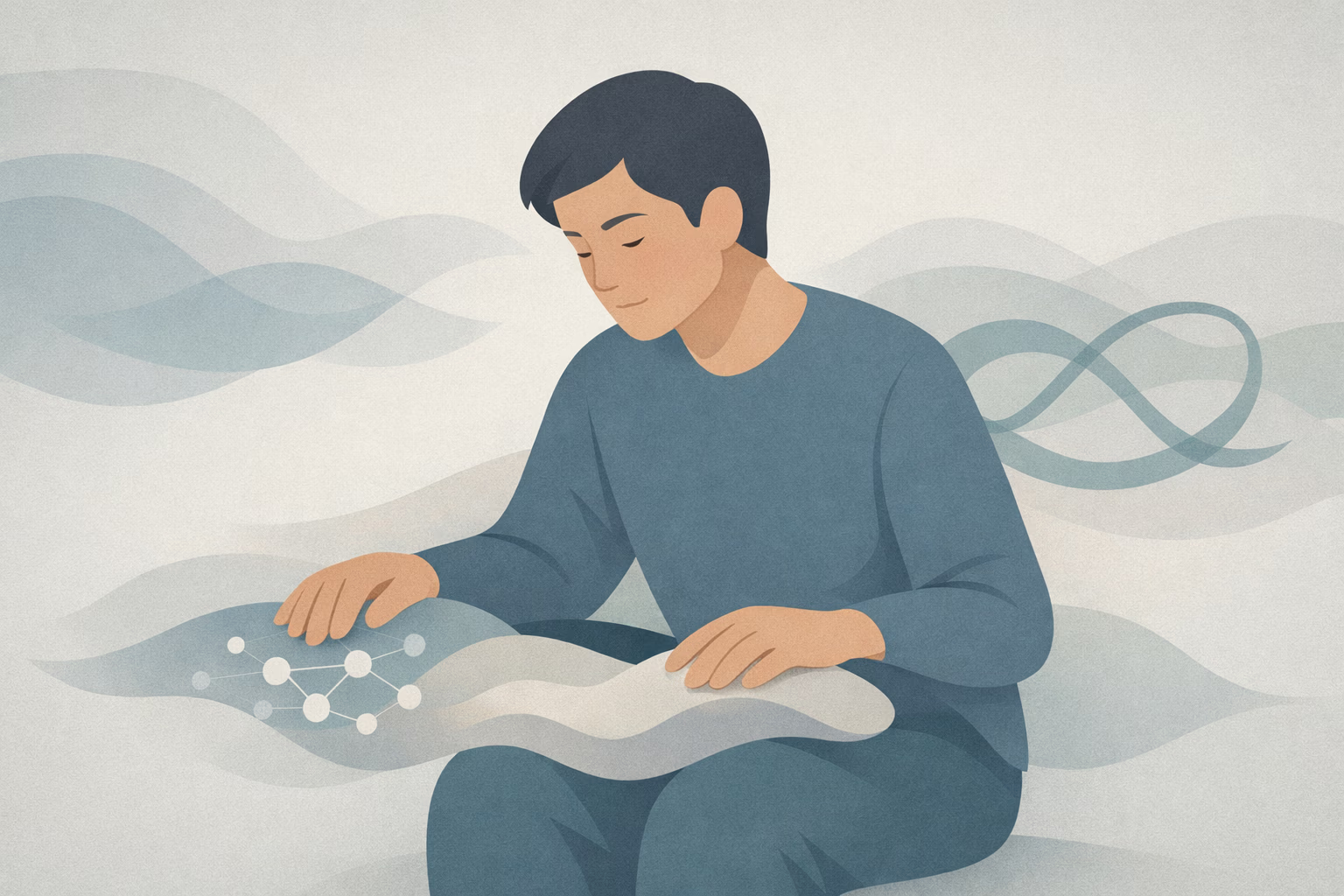
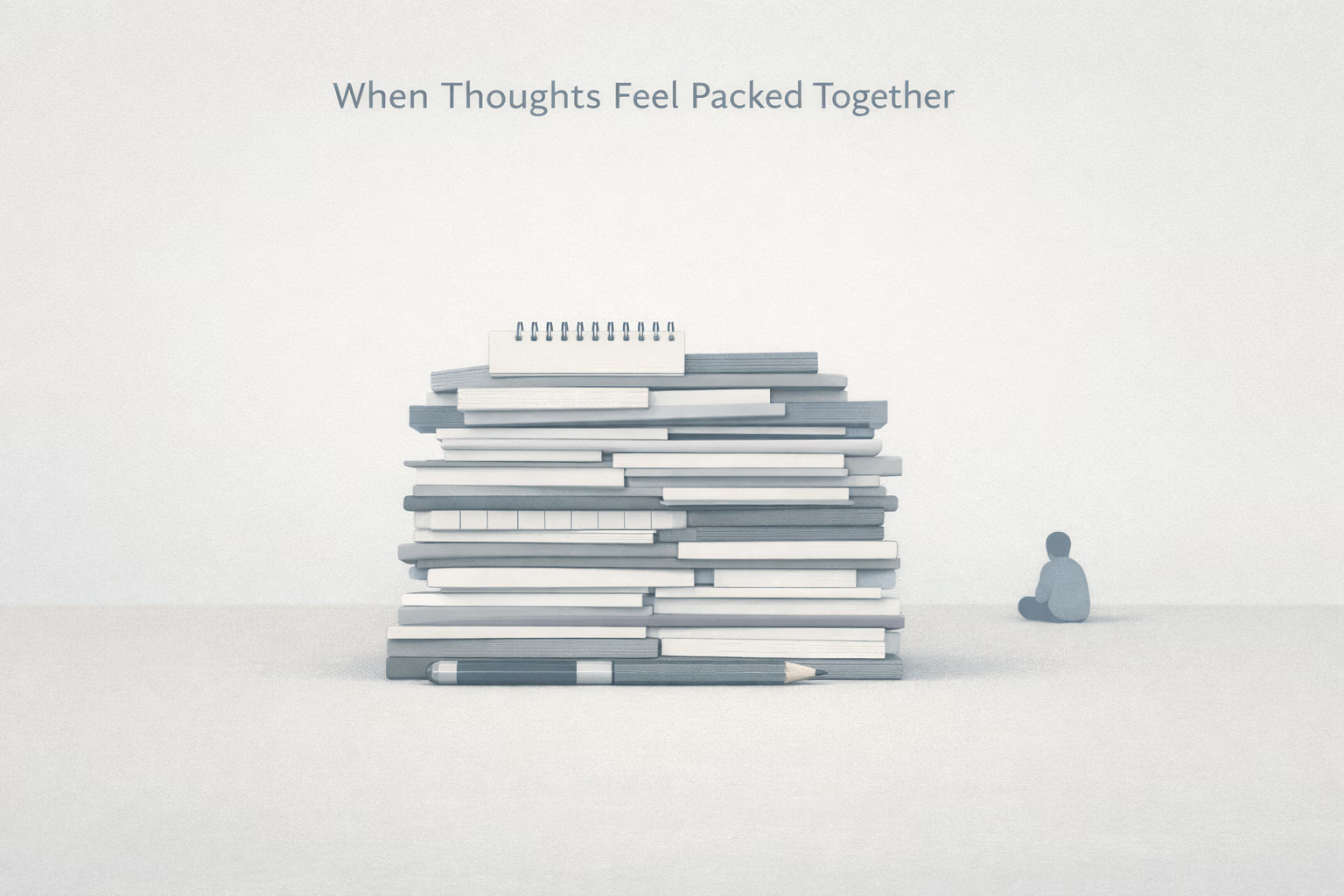
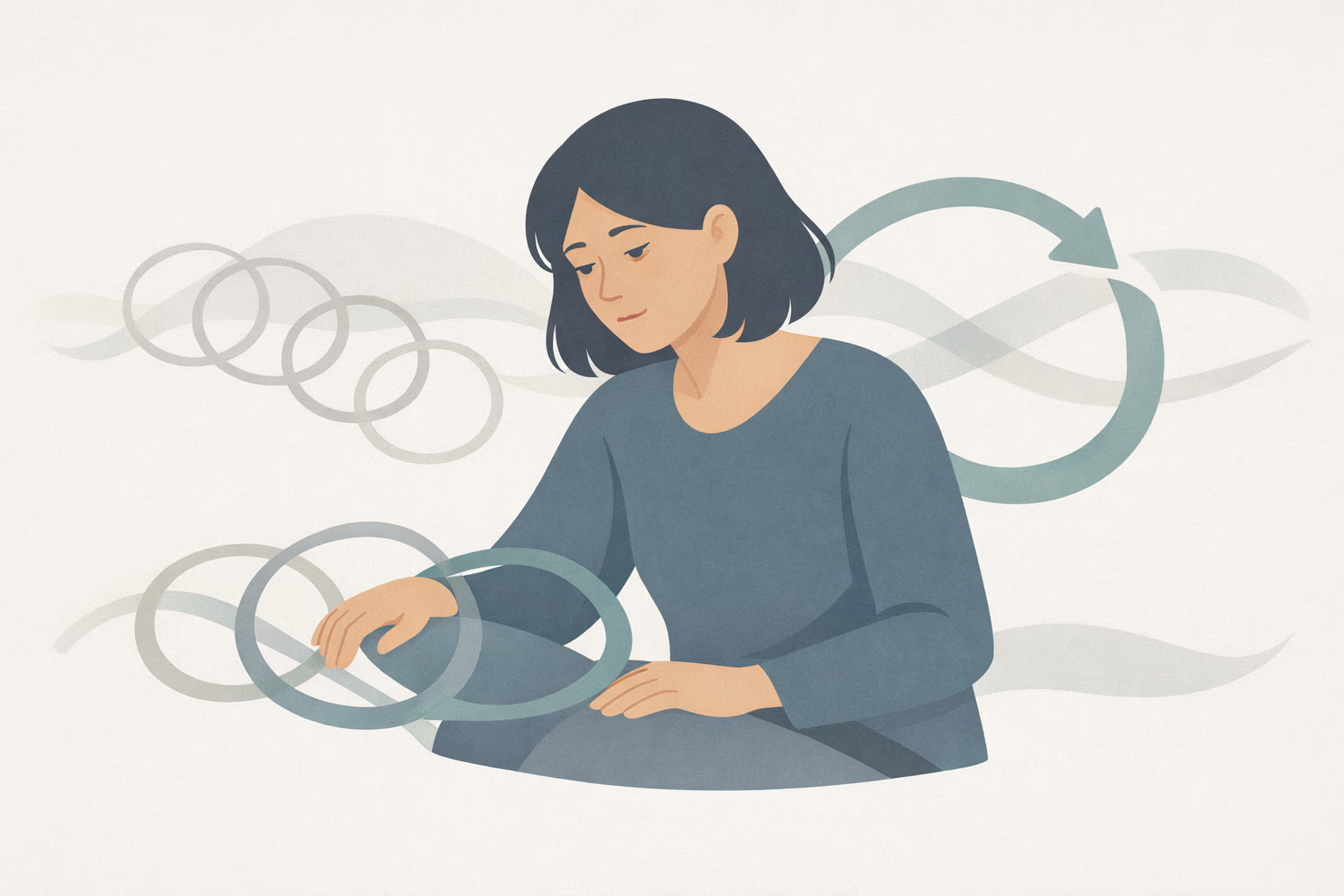
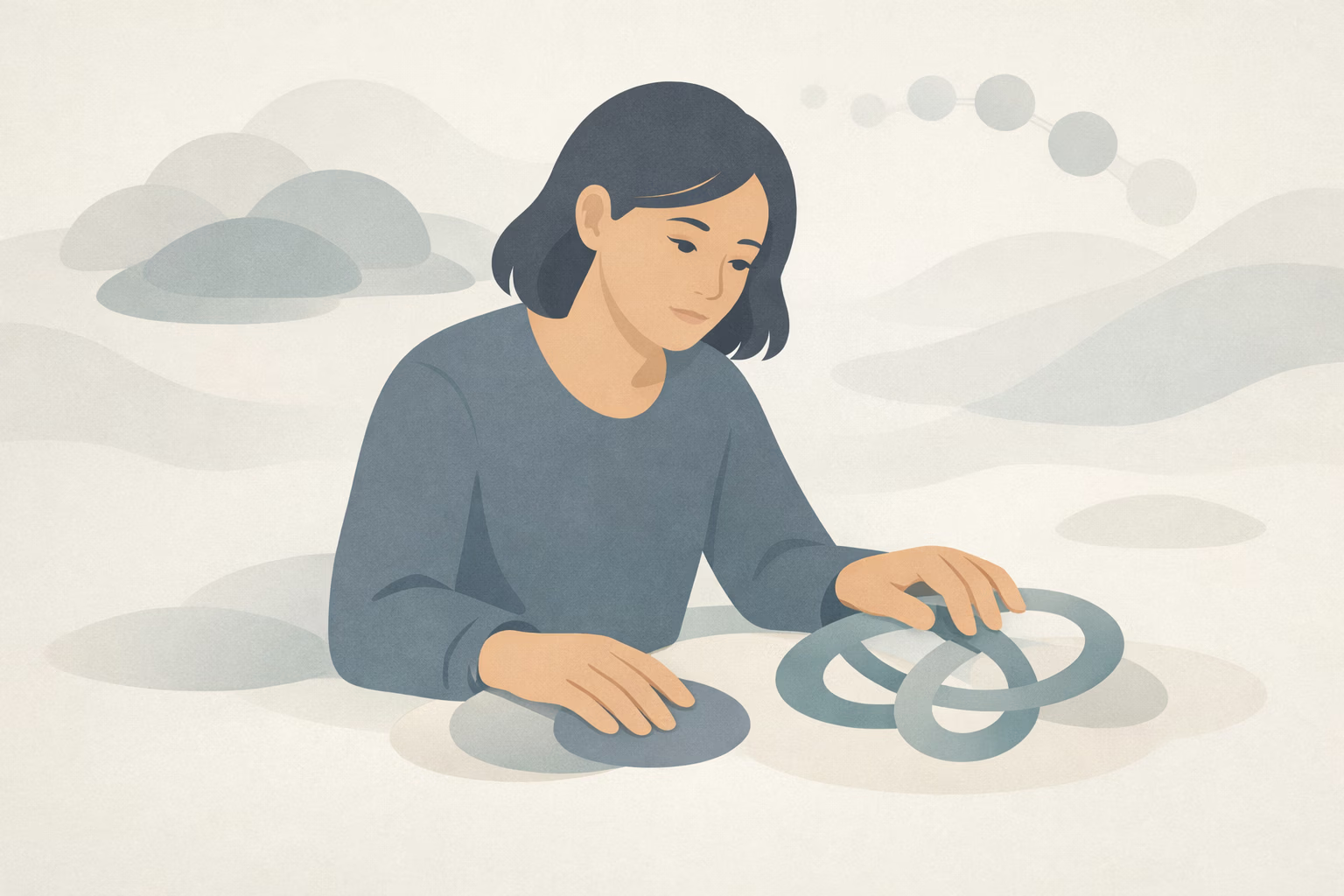
Understanding explains what is happening. Art allows you to feel it—without fixing, judging, or naming. Pause here. Let the images work quietly. Sometimes meaning settles before words do.
One Quiet Window, one insight, one reflection — every Sunday