Overthinking Loops: When the Mind Won’t Quiet Down
In short: Habitual thought patterns are not just “thinking a lot.” They’re repeatable mental sequences that switch on quickly, run with little effort, and tend to pull the nervous system into the same emotional climate again and again—tension, urgency, heaviness, vigilance, or numb over-control. When life is fragmented or high-pressure, the brain often leans on repetition because repetition is efficient.
Habitual thought patterns are not just “thinking a lot.” They’re repeatable mental sequences that switch on quickly, run with little effort, and tend to pull the nervous system into the same emotional climate again and again—tension, urgency, heaviness, vigilance, or numb over-control.
When life is fragmented or high-pressure, the brain often leans on repetition because repetition is efficient. A familiar loop can feel like the quickest way to regain orientation. But the cost is that the loop can keep the body mobilized even when nothing is changing.
What if the problem isn’t that you think too much—what if your system just hasn’t received a “done” signal yet?
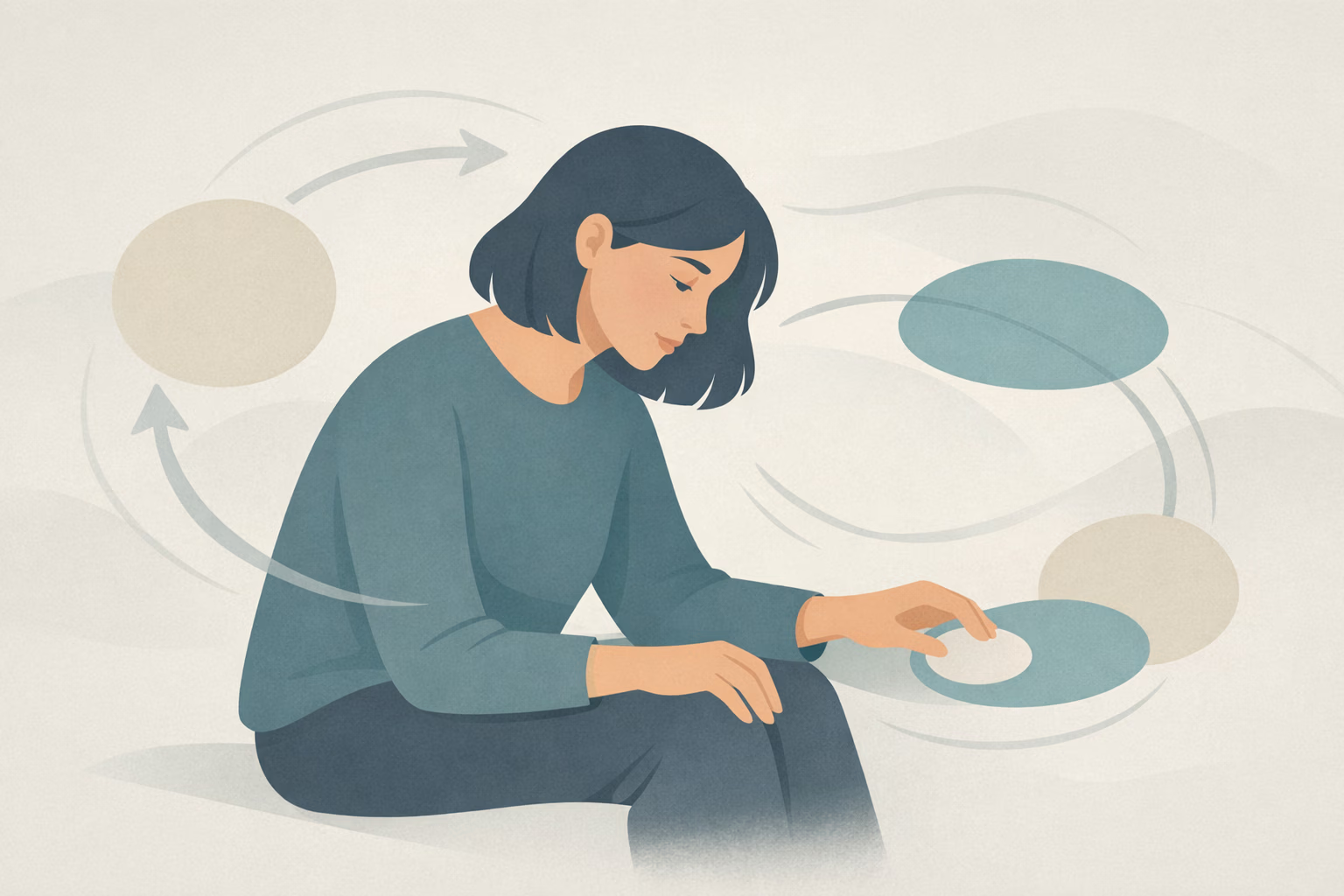
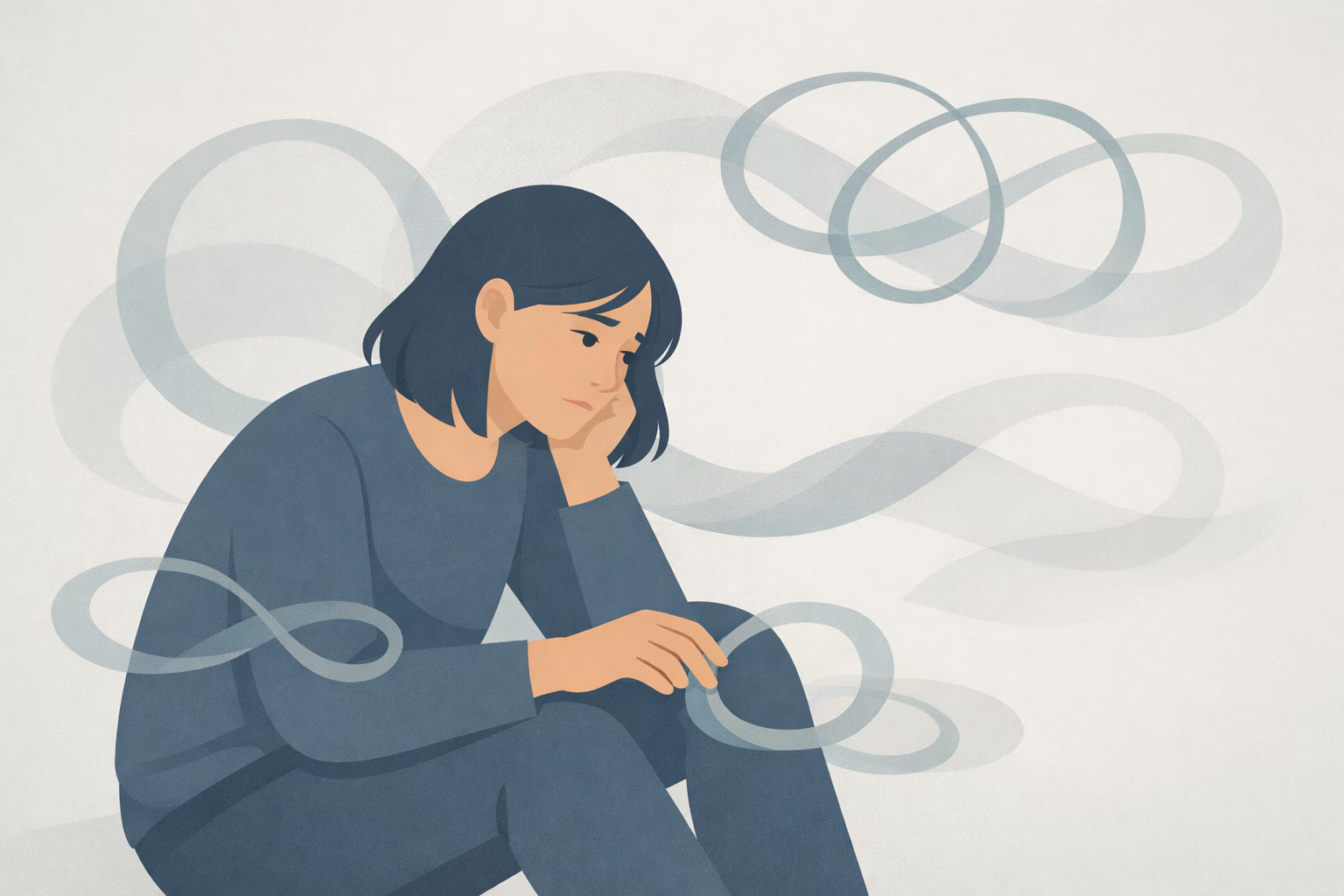
Many people describe thought spirals as a confined inner space: the same questions, the same scenes, the same arguments, the same “what ifs.” Even when the content changes, the shape of the experience stays similar—an internal narrowing that makes the world feel farther away.
This isn’t a character flaw. It’s what happens when a nervous system stays on-duty without closure. Repetitive thinking can intensify anxiety, stress, or sadness because the brain is continuously presenting unresolved material to the body as if it still requires response. [Ref-1]
It can feel like you’re “busy” in your mind, but not actually moving forward.
Brains conserve energy by strengthening frequently used pathways. When a particular thought pattern repeats—especially under stress—it becomes easier to trigger and harder to interrupt. Over time, the mind doesn’t need a big event to start the loop; a small cue can be enough.
Because thoughts and emotions are tightly coupled, repeated thinking can repeatedly cue the same physiological state: muscle tension, shallow breathing, stomach tightness, or a background sense of threat. The emotional tone becomes the “default” not because it’s true, but because it’s rehearsed. [Ref-2]
Repetition isn’t proof—it's a training effect.
Human cognition evolved to simulate outcomes: to plan, predict, and solve. That’s a feature. But when a situation doesn’t have a clear endpoint—ambiguous relationships, uncertain health concerns, diffuse workplace pressure—the problem-solving system can keep running without a finish line.
In those conditions, thinking can become a substitute for completion. The mind keeps searching for the missing piece that would allow the system to stand down. Instead of arriving at a settled conclusion, it reopens the file. Again. [Ref-3]
Repetitive thought can feel like preparation: if you replay it enough, you won’t be blindsided. If you analyze it enough, you’ll finally understand. If you anticipate every risk, you’ll stay safe. That sense of control is not vanity; it’s regulation—an attempt to create predictability when the body doesn’t feel it.
But the brain can confuse mental activity with progress. The loop produces motion without completion, which can keep the system activated instead of reassured. The result is often more monitoring, more scanning, and more internal pressure to “figure it out.” [Ref-4]
Many people were taught that more thinking equals more clarity. In a calm system, reflection can help. In a loaded system, repetitive negative thinking tends to amplify distress—because the same material is being processed in the same state, with the same narrowed attention and the same threat-weighted bias. [Ref-5]
When the nervous system is already mobilized, cognition often prioritizes “what could go wrong” over “what is true.” This isn’t pessimism. It’s a protective allocation of attention. Under strain, the mind becomes a spotlight aimed at risk.
Not all thinking is meaning-making; some thinking is just activation staying active.
It can help to understand habitual thinking structurally: as an avoidance loop where mental effort replaces completion. Not because a person is “avoiding feelings,” but because thinking offers immediate grip. It creates a task-like sensation—something to do—when the system lacks a clear next step.
In this loop, the consequence of not thinking feels muted: if you stop, there’s no obvious resolution, and the body may surge with uncertainty. So the mind keeps generating content to maintain a sense of engagement. Repetitive negative thinking shows up across many kinds of distress because it’s a general-purpose way to stay oriented when closure is missing. [Ref-6]
The loop isn’t trying to hurt you. It’s trying to keep something from falling apart.
Habitual thought patterns often look different on the surface, but they share a similar structure: repeated mental returns to an unresolved theme, usually with a sense of urgency. [Ref-7]
These patterns are sticky because they are internally rewarding in the short term: they create momentary order, a sense of effort, and the impression that risk is being managed.
Persistent thought loops can gradually narrow psychological flexibility: it becomes harder to shift attention, consider multiple interpretations, or feel genuine spaciousness around uncertainty. The mind’s range compresses to the same tracks, and other parts of life can start to feel muted or distant. [Ref-8]
This is not a failure of insight. It’s a load problem. When the system stays repeatedly activated, it starts prioritizing continuity and predictability over novelty and exploration. The loop becomes familiar terrain—a place the brain knows how to navigate—while open-ended living feels harder to access.
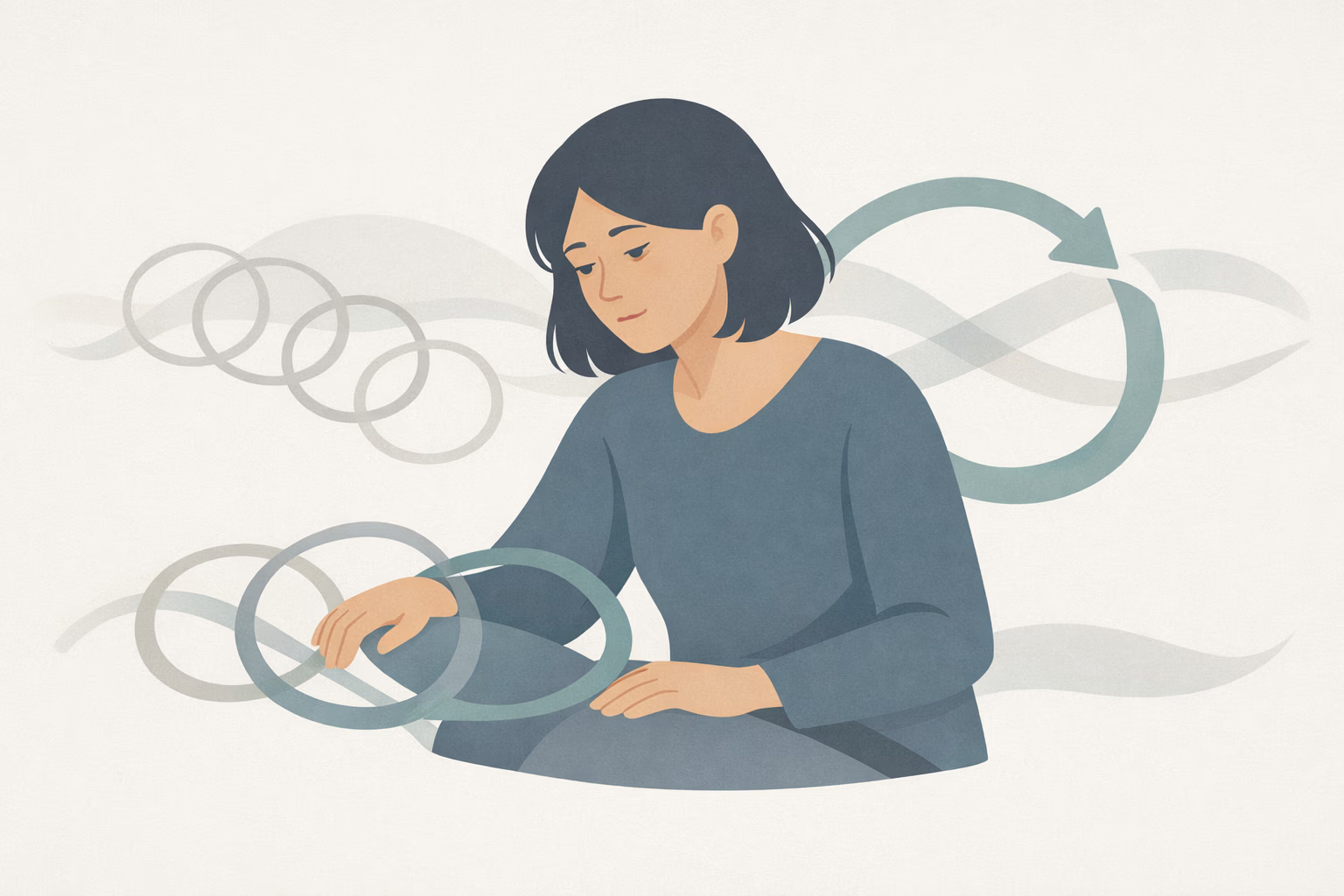
Once a loop is established, it often becomes a two-way circuit. Emotional activation increases the likelihood of repetitive thinking, because the brain treats activation as a signal that something remains unresolved. Repetitive thinking then reactivates the emotion by repeatedly presenting the same theme as unfinished.
Over time, the body can begin to respond to the thought pattern itself as a cue. The content matters less than the rhythm: “Here we go again” becomes its own trigger. That’s how a person can feel anxious or heavy before they even know what they’re thinking about. [Ref-9]
The loop is not a debate you’re losing. It’s a circuit that’s staying powered.
There’s a different relationship available with thought—one that doesn’t require fighting it, believing it, or solving it. In many therapeutic models, the shift involves recognizing thoughts as mental events: outputs of a busy prediction engine, not necessarily instructions or truths. [Ref-10]
This kind of shift is not the same as integration. Understanding a pattern can happen quickly; integration is slower and shows up as a physiological stand-down—less compulsion to re-check, less urgency to re-run, more capacity for the mind to return to neutral when the topic appears.
When a thought is seen clearly as “a thought,” it can stop recruiting your whole body for the mission.
Habitual thinking tends to be self-sealing: the same mind generates the same arguments, and the same arguments generate the same state. External perspective—another person’s steady presence, a wider frame, a different set of words—can introduce new information that your loop cannot manufacture on its own.
Co-regulation matters here: a calmer nervous system nearby can offer safety cues that reduce load, making it easier for attention to widen and for the loop to lose intensity. Many cognitive approaches also emphasize evaluating thoughts more flexibly and testing interpretations against broader evidence, which can loosen automatic coupling between thought and emotion. [Ref-11]
When repetitive thinking disengages, people often describe a specific kind of relief: not excitement, not a dramatic breakthrough, but a return of room. Attention can move again. The body feels less recruited. The day contains more than the problem.
This is sometimes described as reduced identification with thoughts—where a thought can pass through without immediately becoming a project. Importantly, this isn’t denial or avoidance; it’s capacity returning. The mind can register a concern without being captured by it. [Ref-12]
As the loop loses dominance, something subtle but powerful can re-emerge: orientation. Instead of thinking being driven primarily by threat management, cognition can begin to serve meaning—relationships, creativity, care, curiosity, contribution, rest.
Values are not motivation speeches. They work more like an internal compass: when the nervous system isn’t constantly recruited by unfinished loops, attention can organize around what matters and what fits. That alignment creates a different kind of stability—less dependent on constant mental effort and more grounded in lived coherence. [Ref-13]
When the mind isn’t stuck proving safety, it can start participating in life again.
Habitual thoughts are often signals that the system is carrying unfinishedness—too much input, not enough closure, too many open tabs. They can point to where your attention has been over-recruited, not to what you “must believe.”
Sometimes the most stabilizing shift is simply that a thought is allowed to be what it is: an event that arises under load. In approaches like cognitive defusion, the relationship to thinking changes so the mind doesn’t have to obey every alarm it generates. [Ref-14]
In other words: a thought can be loud without being in charge.
Thought patterns gain power when they’re treated as urgent instructions in a system that can’t find completion. They lose power when they’re recognized as mental movement—useful sometimes, repetitive sometimes, and not identical to you.
Over time, as loops receive closure and the body stands down more easily, thinking can return to its rightful role: not a cage, not a siren, but a tool. A stream can carry leaves without needing to become the riverbed. [Ref-15]
From theory to practice — meaning forms when insight meets action.
Because brains conserve energy by strengthening frequently used pathways. When a thought pattern repeats — especially under stress — it becomes easier to trigger and harder to interrupt. The mind doesn't need a big event to start the loop; a small cue is enough. Knowing better operates in calm conditions; the loop operates in loaded ones. Repetition isn't proof; it's a training effect. Thoughts and emotions are tightly coupled, so repeated thinking repeatedly cues the same physiological state — tension, shallow breathing, background threat. The emotional tone becomes the default not because it's true, but because it's rehearsed.
The article frames it as an Avoidance Loop where mental effort replaces completion — not because someone is avoiding feelings out of weakness, but because thinking offers immediate grip. It creates a task-like sensation, something to do, when the system lacks a clear next step. The consequence of not thinking feels muted: if you stop, there's no obvious resolution, and the body may surge with uncertainty. So the mind keeps generating content to maintain a sense of engagement. Repetitive negative thinking shows up across many kinds of distress because it's a general-purpose way to stay oriented when closure is missing.
Because under stress, cognition prioritizes 'what could go wrong' over 'what is true.' That's not pessimism; it's a protective allocation of attention — the mind becoming a spotlight aimed at risk. In a loaded system, repetitive thinking processes the same material in the same state, with the same narrowed attention and same threat-weighted bias, which amplifies distress rather than producing clarity. Thinking can also be confused with progress — the loop produces motion without completion, keeping the system activated. Not all thinking is meaning-making; some thinking is just activation staying active.
Through a different relationship with thought, not through fighting or solving it. Recognizing thoughts as mental events — outputs of a busy prediction engine, not necessarily instructions or truths — lets the mind register a concern without being captured by it. When a thought is seen clearly as a thought, it stops recruiting the whole body for the mission. Co-regulation helps too, because a calmer nervous system nearby offers safety cues that reduce load and let attention widen. Space returns gradually as fewer experiences require constant rehearsal: a quieter baseline, less re-litigating, choices that feel more available.
From Science to Art.
Understanding explains what is happening. Art allows you to feel it—without fixing, judging, or naming. Pause here. Let the images work quietly. Sometimes meaning settles before words do.
One Quiet Window, one insight, one reflection — every Sunday