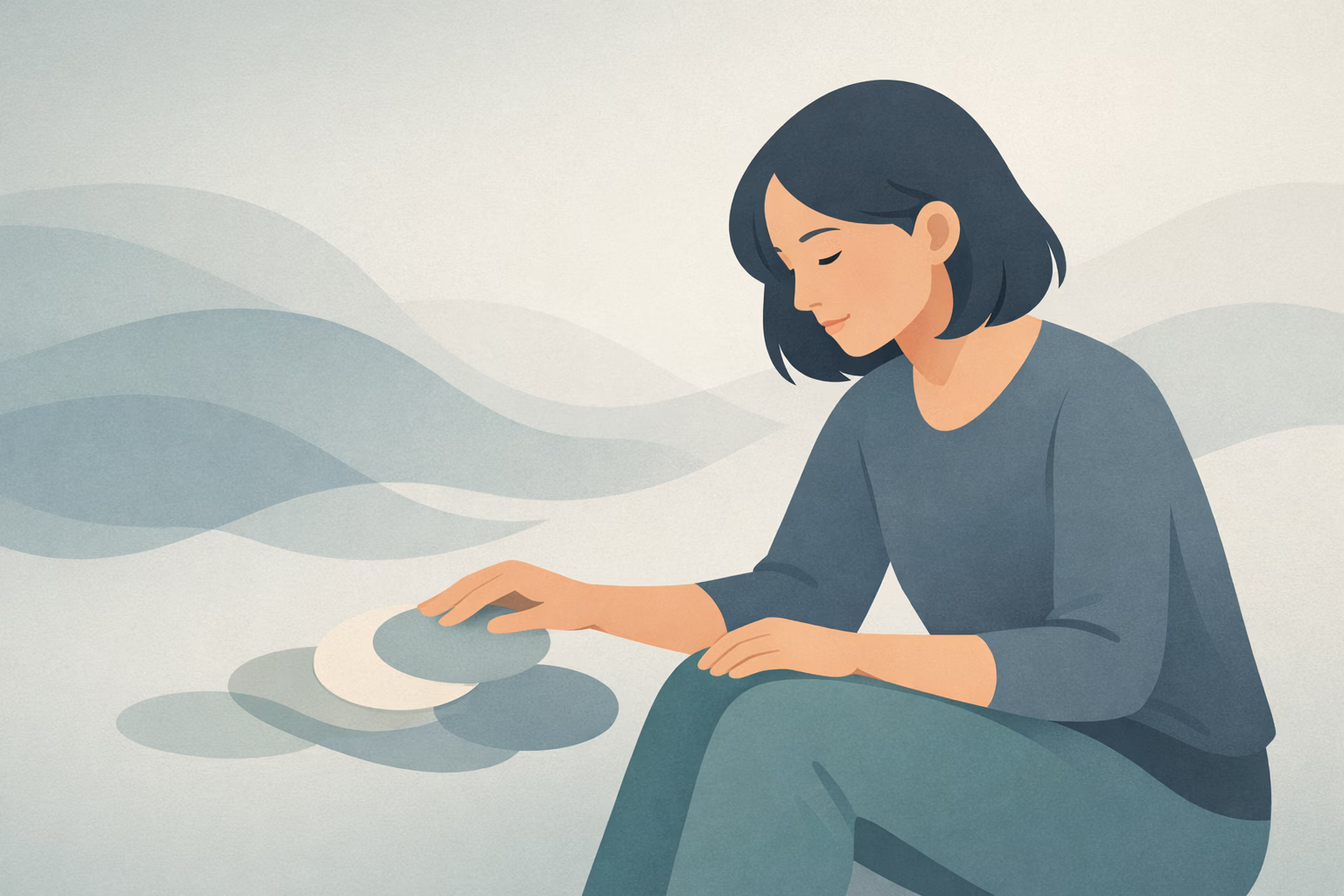
Pattern Awareness: Seeing the Thoughts That Guide Your Life
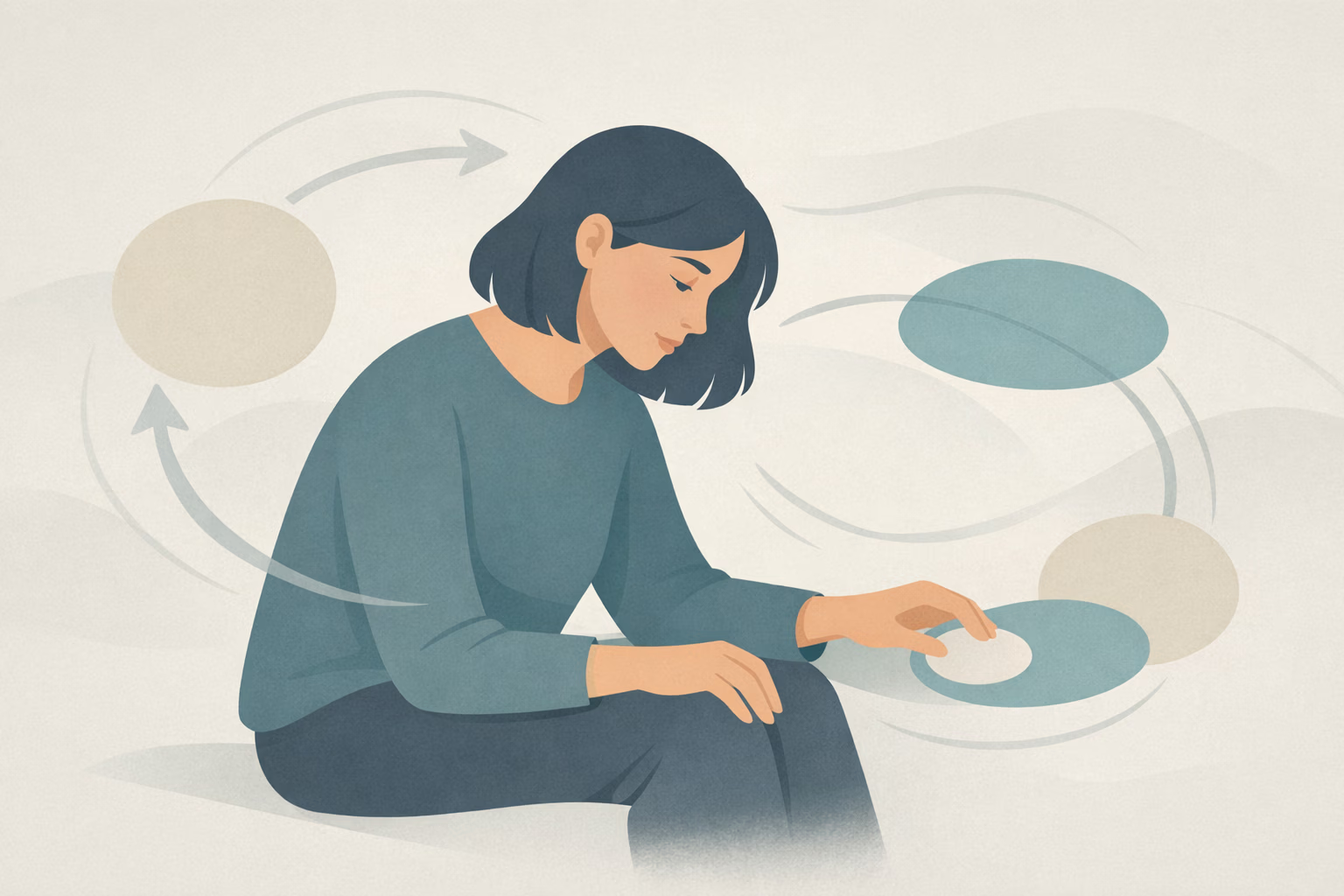
In short: A “psychological loop” is a self-reinforcing pattern where attention, body state, and behavior keep cycling through the same sequence—often faster than conscious choice can enter the room. It can look like overthinking that never lands, reaching for a screen without deciding to, or repeatedly postponing the very thing you care about.
A “psychological loop” is a self-reinforcing pattern where attention, body state, and behavior keep cycling through the same sequence—often faster than conscious choice can enter the room. It can look like overthinking that never lands, reaching for a screen without deciding to, or repeatedly postponing the very thing you care about.
What if the repetition isn’t a personal flaw—what if it’s a nervous system doing its best to find closure?
From a Meaning Density perspective, loops become sticky when experiences don’t get to finish. When there’s no felt “done,” the system keeps scanning, re-running, and re-checking—not because you’re broken, but because your brain is built to stabilize through completion and coherent story.
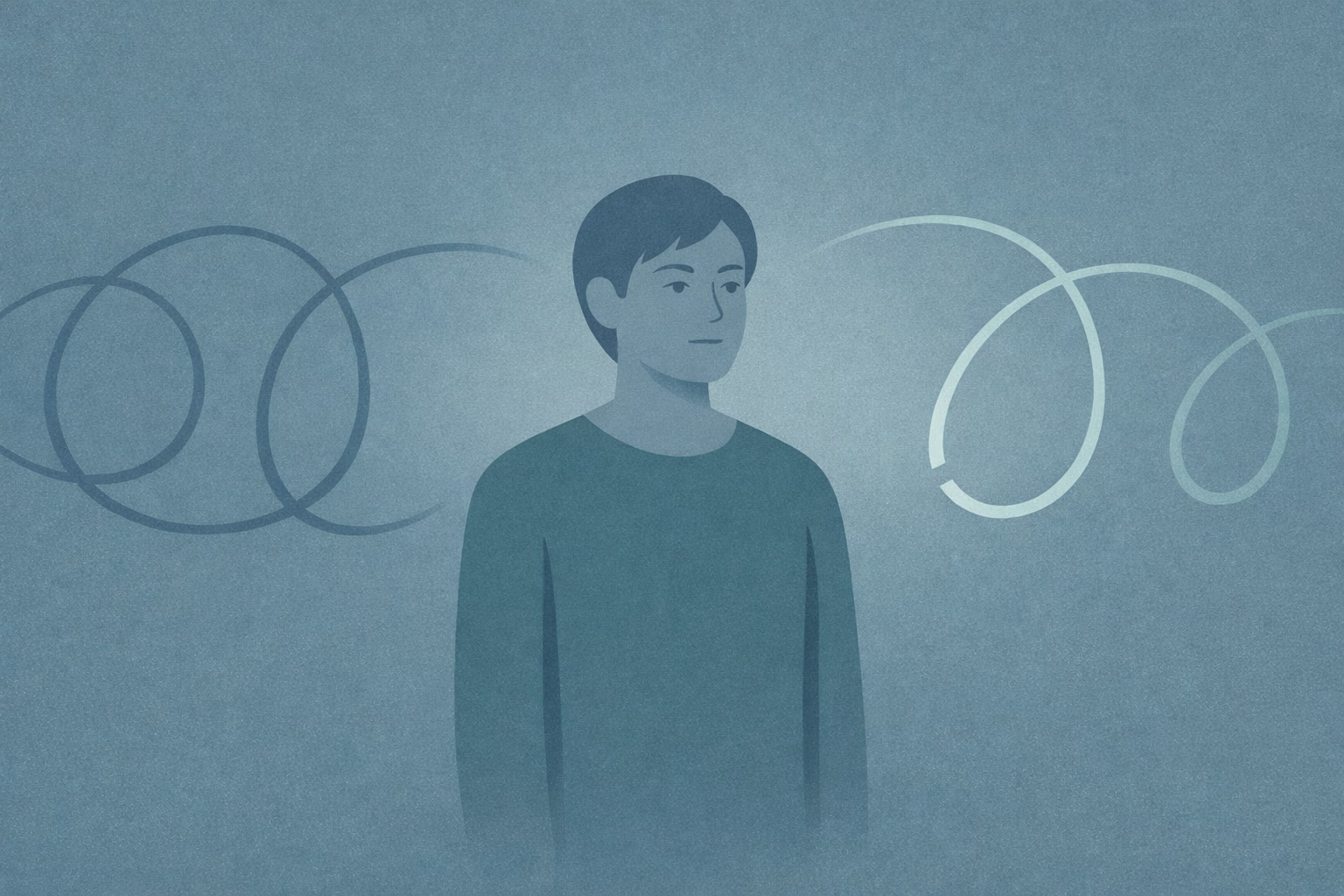
One of the most disorienting parts of loops is the split between insight and outcome. You can understand the pattern, name it, even predict it—then find yourself doing it again. That gap is not a moral verdict; it’s often a sign that the loop is running on circuitry designed to execute quickly, with minimal deliberation. [Ref-1]
In other words: the part of you that can explain the pattern is not always the part that initiates it. Under load, the nervous system prioritizes speed and familiarity. The result can feel like being “controlled,” when it’s really a fast, practiced pathway doing what it learned to do.
“It’s not that I chose it. It’s that it happened—again—before I could arrive.”
Loops often begin with a cue: a notification, a tone of voice, an internal sensation, a time of day. Over time, the brain stitches cues to responses—shifts in arousal, a thought sequence, a behavior—until the chain can run with almost no conscious involvement. [Ref-2]
This is efficient learning. The nervous system is constantly asking, “What usually happens next?” When the same sequence repeats, it gets compressed into a shortcut. The shortcut can include:
Importantly, this isn’t about weak will. It’s about how repeated pairings become a default route—especially when the environment keeps presenting the same cues.
Humans evolved in conditions where repeating what worked mattered. The brain developed systems that turn repeated, survival-relevant actions into routines so that energy can be saved for novelty and threat. The basal ganglia and related circuits play a central role in this “make it automatic” function. [Ref-3]
In a modern context, the same mechanism can automate things that are not truly life-preserving—like checking for updates, rehearsing conversations, or delaying decisions. But the underlying logic is consistent: if something reduces uncertainty (even briefly), it becomes a candidate for repetition.
Automatic loops are economical. They reduce the need to decide, interpret, and problem-solve from scratch. Habit systems can take over when the brain predicts, “This is the kind of moment where we do that thing.” That handoff can conserve energy and stabilize arousal. [Ref-4]
Loops can also reduce uncertainty. When the future feels unclear, a familiar sequence gives the nervous system something it can run. It may not create real resolution, but it creates a momentary sense of “known.” That small drop in uncertainty can be compelling—especially when life is noisy, fast, and evaluative.
There’s a hidden tradeoff in automation: it can reduce flexibility. What begins as efficiency can become rigidity when the same response shows up in situations that are actually different. Over time, the person may feel less able to pause, less able to pivot, less able to access alternative routes—because the default route has been rehearsed more often. [Ref-5]
Why does it feel like the loop “wins”?
Because the loop is practiced, fast, and low-effort. Choice, by contrast, is metabolically expensive. When stress load is high, the system tends to spend less energy on deliberation and more energy on execution.
Many psychological loops are avoidance loops—not in the sense of “refusing feelings,” but in the structural sense of bypassing friction and skipping contact with consequence. Automation can slide you away from the very moment that would create completion: the difficult conversation, the uncertain beginning, the imperfect first draft, the pause that lets information arrive.
Habit circuits strengthen when a behavior reliably follows a cue and produces an immediate shift in state. Over time, the brain can build fast “cue → routine” pathways that run before the fuller situation is metabolized. [Ref-6]
The loop isn’t trying to sabotage meaning. It’s trying to lower load quickly. The cost is that the system never receives the downstream “done” signal that comes from finishing a sequence and letting reality update the story.
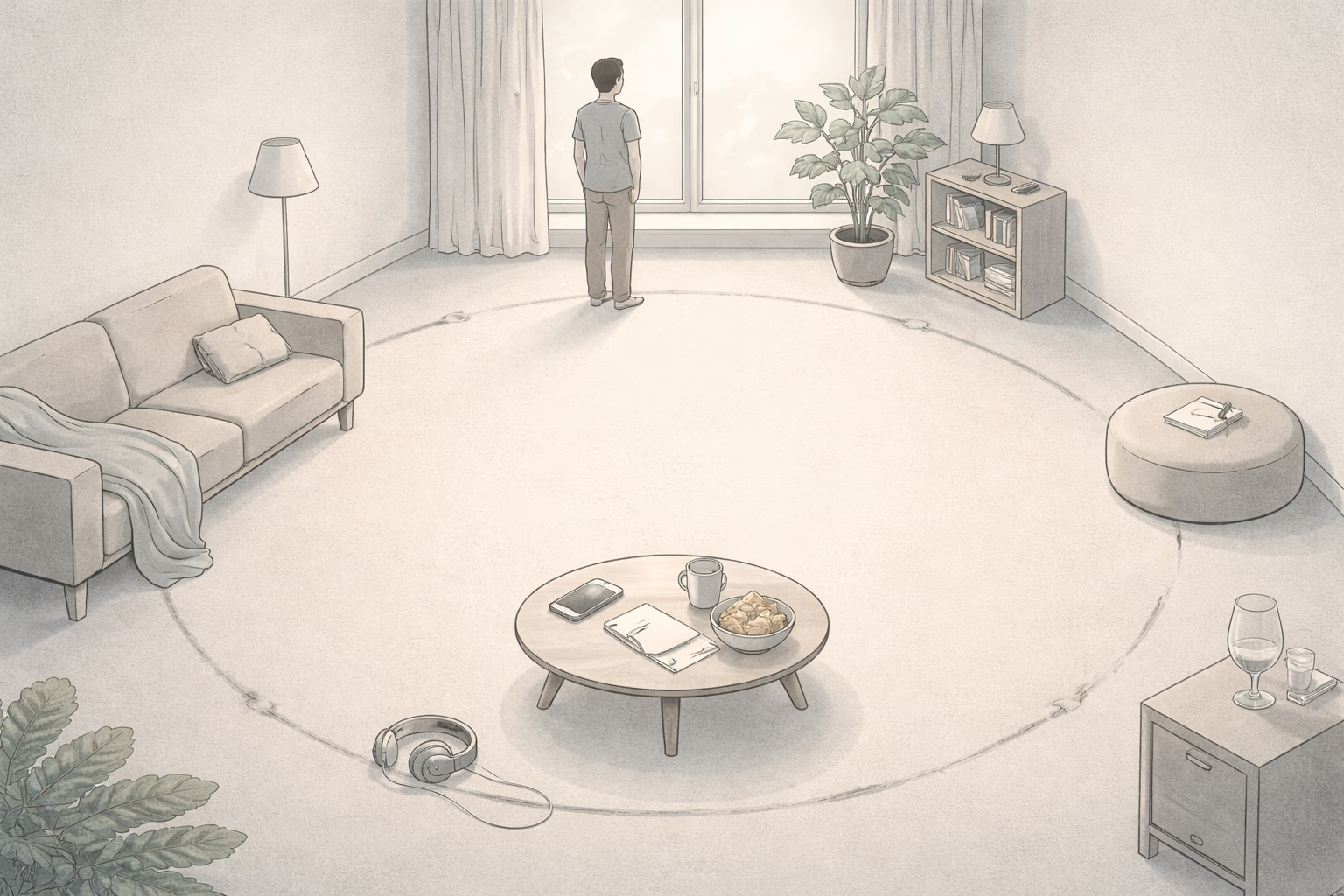
Loops often have a distinctive rhythm: a cue, a body shift, a narrow storyline, then a behavior that temporarily changes state. The content varies, but the structure repeats.
These are not character traits. They’re regulatory strategies—often organized around threat detection and rapid learning systems that pair cues with responses. [Ref-7]
Growth requires updating: new information has to enter the system, get integrated, and change what happens next. Loops reduce updating. When the same response runs, the nervous system receives a familiar state shift, not a fresh reality-based conclusion.
Over time, this can make life feel smaller—not because you “aren’t trying,” but because the conditions don’t support completion. The brain keeps returning to the same grooves, and agency can feel like a concept rather than an available state.
Neuroscience frameworks describe multiple pathways involved in regulation—some oriented toward quick dampening and some toward contextual processing and flexible control. Under chronic load, the quicker pathway can dominate, narrowing options. [Ref-8]
Repeated execution makes the loop more efficient. Cues become more salient, initiation becomes faster, and the sequence can start earlier in the chain—sometimes before you can even name what’s happening. That’s not you “getting worse”; it’s the nervous system doing what it does with repetition: optimizing the route it travels most. [Ref-9]
This is why loops can feel invisible until you’re already inside them. Not because you lack awareness, but because the loop’s onset can occur at the level of attention and arousal—below the threshold where language and planning typically operate.
It can help to separate three different things: noticing a loop, interrupting a loop, and resolving what keeps the loop necessary. Awareness can illuminate the pattern, and slowing can reduce automatic execution—but neither automatically creates the “done” signal the nervous system is seeking.
From a nervous-system lens, interruption is often about reducing immediate load so the system can tolerate more information without flipping into the default routine. Models of experiential avoidance describe how rapid state-shifting behaviors can become self-reinforcing when they reliably reduce discomfort in the short term. [Ref-10]
In Meaning Density terms, the bridge is coherence: when the environment and the body allow a moment to be met fully enough that it can finish. Integration is not a thought. It’s a settling that shows up after completion—when the system no longer needs to run the same sequence to stabilize.
Loops narrow perspective. When attention collapses into the groove, it becomes harder to detect the pattern as a pattern. This is one reason mirroring and shared reflection can be so clarifying: another nervous system can observe the sequence without being pulled into it.
Being witnessed—especially without judgment—often restores context. It helps the brain register, “This is a repeatable process, not the whole truth of the moment.” Research on psychological flexibility emphasizes the health impact of being able to shift perspective and respond with greater range, rather than being dominated by a single rigid pattern. [Ref-11]
“When someone reflected it back to me, I could finally see the edges of it.”
A meaningful change in looping often looks surprisingly simple from the outside: there is a pause. Not a dramatic breakthrough, not a flood of insight—just a small delay where multiple options become available again.
That pause is not merely cognitive. It’s often a physiological shift: less urgency, more capacity to hold uncertainty, more room for context. In learning terms, new associations can form when the expected pattern is not completed in the usual way and the brain can encode an alternative outcome. [Ref-12]
This is where “choice” starts to feel real—not as pressure, but as an expanded menu. The system can sense more signals, not just the loudest one.
When loops loosen, what replaces them isn’t constant self-control. It’s orientation. Actions begin to organize around what matters, not only around what reduces immediate load. This is how meaning becomes stabilizing: it gives the nervous system a coherent direction that doesn’t require endless checking.
On the brain level, triggers and conditioned responses can still arise—humans are cue-based learners—but they no longer have to dictate the next move. Conditioning systems can be active while higher-order context and identity-based aims steer behavior. [Ref-13]
Coherence feels like this: the response fits the situation, the aftermath carries less residue, and life produces more “finished” moments that stay finished.
Psychological loops are often learned protections: quick routes that once reduced uncertainty, conserved energy, or offered relief when life didn’t provide clean closure. Seeing them this way doesn’t excuse harm or erase responsibility—but it replaces shame with accuracy.
When conditions change—when load eases, when contexts become safer, when completion becomes possible—loops can be redirected. Not through force, but through the gradual return of real endings: moments that register as resolved, experiences that settle into identity, choices that don’t need to be repeated to be believed. Habit science consistently shows that repetition and context shape what becomes automatic, for better or worse. [Ref-14]
Loops thrive in fragmentation: partial attention, partial endings, partial self-trust. As patterns become visible, the person isn’t “fixed”—they’re reoriented. The nervous system gains more chances to complete what it starts, and behavior becomes less about running a groove and more about living a coherent story.
That is a quiet kind of freedom: not constant effort, but a growing ability to let moments conclude, to let identity update, and to let meaning guide what happens next. [Ref-15]
From theory to practice — meaning forms when insight meets action.
Because the part of you that explains the pattern isn't the part that initiates it. Loops run on circuitry designed to execute quickly with minimal deliberation — repeated cues stitched to responses until the chain runs almost without conscious involvement. Under load, the nervous system prioritizes speed and familiarity. Insight lives in higher-order thinking; loops live in habit pathways. The result feels like being controlled when it's really a fast, practiced route doing what it learned to do. It's not a moral verdict — it's the structural gap between knowing and arriving. The brain conserves energy by automating what it has rehearsed most.
Through repeated cue-response-state-shift pairings the brain compresses into shortcuts. A notification, tone of voice, internal sensation, time of day becomes linked to a body shift, a narrowed attention funnel, and a familiar behavior. The basal ganglia and related circuits turn survival-relevant repetition into routine to save energy for novelty and threat — that's ancient design. In modern conditions, the same mechanism automates checking, rehearsing, and delaying. The underlying logic is consistent: if something reduces uncertainty even briefly, it becomes a candidate for repetition. Loops aren't sabotage — they're optimization gone literal in a world the system wasn't built for.
Because automation is economical. It reduces the need to decide, interpret, and problem-solve from scratch — a momentary drop in uncertainty and arousal. Choice, by contrast, is metabolically expensive. When stress load is high, the system spends less energy on deliberation and more on execution. Common shapes appear: reassurance loops (checking until uncertainty briefly drops), control loops (over-planning to keep unpredictability out), escape loops (scrolling or switching tasks to mute friction), conflict loops (mentally arguing to restore position). These aren't character traits — they're regulatory strategies oriented around threat detection and rapid learning systems.
Through pause, witness, and completion. Awareness illuminates the pattern; slowing reduces automatic execution; but neither alone creates the Done Signal the system seeks. Co-regulation matters because loops narrow perspective — another nervous system can observe the sequence without being pulled into it, restoring context. The bridge is coherence: when environment and body allow a moment to be met fully enough that it can finish. As loops loosen, what replaces them isn't constant self-control — it's orientation. Triggers can still arise, but they no longer dictate the next move. Identity & Meaning steers, not relief.
From Science to Art.
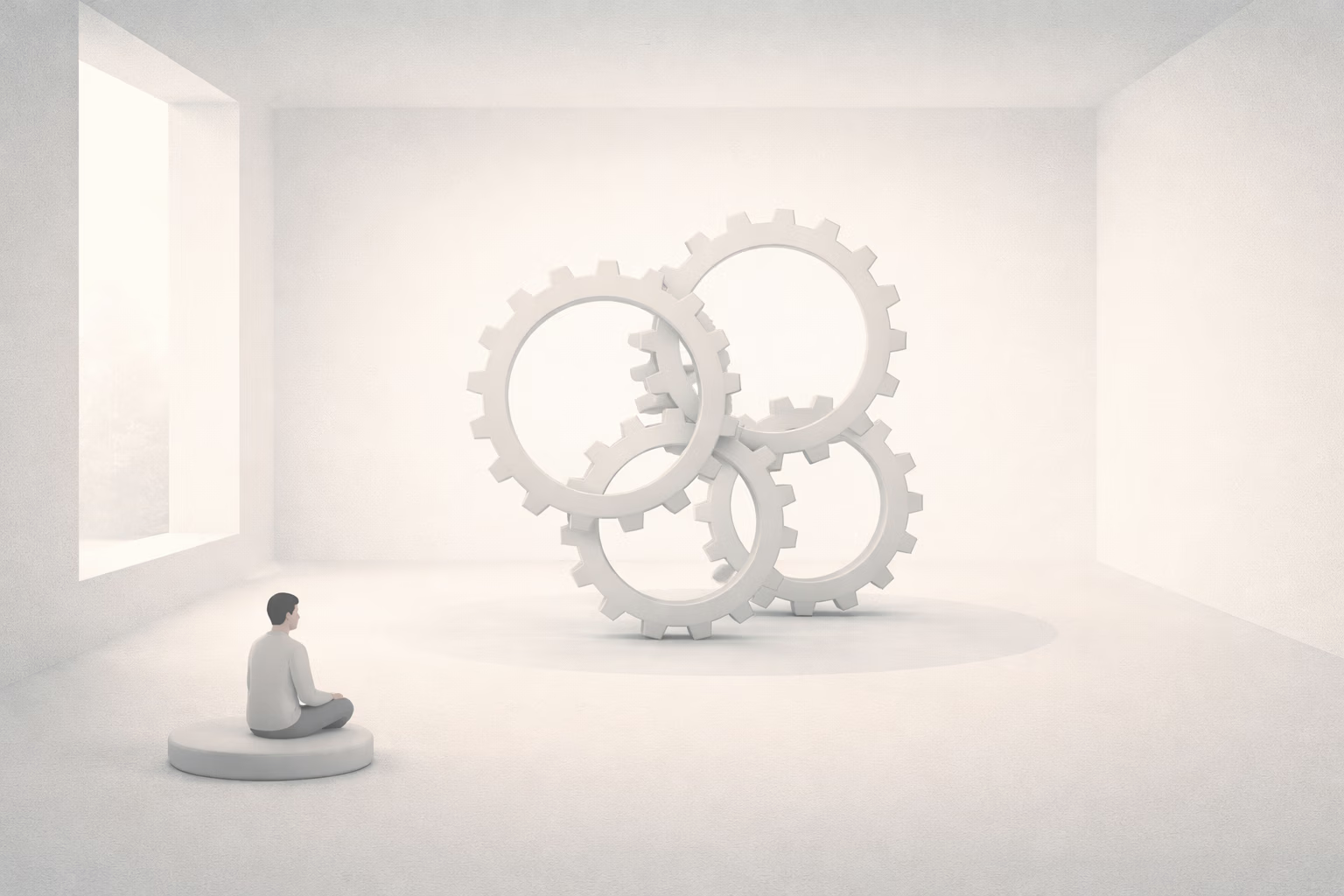
Understanding explains what is happening. Art allows you to feel it—without fixing, judging, or naming. Pause here. Let the images work quietly. Sometimes meaning settles before words do.
One Quiet Window, one insight, one reflection — every Sunday