
Scroll–Escape–Regret Loop
Understand the scroll–escape–regret cycle and how it trains emotional dependence.
In context: Some loops disguise themselves as “necessary actions“ or “random impulses.“ They don't announce themselves as repetitions. In the model, if a behavior provides a quick hit of relief or reward but leaves you feeling empty later, it is likely a disguised loop.
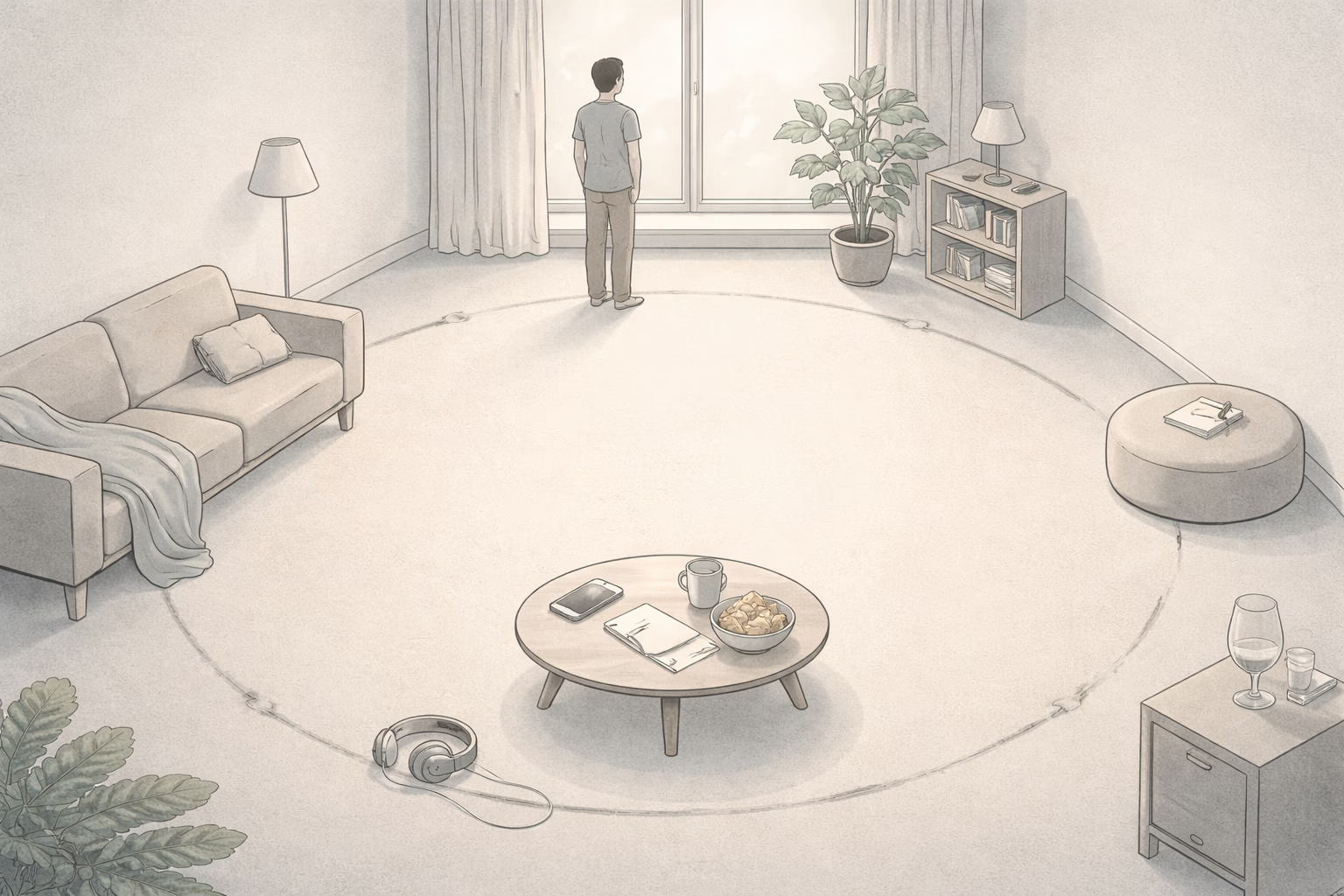
This loop doesn’t feel like a loop.
Each turn seems new.
Only later does familiarity appear.
Recognition changes the pattern.
Seeing the circle reduces surprise and softens urgency.
You don’t need to break the loop— just notice it clearly.
Increase pattern awareness with DojoWell.
Explore DojowellArticles exploring the psychology behind these patterns.
Some loops disguise themselves as "necessary actions" or "random impulses." They don't announce themselves as repetitions. In the model, if a behavior provides a quick hit of relief or reward but leaves you feeling empty later, it is likely a disguised loop. Seeing the repetition allows you to move the behavior from an automatic reflex into the Narrative & Identity system where it can be examined and interrupted.
Look for the "after-feeling." If an action—like checking news or organizing a drawer—leads to a brief burst of control followed by a subtle sense of "now what?", you have found a loop. These loops thrive on being invisible. By naming them "repetitive structural signals," you strip them of their urgency and begin to reclaim your agency from the automated systems of the brain.
One Quiet Window, one insight, one reflection — every Sunday