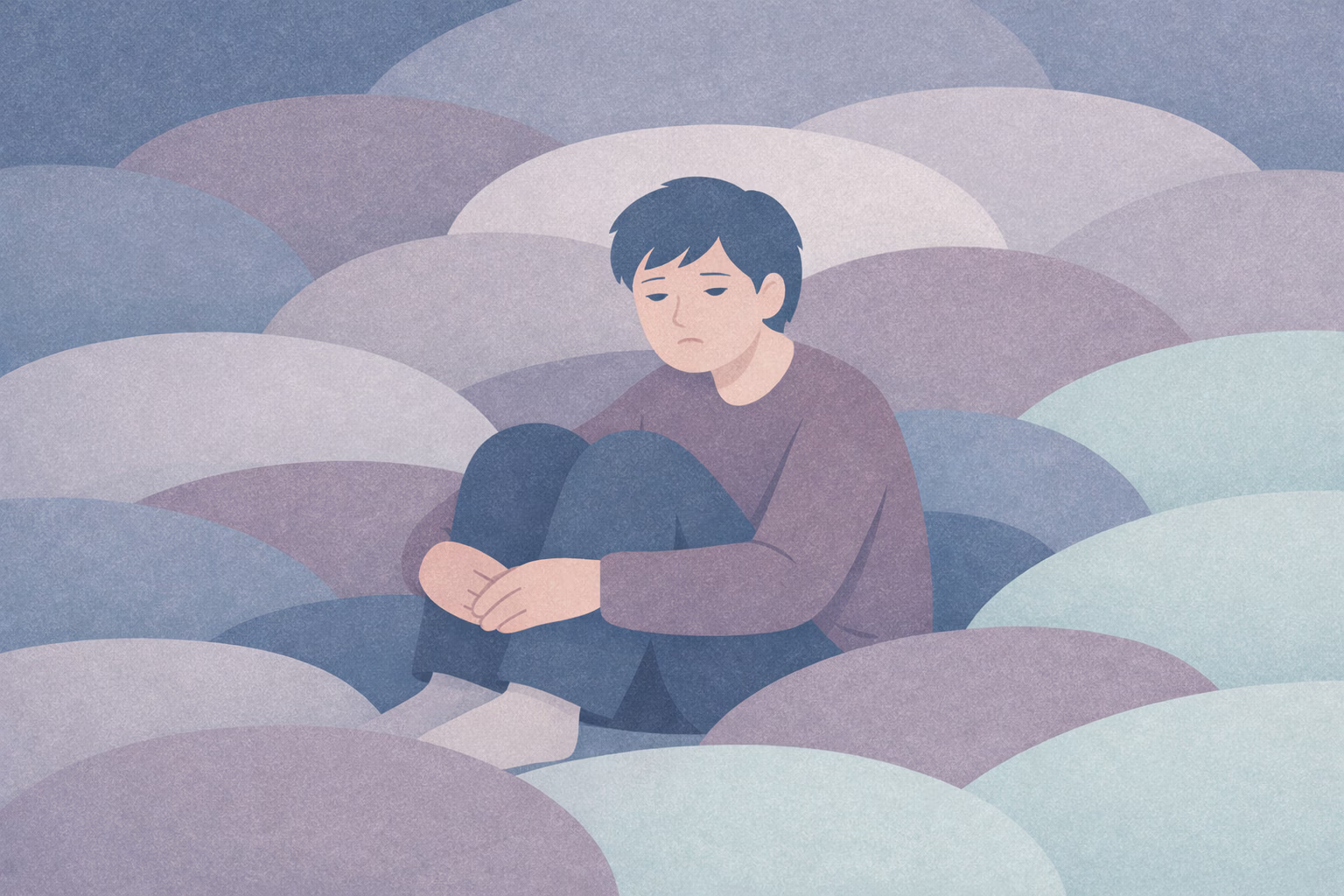
Content Binging: When Consuming Becomes Escaping
In short: Entertainment can be a real form of comfort. It can steady the nervous system, soften a rough day, and offer a pocket of relief when life is loud. And sometimes, the same relief becomes a substitute for something the body is still waiting to complete: a hard conversation that never happened, a week of pressure with no landing, a sense of disconnection with no repair.
Entertainment can be a real form of comfort. It can steady the nervous system, soften a rough day, and offer a pocket of relief when life is loud.
And sometimes, the same relief becomes a substitute for something the body is still waiting to complete: a hard conversation that never happened, a week of pressure with no landing, a sense of disconnection with no repair. In that case, entertainment doesn’t cause the strain—it becomes the most available way to keep going without adding more load.
Is your entertainment giving you rest, or replacing the “done” signal your system can’t find right now?
A lot of people don’t “choose” escapism as a concept. They reach for something familiar: one more episode, one more round, one more short video. The shift is subtle—stress and inner static drop fast, time passes strangely, and the evening disappears.
Afterward, there may be a specific kind of aftertaste: not exactly regret, not exactly pleasure—more like emotional dullness or a lingering sense of “I’m not back yet.” This pattern is commonly linked with binge-watching and using media to step away from loneliness or strain. [Ref-1]
High-engagement entertainment (fast pacing, novelty, bright cues, reward loops) can lower felt distress by shifting attention and state. In nervous-system terms, it changes the signal environment: internal cues become less audible because external cues are louder and more directive.
This is part of why the pull can feel effortless. You’re not “failing” to regulate—you’re using a readily available regulator. Research on problematic internet use often frames this as mood modification: online activity dampens discomfort while reducing contact with internal signals that would otherwise guide pacing, needs, and boundaries. [Ref-2]
Sometimes the screen doesn’t numb you. It simply becomes the only place your system can stop bracing for a moment.
Human reward systems evolved to reinforce learning and keep us moving toward nourishment, safety, and social belonging. They respond to novelty, anticipation, and small unpredictable “wins”—because those features helped our ancestors persist.
Modern media can supply those ingredients continuously, with almost no friction: autoplay, infinite feeds, instant access, constant updates. When reward is always available, the system can become trained to prefer rapid relief over slower forms of completion. This overlap between escapism, reward seeking, and problematic internet use shows up in research describing how digital environments amplify reinforcement patterns. [Ref-3]
Entertainment often works because it offers three things at once: structure, absorption, and predictable emotional pacing. A story tells you what matters next. A game gives you clear goals. A feed gives you constant novelty. All of these reduce the work of orienting.
In communication research, entertainment is frequently discussed as a reliable way people manage mood and stress—especially when life feels uncertain or heavy. [Ref-4] It doesn’t require you to solve anything. It offers an immediate “elsewhere” that can feel safer than the unfinished room you’re standing in.
What if the pull isn’t weakness—what if it’s your system choosing the fastest available stability?
Relief and restoration can look similar in the moment. Both lower strain. Both can feel like a reset. The difference often shows up later: restoration tends to come with a natural stand-down, while relief alone can leave a quiet backlog.
Entertainment can contribute to adaptive coping and even meaning-making in some contexts, especially when it supports reflection or connection. [Ref-5] But when it mainly postpones contact with unfinished life, the body may not receive the “complete” signal it needs. The result is not a moral problem—it’s a nervous system still holding open loops.
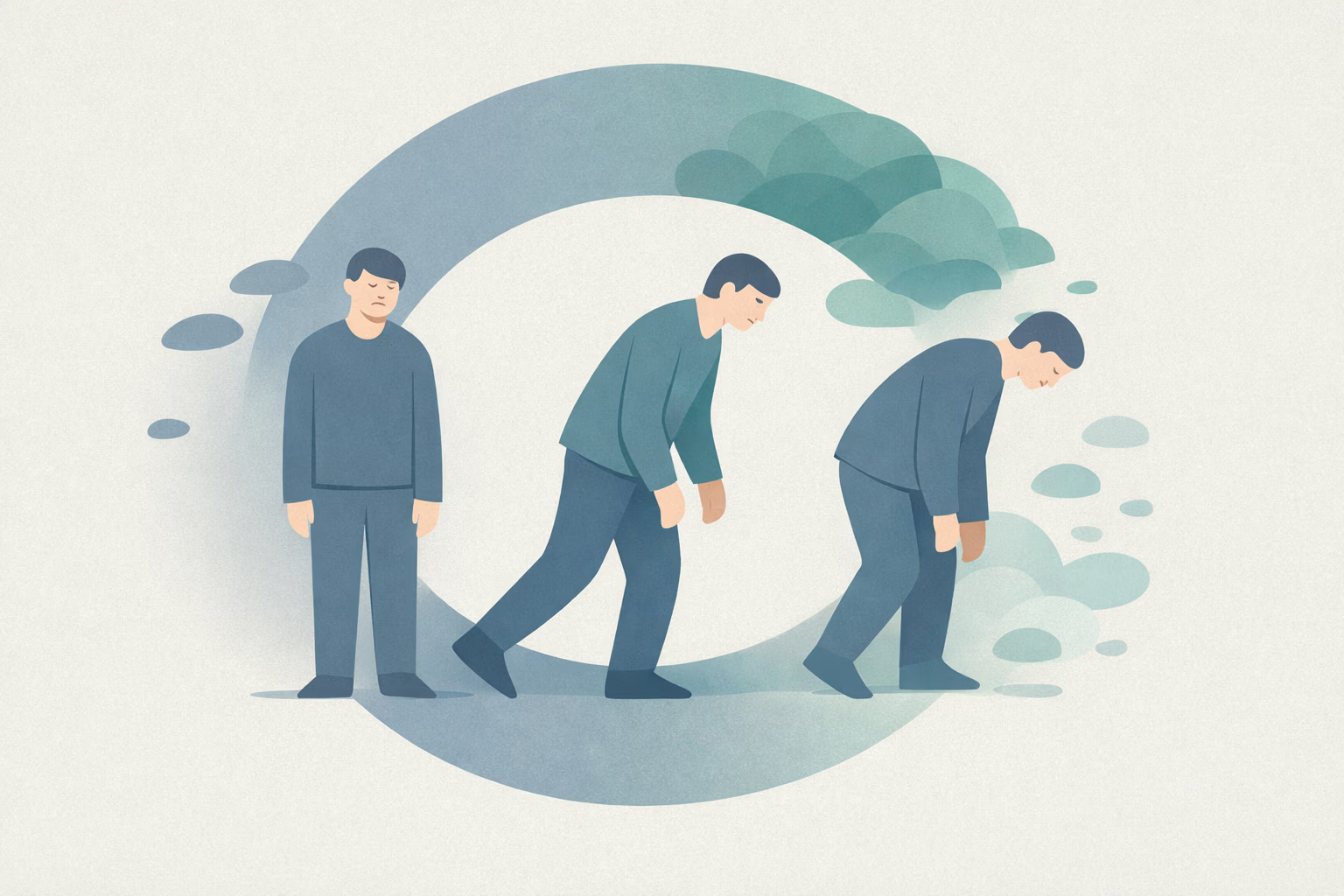
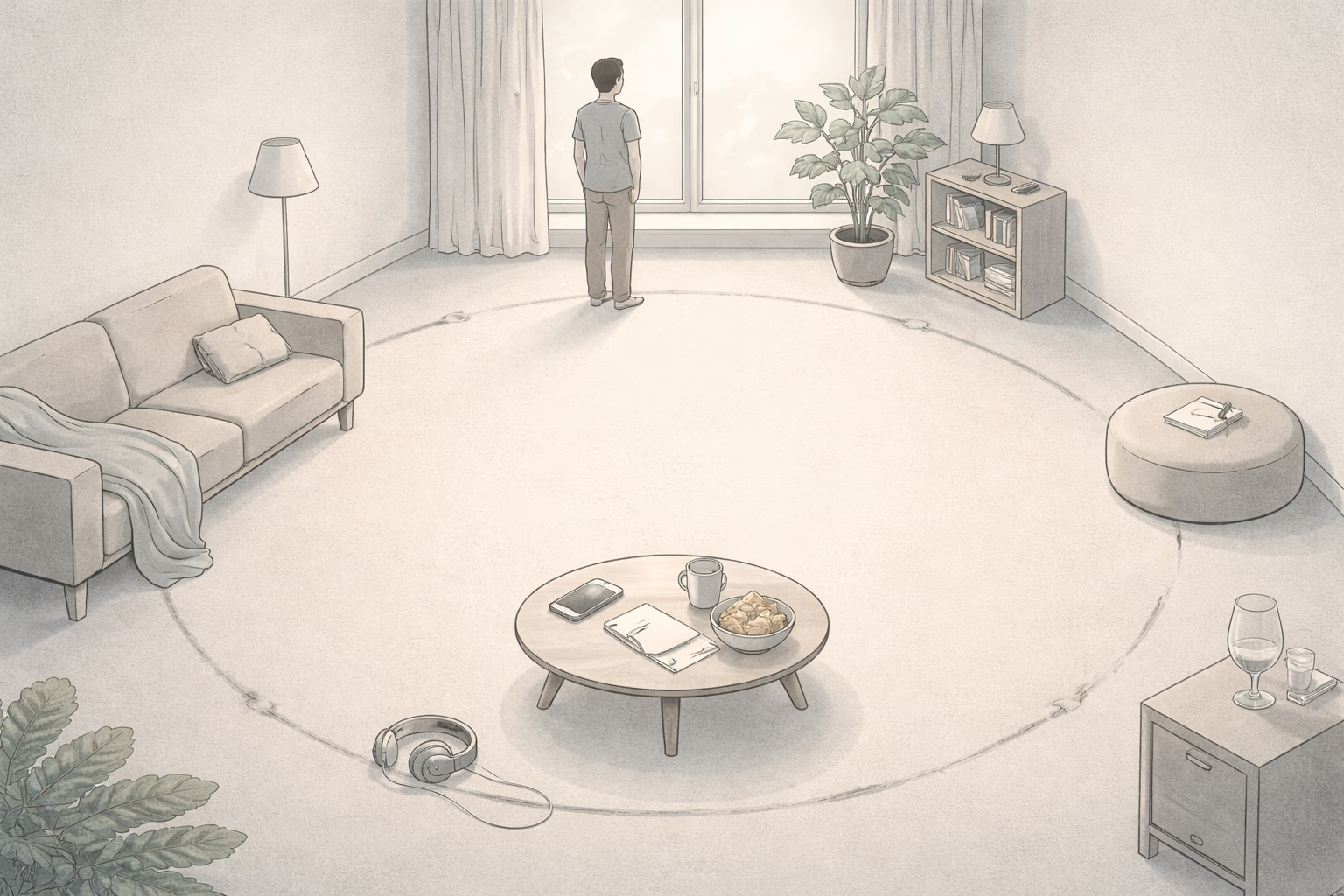
An avoidance loop isn’t defined by fear or denial. It’s defined by a structural swap: instead of closure, the system gets stimulation. Instead of integration, the system gets interruption. The discomfort isn’t resolved; it’s bypassed by something that temporarily reduces its volume.
Over time, the body learns a simple association: “When strain rises, reward lowers it.” That learning is efficient—and it can become automatic. Research comparing escapism with adaptive coping often emphasizes that the same behavior (media use) can function differently depending on whether it supports recovery or replaces engagement with what needs completion. [Ref-6]
When the fastest regulator is always available, the nervous system starts treating it like infrastructure.
Entertainment-escape is often less about wanting pleasure and more about avoiding unstructured moments where the system would have to orient without external guidance. That’s why the pattern can show up most strongly during transitions: after work, before bed, between tasks, after social contact, or on weekends.
Solitude and screen use can also interact in a feedback loop: the more time is mediated, the less often the body gets easy “safe connection” cues, and the more compelling mediated comfort can feel. [Ref-7]
When entertainment repeatedly carries the weight of regulation, a few capacities can start to feel less available—not because they’re gone, but because they aren’t being recruited. The system becomes practiced at quick exits and less practiced at staying present long enough for experiences to reach closure.
This can look like reduced patience for quiet, reduced tolerance for ambiguity, and a fuzzier sense of what you actually want (not what you’ll click next). Some overviews of escapism note that heavy reliance can narrow life participation and dampen self-contact, especially when used to avoid discomfort rather than to genuinely rest. [Ref-8]
Not “What am I avoiding?” but: “What keeps not getting finished?”
The loop tightens because the contrast grows. After high stimulation, ordinary experience can feel flat, slow, or irritating. Not because everyday life is wrong—but because the nervous system has been operating at a different intensity of input.
So the next unstructured moment can feel disproportionately uncomfortable, and the quickest way back to steadiness is the same pathway: more stimulation. Many popular explanations of escapism describe this reinforcing cycle—relief strengthens the habit, and the baseline without it feels harder to tolerate. [Ref-9]
It’s not that silence became dangerous. It’s that silence stopped feeling like a place where anything resolves.
The opposite of escapism isn’t constant introspection. It’s internal steadiness—enough capacity for signals to rise, move through, and settle without needing immediate interruption.
In research on problematic social media use, mood modification is often highlighted: content changes state quickly, which can make it the go-to method when discomfort spikes. [Ref-10] The bridge here isn’t “understanding your feelings” as a concept; it’s what happens when the system has enough room to let an experience run its course toward completion. Then entertainment becomes optional rather than compulsory.
In that steadier state, meaning isn’t forced. It tends to appear as a quiet coherence: “This is what happened; this is where I stand; this is what matters now.”
Humans also stabilize through co-regulation: the nervous system reads safety through tone, timing, facial cues, and mutual attention. Presence with another person (or even a shared activity with gentle reciprocity) can lower load without requiring the sharp state-shift that screens provide.
Some media research distinguishes between forms of escapism and well-being, noting that social and relational contexts can change how media use affects people. [Ref-11] The key difference is that connection tends to bring closure signals: being seen, having a moment land, feeling a day end with contact rather than interruption.
Sometimes what you want isn’t another show. It’s the feeling of arriving somewhere—with someone.
When reliance on stimulation eases, people often describe a return of clarity—not as heightened emotion, but as improved signal readability. Preferences become easier to sense. Fatigue becomes more honest. Enjoyment becomes more specific.
Media and well-being research often distinguishes between purely hedonic relief and more integrative forms of engagement that support meaning. [Ref-12] In lived terms, this can feel like entertainment regaining its proper size: enjoyable, sometimes soothing, but no longer the primary way the day becomes bearable.
Entertainment isn’t the villain. It’s one of the ways humans play, recover, learn, and connect. The difference is alignment: does it support life, or does it replace life’s unfinished completions?
Research on hedonic, eudaimonic, and social entertainment suggests that well-being is shaped not only by consumption, but by the kind of experience it creates—joy, reflection, connection, or shared meaning. [Ref-13] In a more coherent pattern, entertainment can feel like a deliberate companion to your life rather than a hidden exit from it.
Entertainment can be comfort. The question is whether it leaves you more here afterward.
If you find yourself reaching for entertainment the moment anything tightens inside, that urge can be read as information: “Load is high,” “There is no closure yet,” “I need a buffer,” or “I’m underconnected.” In that sense, the behavior is a signal—not an identity.
From an emotion-regulation perspective, media can function as a fast regulator, especially when other supports are thin or when daily life doesn’t offer clear endpoints. [Ref-14] Seeing the pattern this way can return agency without pressure: not by demanding control, but by recognizing what your system has been trying to accomplish.
When escapism shows up, it often means your nervous system is asking for a different kind of ending to the day.
Many people use screens to manage more than boredom—they use them to manage unfinishedness. Under enough strain, choosing the quickest stabilizer is a reasonable response, not a character flaw.
As conditions shift and completion becomes more available, the relationship with entertainment often changes on its own: less urgency, more choice, more fit. And in that change, dignity returns—the sense that your attention belongs to you again, and that comfort can coexist with a life that actually gets to feel complete. [Ref-15]
From theory to practice — meaning forms when insight meets action.
Sometimes — and the difference is structural, not moral. Entertainment can be real comfort that steadies the nervous system and offers a pocket of relief on a rough day. The same content becomes escapism when it substitutes for what the body is still waiting to complete: a hard conversation that never happened, a week of pressure with no landing, disconnection with no repair. The behavior is identical; the function differs. The honest question isn't 'Am I avoiding?' — it's 'What keeps not getting finished?' Your system isn't choosing entertainment because you're weak; it's choosing the fastest available stabilizer.
Because it changes the signal environment — internal cues become quieter when external cues are louder and more directive. High-engagement content offers structure, absorption, and predictable emotional pacing all at once: a story tells you what matters next, a feed gives constant novelty, a game gives clear goals. All of these reduce the work of orienting. Modern reward systems also evolved to track novelty, anticipation, and small unpredictable wins — features that helped ancestors persist. Now they're available continuously with autoplay and infinite feeds. This is Evolutionary Mismatch: a system trained for periodic rewards getting flooded with on-demand reward.
Relief changes state. Completion changes the baseline. Both lower strain in the moment, but restoration comes with a natural stand-down while relief alone leaves a quiet backlog. After high stimulation, ordinary experience can feel flat or irritating — the contrast tightens the Avoidance Loop because the next unstructured moment feels disproportionately uncomfortable, and the quickest way back to steadiness is the same pathway. The body learns: when strain rises, reward lowers it. That's efficient and automatic. The cost is that the system never gets the Done Signal it needs — only repeated interruption.
Almost on its own. Less urgency, more choice, more fit. People describe a return of clarity — not heightened emotion, but improved signal readability. Preferences become easier to sense, fatigue becomes more honest, enjoyment becomes more specific. Time feels more continuous (fewer 'where did the evening go' gaps). Stopping points feel more available. Rest feels less like collapse and more like settling. Entertainment regains its proper size: enjoyable, sometimes soothing, but no longer the primary way the day becomes bearable. The question is whether comfort leaves you more here afterward — or further away.
From Science to Art.
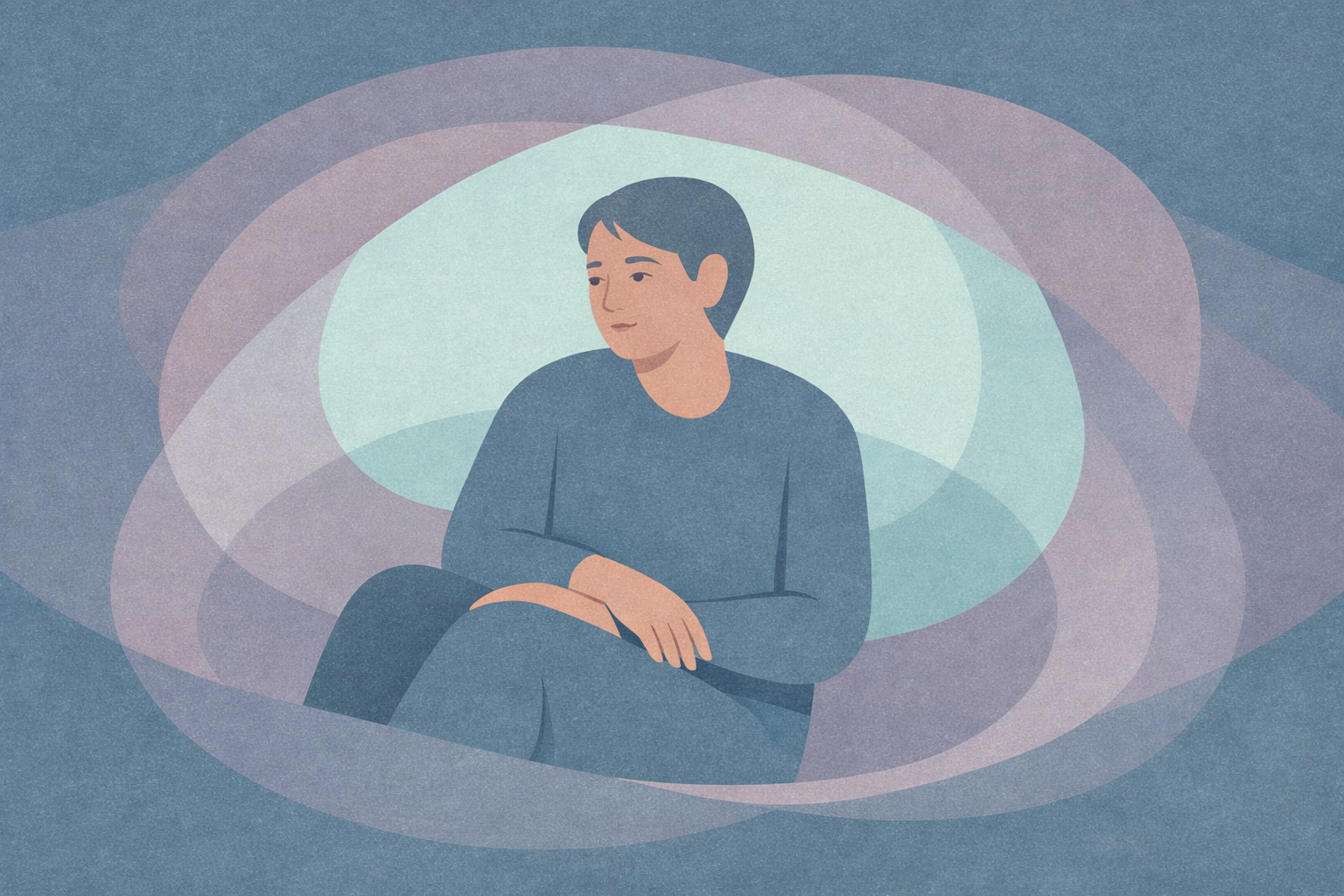
Understanding explains what is happening. Art allows you to feel it—without fixing, judging, or naming. Pause here. Let the images work quietly. Sometimes meaning settles before words do.
One Quiet Window, one insight, one reflection — every Sunday