
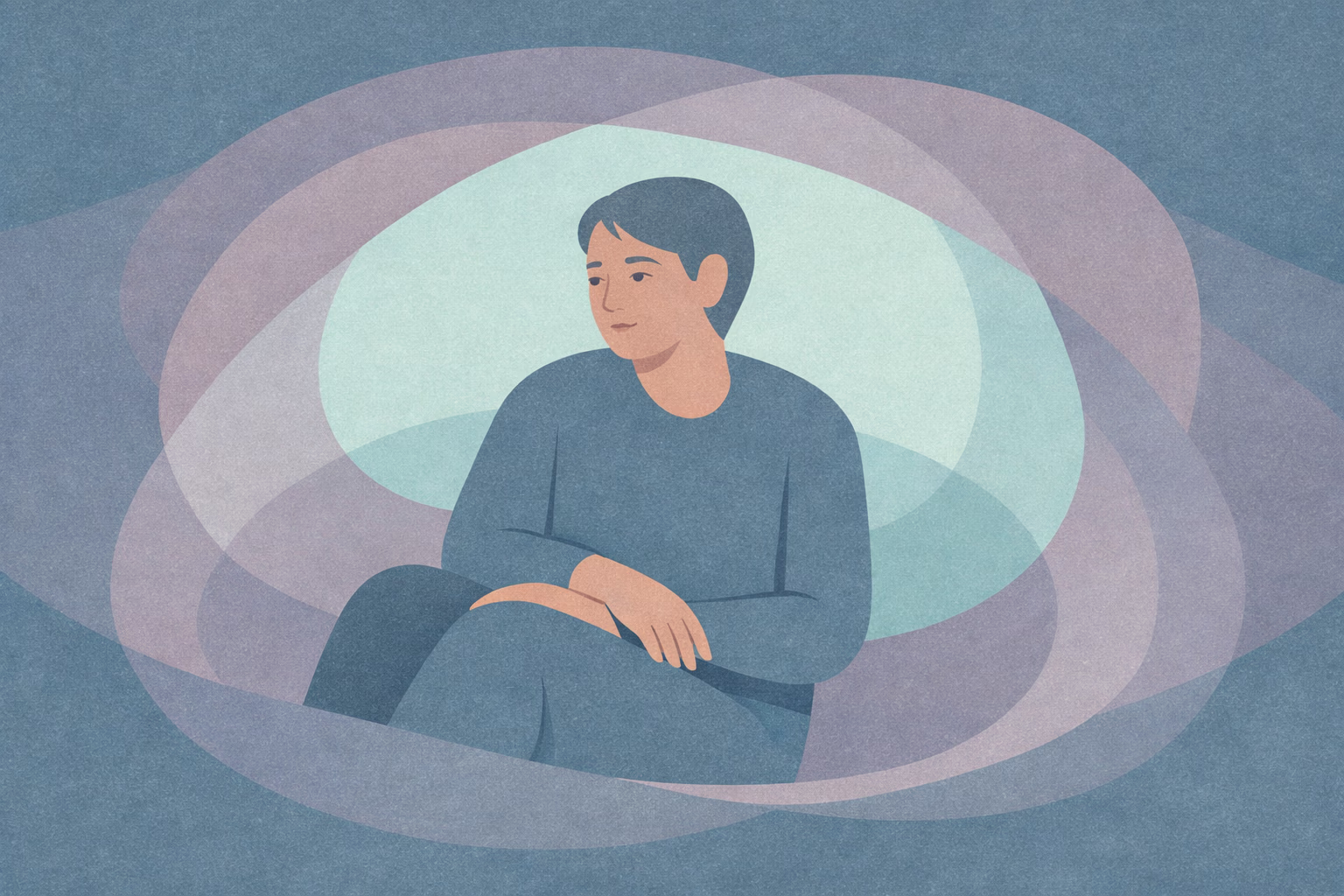
Escapism Through Entertainment: Comfort or Avoidance?
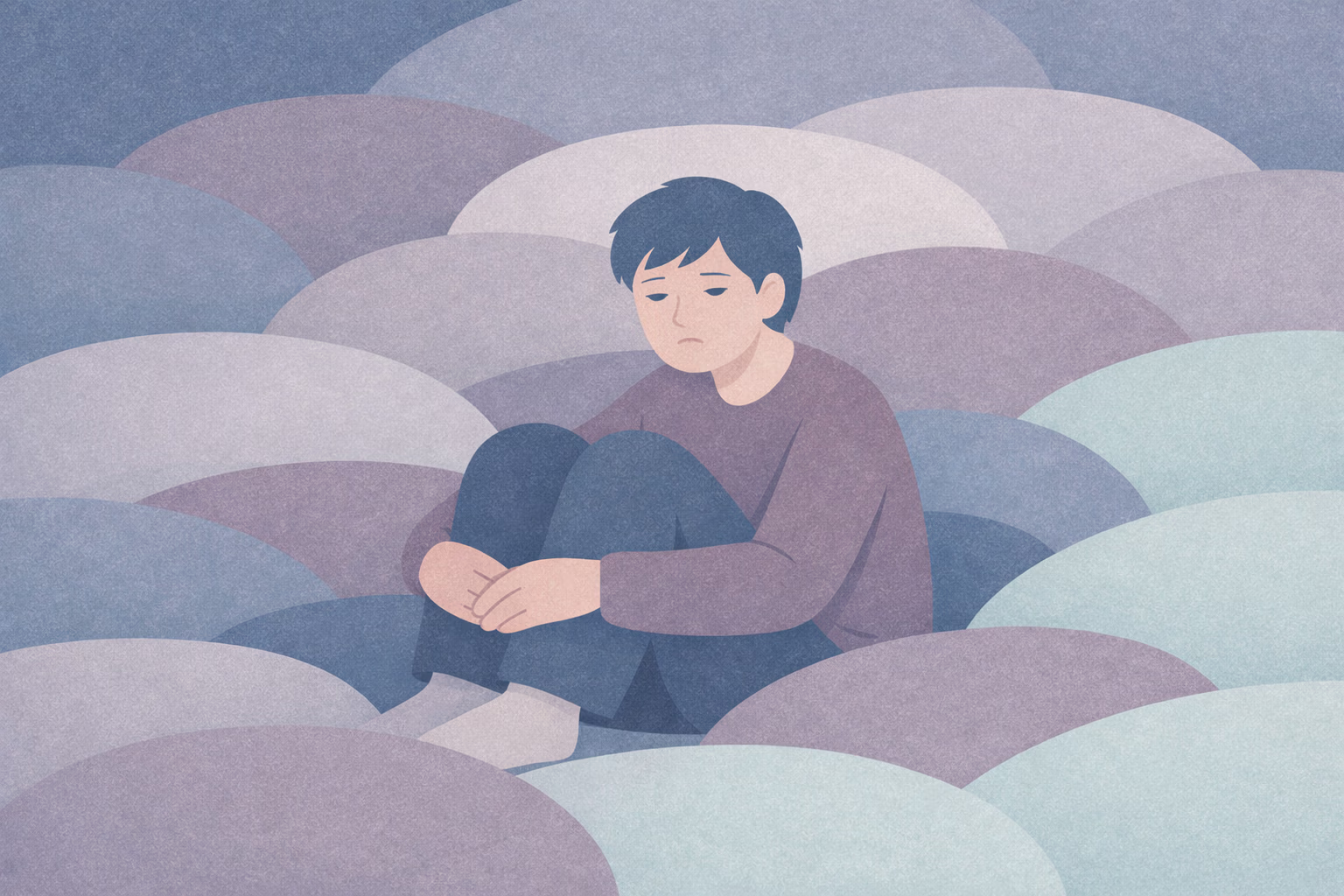
In short: There’s a particular kind of scrolling or streaming that doesn’t feel like leisure. It feels like being carried. One more episode, one more clip, one more thread—not because it’s so enjoyable, but because stopping would mean re-entering a life that feels loud, unresolved, or strangely unfinished.
There’s a particular kind of scrolling or streaming that doesn’t feel like leisure. It feels like being carried. One more episode, one more clip, one more thread—not because it’s so enjoyable, but because stopping would mean re-entering a life that feels loud, unresolved, or strangely unfinished.
This isn’t a character flaw. It’s a nervous system doing what nervous systems do under load: reaching for a state change that delivers quick quiet, quick structure, quick “not now.” In a fragmented environment, content can become a portable shelter—predictable, immersive, and instantly available.
What if the urge to binge isn’t “lack of discipline,” but a sign that your system can’t find closure anywhere else?
Content binging often shows up as a specific sensation: a narrowing of attention that feels relieving. Daily pressures, pending messages, unfinished tasks, social tension, or a vague sense of falling behind can fade into the background while the next scene loads.
In that state, time can blur. Not because you “don’t care,” but because the brain is prioritizing a simple, clean channel of input over a complicated, multi-threaded reality. The body reads that simplicity as a kind of safety: fewer signals to track, fewer decisions to make, fewer loose ends demanding resolution. [Ref-1]
What looks like avoidance from the outside can be, from the inside, an attempt to reduce overload and regain a coherent lane of experience—something that feels followable.
High-volume media is designed to capture attention and hold it. Rapid novelty, cliffhangers, autoplay, endless feeds, and algorithmic personalization don’t just entertain; they continuously recruit the brain’s orientation systems—what to notice next, what matters now.
When attention is repeatedly pulled outward, internal signals can become harder to register in real time. Hunger cues, fatigue cues, “I’m done” cues, and subtle stress cues may not fully land while the stream keeps going. This isn’t a moral failing; it’s an attentional environment doing what it does: competing with interoception for bandwidth. [Ref-2]
The result can feel like numb calm or “finally I can breathe,” but it’s often a dampening effect rather than a completion effect. The underlying loops haven’t closed—they’ve just been temporarily outcompeted.
Human reward circuitry evolved to support adaptive exploration: learn the terrain, track social information, follow curiosity, update your model of what’s safe and useful, then return to baseline. Pleasure and interest weren’t meant to run endlessly; they were meant to guide you toward something and then let you feel “done.”
Modern content platforms can offer a near-limitless version of exploration without the natural endpoint. You can keep sampling novelty without ever arriving anywhere that your nervous system recognizes as complete: no “I finished,” no “I resolved it,” no “my role is done here.”
In that setup, binging isn’t simply “too much entertainment.” It’s a reward system caught in a loop where stimulation replaces closure, and the body doesn’t receive a convincing stand-down signal. [Ref-3]
Content binging often provides something many modern days don’t: a single track. The plot moves forward, the rules are consistent, the social cues are legible, and the next step is pre-chosen (autoplay, recommended next, “continue watching”).
That structure can reduce decision fatigue and soften internal friction. You don’t have to negotiate with competing priorities or ambiguous conversations. For a nervous system carrying high load, that simplicity can register as immediate relief—quieting, narrowing, smoothing. [Ref-4]
Sometimes it isn’t pleasure I’m looking for—it’s a place where nothing is required of me for a while.
After a binge, people often describe a rebound: restlessness, irritability, emptiness, a heavier sense of “I should,” or the sudden return of whatever was waiting in the wings. It can feel confusing—because the content did help in the moment.
One way to understand this is structural rather than psychological: the discomfort didn’t disappear; it was delayed. When the stream ends, the system re-encounters the same open loops—sometimes with added fatigue, reduced time, and a stronger contrast between the clean world of content and the messy world of life. [Ref-5]
That rebound isn’t proof you did something wrong. It’s evidence that short-term state change can’t substitute for completion.
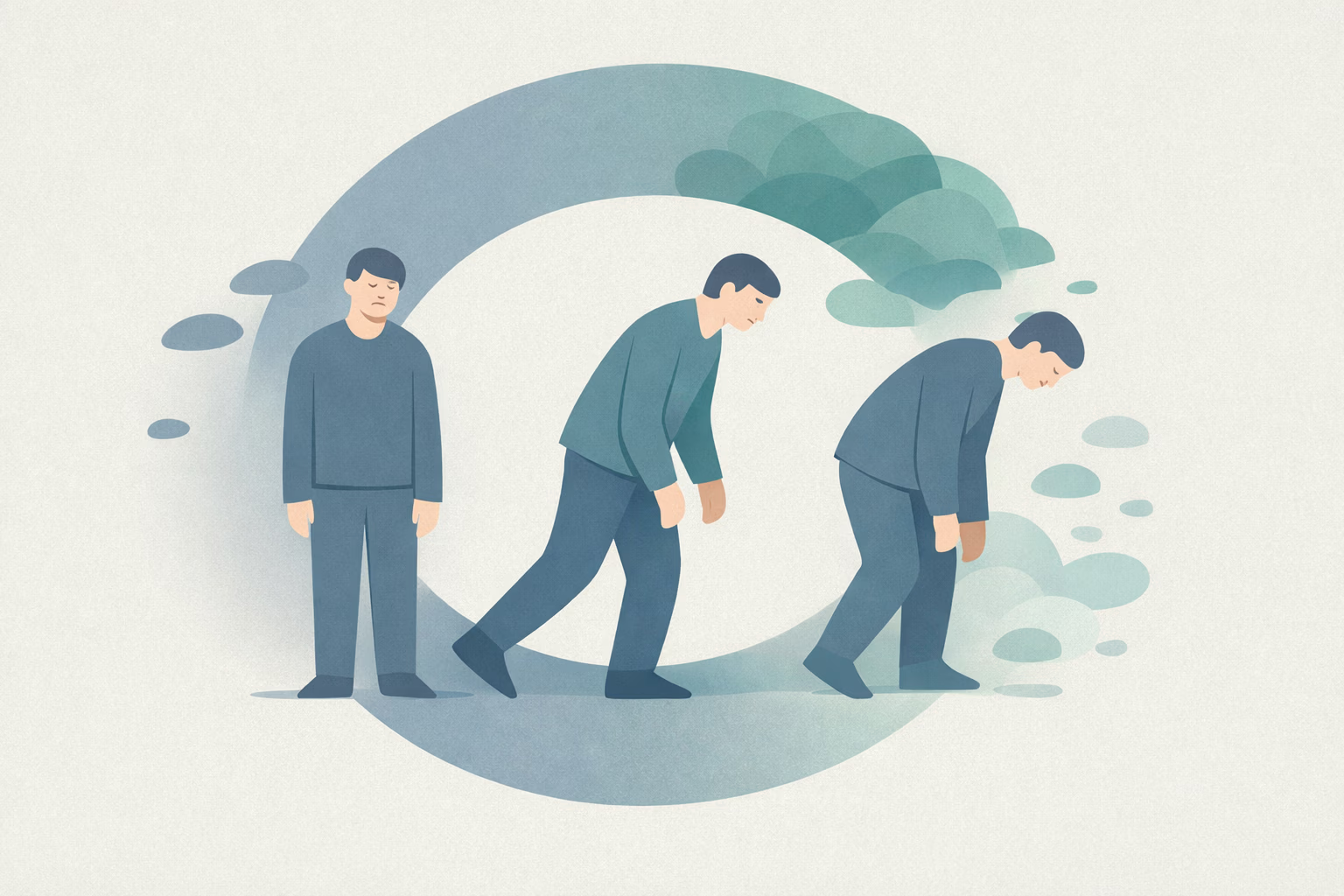
In an Avoidance Loop, the sequence is self-reinforcing because it works—briefly. Discomfort (from pressure, uncertainty, social strain, or sheer overload) meets an instantly available regulator (content). The system shifts state, internal signals quiet, and the moment becomes tolerable.
But because the underlying loops remain incomplete, the nervous system eventually requests regulation again. The next urge arrives sooner, and the threshold for “enough” can rise. Over time, the loop can become the default bridge between discomfort and functioning. [Ref-6]
Not because you’re choosing chaos—but because the environment offers fast relief and very little closure.
Leisure usually leaves a residue of satisfaction or completion: “That was nice,” “I’m done,” “I can re-enter my day.” Content binging tends to feel different—more like being pulled forward by momentum.
Some patterns people recognize include:
These are not labels. They’re signals that consumption has become a regulation strategy—an escapist coping pattern documented in research on problematic use and escapism. [Ref-7]
If your system learns that quiet moments are where the backlog rushes in, then quiet can start to feel like an unsafe setting—even when nothing “bad” is happening. Not because of weakness, but because stillness removes the external dampening effect and allows unfinished signals to reappear.
Over time, heavy reliance on high stimulation can narrow tolerance for low-stimulation states: waiting, pausing, transitioning, doing one thing at a time. The result can look like reduced resilience, but it’s often reduced capacity—because baseline has been crowded out by constant input. [Ref-8]
This is one reason binging can gradually shift from “fun” to “necessary.” The nervous system begins to expect external management of internal load.
Regulation is a learning process. When an action reliably reduces distress quickly, the brain tags it as valuable. That tag doesn’t require conscious endorsement; it’s built through repetition and timing: discomfort appears, content reduces it, relief follows.
From a conditioning standpoint, this is powerful reinforcement. The relief itself becomes the reward, and the body becomes quicker to reach for the same pathway the next time tension rises. [Ref-9]
In this light, the binge urge isn’t a moral problem to battle. It’s a learned stability strategy—one that works for state change, but tends to postpone closure.
There’s a subtle hinge-point in content binging: not the hours of watching, but the instant the urge arrives. That moment often contains information—about load, about unmet needs, about unfinished conversations, about identity friction (“I’m not living the way I recognize myself”).
Noticing that hinge-point isn’t integration by itself. Understanding is not the same as completion. But it can function as a bridge to meaning: the binge impulse can be seen as communication from the system rather than an enemy of the self. [Ref-10]
Sometimes the most honest part of the binge is the sentence underneath it: “I can’t face what’s waiting for me yet.”
Escapist consumption tends to thrive in isolation—not because people “fear feelings,” but because isolated nervous systems have fewer co-regulation cues: fewer shared rhythms, fewer mirrored signals, fewer moments where reality is held together with someone else.
Relational presence can offer something content cannot: mutual completion. A conversation reaches a natural end. A shared meal has a beginning, middle, and finish. A small act of care lands and is received. These are closure-rich experiences that help the body stand down.
When shared meaning is available, the urge to anesthetize can soften—not through willpower, but because the system is no longer doing all regulation alone. Distinction between distraction and avoidance is often described in this relational context. [Ref-11]
As load decreases and closure increases, something practical tends to happen: signals return. Not as a dramatic emotional opening, but as ordinary internal guidance becoming readable again—fatigue registering earlier, boredom becoming informative, “enough” arriving on time.
This shift can feel like more space between impulse and action, and more accurate pacing across a day. The system doesn’t need to slam the door on discomfort with heavy stimulation as often, because discomfort is less unbounded and less backlogged. [Ref-12]
Coherence often feels like neutrality becoming possible again.
Content itself isn’t the villain. Stories, games, videos, and podcasts can be real nourishment—play, learning, beauty, laughter, social connection. The difference is whether content is participating in a coherent life or substituting for one.
When consumption is no longer tasked with anesthetizing open loops, it tends to become more intentional by default. The body receives clearer “done” signals. The ending of an episode can feel like an ending, not a cliff you must escape into again.
Research on motives for binge-watching often points to regulation and coping motives as key drivers of problematic patterns, which fits this broader picture: when content is carrying regulatory weight, it grows sticky; when it’s leisure, it can stay light. [Ref-13]
If you recognize yourself in content binging, it can help to hold the pattern with dignity. The nervous system isn’t trying to ruin your life. It’s trying to reduce activation with the tools available in a high-pressure, high-velocity environment.
In that sense, an urge to binge can be read as a signal of unmet needs for closure, rest, steadier connection, or a life that feels more narratively “together.” Escapism and problematic use are often linked to coping under strain, not to defective character. [Ref-14]
Agency often returns as coherence returns—when experiences land, roles feel more defined, and “done” becomes reachable again.
Content can change your state fast. Presence changes your baseline slowly, through accumulated moments that actually complete: a day that ends, a conversation that resolves, a boundary that becomes real in lived identity.
Over time, the question becomes less “How do I stop binging?” and more “Where does my system get to finish something—so it can finally stand down?” In many findings on well-being and coping, longer-term safety tends to correlate with supportive conditions and coherence rather than with higher effort. [Ref-15]
When life offers more completion, content doesn’t have to carry so much.
From theory to practice — meaning forms when insight meets action.
Because it isn't really about the content — it's about state regulation. The article describes binging as a particular sensation: a narrowing of attention that feels relieving. Daily pressures, pending messages, unfinished tasks fade into the background while the next scene loads. The brain prioritizes a simple, clean channel over multi-threaded reality. The body reads that simplicity as safety: fewer signals, fewer decisions, fewer loose ends. What looks like avoidance from outside is, from inside, an attempt to reduce overload and find a followable lane.
Often, yes — a self-reinforcing one. The sequence is discomfort → stimulation → numbing → rebound. Discomfort meets an instantly available regulator (content). Internal signals quiet, the moment becomes tolerable. But because the underlying loops remain incomplete, the nervous system requests regulation again. The next urge arrives sooner, and the threshold for 'enough' rises. The relief is real but delayed — when the stream ends, you re-encounter the same open loops with added fatigue and a sharper contrast between the clean world of content and the messy world of life.
Because if your system learns that quiet moments are where the backlog rushes in, stillness starts to feel unsafe — even when nothing 'bad' is happening. Stillness removes the external dampening effect and lets unfinished signals reappear. Heavy reliance on high stimulation also narrows tolerance for low-stimulation states: waiting, pausing, transitioning. What looks like reduced resilience is often reduced capacity, because baseline got crowded out by constant input. The system begins to expect external management of internal load.
Yes — that's the meaning bridge. There's a hinge-point in binging: not the hours of watching, but the instant the urge arrives. That moment contains information about load, unmet needs, unfinished conversations, identity friction ('I'm not living the way I recognize myself'). Sometimes the most honest part of the binge is the sentence underneath it: 'I can't face what's waiting for me yet.' The urge isn't evidence of failure; it's communication from the system about where closure is missing.
From Science to Art.
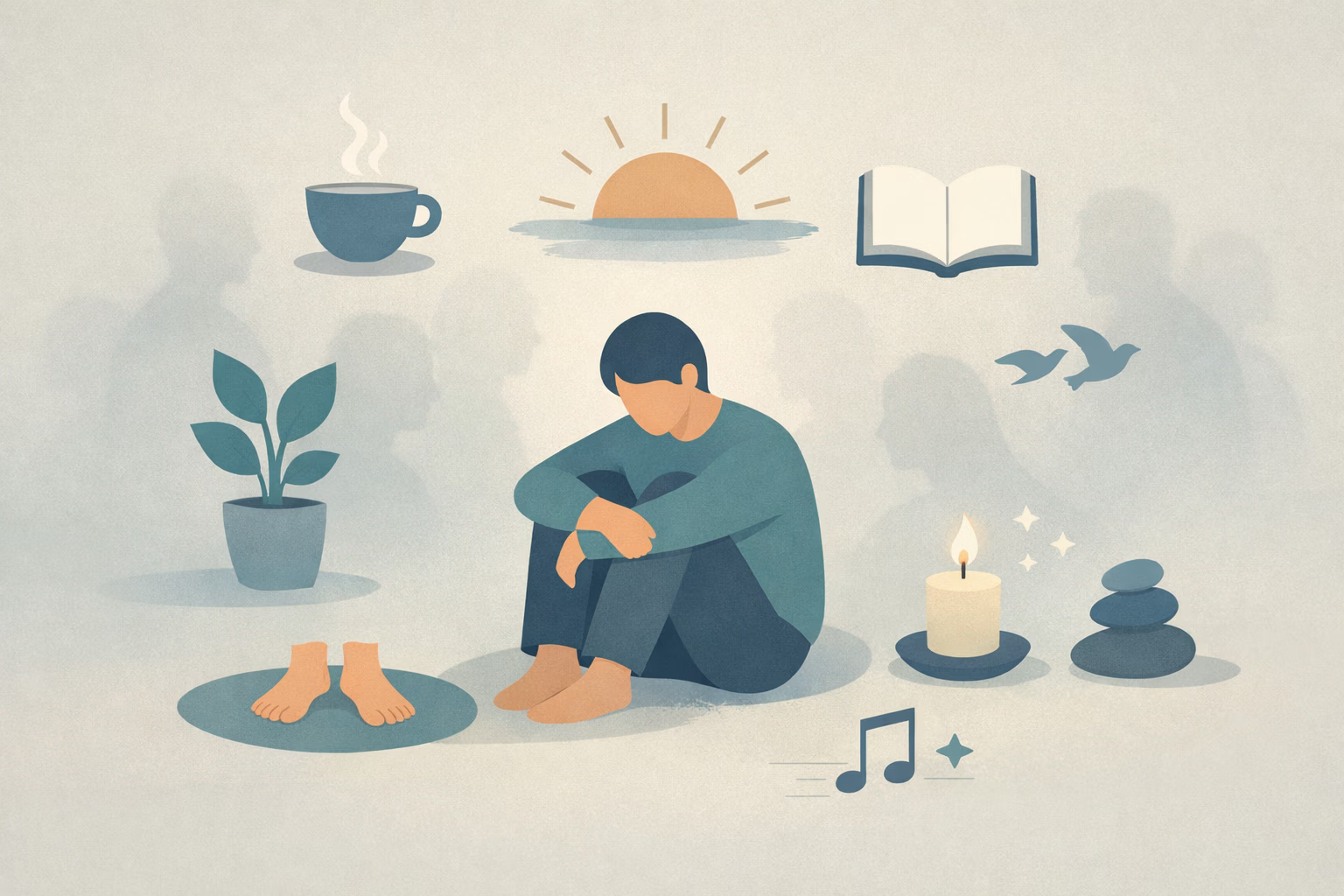
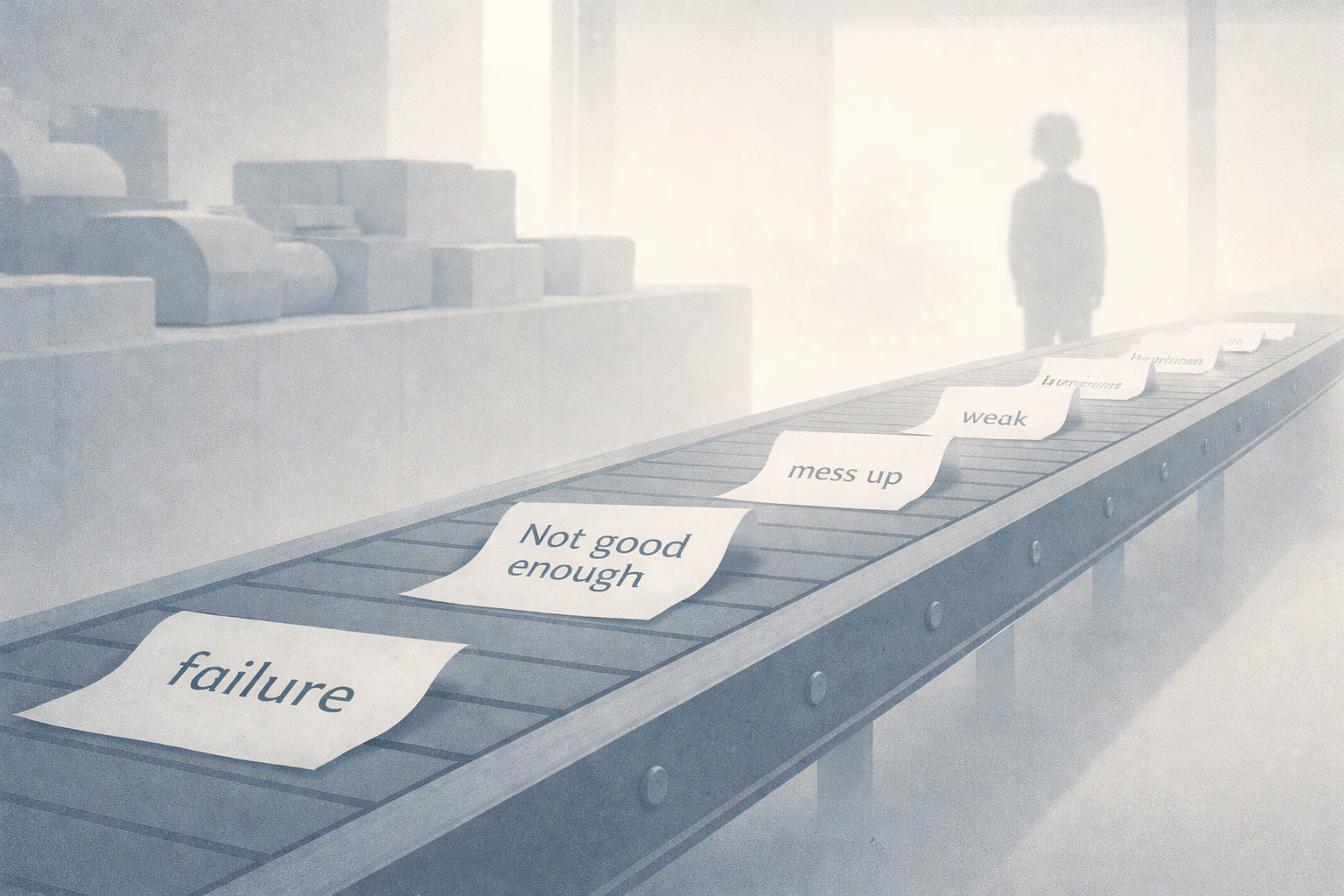
Understanding explains what is happening. Art allows you to feel it—without fixing, judging, or naming. Pause here. Let the images work quietly. Sometimes meaning settles before words do.
One Quiet Window, one insight, one reflection — every Sunday