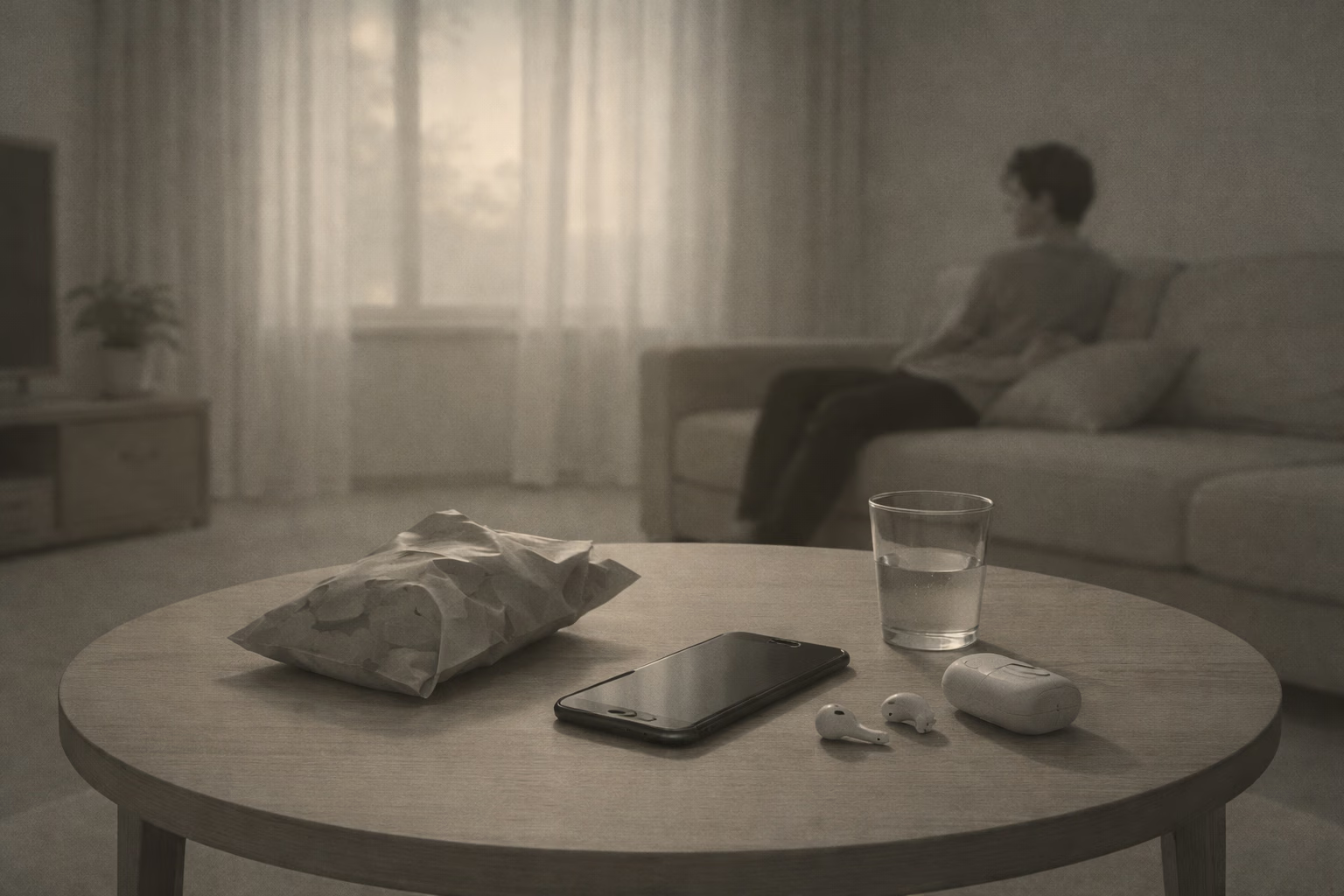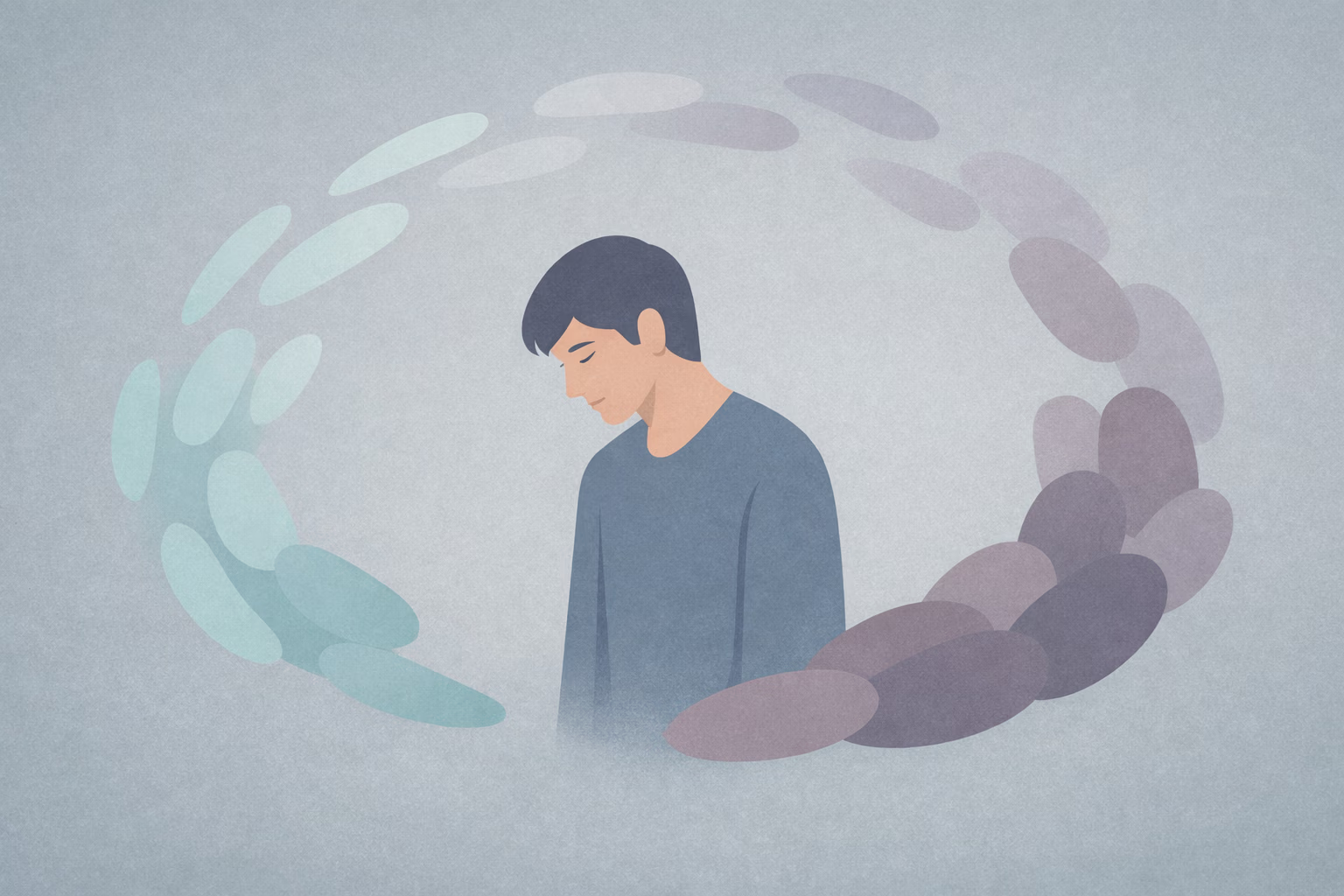
The Scroll–Escape–Regret Loop: A Modern Emotional Cycle
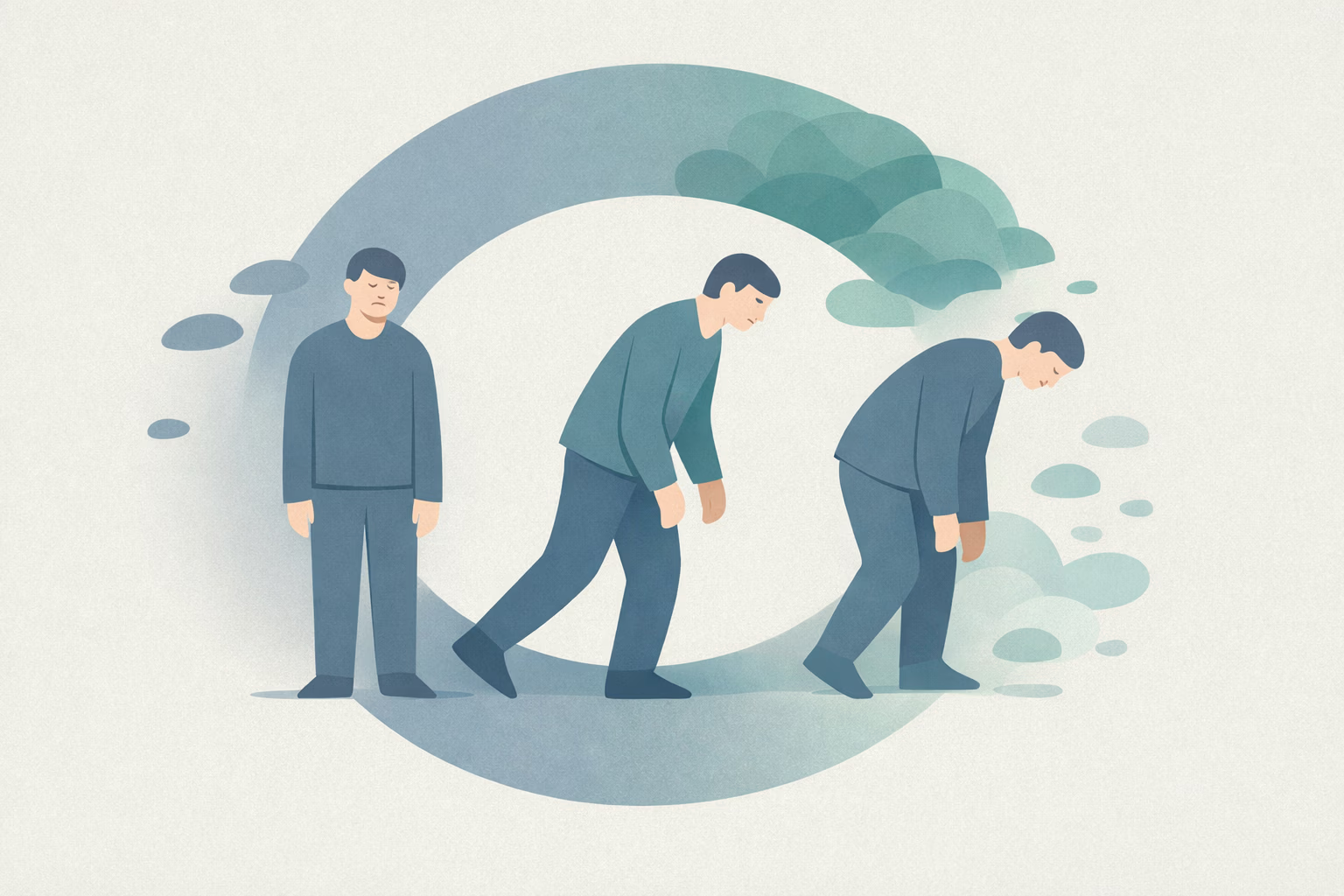
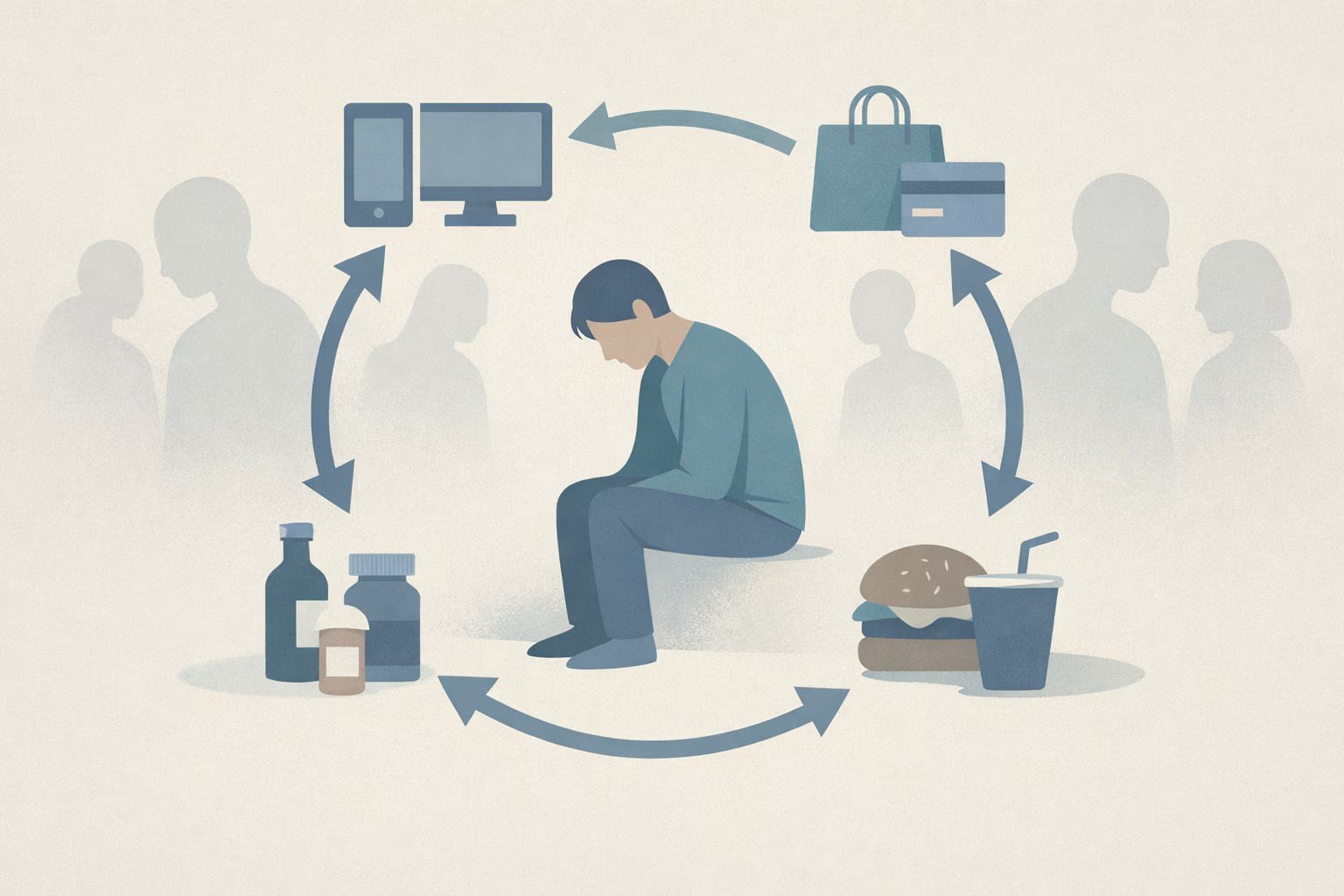
In short: Many people describe a strange rhythm: a low-grade numbness, followed by an intense pull toward something—scrolling, snacking, shopping, porn, work, drama, novelty—followed by a crash that feels like tiredness, irritability, emptiness, or regret. Not because anything is “wrong” with them, but because their system is doing what nervous systems do: trying to regulate load and regain a workable baseline.
Many people describe a strange rhythm: a low-grade numbness, followed by an intense pull toward something—scrolling, snacking, shopping, porn, work, drama, novelty—followed by a crash that feels like tiredness, irritability, emptiness, or regret. Not because anything is “wrong” with them, but because their system is doing what nervous systems do: trying to regulate load and regain a workable baseline.
What if the problem isn’t a lack of willpower, but a lack of completion?
The numb–crave–crash cycle is a modern emotional loop that can form when daily life keeps your reward system activated without giving it enough “done” signals—enough closure for the body to stand down. Understanding the loop doesn’t magically dissolve it, but it can reduce shame and restore orientation: this is a pattern shaped by conditions, not a personal identity.
The first phase often doesn’t feel dramatic. It can look like “fine,” “functional,” “getting through the day.” Underneath, there’s a muted quality—less interest, less savoring, less natural momentum. Pleasure doesn’t land the way it used to, so the nervous system looks for a stronger signal. [Ref-1]
Then craving arrives—not as a moral failure, but as urgency. It’s the body’s way of pulling for a state change: something fast, something certain, something that reliably shifts sensation and attention. After the spike comes the crash: depletion, flattening, fog, or a kind of emotional hangover that makes the next craving more likely.
Reward and motivation rely heavily on dopamine signaling—especially for “wanting” and pursuit. When stimulation is frequent and intense, the system can adapt by dampening responsiveness. What used to feel satisfying starts to feel merely adequate, and what used to be adequate barely registers. Over time, bigger inputs are required for the same impact. [Ref-2]
After a sharp spike, many people notice a rebound: a dip in mood, energy, or interest. This isn’t a character flaw; it’s a predictable swing when the brain and body are asked to repeatedly jump into high activation states. The more abrupt the upshift, the more noticeable the downshift can become.
When your baseline gets quieter, your nervous system doesn’t become “broken.” It becomes harder to impress.
Craving is not an enemy. In a world of scarcity and uncertainty, a strong pull toward calories, novelty, status, and stimulation helped humans survive. When rewards were intermittent, wanting helped mobilize effort and attention.
But modern life can place that same system in continuous abundance: endless novelty, instant access, and rapidly repeated hits. The system adapts, and a common result is hedonic “leveling”—less impact from the same experiences, and quicker return to “needing more.” [Ref-3]
This is one reason people can feel both over-stimulated and under-satisfied at the same time: lots of inputs, fewer completions.
It matters to say this plainly: the pleasure, distraction, and relief are not imaginary. Stimulation can temporarily narrow attention, reduce internal noise, and create a brief sense of coherence—especially when life feels demanding, ambiguous, or relentlessly evaluated. [Ref-4]
In the short term, the loop can function like a quick nervous-system strategy: shift state, mute overload, create a predictable feeling. That is why it repeats. Not because you “should know better,” but because your system learned a reliable lever.
What if the craving is less about desire—and more about regulation?
Short-term relief can come with long-term instability when it repeatedly substitutes for completion. A nervous system settles when it receives clear cues that something is finished: the task ended, the interaction resolved, the body is safe, the day has edges. When stimulation becomes the main method of shifting state, the body may get “better” at seeking spikes and “worse” at returning to a steady baseline.
Over time, people often report a particular combination: restlessness plus dullness. The mind keeps reaching, while the reward system feels less responsive. In models of craving and habit loops, this can look like a cycle of discomfort → seeking → temporary relief → renewed discomfort. [Ref-5]
The numb–crave–crash cycle often becomes self-reinforcing because “wanting” and “liking” can drift apart. You can strongly want something—feel pulled, preoccupied, compelled—without actually enjoying it much once you have it. [Ref-6]
That split is part of why the loop can feel confusing and shamey: “Why do I keep doing this if it doesn’t even feel that good?” From a nervous-system perspective, it’s not a contradiction. It’s a system trained toward pursuit under conditions where completion is rare and stimulation is easy.
The pull can be intense even when the payoff is thin.
As reward sensitivity dampens, people may gravitate toward stronger, faster, or more novel inputs—sometimes without planning to. This can look like binge–crash patterns: long stretches of numb functioning, then a concentrated burst of stimulation, followed by depletion and emotional dullness. [Ref-7]
Importantly, this doesn’t require a dramatic addiction narrative. Many “normal” modern behaviors can carry the same loop structure:
Over time, repeated cycles of spike and crash can compress a person’s range. Not “emotionally” in a dramatic sense, but physiologically: the system spends less time in the middle zone where ordinary things register as meaningful. People may describe it as losing interest in small joys, feeling unmotivated without knowing why, or needing a big push just to begin. [Ref-8]
This can resemble anhedonia—reduced ability to experience pleasure—not as an identity, but as a signal that the reward system has been under chronic strain. In that state, meaning can feel farther away, not because values disappeared, but because the body has fewer resources to let life land.
The crash phase often comes with its own discomfort: agitation, low mood, restlessness, sleep disruption, or a sense that everything is harder. When the body experiences that dip, it naturally looks for the quickest route out. That makes the next craving feel even more convincing.
In many rebound patterns, the nervous system learns: “This unpleasant state ends fastest when I spike stimulation.” Over time, the menu of options can narrow—not because a person lacks character, but because the brain prefers the path with the most immediate, reliable impact under load. [Ref-9]
This is how the loop locks in: the crash doesn’t just feel bad; it trains urgency.
When stimulation has been frequent, the return to baseline can take time—not as a motivational project, but as a biological recalibration. Reward circuits adapt to what they repeatedly encounter, and changes in responsiveness and tolerance are part of that adaptation. [Ref-10]
It can help to distinguish two kinds of “better.” One is state change: relief, distraction, intensity. The other is stability: the capacity to return to baseline after activation, and to have ordinary cues register again as enough. That stability tends to arrive as the system receives more completion—more clear edges, more resolved loops, more moments that actually count as finished.
Coherence isn’t a feeling you think your way into. It’s what the body recognizes after enough things are truly done.
Craving intensity often softens in the presence of safety cues—especially relational ones. Human nervous systems are social regulators: tone of voice, eye contact, shared attention, and reliable connection can reduce threat load and make internal discomfort more tolerable without needing a spike. [Ref-11]
This isn’t about “opening up” or processing everything. It’s more basic: when your system detects safe presence, it may not need to manufacture urgency to get through the moment. Connection can provide a different kind of completion—an embodied signal that you’re not alone inside a high-demand environment.
As load decreases and completion increases, the most noticeable change is often not constant happiness. It’s reduced urgency. The pull toward quick stimulation becomes less absolute, because the baseline is less uncomfortable and more usable. Social bonding biology (including oxytocin-linked pathways) is one reason relational safety can support steadier regulation and stress buffering. [Ref-12]
People often describe the shift in subtle ways:
These are signs of a system that can come back online without needing extremes.
When the loop is running, behavior can feel like it’s being pulled by impulse rather than guided by values. Not because values aren’t there, but because the reward system is busy managing discomfort and chasing reliable state changes. Craving circuitry can narrow attention and prioritize immediate relief. [Ref-13]
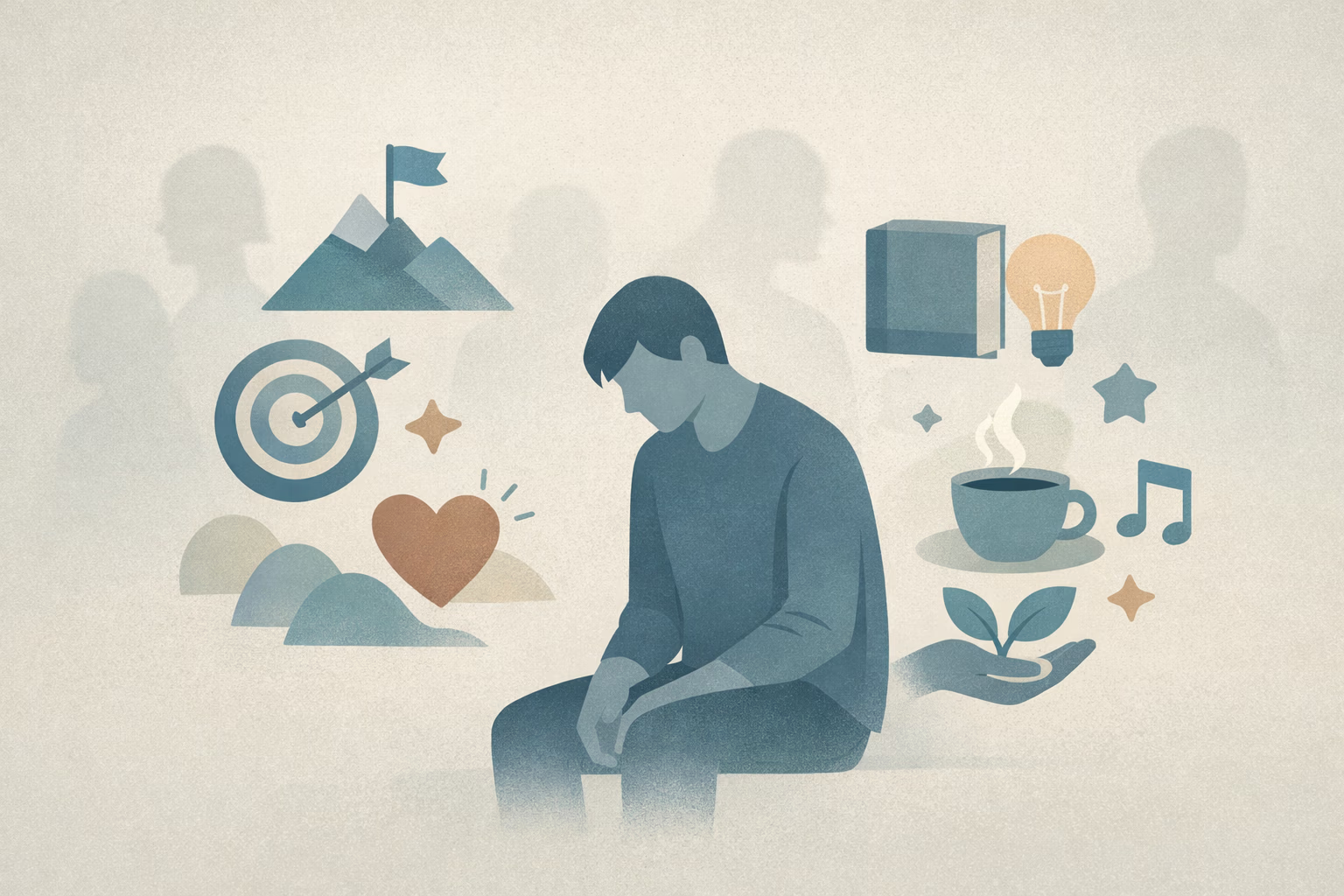
As the nervous system stabilizes, identity starts to feel more available—not as a motivational slogan, but as a lived orientation. Choices become less about escaping a dip and more about engaging what matters. Meaning becomes less performative and more inhabitable: you recognize yourself in what you do, and your actions produce clearer “done” signals that the body can accept.
Coherence often feels like this: not intensity, but steadiness—life landing with fewer spikes required.
Modern culture often sells the idea that feeling okay should be immediate, high-impact, and always available. But nervous systems tend to stabilize through coherence: when actions, relationships, values, and boundaries generate completion—real endings that allow the body to stand down.
In research on well-being, there’s a consistent distinction between pleasure and a deeper kind of fulfillment tied to autonomy, competence, and connection. [Ref-14] In everyday terms: satisfaction is more likely to emerge when life feels self-authored, workable, and relationally anchored—not when stimulation is simply louder.
The numb–crave–crash cycle is not a verdict on you. It’s a signal about your environment, your load, and how much closure your days are actually giving you.
Humans adapt quickly to repeated highs, and that adaptation can make ordinary life feel temporarily underlit. That doesn’t mean ordinary life is meaningless; it can mean your system has been trained to expect intensity as the entry fee for feeling anything. [Ref-15]
Stability tends to return through reduction of relentless inputs, patience with recalibration, and the slow accumulation of experiences that truly complete. When enough loops close, urgency loosens. And when urgency loosens, meaning has room to take up its natural place—not as a concept, but as a steady, lived sense of “this is my life, and I can be here for it.”
From theory to practice — meaning forms when insight meets action.
It's a modern emotional rhythm with three predictable phases: a low-grade numbness where pleasure doesn't land, then an intense pull toward something — scrolling, snacking, shopping, work, drama, novelty — followed by a crash of fatigue, irritability, or regret. The article frames it not as willpower failure but as a regulation strategy a nervous system learns when daily life keeps the reward system activated without giving enough Done Signals. The crash trains urgency, which makes the next craving more convincing. It's a Pleasure Loop maintained by the structural absence of completion, not a personality defect.
Because in this loop wanting and liking drift apart. You can feel pulled, preoccupied, compelled — and not actually enjoy the thing once you have it. The article frames this as a system trained toward pursuit under conditions where stimulation is easy and completion is rare. That split is part of why the loop generates shame ('why do I keep doing this if it doesn't feel that good?'). From a nervous-system view it's not a contradiction. The pull can be intense even when the payoff is thin, because the craving is doing regulatory work — narrowing attention and shifting state — more than it's pursuing actual pleasure.
Reward responsiveness adapts. When stimulation is frequent and intense, the system dampens its response — what used to feel satisfying becomes merely adequate, what was adequate barely registers. Hedonic leveling kicks in: lots of inputs, fewer completions, both over-stimulated and under-satisfied at the same time. The article also names a specific dynamic: after each sharp spike comes a rebound dip in mood and energy, and the body learns the dip ends fastest by spiking again. The menu of options narrows, not from lack of character but because the brain prefers the path with the most immediate, reliable impact under load.
Less constant happiness, more reduced urgency. The article frames the return to baseline as biological recalibration, not a motivational project. Reward circuits adapt to what they encounter, so as stimulation drops they slowly become more responsive to ordinary cues. People describe the shift as more ability to pause without white-knuckling, less 'I need something now' energy, more responsiveness to simple pleasures, more capacity to re-enter tasks after interruption. A quieter baseline can feel unfamiliar before it feels like home. Coherence isn't a feeling you think your way into — it's what the body recognizes after enough things are truly done.
From Science to Art.
Understanding explains what is happening. Art allows you to feel it—without fixing, judging, or naming. Pause here. Let the images work quietly. Sometimes meaning settles before words do.
One Quiet Window, one insight, one reflection — every Sunday