Guilt & Shame: Invisible Forces That Shape Your Behavior
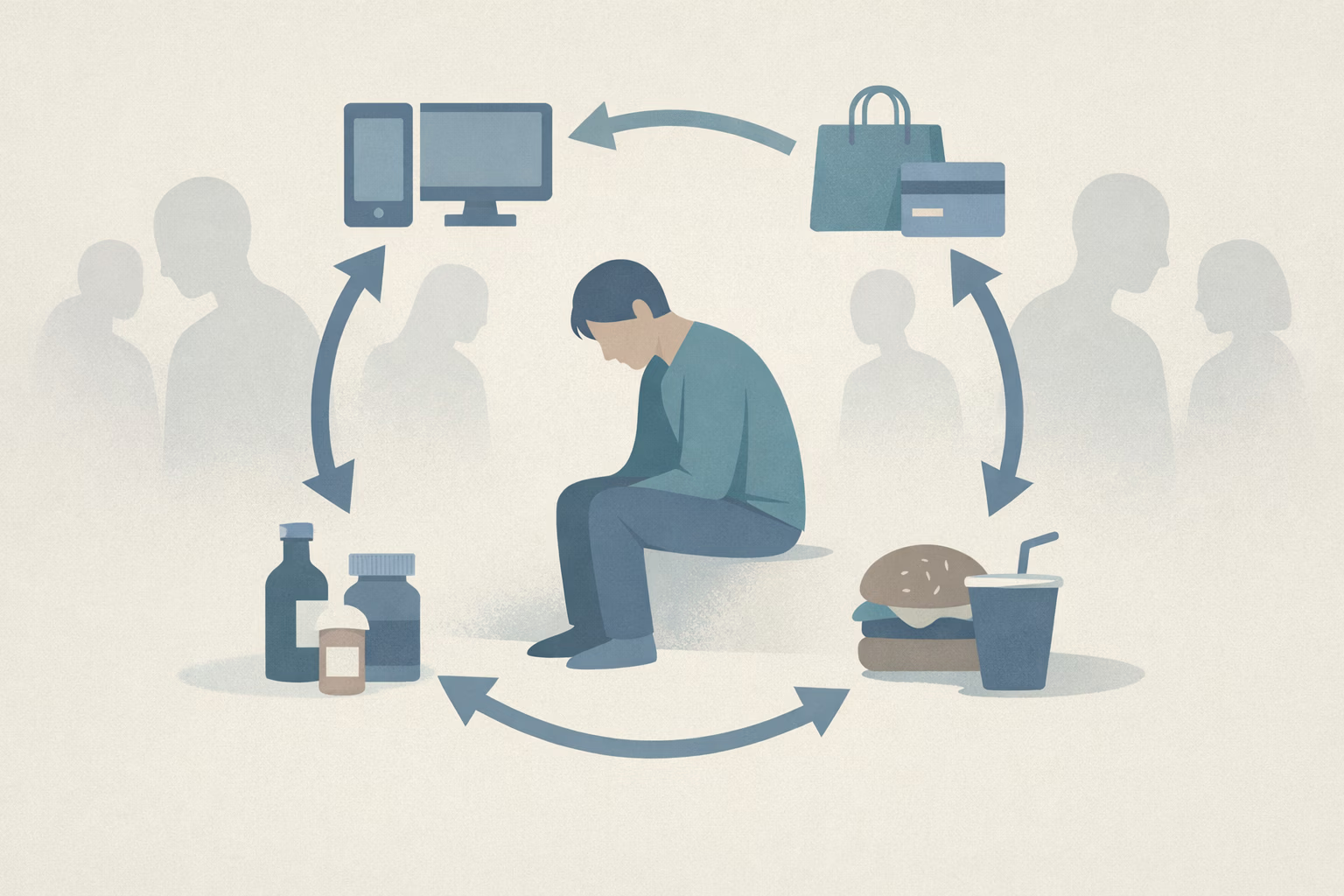
In short: Many people describe a confusing experience: they genuinely want to stop a behavior (porn, food, scrolling, substances, spending), yet the pull returns—often strongest right after a moment of regret. That doesn’t mean you “don’t want it badly enough.” It usually means your system is caught in a regulatory loop where immediate relief briefly lowers strain, and then self-criticism raises it again.
Many people describe a confusing experience: they genuinely want to stop a behavior (porn, food, scrolling, substances, spending), yet the pull returns—often strongest right after a moment of regret. That doesn’t mean you “don’t want it badly enough.” It usually means your system is caught in a regulatory loop where immediate relief briefly lowers strain, and then self-criticism raises it again.
The shame cycle is not just an emotional story. It’s a predictable pattern that can form when stress load stays high, your mind keeps running unfinished loops, and your body is left without a clear “done” signal. Under those conditions, short-term relief can become the most available way to downshift, even when it conflicts with your values.
What if the part of you that repeats the behavior is trying—imperfectly—to restore stability?
The shame cycle often looks like this: an urge builds, you act, relief arrives quickly, and then a second wave hits—self-judgment, secrecy, or a sense of having “messed up again.” That second wave increases internal pressure, which makes the next urge more likely, not less. Over time, the pattern can feel like being pulled forward by momentum rather than choice. [Ref-1]
In this spiral, the behavior is not the whole story. The behavior is one move inside a larger sequence: pressure → relief → backlash → more pressure. When the backlash is harsh enough, it can become the strongest trigger in the entire loop.
When the cost of being human is self-punishment, “relief” starts to look like survival.
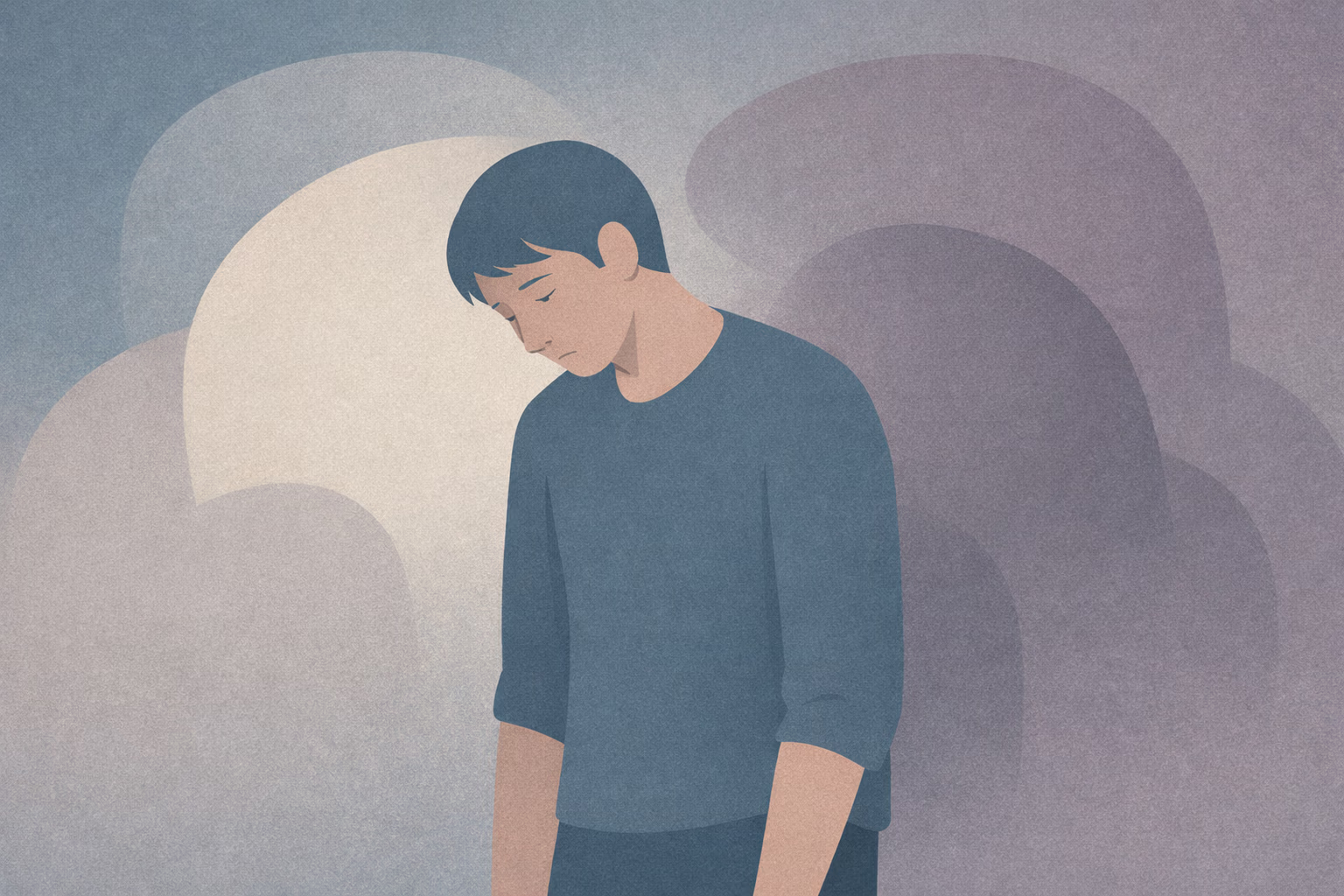
Shame is not simply “feeling bad.” It often functions like a threat signal: a whole-body alert that something about you is at risk—belonging, status, acceptability, safety. When threat is active, the nervous system tends to prioritize rapid state-change over long-term consistency. That can narrow options and make immediate relief more compelling. [Ref-2]
This helps explain a painful paradox: the more you try to use shame as a deterrent (“I should feel worse so I won’t do it again”), the more your system may seek a fast downshift. Not because you’re broken, but because threat states are metabolically expensive, and the body looks for exits.
Under high threat, what looks like “giving in” can be a regulation reflex.
Humans evolved in groups where exclusion had real consequences. So the brain treats signals of social failure—being seen as “bad,” “gross,” “out of control,” “untrustworthy”—as highly significant. Shame can therefore feel urgent and global, as if it defines the whole self rather than one behavior. [Ref-3]
When a behavior becomes associated with potential rejection (by others or by your own inner standards), secrecy often increases. Not because you’re “hiding who you are,” but because the system is managing perceived social risk. The loop tightens when the behavior and the fear of being known become fused.
Addictive or compulsive behaviors tend to be effective in the short term. They can reduce tension, quiet mental noise, interrupt self-criticism, or create a temporary sense of fullness, numbness, or focus. That quick shift is not imaginary—it’s a real change in state, and the body remembers it. [Ref-4]
The problem is that state-change is not the same as closure. Relief can lower activation for a moment without resolving the underlying “unfinished” conditions that generated the pressure in the first place. When the relief fades, the original load returns—often with added consequences like secrecy, disrupted sleep, financial stress, or harsher self-talk.
Shame can look like accountability, especially in cultures that treat self-criticism as virtue. But biologically, shame often increases avoidance and reduces help-seeking—exactly the conditions that keep loops running. [Ref-5]
If the nervous system learns that “after the behavior comes punishment,” it may try to avoid the punishment as much as the original discomfort. That avoidance can ironically make the next episode more likely, because the fastest escape from inner attack is often the very behavior that started it.
One useful way to understand this pattern is as an avoidance loop: a repeating cycle that protects you from overload in the short run while increasing strain in the long run. The loop isn’t “you.” It’s a set of learned pathways shaped by stress, availability of relief, and the absence of completion signals. [Ref-6]
In this framing, the key ingredient isn’t weakness. It’s a nervous system that has discovered a reliable off-switch—paired with a social/identity cost that reignites pressure afterward. The loop persists because it works quickly, not because it’s meaningful or aligned.
Loops continue when they reduce load faster than anything else available.
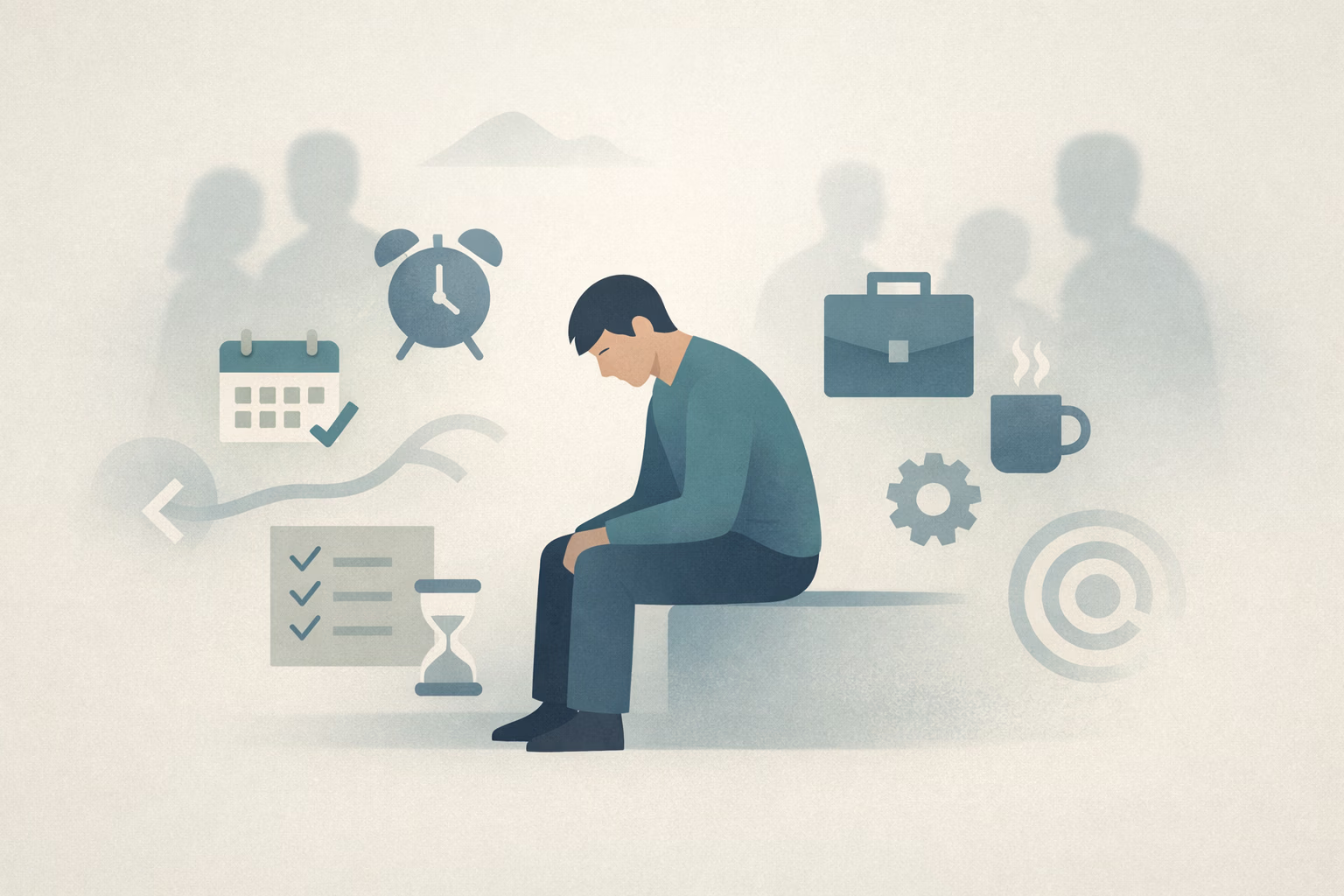
The shame cycle tends to create a recognizable landscape. Not everyone experiences all of it, but many people notice the same structural moves: life becomes organized around preventing exposure, managing rebound discomfort, and controlling the conditions that might activate the urge. [Ref-7]
Notice how these markers are not moral failures. They’re the shape of a system trying to stay intact while carrying more activation than it can easily metabolize.
Chronic shame doesn’t just feel heavy; it changes what becomes available. It can reduce the sense of safety in relationships, make neutrality feel suspicious (“What if they knew?”), and drain the capacity needed for repair. When so much energy goes into managing exposure and self-attack, there is less room for rest, play, intimacy, and simple steadiness. [Ref-8]
It can also erode self-trust in a specific way: not “I am bad,” but “my signals can’t be listened to,” because urges arrive with such force and consequences arrive with such harshness. This can make identity feel fragmented—like different parts of you are living different lives.
Shame doesn’t only say “that was wrong.” It often says “you don’t belong,” and the body reacts accordingly.
Once the pattern is established, it becomes self-reinforcing. The aftershock (guilt, disgust, panic, self-surveillance) acts like a new stressor. That stressor increases mental noise and bodily tension. And because the system already knows a fast way to drop tension, the relief behavior becomes more likely to reappear. [Ref-9]
Over time, the “trigger” may not be an external cue at all. It may be the internal state created by the last episode: sleep disruption, cognitive fog, social withdrawal, or the feeling of being behind in life. The loop doesn’t need a dramatic reason—just enough load and not enough closure.
There’s a common misunderstanding that compassion means excusing harm or lowering standards. In nervous-system terms, compassion is often something more practical: it reduces threat signaling. When the inner environment becomes less punishing, the drive for immediate escape can soften, because the system is no longer trying to flee from itself. [Ref-10]
It also changes what becomes possible after an episode. Shame tends to demand a verdict (“What’s wrong with me?”). A steadier stance makes room for a different kind of processing: what conditions were present, what needs were trying to be met, what got bypassed, what consequences landed. This isn’t mere insight. It’s the beginning of restoring coherence—so the body can eventually register completion instead of continuing to mobilize.
When threat decreases, choice can re-enter the room.
Humans regulate in relationship. When another person responds with steadiness—non-dramatic, non-humiliating, attentive—your nervous system receives safety cues that can’t be generated by willpower alone. This doesn’t “fix” anything instantly, but it can reduce the isolation signal that makes shame feel like an emergency. [Ref-11]
Supportive connection also interrupts secrecy, which is one of the loop’s main stabilizers. Not because disclosure is a virtue, but because secrecy keeps the nervous system braced. Being met without judgment can lower the background vigilance that fuels rebound pressure.
When shame is less dominant, people often notice changes that are subtle but structural. The urges may still show up, but they arrive with less emergency. The “aftershock” becomes less nuclear. Internal language becomes less punishing. This isn’t about becoming endlessly calm; it’s about the system spending less time in threat and more time in workable states. [Ref-12]
These shifts are signs of restored capacity—where signals can rise and fall without immediately needing an escape hatch.
The deepest change isn’t just “doing the behavior less.” It’s that life begins to re-organize around meaning: relationships, responsibility, creativity, health, spirituality, contribution—whatever matters to you. When values become more central than threat management, identity starts to feel less split. The nervous system gets more frequent experiences of completion: conversations that land, tasks that actually end, rest that registers as rest. [Ref-13]
In that environment, urges are less likely to be the only doorway to relief. The system has other ways to stand down, and it has clearer reasons to stay coherent. Agency returns not as force, but as orientation—an increasing sense that your choices belong to you.
Coherence feels like fewer inner emergencies—and more moments that actually feel finished.
Shame often shows up where something important is trying to be protected: belonging, integrity, care, hope. In that sense, shame can be information about unmet needs and overloaded conditions—not proof of who you are. When the system is given less threat and more closure, the loop has less fuel. [Ref-14]
Over time, many people find that what they needed was not harsher pressure, but a way for their life to become more coherent—so fewer experiences remain unfinished, fewer signals stay stuck on “urgent,” and identity has room to settle into something more stable than self-judgment.
It makes sense that the shame cycle feels impossible from the inside: it’s designed like a trap, where the attempt to prevent repetition increases the conditions for repetition. When shame is met with understanding and regulation support, the nervous system can gradually stop treating the situation as an emergency. That’s when change becomes more sustainable—not because you finally found perfect motivation, but because the loop no longer has to run. [Ref-15]
From theory to practice — meaning forms when insight meets action.
Because shame isn't simply 'feeling bad' — it functions like a threat signal, a whole-body alert that something about you is at risk. When threat is active, the nervous system prioritizes rapid state-change over long-term consistency, which makes immediate relief more compelling. The harder you try to use shame as a deterrent, the more your system seeks a fast downshift, because threat states are metabolically expensive and the body looks for exits. The escalation pattern runs: pressure rises, you act, relief arrives, then the second wave hits with self-judgment and secrecy, which raises pressure again. The aftershock becomes the strongest trigger in the loop.
Because addictive or compulsive behaviors are genuinely effective in the short term — they reduce tension, quiet mental noise, interrupt self-criticism, or create temporary fullness, numbness, or focus. That quick shift is real, and the body remembers it. The problem is that state-change isn't the same as closure. Relief lowers activation for a moment without resolving the underlying unfinished conditions that generated the pressure. When relief fades, the original load returns, often with added consequences like secrecy, sleep disruption, or harsher self-talk. Loops continue when they reduce load faster than anything else available — not because they're meaningful, but because they're efficient.
Shame can look like accountability, especially in cultures that treat self-criticism as virtue, but biologically it increases avoidance and reduces help-seeking — exactly the conditions that keep loops running. If the system learns that 'after the behavior comes punishment,' it tries to avoid the punishment as much as the original discomfort. The fastest escape from inner attack is often the very behavior that started it. Shame promises control but delivers more internal threat. Threat narrows choice, making quick relief more attractive. Quick relief prevents closure, keeping the system primed. The trap is structural: the attempt to prevent repetition increases the conditions for repetition.
Because compassion isn't leniency — it's a reduction in threat load. When the inner environment becomes less punishing, the drive for immediate escape softens, since the system is no longer trying to flee from itself. Compassion also changes what becomes possible after an episode: instead of demanding a verdict ('what's wrong with me?'), a steadier stance allows for processing what conditions were present, what needs were trying to be met, what got bypassed. Co-regulation through supportive connection delivers safety cues willpower can't generate. Secrecy is one of the loop's main stabilizers — being met without judgment lowers the background vigilance that fuels rebound pressure. When threat decreases, choice can re-enter the room.
From Science to Art.
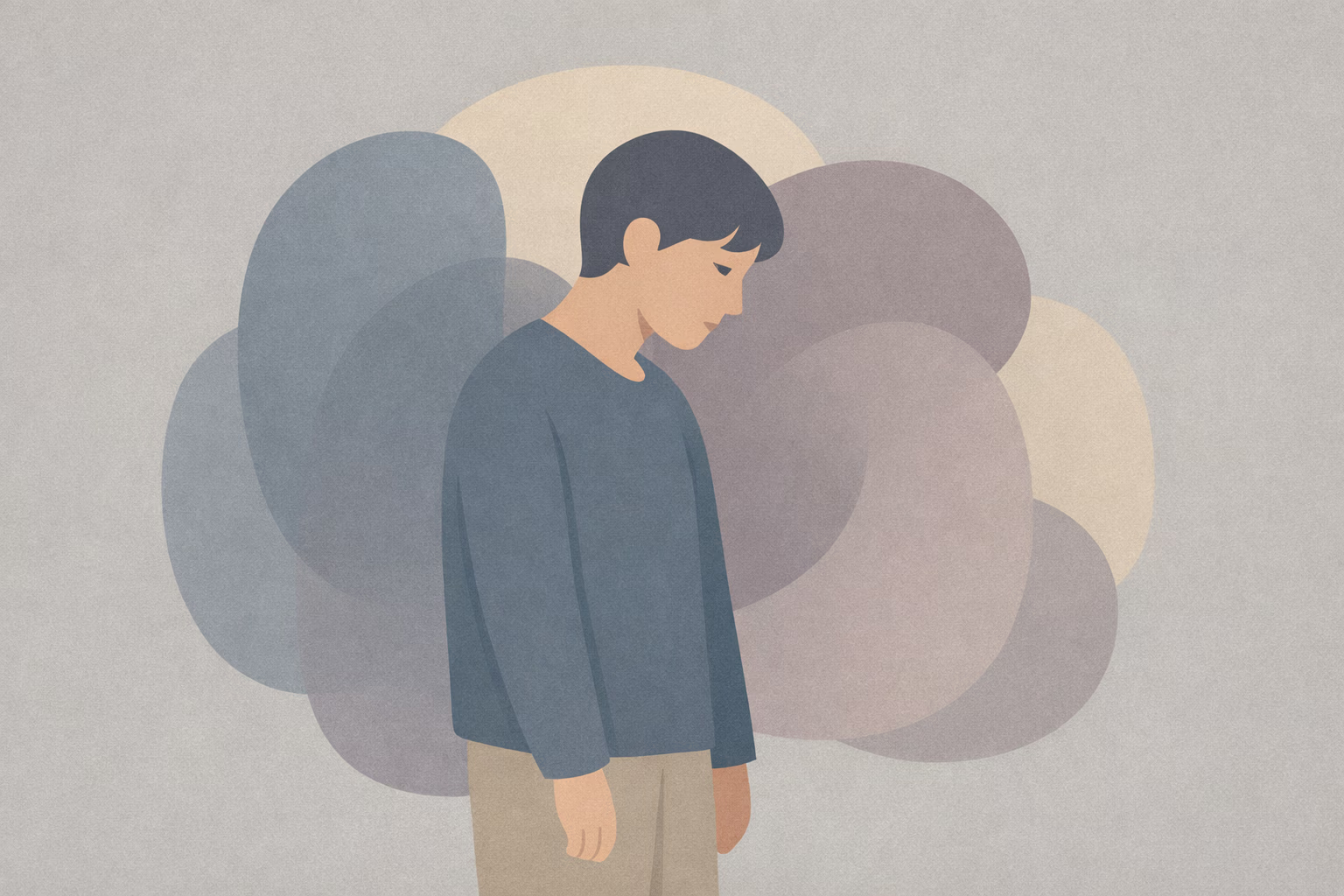
Understanding explains what is happening. Art allows you to feel it—without fixing, judging, or naming. Pause here. Let the images work quietly. Sometimes meaning settles before words do.
One Quiet Window, one insight, one reflection — every Sunday