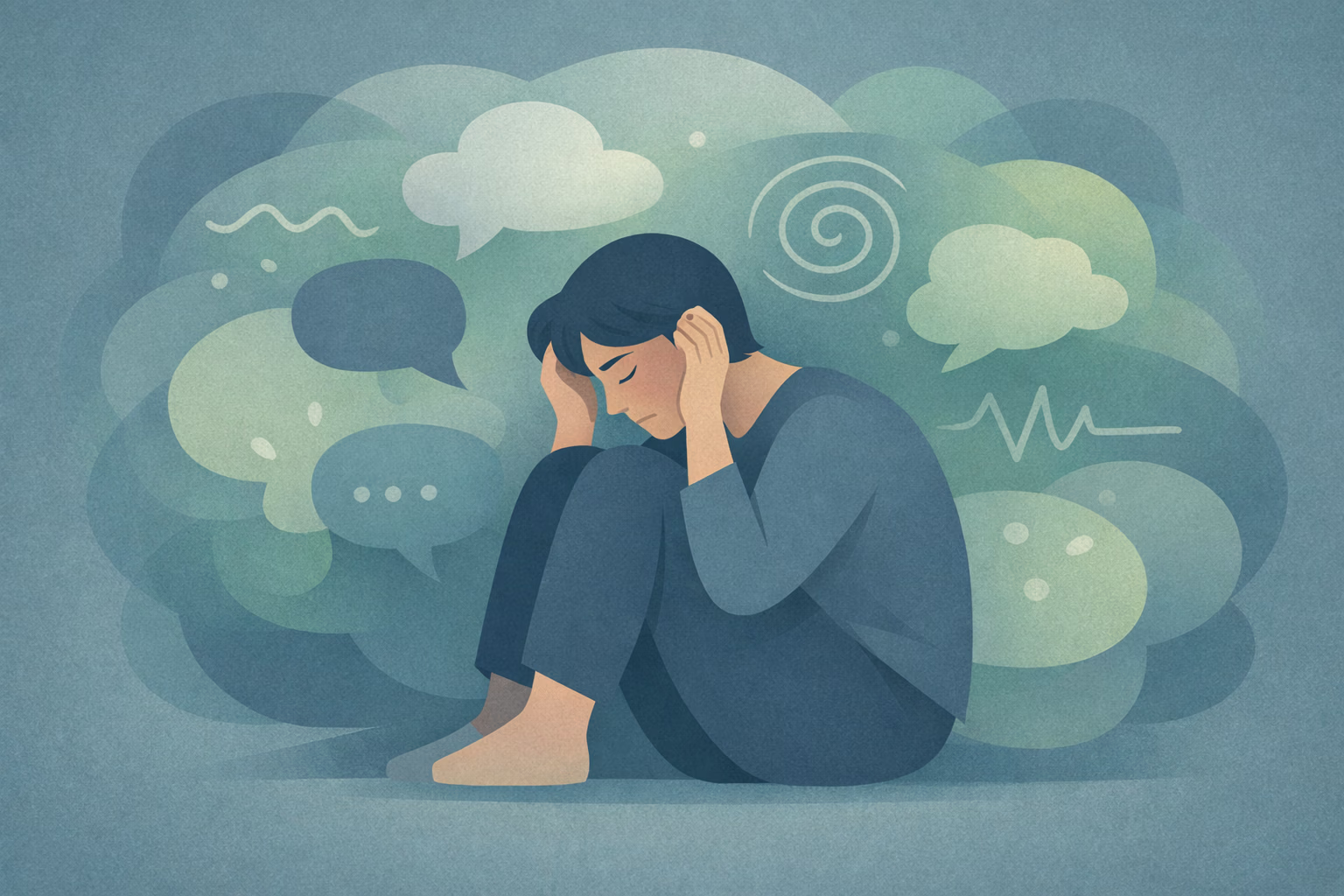
Emotional Trust: Reconnecting With Your Own Feelings
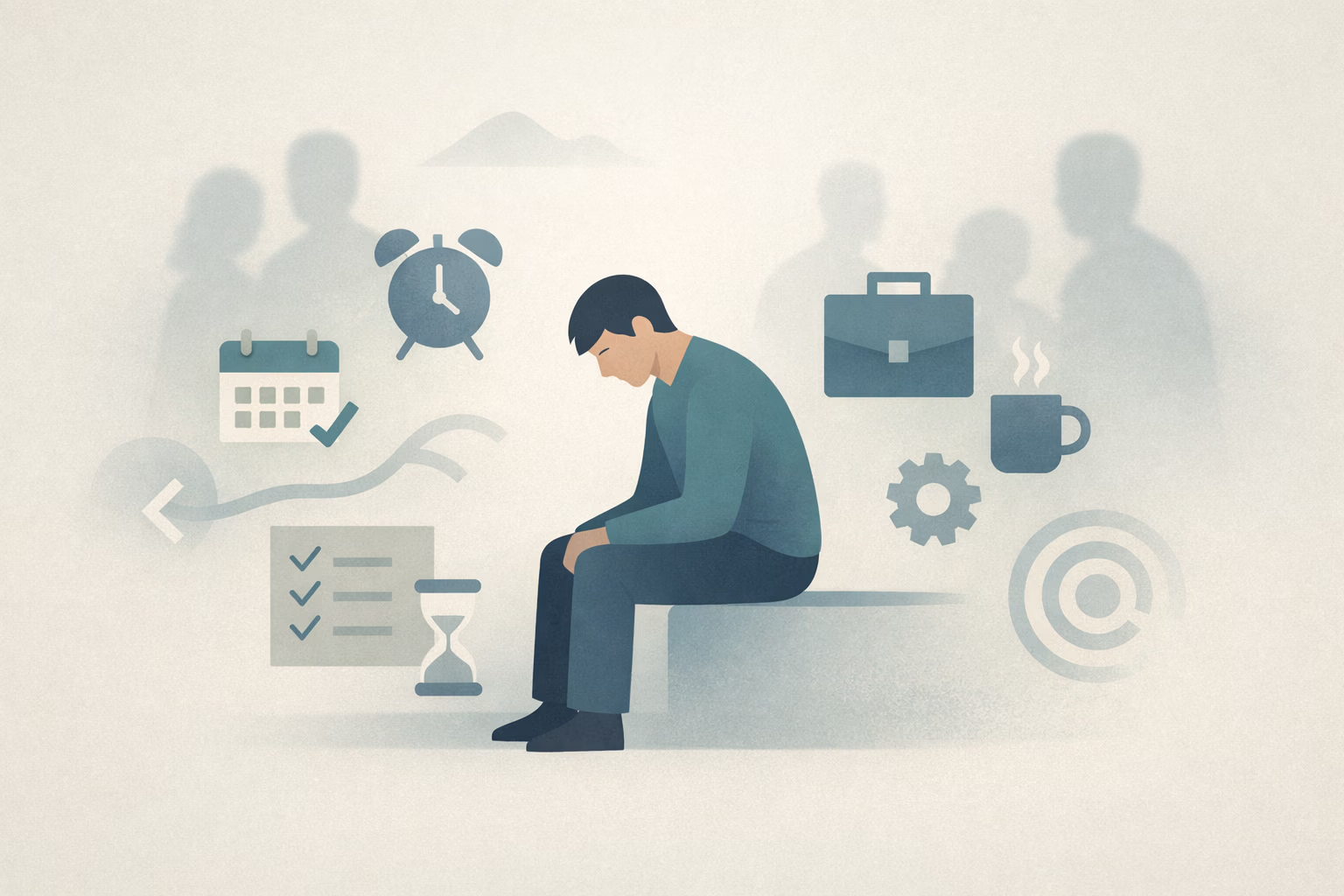
In short: The felt ability to register your own signals (needs, limits, preferences), let them finish their cycle, and allow them to settle into a steady sense of “this is me.” When life runs fast or feels evaluative, that internal channel can get noisy, delayed, or temporarily muted.
Self-connection is less a personality trait and more a nervous-system condition: the felt ability to register your own signals (needs, limits, preferences), let them finish their cycle, and allow them to settle into a steady sense of “this is me.” When life runs fast or feels evaluative, that internal channel can get noisy, delayed, or temporarily muted.
What if feeling “disconnected from yourself” is not a flaw—but a sign your system has been trying to cope?
In modern life, many people learn to function on external cues—deadlines, feedback, metrics, other people’s moods—because those signals are loud and immediate. The cost is often subtle: less clarity, less trust in your own read of a situation, and more reliance on urgency to move.
Self-disconnection often shows up as a specific kind of confusion: you can still think, plan, and perform, yet your inner “yes/no” becomes faint. Desire is hard to access, decisions feel oddly arbitrary, and even rest can feel unconvincing—like your body didn’t receive the memo.
This isn’t a lack of insight. It’s more like the system that normally integrates experience into a stable sense of self is running under strain. When signals don’t complete, they don’t become orientation. They become background noise.
People describe it as being “fine” on paper, yet unanchored in practice—like living from the neck up, or moving through days on autopilot. That description is often more about capacity than emotion. [Ref-1]
Under pressure, many nervous systems reduce internal signal processing because it takes bandwidth. Tracking your own limits, sensations, and preferences requires time, attention, and a sense of safety. When life feels tight, the brain tends to conserve by outsourcing orientation to what’s measurable, immediate, or socially legible.
This can look like “defensive withdrawal,” but not in a moral or psychological sense—more in a structural sense: fewer inward check-ins, more scanning of the outside world, more reliance on reassurance or performance signals. The inner channel isn’t broken; it’s deprioritized to keep things moving. [Ref-2]
Humans evolved in groups where safety often depended on fitting in, staying connected, and reading the room. When threat or uncertainty rises, the social system can take priority: attention shifts toward cues of approval, rejection, and status because those cues historically mattered for survival. [Ref-3]
In that state, self-connection can feel “optional,” even when it’s deeply important. It’s not that you stop having values; it’s that your nervous system may treat social coherence as more urgent than internal coherence.
When the world feels evaluative, many people learn to be legible before they are fully known—even to themselves.
Stepping away from internal signals can reduce friction in the moment. If your body is carrying unfinished conversations, unanswered demands, or chronic uncertainty, turning down the inner volume can feel like a kind of relief: fewer signals to manage, fewer conflicts to reconcile, less complexity to hold at once. [Ref-4]
This is why self-disconnection can be self-reinforcing. It temporarily quiets the system. The problem is that “quiet” from muting isn’t the same as “quiet” from completion.
Relief can change state. Integration creates stability.
When disconnection becomes the primary way to lower load, it can gradually erode self-trust. Not because you did anything wrong, but because the system stops receiving reliable internal data. If you can’t consistently register “I’m tired,” “I’m done,” “I don’t agree,” or “I want this,” then choices start to depend on urgency, guilt, or other people’s reactions.
Over time, this can feel like losing access to your own continuity—your preferences change depending on the setting, your boundaries feel inconsistent, and your identity starts to feel like a performance rather than a home base. [Ref-5]
Many people assume avoidance is caused by fear or suppression. Often it’s simpler: internal signals become associated with unfinishedness. When checking in with yourself repeatedly leads to more ambiguity (“What do I do with this?”), the brain learns that inward attention increases load without producing closure.
So the system shifts toward what closes faster: scrolling, solving, pleasing, optimizing, researching, planning. These can all produce quick “done” signals. But because they don’t complete the underlying loop of self-orientation, the need returns—often stronger. [Ref-6]
This loop is not a personal weakness. It is a predictable response to a world that delivers fast relief and slow completion.
Self-disconnection doesn’t always look dramatic. It often looks functional. The system keeps you moving by leaning on external structure, frequent input, and quick feedback.
These patterns are regulatory strategies. They reduce inner noise in the short term, especially when life feels fast, crowded, or evaluative. [Ref-7]
Identity coherence isn’t built by thinking about yourself; it’s built when lived experiences complete and settle into a stable internal reference. If signals are repeatedly interrupted—by distraction, performance demands, or constant switching—the system doesn’t get the “finished” marker it needs to update identity.
That’s when people report feeling like they have many versions of themselves, but no center. In stress, this can reduce resilience: if you don’t have a steady internal baseline, every situation has more power to define you.
Not knowing yourself isn’t the core problem. Not being able to return to yourself—again and again—tends to be the painful part. [Ref-8]
When internal signals don’t reach completion, they often come back in altered forms: irritability, restless seeking, sudden overcontrol, impulsive changes, or “mystery exhaustion.” These aren’t random. They are often the nervous system’s attempt to close loops that never fully resolved.
Over time, this can create a pattern where life is navigated by spikes—bursts of motivation, crashes, last-minute clarity—rather than steady orientation. The brain is still trying to integrate your experience into a usable self-story, but it’s doing it under interruption. [Ref-9]
When the inner channel is unreliable, urgency becomes a substitute compass.
It can help to reframe self-connection as internal referencing: the body-mind’s ability to register a signal, hold it long enough for it to organize, and let it complete into “known information.” This isn’t the same as understanding yourself, analyzing your history, or collecting more self-knowledge.
People often mistake insight for integration. Insight can be bright and immediate; integration is quieter and slower, and it shows up as reduced internal argument—less pushing, less negotiating, less chasing a perfect explanation. The “done” signal arrives, and the system stands down.
In that sense, mindful attention, somatic awareness, and self-validation are less “techniques” and more conditions that make completion possible: fewer interruptions, less evaluation, more room for signals to finish. [Ref-10]
Because humans are social regulators, supportive connection can function like a stabilizing mirror: not to tell you who you are, but to reduce load enough that your own signals become readable again. In safe conversation, your nervous system often gets extra cues of permission, pacing, and reality-testing.
This is not about dependence or outsourcing your truth. It’s about having enough safety and steadiness in the environment for internal signals to complete rather than fragment.
Empathy-based interactions—where you feel met without being managed—can support coherence: your experience becomes more continuous, and your decisions less reactive. [Ref-11]
When self-connection returns, it often doesn’t feel like a dramatic breakthrough. It feels like improved signal return: you notice earlier when you’re nearing your limit; you recognize preference without overexplaining it; you can pause without immediately filling the space.
Identity becomes less performative and more consistent across contexts. There’s less need to rehearse yourself, defend yourself internally, or keep proving your right to exist in the room.
This is what many people mean by self-acceptance: not a mood, but a settled internal relationship that doesn’t require constant renegotiation. [Ref-12]
As self-connection stabilizes, choice becomes less about reaction and more about alignment. Not perfect alignment—human life stays complex—but a clearer throughline emerges: you can sense what matters, and that sensing has enough weight to guide behavior.
In meaning terms, this is where identity stops being a project and starts being an orientation. You don’t need constant stimulation to know you’re alive, or constant evaluation to know you’re okay. The system can complete loops and move forward with fewer leftover fragments.
In many philosophical traditions, self-alienation is described as a split between lived experience and inner truth; self-connection is the gradual rejoining of those lines into a coherent life. [Ref-13]
If you’ve been feeling estranged from yourself, it can be tempting to interpret it as failure, immaturity, or “not trying hard enough.” A more accurate frame is often environmental and physiological: too much evaluation, too little closure, and too many interrupted cycles of experience.
Seen this way, disconnection becomes meaningful information. It points to a system that has been carrying load and protecting function by turning down inner volume. And because it is a regulatory response, it is also inherently changeable—especially when conditions allow experiences to complete rather than constantly restart. [Ref-14]
Your inner trust is not something you either have or don’t have—it’s something that returns when your system gets enough safety and completion.
Self-connection isn’t a performance of being “in touch.” It’s the quiet steadiness that comes when your nervous system can register signals, let them resolve, and carry their meaning forward into identity.
In a fragmented world, that steadiness is easy to lose and deeply human to want back. And when it returns, it tends to show up as simple dignity: a more reliable internal home base from which life can be chosen, not just managed. [Ref-15]
From theory to practice — meaning forms when insight meets action.
Because under pressure many nervous systems reduce internal signal processing — it takes bandwidth. Tracking your own limits, sensations, and preferences requires time and a sense of safety, so when life feels tight the brain conserves by outsourcing orientation to what's measurable, immediate, or socially legible. The article frames this not as moral failure but as structural deprioritization: external feedback becomes the main compass, distraction becomes the main regulator, busyness becomes a substitute for closure. You can still think, plan, and perform while your inner yes/no goes faint. The inner channel isn't broken; it's been turned down to keep things moving.
Because muting internal signals reduces friction in the moment. If your body is carrying unfinished conversations and chronic uncertainty, turning down the inner volume feels like relief — fewer signals to manage, less complexity to hold. The article distinguishes carefully: relief can change state, but integration creates stability. The trap is that 'quiet' from muting isn't the same as 'quiet' from completion. Over time the system loses reliable internal data — if you can't consistently register 'I'm tired,' 'I'm done,' 'I don't agree' — choices start depending on urgency, guilt, or other people's reactions, and identity starts feeling like a performance rather than a home base.
Because insight isn't integration. The article reframes self-connection as internal referencing — the body-mind's ability to register a signal, hold it long enough for it to organize, and let it complete into known information. Insight is bright and immediate; integration is quieter and slower, showing up as reduced internal argument: less pushing, less negotiating, less chasing a perfect explanation. The Done Signal arrives and the system stands down. Mindful attention, somatic awareness, and self-validation aren't techniques so much as conditions that make completion possible — fewer interruptions, less evaluation, more room for signals to finish.
Improved signal return rather than dramatic breakthrough. The article describes noticing earlier when you're nearing your limit, recognizing preference without overexplaining it, being able to pause without immediately filling the space. Identity becomes less performative and more consistent across contexts — less rehearsing yourself, less defending yourself internally, less proving your right to exist in the room. More stable yes/no sensing, less reliance on external confirmation, more continuity between what you value and what you choose. This is what many people mean by self-acceptance: not a mood but a settled internal relationship that doesn't require constant renegotiation.
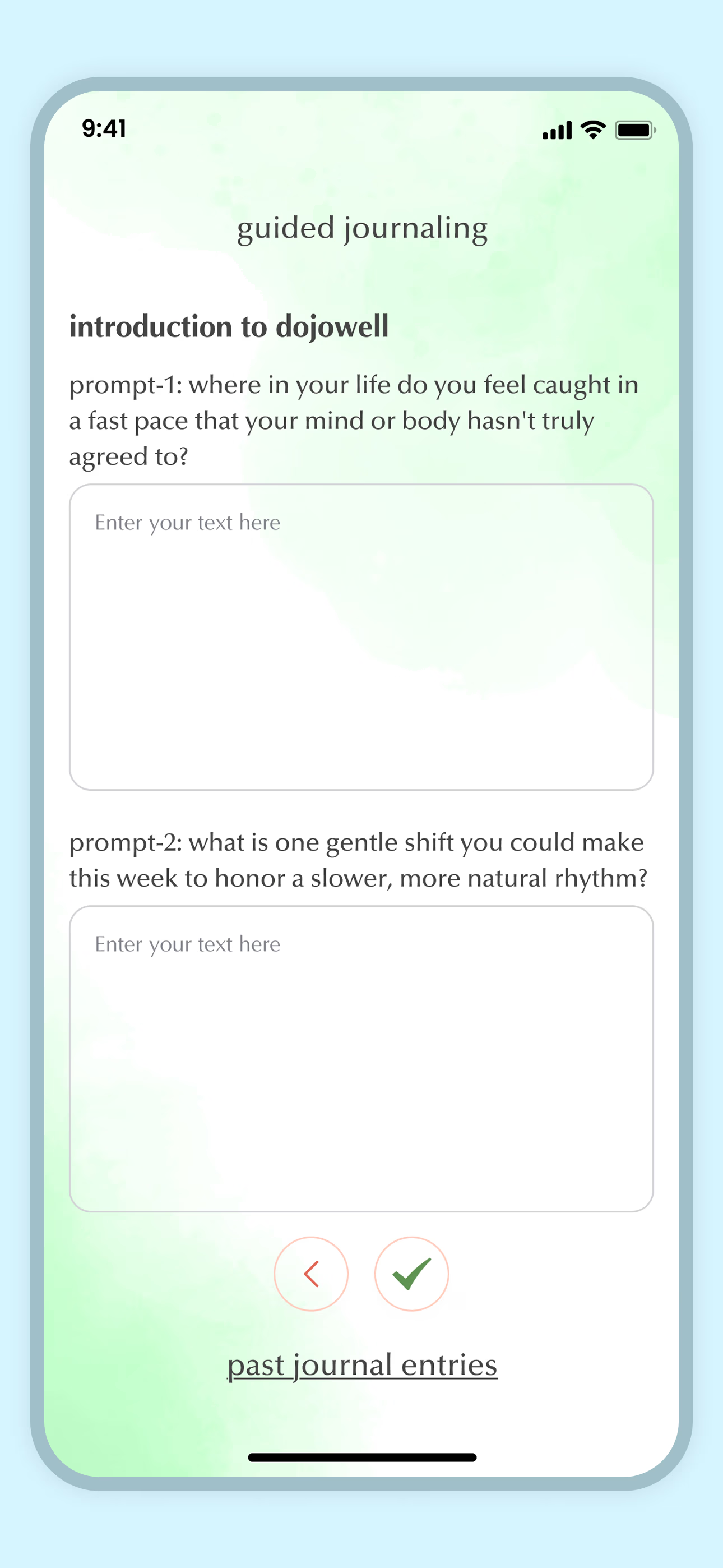
From Science to Art.
Understanding explains what is happening. Art allows you to feel it—without fixing, judging, or naming. Pause here. Let the images work quietly. Sometimes meaning settles before words do.
One Quiet Window, one insight, one reflection — every Sunday