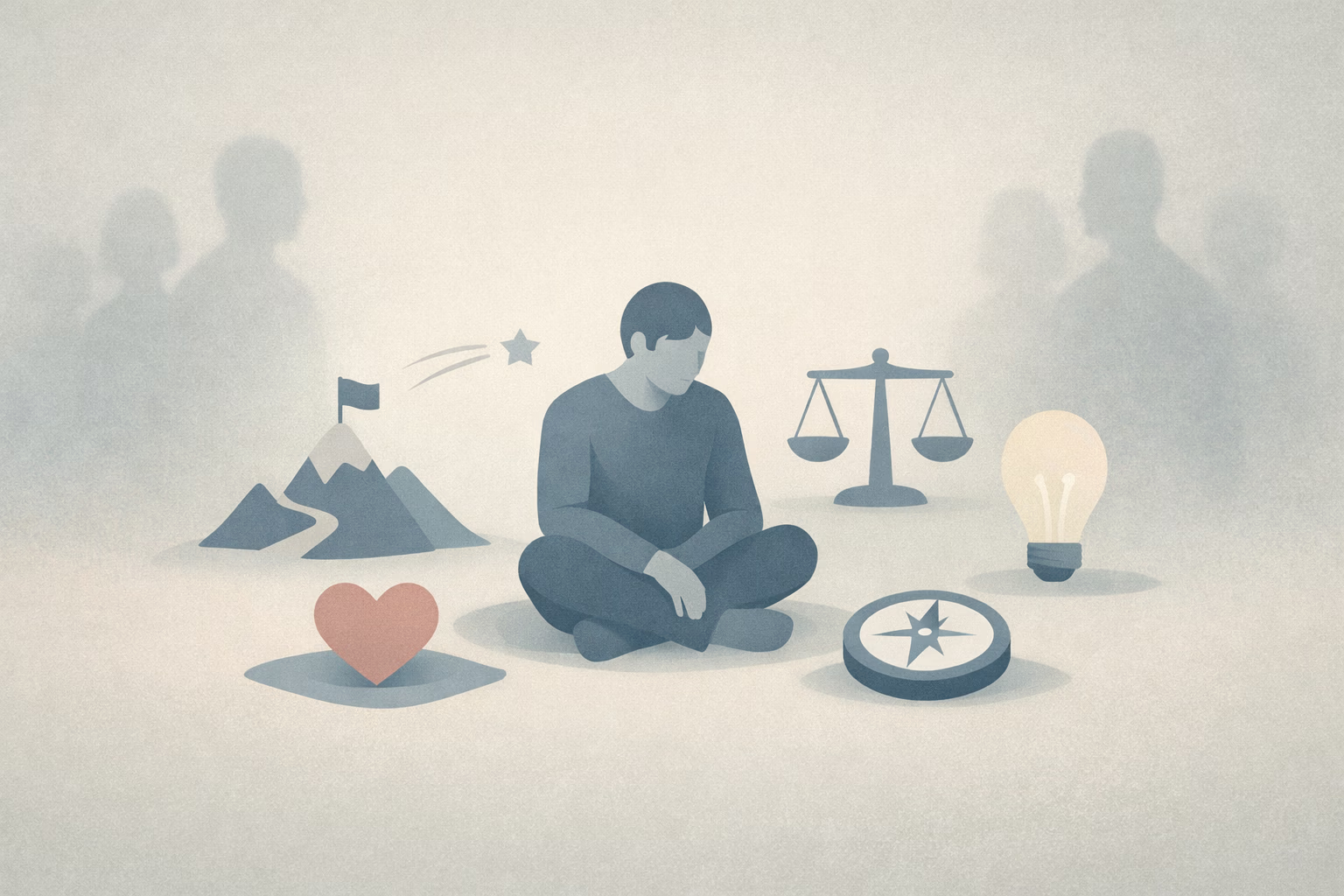
Identity Anchors: The Practices That Keep You Grounded in Yourself

In short: In a busy life, it’s common to feel like you’re moving constantly—and still losing your sense of direction. Not because something is wrong with you, but because modern days often don’t provide natural “done” signals.
In a busy life, it’s common to feel like you’re moving constantly—and still losing your sense of direction. Not because something is wrong with you, but because modern days often don’t provide natural “done” signals. Without closure, the nervous system stays on watch, and your inner compass can start to wobble.
What if being grounded isn’t a personality trait—but a signal that your life is giving you enough continuity?
“Meaning anchors” are small, repeatable practices that quietly reconnect daily life to what matters to you. They don’t have to be impressive or intense. Their power is structural: they create a familiar point of return, so your system doesn’t have to keep recalculating who you are and where you’re going.
Feeling ungrounded often shows up as a subtle disorientation: you’re doing many things, but it’s hard to feel “with” your life. Days blur. Decisions feel noisier than they should. Even rest can feel like unfinished business.
From a biological perspective, this makes sense. Human behavior stabilizes when the system can track continuity—what’s ongoing, what’s complete, and what still needs attention. When experiences don’t land, the mind keeps them active in the background, as if they’re still unresolved. That ongoing activation can feel like scatteredness, urgency, or a persistent sense that you should be somewhere else. [Ref-1]
Sometimes “lost” isn’t a lack of desire—it’s a lack of closure.
Meaning anchors work less like motivation and more like navigation. When a small action is consistently linked to a value (care, honesty, steadiness, contribution, connection), it creates a reliable point in the day where your system recognizes: “This is me. This is my direction.”
This matters because orientation reduces load. When you don’t have to constantly decide what matters, your attention stops fragmenting as easily. Over time, small consistent anchors help the narrative mind maintain a coherent through-line—so life feels more continuous rather than like scattered episodes. [Ref-2]
Importantly, this isn’t about “insight” or “thinking positively.” It’s about repeated experiences that actually complete—small loops that end with a quiet internal settling.
We’re not only responding to immediate threats and rewards; we’re also tracking meaning across time. Humans evolved to coordinate around shared stories—family roles, community duties, craft, faith, care, purpose. That narrative layer helps the nervous system predict what kind of day it is and what kind of person you are within it.
When that narrative layer is fed by consistent, lived signals, it becomes easier to feel like “the same self” from one day to the next. When it isn’t fed, identity can start to feel theoretical—something you think about rather than something you inhabit. Small daily practices can function like a steady thread through the day, keeping continuity intact. [Ref-3]
One reason meaning anchors help is that they don’t ask your system to surge. They don’t depend on high energy, perfect conditions, or big emotional momentum. They offer something simpler: a repeatable return point.
When a practice is small and familiar, it can act like a safety cue. The body recognizes the pattern, and that recognition alone can bring steadiness—less internal noise, fewer competing pulls, more capacity for signals to return to baseline after stress. [Ref-4]
What changes when you don’t have to earn your sense of direction?
There’s a cultural myth that meaning arrives through major reinvention: a new career, a big trip, a total reset. Sometimes those shifts matter. But they’re also intermittent, and intermittence doesn’t always stabilize the nervous system. A huge change can be inspiring yet still leave you with the same daily fragmentation afterward.
Small routines and repeatable practices, by contrast, can create steadiness because they show up where life actually happens: in ordinary time. Consistency gives the system a predictable rhythm, and predictability reduces background vigilance. [Ref-5]
In other words, meaning doesn’t only come from intensity. It often comes from continuity—what keeps showing up as “true” in lived experience.
Without anchors, many people enter a drift loop. The day fills with inputs—messages, tasks, content, demands—and the nervous system stays responsive. But responsiveness isn’t the same as orientation.
Drift isn’t necessarily caused by “avoidance” or “lack of willpower.” Structurally, it happens when the environment provides endless partial starts and very few completions. When there’s no reliable point of closure, the system keeps scanning for the next cue, and meaning fades into the background.
Anchors counteract drift not by adding more stimulation, but by reinforcing a stable reference point—something your system can recognize as complete and aligned. [Ref-6]
When meaning anchors are missing, the signs are often practical rather than dramatic. People may look “fine” from the outside while feeling internally unmoored.
Frequent loss of focus—starting many things, finishing few
Identity fog—difficulty answering “what matters to me right now?”
Emotional volatility—small stressors producing outsized activation
Reliance on external structure—only feeling directed when someone else sets the frame
Constant self-evaluation—measuring the day instead of inhabiting it
These aren’t character flaws. They’re common regulatory responses to high cognitive load, low closure, and constant context switching. [Ref-7]
Over time, a life without anchors can start to feel like a series of disconnected scenes. Even if many good things are happening, the internal experience may be: “None of this is landing.”
When daily life lacks consistent meaning-linked completions, identity coherence weakens. You may begin to doubt your preferences, your direction, or your reliability—not because you became less capable, but because your system isn’t getting enough evidence of continuity. In that state, distraction becomes more persuasive, and short-term relief can crowd out long-term orientation. [Ref-8]
It’s hard to trust your direction when your days don’t contain proof of it.
Drift tends to compound through a simple mechanism: less orientation leads to less follow-through, and less follow-through creates fewer internal “I did what mattered” signals. The nervous system then stays slightly more activated, scanning for what to do next, which further reduces the ability to complete.
In this cycle, rituals and small repeated closures matter because they create a predictable end point. They tell the system: “This segment is complete.” That completion isn’t just conceptual; it’s a physiological stand-down cue. [Ref-9]
Meaning anchors can be understood as a bridge between values and daily life—without turning life into a self-improvement project. Their purpose isn’t to prove anything. It’s to reduce internal renegotiation.
When a small practice is repeated in the same spirit, it becomes a kind of quiet ritual: not magical, not dramatic, simply consistent. Over time, the nervous system learns, “This is a reliable place to return.” That reliability can soften urgency and loosen the feeling of being chased by the day. [Ref-10]
What if the goal isn’t to push harder—but to create a place where your system can settle?
Meaning isn’t only individual; it’s also social. Humans stabilize through recognition—being seen in a consistent role, held in a shared rhythm, remembered across time. When relationships carry small rituals (a daily check-in, a weekly meal, a familiar greeting), they create continuity that the nervous system can lean on.
These shared patterns reduce the need to perform identity alone. They also provide natural closure: beginnings and endings, reunions and goodbyes, acknowledgment and repair. In that relational frame, meaning becomes more embodied—less like a private concept and more like a lived continuity. [Ref-11]
When meaning anchors are present and consistent, the shift is often subtle at first. Not a constant uplift, but a change in baseline: less internal noise, fewer abrupt swings, more ease returning to center after stress.
People often describe a steadier sense of “where I am going,” even if the destination is still evolving. The day holds more shape. Choices feel less like emergency decisions and more like natural extensions of who you are. [Ref-12]
More spacious attention (less tug-of-war)
A clearer “no” that doesn’t require drama
Less dependence on novelty to feel alive
A growing sense of internal reliability
As stability returns, meaning starts to function like orientation rather than a task. You don’t need constant self-correction because your days contain repeated evidence of what matters. The system trusts the pattern.
This is where identity feels less like a statement and more like something lived. What you repeatedly complete—especially in small, value-linked ways—quietly becomes part of who you are. Not as a label, but as a settled continuity. [Ref-13]
Grounding isn’t a mood you chase. It’s what shows up when your life has a place to return to.
Meaning anchors can be seen as acts of self-trust: not promises about the future, but continuity in the present. They keep direction alive through repetition, not intensity. They don’t require you to be inspired, fearless, or perfectly consistent—only human in a world that pulls attention apart.
When life offers small points of completion that match your values, the nervous system gets to stand down more often. And when it stands down, you regain access to choice—not as pressure, but as orientation. [Ref-14]
Lasting meaning is often sustained the way a compass stays useful: by remaining steady, not by being loud. Small lived anchors—repeated moments that align daily life with what you care about—can keep identity coherent even when the world is fast.
Not because you forced yourself to change, but because your days began to contain enough continuity to feel real and complete. [Ref-15]
From theory to practice — meaning forms when insight meets action.
A meaning anchor is a small, repeatable practice that quietly links ordinary moments to something you actually value — care, honesty, steadiness, contribution. It isn't a goal, a productivity tactic, or a self-improvement project. Its power is structural: by showing up in the same way, in the same spirit, it gives the nervous system a familiar point of return so it doesn't have to keep recalculating who you are. That repeated closure feeds the Identity & Meaning System with lived evidence of continuity. Over time, the day stops feeling like scattered episodes and starts holding shape, because something in it keeps recognizing itself as yours.
Feeling ungrounded usually isn't a willpower problem — it's a closure problem. Modern days hand you endless partial starts and very few completions, so the system never gets a clean Done Signal that a segment of life is finished. The mind keeps unresolved threads active in the background, which feels like scatteredness, urgency, or a low hum that you should be somewhere else. That's the drift loop: stimulation high, orientation low. Anchors interrupt drift not by adding more input but by giving your system a reliable reference point it can recognize as complete and aligned with what matters.
Cultural messaging says yes — new career, big trip, total reset. The article argues the opposite: intensity is intermittent, and intermittence rarely stabilizes the nervous system. A dramatic shift can be inspiring and still leave the same daily fragmentation in place afterward. Small, repeated practices work because they show up in ordinary time, where life actually happens. Predictable rhythm reduces background vigilance, which lowers Threat & Safety load. Meaning Density grows through continuity — what keeps showing up as true in lived experience — not through one heroic decision that has to carry everything.
Meaning isn't only individual; the Attachment & Belonging System stabilizes when you're recognized in a consistent role and held in a shared rhythm. Small relational rituals — a daily check-in, a weekly meal, a familiar greeting — give the nervous system continuity it doesn't have to manufacture alone. They also create natural beginnings and endings: reunions, goodbyes, acknowledgment, repair. Each of those is a quiet closure your body can register. In that frame, identity feels less like a private idea you're maintaining and more like something co-regulated through other people. Less performance, more lived continuity.
From Science to Art.
Understanding explains what is happening. Art allows you to feel it—without fixing, judging, or naming. Pause here. Let the images work quietly. Sometimes meaning settles before words do.
One Quiet Window, one insight, one reflection — every Sunday