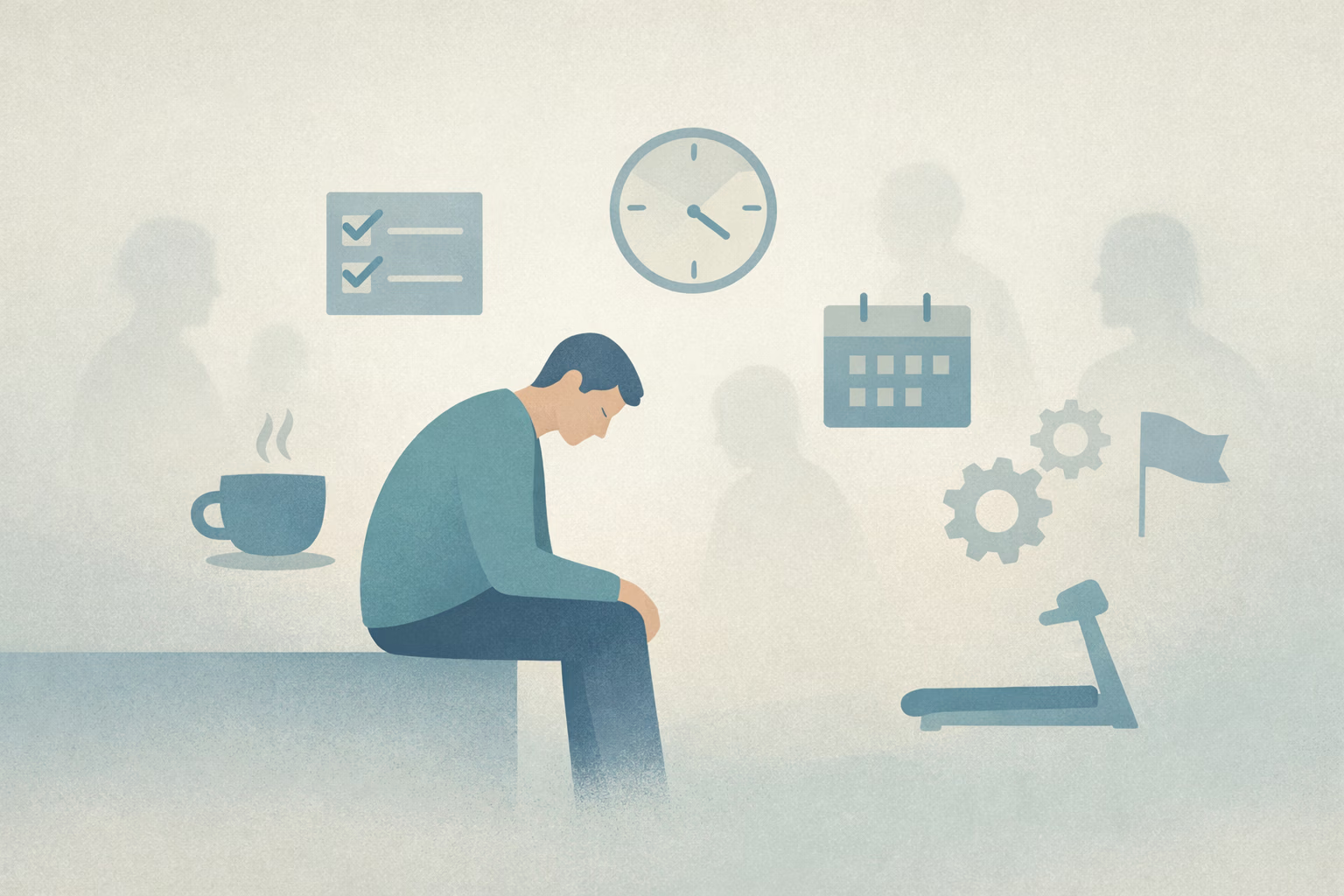
Meaning Deficit: When Life Feels Functional but Empty
In short: Many people can function, achieve, and even care deeply about others—while still sensing an unnameable drift underneath it all. Not a dramatic crisis. More like a low-grade instability: decisions feel harder than they “should,” motivation comes in bursts, and rest doesn’t fully land.
Many people can function, achieve, and even care deeply about others—while still sensing an unnameable drift underneath it all. Not a dramatic crisis. More like a low-grade instability: decisions feel harder than they “should,” motivation comes in bursts, and rest doesn’t fully land.
What if that isn’t a personal flaw, but a structural issue—an inner life missing enough “meaning foundations” to feel settled?
In a Meaning Density lens, meaning isn’t a pep talk or a mindset. It’s the quiet architecture that forms when experiences reach completion and integrate into identity. When those foundations are thin or repeatedly interrupted, the nervous system stays on partial alert—seeking orientation, closure, and a sense of “this makes sense.”
Longing for purpose often shows up alongside emptiness, restlessness, or a feeling of “I’m doing a lot, but nothing is landing.” That pull isn’t vanity or neediness. It’s a biological orientation system asking for a clearer through-line.
When life lacks a unifying sense of meaning, the system tends to compensate: it searches for something that will finally make choices feel obvious and effort feel justified. Without that internal anchor, even good things can feel strangely weightless.
Meaning research often points to three dimensions—coherence, purpose, and significance—as distinct ingredients that shape this experience. [Ref-1]
Meaning foundations work less like inspiration and more like an internal map. They help sort what matters, what doesn’t, and what a moment “belongs to” in the larger story of your life. With that map, the nervous system can conserve energy: fewer alarms, fewer re-checks, fewer urgent recalculations.
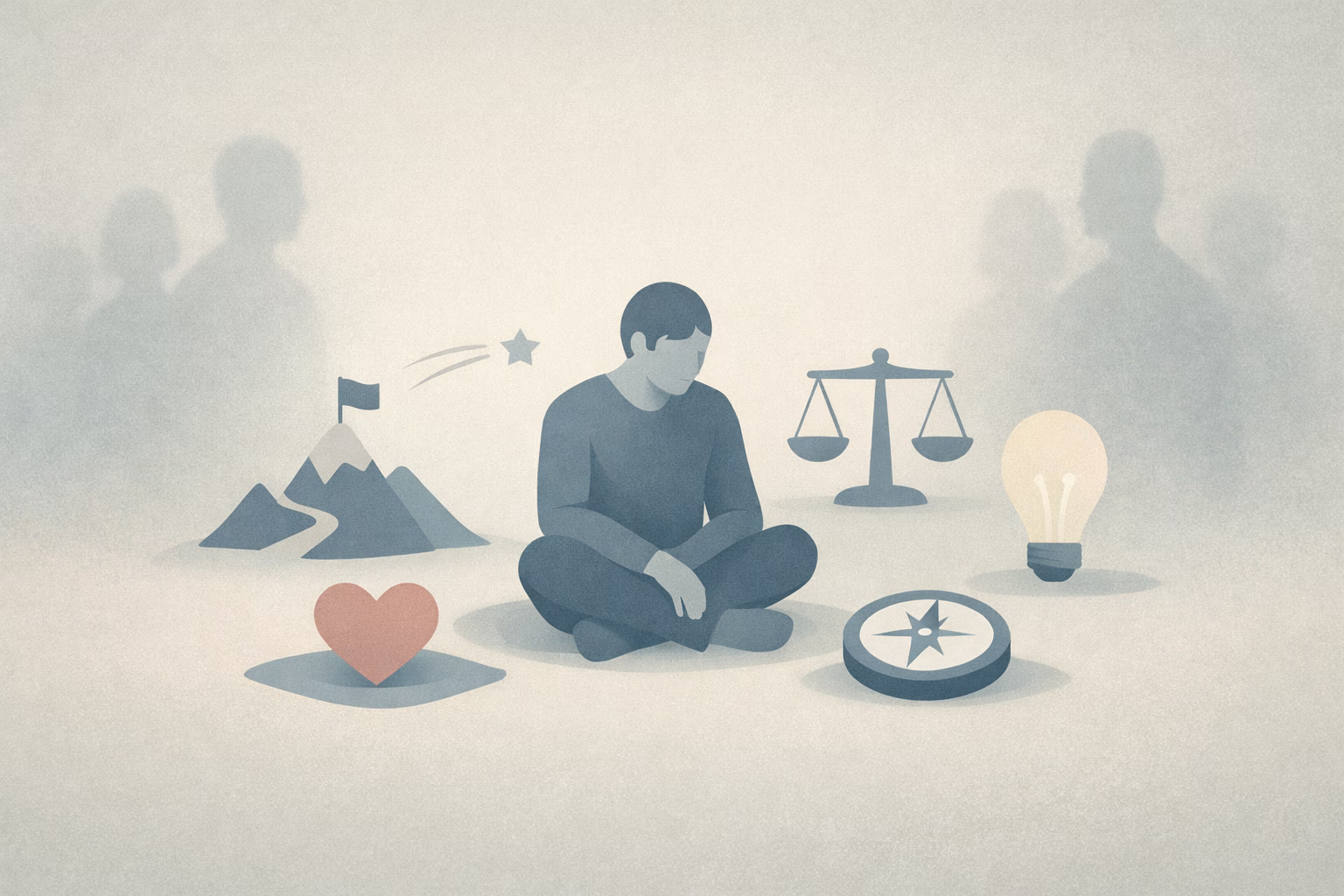
Three elements often show up in stable inner lives:
These aren’t motivational slogans. They’re organizing functions that reduce internal noise and stabilize choices under stress. [Ref-2]
Humans don’t just react—we continuously stitch experience into story. This isn’t merely “thinking about life.” It’s an evolved system for coordinating with others, learning across time, and keeping identity continuous through changing circumstances.
When experiences can be integrated into a coherent narrative—one that connects past, present, and future—people tend to show more resilience under load. Meaning functions as a protective factor not because it eliminates difficulty, but because it reduces fragmentation. [Ref-3]
When your life has a story you can stand inside, challenges become chapters—not proof that everything is falling apart.
Stability doesn’t require perfect certainty. Even partial meaning foundations can create enough internal order for the body to downshift. Orientation is a safety cue: it tells the nervous system, “we know what this is,” or at least, “we know where this fits.”
When orientation is present, emotional signals can rise and fall more cleanly. When orientation is missing, the same signals tend to linger—because the system can’t complete the loop. Meaning in life is consistently linked with individual and societal well-being in part because it supports this settling function. [Ref-4]
Modern culture often implies that meaning arrives through big wins, constant improvement, or high-intensity experiences. Those can change state—providing relief, pride, adrenaline, or belonging—but they don’t automatically build inner structure.
Stable meaning tends to arise when life feels internally consistent and when actions accumulate into identity over time. It’s less about “more” and more about “fits.” The difference matters: intensity can spike significance for a moment, while coherence is what makes it sustainable. [Ref-5]
Have you ever reached something you wanted—and felt your system immediately start scanning for the next thing?
A meaning-deficit loop can look surprisingly functional from the outside. Internally, though, it often feels like needing constant input to stay upright: new goals, new plans, new purchases, new research, new routines, new urgency.
These are not character flaws. They are regulatory substitutions. When the nervous system doesn’t receive enough “done” signals—enough closure and integration—it tries to create stability another way: through stimulation (to feel alive) or control (to feel safe).
Purpose and meaning are shaped by multiple determinants—social, developmental, and environmental—not by sheer willpower. [Ref-6]
When meaning foundations are shaky, the system tends to oscillate. Not because someone “won’t commit,” but because commitment requires internal continuity—and continuity requires experiences that can complete.
Some common patterns include:
In meaning-centered frameworks, these patterns are often understood as adaptive responses to existential strain and incomplete integration, not moral failures. [Ref-7]
When meaning is thin, external signals get louder. Metrics, approval, comparison, and speed can start acting like stand-ins for inner orientation. Over time, that increases stress load: the system is constantly evaluating whether you’re “on track,” even when the track keeps moving.
This is one reason meaning is often discussed in relation to well-being. It can buffer stress not by removing demands, but by reducing internal conflict and fragmentation that make demands feel endless. [Ref-8]
Burnout isn’t only about doing too much. It’s also about carrying too much “unfinished.”
Here’s the painful twist: the strategies that help you get through a day without inner orientation can also make it harder to rebuild it. Not because the strategies are “bad,” but because they often keep the nervous system in a start-and-stop state—lots of activation, little completion.
For example, stimulation can fragment attention into smaller and smaller units of time. Overcontrol can narrow life into only what feels manageable. Avoidance can reduce immediate load, but it can also mute consequences that would have helped the system find closure. None of this is about fear as a flaw; it’s about loop interruption—experiences that never get to finish processing into identity.
Meaning-centered research in existential positive psychology emphasizes that coherence and growth arise through integrating hardship into a livable story, rather than bypassing it with endless compensation. [Ref-9]
Restoring meaning foundations isn’t the same as “thinking differently.” Insight can be valuable, but integration is something else: a physiological stand-down, a quieter inner climate, a sense that life events have a place to land.
When internal order returns, the system doesn’t need as much pressure to function. Emotions can move more like signals and less like storms; decisions can feel guided rather than dragged into place. Self-trust grows not from hype, but from repeated experiences of coherence—where what matters is consistent, and what happens can be metabolized into the self.
This is one meeting point between positive psychology and existential traditions: meaning supports resilience by increasing acceptance of reality as it is, while still holding purpose and value. [Ref-10]
Meaning isn’t built in isolation. The narrative system is social: it stabilizes through shared reality, recognition, and roles that have continuity over time. When other people reliably see you in ways that match your values, identity coherence gets reinforced.
This is not about external validation as a substitute for inner life. It’s about relational continuity: stable communities and relationships provide “return signals” that help experiences complete. You did something; it mattered; it was received; it belongs.
Integrative meaning approaches often emphasize that values and purpose become more durable when they’re lived within relationships and responsibilities, not just privately held as ideas. [Ref-11]
When meaning foundations are in place, people often describe a quiet shift: less urgency, fewer spirals, and more emotional steadiness without needing constant management. Not numbness—more like the system can register a signal and then return.
There may be an increased sense of:
This matches how meaning is often framed in well-being research: not as constant happiness, but as a stable sense that life is understandable, directed, and worthwhile. [Ref-12]
A stable inner life doesn’t eliminate complexity. It changes how complexity is carried. With meaning foundations, decisions tend to arise from an internal “yes/no” that feels anchored—less driven by urgency, comparison, or the need to prove something.
In practical terms, orientation can become the default filter: what aligns, what doesn’t, what belongs now, what belongs later. The point isn’t a perfectly curated life. It’s a life that can be inhabited without constant negotiation with the self.
Popular summaries of meaning research often return to these same dimensions—coherence, purpose, and significance—because they predict steadier direction over time. [Ref-13]
Meaning foundations aren’t a single insight you “find.” They’re the inner conditions that allow experiences to complete and settle into identity—so your system can stop scanning for constant replacement signals.
When that architecture is present, responsibility becomes more workable, relationships feel less like performance, and the future feels less like a threat that must be managed. Coherence doesn’t make life small; it makes life holdable. [Ref-14]
Not everything needs to be solved. Some things need to be placed—so the body can stand down.
Meaning isn’t measured by how inspired you feel. It’s reflected in how consistently your life makes sense to you, how naturally your choices connect to your values, and how often your nervous system gets the signal of completion.
That kind of stability is rarely dramatic. It’s dignified, cumulative, and human—an inner steadiness that grows when coherence, purpose, and significance have enough space to become real. [Ref-15]
From theory to practice — meaning forms when insight meets action.
In this article they're framed as three organizing functions: coherence (life events feel placeable), purpose (actions connect to a longer horizon), and significance (your existence and effort matter within a wider context). Together they form a quiet architecture that lets the nervous system stop scanning for orientation. When these are present, choices flow from internal direction rather than urgency, and emotional signals can rise and fall more cleanly because there's somewhere for them to land. Meaning Density grows from this scaffolding — not from inspiration, but from experiences that complete and integrate into identity over time.
That low-grade drift often points to thin meaning foundations rather than a personal flaw. You can achieve, care about people, and meet responsibilities while the system still misses enough Done Signals for coherence to settle. Decisions feel harder than they should, motivation comes in bursts, and rest doesn't quite land — because the body is searching for orientation it can't find. The pull toward purpose isn't vanity; it's a regulation signal asking for a clearer through-line. Without it, the nervous system stays on partial alert, compensating with stimulation, control, or new goals that briefly mask the gap.
Big wins and high-intensity experiences can change state — providing pride, adrenaline, relief — but they don't automatically build inner structure. Stable meaning arises when actions accumulate into identity over time and life feels internally consistent. Intensity spikes significance for a moment; coherence is what makes it sustainable. That's why people often reach something they wanted and immediately feel the system scanning for the next thing. The Pleasure Loop or Power Loop can mimic meaning briefly, but neither delivers the closure the narrative system needs to settle. Foundations are built through fit, not size.
People often describe a quiet shift: less urgency, fewer spirals, more emotional steadiness without needing constant management. Not numbness — the system can register a signal and then return. There's an increased sense of clarity (less internal debate), continuity (feeling like the same self across situations), and grounded significance (everyday actions feel connected to what matters). This isn't constant happiness. It's that life is understandable enough to inhabit. Within Loop Sovereignty, meaning becomes the organizing field that lets emotions move through rather than pile up — and decisions arise from orientation rather than pressure.
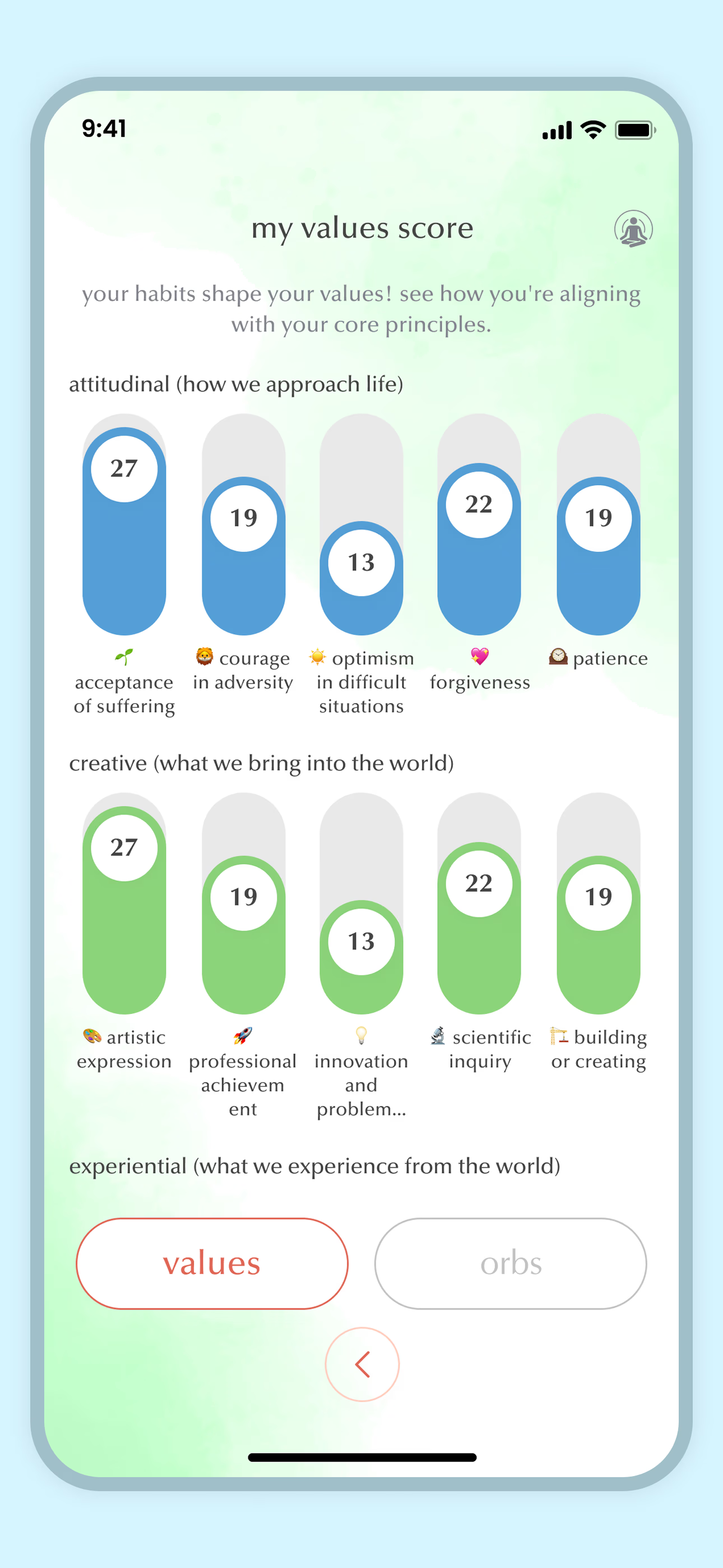
From Science to Art.
Understanding explains what is happening. Art allows you to feel it—without fixing, judging, or naming. Pause here. Let the images work quietly. Sometimes meaning settles before words do.
One Quiet Window, one insight, one reflection — every Sunday