Meaning Interference: How Distractions Steal Your Life’s Purpose

In short: There are seasons when nothing is technically wrong, yet everything feels reduced: the same home, the same people, the same routines—only the sense of “this matters” is missing. Compliments don’t land.
There are seasons when nothing is technically wrong, yet everything feels reduced: the same home, the same people, the same routines—only the sense of “this matters” is missing. Compliments don’t land. Good news doesn’t register. Even rest can feel like it doesn’t restore.
What if the good in your life didn’t disappear—what if your system temporarily lost access to it?
Meaning blindness is a useful phrase for this: a state where value, significance, and purpose become hard to perceive because the nervous system is carrying too much load. It can look like ingratitude from the outside, but internally it’s often a protective narrowing—your biology prioritizing getting through over taking in.
Meaning blindness often shows up as a specific kind of flatness: not dramatic sadness, not constant panic—more like a muted life. You can still do what needs doing, but the internal “yes” signal is faint or absent. Things that used to feel warm or interesting now feel neutral.
This isn’t a philosophical conclusion that life is pointless. It’s more like the mind’s color settings have been turned down. Many people describe it as moving through a day that never quite delivers a “done” or “that mattered” feeling, even when tasks are completed.
From a stress-and-reward perspective, this makes sense: prolonged strain can reduce access to the brain’s reward and anticipation circuitry, which is part of how humans register value and significance in real time. [Ref-1]
Meaning is not only an idea; it’s also a signal. It’s something you detect through attention, reward sensitivity, and the ability to connect a moment to a larger personal story. Under chronic stress, those systems often downshift.
Stress physiology tends to narrow attention toward what is urgent, uncertain, or potentially costly. At the same time, reward sensitivity can dampen—less “pull” toward ordinary pleasures and less internal feedback that something is worth doing. This is one reason the world can feel less textured during long periods of strain. [Ref-2]
In that narrowed state, your mind may still recognize that something is good in theory, but the body doesn’t “agree” with a felt signal. That mismatch can be confusing—and it’s also a clue that perception is constrained.
Humans evolved to shift states. When conditions suggest sustained risk—social conflict, instability, overload, uncertainty—systems that support scanning, guarding, and conserving resources can dominate. Meaning perception is not the top priority in that mode; continuity and safety are.
In practical terms, the nervous system allocates energy toward monitoring and managing rather than savoring and integrating. This doesn’t mean you’re doing life wrong. It means your body is behaving like a body under prolonged demand.
Research linking stress exposure to later reward-related symptoms supports this pattern: stress can be followed by reduced sensitivity to positive cues and reduced anticipation of reward, which can look like “nothing matters.” [Ref-3]
When load stays high, the system often looks for ways to reduce expenditure. One way is by turning down intensity—less emotional amplitude, less desire, less disappointment, less excitement. This can resemble disconnection, but it can also be a conservation strategy.
Inflammation and stress-related biological changes are increasingly discussed as pathways that can contribute to anhedonia-like states—reduced pleasure and motivation—especially when stress becomes prolonged. [Ref-4]
It’s important to name the dignity here: if your system is trying to get through an extended stretch without breaking down, “less feeling” is not a moral failure. It can be an adaptive reduction in bandwidth.
When you can’t feel the good, it’s easy to assume the good isn’t there—or that you’re incapable of appreciating it. Meaning blindness invites a different interpretation: the meaning may still exist in your life and values, but the channel that recognizes it is temporarily quieter.
Think of it less like losing meaning and more like losing contrast. The environment can still contain supportive people, beauty, and purpose, while the nervous system is too strained to translate those inputs into a settled sense of significance.
From a well-being lens, meaning tends to track with coherence—how well experiences connect into a livable story—not with constant positivity. When coherence mechanisms are stressed, meaning can feel distant even in objectively supportive circumstances. [Ref-5]
Once meaning signals dim, withdrawal can start to make structural sense. If nothing feels rewarding, the system may reduce engagement—not because of a conscious choice to avoid life, but because effort no longer produces a meaningful return.
This can become a loop: reduced reward sensitivity leads to reduced approach behavior; reduced approach reduces opportunities for completion and “done” signals; the lack of completion keeps the system activated, which further suppresses reward sensitivity. Over time, the loop can feel like identity: “I’m someone who doesn’t care.”
Research describing interactions between stress history, immune signaling, and reward sensitivity adds weight to the idea that this loop is not purely psychological. It is also biological and state-based. [Ref-6]
Meaning blindness has a recognizable texture. It often includes shifts in what your system can register, not just what you can intellectually endorse.
These patterns overlap with what research on anhedonia and reward anticipation describes: the anticipation and “pull” toward positive experience can decrease, which changes behavior in predictable ways. [Ref-7]
“I can tell you what I care about. I just can’t feel it showing up in my day.”
If meaning blindness persists, it can increase vulnerability to burnout and hopelessness—not because you’re weak, but because the system is operating without adequate restoration or completion. When the brain can’t reliably detect reward, effort becomes expensive.
Attention control can also degrade under chronic stress, making it harder to hold focus on what matters and easier to get pulled into what is loud, urgent, or novel. That attentional narrowing can further reduce exposure to subtle positive cues. [Ref-8]
In that landscape, quick stimulation can become more tempting—not as “bad choices,” but as an understandable attempt to feel something or to interrupt numbness. The problem is that stimulation changes state temporarily; it doesn’t necessarily deliver closure.
As withdrawal grows, many people notice a secondary effect: fewer moments that signal safety, connection, or completion. This matters because the nervous system doesn’t stabilize through insight alone—it stabilizes when conditions allow it to stand down.
Stress can bias attention toward threat and uncertainty, making the environment feel more demanding than it used to. When attention is pulled toward potential problems, even supportive realities can be overlooked—not denied, just not registered. [Ref-9]
Over time, the world can start to feel like a series of unfinished tabs: tasks, messages, expectations, background worry. Without enough “closed loops,” the body stays in a semi-ready posture—and meaning has fewer places to land.
Meaning often returns in the same order it left: not as a sudden mindset change, but as a gradual reopening of signal range when load decreases and safety cues become more available. This is why forcing positivity rarely works; it asks for meaning output from a system that is still conserving.
What if “I can’t feel the good” is information about capacity, not a verdict about your life?
Burnout frameworks often describe a depletion of emotional and motivational resources that changes perception itself. In that framing, meaning is not something you fabricate through effort; it’s something you regain access to as energy balance and reward sensitivity recover. [Ref-10]
Meaning blindness can be intensely private, even when surrounded by people. But a quiet, low-demand sense of being accompanied can counter the nervous system’s tendency to narrow and isolate. Not through “processing,” but through the body receiving cues of safety and continuity.
Supportive presence—someone who doesn’t require you to perform wellness, someone who isn’t evaluating your output—can reduce internal vigilance. Many burnout descriptions highlight how overload and emotional exhaustion shift social experience, making connection feel costly. [Ref-11]
When connection becomes less demanding, it can become more restorative. And restoration is what allows perception to widen again.
As the stress fog lifts, meaning usually doesn’t arrive as a big revelation. It comes as small returns: a laugh that feels real, a song that lands, a moment of ease in the body, a preference becoming noticeable again. These are not “moods” to chase; they’re signals that capacity is coming back online.
Periods of unrest and exhaustion can leave people feeling emotionally spent and cognitively drained, and recovery often looks gradual rather than dramatic. [Ref-12]
What changes is not only how you feel, but what completes. More moments begin to end cleanly. More experiences settle. The nervous system gets more “done” signals—and the world starts to regain depth.
When perception returns, meaning becomes less of a project and more of an orientation. You don’t have to convince yourself that your life is good; you begin to notice what fits, what matters, what aligns. Values start to pull attention naturally, because the reward-and-safety systems can support that pull.
This is different from performing gratitude or insisting on optimism. It’s quieter: the ability to register significance without having to argue with yourself about it.
Burnout-oriented education often emphasizes that recovery involves restoring resources and reducing strain so that motivation and engagement can re-emerge. In that sense, meaning is not forced—it’s allowed. [Ref-13]
If you’re in meaning blindness, it can feel personal—like you’re failing to appreciate a life you’re “supposed” to be grateful for. A more accurate frame is often environmental and physiological: a system living under sustained demand, adapting by narrowing, conserving, and postponing integration.
This is why shame tends to deepen the problem. Shame adds load and increases self-surveillance, which further reduces access to the very signals that create coherence.
In a changing, high-pressure world, stress effects on brain and body are increasingly understood as context-driven responses rather than individual defects. [Ref-14] Meaning can reappear as capacity returns—not as a reward for trying harder, but as a sign that your system is finally getting enough closure to stand down.
You don’t have to treat meaning blindness as the “truth” about you. It’s often the truth about your current load.
When reward sensitivity and motivation systems are suppressed, life can look empty even when it isn’t; when those systems regain function, the same life can look more dimensional again. Objective research on reward sensitivity supports that these shifts can be measured and are not merely a matter of attitude. [Ref-15]
Meaning is less something you manufacture and more something that becomes visible when your experiences can complete and settle into who you are. When the system has room to finish things, the good becomes perceptible again.
From theory to practice — meaning forms when insight meets action.
Meaning blindness is a state where significance, value, and purpose become hard to perceive because the nervous system is carrying too much load. Nothing is technically wrong, but the internal 'this matters' signal is faint or absent. Compliments don't land, good news doesn't register, even rest doesn't restore. From a stress-physiology view, prolonged strain narrows attention toward what's urgent and dampens reward sensitivity, so the world feels less textured. The article frames this as access being suppressed rather than meaning being erased — your biology prioritizing getting through over taking in, a protective narrowing rather than an emotional failure.
Because from the outside it looks like someone shrugging at a perfectly fine life. Internally it's something different: the channel that translates input into a felt sense of significance is quieter. You can name what's good and still not feel it landing. The article reframes this as energy conservation — when load stays high, the system reduces emotional amplitude to keep functioning. That's not moral failure; it's an adaptive reduction in bandwidth. Treating it as ingratitude tends to add shame, which adds load, which further suppresses the very Reward & Stimulation signals that would let appreciation register again.
Reduced reward sensitivity leads to reduced approach behavior. If nothing feels rewarding, withdrawal makes structural sense, which reduces opportunities for completion and Done Signals. The lack of closure keeps the system semi-activated, which further suppresses reward sensitivity. Over time the loop can ossify into identity: 'I'm someone who doesn't care.' The article sits this in an Avoidance Loop frame and notes the dynamic isn't purely psychological — stress history, immune signaling, and reward circuitry interact biologically. Days start to blur without closure, the world becomes a series of unfinished tabs, and meaning has fewer places to land.
Usually in fragments, not revelations. As load drops and safety cues become more available, signal range gradually reopens — a laugh that feels real, a song that lands, a preference becoming noticeable again. The article frames the order clearly: capacity first, meaning second. Forcing positivity asks for output from a system still in conservation mode. What changes is what completes: more moments end cleanly, more experiences settle, the nervous system gets enough Done Signals to stand down. Meaning becomes less a project and more an orientation — values pull attention naturally because Reward & Stimulation can support that pull again.
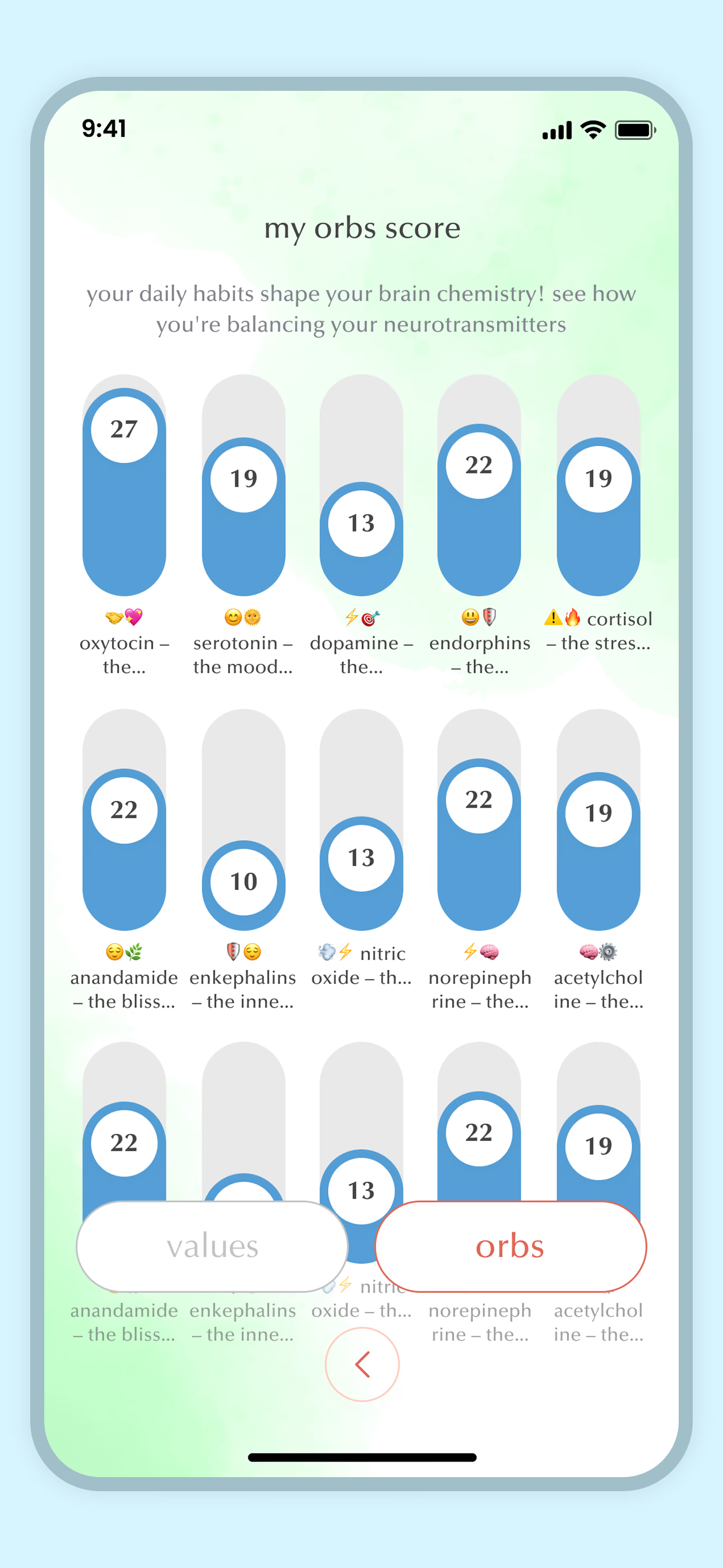
From Science to Art.
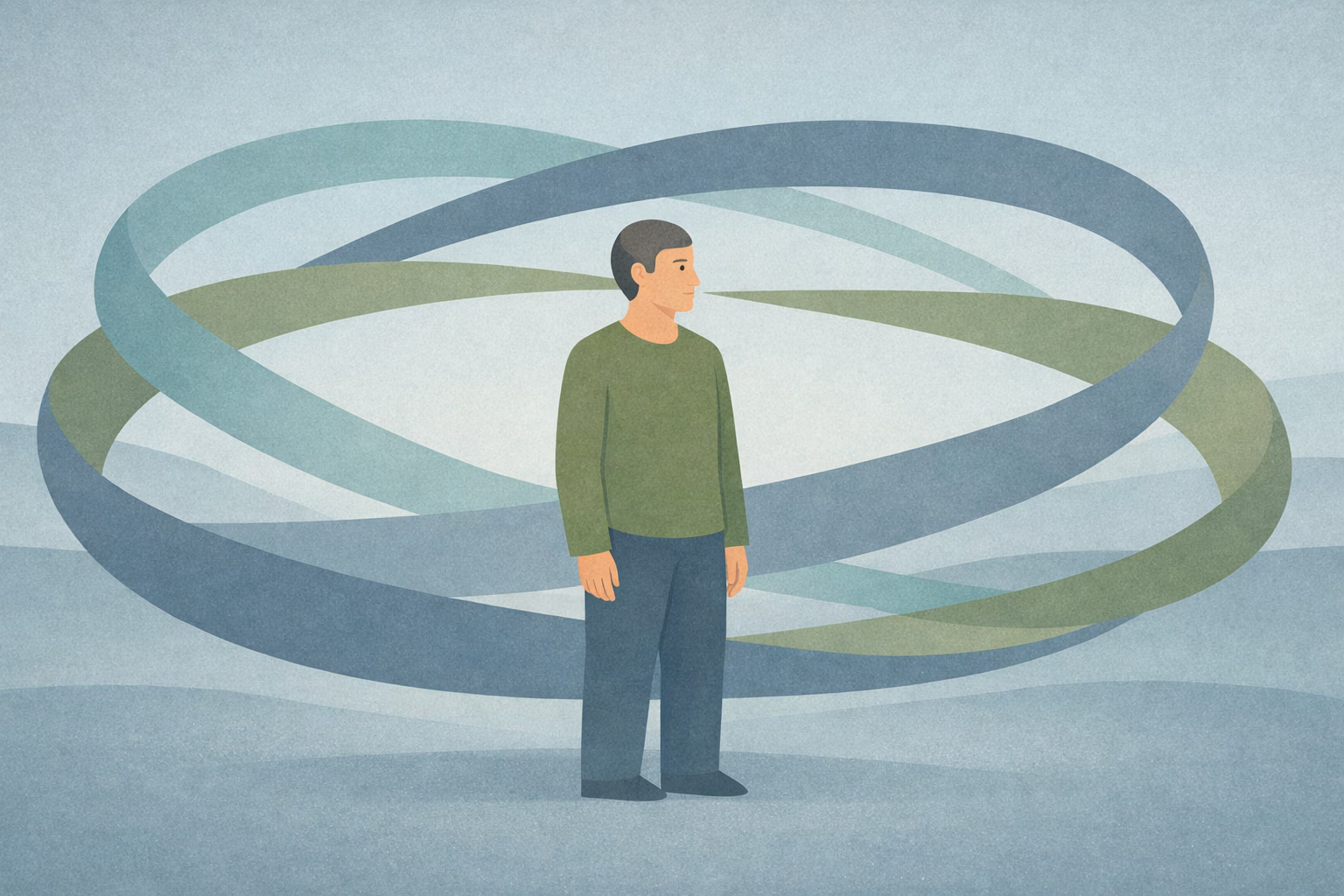
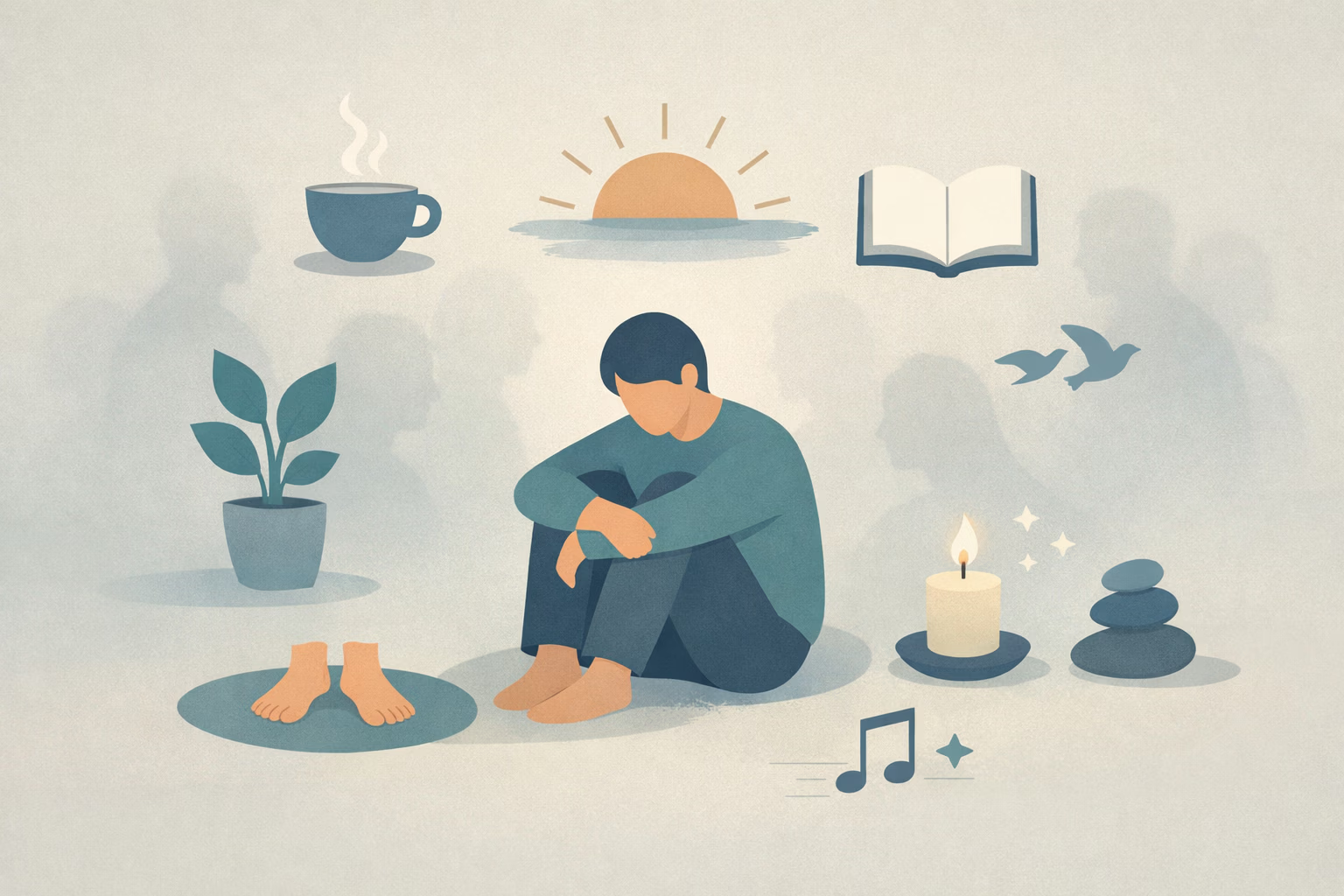
Understanding explains what is happening. Art allows you to feel it—without fixing, judging, or naming. Pause here. Let the images work quietly. Sometimes meaning settles before words do.
One Quiet Window, one insight, one reflection — every Sunday