Doomscrolling as a Survival Response
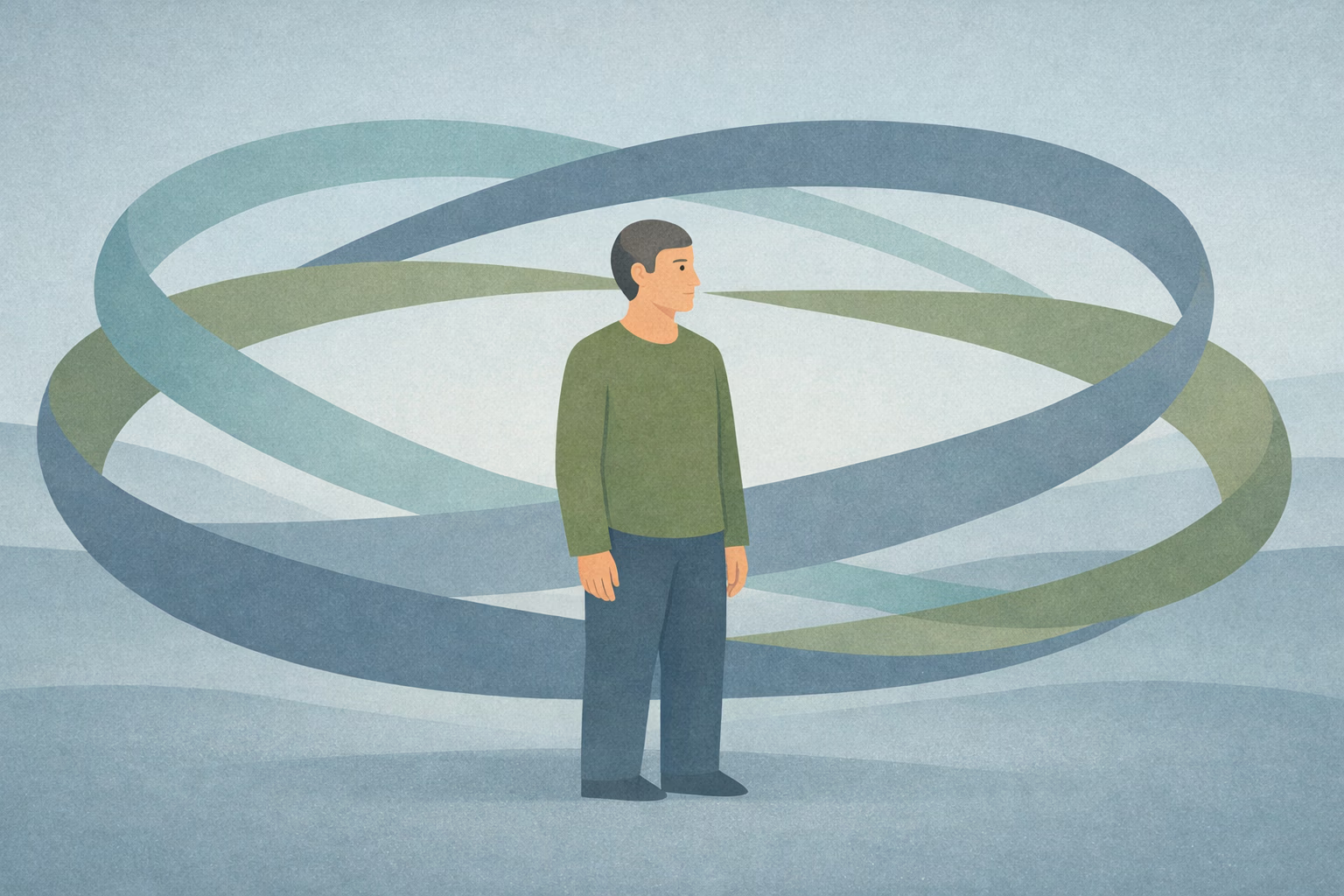
In short: Many people don’t think of their news habits as a “habit” at all. It can feel like being informed, staying responsible, keeping up with what matters. And yet, after scrolling, the body often tells a different story: tightness, agitation, heaviness, a restless need to check again.
Many people don’t think of their news habits as a “habit” at all. It can feel like being informed, staying responsible, keeping up with what matters. And yet, after scrolling, the body often tells a different story: tightness, agitation, heaviness, a restless need to check again.
What if the urge to keep checking isn’t a character flaw—just a nervous system trying to find a “done” signal?
This article describes news addiction as a global stress loop: repeated exposure to threat cues that keeps the threat-detection system active, even when nothing in your immediate environment has changed. The result isn’t deeper awareness—it’s sustained activation that can shrink capacity, dull discernment, and make life feel less inhabitable.
News addiction often doesn’t look dramatic. It can look like checking headlines while brushing teeth, refreshing during lunch, scanning in the evening “to make sure nothing happened,” then noticing your shoulders are up and your breathing is shallow.
It’s common to feel both drained and pulled back in. Not because you “like” feeling bad—but because the system is tracking for resolution. If the story is still unfolding, if the risk feels open-ended, the body stays partially mobilized.
In research, people who report compulsive news checking also report higher stress and anxiety symptoms, suggesting the loop can become self-reinforcing over time. [Ref-1]
Your brain is built to notice danger quickly and prioritize it. When news feeds deliver a steady stream of conflict, disasters, contagion, and social breakdown, the nervous system receives frequent “unsafe” inputs—often without any corresponding local action that would complete the loop.
Instead of a single threat followed by resolution, modern news can produce a long chain of partial alarms: enough information to activate, not enough closure to stand down. This can keep stress physiology closer to “ready mode,” even if you’re sitting still.
Studies on problematic news consumption have linked it with stress and anxiety, consistent with the idea that repeated exposure can overload threat systems rather than informing them. [Ref-2]
In ancestral environments, paying attention to threat had a clearer payoff. A sound in the brush, smoke on the horizon, a change in the group—signals were local, time-bound, and usually followed by a concrete sequence: orient, respond, and then return to baseline.
Global news breaks this pattern. It delivers distant danger as if it were nearby, and it rarely resolves in a way the body recognizes as complete. The survival system is excellent at scanning; it’s less equipped for an endless stream of unresolved “maybe.”
When following headlines becomes compulsive, it can reflect this mismatch: an adaptive alerting system placed inside an environment that never stops broadcasting alarms. [Ref-3]
Checking the news often creates a short-lived easing: uncertainty drops for a moment. The mind gets an update, a narrative, a sense of orientation. That moment can feel like safety—even if the content is distressing—because it reduces not-knowing.
But the body may be paying a separate price. Each check can reintroduce threat cues, reactivating stress pathways. Over time, the nervous system can begin to associate “staying vigilant” with “staying safe,” even when vigilance is eroding baseline steadiness. [Ref-4]
Relief can arrive as an update—without the deeper settling that comes from completion.
It’s understandable to assume that more information equals better preparedness. In some contexts, it does. But when information arrives as constant, emotionally loaded exposure—without clear endpoints—what grows isn’t preparedness; it’s strain.
Media overload has been associated with stress, depletion, and reduced well-being, especially when the flow is relentless and the content is high-threat. [Ref-5] The paradox is that the mind may feel it’s “doing something important,” while the nervous system registers it as prolonged activation.
In that state, the ability to respond constructively can shrink. Attention narrows, irritability rises, and the day starts to organize around monitoring instead of living.
News addiction can function as an avoidance loop—not in the sense of “running from feelings,” but in a structural sense: monitoring becomes a substitute for grounded contact with what is actually reachable and influenceable.
Global threat exposure offers endless inputs, but very few natural “completion points.” The loop can feel like responsibility while quietly bypassing resolution. The body stays mobilized, yet nothing local changes—so the activation has nowhere to land.
Research during global crises has linked doomscrolling and heavy news exposure with worse mental health outcomes, consistent with a pattern where more monitoring increases load without restoring control. [Ref-6]
Because this pattern can look socially acceptable—“I’m just staying informed”—it often goes unnoticed until the body starts flagging it. The signals tend to be practical, physical, and relational.
These patterns are consistent with measures used to study doomscrolling and problematic news consumption. [Ref-7]
Baseline calm isn’t a personality trait; it’s a physiological condition. It tends to return when the system receives enough safety cues, predictability, and closure. Prolonged exposure to threat narratives can weaken those conditions—especially when the threats are big, ongoing, and unresolved.
Over time, people may notice less resilience: smaller stressors feel larger, recovery after a hard day takes longer, and the future starts to feel narrower. Studies during COVID-era doomscrolling found negative associations with mental health, suggesting cumulative effects on well-being when threat exposure is constant. [Ref-8]
Trust can also erode—not only trust in institutions or society, but a quieter kind: trust that your own day can be lived without bracing.
Once the nervous system is loaded, it becomes easier to detect danger everywhere—because the threshold for “this matters” drops. Headlines feel more urgent, uncertainty feels less tolerable, and the impulse to scan for updates becomes stronger.
This creates a feedback loop: heightened activation increases perceived risk; increased perceived risk drives more consumption; more consumption adds more activation. Over time, the loop can sensitize threat detection, making neutral moments feel subtly unsafe or unfinished.
Recent research has examined associations between doomscrolling and anxiety/depression-related symptoms, aligning with the idea that the loop can amplify distress rather than resolve it. [Ref-9]
There’s a difference between exposure and processing. Exposure is simply taking in more threat cues. Processing is what happens when the nervous system has enough capacity to integrate what it learns into a coherent sense of the world—without staying in alarm.
When regulation returns, the same headline can register as significant but not destabilizing. The body can stay oriented to the present room, the present day, the present relationships—while still acknowledging what’s happening elsewhere. This isn’t indifference; it’s proportionality.
In other words, the goal isn’t “positive thinking.” It’s a state shift where threat circuits no longer dominate interpretation, so meaning can form without chronic mobilization. Findings on amygdala-related negative mood dynamics support how brain systems can shape the tone of experience when repeatedly activated. [Ref-10]
Threat grows in the dark. Not psychologically, but structurally: when the body carries global danger alone, without shared context or grounding, the load stays internal and open-ended.
Humans regulate in connection. Conversation can provide pacing, proportion, and reality-testing—not as “reassurance,” but as contextualization. When a story is placed into a shared narrative (“what this means,” “what’s known,” “what’s not”), it becomes less like an uncontained alarm and more like a bounded event.
Research on amygdala reactivity and stress-related outcomes underscores how exposure to negative stimuli can shape symptom patterns, and why context and support matter in how threat is metabolized. [Ref-11]
As load reduces, many people notice a specific kind of return: not constant calm, but signal return. Hunger signals become clearer. Sleep cues arrive more reliably. Focus comes back in longer stretches. The body stops acting like it has to keep watch during rest.
Discernment also changes. Instead of feeling compelled to consume everything, the mind can distinguish “important” from “inflaming,” “actionable” from “endless,” “new” from “repackaged.” This is less about willpower and more about thresholds normalizing.
Work on negative response bias and amygdala modeling helps explain how a sensitized system can tilt toward threat detection—and how that tilt can soften when activation isn’t constantly reinforced. [Ref-12]
When the system isn’t bracing, you can learn without being recruited into alarm.
When the stress response stabilizes, boundaries around information can become less of a fight and more of an identity-level orientation: “This is how I stay connected to the world while still living my life.” Not a rule, but a lived coherence.
In that state, engagement becomes more purposeful. Some stories invite attention; others are recognized as repetitive activation with no completion. The nervous system can sense the difference between meaningful awareness and endless scanning.
Public mental health discussions of doomscrolling emphasize that healthier news engagement tends to be about protecting well-being while staying informed—an approach that aligns with restored capacity rather than constant vigilance. [Ref-13]
If you recognize yourself in this, it can help to name what’s true underneath the pattern: the checking is usually an attempt to be responsible, to protect, to stay oriented, to prevent being caught off guard. That’s not trivial—it’s a real value.
The trouble is that modern news environments can convert that value into a chronic alarm ritual. And because the content is global and ongoing, the body rarely receives a clean “done” signal. Understanding that mismatch can reduce shame and make the loop easier to see as a system response, not an identity.
Many experts note that we’re wired to attend to negative information and unresolved danger, which makes endless feeds especially sticky in times of uncertainty. [Ref-14] Seeing the wiring doesn’t solve the problem by itself—but it can restore dignity and choice to the conversation.
Being informed is not the same as being continuously activated. A nervous system that can stand down is not ignoring reality—it’s preserving the capacity to meet reality with steadiness.
Bad news grabs attention because attention is a survival function, not a moral weakness. [Ref-15] Over time, what restores agency isn’t more scanning; it’s the quiet reorganization of life around what is coherent, complete, and truly reachable—so awareness can exist without becoming a permanent emergency.
From theory to practice — meaning forms when insight meets action.
Because the system is tracking for resolution. If a story is still unfolding and the risk feels open-ended, the body stays partially mobilized — and checking creates a brief drop in uncertainty that feels like safety, even when the content is distressing. You can feel both drained and pulled back in. This isn't 'liking' bad news; it's the Threat & Safety System looking for a Done Signal that never arrives, because global news rarely resolves the way local threats do. The mind interprets vigilance as responsibility while the nervous system interprets it as prolonged activation. Both feel true at once.
Because exposure isn't preparedness. Human threat circuits evolved for local, time-bound danger that resolves through orienting, responding, and returning to baseline. Global news delivers distant danger as if it were nearby and rarely closes the loop. So instead of one alarm followed by resolution, you get a long chain of partial alarms: enough to activate, not enough to stand down. More information doesn't equal more capacity to act on it. Often it produces the opposite — attention narrows, irritability rises, the day organizes around monitoring rather than living. The mind feels it's doing something important while the body registers it as continuous strain.
In a structural sense, yes. Not avoidance of feelings — avoidance of grounded contact with what's actually reachable. Monitoring becomes a substitute for engagement with what you can influence. Global threat exposure offers endless inputs and almost no completion points, so the loop feels like responsibility while quietly bypassing resolution. The body stays mobilized but nothing local changes, so the activation has nowhere to land. Heightened activation increases perceived risk; increased perceived risk drives more consumption; more consumption adds more activation. The threshold for 'this matters' drops, neutral moments start feeling subtly unsafe, and the loop sensitizes itself.
Capacity to stand down. A regulated nervous system can register a significant headline as significant without becoming destabilized — it stays oriented to the present room, the present day, the present relationships, while still acknowledging what's happening elsewhere. That's not indifference; it's proportionality. When regulation returns, discernment also changes: the mind distinguishes 'important' from 'inflaming,' 'actionable' from 'endless,' 'new' from 'repackaged.' Engagement becomes purposeful. Some stories invite attention; others get recognized as repetitive activation with no completion. Awareness can exist without becoming a permanent emergency, and information goes back to being information.
From Science to Art.
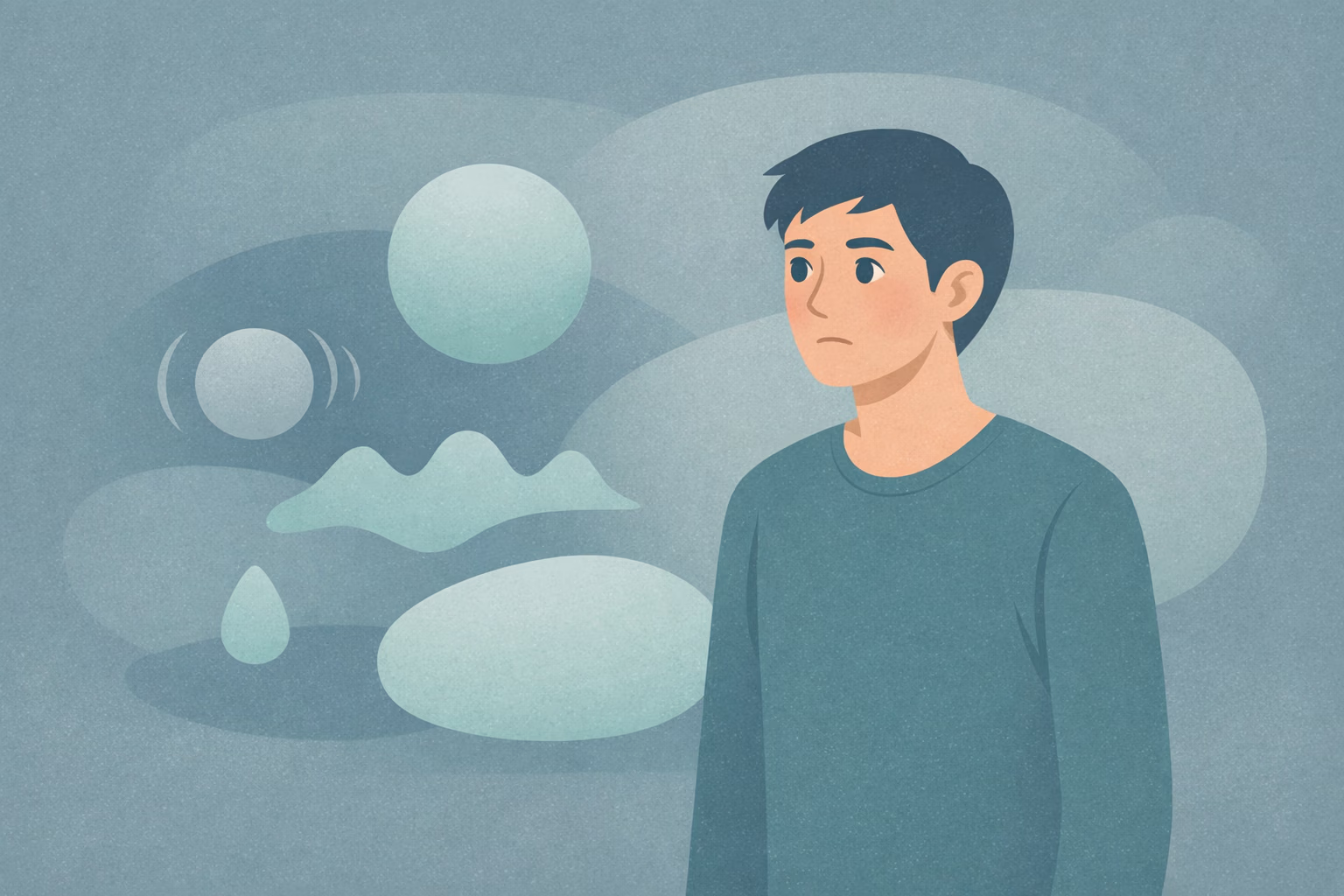
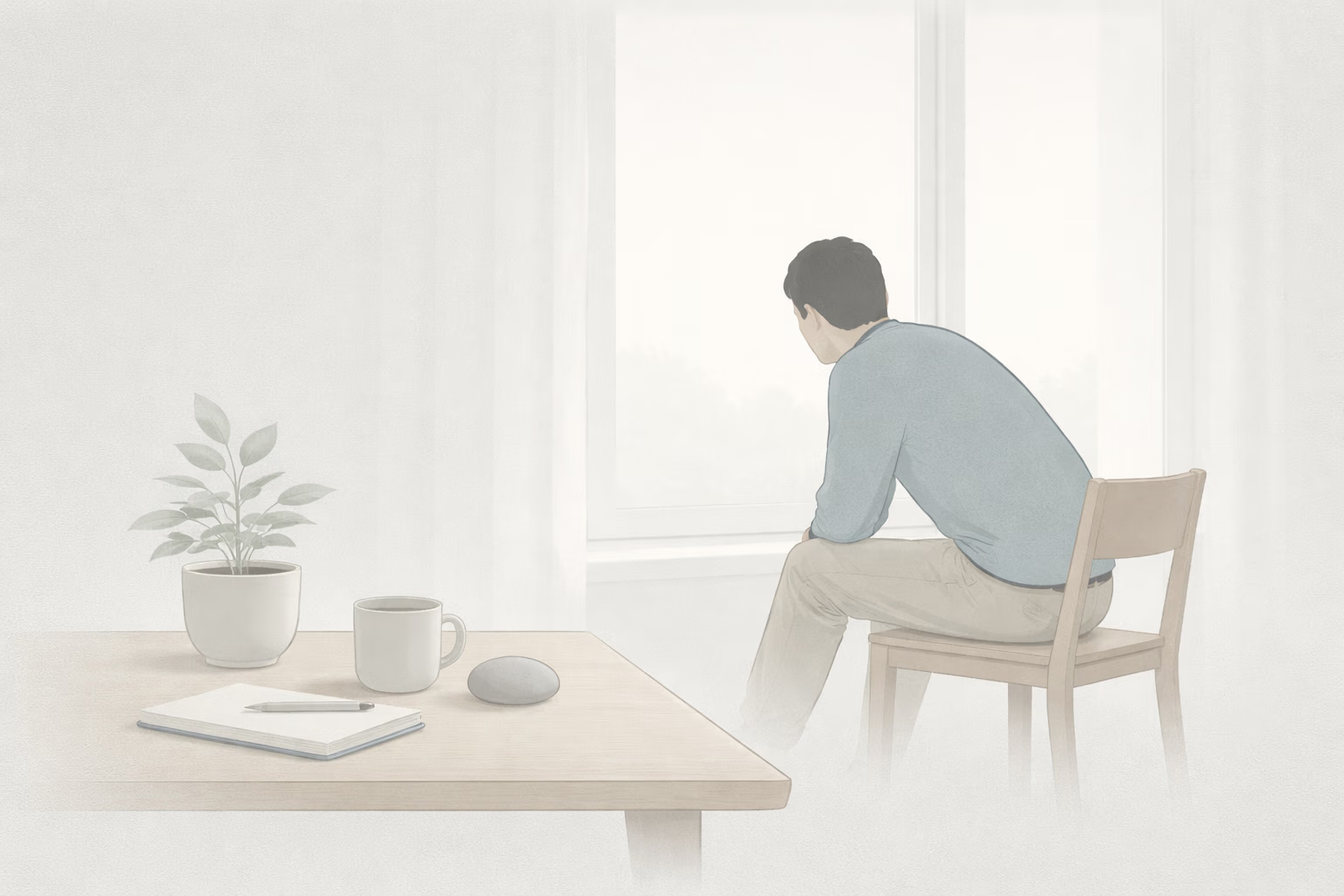
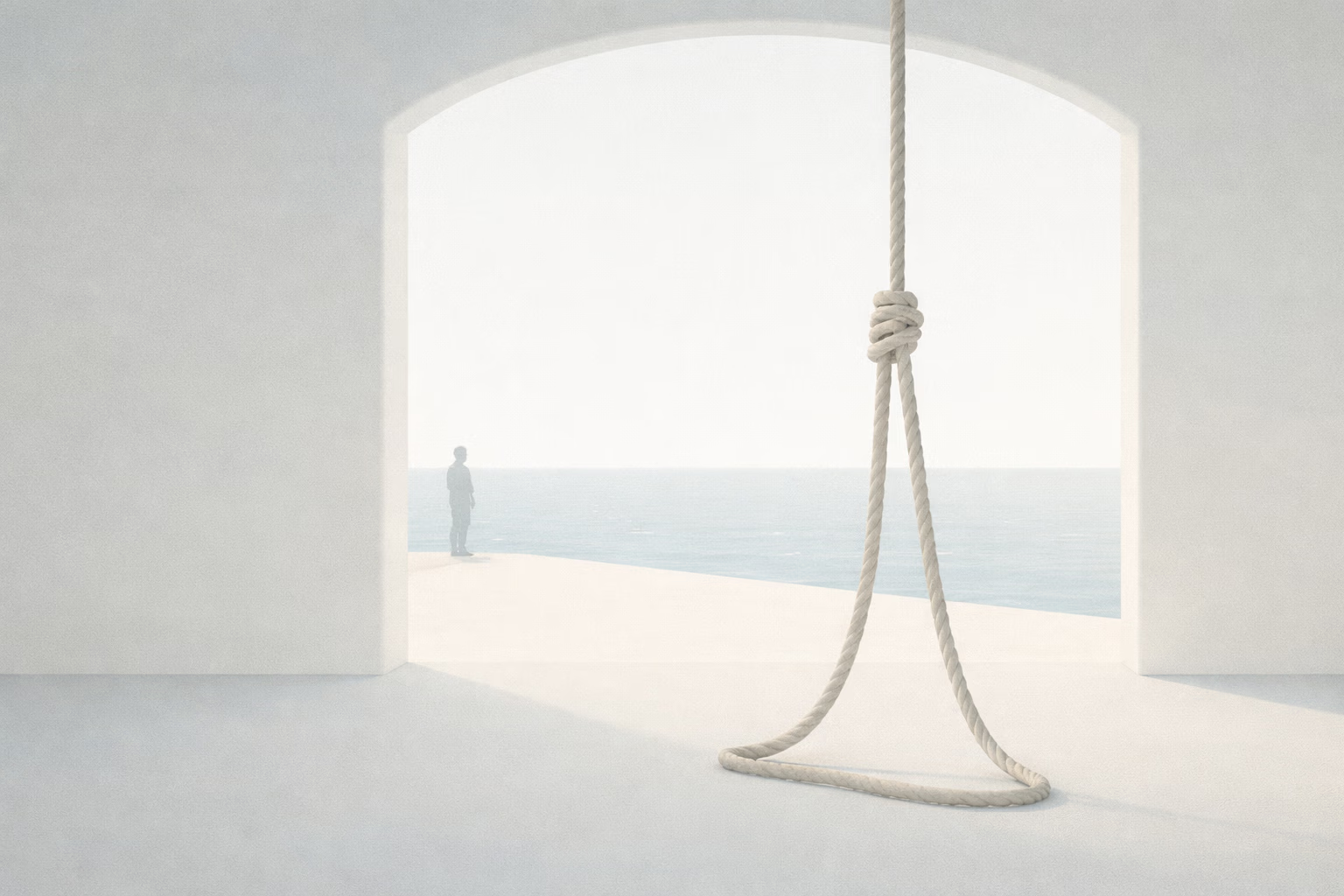
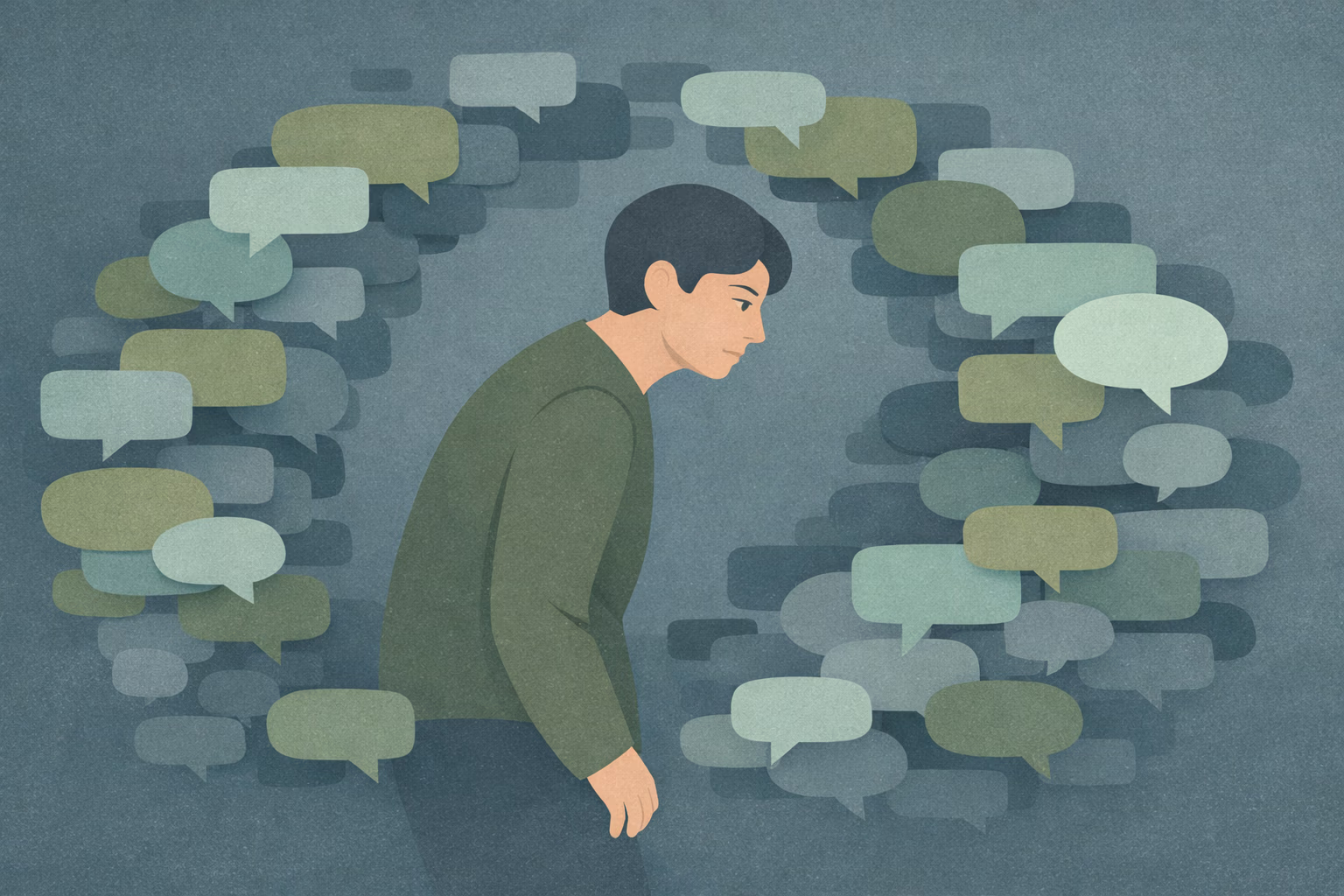
Understanding explains what is happening. Art allows you to feel it—without fixing, judging, or naming. Pause here. Let the images work quietly. Sometimes meaning settles before words do.
One Quiet Window, one insight, one reflection — every Sunday