

Stress Unlearning & Threat Deconditioning
Understand how to unlearn stress responses learned long ago.
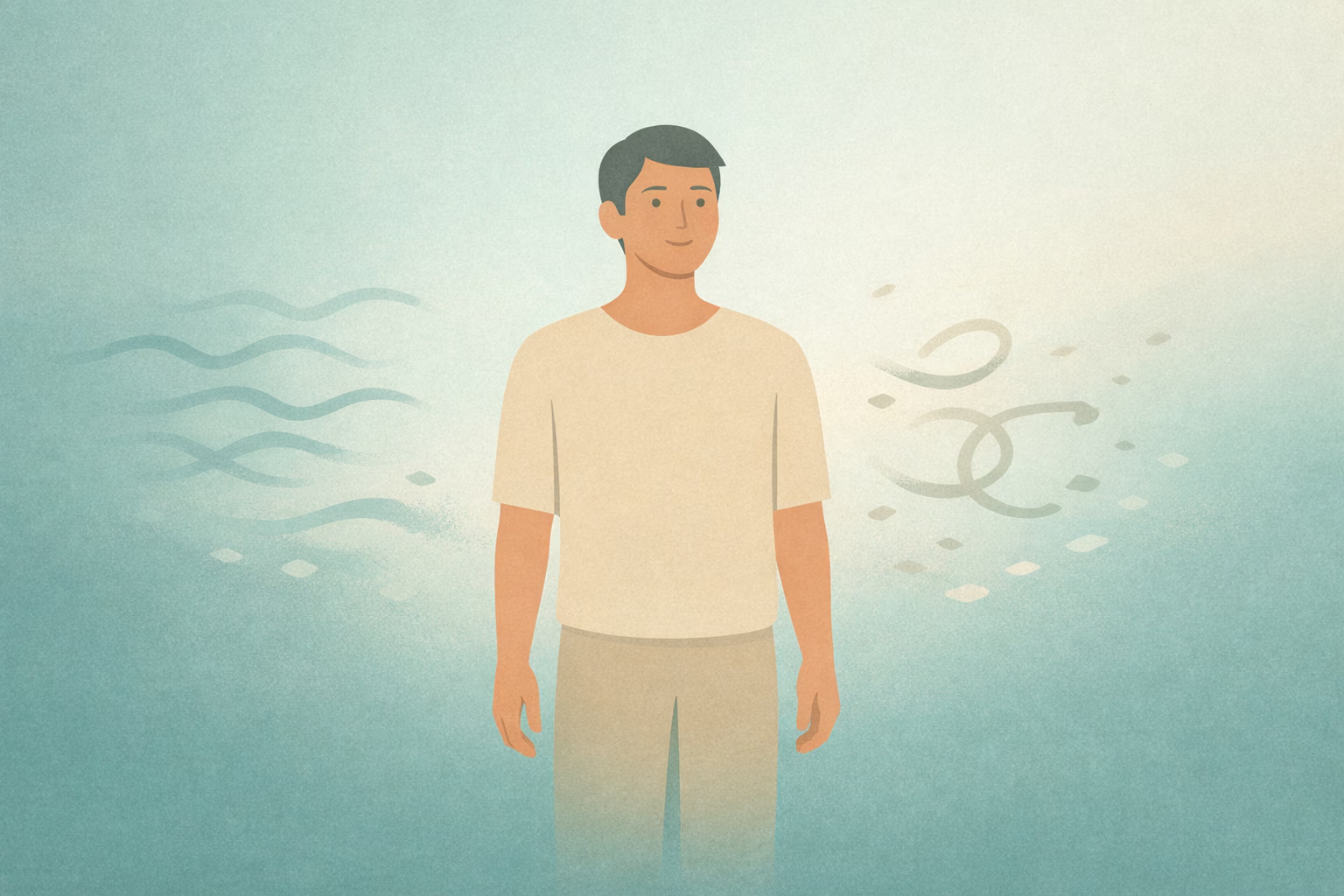
In context: You are experiencing “Readiness Loosening Its Hold.“ In the Meaning Density Model™, you don't have to “let go“ of your vigilance for easing to occur. Readiness can become “Soft“ instead of “Rigid.“ You still have your “Armor“ on, but it's no longer “pinching“ you.

Readiness loosens its hold without letting go completely.
The grip softens.
Tension eases while connection remains.
This matters.
You do not have to abandon preparedness to settle.
Partial release is enough.
Recognizing this prevents fear of collapse.
The system learns that safety does not require constant tightening.
Ease readiness safely with DojoWell.
Explore DojowellArticles exploring the psychology behind these patterns.
Understand how to unlearn stress responses learned long ago.

Learn how to increase emotional tolerance safely.

Explore how to align daily actions with deeper values.
You are experiencing "Readiness Loosening Its Hold." In the Meaning Density Model™, you don't have to "let go" of your vigilance for easing to occur. Readiness can become "Soft" instead of "Rigid." You still have your "Armor" on, but it’s no longer "pinching" you. This allows for a "Functional Easing"—you stay prepared without the high metabolic cost of a "Total-Body Brace."
Because "Total Release" can feel "Unsafe" if the environment is still high-load. "Loosening" is a "Pragmatic Down-regulation." It honors your need for Safety while reducing "Systemic Friction." In DojoWell, we don't demand you "Relax Completely." We just look for the "Loosening." This smaller step is often more "Integrity-Preserving" and easier for a stressed system to maintain.
One Quiet Window, one insight, one reflection — every Sunday