Stress Threshold: Why Some Days You Break Faster Than Others
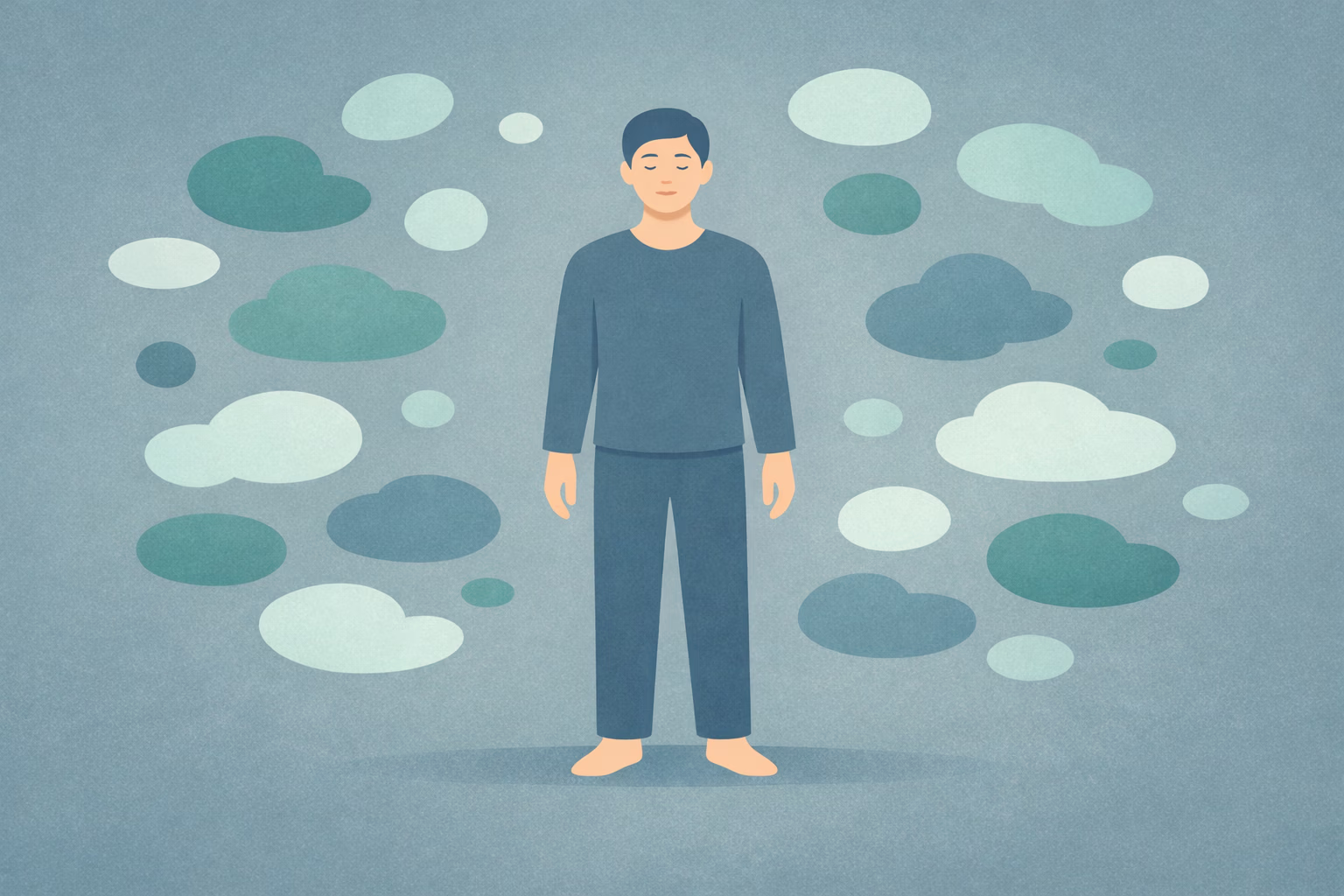
In short: Some people can “handle a lot,” and others can’t. But in real nervous systems, tolerance is less like a fixed trait and more like capacity—something that expands and contracts depending on load, safety cues, and whether experiences get to finish.
Emotional tolerance is often described like a personality trait: some people can “handle a lot,” and others can’t. But in real nervous systems, tolerance is less like a fixed trait and more like capacity—something that expands and contracts depending on load, safety cues, and whether experiences get to finish.
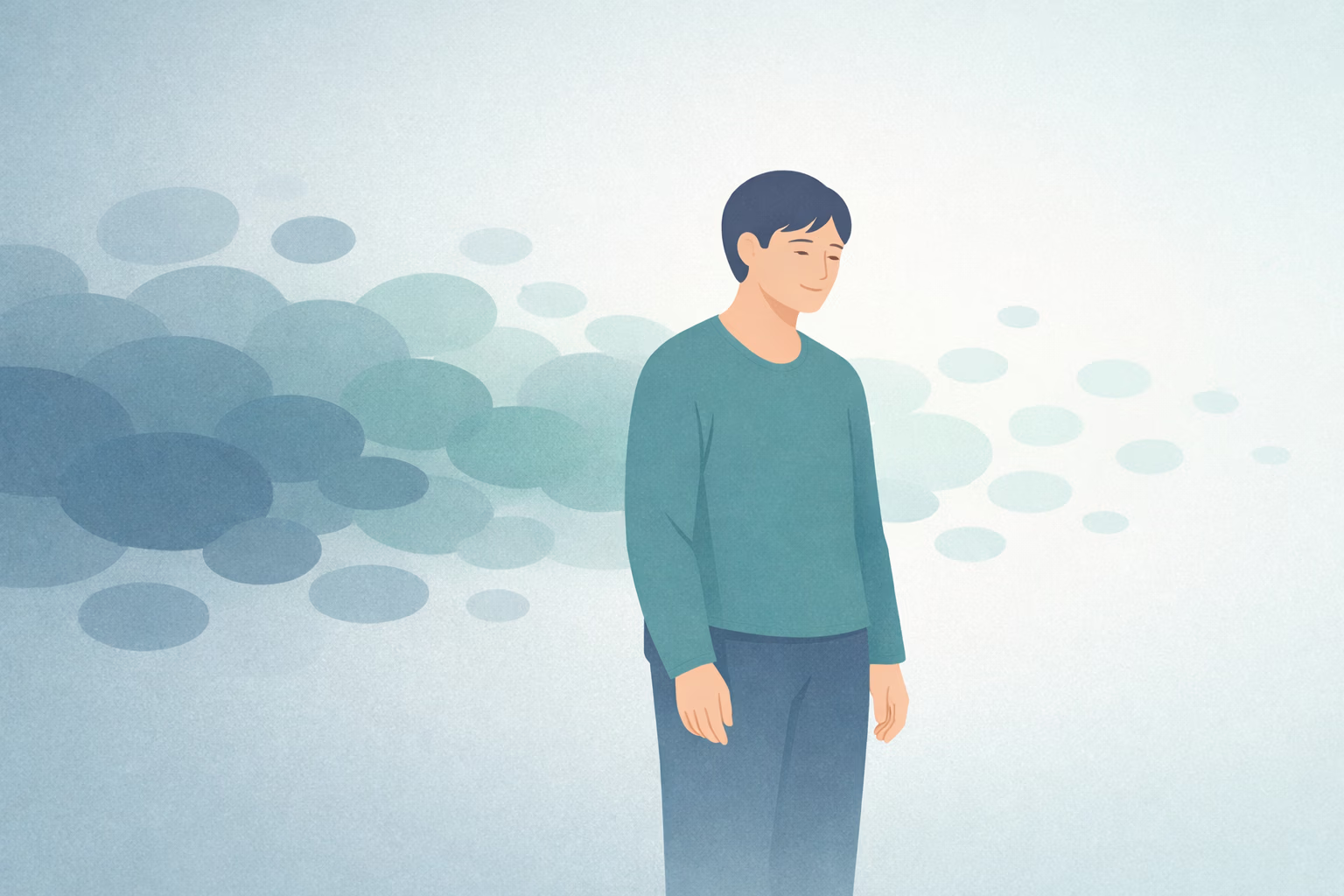
When tolerance is low, it can feel like emotions arrive already too large: a wave of sadness becomes collapse, frustration becomes sharp reactivity, uncertainty becomes urgency, and conflict becomes shutdown. These aren’t character flaws. They’re protective outputs from a system that is trying to prevent overload.
What if the problem isn’t that you feel “too much,” but that your system hasn’t had enough conditions for completion?
Many people don’t fear emotions in the abstract; they fear what happens after an emotion starts. The worry is practical: Will this take me out for the day? Will I say something I can’t take back? Will I go numb and disappear?
In that state, “a feeling” is not just information—it’s a potential cascade. The body anticipates the cost of intensity and prepares for impact. That anticipation can show up as bracing, urgency, mental scanning, or a quick move to control the situation before it grows. Emotion regulation is the broad set of processes that shape what happens next. [Ref-1]
Low tolerance often feels like a narrow window where experience is manageable. Outside that window, the system shifts into emergency modes—not because you’re broken, but because your physiology is choosing what seems safest in the moment.
People sometimes assume emotional tolerance increases when you “understand your feelings” or “think differently.” Understanding can be useful, but it’s not the same as capacity. Capacity is more bodily than philosophical: the nervous system learns, over time, what intensity it can carry without collapsing, escalating, or needing an immediate escape.
That learning depends on repeated experiences where activation rises and then returns—where the system gets a clear “done” signal. Stress neurobiology shows how repeated high activation without adequate recovery can sensitize threat systems, while experiences of manageable arousal can recalibrate responsiveness. [Ref-2]
Framing matters too, but not as a magical override. It matters because it can reduce extra load—like self-attack, catastrophic prediction, or social danger—so the body has fewer alarms to manage while the moment moves toward completion.
Across evolution, nervous systems were shaped to keep organisms functional. When intensity climbs past capacity, it makes sense for the system to prioritize immediate stability over nuanced processing. In other words: when the load is high enough, the body does what it must to keep you intact.
This is why intense emotion can trigger physical responses that feel “out of proportion”: tight chest, shallow breathing, frozen limbs, racing thoughts, blankness, nausea, heat, trembling. These are not moral verdicts; they are state shifts—mobilize, dampen, conserve, get safe.
Research on stress and the brain describes how prolonged or repeated stress can change reactivity and recovery, especially when activation doesn’t resolve into restoration. [Ref-3] From this lens, tolerance is closely tied to how reliably your system can climb down after it climbs up.
When intensity feels dangerous, it’s natural to move away from it. Not because you’re “afraid of feelings,” but because avoidance reduces immediate load. It can lower arousal quickly, restore a sense of control, and prevent social or practical fallout.
The catch is structural: if the system repeatedly exits before the arc completes, it doesn’t receive the bodily evidence that intensity can rise and then resolve. Avoidance can therefore keep the window of tolerance narrow—even when it provides real relief in the moment.
In exposure models, learning changes when an organism stays in contact long enough for new associations and “safety learning” to consolidate. [Ref-4] The key point is not endurance as a virtue; it’s completion as a signal.
There’s a common misunderstanding: that emotional tolerance is built by pushing harder. But forcing can increase strain without increasing capacity, especially if it adds internal pressure, shame, or the sense of being trapped.
Capacity expansion is more like gradual strengthening than sudden proving. It tends to happen when intensity is present but not overwhelming—when the system can stay oriented, track time, and eventually return to baseline. This is why pacing matters: not as a technique, but as a biological requirement for learning to “come back.”
Experiential avoidance research highlights how rigid escape patterns can narrow behavioral options and keep distress cycles running, even when those patterns start as sensible protection. [Ref-5]
When tolerance is limited, life gets organized around preventing spikes. People may not even notice it at first; it can look like “being practical,” “keeping things calm,” or “not making it worse.” Over time, the system learns that strong activation is followed by fallout, and it starts to pre-empt intensity earlier and earlier.
This can create a loop:
Suppression and chronic dampening can also carry physiological costs, including increased stress reactivity in some contexts. [Ref-6] Again, the issue isn’t “wrong coping.” It’s the lack of closure that keeps the system needing the same coping.
Low emotional tolerance can look very different across people, because nervous systems choose different stabilization strategies. What they share is speed: the system moves quickly to prevent overload.
Some research suggests that suppressing emotion can increase physiological stress and reduce social connectedness over time, whereas acceptance-related strategies are often associated with lower costs. [Ref-7] In real life, many people suppress because it’s the only available route to keep functioning under pressure—not because they lack insight.
“My reactions aren’t who I am. They’re what my system does when it thinks we’re over the edge.”
Emotional tolerance isn’t only about discomfort. It shapes what kinds of conversations you can have, what risks you can take, and how much reality you can hold at once. When capacity is low, the system tends to prefer smaller worlds: fewer conflicts, fewer unknowns, fewer deep needs, fewer meaningful stretches.
This is one reason limited tolerance can quietly affect relationships. Not through lack of love, but through limited bandwidth for repair, misattunement, or ambiguity. A person may become highly skilled at maintaining surface harmony while feeling privately exhausted.
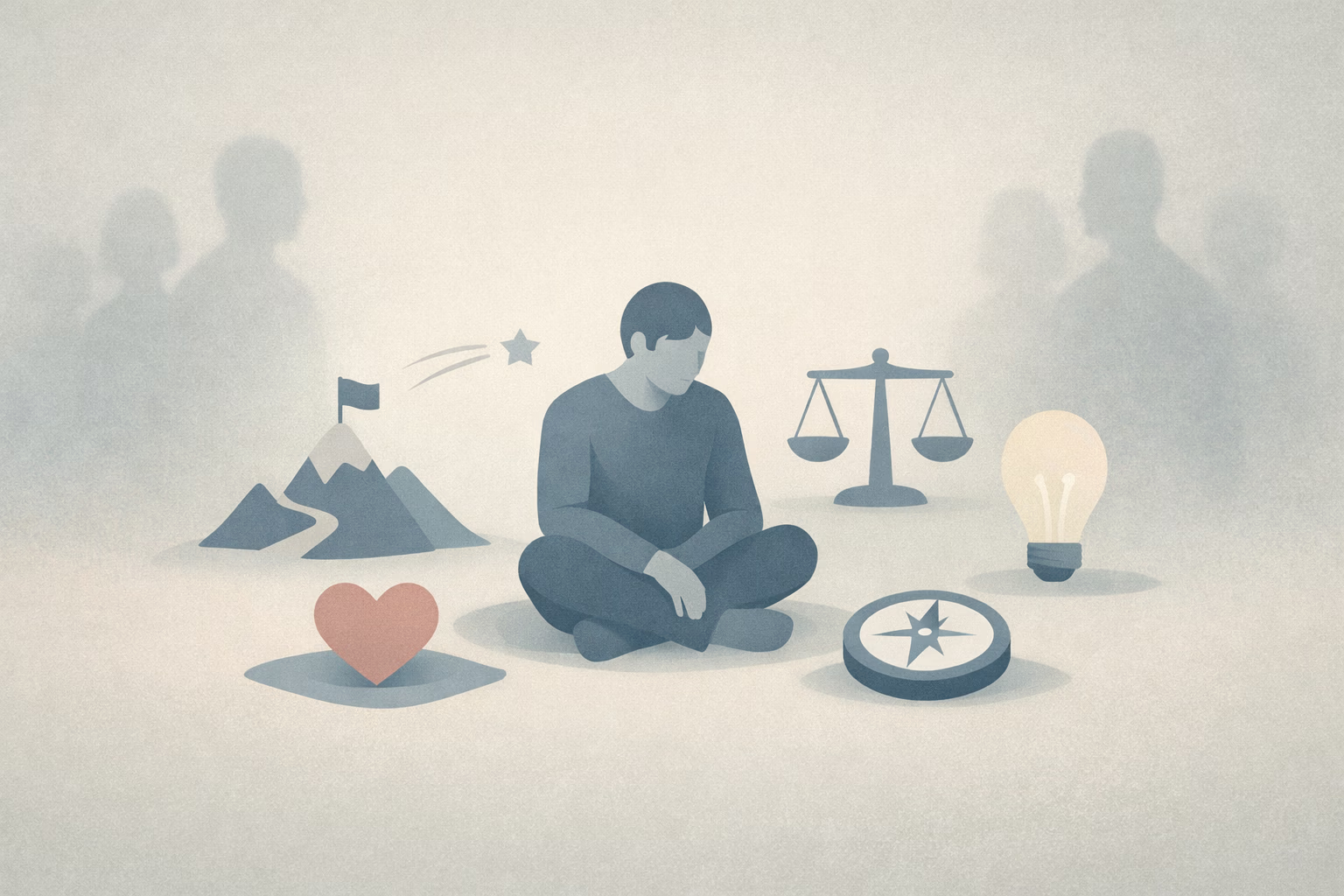
Psychological flexibility research emphasizes the value of being able to stay in contact with difficult internal experiences while still moving in directions that matter. [Ref-8] Not because discomfort is inherently good, but because meaning often requires contact with intensity long enough for the moment to complete.
Over time, repeated exit-before-completion can teach the nervous system that intensity has no ending. The body then responds earlier, faster, and more globally—because it expects escalation without resolution.
The opposite learning happens when the system has repeated experiences of: activation rising, support and orientation remaining available, and then a clear return. This is not about “liking” emotions. It’s about your body gaining evidence that strong states can move through without requiring emergency measures.
Safety is not only an idea; it’s a physiological condition shaped by cues like breath, posture, voice tone, pace, and the presence of trusted others. Polyvagal-informed perspectives describe how cues of safety can shift autonomic state toward connection and recovery. [Ref-9]
In a high-load life, “tolerance” can sound like endurance—like you’re supposed to withstand anything without impact. But a more human definition is steadiness: the capacity to stay partially online during intensity and to return afterward without needing a long detour.
What changes when tolerance increases?
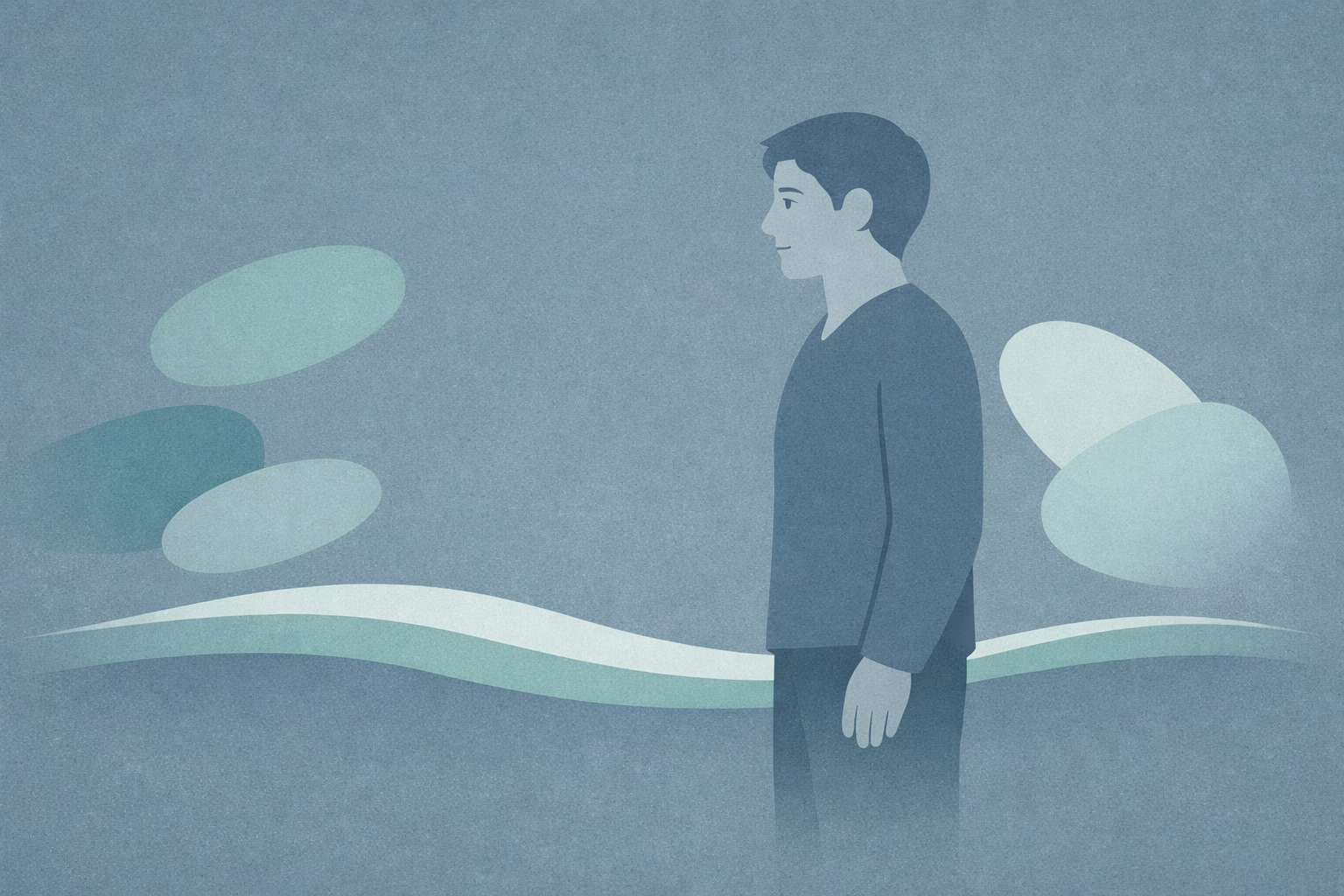
Not that emotions disappear, and not that you become endlessly calm. What changes is the shape of the arc. Intensity still rises, but it’s less likely to tip into collapse, compulsion, or rigidity. The system spends less time in all-or-nothing states.
This matters because chronic allostatic load—carrying stress activation without enough recovery—can wear on multiple body systems. [Ref-10] Tolerance, in this sense, is partly about reducing the “extra” activation that comes from fighting the experience or rushing it, so the body can move toward completion and stand-down.
Humans are regulated in relationship. When you’re with a steady person—or even remembering that steadiness—your system may borrow stability. This isn’t weakness; it’s biology. Co-regulation is a built-in feature of social nervous systems.
Mindfulness-related research often notes that body-based attention and non-reactive presence can support emotion regulation processes. [Ref-11] Importantly, many people access that kind of steadiness more easily with another person than alone, especially when their system is already near the edge.
Social buffering research also shows that supportive relationships can blunt stress responses. In lived terms, being accompanied can make an experience finish instead of fragment—so the body learns, “We can get through this and come back.”
Increased emotional tolerance doesn’t always feel like a breakthrough. Often it feels quietly practical. The same life events happen, but the aftereffects are less extreme, and the recovery is more reliable.
Over time, this can look like confidence, but it’s not the performative kind. It’s the embodied kind: the sense that your system can carry more reality and still remain yours.
As tolerance expands, access to meaning often expands with it. Not because intensity becomes pleasant, but because you can stay present long enough for moments to complete and integrate into identity: “That happened, I moved through it, and I’m still here.”
This is where richer challenges become possible—deep relationships, honest work, creative risks, necessary endings, real commitments. Many of these experiences naturally involve strong states. Without tolerance, they can feel impossible or not worth the cost. With more capacity, they become part of a life that feels lived rather than managed.
Attachment and emotion regulation research highlights how relational safety and early experiences shape regulatory capacity. [Ref-13] From a meaning perspective, safety isn’t just comfort—it’s the platform that allows completion, repair, and coherent selfhood to form over time.
“It’s not that life got lighter. It’s that I got more room inside it.”
Emotional tolerance is often misread as stoicism. In reality, it’s closer to range: the ability to move through more of life without having to shrink your world to stay functional.
When people blame themselves for low tolerance, they add a second load on top of the first. A non-shaming frame matters because it removes unnecessary threat from the system. Self-compassion research suggests that treating oneself with kindness rather than criticism is associated with better psychological outcomes. [Ref-14]
As capacity returns, agency tends to return with it—not as constant control, but as a steadier ability to choose, repair, and continue. And that is a kind of strength that doesn’t require force.
Emotional tolerance isn’t built by proving you can take pain. It’s built when your system repeatedly experiences intensity that resolves—when the story of the moment can finish and settle, rather than staying stuck as an unfinished alarm.
Over time, these completed arcs become part of narrative identity: not inspirational slogans, but lived evidence—“I can go through hard things and still be me.” [Ref-15]
That is how a nervous system becomes less brittle: not by being pushed past its limit, but by being supported into steadier, more coherent returns.
From theory to practice — meaning forms when insight meets action.
It's capacity, not trait — something that expands and contracts depending on load, safety cues, and whether experiences get to finish. When tolerance is low, emotions arrive already too large: sadness becomes collapse, frustration becomes sharp reactivity, uncertainty becomes urgency, conflict becomes shutdown. These aren't character flaws but protective outputs from a system trying to prevent overload. The window of tolerance is narrower; outside it, the system shifts into emergency modes. Capacity grows through adaptation, not persuasion or willpower. Your nervous system learns what intensity it can carry — and what it can't — through lived experiences, not arguments.
Because forcing increases strain without increasing capacity, especially when it adds internal pressure or shame. Tolerance expansion is gradual strengthening, not sudden proving. It happens when intensity is present but not overwhelming — when the system can stay oriented, track time, and eventually return to baseline. Pacing isn't a technique; it's a biological requirement for learning to come back. When intensity tips into collapse or compulsion, the body learns 'this is too much,' and the window narrows further. The goal isn't endurance as a virtue — it's completion as a signal. The system needs to feel the arc finish.
Avoidance reduces immediate load — it lowers arousal quickly, restores control, and prevents fallout. The catch is structural: if the system repeatedly exits before the arc completes, it doesn't receive bodily evidence that intensity can rise and then resolve. So the body responds earlier and faster next time, expecting escalation without resolution. The Avoidance Loop strengthens not because you're afraid of feelings but because exit-before-completion is what was available. Real expansion happens through repeated experiences of: activation rising, support and orientation remaining available, and a clear return. Safety cues — breath, voice tone, pace, trusted presence — make those returns possible.
Often quietly practical, not dramatic. The same life events happen, but aftereffects are less extreme and recovery is more reliable. You notice intensity sooner without it immediately hijacking behavior. There's more space between sensation and action. Conflict feels less like total threat to connection. Mixed feelings can coexist without an immediate verdict. After a hard moment, your system returns with fewer echoes. This isn't performative confidence — it's embodied. As capacity widens, Meaning Density returns: deep relationships, honest work, creative risks, real commitments become possible because you can stay present long enough for moments to complete and integrate.
From Science to Art.
Understanding explains what is happening. Art allows you to feel it—without fixing, judging, or naming. Pause here. Let the images work quietly. Sometimes meaning settles before words do.
One Quiet Window, one insight, one reflection — every Sunday