Values Alignment: How to Live What Truly Matters
In short: Internal alignment is often described as “doing what you believe in.” But in lived experience, it’s more like a quiet settling: your daily choices reliably match what you value, and your system stops having to argue with itself. What if the problem isn’t that you don’t care enough—but that your life isn’t giving you enough closure to live what you care about?
Internal alignment is often described as “doing what you believe in.” But in lived experience, it’s more like a quiet settling: your daily choices reliably match what you value, and your system stops having to argue with itself.
What if the problem isn’t that you don’t care enough—but that your life isn’t giving you enough closure to live what you care about?
When values and actions don’t line up, many people assume it’s a character issue. In reality, misalignment is frequently a load issue: too many open loops, too much evaluation, too little completion. Alignment tends to return when the conditions support follow-through, consequence, and a sense of “done.”
Misalignment has a specific texture. It isn’t just disappointment. It’s the friction of carrying a clear value (health, honesty, creativity, family, integrity) while repeatedly moving around it rather than through it.
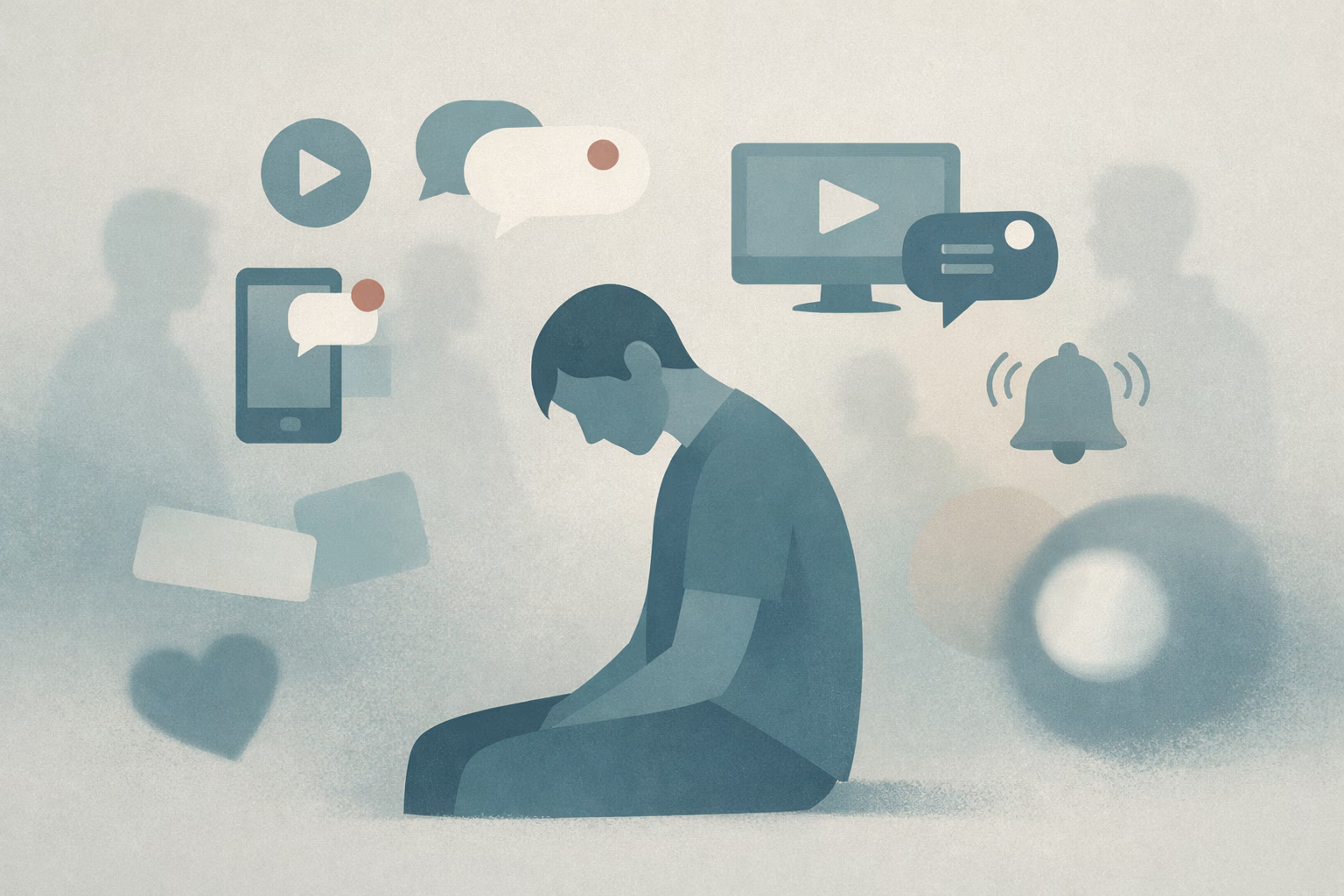
That friction can show up as tension, irritability, self-critique, or a vague sense of being “off.” It can also look surprisingly quiet: numb focus, constant busyness, or a low-grade fatigue that doesn’t lift with rest. The strain comes from running two tracks at once—what you stand for, and what your days actually reinforce. [Ref-1]
When your calendar tells a different story than your values, your body often becomes the messenger.
When actions and values conflict, the brain doesn’t treat it as a neutral puzzle. It often registers as uncertainty: “Can I rely on myself?” That question carries survival weight, because self-trust is a safety cue—especially in complex environments where you can’t predict outcomes moment to moment.
This is one reason misalignment can bring urgency, avoidance, or shutdown. The system looks for a fast way to reduce internal conflict, and it will often choose the quickest state-change available—distraction, justification, overcontrol, or disengagement—because those options lower immediate strain even if they don’t restore coherence. [Ref-2]
When the nervous system is already loaded, even small value-conflicts can feel disproportionately loud.
Humans don’t just react; we organize life into story. Values help that story stay coherent across time: they connect yesterday’s choices to tomorrow’s direction. When behavior repeatedly contradicts values, it creates a kind of narrative split—two versions of “who I am” competing for control of the next decision.
This isn’t about being dramatic. It’s about how meaning stabilizes: experiences settle when they can be integrated into identity as complete. When the loop stays open—“I care, but I’m not living it”—the system keeps scanning for resolution. That ongoing scan consumes capacity and increases inner noise. [Ref-3]
In other words, the stress is not only moral or emotional. It’s structural: unfinished identity claims (“I’m someone who…”) without the completions that make them true in the body.
When something matters, it usually carries friction: effort, uncertainty, exposure to consequence, or the risk of disappointing someone. Under load, the system naturally prioritizes the fastest reduction in discomfort. This is why immediate comfort and social approval can become default regulators.
The tricky part is that these regulators work—briefly. They lower tension without requiring completion. But because they don’t close the meaning loop, they can increase long-term dissonance: you feel calmer for an hour, then more divided later. Values-based living tends to support well-being not because it is virtuous, but because it produces the kind of closure that lets the nervous system stand down. [Ref-4]
It can look like nothing is wrong: you’re functional, you’re responding to messages, you’re meeting the basics. And yet there’s an inner drag—because the pattern your days reinforce isn’t the one you recognize as yours.
Over time, repeated small compromises create a specific cost: decreased self-trust. Not as a thought (“I’m unreliable”), but as a bodily expectation that intentions don’t land. When goals and values aren’t self-concordant—when they don’t truly match identity—persistence becomes harder because the system doesn’t receive the internal reward of “this is me, confirmed.” [Ref-5]
Convenience is not the enemy. The issue is when convenience becomes the only place your system gets relief.
Misalignment rarely stays one-time. It becomes a loop because the nervous system learns what reduces friction quickly. If value-based actions feel costly (time, conflict, uncertainty), the system starts selecting alternatives that are faster to execute and easier to measure.
Common compensations include distraction, over-optimizing plans without embodying them, chasing small rewards, or tightening control around minor tasks. These aren’t random habits; they’re regulatory substitutes that provide short-term closure signals without true completion. In goal research, this shows up as low self-concordance: goals pursued for external reasons or pressure tend to be harder to sustain and less satisfying even when achieved. [Ref-6]
When completion is unavailable, the mind often settles for movement.
Because misalignment is a structure, not a personality type, it can take many forms. The surface behavior differs, but the underlying pattern is similar: value-based actions keep getting postponed, diluted, or traded away for faster regulation.
None of these are evidence that you don’t care. Often they’re evidence that your system is protecting capacity by choosing lower-consequence routes when the higher-meaning route feels too expensive right now. [Ref-7]
When misalignment becomes chronic, it doesn’t just affect mood. It can change what life feels like it “adds up to.” Meaning is partly a perception of coherence—signals that your actions and identity are moving in the same direction. Without that, even good things can feel thin.
Over time, people may notice reduced resilience under stress: it takes less to tip into overwhelm, shutdown, or urgency. This makes sense physiologically. A system carrying many open loops spends more energy maintaining readiness. The body stays closer to activation because completion hasn’t delivered the stand-down signal. Values-based actions are associated with well-being partly because they help organize attention and behavior into a coherent pattern the nervous system can trust. [Ref-8]
Misalignment doesn’t just hurt because it feels bad. It hurts because it prevents settling.
Many people can name their values clearly. The challenge is not articulation—it’s reinforcement. Identity becomes real in the nervous system when it is repeatedly confirmed by completed actions and their consequences. Without that reinforcement, values remain abstract, and behavior keeps defaulting to whatever reduces load fastest.
When value-aligned choices are habitually bypassed, the brain doesn’t get the learning signal that says, “This is who we are; this is safe; this works.” Instead, it learns, “We talk about this, but we don’t do it,” which further weakens self-trust and increases inner friction. [Ref-9]
Values become stabilizing when they are lived often enough to feel inevitable.
Reflection can be useful, but insight is not the same as integration. You can understand your values and still feel divided, because the body is waiting for completion, not explanation. Integration is the quiet physiological “click” that happens after enough aligned actions close enough loops that identity can settle.
That said, humans often begin rebuilding coherence through meaning-making practices like journaling, careful self-inventory, and conscious planning—not as self-improvement projects, but as ways of reducing fragmentation and clarifying what is actually being asked of you in real life. The point is not to pressure yourself into consistency; it’s to restore a clearer map so completion becomes possible. [Ref-10]
Internal alignment tends to return when life becomes coherent enough for follow-through to feel real.
Alignment is easier to sustain in environments that provide steady mirrors: people who reflect you accurately, notice what matters to you, and respond to you as a whole person rather than a performance. This isn’t about accountability as pressure; it’s about relational safety cues that reduce threat load.
When someone trustworthy holds your values with you—remembering them, naming them, respecting them—your nervous system receives support for continuity. That continuity helps actions “stick” long enough to become identity-level reinforcement. Over time, this can reduce the need for compensatory regulation like hiding, overexplaining, or chasing approval. [Ref-11]
When actions and values line up consistently, many people expect fireworks. More often, it feels plain—and relieving. The internal bargaining decreases. Decisions require fewer justifications. The body spends less energy bracing for self-contradiction.
This can look like steadier calm, clearer confidence, and a more reliable sense of direction. Not because life is easy, but because your system isn’t running two opposing stories at once. The result is often increased capacity: more patience, more flexibility, and quicker recovery after stress because fewer loops remain open. [Ref-12]
Alignment doesn’t make you perfect. It makes you less split.
With restored alignment, goals stop feeling like constant negotiation. They become extensions of who you already are. This is one reason values-consistent decisions can feel steadier over time: they reduce the cognitive and physiological cost of choosing.
In this state, planning tends to be less performative and more orienting. You’re not trying to become someone else; you’re expressing someone you recognize. That shift supports meaning-driven behavior because the nervous system expects follow-through and can tolerate the short-term friction that meaningful choices sometimes require. [Ref-13]
Agency grows when your life repeatedly confirms your values—so your system doesn’t have to keep asking.
If your values and actions don’t match right now, it doesn’t necessarily mean you’re unserious or incapable. It may mean your system has been operating in conditions where completion is hard: too much evaluation, too many demands, too little room for consequences to settle into identity.
Seen this way, misalignment becomes information: something in the environment, the pace, or the tradeoffs is preventing closure. Values can function as a compass—not as a weapon against yourself. And coherence is often less about intensity and more about reducing fragmentation so what matters can be lived consistently enough to become real. [Ref-14]
Internal alignment is what happens when your nervous system no longer has to compensate for a split between meaning and behavior. With enough completed, values-consistent experiences, identity becomes less theoretical and more embodied—something you can rely on in real time.
That reliability is stabilizing. It supports regulation, reduces inner friction, and makes meaningful action feel less like willpower and more like continuity. Over time, the life you live becomes the life that makes sense. [Ref-15]
From theory to practice — meaning forms when insight meets action.
Misalignment is frequently a load issue, not a character issue: too many open loops, too much evaluation, too little completion. Alignment returns when conditions support follow-through, consequence, and a sense of done. The friction of carrying a clear value (health, honesty, family, integrity) while repeatedly moving around it rather than through it is a structural problem — running two tracks at once: what you stand for, and what your days actually reinforce. When your calendar tells a different story than your values, your body often becomes the messenger. The strain shows up as tension, irritability, low-grade fatigue that doesn't lift with rest.
When actions and values conflict, the brain doesn't treat it as a neutral puzzle. It registers as uncertainty: can I rely on myself? That question carries survival weight because self-trust is a safety cue. Misalignment brings urgency, avoidance, or shutdown because the system looks for fast ways to reduce internal conflict — distraction, justification, overcontrol, disengagement. These options lower immediate strain even if they don't restore coherence. When the nervous system is already loaded, even small value-conflicts can feel disproportionately loud. The Threat & Safety System is treating self-trust like infrastructure, because biologically, it is.
Insight isn't integration. You can understand your values clearly and still feel divided because the body is waiting for completion, not explanation. Integration is the quiet physiological click that happens after enough aligned actions close enough loops that identity can settle. Identity becomes real in the nervous system when it is repeatedly confirmed by completed actions and their consequences. Without that reinforcement, values remain abstract, and behaviour defaults to whatever reduces load fastest. The brain doesn't get the learning signal that says this is who we are; this is safe; this works. Internal alignment returns when life becomes coherent enough for follow-through to feel real.
Most people expect fireworks; more often it feels plain — and relieving. Internal bargaining decreases. Decisions require fewer justifications. The body spends less energy bracing for self-contradiction. Steadier calm, clearer confidence, a more reliable sense of direction. Not because life is easy, but because your system isn't running two opposing stories at once. Capacity increases: more patience, more flexibility, quicker recovery after stress because fewer loops remain open. Alignment doesn't make you perfect — it makes you less split. Meaning Density grows when actions repeatedly confirm your values, so your system doesn't have to keep asking who you are.
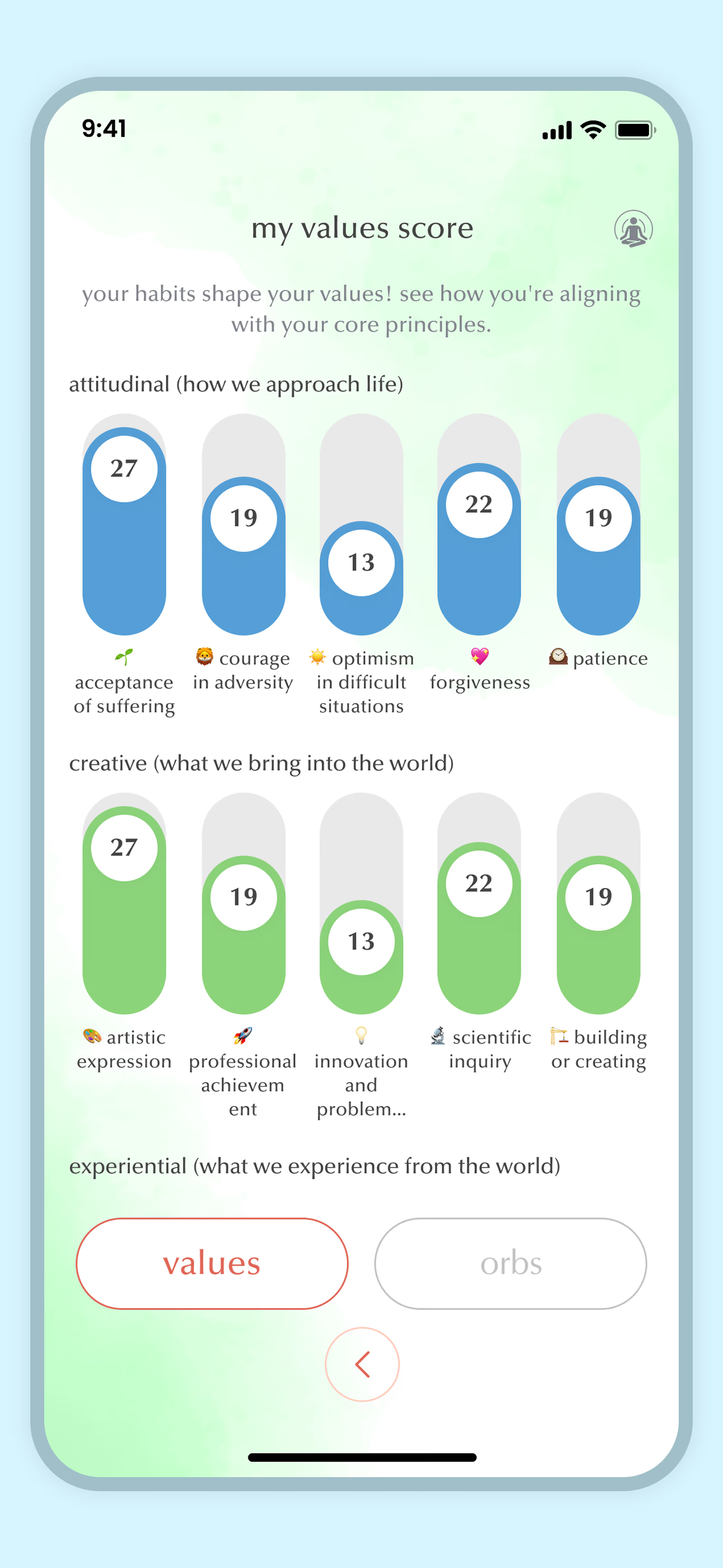
From Science to Art.
Understanding explains what is happening. Art allows you to feel it—without fixing, judging, or naming. Pause here. Let the images work quietly. Sometimes meaning settles before words do.
One Quiet Window, one insight, one reflection — every Sunday