Chronic Stress Patterns: The Loops You Stop Noticing
In short: Sometimes the most confusing part of stress isn’t the stressor—it’s how automatic the reaction can feel. Your day might be objectively fine, your mind might “know” you’re safe, and yet your body moves like something is about to go wrong: tightness, urgency, scanning, bracing.
Sometimes the most confusing part of stress isn’t the stressor—it’s how automatic the reaction can feel. Your day might be objectively fine, your mind might “know” you’re safe, and yet your body moves like something is about to go wrong: tightness, urgency, scanning, bracing.
If you already understand you’re safe, why does your system still react like you aren’t?
“Stress unlearning” can be understood as the gradual dismantling of threat responses that were once adaptive, repeated often, and then carried forward into a present that no longer matches them. It’s not about forcing calm. It’s about how a nervous system stands down when it receives enough real, repeated closure that the loop is complete.
A nervous system can react faster than conscious thought. That speed is protective: it reduces the time between detecting a cue and preparing the body to respond. The trouble is that the system doesn’t only respond to actual danger; it also responds to cues that have been linked with danger before.
This is why you can feel “overreactive” while also feeling rational. The reaction is not a moral failure or a lack of insight. It’s a learned, embodied sequence—an alarm pattern that can keep firing even when the environment has changed. [Ref-1]
It can feel like you’re living in a present moment with an old instruction manual.
When a cue (a tone, a look, a room, a silence, a notification sound) repeatedly coincides with harm, humiliation, overload, or instability, the nervous system starts treating the cue itself as meaningful. This is classical conditioning in plain language: associations strengthen through repetition and timing. [Ref-2]
Importantly, these associations don’t need to be dramatic to become durable. They can form through chronic pressure, unpredictable feedback, or repeated moments of being cornered by demands without a clean “done” signal. A system that has learned “this predicts trouble” will prepare early—because early preparation used to work.
Over time, safety experiences that truly register as safe can weaken those associations, not by convincing the mind, but by changing what the body expects will happen next.
From an evolutionary perspective, remembering danger has a different cost-benefit profile than remembering safety. A false alarm wastes energy; a missed threat can be fatal. So many brains and bodies are biased toward holding onto threat predictions—especially when the earlier experience felt intense, unpredictable, or repeated.
This can create a lopsided archive: danger memories are easily retrieved, while safety memories may feel less “sticky” or less available under load. The result isn’t irrationality—it’s a survival system optimized to keep you alive, not necessarily to help you feel at ease on a random Tuesday. [Ref-3]
There’s another twist: a familiar stress response can bring predictability. If your system has learned that bracing, scanning, overpreparing, or pulling back reduces uncertainty, then those moves can feel like “doing something,” even when they come with a cost.
In this sense, some stress reactions become self-reinforcing not because a person wants distress, but because the pattern creates a temporary sense of manageability: fewer surprises, fewer exposures, fewer unplanned outcomes. That predictability can read as safety to a nervous system that has had to operate without reliable closure. [Ref-4]
What if the problem isn’t that you’re too reactive—but that your system learned that reactivity prevents worse outcomes?
It’s common to interpret persistent stress as “just my personality” or “how I’m wired.” But stress physiology and threat learning are plastic: the brain and body change with repeated experience, for better or worse. [Ref-5]
This matters because it shifts the story from identity to conditions. When the environment repeatedly signals urgency, evaluation, or social uncertainty, the body adapts. When the environment provides consistent cues of safety and completion, the body can adapt again.
Adaptability doesn’t mean instant change, and it doesn’t mean thinking differently is enough. It means the system is capable of updating when the inputs finally include enough safety, enough stability, and enough “this ended and I’m okay.”
An avoidance loop doesn’t have to look like hiding. It can look like staying busy, staying hyper-responsible, staying “on,” staying ready—anything that reduces contact with uncertainty and prevents the system from having to find out what would happen if you didn’t brace.
In stress unlearning, the shift is less about “being fearless” and more about the nervous system no longer needing to run the same protective sequence on autopilot. That shift happens when threat conditioning is interrupted by experiences that include safety, tolerability, and a sense of completion. Chronic stress, by contrast, keeps the circuitry primed—especially when the day never resolves into a clean stand-down. [Ref-6]
Unlearning is not a performance. It’s the system realizing it can stop spending so much energy on prevention.
Outdated threat responses often look like “symptoms,” but structurally they’re regulatory strategies: the system is trying to reduce surprise, reduce exposure, and maintain enough control to get through the day. Emotional memory can prime these reactions quickly, sometimes before you can name what changed. [Ref-7]
Common patterns include:
None of these are character flaws. They’re signs of a system operating under a remembered workload.
When threat responses stay online, they narrow life. Not because you’re unwilling to engage, but because engagement becomes expensive. Attention gets allocated to monitoring. Social contact gets filtered through risk. Decisions get shaped by what prevents discomfort rather than what completes something meaningful.
Over time, the system can lose access to the ordinary “done” signals that help experiences settle: finishing a conversation and feeling it land, completing a task and letting it be complete, ending a day and feeling off-duty. Without those closures, activation stays partially open, like a tab that never stops running in the background. Emotional memory retrieval can keep that background activity vivid. [Ref-8]
When the body doesn’t register completion, how can it fully rest?
Conditioning is maintained when activation repeats without a corrective sequence. If the nervous system keeps encountering cues that trigger threat—and then you exit, override, numb, rush, or control—there may be short-term relief, but the deeper prediction (“this is dangerous”) never gets disproven at the level that counts.
In other words, the loop doesn’t close. The system prepares; the situation ends; but it ends without a registered update that says, “I stayed present, I was safe enough, and it completed.”
Many modern lives also reduce safety cues: fewer predictable rhythms, fewer co-regulating interactions, less time for the body to downshift. When safety cues are scarce, the system has fewer reasons to deactivate. [Ref-9]
A key reframing is this: threat deconditioning isn’t primarily a cognitive debate. It’s an expectation update. The body learns from what happens while you are in a state that can actually register new information—especially internal information like breath, muscle tone, heartbeat, and the sense of “I can be here and nothing is escalating.” [Ref-10]
This is why “gentle exposure to safety” matters as a concept. Not exposure as a harsh push, and not safety as a pep talk. Rather, moments where a cue that once meant danger is paired with an experience of enough regulation, enough support, and enough time for the nervous system to notice the difference.
When safety is experienced with capacity online, the prediction begins to loosen.
Humans are built for co-regulation. A steady, attuned relationship can function like a physiological scaffold: it increases the likelihood that the nervous system will stay within tolerable range long enough for an experience to complete rather than fragment.
This is not about “depending” or being fragile. It’s about biology. When cues of safety arrive through voice, facial expression, timing, and repair after misunderstandings, the system gets repeated evidence that connection doesn’t automatically equal threat. Practices that involve present-moment attention and body awareness are often discussed in this context because they can support regulation and reduce automatic escalation. [Ref-11]
When the social environment becomes more predictable and less evaluative, the need for defensive anticipation tends to decrease.
Stress unlearning is often subtle before it’s obvious. It may show up less as a constant feeling of calm and more as a different recovery curve: activation still happens, but it resolves sooner. The system returns to baseline more readily, and the “off” switch becomes more accessible.
Over time, people often notice markers like:
These shifts are consistent with what we know about stress buffering and the role of supportive contexts in reducing physiological load. [Ref-12]
One of the most underappreciated effects of threat deconditioning is not just “less stress,” but more available life. When your system isn’t spending so much energy on prediction and prevention, attention can move toward curiosity, learning, and connection.
This is where meaning becomes practical. Meaning isn’t a motivational poster; it’s what emerges when experiences complete and settle into identity—when your choices start to feel like they belong to you, not just to your alarm system. As protective patterns soften, it becomes easier to sense direction: what matters, what fits, what you’re here for.
In that way, unlearning threat is also reclaiming agency. Not by forcing bravery, but by restoring the capacity to engage without constant internal negotiation. [Ref-13]
Stress responses are often loyal. They formed in conditions where speed, vigilance, or control reduced harm. Remembering that can lower shame: these patterns were not random, and they were not evidence of weakness.
And you’re also allowed to live in a present tense that doesn’t require constant protection. Unlearning is one way the nervous system updates its relationship with memory—so that the past can be remembered without continually being re-enacted. [Ref-14]
There’s a difference between respecting your history and letting it run your whole day.
As threat learning fades, life often feels less like something to manage and more like something to inhabit. Not perfect, not permanently calm—just more available.
When the system isn’t organized around avoidance, it has more room for values to become real: not as ideals to chase, but as a lived orientation that brings coherence. Over time, that coherence can become its own kind of stability—quiet, durable, and self-respecting. [Ref-15]
From theory to practice — meaning forms when insight meets action.
Because the nervous system reacts faster than conscious thought, and it responds to cues that have been linked with danger before — not just to actual danger now. The article frames this as a learned, embodied sequence: an alarm pattern that keeps firing even when the environment has changed. It can feel like living in a present moment with an old instruction manual. The reaction isn't moral failure or lack of insight; it's classical conditioning at work. Importantly, these associations don't need dramatic events to become durable — chronic pressure, unpredictable feedback, or repeated moments of being cornered without a clean Done Signal also build them.
Because remembering danger has a different cost-benefit profile than remembering safety. A false alarm wastes energy; a missed threat can be fatal. So many brains and bodies are biased toward holding onto threat predictions — especially when the earlier experience felt intense, unpredictable, or repeated. The article frames this as a lopsided archive: danger memories are easily retrieved, while safety memories may feel less sticky or less available under load. The result isn't irrationality — it's a survival system optimized to keep you alive, not necessarily to help you feel at ease on a random Tuesday. The Threat & Safety System has its priorities.
Because conditioning is maintained when activation repeats without a corrective sequence. If the nervous system keeps encountering cues that trigger threat — and you exit, override, numb, rush, or control — there's short-term relief, but the deeper prediction 'this is dangerous' never gets disproven at the level that counts. The loop doesn't close. The system prepares, the situation ends, but ends without a registered update of 'I stayed present, I was safe enough, and it completed.' Modern lives also reduce safety cues — fewer predictable rhythms, less co-regulation — so the system has fewer reasons to deactivate.
Through expectation update, not cognitive debate. The article reframes deconditioning as something the body learns from what happens while you're in a state that can actually register new information — breath, muscle tone, heartbeat, the felt sense of 'I can be here and nothing is escalating.' Gentle exposure to safety isn't a harsh push or a pep talk; it's pairing a cue that once meant danger with an experience of enough regulation, enough support, enough time for the nervous system to notice the difference. Co-regulation accelerates this because connection provides the scaffold that keeps the system within tolerable range long enough for experiences to complete rather than fragment.
From Science to Art.
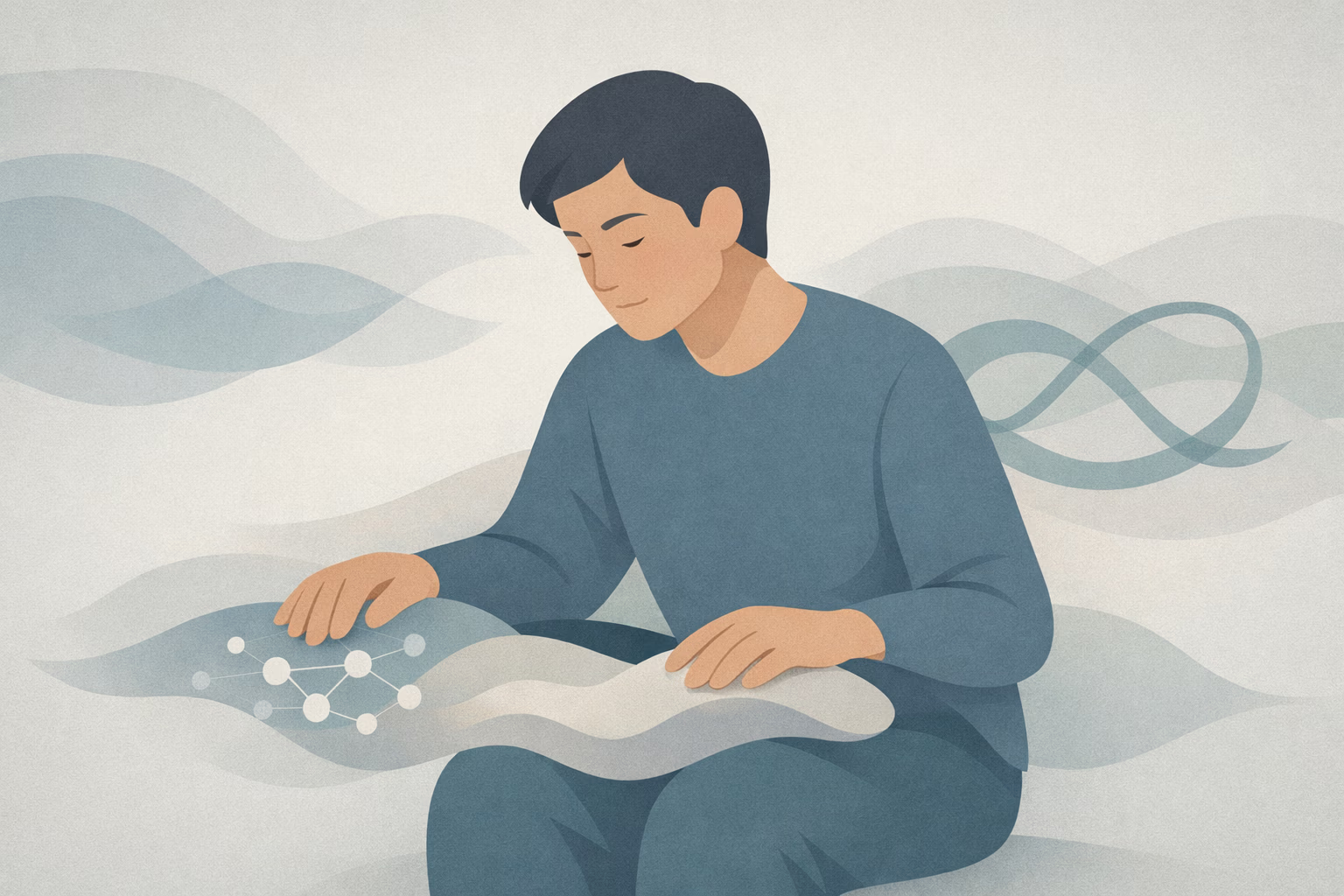
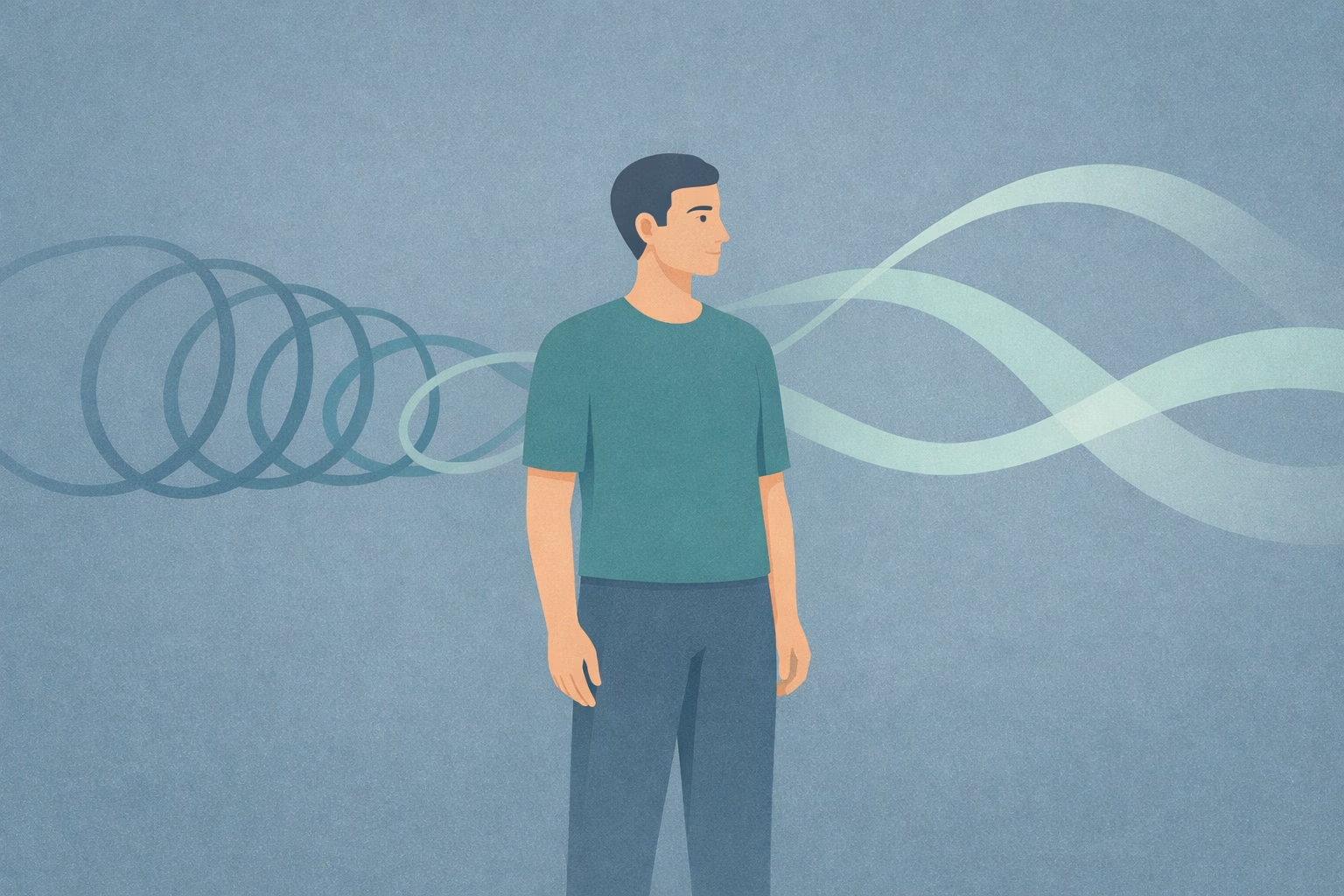
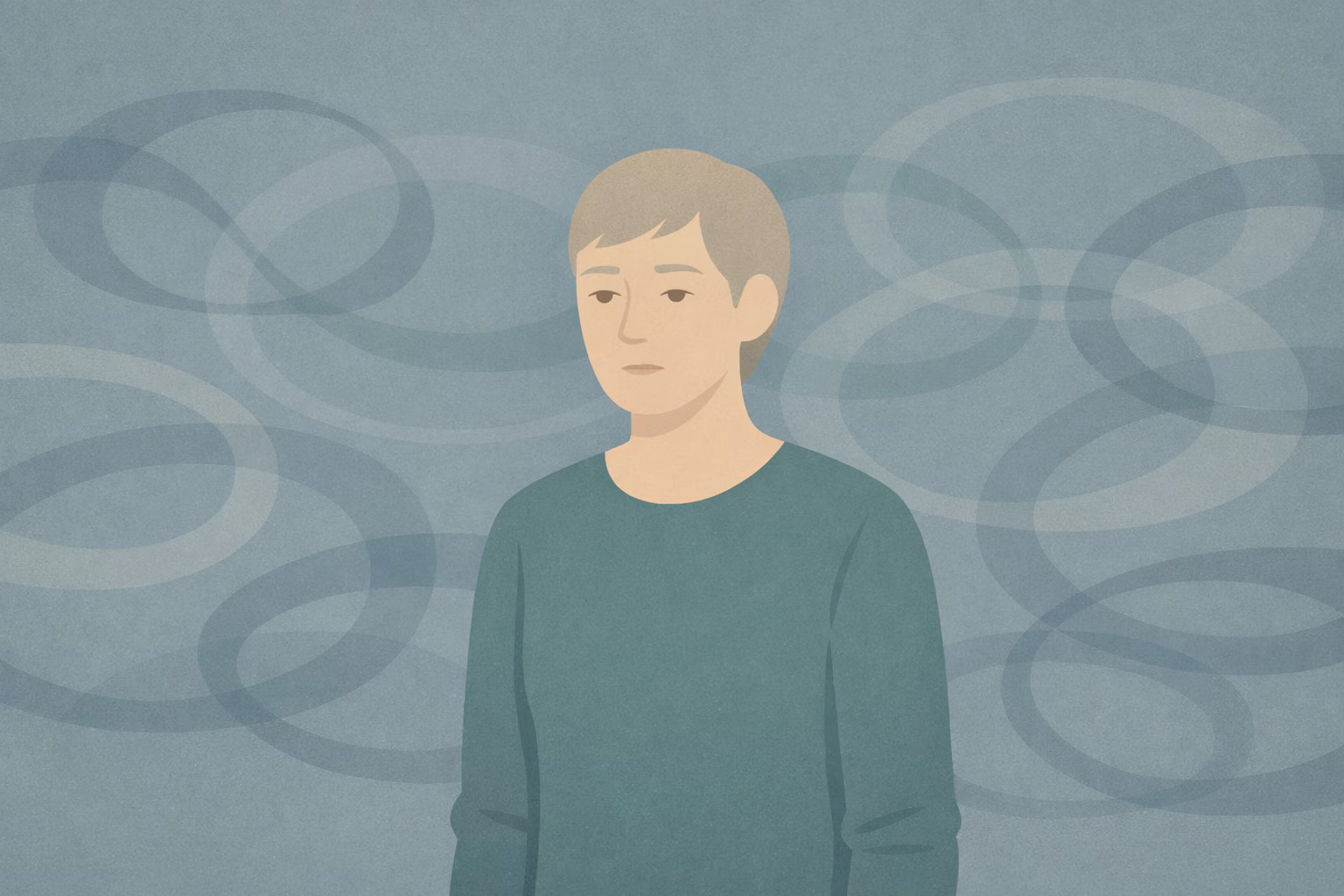
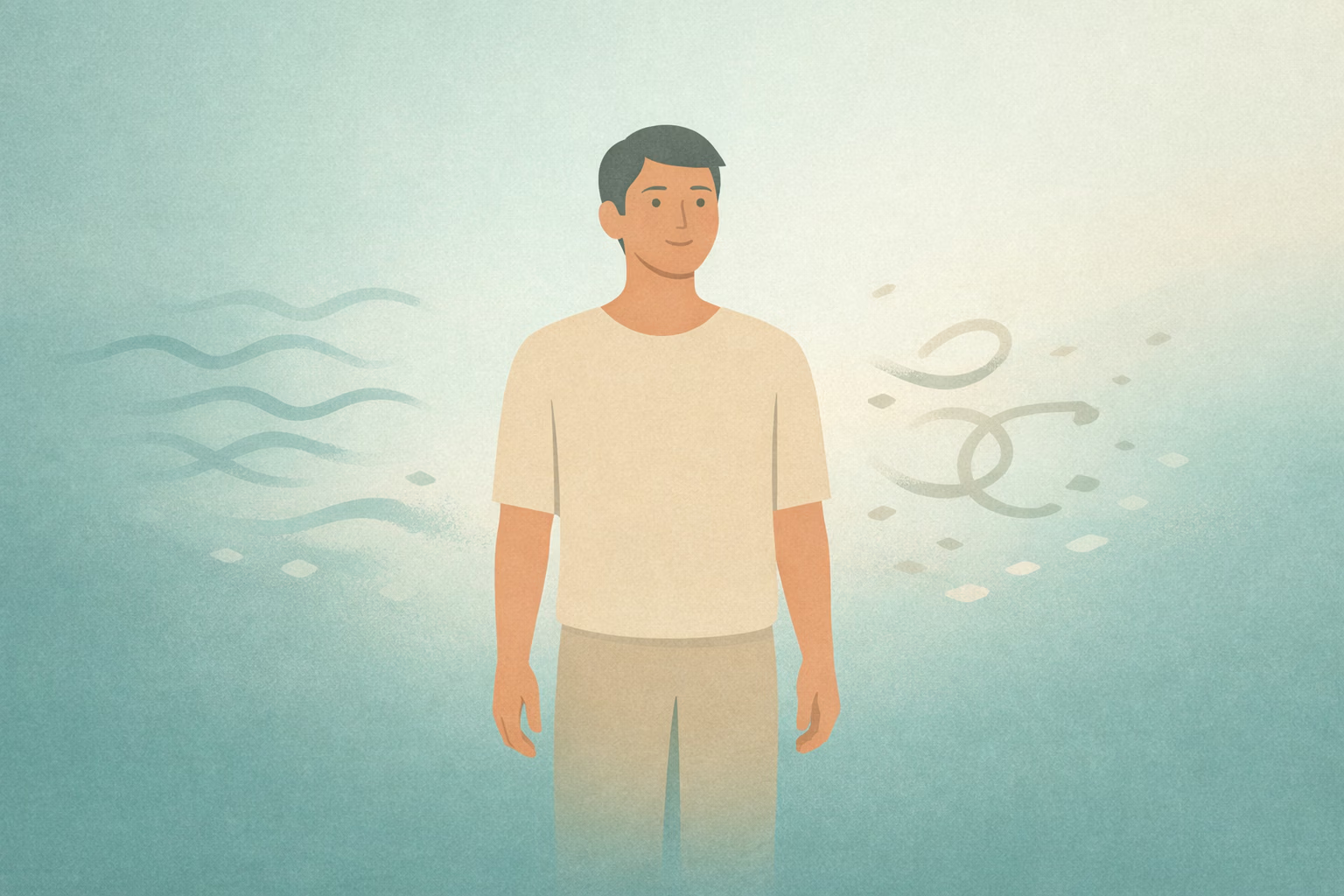
Understanding explains what is happening. Art allows you to feel it—without fixing, judging, or naming. Pause here. Let the images work quietly. Sometimes meaning settles before words do.
One Quiet Window, one insight, one reflection — every Sunday