
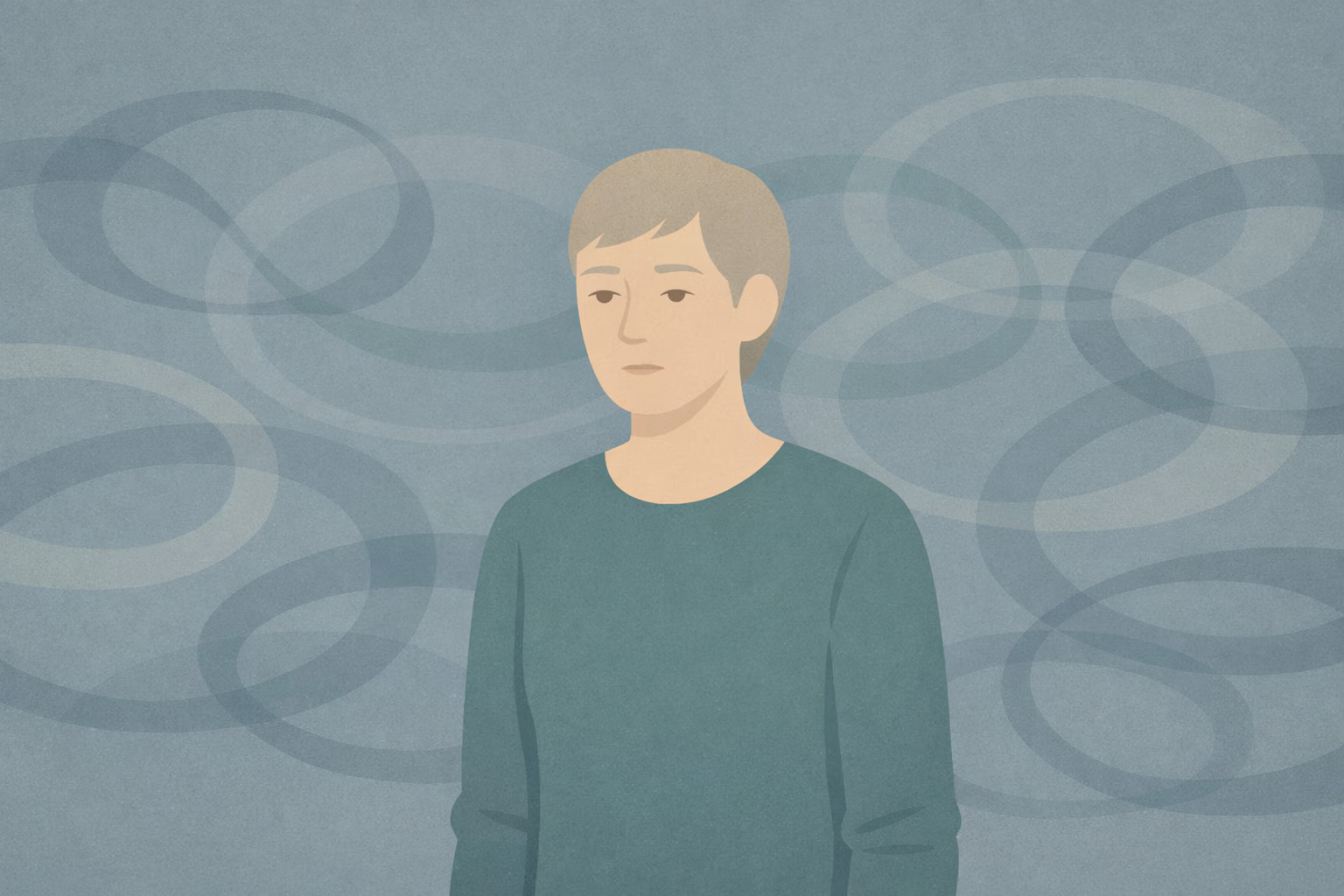
Chronic Stress Patterns: The Loops You Stop Noticing
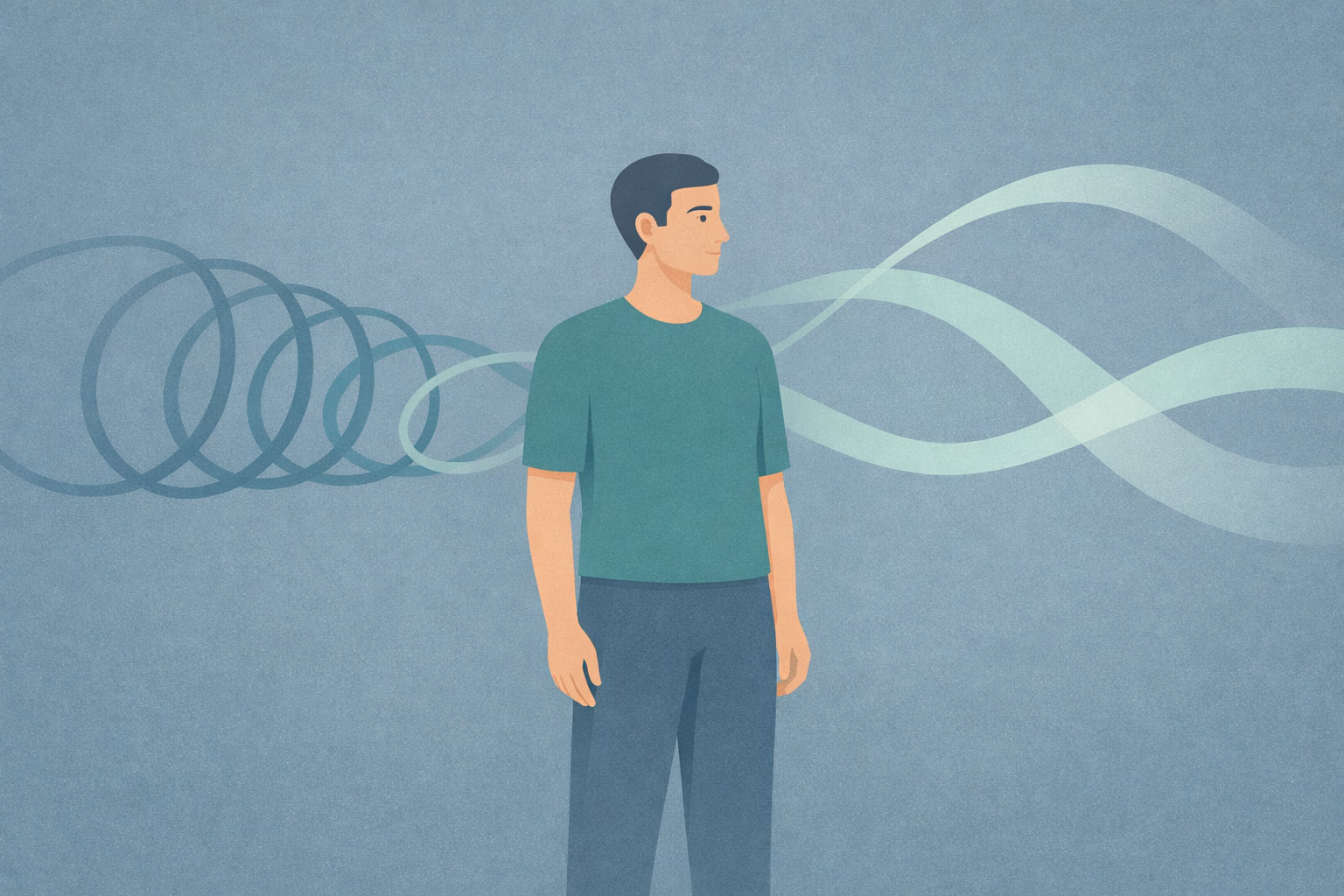
In short: Most people don’t “choose” their stress reaction. They notice it afterward: the snap, the shutdown, the urgent fixing, the scrolling, the tight chest, the sudden blank mind. And then comes the second wave—self-critique for having reacted “like that” again.
Most people don’t “choose” their stress reaction. They notice it afterward: the snap, the shutdown, the urgent fixing, the scrolling, the tight chest, the sudden blank mind. And then comes the second wave—self-critique for having reacted “like that” again.
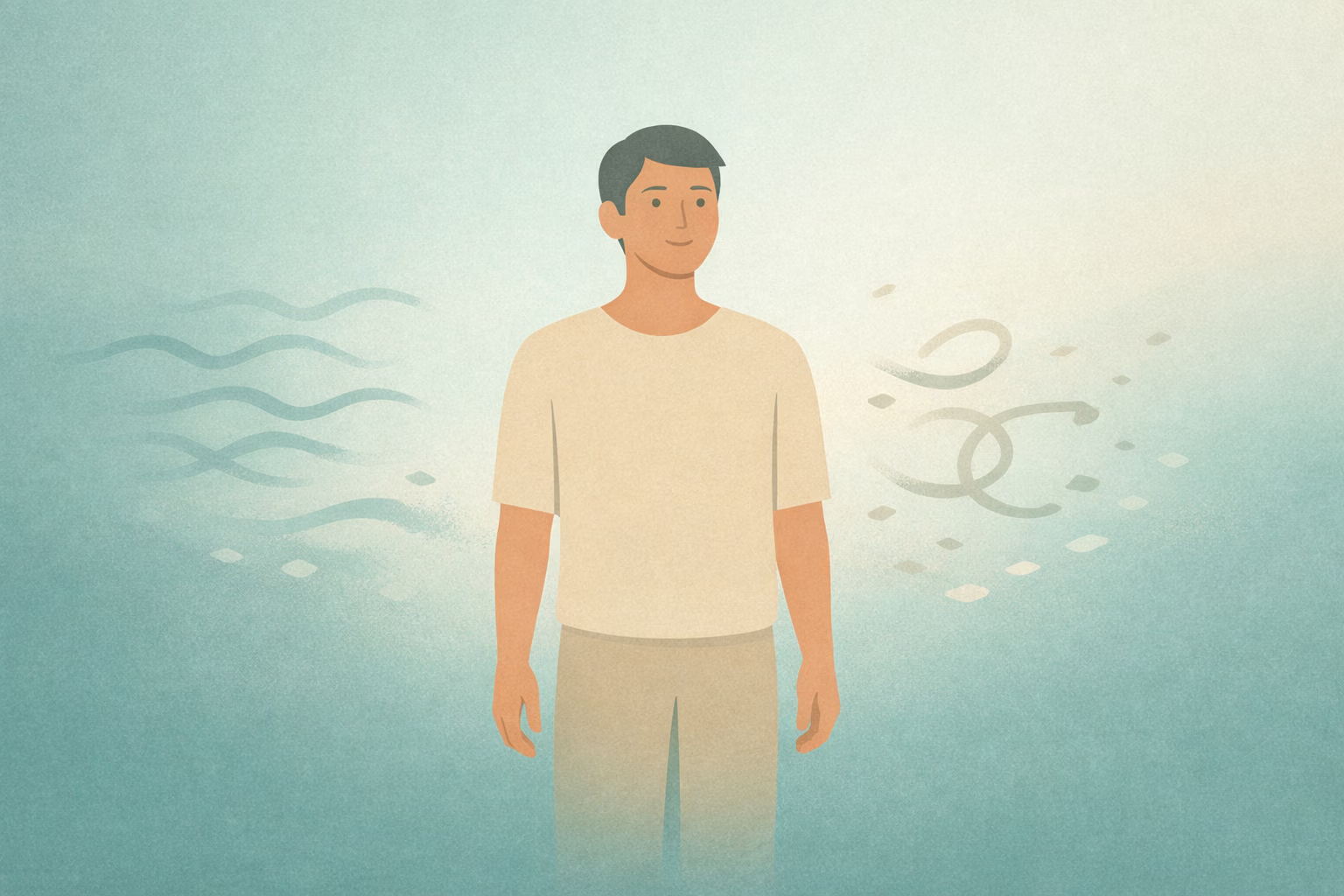
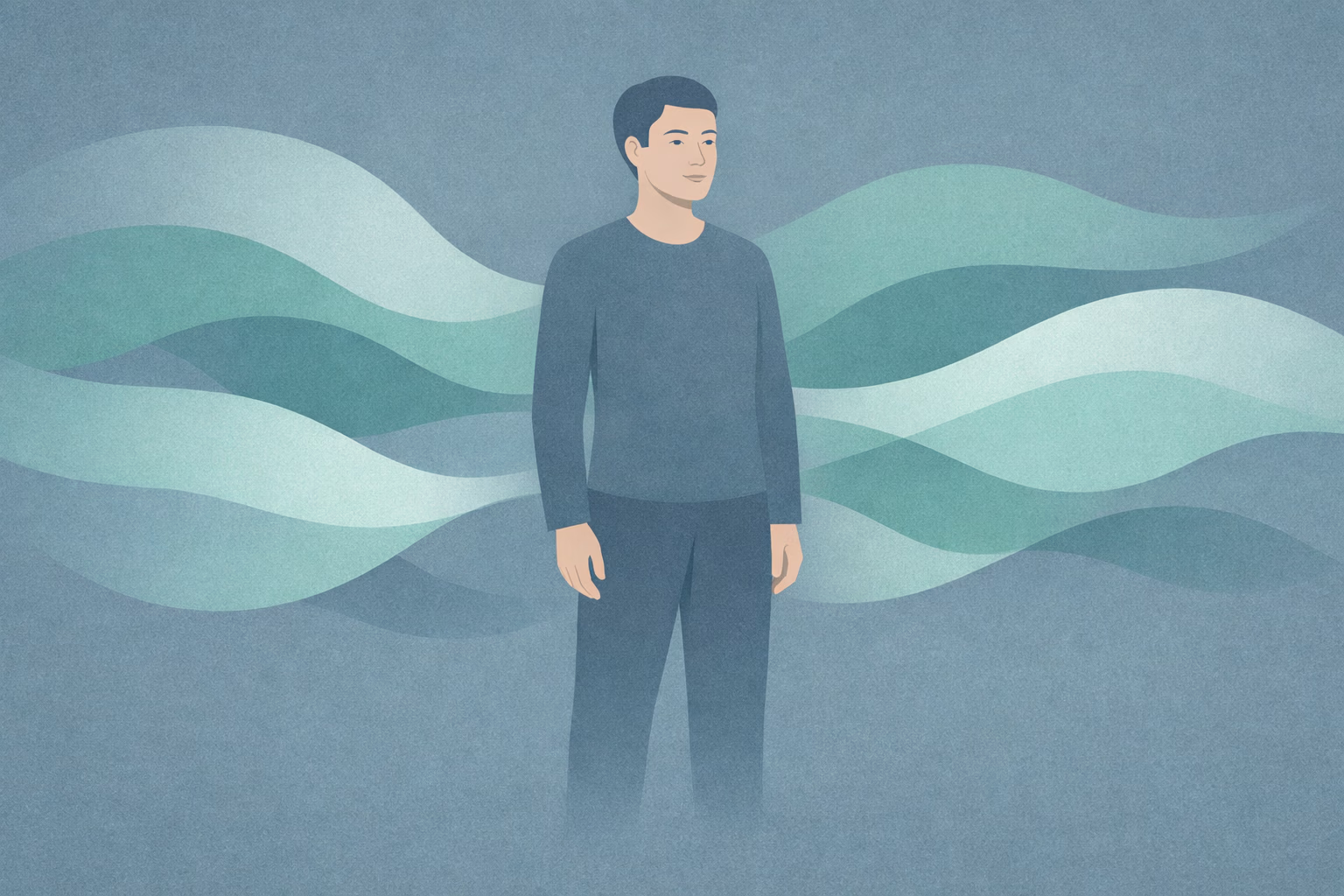
Stress repatterning is a way to describe something more humane and more accurate: under pressure, the nervous system tends to run familiar sequences that were shaped by repetition, consequence, and survival efficiency—not by character. Those sequences can change, but not usually through more force, more analysis, or more shame.
What if your stress response isn’t “who you are,” but a loop your system learned to complete quickly?
A common frustration is knowing what’s happening—naming it, understanding it, even predicting it—yet still reacting the same way when pressure hits. You can have a clear intention to stay steady, and still find your voice gets sharp, your thinking narrows, or your body goes rigid.
This isn’t proof that you “don’t want it enough.” It’s often a sign that the reaction is running on a different layer than conscious preference: fast regulation circuitry designed to protect you in real time. Under load, the system will usually choose what it can complete reliably. [Ref-1]
“I can understand myself perfectly and still feel like my body is hitting ‘auto-run.’”
Repeated stress responses become learned patterns because the brain is a prediction machine. If a certain reaction (push harder, go numb, control everything, disappear, escalate) reliably changes the immediate situation—or even just changes internal sensation—your system tags it as usable under threat.
Over time, cues that resemble past pressure (tone of voice, email notifications, deadlines, silence, uncertainty) can trigger the same state shift before you’ve “decided” anything. This is not irrational; it’s conditioning plus threat learning—association, repetition, and reinforcement—operating at speed. [Ref-2]
In other words: the loop isn’t happening because you are broken. It’s happening because it was practiced, and it worked well enough to be kept.
When the nervous system detects pressure, it tends to prioritize rapid mobilization and clear outcomes. That design made sense in environments where hesitation carried costs. In modern life, “pressure” is often social, cognitive, and ongoing—but the body can treat it as urgent anyway.
Stress biology shifts attention toward the most salient signals, reduces tolerance for ambiguity, and narrows the menu of responses. That narrowing isn’t a moral failure. It’s a protective economy: fewer options, faster execution. [Ref-3]
Why does it feel like you become a simpler version of yourself under stress?
Because under threat load, flexibility is expensive. The system reaches for what it already knows how to run.
Under pressure, uncertainty is costly. The body prefers a response that lowers uncertainty quickly—even if it creates other problems later. Familiar stress reactions can do that by creating immediate structure: a plan, a fight, a retreat, a numbing channel, a rigid rule.
Conditioning also makes familiar reactions feel strangely “right” in the moment. Not pleasant—just compelling. This is how learned associations operate: a cue predicts a state; the state predicts an action; the action predicts short-term relief or control. [Ref-4]
Seen this way, many stress habits are not “overreactions.” They are fast closures—attempts to finish the moment and get a done signal, even if the closure is incomplete.
When a reaction has been repeated for years, it can feel like temperament: “I’m just anxious,” “I’m just intense,” “I shut down,” “I get controlling.” But learned patterns can become identity stories simply because they’re dependable.
What often keeps the pattern in place isn’t lack of insight; it’s that the body has been trained to treat certain sensations as urgent and certain behaviors as necessary. Hypervigilance and sensitivity to internal cues can intensify this: the system scans for signs of overload, then deploys the usual strategy sooner. [Ref-5]
This is one reason people can feel “fine” until a very specific type of demand arrives—then the whole system flips. That flip is learned state change, not a personal defect.
Many stress responses are organized around one goal: make the pressure stop. That can happen through overdoing, retreating, arguing, pleasing, controlling, numbing, or endlessly preparing. The form varies, but the loop is similar: activation → urgent action → short-term relief → unfinished residue.
When the residue stays unfinished, the nervous system doesn’t fully stand down. The next cue arrives, and the loop restarts faster. Over time, life can become shaped by what prevents activation, rather than what creates coherence.
Stress repatterning can be understood as the gradual shift from “anything that reduces the feeling right now” toward “responses that can complete cleanly and fit the person you mean to be.” In that shift, meaning isn’t a motivational speech; it’s the stabilizing effect of actions that settle into identity rather than splinter it. [Ref-6]
Under pressure, people often recognize a few repeatable “moves.” These aren’t personality types; they’re regulatory strategies that have worked before, especially when the environment demanded speed.
These patterns often persist because they reliably change internal conditions—reducing uncertainty, increasing sensation, or creating a temporary sense of control. Learned threat associations help lock them in. [Ref-7]
When the same stress loop runs again and again, the nervous system spends more time activated and less time in genuine recovery. That doesn’t always look dramatic. It can look like a life with fewer “done” moments: fewer clean endings, fewer settled decisions, fewer interactions that feel complete.
Chronic activation can also reduce capacity for signal return. In plain language: it gets harder to notice subtle cues of safety, appetite, fatigue, satisfaction, or connection. The system learns to stay ready. [Ref-8]
And when “ready” becomes the baseline, growth can start to feel risky—not because you fear growth, but because growth increases uncertainty and uncertainty increases load.
The brain strengthens what it uses, and stress increases the likelihood of using the most practiced route. If a particular response has been rehearsed under high pressure, it becomes a preferred path when the body detects similar conditions.
This is also why stress can feel bodily before it feels mental. Interoceptive signals—breath, heartbeat, muscle tone, gut sensations—shift first, and the mind often assembles a story afterward that matches the state. The “story” can change, but the state can still keep pulling toward the same behavior until the loop has a different way to complete. [Ref-9]
In that sense, repatterning isn’t about winning an argument with yourself. It’s about the nervous system learning that a different sequence can finish the moment more cleanly.
In popular culture, “calm down” is treated like a command. In physiology, calmer states function more like a gate: when the system detects enough safety, it can afford flexibility. When it does not, it will favor speed, certainty, and familiar closure. [Ref-10]
This is an important meaning bridge: a calmer nervous system doesn’t automatically create a better life, and it isn’t the same as integration. But it can create the conditions where new responses are possible because the brain is no longer forced into its narrowest menu.
What changes when your system isn’t bracing?
Not that you become “better,” but that more of you becomes available—more options, more timing, more choice points, and a greater likelihood that a moment can end with a real done signal.
Humans regulate in context. When the environment includes dependable cues—steady tone, repair after rupture, predictable expectations—the nervous system can risk trying a different response. Not because someone convinces you logically, but because the body learns, through repetition, that the cost of a new response won’t be catastrophic.
This is part of why supportive relationships, stable communities, and respectful workplaces matter for change: they reduce background threat load. In lower-load contexts, micro-experiments happen naturally—different words appear, pauses lengthen, and the body doesn’t have to sprint to closure. [Ref-11]
“It’s easier to respond differently when I’m not also defending my right to exist in the room.”
When stress reactions begin to shift, it often isn’t dramatic. It can feel like a slight delay before the old pattern launches. The reaction still arises, but it doesn’t fully capture the steering wheel. That delay matters because it is where alternative completion becomes possible.
People often describe changes like:
Notice the difference: this isn’t about “feeling more” or performing calm. It’s about increased capacity for signal return and a growing alignment between what matters and what happens next. Values-based orientation is one way researchers describe this kind of steadier responding. [Ref-12]
Pressure will always exist. The deeper shift is when pressure stops functioning as a commander and becomes information—data your system can hold without automatically collapsing into the oldest strategy.
As repatterning takes hold, actions can become less about immediate relief and more about coherence: what fits your relationships, your long-term commitments, and the person you recognize yourself as. That doesn’t mean you never react; it means the reaction is less likely to write the whole story.
And because humans are social mammals, the ability to keep orienting under stress is strengthened in supportive contexts—through social buffering, shared reality, and the felt sense of not carrying everything alone. [Ref-13]
It can be quietly liberating to realize that your stress response is a learned loop, not a verdict. Not because you can “control” yourself perfectly, but because patterns can change when the conditions change—when load reduces, when moments complete, when safety cues return, when your life has more true endings.
Authorship here doesn’t mean forcing a different reaction. It means your responses increasingly belong to you: they match your values more often, they create fewer unfinished residues, and they leave you with a clearer sense of integrity afterward. Self-compassion supports this not as sentiment, but as a reduction in inner threat that can keep loops running. [Ref-14]
Pressure can be real without being the thing that defines you.
Stress repatterning is not about becoming unbothered. It’s about your system learning that it can meet demand without losing itself—without defaulting to the same narrow closure every time.
As responses become more coherent, pressure no longer determines direction by reflex. You still feel the weight of things, but you’re less recruited into automatic roles. And over time, that steadiness tends to be supported by the most human of factors: secure connection, kinder inner climate, and the gradual accumulation of experiences that actually resolve. [Ref-15]
From theory to practice — meaning forms when insight meets action.
Because the reaction runs on a different layer than conscious preference. Fast regulation circuitry operates before you've decided anything. Insight names the loop, but the body has been trained to treat certain sensations as urgent and certain behaviors as necessary. Under load, the system chooses what it can complete reliably — not what you intellectually prefer. You can have a clear intention to stay steady and still find your voice gets sharp, your thinking narrows, or your body goes rigid. This isn't 'not wanting it enough'; it's conditioning plus threat learning operating at speed. Awareness can map the loop. Completion is what allows the system to stand down.
Because patterns repeated for years can become identity stories simply by being dependable. 'I'm just anxious,' 'I'm just intense,' 'I shut down,' 'I get controlling.' But learned patterns aren't temperament. The brain is a prediction machine — if a reaction reliably changes the situation or the internal sensation, your system tags it as usable under threat. Cues that resemble past pressure can trigger the same state shift before you've decided anything. Many stress habits aren't overreactions; they're fast closures, attempts to finish the moment and get a Done Signal even when the closure is incomplete. The form looks fixed, but the wiring was learned.
Because in physiology, calm functions as a gate, not a command. When the system detects enough safety, it can afford flexibility. When it doesn't, it favors speed, certainty, and familiar closure. Calm isn't a willpower achievement; it's the condition that allows new patterns to emerge. The brain strengthens what it uses, and stress increases the likelihood of using the most practiced route. Stress also feels bodily before it feels mental — breath, heartbeat, muscle tone shift first; the mind assembles a story afterward. Repatterning isn't winning an argument with yourself. It's the nervous system learning that a different sequence can finish the moment more cleanly.
Often a slight delay before the old pattern launches. The reaction still arises, but it doesn't fully capture the steering wheel. That delay matters because it's where alternative completion becomes possible. People describe slower onset of urgency, less time spent in the stress state, more ability to keep language online under pressure, fewer aftershocks like rumination or lingering tension, and decisions that feel more consistent with values afterward. This isn't performing calm. It's increased capacity for signal return and growing alignment between what matters and what happens next. Pressure stops commanding direction by reflex — you still feel weight, but you're less recruited into automatic roles.
From Science to Art.
Understanding explains what is happening. Art allows you to feel it—without fixing, judging, or naming. Pause here. Let the images work quietly. Sometimes meaning settles before words do.
One Quiet Window, one insight, one reflection — every Sunday