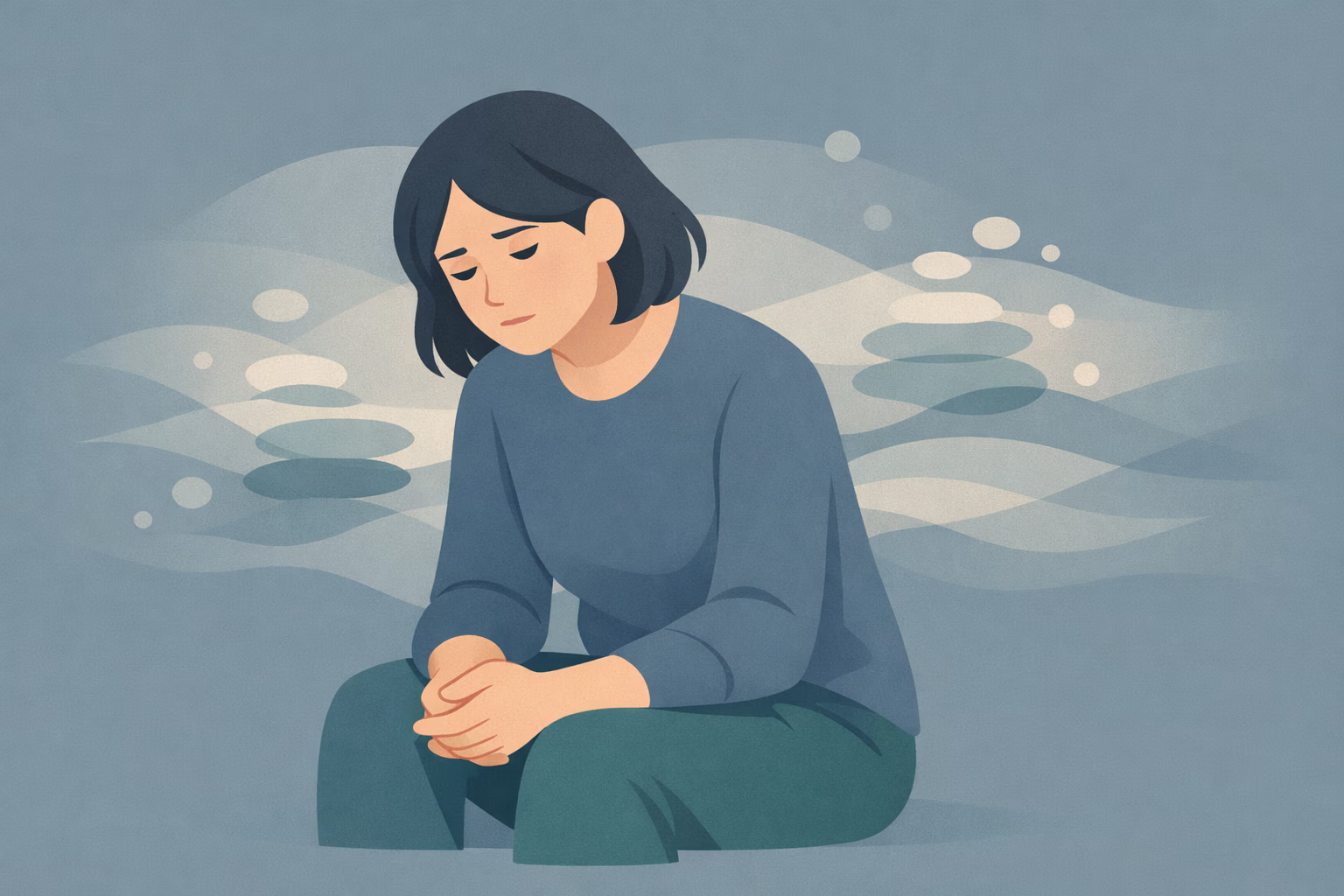
Stress Accumulation: How Daily Micro-Stress Builds Into Burnout
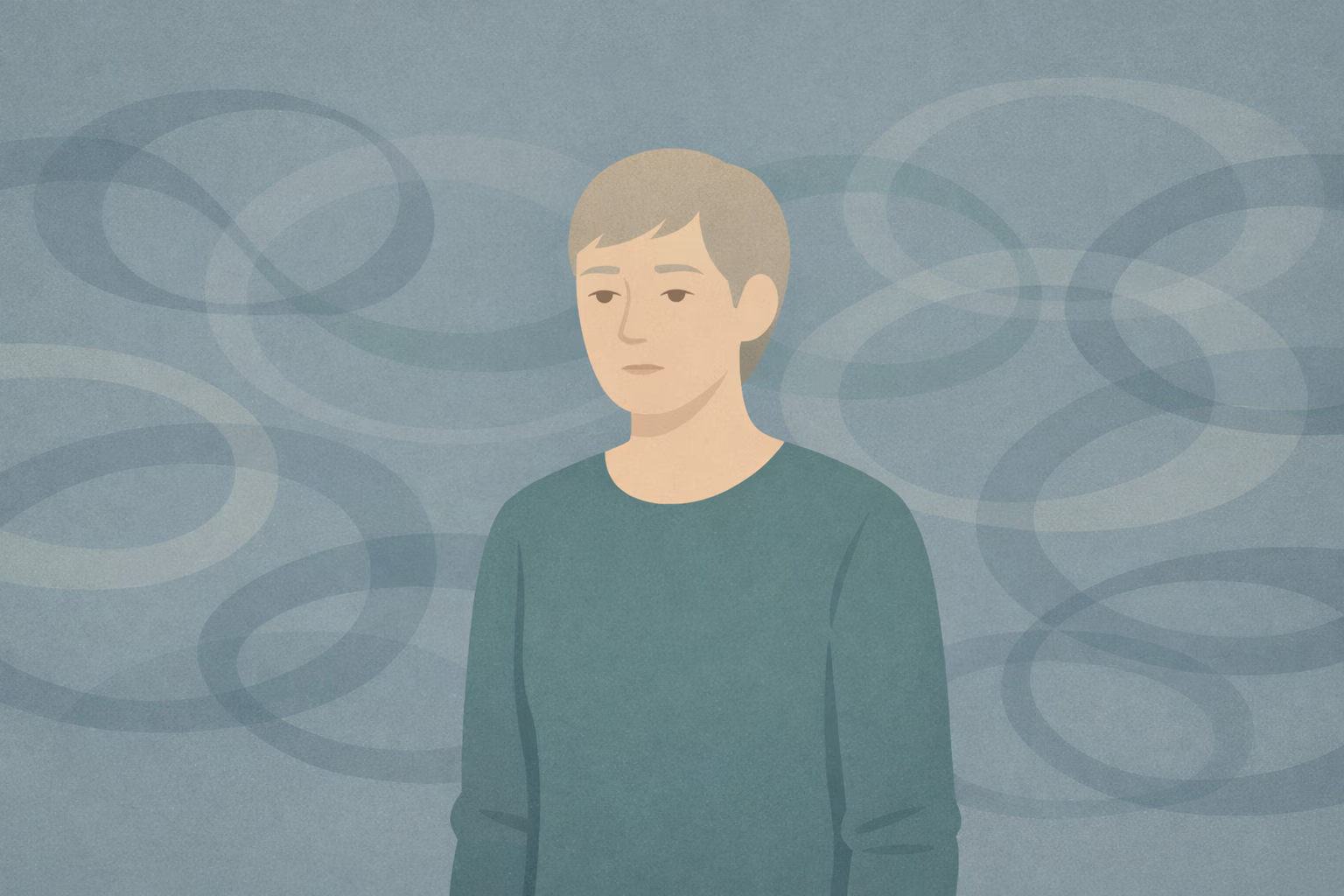
In short: Chronic stress rarely announces itself as “stress.” More often it shows up as a background setting: a body that stays slightly braced, a mind that keeps scanning, a day that never fully lands—yet nothing looks obviously wrong. What if your baseline tension isn’t your personality—just a nervous system running without a clear “done” signal?
Chronic stress rarely announces itself as “stress.” More often it shows up as a background setting: a body that stays slightly braced, a mind that keeps scanning, a day that never fully lands—yet nothing looks obviously wrong.
What if your baseline tension isn’t your personality—just a nervous system running without a clear “done” signal?
This isn’t a story about personal weakness or poor coping. It’s about how human systems adapt to conditions that don’t resolve cleanly. When pressure persists and closure stays out of reach, the body learns to keep the lights on—quietly, continuously, and eventually invisibly.
A common feature of chronic stress is the lack of a single cause. The system feels keyed up or worn down, but the mind can’t point to one threat that explains it. The result can be confusing: you may function, even perform, while feeling like you’re dragging a hidden weight.
This state often carries mixed signals—restlessness with fatigue, alertness with fog, tension with a sense of emotional flatness. The nervous system isn’t “overreacting”; it’s maintaining readiness in the absence of completion. Over time, that readiness can become the default setting. [Ref-1]
Nervous systems are designed to adjust to what repeats. When activation happens often enough—deadlines, conflict, financial uncertainty, relentless input—the body recalibrates. What once felt like “too much” can start to feel like everyday life.
One way researchers describe this is cumulative wear-and-tear: multiple systems (sleep, immune function, cardiovascular tone, attention) carry the load of staying ready for too long. This isn’t about a mindset problem; it’s about physiology adapting to ongoing demand. [Ref-2]
In this recalibrated baseline, calm can feel unfamiliar, and stillness can register as “something’s missing.” Not because calm is unsafe in itself, but because the system has learned to expect the next demand before the last one has fully resolved.
From an evolutionary perspective, sustained vigilance made sense in environments where threats were frequent and ambiguous. If danger could appear without warning, staying ready improved survival odds.
That same architecture still runs in modern bodies. It can sustain alertness, mobilize energy, narrow focus, and prioritize quick responding. In the right context, this is protective. In a long, modern context—where threats are more social, abstract, and ongoing—it can become a costly form of adaptation. [Ref-3]
When the world feels unpredictable, readiness can act like a buffer. If you’re already braced, fewer things can “catch” you off guard. The system learns that staying prepared reduces surprise.
This is one reason chronic stress can be self-reinforcing: readiness provides a short-term sense of control. It may prevent missed cues, reduce the chance of social error, or keep you functioning through unstable periods. The nervous system isn’t choosing suffering; it’s selecting predictability. [Ref-4]
“If I stay one step ahead, maybe nothing will collapse.”
Many cultures quietly reward high activation: tight schedules, constant availability, rapid responsiveness. Over time, tension can be misread as commitment, competence, or responsibility—especially when it produces short bursts of output.
But chronic activation is not free energy. It’s borrowed capacity. When the system stays mobilized, recovery processes get less time and fewer cues to complete. Fatigue then becomes part of the baseline, not as laziness, but as the predictable consequence of sustained load. [Ref-5]
Importantly, fatigue here doesn’t always look like sleepiness. It can look like irritability, narrowed thinking, reduced patience, or a sense that everything requires effort.
Chronic stress can form a loop that doesn’t feel dramatic. The system stays slightly activated, which reduces sensitivity to subtle internal signals. When signals are muted, it becomes harder to recognize that strain is present—so the same pace continues.
This is a structural loop: activation narrows perception, narrowed perception prevents accurate tracking, and lack of tracking delays the conditions that allow stand-down. In other words, the body keeps going because it doesn’t receive clear evidence that it can stop.
Safety is not only an idea; it’s also a set of cues the nervous system detects in breath, posture, environment, and relationship. When cues of safety are scarce or inconsistent, readiness persists. [Ref-6]
Because chronic stress normalizes itself, it often shows up as ordinary habits of the body and attention—things you might not even label as stress. Many people don’t notice the pattern until something forces a pause.
It can look like:
These are not character traits. They are often the body’s way of maintaining readiness when life doesn’t provide clear completion points. [Ref-7]
Over time, prolonged stress can reduce resilience—not as a moral failure, but as a predictable biological trade-off. Systems that are built to surge and settle begin to lose their range when they are asked to surge continuously.
This can affect physical health, but it also affects daily life quality: less flexibility in attention, less tolerance for uncertainty, less room for play, and fewer spontaneous moments of ease. The world can start to feel more demanding than it objectively is, because the system is already carrying yesterday’s activation. [Ref-8]
When range narrows, people often compensate with more control, more checking, more urgency, or more numbing. These are regulatory responses aimed at getting through—not evidence of who you “really are.”
One of the most disorienting parts of chronic stress is habituation. The body can adapt to activation so thoroughly that it no longer registers as noteworthy. The signal becomes the background.
From the perspective of the autonomic nervous system, chronic strain can look like dysregulation: difficulty shifting cleanly between mobilization and recovery, even when the immediate demand is low. When that shifting becomes less available, activation persists with fewer internal “alerts,” which makes it easier for the pattern to continue unchecked. [Ref-9]
This is why someone can say, honestly, “I’m fine,” while also living with persistent tension, shallow recovery, and a sense of never quite arriving.
Restoration often begins—not with a pep talk, and not with more effort—but with a subtle return of contrast. When the baseline becomes noticeable, the system can start distinguishing between “this is the moment” and “this is leftover activation.”
This is not the same as insight or reframing. Visibility is a change in signal quality: the body’s internal readouts become clearer once load reduces enough for feedback to register.
In that clearer signal space, the story can shift from “I am like this” to “my system has been carrying something for a long time.” That shift adds dignity. It also creates the possibility of completion—because what can be tracked can eventually receive an ending. Social buffering and safety cues can support this shift by changing what the nervous system expects from the environment. [Ref-10]
Humans regulate in context. A nervous system reads safety not only from quiet rooms or reduced workload, but also from the presence of dependable connection—signals that you don’t have to manage everything alone.
In safe relational environments, the body often receives permission to stand down: tone softens, breathing deepens, attention widens. This isn’t emotional catharsis; it’s a biological update. The system stops preparing for impact when it consistently detects support, predictability, and respectful pace. [Ref-11]
“Nothing changed on my calendar, but something changed in my body when I wasn’t alone in it.”
When chronic stress begins to release, it often feels surprisingly ordinary. Not bliss. More like the absence of constant bracing. The mind doesn’t have to hold as much in working memory, and the body stops rehearsing the next problem before it arrives.
People sometimes notice small markers of return: a fuller breath without thinking, shoulders dropping on their own, less scanning, a clearer sense of hunger or tiredness, or the ability to pause without a spike of urgency. These are interoceptive signals—body-to-brain feedback becoming more available again. [Ref-12]
Capacity expands here not because you’ve become “better at stress,” but because the background load is lower and more loops have reached completion.
Chronic stress pulls attention toward endurance: get through, keep up, don’t drop anything. When the system is less burdened, attention can re-orient toward choice—what matters, what fits, what’s worth continuing.
This is where meaning becomes stabilizing. Not as a motivational slogan, but as lived coherence: actions align more naturally with values because there is enough nervous-system bandwidth to notice mismatch and enough internal quiet to let completion register.
In this state, agency feels less like forcing yourself forward and more like having options. The future stops being only a list of threats to manage and becomes a landscape where direction is possible. [Ref-13]
Chronic stress patterns are often learned adaptations to environments that didn’t provide clean endings. If your system stayed activated, it likely did so for a reason: to preserve function, reduce surprise, and keep life moving.
When this is seen as adaptation rather than defect, shame has less traction. The question becomes less “What’s wrong with me?” and more “What has my nervous system been carrying without closure?” In many lives, sleep disruption and incomplete recovery are part of that carry—an unfinished nightly reset that keeps activation rolling into the next day. [Ref-14]
Meaning can return when the body begins to receive completion signals: not in the form of perfect understanding, but in the form of settledness that holds across moments—proof, in physiology, that the alarm is no longer required.
The loops you stop noticing are often the ones you had to normalize to survive your season. Seeing them clearly is not a demand to change faster; it’s a sign that your system has enough margin to register what’s been happening.
Over time, what has been carried without closure can begin to settle—not through force, but through conditions that allow completion. And as the background tension eases, direction tends to reappear: not as pressure, but as a quiet sense of where you are, who you are, and what matters now. [Ref-15]
From theory to practice — meaning forms when insight meets action.
Because the baseline shifts. Nervous systems are designed to adjust to what repeats — deadlines, conflict, financial pressure, relentless input — and over time the body recalibrates. What once felt like 'too much' becomes everyday life. This is cumulative wear-and-tear: sleep, immune function, cardiovascular tone, and attention all carry the load of staying ready for too long. Habituation does the rest — the system stops flagging the activation as noteworthy because the signal becomes the background. That's how someone can honestly say 'I'm fine' while living with persistent tension, shallow recovery, and a sense of never quite arriving.
Because the Threat & Safety System maintains readiness in the absence of completion, not in the presence of obvious danger. Sustained vigilance was a survival feature for ancestral environments where threats appeared without warning, and that architecture still runs. When the world feels unpredictable, readiness functions as a buffer — if you're already braced, fewer things catch you off guard. The system isn't choosing suffering; it's selecting predictability. The cost is borrowed capacity: chronic activation crowds out recovery, and fatigue becomes part of the baseline. Tension gets misread as commitment when it's actually the body running on credit.
It looks like ordinary habits of body and attention you might never label as stress. Shallow or high-chest breathing, frequent sighing, holding breath between tasks. Jaw clenching, shoulder elevation, tight hands, a braced belly. Restlessness that makes stillness feel unproductive. Irritability and a low threshold for noise or interruption. Sleep that happens but doesn't restore. These aren't character traits — they're the body maintaining readiness when life doesn't provide clear closure points. The Avoidance Loop closes here: activation narrows perception, narrowed perception prevents accurate tracking, and lack of tracking delays the conditions that would allow stand-down.
Surprisingly ordinary. Not bliss — just the absence of constant bracing. The mind doesn't have to hold as much in working memory. The body stops rehearsing the next problem before it arrives. People notice small markers: a fuller breath without thinking, shoulders dropping on their own, less scanning, clearer hunger or tiredness, the ability to pause without a spike of urgency. Co-regulation accelerates this — safe relational presence updates what the body expects from the environment. As the background load drops and more loops reach completion, attention shifts from endurance to choice. Direction reappears, not as pressure, but as quiet orientation.
From Science to Art.
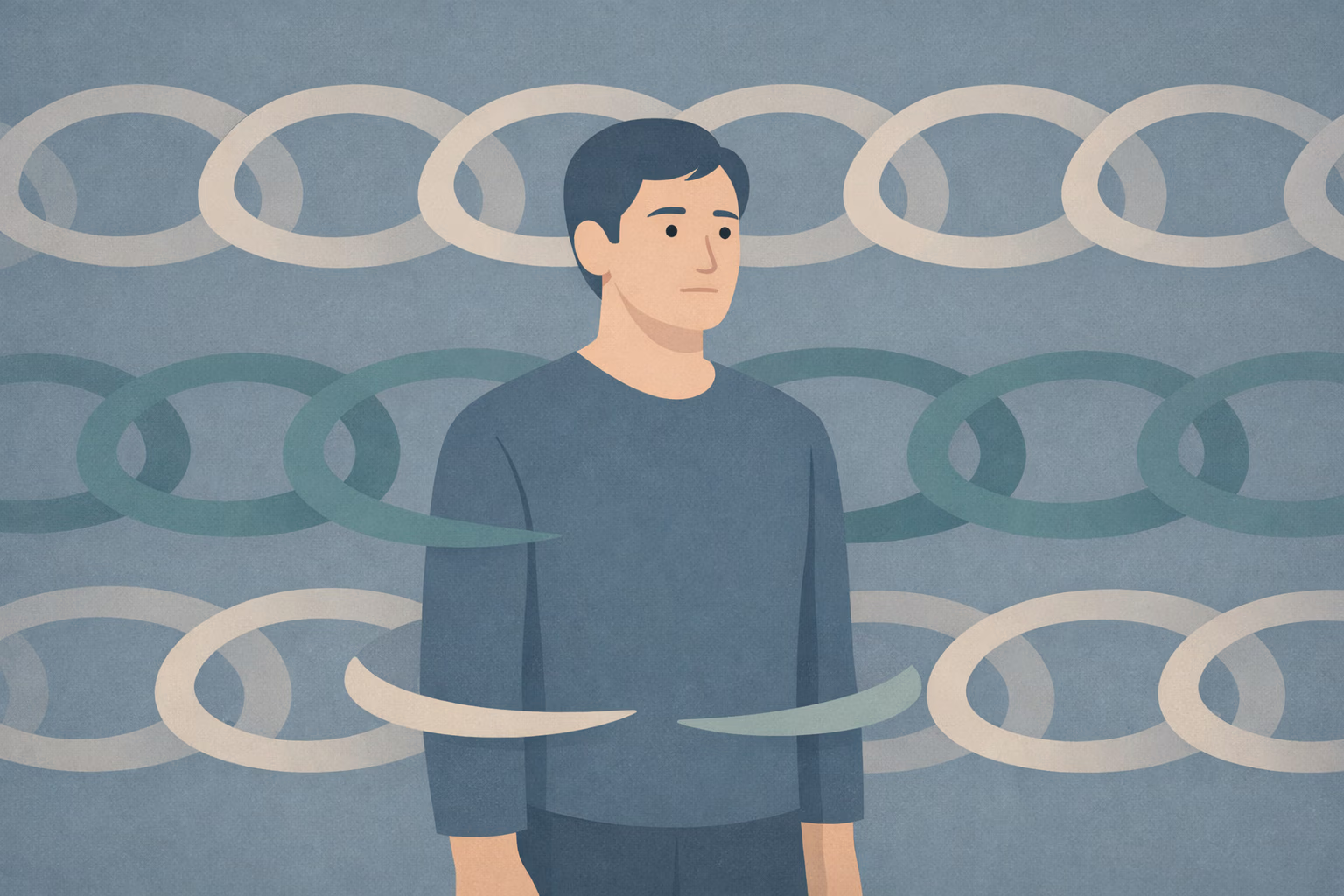
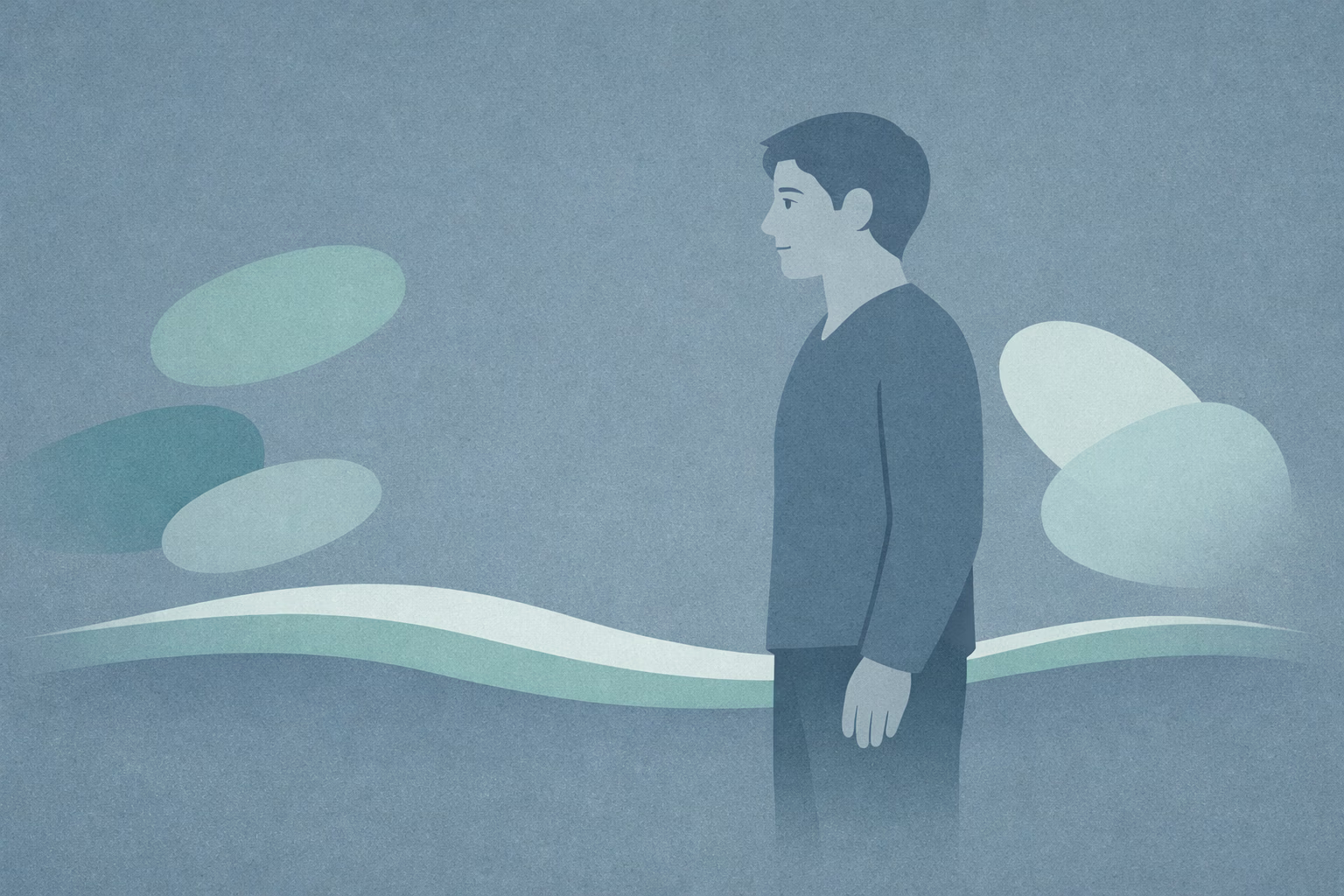
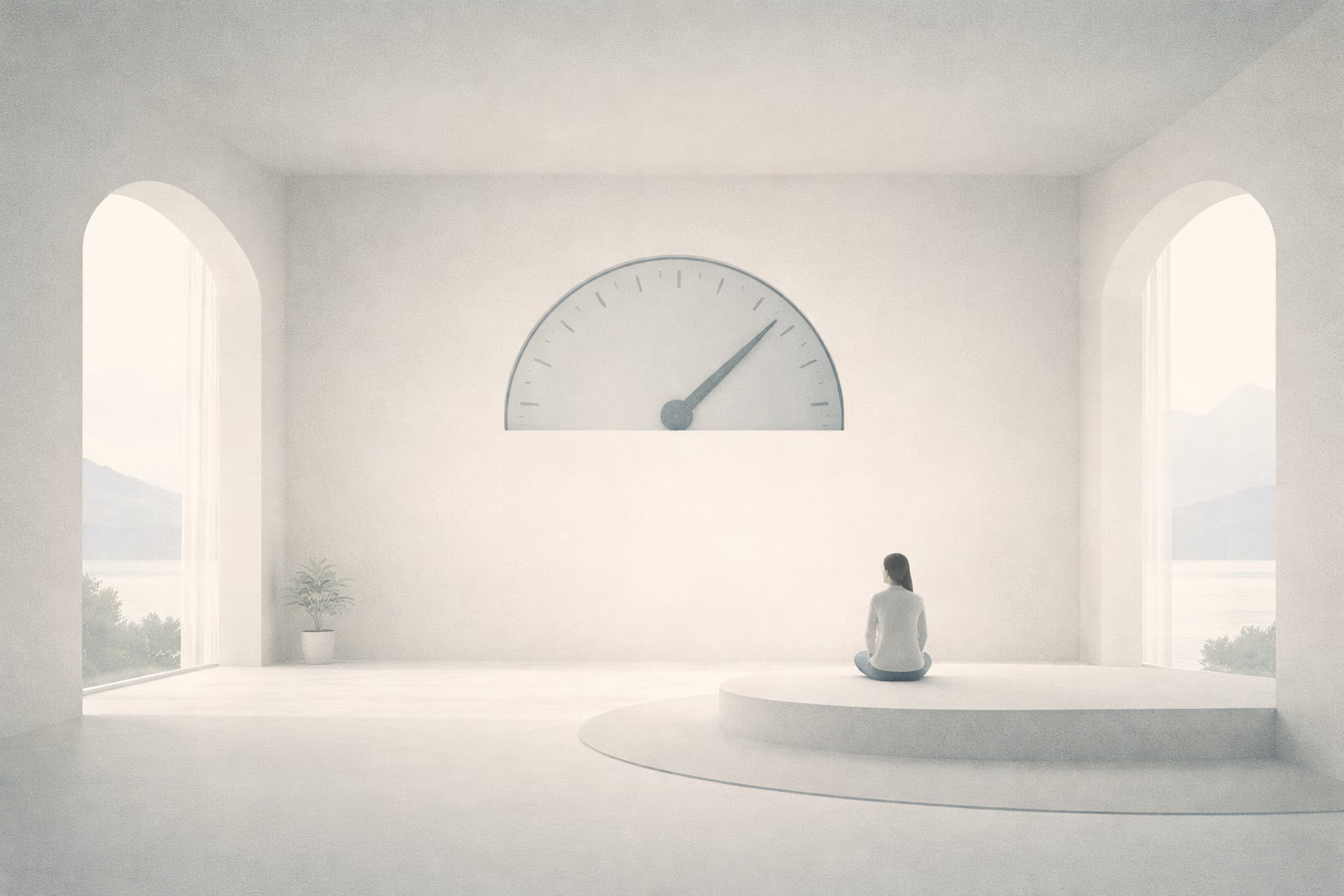
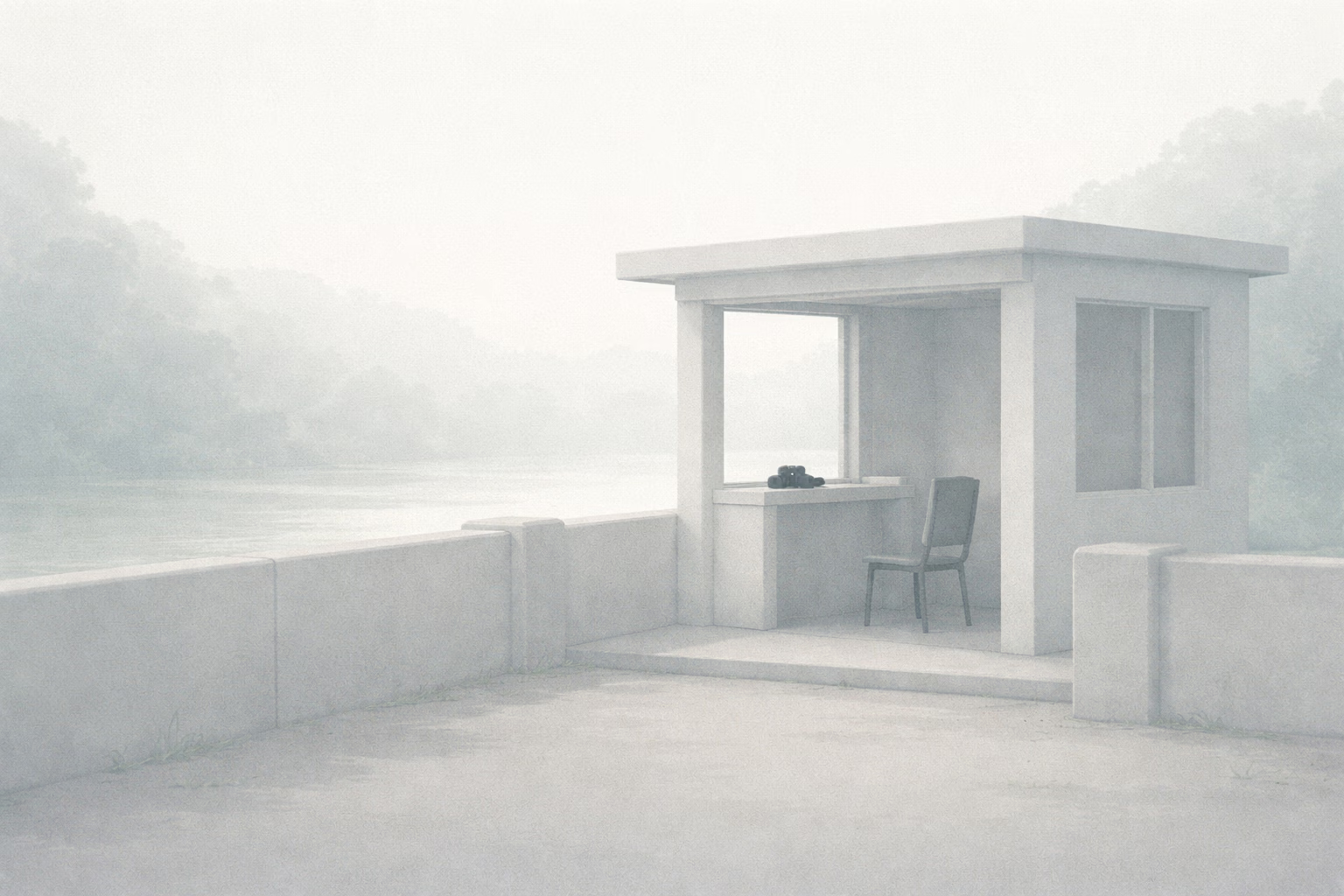
Understanding explains what is happening. Art allows you to feel it—without fixing, judging, or naming. Pause here. Let the images work quietly. Sometimes meaning settles before words do.
One Quiet Window, one insight, one reflection — every Sunday