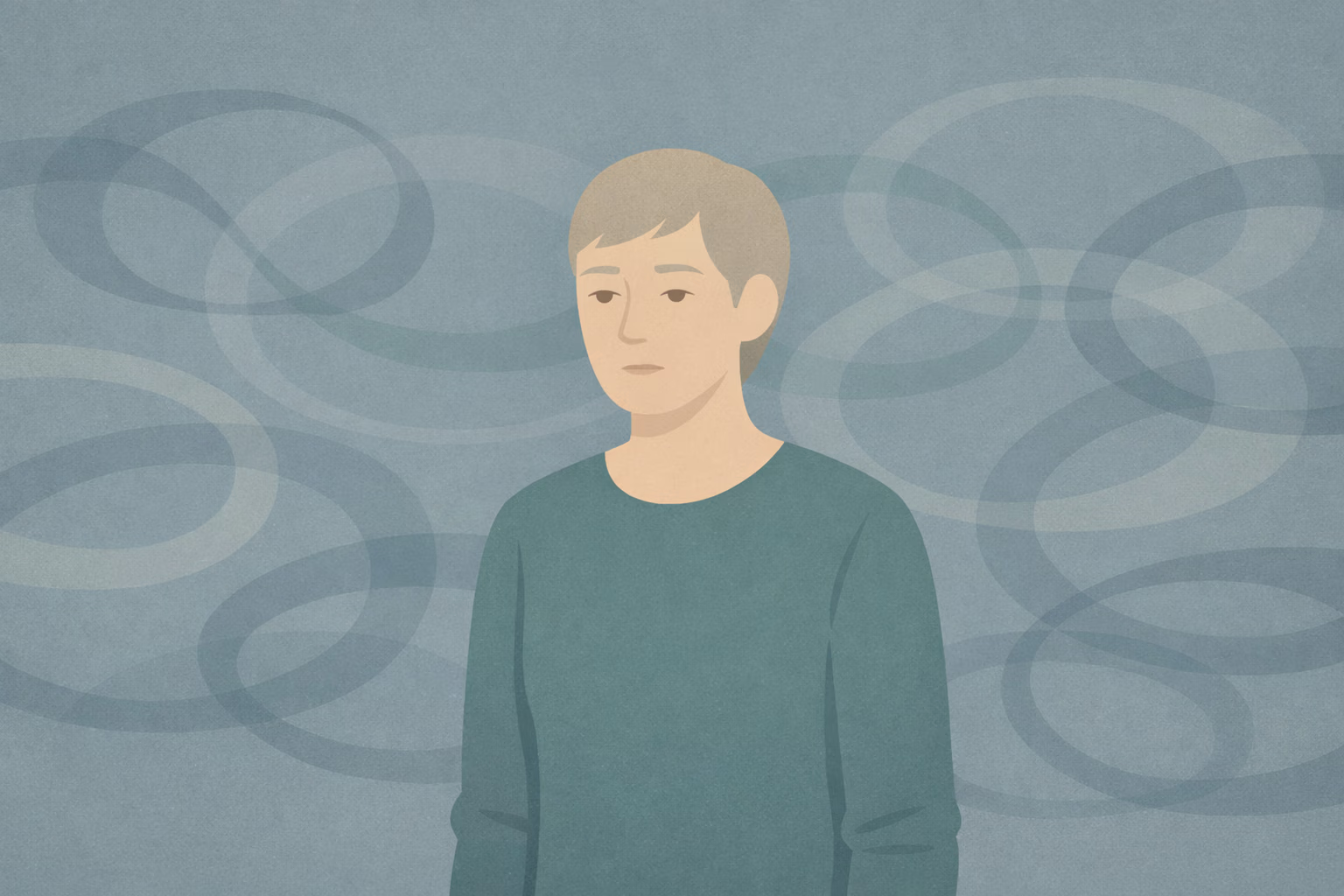
Chronic Stress Patterns: The Loops You Stop Noticing
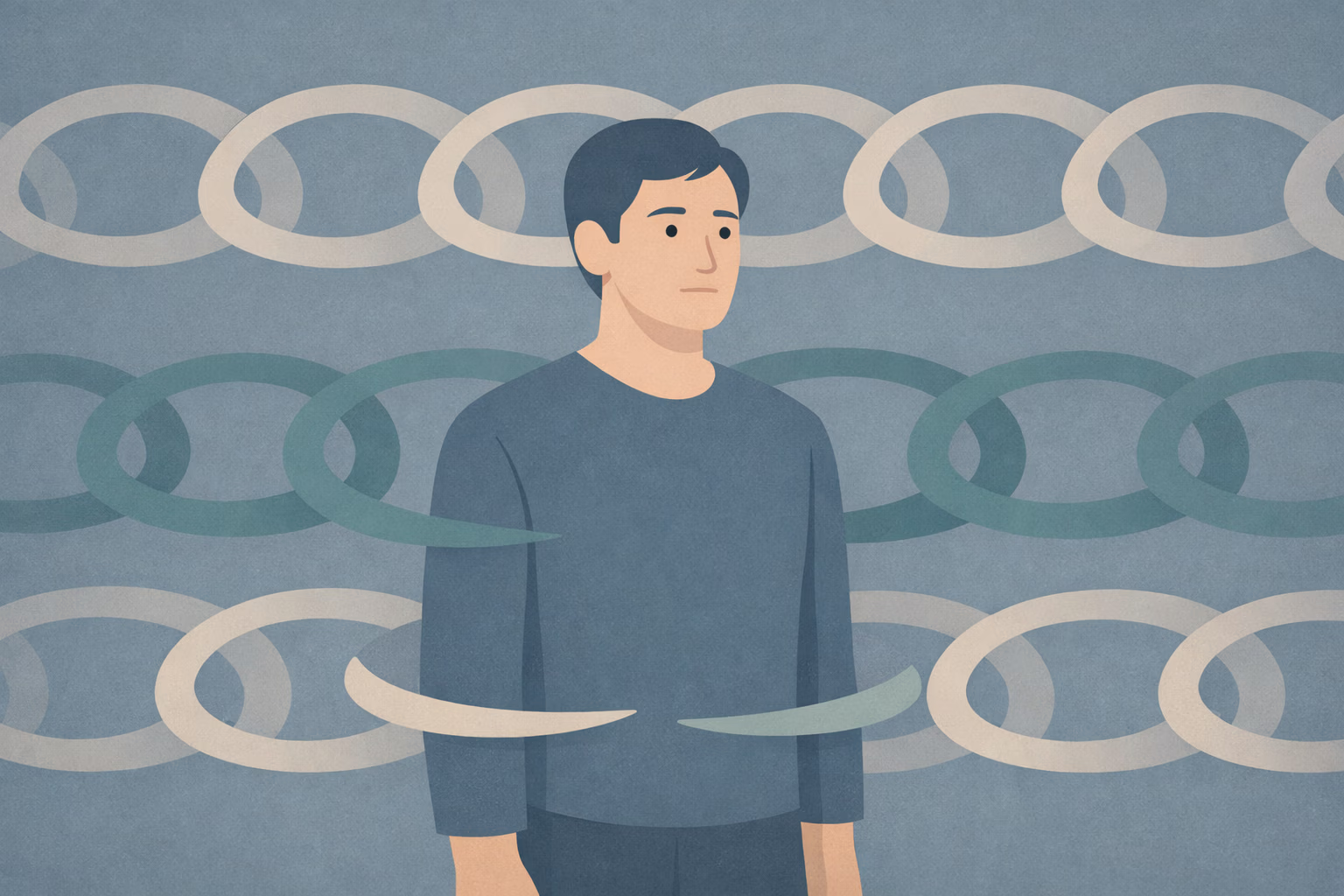
In short: Many people think stress is something that “hits” them, randomly, on bad days. But a lot of stress is more like a loop: a repeatable sequence of cues, body shifts, thoughts, and behaviors that forms over time—especially when life keeps asking for more than the system can comfortably carry.
Many people think stress is something that “hits” them, randomly, on bad days. But a lot of stress is more like a loop: a repeatable sequence of cues, body shifts, thoughts, and behaviors that forms over time—especially when life keeps asking for more than the system can comfortably carry.
What if your most frustrating stress reactions are actually predictable patterns—built for speed, not for shame?
When a nervous system learns that certain situations reliably come with pressure, conflict, uncertainty, or exposure, it starts preparing early. Not because you’re broken, but because your biology prefers a quick, familiar script over an open-ended unknown.
There’s a particular feeling that often arrives just before a stress reaction fully takes over: here we go again. It can happen when an email arrives, a tone changes, a calendar fills, or a familiar silence settles into a room.
That moment is not a moral failure or lack of growth. It’s often your nervous system recognizing a pattern—linking today’s cue with previous times that ended in strain. The speed of the reaction can feel discouraging, but it’s also evidence that your system has been working hard to predict and prepare. [Ref-1]
A common misunderstanding is that stress is something you decide to do—like you choose to spiral, shut down, snap, overwork, or disappear. In reality, many stress reactions begin below the level of deliberate decision-making.
Conditioned cues can recruit attention, muscle tone, breathing patterns, and scanning behavior within milliseconds. Conscious interpretation often arrives later, as a story that tries to explain why the body is already mobilizing. This is why someone can “know better” and still find themselves repeating the same sequence. [Ref-2]
Sometimes the reaction isn’t chosen. It’s launched.
Human stress systems evolved to learn quickly from repeated threat exposure. If something reliably preceded danger, rejection, loss, or overwhelm in the past, the brain-body system treats similar cues as worth responding to now.
Over time, chronic strain can accumulate into what researchers describe as allostatic load: the wear-and-tear of staying prepared, staying vigilant, and repeatedly shifting states without enough completion and recovery. When load stays high, the system tends to rely more on fast, familiar pathways—because they cost less time than re-evaluating every situation from scratch. [Ref-3]
Even when a stress pattern feels unpleasant, it can also feel strangely stabilizing. A predictable loop reduces uncertainty: it tells the system, “We know what this is. We know what happens next.” That reduction in uncertainty can register as temporary control.
Under sustained pressure, control isn’t always about dominating life; it can be about narrowing options to something manageable. A repeated reaction can become a shortcut that lowers the cognitive and physiological cost of ambiguity—especially when the body has learned that waiting and assessing tends to end badly. [Ref-4]
When life feels volatile, what would it mean if your loop is a way of creating something familiar?
From the inside, stress can feel like it comes out of nowhere. But when you zoom out, it often follows learned associations: a specific cue predicts a specific surge, and the body moves ahead of the mind. [Ref-5]
This is one reason people can feel confused by their own reactions. The current moment may not be objectively dangerous, but it resembles a previous situation that didn’t resolve cleanly. The nervous system doesn’t require a perfect match; it only needs enough similarity to justify preparation.
Many stress patterns form as an avoidance loop—not as a personality trait, but as a structural sequence. The body ramps up, the person reaches for something that reduces intensity quickly, and the system interprets that reduction as “problem solved.”
The catch is that quick relief can interrupt the learning the nervous system needs in order to update. The loop stays intact because the situation never reaches a clean “done” signal. The system doesn’t get proof of completion; it gets proof that escape worked. Over time, that can increase sensitivity to early cues and make the launch sequence even faster. [Ref-6]
Stress patterns aren’t just “feeling stressed.” They tend to be recognizable bundles: the same triggers, the same body shifts, the same narrowing of options, and the same coping behaviors that create a brief downshift.
Common elements include: [Ref-7]
None of these are identities. They are regulatory moves—ways a system tries to get back to a tolerable level of activation.
The cost of a stable loop is often reduced range. When a pattern becomes entrenched, the nervous system can lose access to intermediate responses—subtle boundaries, patient negotiation, paced problem-solving, selective engagement. The system begins to treat many situations as if they require the same intensity.
Over time, this can affect resilience—not because the person is weak, but because the body is spending more time in upshifted states, with fewer opportunities for completion and stand-down. Learning new responses usually requires enough safety and capacity for the system to stay present through a different ending. When capacity is low, the older loop wins by default. [Ref-8]
When stress is high, the nervous system prioritizes speed. That speed reduces the pause where alternatives could emerge. The result is a self-reinforcing structure: the more the loop runs, the more “true” it feels, because it becomes the most available route.
Safety cues matter here. When the environment (or relationship, or workplace) carries ambiguous signals, the body may stay in a scanning mode, primed to interpret neutral cues as significant. In that state, the loop doesn’t need a big trigger; it can ignite from small inputs. [Ref-9]
When the system can’t find “safe enough,” it defaults to “familiar enough.”
People sometimes assume that “noticing” a stress response should immediately change it. But awareness is not the same thing as integration. A loop doesn’t dissolve because it’s understood; it loosens when the body gets a different ending—one that actually completes.
Still, early bodily cues matter because they arrive before full activation peaks. A faster pulse, a shift in breathing, a pressure behind the eyes, a narrowing of attention—these are often the first data points that the system is moving into a known script. When those cues are recognized as physiology (not a verdict), the timeline changes: there is more room for the situation to resolve without the full cascade. [Ref-10]
What changes when a cue is read as “my system is loading” instead of “I’m failing”?
Stress patterns are notoriously hard to see from the inside because the loop changes perception. Attention narrows; memory becomes selective; urgency feels like truth. This is where shared awareness can be supportive: not as correction, but as added perspective.
Sometimes another person notices the early shift—your voice changes, you speed up, you get quiet, you become unusually certain. Just having that reflected back (in a respectful way) can bring the pattern into view as a sequence, not an identity. And because interoception—the brain’s mapping of internal state—varies by context and load, outside feedback can sometimes provide missing data when your own signals are muffled. [Ref-11]
One of the clearest signs of restoration is not constant calm. It’s latency: more time between cue and reaction. With reduced load and more completion in the background, the nervous system can stay online longer before it flips into the familiar script.
This can feel like: a slower rise of urgency, less compulsion to finalize immediately, fewer all-or-nothing interpretations, and a wider menu of responses. The point isn’t to become endlessly tolerant. It’s to regain flexibility—the ability to match the response to the actual situation rather than to the remembered one. [Ref-12]
When a stress pattern loosens, something subtle but profound happens: life stops being organized primarily around avoiding activation. Energy returns to direction—relationships, craft, values, care, curiosity, rest. Not because someone “tries harder,” but because the system is no longer spending so much effort preventing the next surge.
Coherence grows when experiences reach a clean ending and can be filed as “completed” rather than “still happening.” In supportive environments, this is easier; safety and connection buffer stress physiology and reduce the need for protective reflexes. [Ref-13]
Orientation is what comes back when your body no longer has to rehearse danger.
Stress patterns are learnable, predictable, and therefore interruptible—especially when they’re understood as nervous-system strategies rather than personal defects. That reframing alone isn’t integration, but it can reduce the extra layer of self-attack that keeps load high.
When shame decreases, capacity often increases. And when capacity increases, the possibility of a different ending becomes more available. This is one reason self-compassion is frequently linked with steadier self-care and lower distress: it changes the internal conditions under which the system has to operate. [Ref-14]
Meaning doesn’t come from forcing a new behavior. It tends to appear when life feels more complete—when moments resolve, signals can settle, and your actions begin to match what you actually value.
Repeating stress reactions usually mean your system has been carrying an unfinished workload for a long time. The loop is not proof that you’re stuck forever; it’s proof that your biology has been trying to protect you with the tools it had available.
As patterns become more visible, they often become less absolute. And as they become less absolute, direction becomes easier to feel—not as a motivational push, but as a settled sense of what matters and where you belong next. Supportive connection can strengthen that process, making regulation and self-care feel more like continuity than correction. [Ref-15]
From theory to practice — meaning forms when insight meets action.
Because they often start before deliberate decision-making is online. Conditioned cues recruit attention, muscle tone, breathing, and scanning behavior within milliseconds. Conscious interpretation arrives later as a story trying to explain why the body is already mobilizing. This is why someone can know better and still find themselves repeating the same sequence. The reaction isn't chosen — it's launched. Calling it a willpower problem misses the timing. Your survival system learned a script and runs it fast precisely because speed once protected you. Awareness alone doesn't dissolve it; the body needs a different ending in order to update.
Because predictability is cheap, and uncertainty is metabolically expensive. Even an unpleasant loop tells the system we know what this is, we know what happens next — that registers as temporary control. Under sustained pressure, control isn't always domination; it's narrowing options to something manageable. A repeated reaction becomes a shortcut that lowers the cognitive cost of ambiguity, especially when the body has learned that waiting and assessing tends to end badly. When the system can't find safe enough, it defaults to familiar enough. The Avoidance Loop here is structural, not a character flaw.
Because relief interrupts the learning the nervous system needs in order to update. Activation builds, a relief behavior reduces immediate load, and the system tags the pattern as effective. The situation never reaches a clean Done Signal — the brain just gets proof that escape worked. Next time, the launch sequence happens earlier and faster, with smaller triggers. Sensitivity to early cues increases. The loop hardens because its real ending — completion, integration, stand-down — never gets practiced. The system doesn't get evidence that activation can resolve any other way, so the older script wins by default.
Through latency. The clearest sign of restoration isn't constant calm — it's more time between cue and reaction. With reduced load and more completion in the background, the nervous system stays online longer before flipping into the familiar script. That shows up as slower rise of urgency, less compulsion to finalize immediately, fewer all-or-nothing interpretations, a wider menu of responses. Outside perspective helps because loops change perception from the inside. Self-compassion helps because shame adds load and load tightens loops. Loop Sovereignty rebuilds when life feels more complete, not when discipline is harsher.
From Science to Art.
Understanding explains what is happening. Art allows you to feel it—without fixing, judging, or naming. Pause here. Let the images work quietly. Sometimes meaning settles before words do.
One Quiet Window, one insight, one reflection — every Sunday