

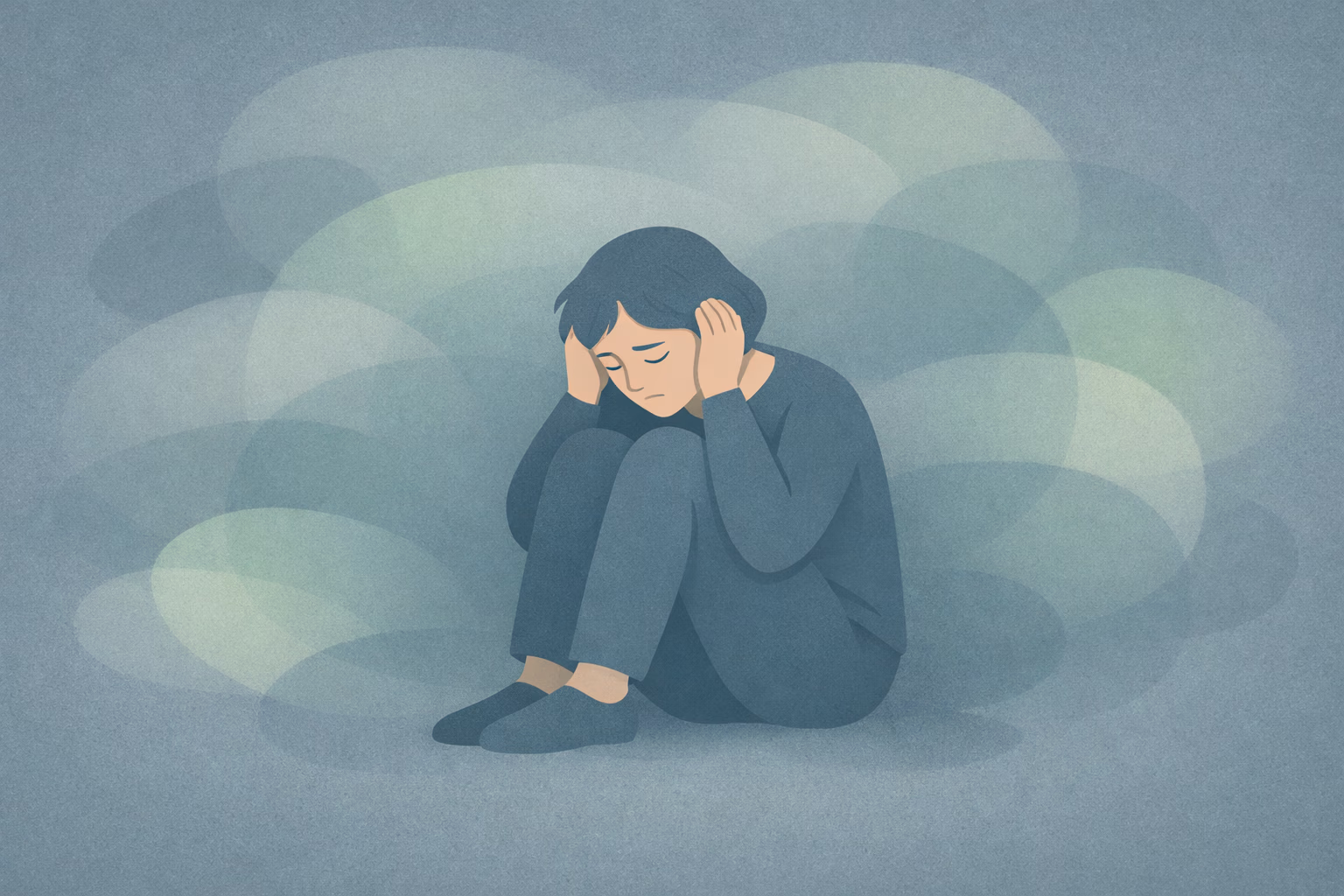
Emotional Overwhelm & Inner Overload
Learn why emotional overwhelm occurs when your brain receives more sensory and emotional input than it evolved to handle.
In context: You have “Hyper-Readiness.“ Your Status & Control system has determined that “Constant Preparedness“ is the only way to manage your life's density. In the Meaning Density Model™, we “Normalize Constant Preparedness“ as a valid survival strategy for high-load environments.
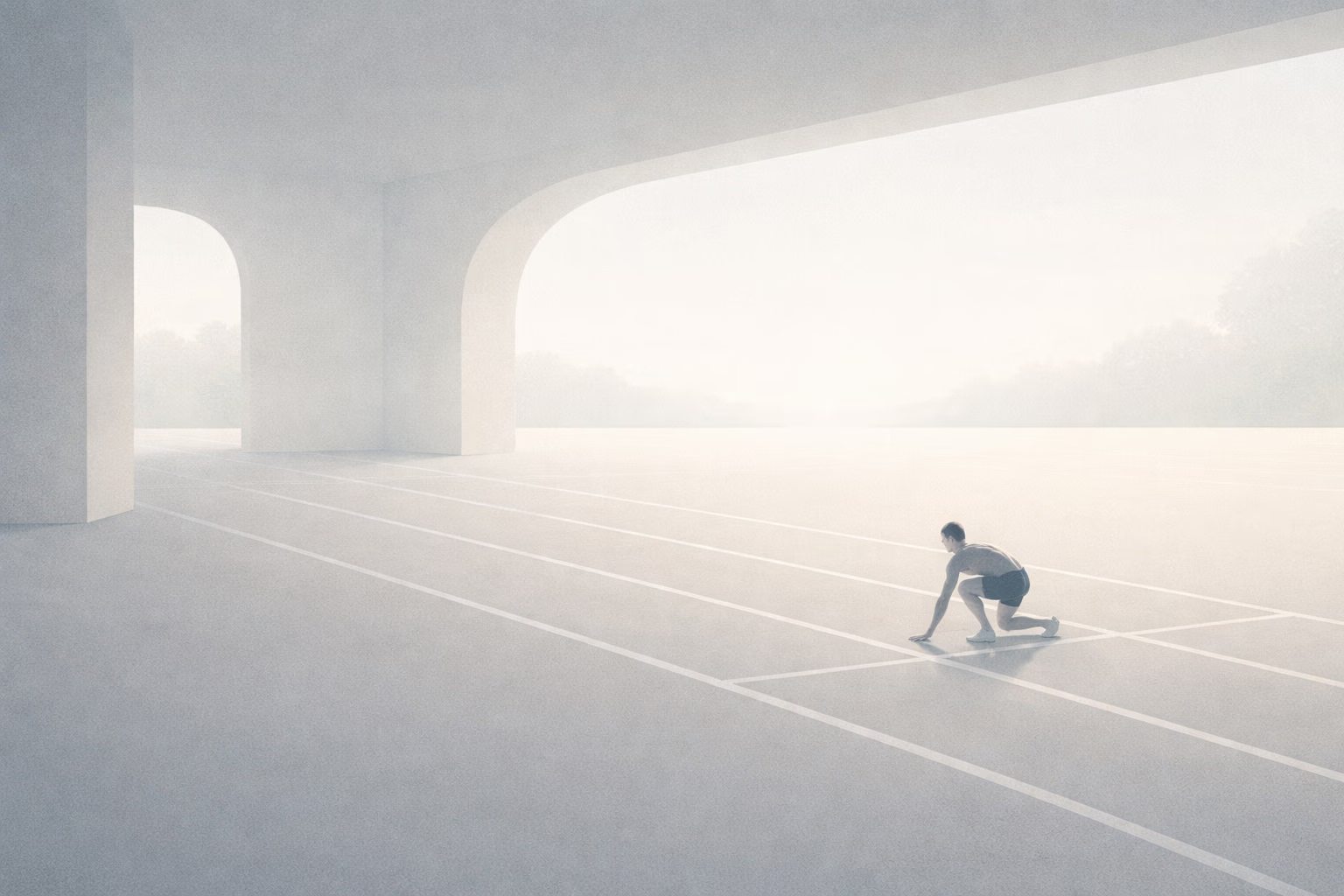
Always ready, even when nothing happens.
The system stays poised, waiting for the signal to move.
This hyper-readiness is not anxiety— it is training without a finish line.
Normalizing it reduces self-criticism.
You are not unable to relax.
Your system has not yet been told it can stand down.
Normalize hyper-readiness with DojoWell.
Explore DojowellArticles exploring the psychology behind these patterns.
Learn why emotional overwhelm occurs when your brain receives more sensory and emotional input than it evolved to handle.
Learn how emotional tension is stored in the body and how to release it.
Learn the components of emotional maturity and how it evolves.
You have "Hyper-Readiness." Your Status & Control system has determined that "Constant Preparedness" is the only way to manage your life’s density. In the Meaning Density Model™, we "Normalize Constant Preparedness" as a valid survival strategy for high-load environments. By acknowledging: "I am currently in a high-readiness state for a reason," you remove the "Identity Conflict." You stop fighting the readiness and start "Managing" it as a technical resource.
Yes, through "Standby Mode." Think of your system like a laptop—it can be "on" but with the "screen dimmed." You maintain your readiness (your lists, your boundaries) but you "lower the metabolic gain" on your emotions. DojoWell suggests "Technical Vigilance": keep your plans ready, but let your body "sit down." By separating "Structural Preparation" from "Somatic Bracing," you can stay "ready" without burning out your architecture.
One Quiet Window, one insight, one reflection — every Sunday