Mind-Body Loops: How Emotional Stress Shows Up Physically
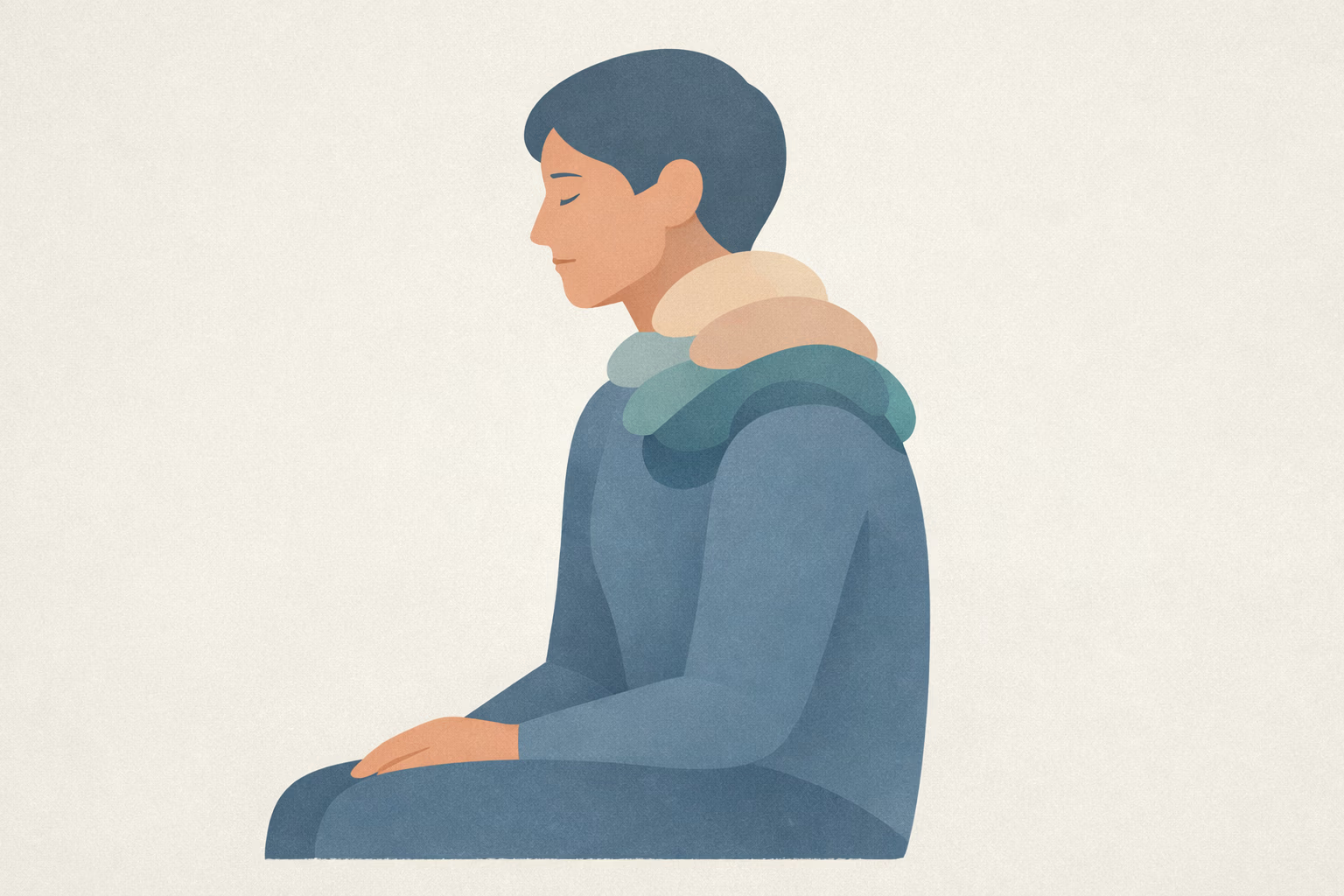
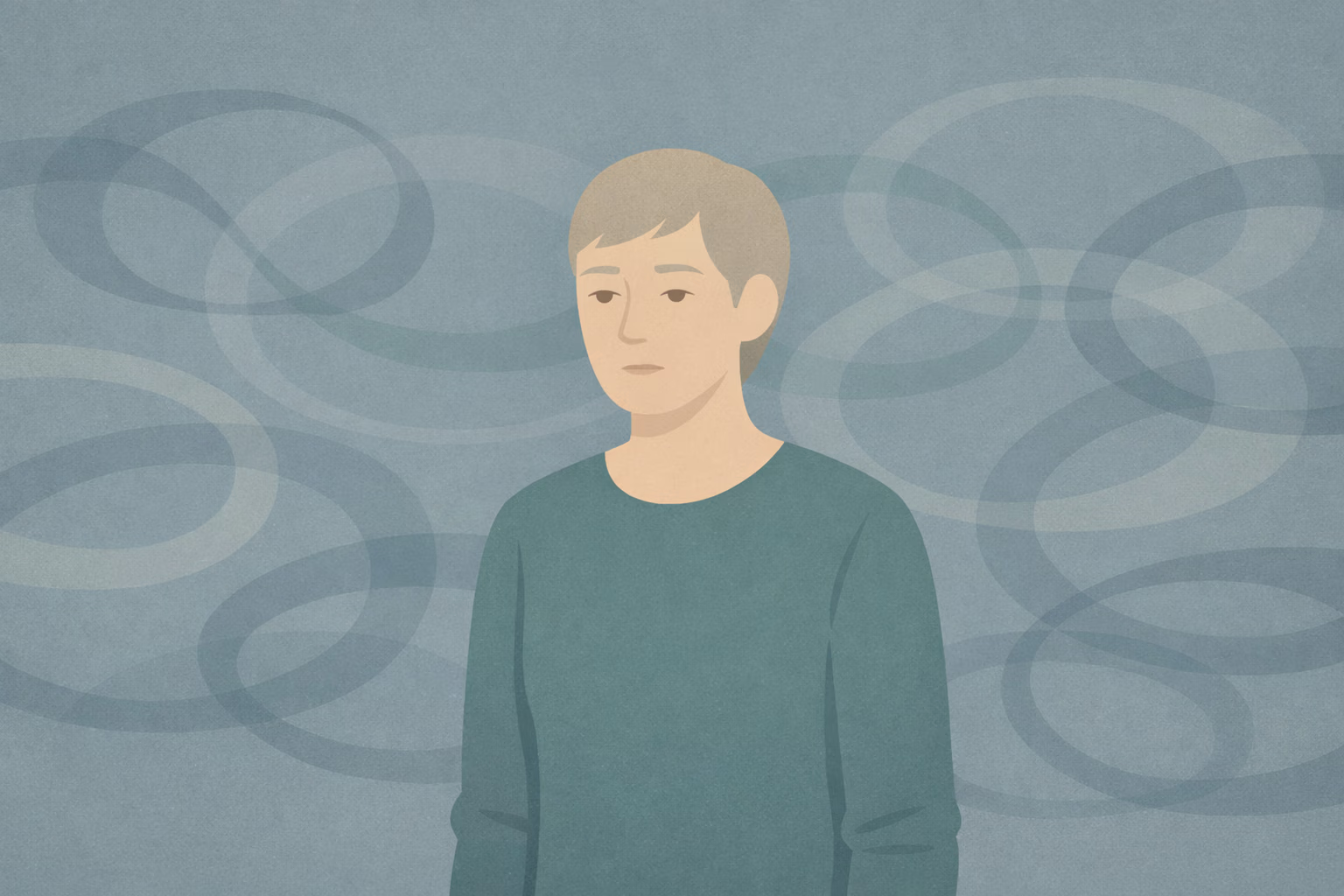
In short: Tension buildup often gets talked about like a posture problem, a stretching problem, or a “you should relax” problem. But for many people, it’s more like carrying an extra layer of weight: shoulders that never quite drop, a jaw that lives on standby, a chest that won’t fully soften, a belly that stays guarded.
Tension buildup often gets talked about like a posture problem, a stretching problem, or a “you should relax” problem. But for many people, it’s more like carrying an extra layer of weight: shoulders that never quite drop, a jaw that lives on standby, a chest that won’t fully soften, a belly that stays guarded.
From a nervous-system perspective, this isn’t mysterious and it isn’t a character flaw. It’s a stabilizing response. When life delivers repeated stress without clear endings—no clean “done” signal—your body can keep a small amount of readiness online, as if it’s still waiting for the next demand.
What if the tightness isn’t “you,” but a body-based way of holding unfinished load?
Chronic tension can be obvious—neck pain, headaches, aching hips—or subtle, like a persistent sense of heaviness or stiffness that you only notice when someone asks, “Are you okay?” [Ref-1]
What makes it confusing is that it can show up even when nothing is “wrong” in the moment. You might be safe, seated, and technically at rest, yet your body feels like it’s still mid-task. This is one of the most common signatures of an overloaded system: the body keeps a baseline of contraction because it hasn’t received reliable closure.
Muscles don’t only contract for movement. They also contract for readiness—an embodied “just in case.” Under stress, the brain and body coordinate to increase vigilance, tighten certain muscle groups, and keep energy available for action. [Ref-2]
If stress comes in waves without clear resolution, that readiness can become a default setting. The system learns: staying subtly contracted reduces surprise. It costs more energy, but it lowers the chance of being caught unprepared. Over time, “ready” can start to feel like “normal.”
From an evolutionary view, tension is not an error—it’s a feature. In threatening conditions, bodies that could mobilize quickly had an advantage. Tightening the jaw, bracing the core, lifting the shoulders, narrowing attention: these patterns can support speed, endurance, and protection.
The problem is less the design and more the duration. Modern stress often doesn’t end with a clear finish line. Instead, it becomes cumulative: alerts, deadlines, ambiguous social pressure, financial uncertainty, nonstop information. The body can’t always “complete the loop,” so it keeps paying the physiological costs of readiness—what researchers often describe as wear-and-tear under chronic stress load. [Ref-3]
For many people, tension quietly functions as a stabilizer. It can create a sense of structure: a firm spine, a tightened stomach, a set jaw. When your environment feels unpredictable, bodily holding can become a substitute for external reliability.
This doesn’t mean people are choosing tension on purpose. It means the nervous system is prioritizing predictability. If bracing has helped you get through high-demand seasons, your body may keep using that strategy—especially when burnout and cumulative load are present. [Ref-4]
Sometimes “holding it together” is literal: the body becomes the place where togetherness is stored.
In many cultures, tightness gets confused with toughness: shoulders back, stomach in, keep it together. The body learns that relaxation looks like “slacking,” and bracing looks like capability.
But sustained contraction is expensive. It narrows movement options, increases fatigue, and can amplify pain sensitivity—especially in systems already carrying psychosocial stress. Over time, the attempt to stay prepared can reduce the very capacity it’s trying to protect. [Ref-5]
It can help to think of chronic tension as an avoidance loop—not in the sense of fear-based psychology, but in the structural sense that certain experiences don’t reach completion. When stress doesn’t get a clear ending, the body may “store” readiness in muscle tone and posture as a placeholder.
This is a form of displacement into the body: the system keeps the load in a physical format because physical holding is immediate, familiar, and measurable. It creates short-term stability, even if it reduces long-term ease. Many trauma-informed frameworks describe this as the body carrying what life didn’t allow to fully resolve. [Ref-6]
In other words: the body isn’t stuck; it’s still working.
Tension buildup doesn’t always feel like “stress.” Sometimes it feels like limitation: a narrower range of motion, a smaller breath, a body that won’t fully settle. Body-to-brain signaling (interoception) can make these patterns feel like the atmosphere you live in—so familiar they become hard to name. [Ref-7]
When muscles stay partially contracted, the body spends energy just to maintain baseline posture. That can contribute to fatigue and reduce the sense of physical spaciousness—like you’re operating with less room inside your own body.
Over time, ongoing guarding can interact with pain pathways and stress physiology. It can also reduce “emotional flexibility” in a practical sense: when the body has fewer safe cues, the nervous system has fewer easy off-ramps from activation. Safety isn’t only an idea; it’s also a set of physiological conditions that allow the system to stand down. [Ref-8]
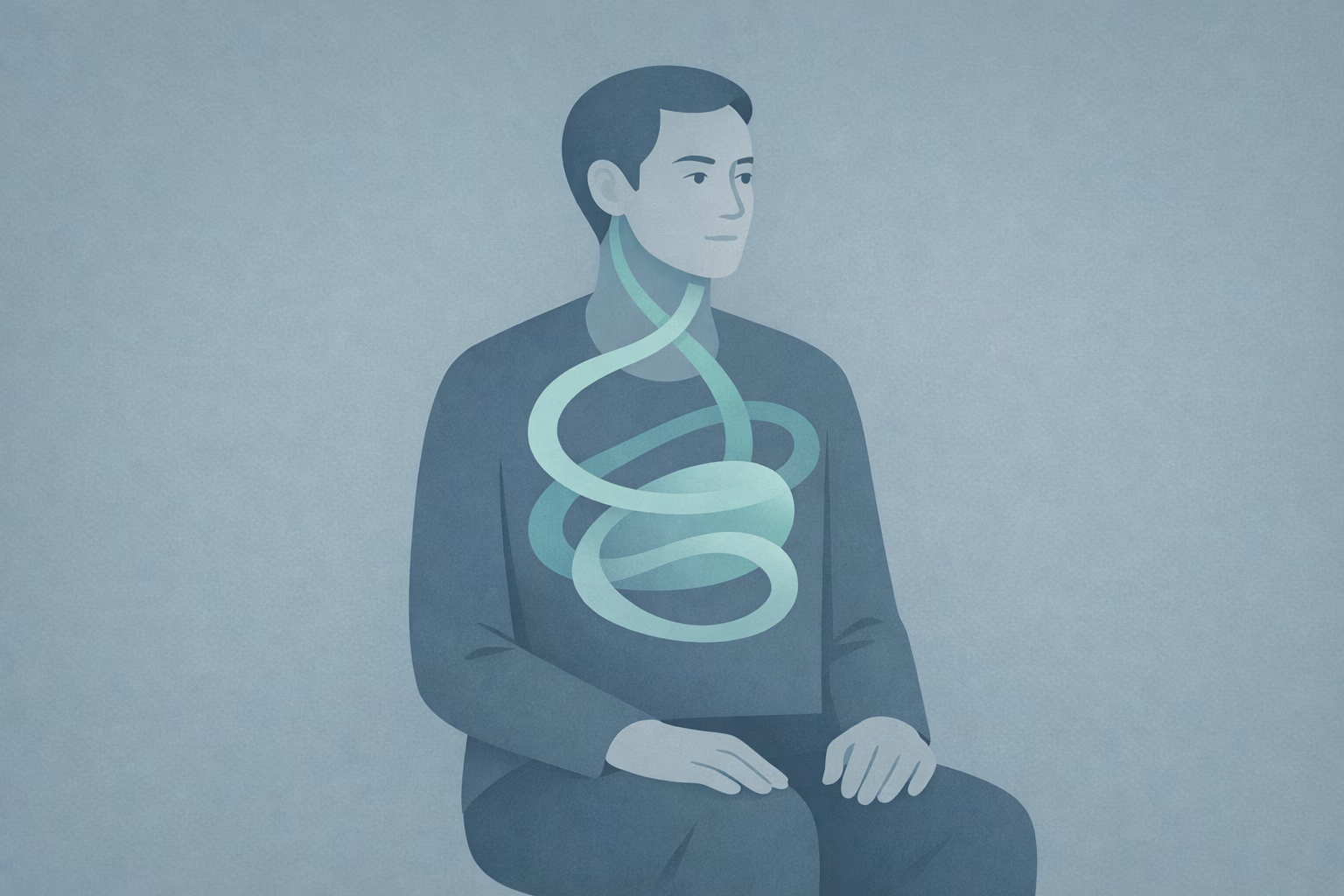
One reason tension persists is that it sends information back to the brain. A braced chest, tightened throat, or clenched abdomen can function as a continuous internal signal: something is still happening. The nervous system then maintains the same state that created the bracing in the first place.
This is not “thinking yourself into tension.” It’s a body-based loop: posture, muscle tone, breathing mechanics, and autonomic state reinforce each other. When the body can’t register completion, it keeps generating readiness signals, and readiness signals keep the body braced. [Ref-9]
Many people hear “release tension” and translate it as: notice it, understand it, calm down, fix it. But understanding is not the same as completion. The system doesn’t stand down because you have the right insight; it stands down when enough conditions of safety and closure are present for the body to stop preparing.
In that light, “release” is less like forcing softness and more like the gradual return of capacity: breathing expands, muscles stop overworking, attention widens, and the body begins to trust that the moment is not requiring armor. Nervous-system regulation is often simply the restoration of a reliable off-switch. [Ref-10]
Not everything needs to be unpacked. Some things need to be finished.
Human nervous systems are not designed to regulate alone all the time. Supportive connection can lower stress physiology through social buffering—reducing the need for vigilance and making it more possible for the body to settle. [Ref-11]
This isn’t about “opening up” or processing perfectly. It’s about receiving cues that you are not managing the world by yourself. When the environment contains steadiness—tone of voice, predictable interaction, respectful pacing—the body often reduces guarding automatically, because it no longer needs to hold as much readiness internally.
When tension begins to resolve, people often notice it in functional ways: a deeper breath without effort, a neck that turns more easily, a face that feels less “set,” a stomach that isn’t constantly braced. It can feel like reducing internal effort—doing the same life with fewer muscles recruited.
There’s also often a social dimension. When isolation or unsafety has been part of the load, even small shifts toward steadier connection can change the body’s baseline. The body becomes more willing to return to neutral when it expects support and predictability. [Ref-12]
Not “perfectly relaxed.” More like: more available for your own life.
Chronic bracing doesn’t only create discomfort—it consumes orientation. A portion of awareness stays allocated to monitoring and managing. When that holding eases, energy becomes available for other forms of engagement: curiosity, play, focus, connection, decision-making.
This is a meaningful shift because it’s identity-level, not just symptom-level. The body is no longer organized primarily around protection. It can begin organizing around participation—work, relationships, creativity, and rest that actually rests. In chronic stress states, somatic symptoms and tension often track with how continuously the system has been asked to carry unfinished demand. [Ref-13]
Many people hesitate at the idea of letting go because tension has functioned like a guardrail. If you’ve been holding a lot for a long time, softening can feel unfamiliar—not because it’s wrong, but because it’s new.
It may help to frame restoration as respect for what your system has been doing. Your body has been working to keep things together under conditions that didn’t reliably provide closure. When the need to brace decreases, it isn’t a loss of strength; it’s a reduction in unnecessary load.
And when the mind circles (rumination, worry), the body often braces more—each reinforcing the other. A more coherent sense of “done” can quiet both loops over time, not through pressure, but through completion. [Ref-14]
If you live with tension buildup, it can be tempting to treat your body as a problem to solve. A more dignified view is that your body has been adapting—protecting, preparing, staying ready—often without enough support or endings.
When what’s been held finally gets to stand down, the result is often simple: more movement, more ease, and more room for who you already are. That kind of kindness toward the body isn’t indulgence; it’s a stable alternative to self-criticism, and it tends to support real change over time. [Ref-15]
From theory to practice — meaning forms when insight meets action.
Because muscles don't only contract for movement — they contract for readiness, an embodied 'just in case.' The article frames chronic tension as a stabilizing response: when life delivers repeated stress without clear endings, the body keeps a small amount of readiness online, as if still waiting for the next demand. Over time, 'ready' starts to feel like 'normal.' You can be safe and seated and still feel like the body is mid-task. This is one of the most common signatures of an overloaded system — baseline contraction in the absence of reliable closure. The tightness isn't you; it's a body-based way of holding unfinished load.
Through a kind of structural displacement: when stress doesn't reach completion, the body holds the load in muscle tone and posture as a placeholder. The article frames this not as fear-based avoidance but as a structural avoidance loop — physical holding is immediate, familiar, and measurable, so it creates short-term stability even at long-term cost. The body isn't stuck; it's still working. Bracing has often functioned as a stabilizer when external life felt unpredictable: a firm spine, set jaw, tightened stomach become substitutes for environmental reliability. 'Holding it together' becomes literal — the body becomes the place where togetherness gets stored.
Because tension sends information back to the brain. A braced chest, tightened throat, or clenched abdomen functions as a continuous internal signal that something is still happening. The nervous system then maintains the same state that created the bracing in the first place. The article frames this as not 'thinking yourself into tension' but a body-based loop: posture, muscle tone, breathing mechanics, and autonomic state reinforce each other. When the body can't register completion, it keeps generating readiness signals, and readiness signals keep the body braced. The chest can't fully soften because the chest is also reporting that softening isn't safe yet.
Because understanding isn't completion. The article makes this distinction sharp: the system doesn't stand down because you have the right insight, it stands down when enough conditions of safety and closure are present for the body to stop preparing. Release is less like forcing softness and more like the gradual return of capacity — breathing expands, muscles stop overworking, attention widens, and the body begins to trust the moment doesn't require armor. Co-regulation matters because supportive connection lowers the need for vigilance and reduces guarding automatically. Not everything needs to be unpacked. Some things need to be finished.
From Science to Art.
Understanding explains what is happening. Art allows you to feel it—without fixing, judging, or naming. Pause here. Let the images work quietly. Sometimes meaning settles before words do.
One Quiet Window, one insight, one reflection — every Sunday