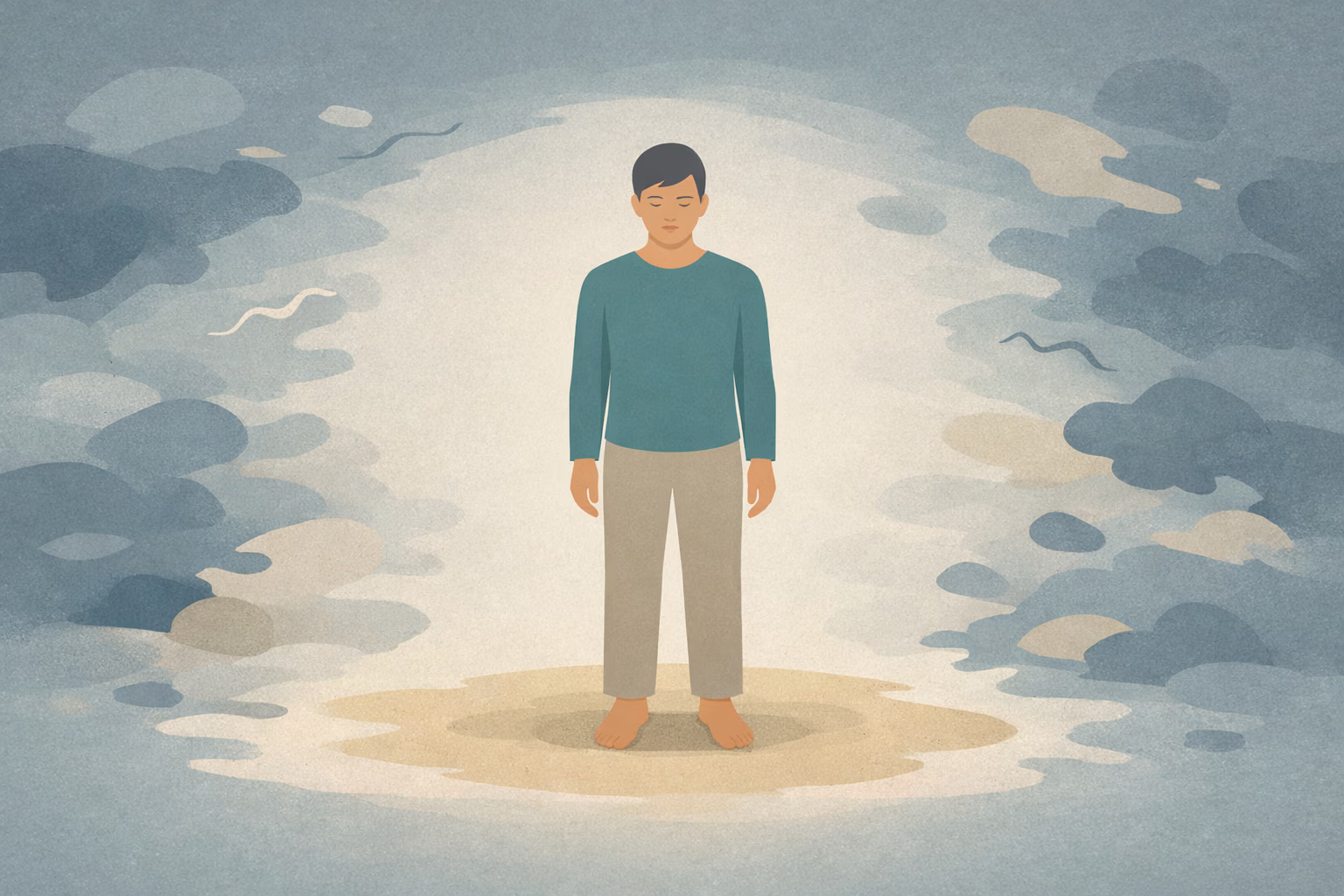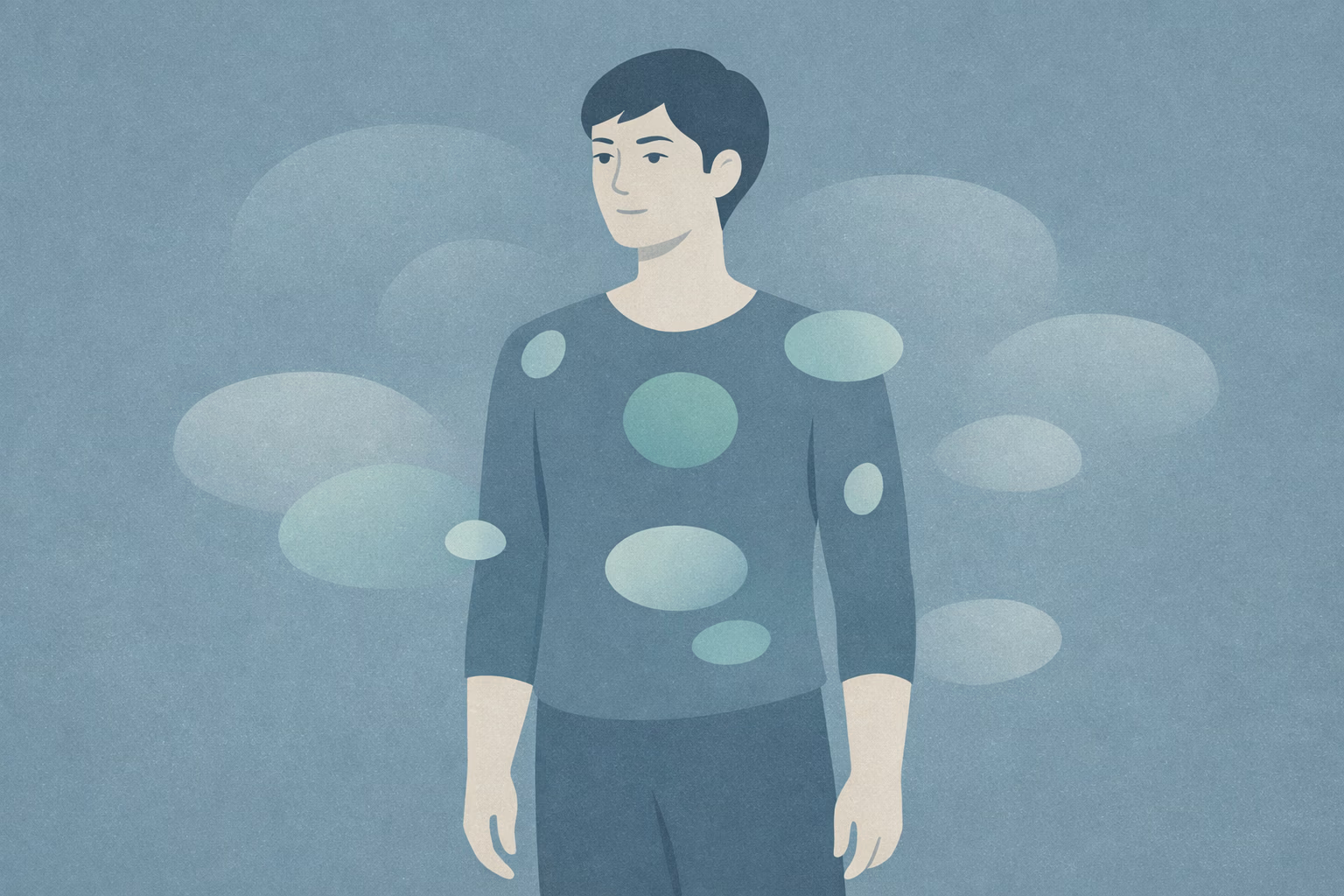


Tension Buildup: The Emotional Weight You Carry Physically
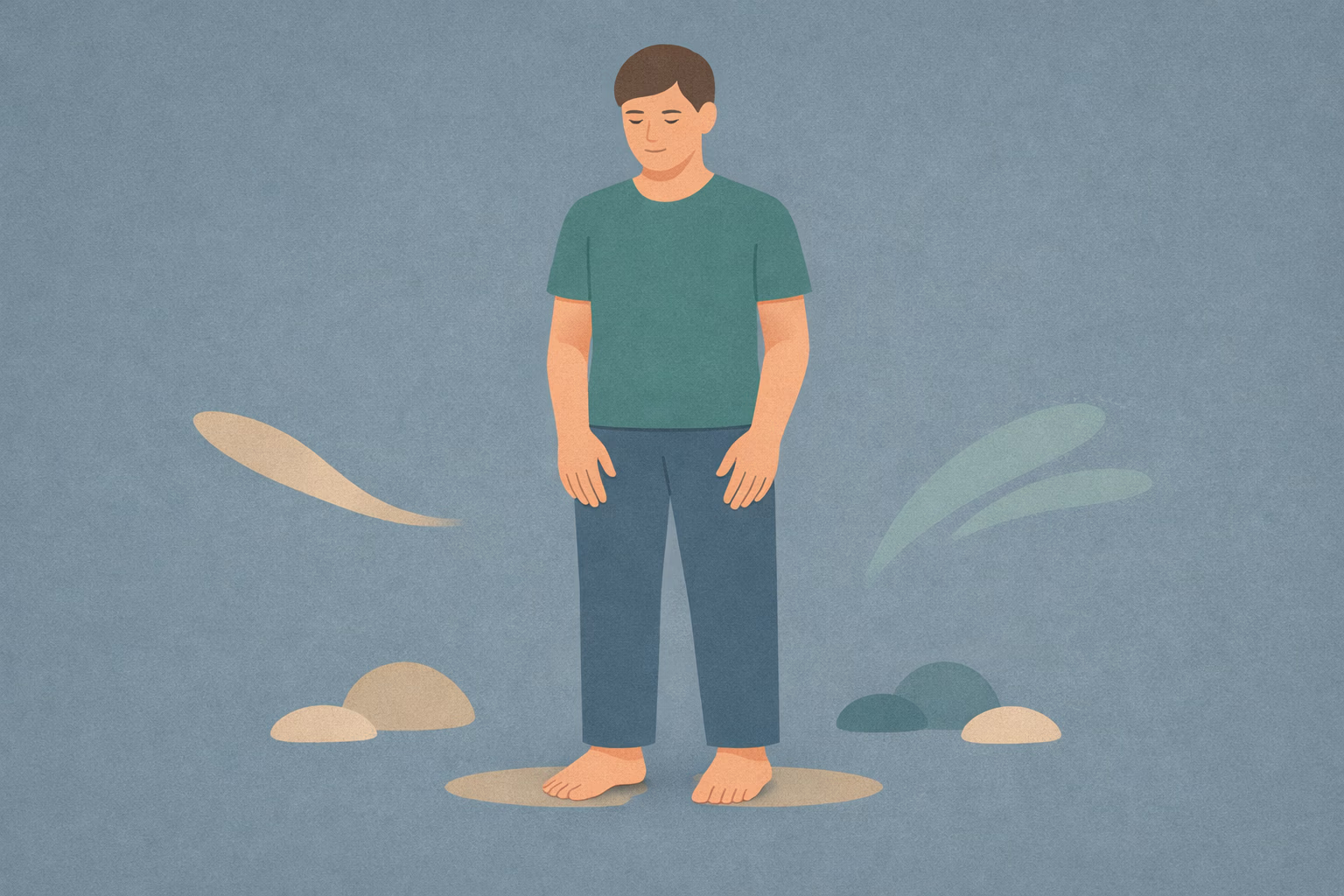
In short: When anxiety rises, it can feel like your mind has been handed the microphone—and it won’t stop talking. Thoughts stack, scenarios multiply, and even small decisions can start to carry the weight of a larger threat.
When anxiety rises, it can feel like your mind has been handed the microphone—and it won’t stop talking. Thoughts stack, scenarios multiply, and even small decisions can start to carry the weight of a larger threat.
Somatic grounding is a different doorway. Instead of asking the mind to reason its way to safety, grounding uses direct sensory and bodily input to help the nervous system register the present moment: the chair under you, the floor beneath you, the air on your skin.
What if relief isn’t something you “figure out,” but something your body recognizes?
In acute anxiety or panic, the system can flip into a high-alert state where speed feels necessary. The mind may race to explain what’s happening, predict what’s next, and scan for an exit—socially, physically, mentally. This isn’t drama or fragility; it’s a biological attempt to restore safety quickly. [Ref-1]
In those moments, “thinking clearly” often becomes harder not because you lack insight, but because the brain prioritizes threat processing over nuance. What shows up as spiraling is frequently an overloaded regulation system trying to complete a safety loop that hasn’t landed yet.
Sometimes anxiety isn’t asking for better thoughts. It’s asking for a clear signal that the emergency is over.
Anxiety often recruits the mind into rapid interpretation: labeling sensations, predicting outcomes, reviewing past moments for evidence. But the nervous system doesn’t only regulate through ideas—it also regulates through incoming signals from the body and environment. Touch, temperature, muscle engagement, sound, and visual orientation can all deliver “current state” information that competes with the alarm channel. [Ref-2]
Somatic grounding works through this bottom-up route: it introduces concrete, present-moment data that can reduce the dominance of catastrophic simulation. It’s not forcing calm; it’s giving the system a different dataset to compute.
From an evolutionary standpoint, the survival system is designed to make quick calls: safe enough to settle, or risky enough to mobilize. Those calls are strongly influenced by sensory evidence—what you can see, hear, feel, and orient to right now—because those channels historically predicted whether danger was present. [Ref-3]
That’s why anxiety can persist even when you “know” you’re safe. Knowledge can be accurate while the body remains unconvinced. Grounding aims at that gap: it increases the clarity of present-time signals so the system has something concrete to stand down toward.
In other words: anxiety often isn’t a failure of understanding. It’s a shortage of usable safety input.
When threat mode is active, the body prepares for action: heart rate may increase, breathing can tighten, muscles brace, attention narrows. These are protective shifts meant to help you respond. Over time, however, staying in this state is metabolically expensive and can intensify the sense that something must be wrong. [Ref-4]
Grounding can reduce intensity because it changes the state conditions the brain is responding to. By increasing sensory precision and physical contact, the system gets cues consistent with “this moment is not an emergency.” It doesn’t erase the situation; it lowers the alarm volume enough for capacity to return.
That return is often subtle: a slightly longer exhale, less visual tunneling, a small widening of attention, more access to ordinary perception (the room, the time of day, the fact that you are sitting rather than running).
Many people get stuck in a loop where anxiety triggers more thinking, and more thinking triggers more anxiety. This can happen because the body’s internal sensing system (interoception) is still broadcasting “activation,” even as the mind produces reassuring arguments. [Ref-5]
When interoceptive signals are loud—fluttery chest, tight throat, shaky hands—the mind often treats them as evidence that danger is present. Trying to out-reason those signals can become a tiring internal courtroom: more testimony, more cross-examination, no verdict.
Somatic grounding doesn’t “prove” safety. It supplies conditions that allow safety to be registered—through sensation, orientation, and boundary.
Anxiety can pull you into a narrow time tunnel: the next five minutes feel like the whole future. In that tunnel, behavior often becomes about escaping the state—leaving, scrolling, over-explaining, over-controlling, going numb. These are regulatory responses that make sense when the system can’t find a stable “now.” [Ref-6]
Grounding interrupts that escape-by-default pattern by reestablishing embodied presence. Presence matters here not as a mindset, but as continuity: the experience becomes locatable in time and place, which helps the nervous system complete the loop from activation to resolution.
In meaning terms, grounding can be a bridge back to coherence: “This is happening, and I am here with it, in a specific moment, in a specific body.” That specificity is often what anxiety removes.
People often judge themselves harshly for the early signals of panic or dissociation, as if those signals indicate weakness. More often, they indicate a rising load and a shrinking of orientation. [Ref-7]
Some common markers include:
These signals usually mean: your system is mobilizing for safety without enough closure yet.
If anxiety repeatedly rises without a felt completion—without the body receiving clear cues of resolution—the system can become more sensitive. Not because you’re “teaching yourself fear,” but because the nervous system learns what predicts prolonged activation and starts responding earlier. [Ref-8]
In practical terms, the threshold can drop: smaller triggers create bigger reactions, and the anticipation of anxiety becomes its own load. This is one reason people can feel “anxious about being anxious.” The system is tracking patterns of unfinished activation.
Grounding supports a different learning signal: that activation can move through and return to baseline when enough present-moment input is available.
When panic episodes end only through escape, distraction, or collapse, the nervous system may file the event as “danger persisted until I got out.” That can turn certain places, bodily sensations, or social contexts into predictors of threat—even if nothing objectively dangerous occurred. [Ref-9]
This is how patterns can expand: the system generalizes. A racing heart becomes a warning; a crowded store becomes a trigger; a meeting becomes a risk. It’s not irrationality—it’s a protective forecasting system doing its job with incomplete closure.
When the body doesn’t get a “done” signal, it keeps the file open.
There’s a quiet reframe that changes the whole terrain: grounding isn’t a performance of calmness. It’s a repeated signal that your system can return. [Ref-10]
Return is a physiological event: the body shifts out of mobilization when enough safety cues are present. Over time, this builds a kind of internal credibility. Not “I can control anxiety,” but “my system can come back online after activation.” That distinction matters because it supports coherence rather than a constant contest.
Trust here isn’t optimism. It’s the gradual reduction of alarm around the fact that activation can happen—and still complete.
Humans regulate in connection. A steady voice, a familiar face, synchronized breathing, respectful touch—these can act as powerful safety signals because the nervous system evolved to read social cues as part of the environment’s threat level. [Ref-11]
This doesn’t mean you must rely on others. It means that co-regulation is a real biological support, not a childish need. In moments of anxiety, being with someone grounded can provide external structure while your own system is temporarily narrowed.
Even small relational cues—someone staying near, not demanding explanations, not escalating urgency—can help the system locate “safe enough” faster.
Grounding is often described as “calming,” but many people experience it first as clarifying. The room comes back. Time becomes trackable. The body feels more like a single place to live rather than a set of alarms. This is the return of usable signal after load decreases. [Ref-12]
Common shifts people report include:
Notice that none of these require perfect calm. They reflect regained orientation—enough to move from emergency mode into response mode.
When anxiety is high, the system often treats escape as the primary route to safety. Grounding changes the equation by making “staying present” more physiologically doable, even while discomfort exists. In that space, different options become available—options aligned with values, context, and the actual moment rather than the alarm. [Ref-13]
This is where agency lives: not in never activating, but in having enough nervous system capacity to choose what happens next. Anxiety may still be present, but it’s no longer the only author of your behavior.
Coherence isn’t the absence of activation. It’s the ability to complete the loop and return to yourself.
Many people treat anxiety as an enemy to defeat. But for a nervous system under load, fighting can add more activation: more monitoring, more urgency, more internal conflict. Grounding offers a different stance: relating to the moment as something you can contact, not outrun.
In that sense, grounding is less about “getting rid of anxiety” and more about restoring safety cues so the system can close the open loop. Presence becomes a form of dignity: you are not reduced to a symptom; you are a person in a moment, with a body that can reorient. [Ref-14]
Somatic grounding isn’t avoidance. It’s a return to the conditions where your nervous system can register what is actually happening now—and where your identity can stay intact under stress.
Over time, that return can become a lived kind of stability: not constant comfort, but reliable reorientation. And when reorientation is available, agency stops being a concept and starts being a physiological reality. [Ref-15]
From theory to practice — meaning forms when insight meets action.
Because safety is a felt signal, not a conclusion. The body's interoceptive system can keep broadcasting activation — fluttery chest, tight throat, shaky hands — even while the mind produces accurate reassuring arguments. The mind treats those sensations as evidence that danger is present, so trying to out-reason them turns into an exhausting internal courtroom: more testimony, more cross-examination, no verdict. Knowledge can be accurate while the body remains unconvinced. Anxiety isn't a failure of understanding; it's a shortage of usable safety input. Grounding doesn't argue with the alarm — it gives the system different data to compute from.
No, and conflating the two is one of the most common misreads. Forcing calm is a Power Loop trap: you're telling your Threat & Safety System that the current state is unacceptable, which adds pressure on top of pressure. Grounding works differently. It supplies the nervous system with present-moment evidence — the floor under your feet, the temperature of the air, the edges of an object — so the body can update its own report on safety. Calm doesn't get argued into existence; it arrives as a byproduct of cues the body can verify. The aim isn't performance of calmness; it's a repeated signal that your system can return.
Through bottom-up regulation. The nervous system regulates not only through ideas but through incoming signals from body and environment — touch, temperature, muscle engagement, sound, visual orientation. Each of those delivers current-state information that competes with the alarm channel. Touch and pressure provide location and boundary. Temperature sharpens present-time reference. Slow movement supplies updated safety cues. Tracking real stimuli reduces internal looping. Grounding introduces concrete present-moment data so catastrophic simulation loses dominance. It's not erasing the situation — it's lowering the alarm volume enough for capacity, choice, and orientation to come back online.
Most people describe it first as clarifying rather than calming. The room comes back. Time becomes trackable. The body feels more like a single place to live rather than a set of alarms. Attention widens beyond the problem. Breath, posture, and voice get a little steadier. Critically, none of this requires perfect calm — it reflects regained orientation, enough to move from emergency mode into response mode. That's where agency lives: not in never activating, but in having enough nervous system capacity to choose what happens next. Coherence isn't the absence of activation; it's the ability to complete the loop and return.
From Science to Art.
Understanding explains what is happening. Art allows you to feel it—without fixing, judging, or naming. Pause here. Let the images work quietly. Sometimes meaning settles before words do.
One Quiet Window, one insight, one reflection — every Sunday