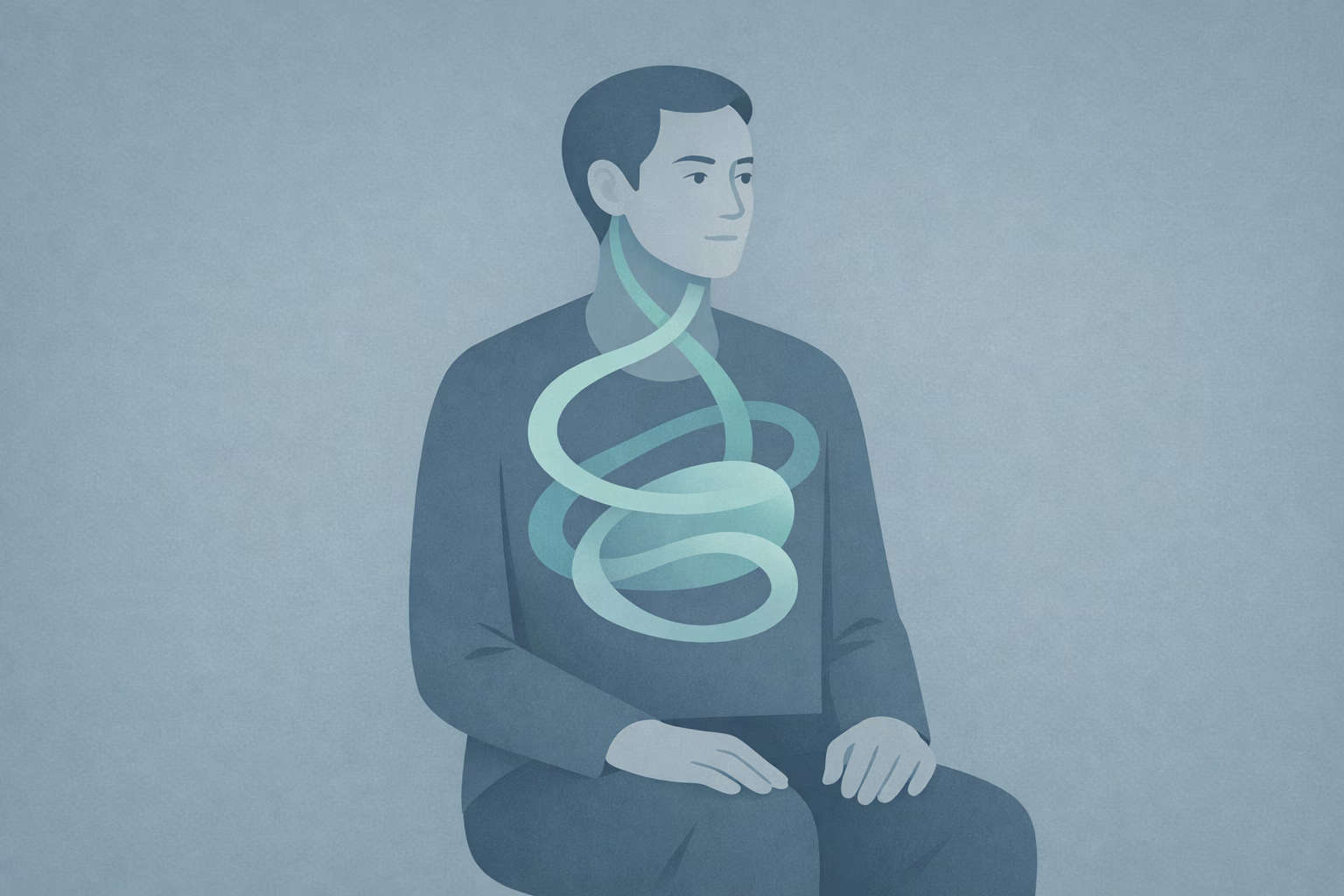
Mind-Body Loops: How Emotional Stress Shows Up Physically
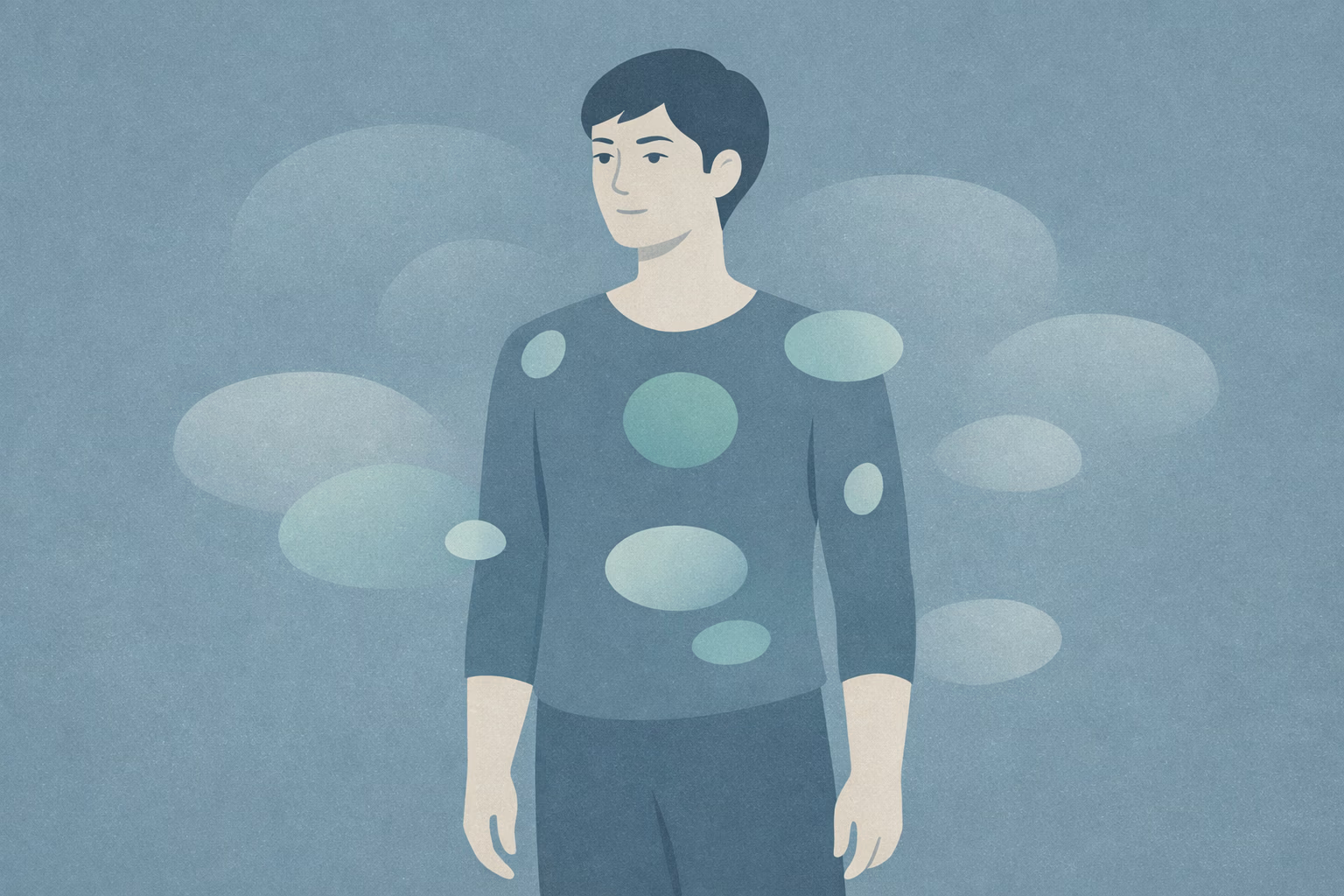
In short: Sometimes the body speaks first: a tight chest, a heavy stomach, a buzzing under the skin, a throat that feels “closed.” And sometimes there’s no clear story attached—just sensation and the pressure to explain it. Emotional mapping is a way of orienting to these signals without forcing them into a quick label.
Sometimes the body speaks first: a tight chest, a heavy stomach, a buzzing under the skin, a throat that feels “closed.” And sometimes there’s no clear story attached—just sensation and the pressure to explain it.
Emotional mapping is a way of orienting to these signals without forcing them into a quick label. It’s the recognition that emotional states often arrive as physiology before they arrive as thoughts, narratives, or conclusions about who you are.
What if your body isn’t “being dramatic,” but trying to complete a message?
Many people expect emotions to show up as clear internal sentences: “I’m sad,” “I’m anxious,” “I’m angry.” But in real life, emotion often appears as sensation—pressure, heat, nausea, fatigue, restlessness—without an obvious name.
This can be disorienting. If you can’t label what’s happening, your mind may start scanning for explanations, replaying conversations, or inventing problems to match the intensity of the body. The confusion isn’t a character flaw; it’s what happens when the signal arrives before the interpretation. [Ref-1]
“I’m not sure what I feel—only that something in me won’t settle.”
Your nervous system is constantly tracking internal data: breath, heart rhythm, muscle tension, gut activity, temperature shifts. This internal sensing is part of interoception—how the brain receives updates from the body and organizes them into usable information. [Ref-1]
Those updates can function like “somatic markers”: rapid body-based signals that help prioritize attention and guide decisions, long before conscious reasoning finishes its draft.
So when a feeling “makes no sense,” it may simply be early. The signal is already present; the meaning has not yet reached closure.
From an evolutionary perspective, speed matters. Systems that detected changes in safety, social standing, and resource availability quickly had an advantage. Your body learned to mobilize energy, restrict energy, or reorient attention before you could calmly analyze the situation.
This is why emotions can feel like weather moving through tissues—because, in a way, they are. They are coordinated state shifts across multiple systems: hormones, immune signaling, muscle readiness, attention narrowing or widening. [Ref-3]
It’s not “overreacting” when the body escalates quickly; it’s a nervous system doing what it was built to do in a world where quick detection was protective.
When sensations remain unnamed and untracked, the system often stays partially activated. It’s like a notification that never clears: attention keeps getting pulled back, even if you’re trying to focus elsewhere.
Recognizing bodily cues doesn’t automatically integrate them—but it can reduce the confusion that adds extra load. It gives the mind fewer places to spin. Instead of “Something is wrong with me,” the experience becomes “Something is happening in me.” That shift can support a sense of internal coherence. [Ref-4]
What changes when you treat sensation as information rather than evidence?
Many people avoid body awareness because they worry it will intensify symptoms. That concern makes sense: if you’ve felt overwhelmed, any increase in attention can seem like it might “feed” the experience.
But gentle attention is not the same as amplification. Often, what escalates a sensation is the added layer of bracing, urgency, and evaluation—especially when the body is already under chronic stress load. [Ref-5]
In other words, the nervous system can become reactive not because the signal exists, but because it has been treated as an emergency or a mystery for too long.
When bodily signals are routinely bypassed—because life is busy, because performance is required, because pausing isn’t supported—your system may keep running unresolved state shifts in the background. Not as a moral issue, but as a timing issue: the body initiated a response and never received a “done” signal.
This is one way stress becomes sticky. The brain adapts to ongoing demand by staying more ready, more vigilant, or more shut down—depending on what reduces immediate cost. [Ref-6]
Disconnection isn’t the cause of distress in a simple way. It’s a condition that can allow incomplete loops to persist until they reappear as sleep issues, irritability, numbness, or sudden spikes of intensity.
Emotional mapping is less about perfect labeling and more about noticing recurring patterns: where the signal tends to land, how it moves, and what state it seems to organize.
Some common patterns people report include:
These patterns are not diagnostic. They’re often the body’s way of routing unfinished information through familiar channels, especially under chronic stress conditions. [Ref-7]
In a supportive environment, many emotional states rise, communicate, and resolve. In a high-demand environment, signals can accumulate: not because you “won’t deal with them,” but because there is no clean endpoint—no completion, no closure, no safe downshift.
Over time, the body may express this accumulation as ongoing tension, headaches, digestive disruption, sleep fragmentation, or a sense of being perpetually “on.” This is not the body turning against you; it’s the cost of carrying unfinished activation. [Ref-8]
When there’s not enough closure, the nervous system compensates: either staying activated to prevent surprise, or reducing sensitivity to endure.
If a signal doesn’t change anything, nervous systems often increase its intensity. This isn’t punishment—it’s escalation for visibility. A subtle cue becomes a stronger cue when the environment (external or internal) can’t respond.
That’s why people sometimes experience a sudden wave—panic-like sensations, a burst of irritation, a body-level collapse—after weeks of “being fine.” The system has been carrying an unfinished message and eventually raises the volume to create a chance for reorganization.
Practices that reduce overall load and reactivity are associated with improved stress physiology and health outcomes, suggesting that turning toward signals in a non-urgent way can support regulation rather than worsen it. [Ref-9]
It’s tempting to believe that once you understand what a sensation “means,” the job is done. But insight and integration are not the same. Integration is the physiological settling that tends to arrive after an experience reaches completion—when the system receives enough closure to stand down.
Still, naming and tracking bodily cues can reduce the extra strain created by confusion. When the mind stops fighting for an explanation, fewer resources are spent on monitoring, bracing, and self-correction. That reduction in load can make regulation more available. [Ref-10]
“When I can describe it simply, I don’t have to wrestle it into a verdict about my life.”
When bodily signals are legible, expression often becomes simpler. Not more dramatic—more precise. Instead of exporting pressure as conflict, withdrawal, or over-explaining, people can communicate from a clearer internal reference point: what’s happening in the system right now.
This matters relationally because many misunderstandings are regulation mismatches. One person is mobilized (urgent, scanning, pushing for resolution) while the other is conserving (slower, less verbal, needing more space). Emotional mapping can make these state differences easier to recognize without assigning blame or identity.
Difficulties in emotion regulation are associated with challenges in identifying and describing internal states, which can ripple into relationships and coping. Building clarity around signals supports more coherent interaction. [Ref-11]
When meaning and physiology start aligning, the change is often quiet. Not constant calm, not perfect emotional clarity—more like earlier detection and less escalation.
People often describe:
This isn’t about feeling more. It’s about having more capacity for signals to move through and conclude, rather than getting stuck in repeat activation. Experiences of chronic stress and trauma can disrupt body-based processing, so clarity can be a meaningful marker of restored organization. [Ref-12]
Emotional mapping can shift your relationship to sensation from suspicion to interpretation. Not in a forced-positive way, but in a structural way: signals become part of orientation rather than interruptions that must be overridden.
When bodily cues are repeatedly dismissed, the system may rely on avoidance patterns—numbing, overcontrol, compulsive distraction, compulsive fixing—because those patterns reduce immediate load or uncertainty. These are regulatory responses that can become sticky when closure is scarce. [Ref-13]
As signals become more legible, the body doesn’t have to use extremes to be heard. Guidance can arrive earlier, at lower intensity, with more room for choice and less pressure for a quick escape hatch.
Emotional mapping isn’t a self-improvement project. It’s closer to literacy: learning the body’s language so you can live with less internal contradiction.
When inner signals can be acknowledged without immediate suppression or performance, the nervous system often spends less energy on containment. Over time, that can support a life that feels more aligned—because your actions aren’t constantly fighting your physiology. Research on suppression versus acceptance suggests that how we relate to internal experiences has real costs and benefits, affecting stress load and functioning. [Ref-14]
Agency grows when your system doesn’t have to shout to be included.
Your body is not a problem to solve; it’s a context to understand. Many intense sensations are not evidence of brokenness—they’re evidence of a system working hard to protect coherence in a fragmented world.
As signals become recognizable and experiences reach completion, the nervous system can downshift more often. And when the body trusts it will be heard, emotions usually don’t need to escalate to make contact. [Ref-15]
From theory to practice — meaning forms when insight meets action.
Because the body speaks first. Your nervous system constantly tracks breath, heart rhythm, muscle tension, gut activity, temperature — interoception, the brain's read of internal state. These updates function like somatic markers: rapid body-based signals that prioritize attention and guide decisions before conscious reasoning finishes its draft. Emotion often appears as sensation — pressure, heat, nausea, restlessness — without an obvious name. Speed mattered evolutionarily; the body learned to mobilize or restrict energy before careful analysis. So when a feeling makes no sense, it may simply be early. The signal is already present; the meaning hasn't reached closure yet.
It's a reasonable concern but usually backwards. What escalates a sensation isn't gentle attention — it's the added layer of bracing, urgency, and evaluation, especially under chronic stress load. The nervous system becomes reactive not because the signal exists but because the signal has been treated as an emergency or a mystery for too long. Emotional mapping is less about perfect labeling and more about noticing recurring patterns: where the signal lands, how it moves, what state it organizes. Attention as information rather than evidence reduces the extra strain that confusion creates and gives the mind fewer places to spin.
Because if a signal doesn't change anything, the system often increases its intensity to gain visibility. This isn't punishment — it's escalation. A subtle cue becomes a stronger cue when the environment, internal or external, can't respond. That's why people sometimes experience a sudden wave — panic-like sensations, a burst of irritation, a body-level collapse — after weeks of "being fine." The system has been carrying an unfinished message and eventually raises the volume to create a chance for reorganization. Ignored signals don't disappear; they stack.
They're often the body's way of routing unfinished information through familiar channels. Common patterns: chest tightness or shallow breathing maps to mobilization, readiness, social evaluation load. Stomach unease or appetite shifts can reflect uncertainty or anticipation. Throat constriction often signals inhibited speech or held-back output. Limb heaviness can indicate conservation or prolonged demand. Restless legs suggest excess activation without a clear endpoint. These aren't diagnoses, and naming isn't the same as integration. But naming reduces confusion-load: the mind stops fighting for an explanation, which frees resources for the system to actually settle.
From Science to Art.
Understanding explains what is happening. Art allows you to feel it—without fixing, judging, or naming. Pause here. Let the images work quietly. Sometimes meaning settles before words do.
One Quiet Window, one insight, one reflection — every Sunday