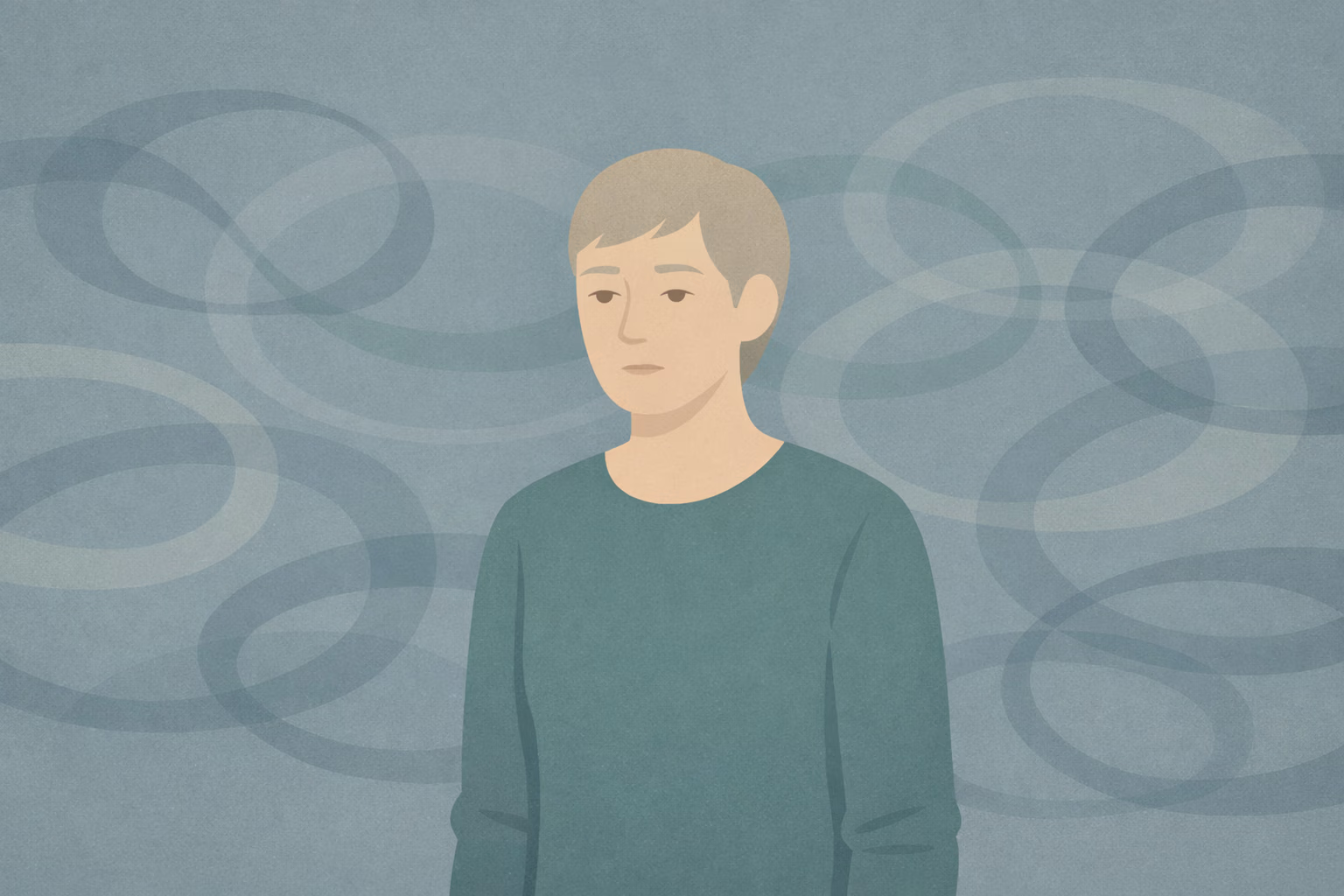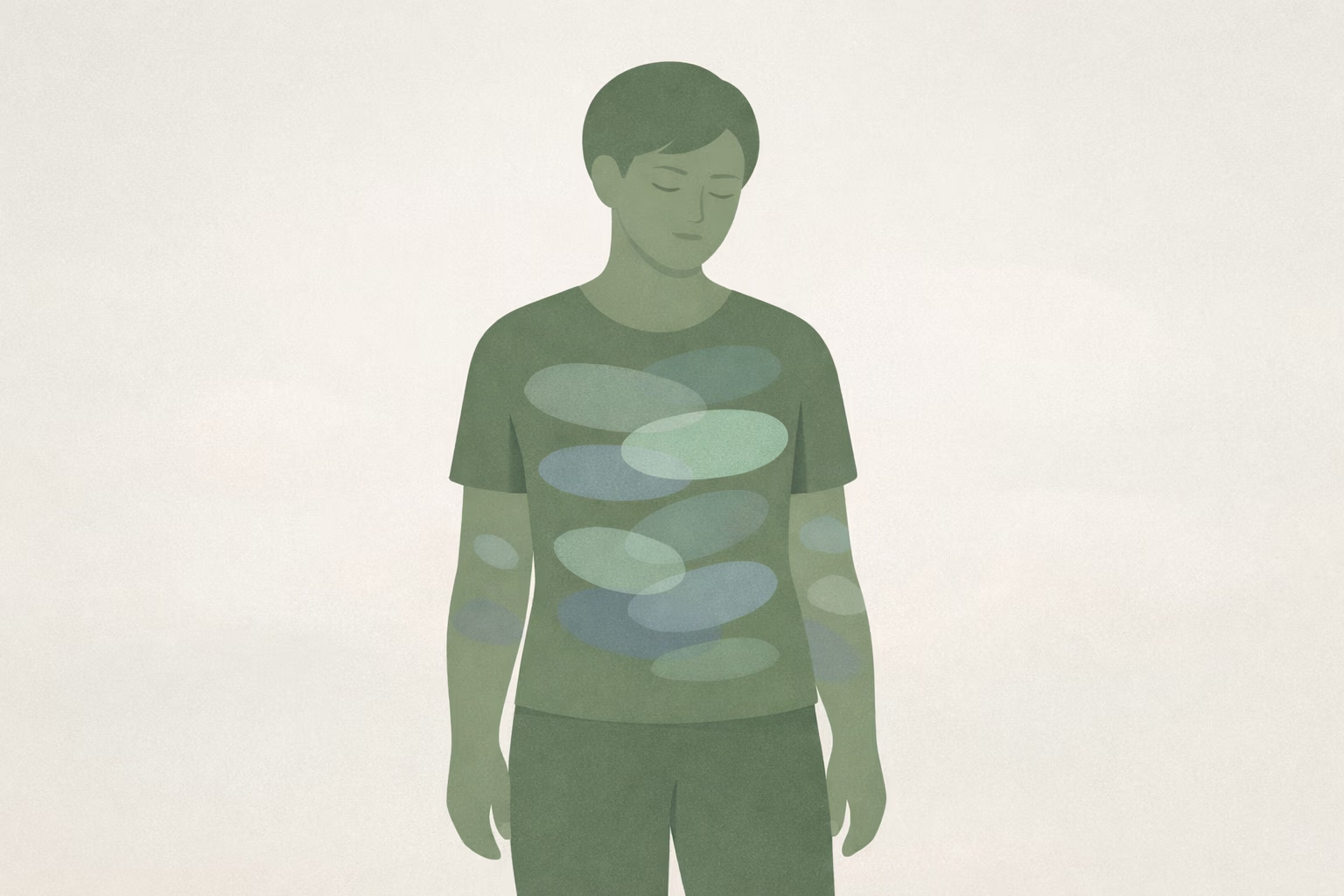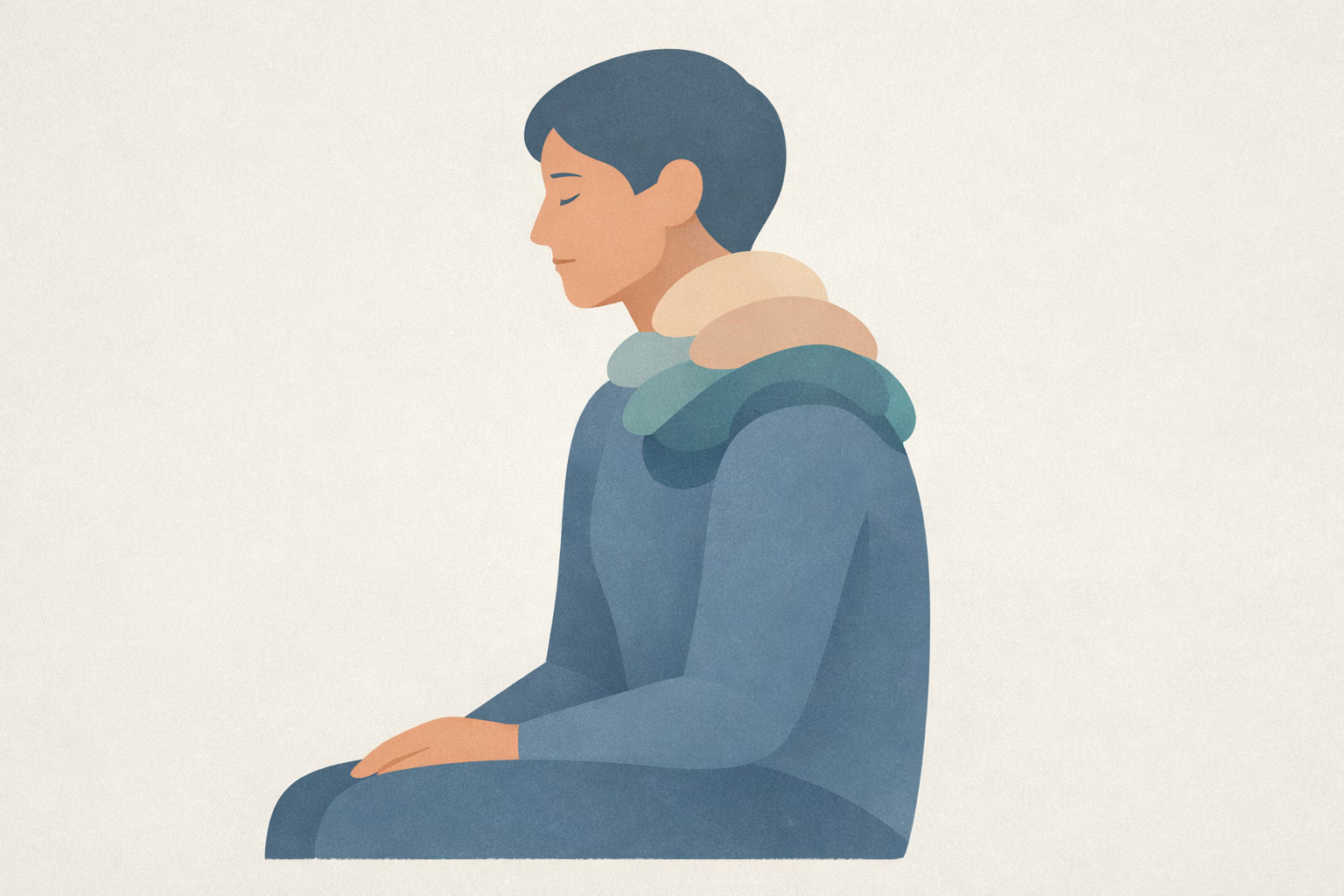
Tension Buildup: The Emotional Weight You Carry Physically
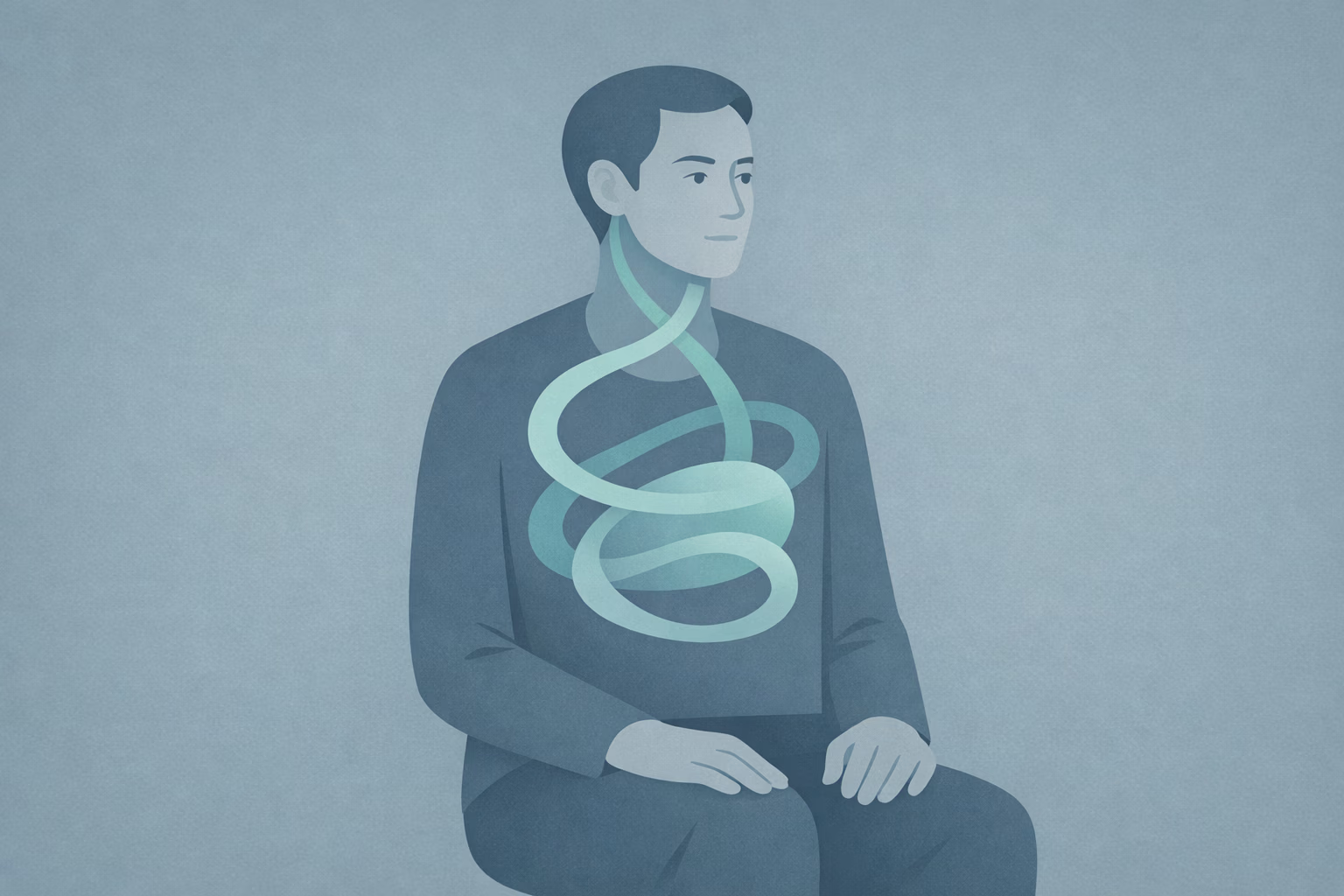
In short: Many people don’t experience stress as “thoughts.” They experience it as a neck that won’t loosen, a chest that feels heavy, a stomach that stays tight, or fatigue that doesn’t match the day. It can be confusing—especially when life looks “fine” on the outside.
Many people don’t experience stress as “thoughts.” They experience it as a neck that won’t loosen, a chest that feels heavy, a stomach that stays tight, or fatigue that doesn’t match the day. It can be confusing—especially when life looks “fine” on the outside.
What if the body isn’t malfunctioning—what if it’s finishing a job your system started under pressure?
Mind-body loops are recurring patterns where emotional stress gets expressed through physiology and then maintained there. This isn’t about being overly sensitive or “bad at coping.” It’s about how a human nervous system stays prepared when experiences don’t get a clear “done” signal.
Some stress is obvious: racing thoughts, worry, spiraling. But for many people, the first signal is physical. The body registers strain before the mind can name what’s happening.
This can look like waking up already braced, realizing your jaw is clenched hours into the day, or noticing a tight throat in a conversation you thought you were handling well. It’s not a lack of insight; it’s a nervous system speaking in its most immediate language—muscle tone, breath, gut pressure, posture. [Ref-1]
Under strain, the body organizes itself around readiness: muscles subtly tighten, breathing shifts, and attention narrows. This is efficient in the short term. The issue is when activation becomes the default because nothing provides closure—no completion, no release, no settled outcome.
Over time, the body can treat certain postures and breath patterns as normal. Tightness becomes background. Rest stops feeling restorative because the system doesn’t fully stand down. This is part of what researchers describe as allostatic load: the cumulative wear of carrying repeated activation without enough recovery or resolution. [Ref-2]
The loop forms when physical tension feeds the perception of threat (“something’s wrong”), and that perception reinforces more tension. The body isn’t causing drama; it’s maintaining a state that once helped you function.
Human stress physiology evolved for situations with an arc: detect danger, mobilize, act, then return to baseline. The nervous system expects an ending—an outcome that tells the body it can stop preparing.
Modern stress often lacks that arc. The “threat” is a backlog, a relationship ambiguity, an unstable role, a constant feed of alarming information, or a day structured around evaluation. The body still mobilizes as if action will resolve it, but the environment rarely provides a clean finish line.
When activation repeats without completion, the stress response can become more easily triggered and slower to settle. This isn’t about weakness; it’s about conditioning under chronic demand. [Ref-3]
Holding tension can be a form of containment. Not emotional suppression as a moral failing—more like a structural strategy: if the system can’t process everything in real time, it stabilizes by bracing.
That bracing can help you keep going through meetings, parenting, caregiving, uncertainty, or social complexity. It can also prevent overwhelm when life is moving faster than your capacity to complete what it asks of you.
Sometimes tension is the body’s way of saying, “Not now. I’ll carry this until there’s room.”
From the brain’s perspective, this is adaptation: staying ready, staying contained, staying able to perform. [Ref-4]
It can be relieving to frame symptoms as purely physical—posture, ergonomics, dehydration, aging. And sometimes those factors matter. But when a pattern flares predictably with deadlines, conflict, uncertainty, or social intensity, it points to a larger system interaction.
Stress biology doesn’t separate “emotional” and “physical” into different departments. The same circuits that track safety and threat influence muscle tone, digestion, immune activity, sleep depth, and pain sensitivity. So the body’s signals can be accurate, even when they’re inconvenient. [Ref-5]
Noticing this is not the same as “understanding your feelings.” It’s simply recognizing that physiology often continues a story that life hasn’t fully closed.
In many mind-body loops, the nervous system routes stress into physiology because it’s the most workable channel available. This can look like “I’m fine” mentally while the body stays braced. The loop isn’t created by conscious choice; it’s created by what the system can safely carry while still functioning.
From a safety-system perspective, this is protective. When emotional load is high or consequences feel uncertain, the nervous system may reduce access to nuance and complexity and instead prioritize survival-relevant outputs: tension, scanning, urgency, shutdown, or numbness. [Ref-6]
In this frame, avoidance isn’t “refusing to face something.” It’s a structural re-routing that keeps life moving when closure isn’t available.
Mind-body looping often has a recognizable signature: patterns that repeat, flare, or cluster around certain contexts. The specifics vary by person, but the structure is similar—activation without completion.
These aren’t proof that something is “wrong with you.” They are consistent with a nervous system doing its best under load, using the body as a stabilizer. [Ref-7]
When the body stays in a partial brace for long periods, it can begin to feel like you’re living with the parking brake on. Energy gets diverted into holding patterns—muscular effort, vigilance, and internal monitoring.
Over time this can contribute to fatigue, pain sensitivity, reduced mobility, and a narrowed sense of engagement with life. Some people also notice a muted internal signal range—not because they are “disconnected from emotions,” but because the system has learned to conserve bandwidth and minimize internal complexity to keep going.
In higher load states, nervous systems can shift toward freeze or shutdown patterns, which are also protective. They reduce output when mobilization no longer feels effective. [Ref-8]
Once a loop is established, it can become self-reinforcing. Tight muscles can signal danger to the brain. Shallow breathing can keep the body in a vigilance-biased state. Gut tension can amplify alertness and irritability. None of this requires a conscious story for the body to keep responding.
The loop can also be maintained by incomplete consequences. If you push through a hard week and “nothing happens” outwardly, the system learns that bracing worked. If you avoid a difficult conversation and things stay calm short-term, the system learns that tension was protective. The problem is that the system doesn’t receive closure—only temporary containment—so it stays ready.
In some cases, numbness can become part of the loop: a reduced-signal state that prevents overload, while the body continues to hold activation beneath the surface. [Ref-9]
Unwinding a loop isn’t primarily an “insight” project. Understanding why you’re tense can be useful, but it doesn’t automatically create the physiological stand-down that signals completion.
What tends to shift loops is when body signals become legible in real time—when the system can register, moment by moment, what increases load and what offers safety cues. In that state, tension and stress are no longer a mystery to solve; they are information.
This is also where meaning can return. Not as a motivational slogan, but as coherence: the body and the person start telling the same story. When the system isn’t flooded, it can track what matters, what’s misaligned, and what hasn’t reached an endpoint. In overwhelm, that tracking often goes offline. [Ref-10]
Nervous systems regulate in relationship. A steady, non-demanding presence—someone who isn’t evaluating you, rushing you, or escalating the moment—can act like an external safety cue. That cue can reduce defensive physiology and help the body update from “prepare” to “we can settle.”
This isn’t about being dependent or needing perfect support. It’s about biology: humans co-regulate through voice tone, facial signals, pacing, and predictability. When those cues are available, muscular guarding and breath restriction often soften because the environment feels more workable.
Importantly, co-regulation is not the same as emotional intensity. It’s often quiet. It’s a reduction of load that allows the system to re-enter a wider window of capacity. [Ref-11]
When looping reduces, people often describe less effort spent “managing themselves.” The body becomes less of a battleground and more of a guidance system. Not perfect ease, not constant calm—just more return.
Signals start to come through in a usable way: clearer hunger and fullness, more natural breathing depth, less sudden spike-and-crash reactivity. There may be moments of tiredness that feel like real recovery rather than depletion. This is a sign the system is regaining the ability to complete stress cycles instead of storing them as tension.
Social buffering—feeling accompanied rather than alone with the load—can make this shift more likely by lowering threat detection and supporting recovery physiology. [Ref-12]
It’s not that life stops being hard. It’s that the body stops needing to stay braced for it all the time.
A major cost of mind-body loops is attention. When your system is busy tracking discomfort, scanning for what might go wrong, or managing symptoms, less energy is available for curiosity, connection, and direction.
As loops loosen, people often notice a subtle but important shift: more ability to orient outward. More capacity to be with others, to think in longer time horizons, and to sense what feels meaningful rather than merely urgent.
This matters because isolation—especially the felt sense of being alone with strain—can intensify stress physiology and keep the loop active. Connection isn’t a luxury here; it’s part of the environment that helps the nervous system receive “safe enough” signals to settle. [Ref-13]
Mind-body loops can make people feel betrayed by their own bodies. But many symptoms are better understood as communications from a system that has been carrying too much, too long—without closure.
In a coherence-based frame, relief doesn’t come from pushing harder against the body. It comes from recognizing that the body is trying to complete something: to resolve activation, to return to baseline, to protect what matters. When that story replaces self-criticism, the system often has more room to settle. [Ref-14]
Agency can begin to return when the signals are treated as meaningful data about load, context, and unfinished loops—not as proof of personal failure.
There is nothing weak about having a nervous system that speaks through the body. It is one of the most human ways we stay oriented under strain.
When the body’s messages are met with respect rather than pressure, life can start to feel more internally consistent—less fragmented, less managed. Not because you forced change, but because your system finally received enough safety and completion to stand down.
That return to coherence—where your physiology and your values can face the same direction—isn’t self-improvement. It’s restoration. [Ref-15]
From theory to practice — meaning forms when insight meets action.
Because for many people the body registers strain before the mind names it. The nervous system speaks in its most immediate language — muscle tone, breath depth, gut pressure, posture — and tightness can become background long before any conscious worry arrives. You wake already braced, realize hours in that your jaw is clenched, notice a tight throat in a conversation you thought went fine. The article reframes this not as a lack of insight but as physiology doing its job: organizing the body around readiness when experiences haven't received a clear Done Signal. The body isn't malfunctioning — it's continuing a story that life hasn't closed.
Tight muscles signal danger to the brain. Shallow breathing keeps the body in vigilance. Gut tension amplifies alertness. None of this requires a conscious story — the loop runs because physical tension feeds the perception of threat, and that perception reinforces more tension. The article also names a subtler reinforcer: incomplete consequences. If you push through and 'nothing happens,' the system learns that bracing worked. If you avoid a hard conversation and things stay calm short-term, the system learns tension was protective. The body never receives closure, only temporary containment, so it stays ready. This is the structural basis of an Avoidance Loop expressed somatically.
The article frames it more structurally than that. Holding tension is a form of containment — not emotional suppression as a moral failing, but a way the system stabilizes when it can't process everything in real time. Bracing helps you keep going through meetings, parenting, caregiving, social complexity. From the brain's perspective this is adaptation: staying ready, staying contained, staying functional. The body isn't betraying you; it's carrying load until there's room. Stress biology doesn't separate emotional and physical into different departments — the same circuits tracking safety and threat shape muscle tone, digestion, immune activity, and pain sensitivity simultaneously.
Not insight alone — understanding why you're tense doesn't automatically create the physiological stand-down that signals completion. The article emphasizes co-regulation: nervous systems regulate in relationship, and a steady, non-demanding presence acts as an external safety cue. Voice tone, facial signals, pacing, predictability — these shift the body from 'prepare' to 'we can settle.' Co-regulation isn't emotional intensity; it's often quiet, a reduction of load that widens the window of tolerance. As loops unwind, signals start coming through usably: clearer hunger, more natural breath depth, less spike-and-crash reactivity. The body becomes a guidance system rather than a battleground.
From Science to Art.
Understanding explains what is happening. Art allows you to feel it—without fixing, judging, or naming. Pause here. Let the images work quietly. Sometimes meaning settles before words do.
One Quiet Window, one insight, one reflection — every Sunday