Chronic Stress Patterns: The Loops You Stop Noticing
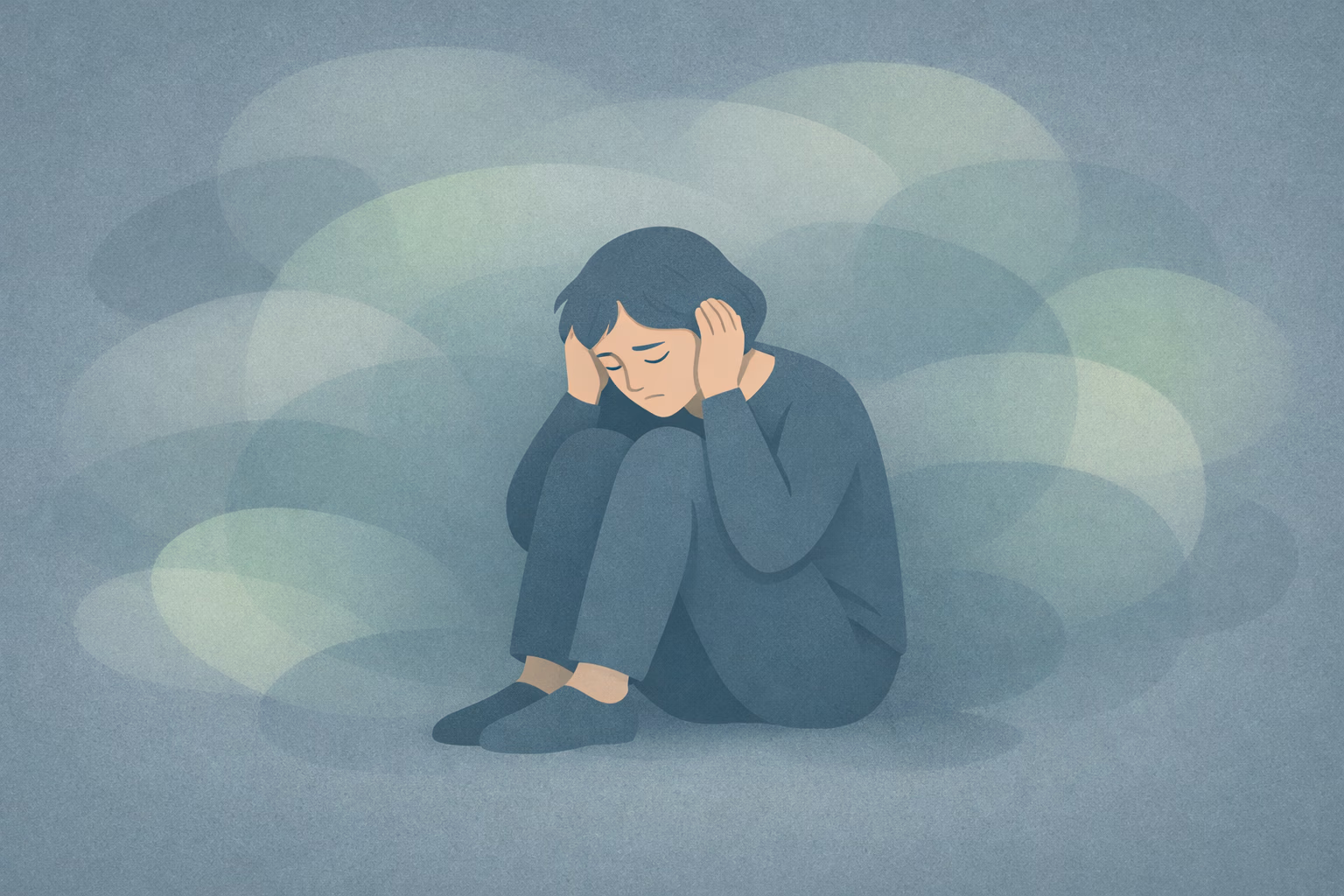
In short: Emotional overwhelm can feel like being trapped in a room where every sound is amplified: thoughts stack on thoughts, feelings blur into noise, and even simple choices start to feel strangely complex. From the outside, life might look “fine.” Inside, it can feel like there’s no remaining space to sort, prioritize, or respond.
Emotional overwhelm can feel like being trapped in a room where every sound is amplified: thoughts stack on thoughts, feelings blur into noise, and even simple choices start to feel strangely complex. From the outside, life might look “fine.” Inside, it can feel like there’s no remaining space to sort, prioritize, or respond.
What if “I can’t handle this” is less about who you are—and more about what your system is carrying?
This is a grounded way to understand overwhelm: not as weakness, not as a personality, but as a state where input (sensory, cognitive, emotional, relational) has exceeded the nervous system’s current processing capacity. When capacity is exceeded, the body does what bodies do: it shifts into protection.
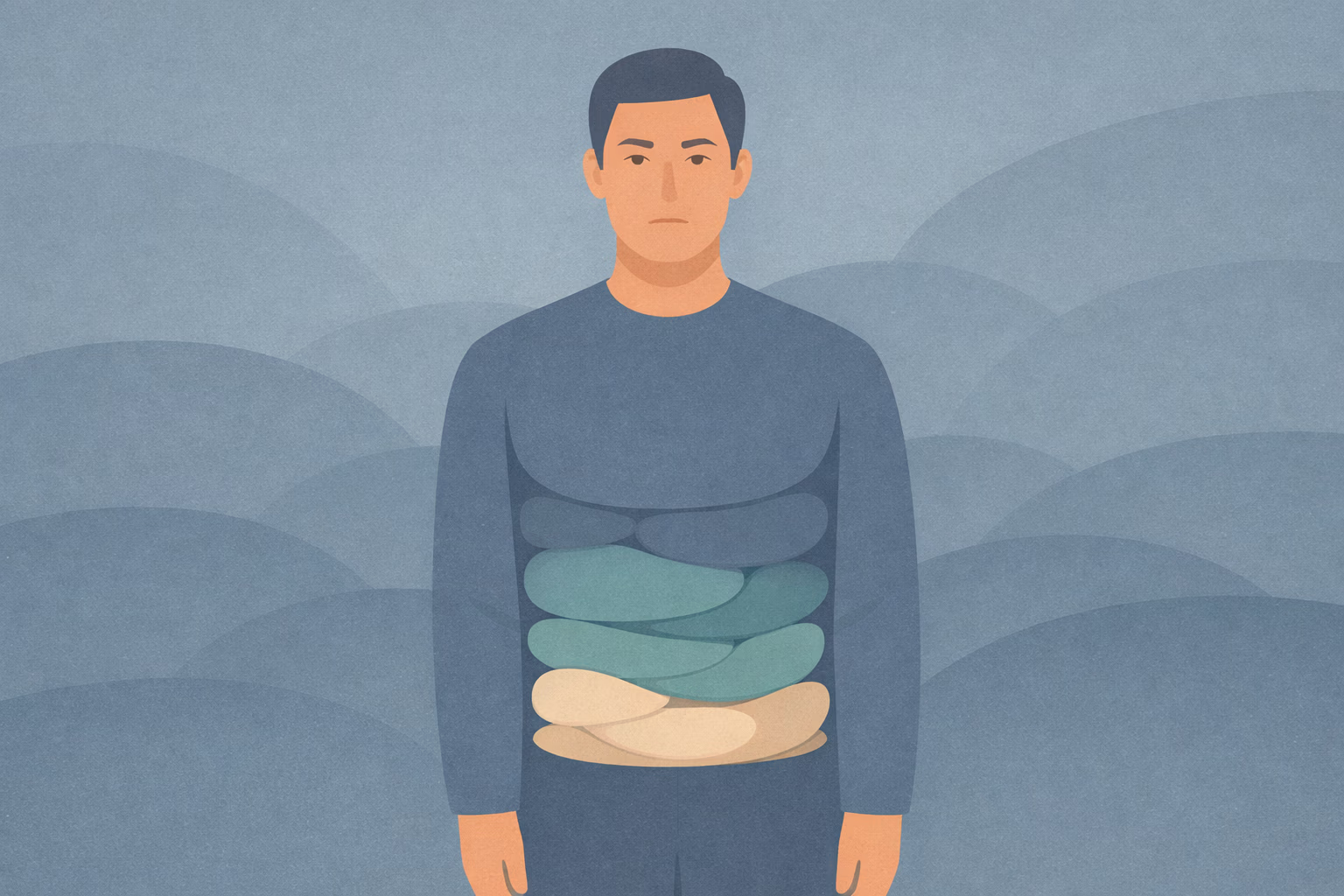
In overwhelm, the inner world can feel packed and pressurized. It’s not just “a lot of emotion.” It’s the sense that everything is arriving at once—signals, demands, memories, unfinished tasks, social cues—and none of it is sorting itself into a usable order. [Ref-1]
People often describe a few common features: a mental “traffic jam,” irritability that seems to come out of nowhere, and a pull toward disappearing—into sleep, scrolling, numbness, or silence. These aren’t random behaviors. They’re the system attempting to reduce incoming load when filtering capacity is compromised.
When everything feels urgent, the body often tries to make the world smaller.
Your brain and nervous system are constantly filtering: deciding what matters, what can wait, and what is safe to ignore. Under sustained stimulation—constant decisions, emotional labor, conflict, multitasking, irregular rest, background noise—those filters can start to lose efficiency. The result can feel like inner flooding: too many signals with not enough “processing bandwidth.”
One way to name this is allostatic load: the cumulative cost of staying adapted to ongoing demands without adequate completion and stand-down. When load stays high, the system becomes more reactive, less selective, and less able to return to baseline after a spike. [Ref-2]
Importantly, this is not about insight. You can understand why you’re overwhelmed and still be overwhelmed—because the issue is capacity and saturation, not a missing explanation.
Human threat-and-safety systems evolved in environments where “a lot happening” usually meant something concrete: a storm, a predator, a conflict in the group. Input was intense, but it was also episodic. There were more natural endings—resolution, rest, return.
Modern life often removes endings while multiplying signals. The nervous system can interpret sustained intensity as ongoing danger, even when the “danger” is simply relentless information, social evaluation, and unfinished loops. Keeping the system online costs energy; over time, that cost accumulates. [Ref-3]
In that context, overwhelm is not irrational. It is the expected output of an ancient detector living inside a high-density signal environment.
When input exceeds capacity, the system doesn’t keep trying to “perform better.” It often switches strategies. If it can’t reduce the demands externally, it may reduce contact internally: narrowing attention, flattening response, or seeking quick exits from stimulation.
That can look like withdrawal, sudden fatigue, spacing out, procrastination, or an intense urge to be left alone. Structurally, these are ways the nervous system attempts to lower perceived threat and restore tolerable levels of activation. Under chronic stress, these protective shifts can become more accessible and more frequent. [Ref-4]
These responses can be inconvenient and confusing—but they are coherent. They are the body’s attempt to interrupt an input stream that no longer has a clear “done” signal.
Overwhelm often comes with global conclusions: “I can’t do life,” “I’m not cut out for this,” “Something is wrong with me.” That makes sense—because when the system is saturated, it cannot easily separate what is truly urgent from what is merely loud.
But “too much” is not a personality diagnosis. It is a state description. A nervous system can go into freeze-like or collapse-like modes when demands remain high and escape feels limited; this can reduce movement, initiative, and responsiveness as a protective conservation strategy. [Ref-5]
When you’re overloaded, the story often sounds personal—even when the cause is structural.
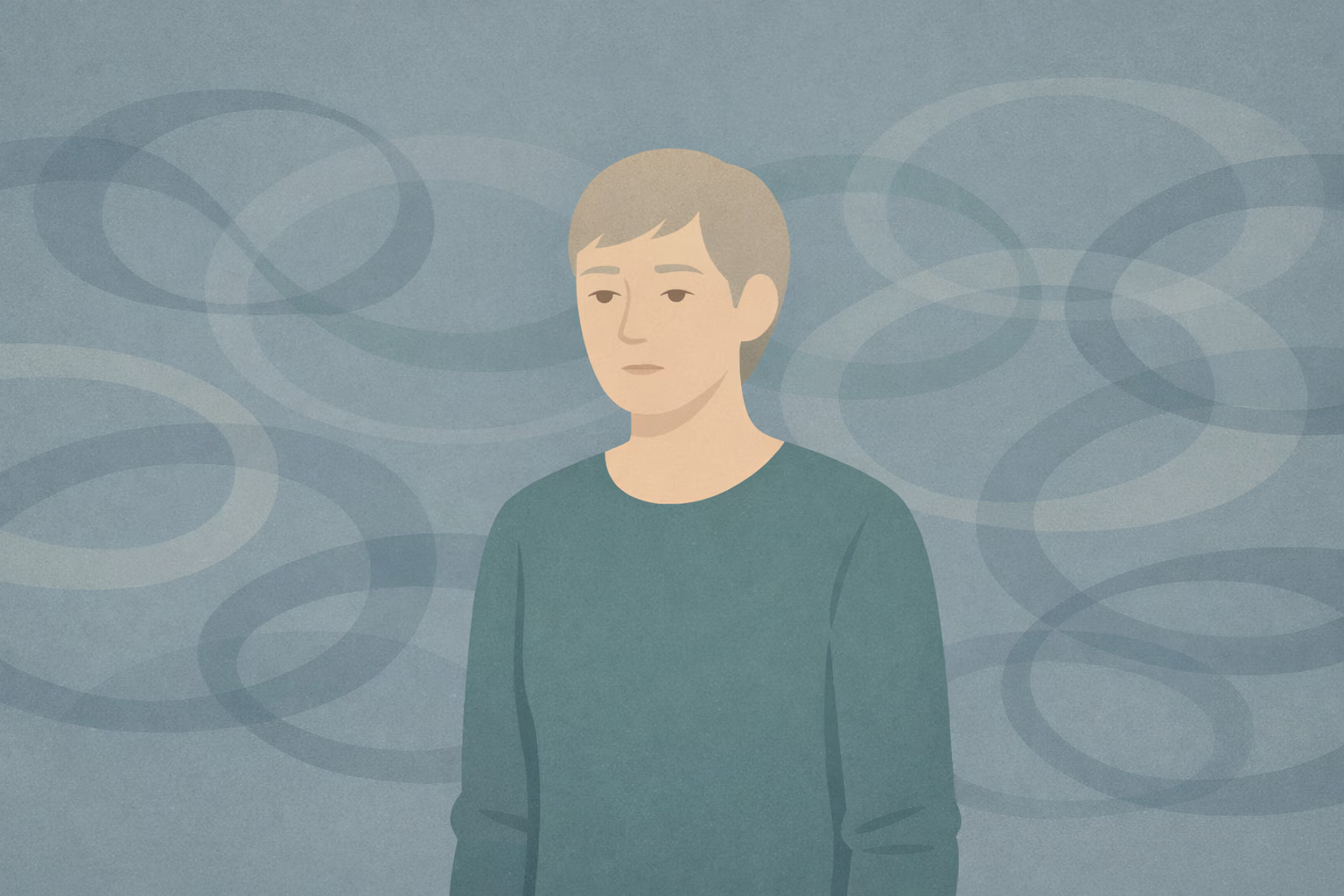
Overwhelm can quietly form a loop. High stimulation and pressure raise threat activation. Threat activation reduces filtering and increases urgency. Reduced filtering makes everything feel even more intense. And as intensity rises, the system reaches for whatever lowers contact with the flood—distraction, numbing, over-control, withdrawal.
This isn’t avoidance in the moral sense, and it doesn’t require a theory about fear or suppression. It’s a load-management move: when the channel is saturated, the system tries to cut the feed. The relief is real, but it often doesn’t produce closure—so the baseline load remains, and the loop restarts. [Ref-6]
Overwhelm is often recognizable by the way it changes the shape of attention and response. It can feel like you’ve lost your internal volume control, or like your mind keeps hitting a limit where nothing else will load.
Some common patterns include:
At the far end, overwhelm can tip into shutdown-like states: low energy, reduced speech, a sense of distance from the environment, or difficulty initiating even basic tasks. This is not laziness; it is the system moving into low-demand mode to conserve resources. [Ref-7]
When overwhelm is occasional, the system can often recover between waves. When it becomes chronic, something subtler happens: life starts to lose “edges.” Not because you don’t care, but because the system can’t afford full contact with everything it’s receiving.
Over time, chronic overload can erode cognitive clarity and reduce the felt availability of choice. People may notice that they can do urgent tasks but struggle with deeper engagement—relationships, creativity, reflection, or anything that requires spacious attention. The nervous system becomes oriented toward managing intensity rather than building continuity.
In some people, the protective pattern can resemble numbness or a freeze-like stillness: fewer internal signals reaching awareness, less initiation, less momentum. Again, this is not an identity; it’s an adaptation under sustained load. [Ref-8]
One of the most frustrating parts of overwhelm is that it can create the very conditions that sustain it. When threat circuits are activated, the brain prioritizes scanning and rapid response. That can reduce nuanced filtering, making more stimuli register as important, urgent, or “too much.”
So the system feels flooded, and because it feels flooded, it becomes more vigilant—and because it becomes more vigilant, it feels more flooded. This is not a mindset problem; it’s a state-dependent processing shift.
Regulation, in this context, is less about forcing calm and more about the nervous system regaining the ability to discriminate: this matters, that doesn’t; this is now, that is later. When discrimination returns, the world becomes quieter inside. [Ref-9]
Overwhelm often improves when the overall density of inputs decreases—when there are fewer simultaneous demands, fewer open loops, fewer mixed signals, and more predictable pacing. Not because a person becomes “more motivated,” but because the nervous system can re-establish sorting.
This is where the difference between relief and integration matters. Relief can change state quickly (a numbing scroll, a sudden nap, a burst of control). Integration is slower and more bodily: it’s what happens when experiences reach completion, signals settle, and identity no longer has to brace against unfinished urgency.
As pacing returns, filtering capacity can rebuild. The brain becomes more able to inhibit irrelevant stimuli and re-engage flexible attention—an adaptive shift described in stress-and-brain research as moving from prolonged survival-mode dynamics back toward restorative processing. [Ref-10]
Humans regulate in groups. Not through constant emotional processing, but through predictable, low-demand cues of safety: familiar voices, steady presence, ordinary conversation, shared routines. These cues can reduce the need for the nervous system to do all containment alone.
When overwhelm is high, intense social contact can sometimes add load—more cues to track, more responses to generate. But steady, non-evaluative connection can act like an external boundary: a reminder that the world is not entirely unpredictable, and that attention can rest without missing danger.
Neurobiology research on stress and anxiety highlights how perceived safety and social context influence threat circuitry and stress responding. In simple terms: when safety cues increase, the alarm system can stand down. [Ref-11]
When overwhelm recedes, many people expect a dramatic emotional breakthrough. Often, the first change is quieter: more internal space between stimulus and response. Thoughts become more linear. Sensory input feels less invasive. Choices require less force.
Another hallmark is improved signal separation—the ability to distinguish urgency from noise. A message can be “important” without feeling like an emergency. A feeling can be “present” without taking over the entire field. This is less about accessing emotion and more about returning capacity: the system can hold information without flooding.
Clinically, this resembles moving back inside a workable “window” where activation is tolerable and processing is possible. The person hasn’t become a different person; the system is simply no longer operating beyond its limits. [Ref-12]
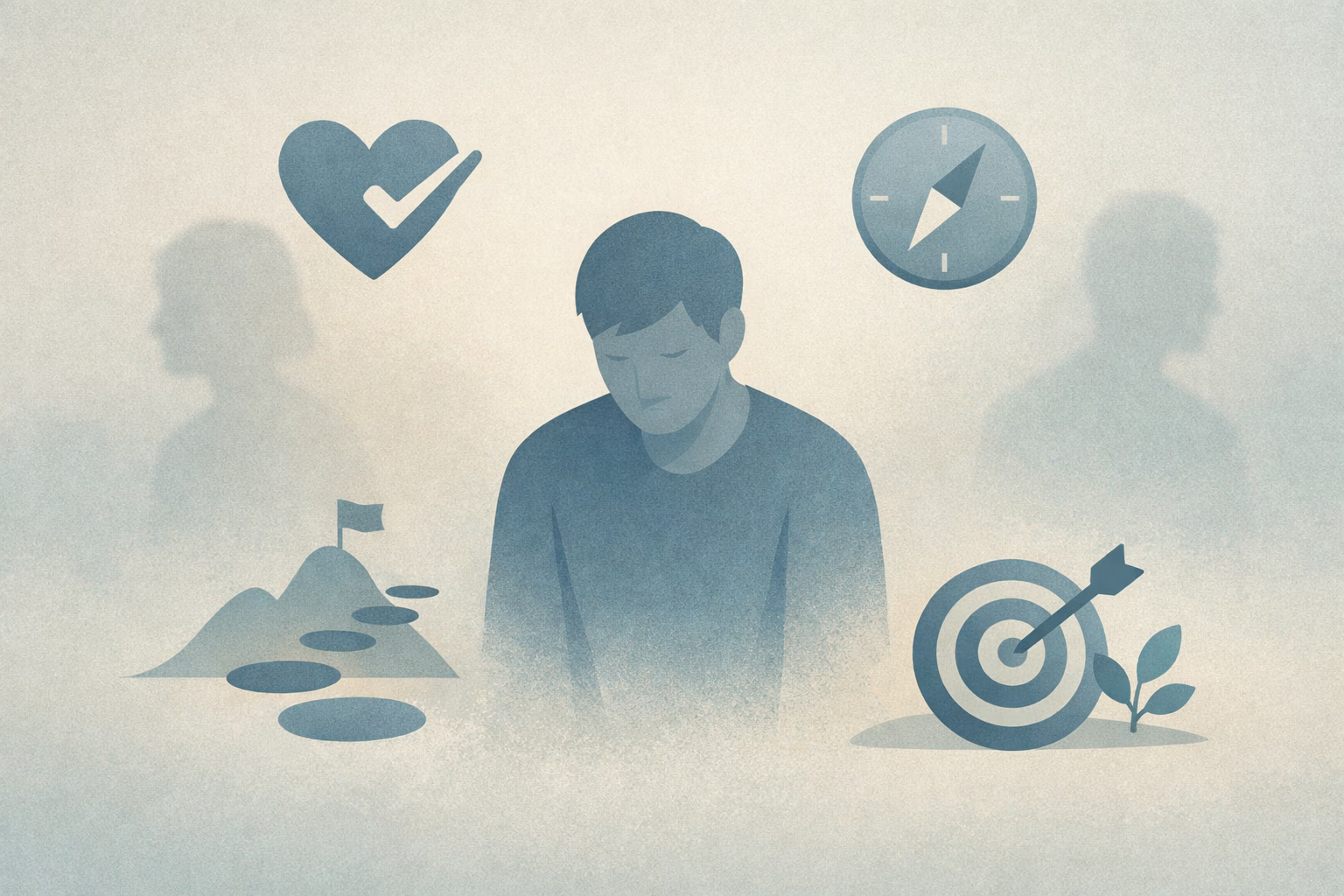
Overwhelm hijacks attention. It makes life feel like a wall of equal-priority inputs. When that happens, values can become hard to access—not because values disappeared, but because the system is busy managing volume.
When stimulation decreases and closure becomes more available, attention naturally starts to organize around meaning: what is actually important, what fits your life, what you want to stand for. This is not about pushing yourself to care. It’s about the nervous system having enough capacity to register direction again.
Many descriptions of overstimulation emphasize how sensory, cognitive, and emotional load can blur priorities and reduce tolerance. As tolerance returns, the mind can choose a focus rather than being chosen by whatever is loudest. [Ref-13]
When the inside gets quieter, the compass becomes readable again.
Emotional overwhelm is often the body’s way of communicating a simple fact: the current load exceeds current capacity. That message can arrive as irritability, shutdown urges, numbness, or a restless need to escape. None of these are proof of inadequacy; they are regulatory responses under strain.
In a culture that treats constant availability as normal, it’s easy to interpret overwhelm as a personal failure. A more coherent framing is that the system is signaling for fewer simultaneous inputs and more complete endings—so it can return from emergency sorting back to meaningful living. [Ref-14]
Agency often begins here: not with self-critique, but with accurate interpretation of what the signal is saying.
When life feels too loud inside, it doesn’t mean you’re broken. It means your nervous system is doing its job in a world that rarely provides clean pauses, clear endings, or predictable safety cues.
Over time, predictability and steadiness support the body’s ability to stand down from threat mode and restore capacity. [Ref-15] And when capacity returns, so does orientation: the sense that you can meet life in a paced way, with clearer boundaries between urgency and noise.
Overwhelm is not your identity. It’s a message from the system—requesting space, clarity, and direction.
From theory to practice — meaning forms when insight meets action.
Because filtering systems get saturated. The article explains that under sustained stimulation — constant decisions, emotional labor, multitasking, irregular rest — the brain's filters lose efficiency. Too many signals arrive with not enough processing bandwidth. Decision paralysis on small choices isn't proof you can't handle life; it's proof the system can't easily separate truly urgent from merely loud. This is allostatic load: the cumulative cost of staying adapted without adequate completion. You can understand exactly why you're overwhelmed and still be overwhelmed, because the issue is capacity and saturation, not a missing explanation.
No — the article frames withdrawal urges as coherent regulation. When input exceeds capacity, the system stops trying to perform better and switches strategies. If it can't reduce demands externally, it reduces contact internally — narrowing attention, flattening response, seeking quick exits. Withdrawal, sudden fatigue, spacing out, an urge to be left alone aren't moral failures. They're protective shifts that lower perceived threat and restore tolerable activation levels. These responses can be inconvenient and confusing, but they make sense. The body is trying to interrupt an input stream that no longer has a clear Done Signal.
Through threat-driven processing. The article describes the self-perpetuating cycle: when threat circuits are activated, the brain prioritizes scanning and rapid response, which reduces nuanced filtering. More stimuli register as important or urgent. The system feels flooded, becomes more vigilant, then feels more flooded. This isn't a mindset problem; it's a state-dependent processing shift. Pressure increases activation, activation reduces signal clarity, reduced clarity increases urgency, urgency drives escape behaviors that produce relief without closure — so the baseline load remains and the loop restarts. The Avoidance Loop here is structural, not chosen.
Reduced input density and more complete endings. The article makes this distinction clearly: relief changes state quickly, but integration is slower and bodily — what happens when experiences reach completion and signals settle. As pacing returns, filtering capacity rebuilds. The brain becomes more able to inhibit irrelevant stimuli and re-engage flexible attention. Restoration usually shows up first as more space between stimulus and response, better signal separation — a message can be important without feeling like an emergency. You're not too sensitive. You're carrying too much signal without enough closure, and the window of tolerance can return when conditions allow it.
From Science to Art.
Understanding explains what is happening. Art allows you to feel it—without fixing, judging, or naming. Pause here. Let the images work quietly. Sometimes meaning settles before words do.
One Quiet Window, one insight, one reflection — every Sunday