Emotional Overwhelm: When Life Feels Too Loud Inside
In short: Emotional compression is what happens when you keep daily life moving by pressing down your internal experience—tightening your focus, narrowing your range, and prioritizing output over completion. From the outside, it can look like competence.
Emotional compression is what happens when you keep daily life moving by pressing down your internal experience—tightening your focus, narrowing your range, and prioritizing output over completion. From the outside, it can look like competence. From the inside, it can feel like bracing: a constant, quiet effort to stay contained.
What if “pushing it down” isn’t a personality trait—what if it’s your nervous system buying you time?
This pattern isn’t a moral failure or a lack of self-knowledge. It’s a regulatory strategy: a way to stay functional when your load is high and your conditions don’t allow for things to fully resolve. The cost is that what didn’t get completion often doesn’t disappear—it stays active in the background, asking for closure.
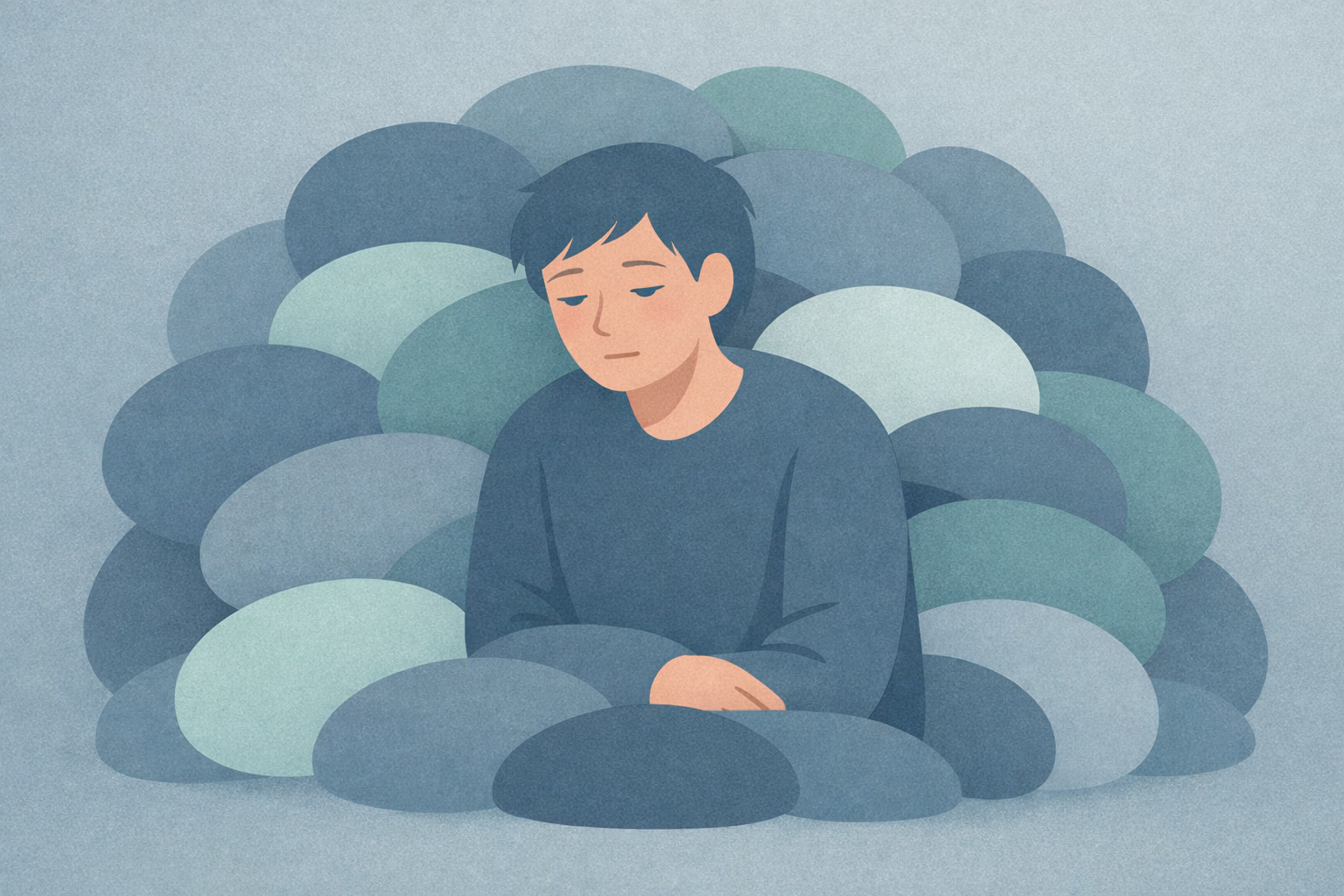
Emotional compression often has a particular texture: you’re getting things done, showing up, responding, and appearing steady—while your inner world feels dense, tight, or heavy. It’s not always dramatic. It can be subtle and constant, like carrying a weight you’ve gotten used to.
This is frequently less about “not feeling anything” and more about keeping the signal range narrow enough to remain operational. Under ongoing load, many systems prioritize short-term coordination over full processing, which can increase allostatic burden over time. [Ref-1]
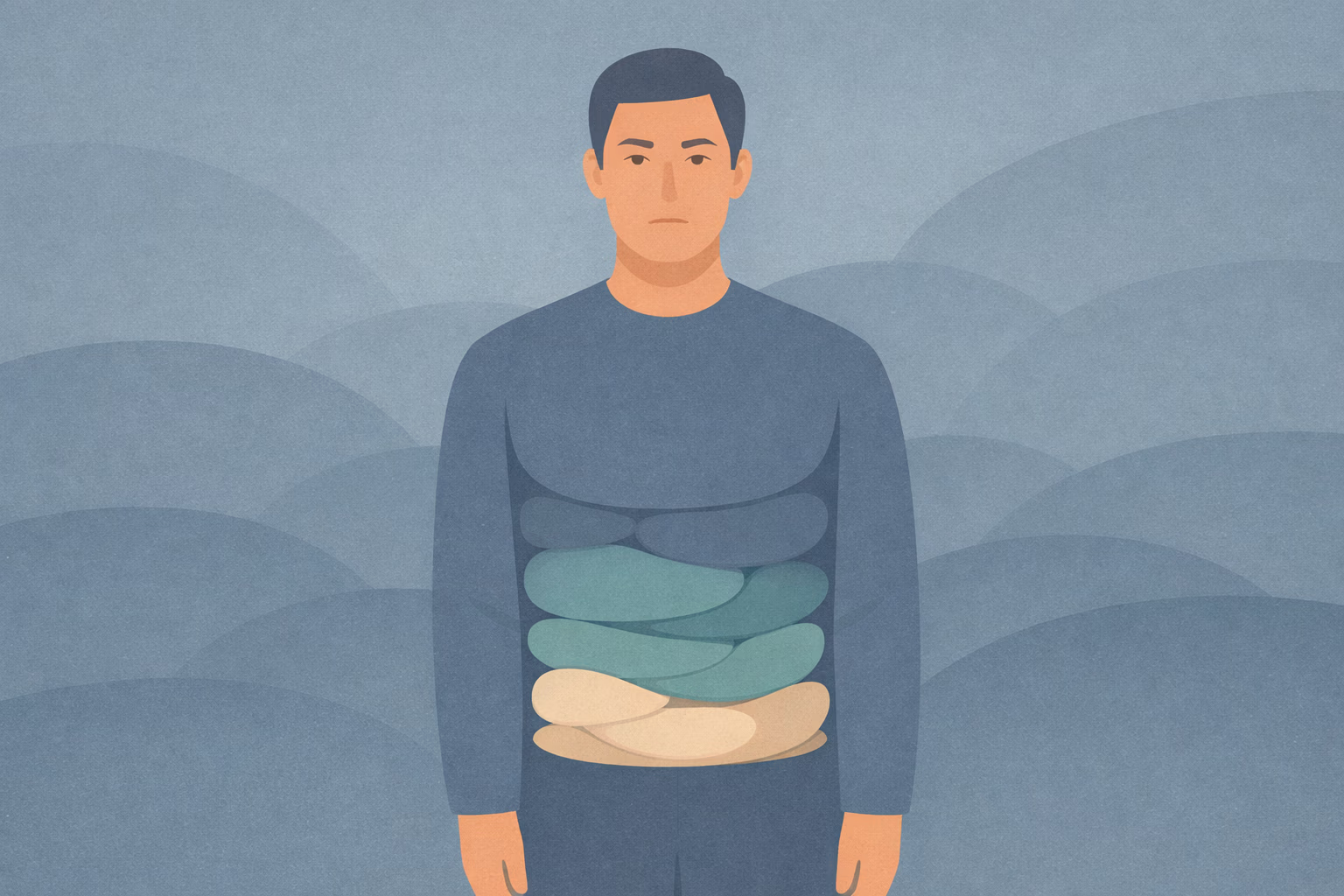
When emotional expression is restricted, the body often continues running the physiology that would normally support completion: tension, readiness, narrowed breathing, and increased cognitive effort to stay organized. The “containment” itself becomes work—muscles holding, attention clamping, and thought loops monitoring for leaks.
In practical terms, compression can increase load in multiple channels at once: physical (jaw, shoulders, gut), respiratory (shallow or held breath), and cognitive (overthinking, scanning, rehearsing). Over time, sustained load like this is associated with burnout patterns and wear on regulatory capacity. [Ref-2]
“I’m not falling apart, but I’m always holding something back.”
In many human environments—past and present—open expression has not always been safe or useful. When outcomes were uncertain, restraint could protect belonging, reduce conflict, and keep you employable, acceptable, or physically safer. In that context, compression isn’t mysterious; it’s adaptive.
Biologically, chronic stress conditions can shape how strongly the system responds and how quickly it returns to baseline. If the environment repeatedly requires endurance, the nervous system can learn “keep going” as the default. [Ref-3]
So emotional compression is often less a choice than a strategy your system has rehearsed: endure now, sort later. The problem is that “later” doesn’t always arrive.
Compression can be remarkably effective at preserving function. It narrows attention, limits unpredictable expression, and supports task focus. In high-demand contexts—caregiving, crisis, deadlines, unstable relationships—this can keep your life intact.
From a brain-and-body perspective, stress physiology is designed to help you adapt and perform under challenge. When it’s time-limited, it can be protective; when it becomes prolonged, the same systems can begin to shift from adaptation into wear. [Ref-4]
So the goal was never to “be numb.” The goal was to stay coherent enough to get through.
A widespread belief—often learned early—is that if you don’t name something, don’t show it, and don’t pause for it, it will dissolve. But nervous systems don’t work like trash bins. Unfinished experiences tend to stay partially activated: not always in clear feelings, but as pressure, vigilance, and irritability.
This is one reason compression can feel like “accumulation.” Stress-related activation can remain present even when you’re not consciously attending to it, shaping sleep, digestion, attention, and sensitivity to threat cues. [Ref-5]
In meaning terms, what’s missing isn’t insight. It’s closure—an internal “done” signal that tells the system it can stand down.
Emotional compression can become a self-reinforcing loop: the more you rely on control over expression to stay steady, the more your body learns that steadiness requires holding. This is not a character flaw—it’s conditioning under load.
Safety physiology is strongly shaped by cues of connection, predictability, and permission to settle. When those cues are limited, the system may choose containment as the safest available option. Over time, “keeping it inside” can become a default state because it reliably prevents immediate disruption. [Ref-6]
Because compression is often quiet and functional, it can be hard to recognize. It may not look like panic or collapse. It can look like competence with a cost—like your body is always slightly tightened to maintain a socially acceptable shape.
Over time, the system may swing between high control and low capacity states (including shutdown-like patterns), especially when load exceeds what containment can manage. [Ref-7]
When compression continues for long periods, the body may start to conserve by limiting range—less spontaneity, less flexibility, more fatigue. This can be experienced as emotional exhaustion, bodily discomfort, or a sense that your internal battery no longer refills the way it used to.
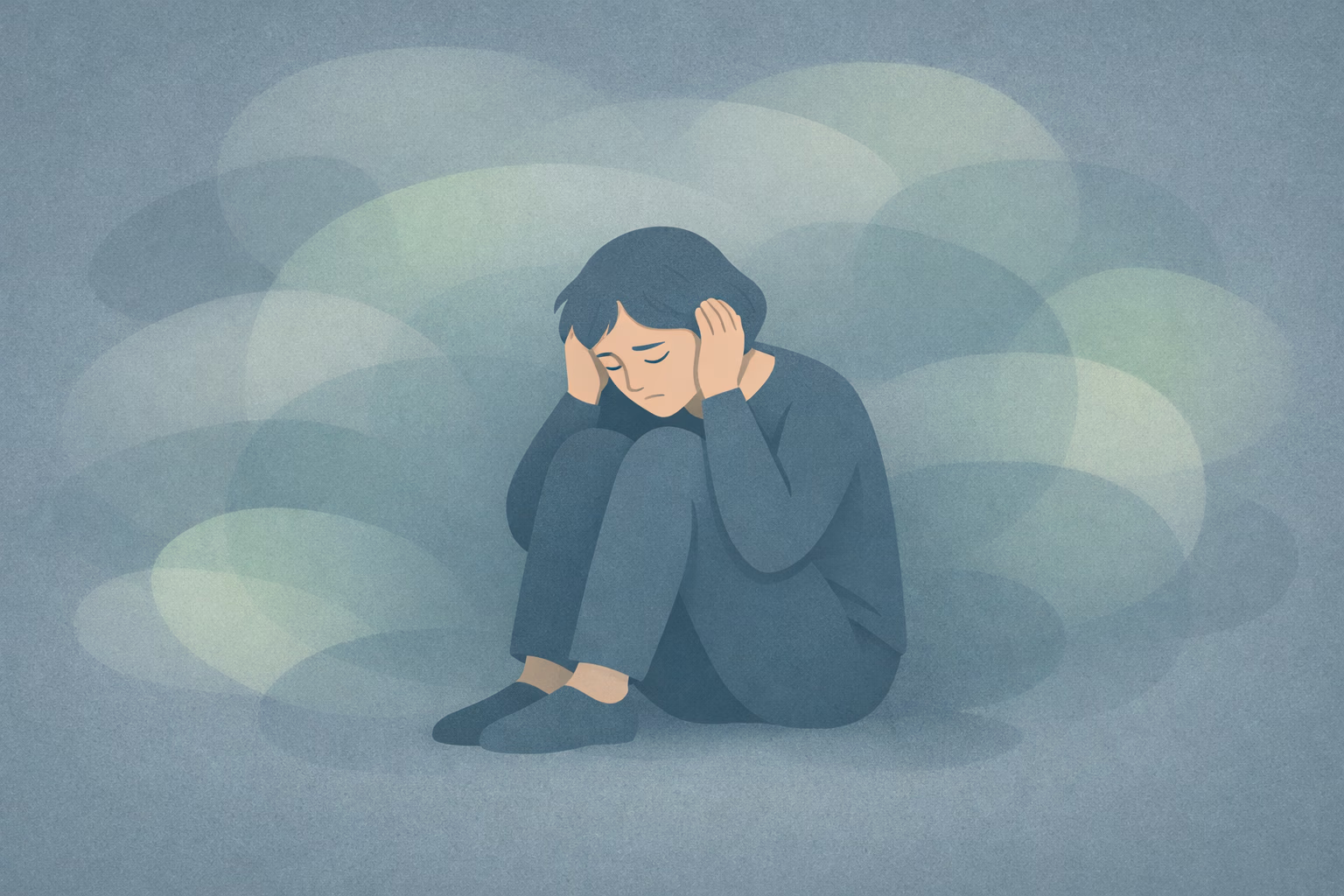
Some people describe a “freeze-ish” quality: not dramatic shutdown, but a reduced sense of movement inside—like everything is slowed, muted, or suspended. This can be a protective response to overwhelm, not a sign that something is broken. [Ref-8]
In Meaning Density terms, a lot of attention is being used for containment—leaving less available for connection, curiosity, and forward direction.
Compression often persists because it seems to prevent disruption. But the same containment that keeps things stable can also prevent discharge—the natural completion process that tells the body, “That happened, it’s over.” When discharge is delayed, activation can circulate as internal pressure rather than resolving.
This helps explain the paradox: you work so hard to keep things from spilling, and yet the sense of being “full” increases. The system becomes more sensitive because it’s carrying more unfinished activation at once. [Ref-9]
It’s not that you’re refusing your experience. It’s that the route to completion has been narrowed, so the body stays on the hook for what hasn’t landed.
There’s an important distinction between understanding what’s happening and the body actually settling. Insight can name the pattern; completion changes the state. Restoration tends to look like the gradual return of pathways that let activation move through rather than pile up.
That shift usually depends less on pushing for catharsis and more on conditions: enough safety cues, enough time, enough relational or environmental permission for the system to stop bracing. When those conditions are present, awareness becomes more than an idea—it becomes a channel through which the body can update. [Ref-10]
“When it’s safe enough, my system doesn’t have to work so hard to be okay.”
Humans regulate in relationship. When your experience is received—met with steadiness, not escalation—your nervous system gets evidence that expression doesn’t automatically create danger or abandonment. That evidence matters because it reduces the need for solitary containment.
This doesn’t require dramatic disclosure. Often it’s the simple physiological shift of not being alone with the load: your breath changes, your muscles soften, your attention widens. When you’re flooded, shutting down can be a protective response; being supported can interrupt that cycle by providing co-regulation and safety cues. [Ref-11]
In other words: compression is often what happens when support is absent, inconsistent, or too costly. Reception changes the math.
As internal pressure reduces, people often notice concrete changes: breathing feels less restricted, movement feels less effortful, and small stressors take up less space. The mind may become less crowded—not because life is perfect, but because fewer resources are being spent on containment.
Importantly, this isn’t about “feeling more” as a goal. It’s about increased capacity for signal return: the ability to register what’s present, respond, and then come back to baseline. That restoration of self-trust and attunement tends to correlate with steadier regulation and more reliable internal guidance. [Ref-12]
Compression consumes attention. A significant portion of your bandwidth goes into monitoring yourself, keeping things contained, and preventing overflow. When the internal pressure decreases, that bandwidth becomes available for something else: orientation toward what matters.
This is where meaning becomes practical. Not as motivation, but as coherence—your actions, values, and identity aligning with less internal resistance. With less need to control yourself, you can relate to your life more directly and choose from a wider range of responses.
Self-compassion can be understood here not as a pep talk, but as a stabilizing stance that reduces self-attack and supports steady regulation—making completion more possible. [Ref-13]
In a culture that rewards composure, release can be mislabeled as weakness or chaos. But from a nervous-system view, release is often a sign that the system finally has enough safety and support to complete what it has been carrying.
When you frame this as self-respect—an honest acknowledgment of load, limits, and human design—the shame story loses traction. Care becomes less about forcing change and more about creating the dignity of closure, which is one pathway toward more stable self-care and regulation over time. [Ref-14]
Release isn’t a failure of control; it can be evidence that you no longer have to live in permanent containment.
Emotional compression is a sign of intelligence under constraint: a system doing its best with the conditions available. And when conditions shift—through safety, connection, and enough completion—what was held can settle.
What emerges isn’t a “new you.” It’s you with more room: more breath, more attention, more capacity to be guided by meaning instead of pressure. In that room, vitality and direction become less effortful—not because life is easy, but because your system isn’t carrying everything alone. [Ref-15]
From theory to practice — meaning forms when insight meets action.
Because emotional compression is exactly that: outward steadiness paired with inward bracing. The article describes it as keeping daily life moving by pressing internal experience down — narrowing range, prioritizing output over completion. From outside it can read as competence; inside it feels like a constant quiet effort to stay contained. The 'I can handle it' coexists with a sense of being internally crowded. This isn't a personality trait. It's your nervous system buying you time when conditions don't allow things to fully resolve.
No — and that's a widespread misread. Nervous systems don't work like trash bins. Unfinished experiences stay partially activated: not always as clear feelings, but as pressure, vigilance, and irritability. Stress-related activation can remain present even when you're not consciously attending to it, shaping sleep, digestion, attention. Compression can feel like accumulation because what didn't get completion doesn't disappear — it stays asking for closure. What's missing isn't insight. It's an internal Done Signal that tells the system it can stand down.
It can become one — not from weakness, but from conditioning under load. Containment reduces short-term consequences, reduced consequences reinforce containment, reinforcement increases internal load. The body learns that steadiness requires holding. Common signs include chronic tension, emotional flatness that isn't restful, irritability that surprises you, and delayed release ('big reactions later, in private, or out of nowhere'). The same containment that keeps things stable also prevents discharge — the natural completion that tells the body 'that happened, it's over.'
Often quiet, structural shifts: breathing feels less restricted, posture less braced, small stressors take up less space. The mind feels less crowded — not because life is perfect, but because fewer resources are being spent on containment. This isn't 'feeling more' as a goal; it's increased capacity for signal return. Co-regulation matters here too: when your experience is received with steadiness, the nervous system gets evidence that expression doesn't automatically create danger. Reception changes the math — you no longer have to hold it alone.
From Science to Art.
Understanding explains what is happening. Art allows you to feel it—without fixing, judging, or naming. Pause here. Let the images work quietly. Sometimes meaning settles before words do.
One Quiet Window, one insight, one reflection — every Sunday