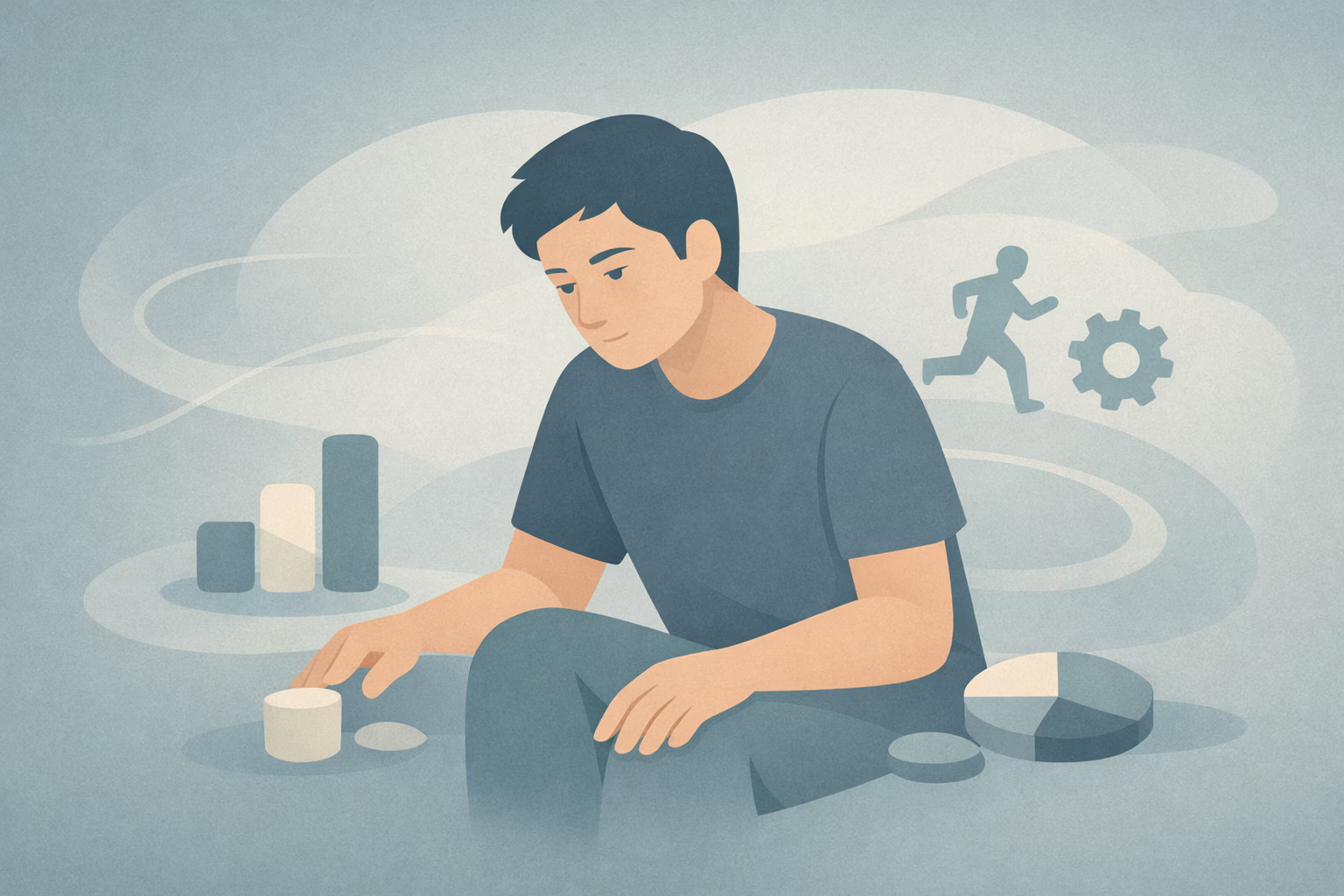
Self-Optimization as Existential Avoidance
Understand why optimizing everything hides deeper fear.
In context: In the Meaning Density Model™, “strength“ is the ability to hold a load, but “compression“ is what happens when that load is sustained for too long without a landing. Your strength hasn't failed; it has simply reshaped your inner space.

Strength kept everything moving, but over time it tightened the space inside you.
Muscles learned to stay engaged.
Attention stayed narrowed.
What once felt capable slowly became compressed.
This is not misuse of strength.
It is strength used continuously.
Recognizing this reframes the story.
You did not fail to rest.
Strength was asked to do too much for too long, and it adapted the only way it could.
Reframe strength with clarity in DojoWell.
Explore DojowellArticles exploring the psychology behind these patterns.
In the Meaning Density Model™, "strength" is the ability to hold a load, but "compression" is what happens when that load is sustained for too long without a landing. Your strength hasn't failed; it has simply reshaped your inner space. Like a spring that has been held down for years, your nervous system has lost its "travel." You feel tight because your Threat & Safety system has narrowed your margins to protect your core from the constant weight.
You don't do it through more effort. You do it by creating "expansion zones." Strength needs "slack" to be functional. DojoWell suggests identifying one area of your life where you can intentionally "lower the tension"—by lowering a standard or extending a deadline. This introduces a tiny bit of "play" back into your architecture. As the compression eases, your strength becomes a flexible tool again rather than a rigid cage.
One Quiet Window, one insight, one reflection — every Sunday